

Oneplace.com

Cain and Abel

April 26, 2026
00:00

Two brothers, one family, and a divide that still runs through humanity. As Dr. McGee unpacks Cain and Abel’s choices, we discover that their story also holds a mirror to our own hearts, revealing our need for grace and the only path that truly leads to life.

References: Genesis 4

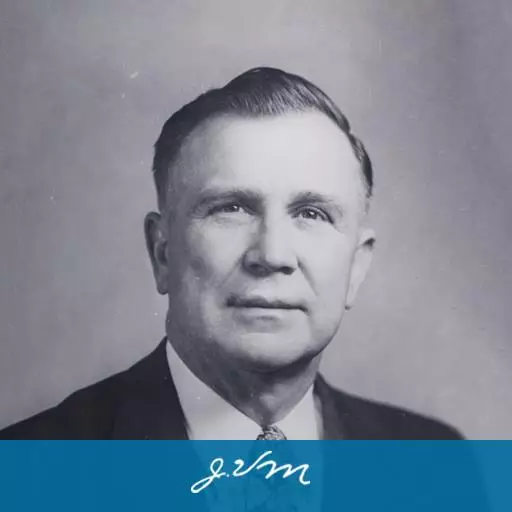
Steve Shvetz: As we read through Genesis, it doesn't take long to realize that human nature hasn't changed much at all. The first family—Adam, Eve, and their sons—wrestled with the same issues we still do today: jealousy, pride, fear, and the deep need to come to God His way, not our own. In our Sunday sermon, "Cain and Abel," Dr. J. Vernon McGee opens the Scriptures to show us how their story sheds light on our own and how God’s grace still reaches into the lives of sinners like us.

First, here’s a quick note from a faithful listener named Fred, who writes this: "I just celebrated my 72nd birthday and have been off and on the Bible Bus since 1984. I’ve been a pastor since 1989 and received my theological training from Dr. McGee. I can now donate to this ministry regularly and would like some of your Bible Bus passes. Thank you for your hard and important work flinging the seed."

Happy birthday, Fred! And those passes are already on the way to you. So thanks for partnering in the work of taking God’s Word to the world. Those Bible Bus passes that Fred talked about are available to you too. Just call us at 1-800-65-BIBLE. We’re always glad to send them your way. We'll send out a packet of ten.

Let's pray. Heavenly Father, thank you for the grace that meets us fresh each time we open your Word. Lord, as we study, would you soften our hearts and then steady our thoughts and help us to see your truth clearly? In Jesus' name we pray. Amen.

Dr. J. Vernon McGee: This morning, I would like to turn to two verses of Scripture. One is Genesis 1:26, and read that in your hearing: "And God said, Let us make man in our image, after our likeness: and let them have dominion over the fish of the sea, and over the fowl of the air, and over the cattle, and over all the earth, and over every creeping thing that creepeth upon the earth."

Genesis 5, verse one: "This is the book of the generations of Adam. In the day that God created man, in the likeness of God made he him." Verse three: "And Adam lived an hundred and thirty years, and begat a son in his own likeness." Adam was created in the likeness of God, but the sons of Adam were born in his likeness. They were not sons of God.

Our subject is Cain and Abel: a study in human nature. These two men had more in common than any two men that have ever lived upon this earth. But the one thing above all others that identified them as one was the fact that they had a fallen nature. Adam was created in the likeness and image of God, but he fell and he failed. He became a fallen creature. You find him running away from God, trying to get away from God.

Outside the Garden of Eden, he begets children in his image: a fallen, sinful nature, if you please. Cain was a sinner. He was the son of Adam but not a son of God. Abel was a sinner. He was a son of Adam, but he was not a son of God. In spite of the likeness of these two men—and they were alike, as we’ve said—these two men were more unlike than any two men. They were antipodes apart. They were entirely different.

Direction and the destiny of their lives was different. One was headed for heaven; the other was headed for hell. The Lord Jesus said that there’s a great gulf fixed. I cannot think of any two that would be as far apart as these two men who were brothers. Here in the very first section of Genesis, God’s making some sharp distinctions. He’s drawing in black and white, and there’s no merging or mingling of the two colors. You will find no shading of gray here at all.

Very beginning, in the first chapter of Genesis, you’ll find that God divided the light from the darkness. When God divided the light from the darkness, you will find that they never intermingle again. You cannot have both. Therefore, the two are never present at the same time. Cain and Abel: darkness and light, night and day, both belong to every 24-hour day. The evening and the morning are the first day. Cain and Abel are in the first family.

Both boys in one family, and you have here the beginning of family life. With that introduction, let’s come to the text this morning, because I want to pay particular attention to it. Will you listen to verse one of chapter four? "And Adam knew Eve his wife; and she conceived, and bare Cain, and said, I have gotten a man from the Lord." This is "the man from the Lord."

Actually, you will find, for instance, the American Standard Version has changed that. I don’t think they’ve improved it, but they do reveal the fact that the Authorized is probably not the translation. The American Standard read, "And the man knew Eve his wife; and she conceived and bare Cain and said, I have gotten a man with the help of Jehovah." That gives another facet of meaning, but it would be better to say in relationship to the Lord.

Adam and Eve thought when Cain was born was that this was the seed of the woman that had been promised here in the third chapter, verse 15: "I will put enmity between thee and the woman," God speaking to Satan. It was, of course, for him a judgment, but for man, it was a blessing. "I will put enmity between thee and the woman, and between thy seed and her seed; it shall bruise thy head, and thou shalt bruise his heel." Eve thought this first boy that was born to her was the fulfillment of the promise.

Adam and Eve apparently did not know this struggle of sin was going to be as long as it has been. They didn’t know it would be so long until the Savior did come. They gave him the name of Cain. Cain means "acquisition" or "possession." He was the one that now is the fulfillment; they’ve gotten the possession, the one that God had promised, so they thought. But how wrong they were. "And she again bare his brother Abel. And Abel was a keeper of sheep, but Cain was a tiller of the ground."

Notice the only noticeable distinction is in the occupation of these two men. Abel was a shepherd, and Cain dealt in agriculture. There are those today, and have been, that have felt that these two boys were twins. The late Dr. Harry Rimmer took that position. I’ve run into that now several times in my study of Genesis where men have thought that they were twins. Candidly, I can see no basis for it in the text whatsoever.

przygotowany to say this: that these two boys were more alike than twins, any twins today. There are two elements that enter into personality and character of every individual: one's heredity and the other is environment. There’s always been a debate among the psychologists which is more important, heredity or environment. I had a professor in college that solved the problem. He said before birth, heredity is more important, and after birth, environment’s more important. That solves the problem to a limited extent.

Look at these two boys in the light of that. They were alike, and they were alike because of the fact that there was no bloodstream coming from both sides of the family to be poured into their veins. Today—and this is not a true illustration, but it could be very easily—here are two boys that are twins. They’re called identical twins, and they grow up. One boy becomes a very fine, outstanding man in the community. The other one becomes a drunkard.

Psychologist comes along and says the way that you explain this is through the Mendelian hypothesis. The way that you do this is because on the mother’s side, there was an uncle who was a very fine, upstanding man, and this twin that’s an upstanding man, he inherited from him. Whereas the other boy that became a drunkard, there was an uncle on the father’s side, and he was a ne'er-do-well and a drunkard, and the boy inherited from him, and that explains the difference.

Uncle are we talking about here? Did Cain and Abel have an uncle on either side? They didn’t have an uncle. There’s nothing in the bloodstream to go into their lives except father and mother. That’s all. Nothing in the background at all. Heredity had to be the same. They’re more alike than twins. Environment, they both had the same environment, brought up in the family of Adam and Eve outside the Garden of Eden.

Both of these boys inherited a fallen nature. Both of them by nature were children of wrath, even as others. They were both conceived in sin, alienated from God, shapen in iniquity, a heart that was desperately wicked, the poison of asps was under their lips, and their feet were quick to shed blood. Those are the two boys we’re talking about today. Human nature in the raw, they had it.

Savior. Neither one of them was a savior. "And in process of time it came to pass, that Cain brought of the fruit of the ground an offering unto the Lord." Last Sunday morning, I called your attention to the brevity of this section of Genesis—that in the first eleven chapters, God’s hurrying to His subject. He hasn’t got to it until He gets to chapter 12, and He’s merely saying some things that are very brief. You have here an abbreviated and an abridged edition, if you please.

It’s terse and concise; it’s short and succinct. But because of that, it’s to the point, and what is said needs very careful consideration. There are three striking statements in this verse that I’ve read in your hearing: "And in process of time." That word "process of time" means at the end of days. The Septuagint, which is a Greek translation made in Alexandria by about 70 scribes, representatives of each tribe before the Lord came into the world—and it’s one of the best that we have—it makes it very clear that it’s at the end of days.

They came at an appointed time, at the end of the week, if you please. I believe it was the Sabbath day. But wait a minute, don’t make anything of that, my friend, because if you’re going to say that it’s important to worship on the Sabbath day and if you do it makes everything right, you will have to explain Cain to me. He worshiped on the Sabbath day. They came together at the appointed time.

They worked during the week, each at his appointed task, and on the Sabbath day, they worshiped at an appointed time, if you please. That’s very important. Second thing that we need to note here: not only is there an appointed time, but there is a particular place. Notice this: "And in process of time it came to pass, that Cain brought of the fruit of the ground an offering to the Lord." In that Hebrew word for "brought," there is the thought of an appointed place.

They came to an appointed place. It’s suggestive here in this next verse: "And Abel, he also brought of the firstlings of his flock and of the fat thereof." Firstlings of the flock and the fat thereof suggests an altar. There was an altar somewhere because the fat was always burned on the altar. Moses understood that when he wrote this, that the fat was to be burned on an altar, and there was an altar somewhere. But where was that altar?

Suggestion for you, will you follow me very carefully? Notice the last verse of the third chapter; it’s very important to the understanding of this chapter. "So he drove out the man; and he placed at the east of Eden of the garden of Eden Cherubims, and a flaming sword which turned every way to keep the way of the tree of life." Way that I’ve heard that explained in the past was that when God put man out of the Garden of Eden, He put the cherubims as guards to keep man out of the garden and to shut him out forever.

My friend, that’s not the thought here at all. We have here something that’s quite interesting. I’d like to give you Jamieson, Fausset, and Brown’s. In their commentary, they give a translation of this verse—and I’ve looked now at least 25 translations, and I believe this is the best one: "And He, that is God, dwelt at the east of the garden of Eden between the cherubim as a Shekinah." A fire-tongue or fire-sword is what the Shekinah is. "To keep open the way to the tree of life."

Jerusalem Targum also translates like that. Notice what is being said here, for it’s very important. When God put man out of the Garden of Eden, He didn’t shut him out from eternal life. He didn’t shut him out from God at all. What He did, God dwelt yonder between the cherubim, and He made an altar. Adam and Eve went out of the garden and looked back, they saw a way to God.

What was that way? They had on themselves clothing, no longer fig leaves, but they had on themselves the skins of animals, and the sacrifice and the blood was yonder on that altar, and there was a mercy seat so that man could come to God anytime he wanted to if he’d come God’s way. You’ll find out that when Moses later on made the tabernacle and a mercy seat, that Shekinah glory came and dwelt over the mercy seat.

Mercy seat in the tabernacle is exactly what was outside the Garden of Eden. I believe, therefore, that God established a mercy seat, protected by the cherubims and covered with blood, that a man who was a sinner and recognized it could come. May I say to you, there was a particular place that they were to bring their sacrifice. There was a definite location, and that location is as definite as Hope Street at Sixth, the Church of the Open Door. It was just as much a definite place to come and worship.

Adam and Eve sinned, they lost fellowship with God. But God kept the way open. He kept the way open by sacrifice to let them know that they had sinned and there must be a penalty for their sin to meet the demands of a holy God, and that there must be the shedding of blood. It’s quite interesting to read a little later on in this chapter, and it’s the reason I read 16 verses was to get verse 16. "And Cain went out from the presence of the Lord."

This man is quite different from the publican who came in, stood afar off, beat upon his breast, and said, "Oh God, be merciful to me a sinner." What he really said, "Oh God, make a mercy seat for a poor publican to come to." This man Cain, after his sin, he walks out of the presence of God and he says, "I don’t need a mercy seat." Even after he became a murderer, he says, "I don’t need a mercy seat," and he went out from the presence of the Lord.

But there stood a way back to a holy God, protected by the cherubims, but the blood made it possible for a sinner to come. Third thing: there is not only a time, there’s not only a place, but there’s a method of coming. And that’s all-important. That’s revealed in the sacrifice that each one brought. God’s made it clear here at the very beginning—and He certainly hasn’t changed—that He’s only approached through a substitutionary sacrifice.

He put down a principle that’s never been changed: without shedding of blood is no remission. This table right here—and I’ve often wondered how the liberal gets by with it—comes to a table and drinks the wine. What does that wine speak of? The Lord Jesus says it is my blood which was shed for you. You get around that, my brother. God has not changed the way to Himself. Without shedding of blood is no remission of sins.

Expiation of sin by the paying of the penalty. Believe God and come God’s way. Now somebody’s going to say to me, but had God revealed His way at this point? We don’t find anything up to this place about God telling man how he’s to come to Him. I said this was a very brief section. God’s not putting in all details, but we can know this morning, He told them how to come.

How? Will you listen? The writer to the Hebrews in the 11th chapter, verse 4 says: "By faith Abel offered unto God a more excellent sacrifice than Cain, by which he obtained witness that he was righteous, God testifying of his gifts: and by it he being dead yet speaketh." By faith he came. How could he come by faith if God had not revealed this as the way to come?

Romans says, "Faith cometh by hearing, and hearing by the word of God." Faith is the response to a revelation, always. That’s the reason this stuff today that you hear, "Oh just believe, if you just believe, only believe." Well, my beloved, millions of Germans believed in Hitler. There are millions of people today that believe in communism. "Only believe"—my friend, it’s who you believe and what you believe. That’s the thing that’s important.

Faith cometh by hearing, and hearing by the word of God. This man Abel came by faith, and Cain did not come by faith, which is, I think, quite obvious. notice? Up to this point, as far as the record is concerned, there’s no difference in the two boys. Cain’s no atheist; he’s come to worship God. He’s no agnostic, even. This man is—he’s not on the FBI list of the ten most wanted men. He’s not an out-and-out drunkard.

Citizens of the antediluvian civilization and would walk in any church in Southern California this morning and be accepted. Yes, he would. Abel was not superior to his brother in conduct or in works. No, he wasn’t. These two boys are brothers. They both inherited a sinful nature. Both of them are alike. What’s the difference? The difference is in their offering. By faith, Abel offered unto God a more excellent sacrifice.

Abel wasn’t excellent; his sacrifice was. He was declared righteous, just as God declares a sinner righteous today who is not righteous when he trusts Christ as Savior. Radical difference in the offering of these two boys. Cain’s offering was the fruit of the ground—produce. It would have made a lovely display at the Pomona Fair this year. I think it would have won a blue ribbon.

Lovely: fine fruit, fine vegetable, fine grain. All of it was there. I want to tell you, there are a lot of people in Los Angeles today would look at it and said, "My, God ought to be tickled to death to get an offering like that." It looked good. It made an impression. But there was no shedding of blood. There’s no recognition that he was a sinner. There’s no attitude of, "Oh God, be merciful to me a sinner" or "Make me a mercy seat to come to."

He didn’t even have to ask that; there was a mercy seat. It was rather this: "Lord, look at me. Look what I’ve done. Look what I’ve grown. Look at the works of my hands." He comes in pride. My friend, he was the first little Jack Horner. Jack Horner sat in a corner eating his Christmas pie. He reached in his thumb and he pulled out a plum, and he said, "What a smart boy am I."

Jude says, speaking of this day and describing apostates, "They’ve gone in the way of Cain." Will you hear me this morning? All over the world, in this country, in Los Angeles, and it could be here today, men are coming their way to God. In self-will, in pride, in their self-sufficiency, they will not recognize that they are sinners that need a sacrifice and need a Savior.

Believe the word of God when it says, "All we like sheep have gone astray, we’ve turned every one to his own way." What is his own way? The way of Cain, if you please. But the Lord hath laid on Him, the Lord Jesus, the iniquity of us all. "There is a way that seemeth right unto a man, but the end thereof are the ways of death." That’s the way of Cain.

Pilate says, "I wash my hands of Jesus, I’ll have nothing to do with Him." The Roman centurion took his place beneath the cross and said, "Truly, this is the Son of God." You see both of them wearing the same livery, the same uniform, serving the same government, but they’re different men. Paul says, "They are all gone out of the way." They’ve taken the way of Cain. That’s his sacrifice: bloodless.

Cursed ground, this man brings an offering to God. A holy God only accepts that which is perfect, which is holy, which is righteous. My friend, you and I don’t have it this morning, that is if we’re honest. He only is our righteousness. "There was no other good enough to pay the debt of sin. He only could unlock the gate of heaven and let us in," He alone.

Abel recognized that he was a sinner and the penalty was death. He knew that by man came death and that in his father Adam, all die. Wages of sin is death and he deserved death—eternal separation from God. So he brought a little sacrifice, and that little lamb died in his stead. Do you have a lamb today? Don’t bring a little lamb today, for the Lamb of God that taketh away the sin of the world has already died, and He died for you.

Man called me several years ago here at the Church of the Open Door. He’s not a member, but he attended here then. He said, "Next Sunday’s communion Sunday. I do not feel worthy to partake of the Lord’s table." I said, "Fine, I’m glad you feel that way about it. Confess your sin and come on, because the table is spread for you."

How dare you come to this table this morning if you feel worthy. It’s not for worthy folk. It’s for those who like Abel know they’re sinners and have turned to the Lamb of God and know that that bread speaks of His body and that cup speaks of His blood that was shed for them. "Abel, he also brought of the firstlings of his flock and of the fat thereof. And the Lord had respect unto Abel and to his offering: But unto Cain and to his offering he had no respect."

"And Cain was very wroth, and his countenance fell." God made it crystal clear which was right and which was wrong. He made it very clear which was God’s way and which was man’s way. It says God had respect unto his offering. Writer to the Hebrews there in the 11th chapter says, "God testifying of his gifts." How did He do it? Candidly, I don’t know. But I can make a suggestion to you.

Leviticus 9:24, "There came a fire out from before the Lord, and consumed upon the altar the burnt offering and the fat: which when all the people saw, they shouted, and fell on their faces," which meant they were accepted of God. I believe that that’s exactly what happened at this time. God had respect unto his offering. But those little apples and little plums and little prunes that Cain brought just stayed right where they were.

Most difficult verse that you will come to in this entire section. Verse seven: "If thou doest well, shalt thou not be accepted? and if thou doest not well, sin lieth at the door. And unto thee shall be his desire, and thou shalt rule over him." I want to give you this morning a translation that we believe is a good translation. It’s the English Revised Version. Listen to this in the margin.

"If thou doest well, will there not be acceptance for thee? And if thou doest not well, sin is lying at the door like a crouching beast, ready to spring upon thee. And unto thee is sin’s desire, but thou shalt rule over it." There are those that like to translate "sin" as "sin offering," that there was a sin offering. I cannot accept that because there’s no sin offering in the first chapters of Genesis and you do not find a sin offering until you come to the book of Leviticus.

Why? Because by the law is the knowledge of sin. Until sin became a transgression, God gave no sin offering to man. Man was a sinner and the burnt offering spoke of it, but not as an act, now you see. So I do not believe this is a sin offering here. May I read it again? "If thou doest well, will there not be acceptance of thee?" "Doest well" means to bring the proper offering. "Shalt thou not be accepted?"

Primogeniture, that the eldest son inherited twice as much. He takes the father’s place; he rules over the rest of the family when the father dies. Cain thought he was going to lose that. God says to him, "If you offer the proper offering, you’ll still retain your place, the place of the firstborn." Real nature of Cain is revealed, and I think it was there all along.

You have to go back and find it in the name given to his brother, Abel. It’s "Hevel" actually in the Hebrew, and it means "breath," "hey," you know, breathing out. Why did they call him "breath"? That was his name. If you want me to paraphrase: "winbag." Abel was a winbag. You know why they called him winbag? Is because of this: it means transitoriness.

Adam and Eve were disappointed with Cain. So this next boy that comes along, they say "breath." We know the first one’s not the man and we’re sure this is not the man. He’s not the Savior, not the deliverer. Isaiah confirmed that. In Isaiah 2:22 he says: "Cease ye from man, whose breath is in his nostrils." He actually breathes in his breathing places and he’s ready any moment to exhale.

Cain talked with Abel his brother: and it came to pass, when they were in the field, that Cain rose up against Abel his brother, and slew him. I want to read you something this morning, rather brief, but it comes from an old commentator and I couldn’t improve on this. Dr. Parker in his *People's Bible* has this. "Now the real nature of Cain comes out. You see the man that won’t come God’s way is wrong, and he’ll be wrong in his conduct. You can’t think wrong and act right."

Condition of heart, you will find it after the service which he pretended to render. You know a man best out of church. Minister sees the best side of a man, the lawyer the worst side, and the physician the real. If you want to know what a man’s religious worship is worth, see him out of church. Cain killed his brother when church was over, and that is the exact measure of Cain’s piety.

Psalm-singing and sermon-hearing. You said you enjoyed the discourse exceedingly last Thursday. I wonder how Parker knew about that? But then you filled up the income tax paper falsely, and you will be judged by the schedule, not by the sentiment. You see, when a man thinks wrong, comes to God wrong, he’s wrong, and he’ll be wrong in his conduct, if you please. "And the Lord said unto Cain, Where is Abel thy brother? And he said, I know not: Am I my brother’s keeper?"

Impudent. He’s now fixed in his evil. Cain said unto the Lord, "My punishment is greater than I can bear." It was. That’s the one true statement he made, because sin is greater than you and I can bear. Yonder stood a mercy seat on the east of the Garden of Eden, and there was the blood of Abel’s offering as well as Abel’s blood poured on the ground.

Blood of Abel’s offering as well as Abel’s blood poured on the ground, and even at that moment, Cain could have gone yonder and claimed the blood, acknowledged his sin, turned to a Savior and been saved. But all he could say, "My sin’s greater than I can bear." He keeps going away from God. Just like his father ran away from God in the Garden of Eden. He’s now fixed in evil.

Tragedy of sin in Adam and Eve are beginning to see it for the first time. Out yonder goes Cain a murderer, a wanderer over the face of the earth, never to have fellowship with them again. Eve is holding to her bosom the bloody body of that boy Abel. They know now something of the consequences of sin. Fallen human nature. You have it, and you have it, and you have it. Don’t tell me how good you are today, because you’re not.

Fallen human nature manifests itself, though, in two ways. There are those who go the way of Cain: self-sufficient, self-righteous. And there are those whom our Lord said righteous Abel, declared righteous because he brought a sacrifice to recognize he was a sinner and that he deserved death and he was claiming a Savior. Jacob and Esau, Moses and Pharaoh, David and Saul, Elijah and Ahab, Peter and Judas, Pilate and the Roman centurion.

Truly, this is the Son of God. You see both of them wearing the same livery, the same uniform, serving the same government, but they’re different men. Pharisees, a young man by the name of Saul of Tarsus. One day he comes out. Now you have Paul the apostle and the Pharisee. Thieves crucified with Jesus on the cross. Both of them were thieves.

Saved, one was not. The blood of Abel cries from the ground today, and so does the blood of Christ. There are sinners, just sinners in the world. The Lord Jesus said, "I have not come to call the righteous, but sinners." And that meant everybody. There are two classes of sinners. Which one are you in this morning? Are you this morning looking to yourself, trusting your own goodness, your character, your church membership, or who you are today? Or have you looked away to the Lamb of God that taketh away the sin of the world?

John’s answering Abel when John the Baptist said, "Behold the Lamb of God that taketh away the sin of the world." Again, which class of sinners are you in? I’m not talking this morning about good people and bad people. I’m not talking this morning about those who are church members and those who are not. Trusting Christ, or aren’t you?

Steve Shvetz: You can learn more about how to come to God His way, not by our own effort, but through the salvation that He offers by clicking on "How Can I Know God?" in our app or at ttb.org. Or call 1-800-65-BIBLE, and we’ll gladly send some resources by mail. I’m Steve Shvetz, and as we go, I leave you with this blessing inspired by Psalm 32:8: May the Lord gently show you the path He wants you to walk, guiding you step by step with His loving eye upon you. Amen.

Join us each weekday for our five-year daily study through the whole Word of God. Check for times on this station or look for Thru the Bible in your favorite podcast store and always at ttb.org.

This transcript is provided as a written companion to the original message and may contain inaccuracies or transcription errors. For complete context and clarity, please refer to the original audio recording. Time-sensitive references or promotional details may be outdated. This material is intended for personal use and informational purposes only.

Past Episodes

Loading...
G
Loading...

About Thru the Bible - Sunday Sermon

These Sunday Sermon messages form a collection of the most effective and fruitful sermons given by Dr. J. Vernon McGee during his 21-year pastorate (1949-1970) at the historic Church of the Open Door when it was located in downtown Los Angeles.


Other Thru the Bible Programs:

Thru the Bible

Thru the Bible - Minute with McGee

Thru the Bible - Questions & Answers

Thru the Bible International

A Través de la Biblia


About Dr. J. Vernon McGee

John Vernon McGee was born in Hillsboro, Texas, in 1904. Dr. McGee remarked, "When I was born and the doctor gave me the customary whack, my mother said that I let out a yell that could be heard on all four borders of Texas!" His Creator well knew that he would need a powerful voice to deliver a powerful message.


After completing his education (including a Th.M. and Th.D. from Dallas Theological Seminary), he and his wife came west, settling in Pasadena, California. Dr. McGee's greatest pastorate was at the historic Church of the Open Door in downtown Los Angeles, where he served from 1949 to 1970.


He began teaching Thru the Bible in 1967. After retiring from the pastorate, he set up radio headquarters in Pasadena, and the radio ministry expanded rapidly. Listeners never seem to tire of Dr. J. Vernon McGee's unique brand of rubber-meets-the-road teaching, or his passion for teaching the whole Word of God.


On the morning of December 1, 1988, Dr. McGee fell asleep in his chair and quietly passed into the presence of his Savior.

Contact Thru the Bible - Sunday Sermon with Dr. J. Vernon McGee

Mailing Address

Thru the Bible, Inc.

P.O. Box 7100

Pasadena, CA 91109


In Canada:

Box 25325,

London, Ontario

N6C 6B1

Phone Number

(626) 795-4145 or

(800) 65-BIBLE (24253)
