

What is This World Coming To?


In Matthew 24, Jesus said the beginning of sorrows for the Great Tribulation will be filled with famines, pestilence, and earthquakes. But long before Jesus spoke these words, David prophesied about these things in Psalm 2.
Steve Schwetz: In Matthew chapter 24, Jesus explained to his disciples about the coming of the Great Tribulation. He said, "And you will hear of wars and rumors of wars. See that you are not troubled, for all these things must come to pass, but the end is not yet. For nation will rise against nation, and kingdom against kingdom, and there will be famines, pestilences, and earthquakes in various places. But all these are the beginning of sorrows."
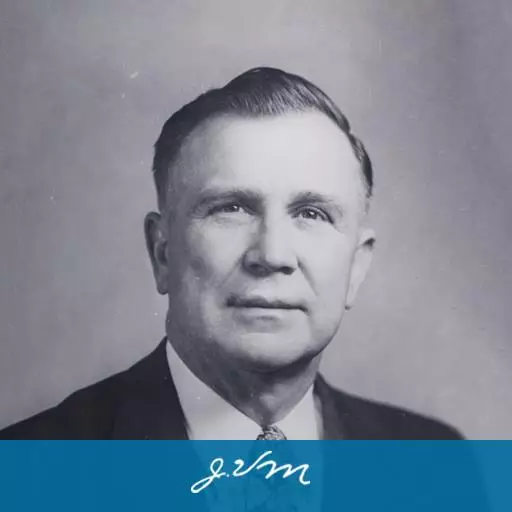
Welcome to the Sunday Sermon on Through the Bible. Long before Jesus spoke these words, King David wrote a Psalm that prophesied the same events and the results that would come from them. And that's what our teacher, Dr. J. Vernon McGee, is talking about in this message: "What is This World Coming To?" I'm your host, Steve Schwetz, welcoming you aboard the Bible Bus as we set off for another exciting adventure in God's word.
While you find your seat and open to Psalm 2, let's hear a couple of letters from folks here with us on the Bible Bus. First is an email. This is from a listener who doesn't share her name, but she's got a great story. "I first came to know about this program from a book by Dr. McGee that my sister gifted to me. Later, my husband gave me three others for Christmas. I came across the app while researching more about him. I can't put into words how much it has helped me to grow in my faith."
"My dad passed away two years ago, and he was my best friend and the glue that held our family together. I had been listening for several months before his health declined, and I know without a shadow of a doubt that I could not have had the strength to endure that time without my daily devotion to study and being in God's word. After my dad died, I went through a dark period where I couldn't focus enough to study, but I continued to listen to the Sunday Sermons. And now, two years later, I've gotten to a place where I can jump back on the Bible Bus. Thank you, team, for everything you do. This program has been and continues to be a journey of healing for me. God bless."
Grief can feel often like a long road, but I'm grateful that God's word is bringing you comfort. And we'll keep your seat warm right here on the Bible Bus for when you come back. Here's another note. This is from Catherine. "I stumbled on Christian radio station 99.9 FM, the Bible Broadcasting Network, on my car radio approximately five years ago. At some point later, I started listening to J. Vernon McGee, whom I remember hearing many years ago. I cannot get enough of his messages, and my husband is listening too every day. I turn on the radio to either the Sunday Sermon or the daily Bible study. We are big fans of the ministry."
"This is the first gift I am giving, but I plan to support monthly. I love to hear the stories of those who have come to Jesus from around the world, and I love to hear Dr. McGee's sound teaching of the word." Thanks for your encouragement, Catherine. We're grateful for your partnership in the gospel. If you'd like to join Catherine and other faithful Through the Bible friends in supplying a tank of gas or a new set of tires to keep the Bible Bus rolling along in more than 250 languages around the world, call us at 1-800-65-BIBLE or visit ttb.org anytime.
If you want to join thousands of others on our World Prayer Team as we travel the world on our knees, you can sign up in our app or at ttb.org. Let's ask the Lord's blessing as we study together. Father, thank You for Your word and the power it has in our lives. Thank You too, Lord, for Your promises that You will bless it as it goes out. And we're grateful that Your Spirit ministers to the hearts and minds of all who hear it. In Jesus' name we pray, amen.
Dr. J. Vernon McGee: Psalm 2. I like to think of it as a television program. And I recall that several years ago, in fact at the very beginning of television, we had a program in Southern California. And since we were so new at this new medium of communication, we asked a couple of Christian friends. One was the director of CBS for these situation-family-type programs, and the other was a cameraman of a local station. They came together and gave us some valuable advice. One of the things they said: "Do not use one camera, use two cameras, because you can't have a smooth program with one."
Well, I know they've come a long ways since those days. I notice some of the programs today have as many as five to seven cameras. Well, the Spirit of God used two cameras. And this is dramatic beyond any imagination of man. One camera's in Heaven and the other camera's on Earth. And the first camera on Earth comes on. And when it does, why, we hear the masses of the Earth. We hear little man speaking his little piece and playing his part. And as Shakespeare said, "strutting and puffing across the stage of life." Little man.
And then the camera on Earth goes off and the camera in Heaven comes on, and God the Father speaks. And then after He speaks, the camera shifts to His right hand and God the Son speaks. Then God the Son has His part. Then the camera in Heaven goes off and the camera on Earth comes on again, and God the Holy Spirit has the last word. Now we want to see that tonight. First of all, the camera on Earth comes on and we see the mankind. And he's put before us here in this question: "Why do the heathen (or the Gentiles) rage, and the people (or the masses) imagine a vain thing?"
And when it says "a vain thing," the word "vain" means empty. It means that this that has so enraged the Gentiles, and this that has brought together mankind in a great mass movement—and it's a great protest movement—that it will never be fulfilled. It'll never be accomplished. It's an empty thing that has brought mankind together. Well, what is it? Well, let's note further: "The kings of the earth set themselves, and the rulers take counsel together." That's the political rulers and then the rulers take counsel together, and that's the religious rulers.
And they are coming together now, and you find that those that are coming together, not only do you have mankind in this protest movement, but the establishment has joined in with it. Here are the rulers, both religious and political rulers that have joined together. Now, what is it? Well, it's against the Lord and against His Anointed. And the word "Anointed" here means Messiah. That's what it is in the Hebrew. And it's brought over in the New Testament as Christ or Christos. Here is a great worldwide movement that is against God and against Christ.
Now, when did this movement begin? Well, scripture lets us know about that over in the fourth chapter of the book of Acts, when the first persecution broke out against the church. We're told at that time that when the apostles—that is, Peter and John—they returned back to the church and reported to them. And verse 24: "When they heard that (that is the report), they lifted up their voice to God with one accord, and said, 'Lord, thou art God.'"
I'd like to pause there a moment tonight. I would say today that that's one of the things the church is not sure about tonight: "Lord, thou art God." And a lot of people are not sure about that. They're not sure He's God tonight. They wonder. May I say to you, the early church had no qualms or questions. "Lord, thou art God, which hast made heaven, and earth, and the sea, and all that in them is: Who by the mouth of thy servant David hast said, 'Why did the heathen rage, and the people imagine vain things?'"
That's quoted now here by the early church. "The kings of the earth stood up, and the rulers were gathered together against the Lord, and against his Christ." For of a truth—now here is the Spirit's interpretation—"For of a truth against thy holy child Jesus, whom thou hast anointed, both Herod, and Pontius Pilate, with the Gentiles, and the people of Israel, were gathered together."
Now here is this movement. It began, we're told now by the Spirit of God, it began back yonder when Pilate joined up with the religious rulers and Herod in order to put Jesus to death. And that is a movement that has been against God and against Christ that has come down through the centuries. And it's been snowballing as it has come down through the centuries, and it will break finally like a mighty crescendo upon this earth: a worldwide revolution against God and against Christ.
Now, somebody says to me tonight, "You really don't think that the world's moving in that direction?" May I say to you, I think it is. Someone comes to me and says, "Dr. McGee, you think the world's getting better?" and I say, "Yes, I do." And somebody comes and says, "Dr. McGee, don't you think the world's getting worse?" and I say, "Yes, I do." And somebody says, "What in the world are you trying to do? Go with the hare and the hounds? Go with the crowd?" No, both are true. And that's what the Lord Jesus said.
The Lord Jesus said that He's a sower. He's sowing seed in the world. Now He said an enemy came in and sowed tares. And the servants, they went in and they wanted to pull up the tares. When I entered the ministry, that's what I wanted to do. I was the best puller-up of tares you've ever seen, and I soon found out that we're not called to pull up tares. I sure found that out the hard way. But we're not called upon to pull up tares. That's the reason I don't try to straighten anybody else out. I'm having enough trouble with J. Vernon McGee, so I don't worry about the others.
He'll take care of that. But what He said was this: the wheat's growing, the tares are growing, and they're both growing together. He'll do the separation. He'll take care of that. So that today the good is growing. Did you know that there's more Bible teaching going out today than any period in the history of the world? The word is going out today more than it's ever gone out before. Wheat's growing. But I want to tell you, brother, the tares are growing also. Evil is growing, and there's an opposition against God and Christ today that's unbelievable.
I wish tonight I could spend time just on that particular facet of the enmity that we find today. Did you know that you and I have seen appear in our day, in our lifetime—I see a few of you that I think are as old as I am here tonight—we have seen appear in our day a nation whose basic philosophy, basic political economy is atheism? There's been nothing like that in the past. No nation of the ancient world, that great pagan world of the past, not one of them was atheistic. Somebody says, "I thought they were." They were the opposite. They were polytheistic. They worshipped many gods. None of them were atheistic.
You see, you're too close to the morning mass of revelation. Noah knew a man who knew Adam. When you're that close to it, you don't deny God. And in Noah's day, it was a world filled with violence, but there wasn't an atheist in the crowd. Why? Too close to it. You've got to come on down. Now when you get to the time of David, you meet atheists, and a great many atheists by that time. And David labels them though. He says, "The fool hath said in his heart, 'There is no God.'" Now the word for fool in the Hebrew there is "insane." The insane, the nutty individual is the one that's the atheist. Of course, he may be a PhD in a university, but he's the nutty individual. The Bible says he's insane. It's insane for a man to say that there is no God.
But you see, we've come a long way since David's day. When God gave the Ten Commandments, He didn't give any one of them against atheism. He gave two against polytheism. "Thou shalt have no other gods before me. Thou shalt not make unto thee any graven image, any likeness, heaven above, earth beneath, or beneath the earth, and so forth." Two commandments against polytheism, none against atheism. Why? There were none. You have to come to our day. And today they're beginning to emerge. There is opposition against Jesus Christ.
Oh, somebody says, "Wait a minute. I just hear many today talk about Jesus and how wonderful Jesus is." Had you ever stopped to think that the Jesus today of liberalism, the Jesus that the world thinks of, actually never lived? The Jesus of the Bible and the Jesus of liberalism are just two different individuals. And the Jesus of liberalism never lived. Let me give you an example of what I mean.
For many years when I was pastor downtown Los Angeles, there was the leading liberal, and he's the leading liberal I suppose in this country today—was for many years. But I had great respect for him. He was one liberal who was honest. He would just come out flat-footed. He didn't believe the Virgin Birth, he'd say. And if you don't believe it, I like for you to say it, not beat around a bush. And he just said he didn't believe in the bodily resurrection.
So at Christmastime, he had a question and answer program. I have a question and answer program. And people would feed questions into both of us to set us in opposition. And every year, why, we went through that same little ritual. I always enjoyed it. And so one time we were invited to a banquet, and I think this was done purposely. He was put right next to me at the banquet, or I was put next to him. I don't know which way it was. But we found ourselves together. I got there first, sat down. I saw his name there. And in a minute, he came in and I felt somebody put his arm around me. Put his arm around and he says, "You know, Brother McGee, you and I ought to be much closer together. We preach the same Jesus." And he sat down.
I said to him, "Are you sure we preach the same Jesus?" "Oh, don't we?" I said, "I don't think so." I said, "Let me ask you some questions." I said, "Does the Jesus you preach, was he Virgin Born?" "Oh," he said, "of course not." "Well," I said, "the one I preach is Virgin Born." And I said, "Does the Jesus you preach, did he perform miracles?" And he said, "I do not believe in miracles." "Well," I said, "the Jesus I preach performed miracles." I said, "Does the Jesus you preach, did he die for the sins of the world on a cross?" Well, he said he died on a cross, but not for the sins of the world. Well, I said the Jesus I preach died a substitutionary, vicarious death for the sins of man. And I said, "Do you believe that Jesus rose bodily?" "Oh," he says, "no, of course not." "Well," I said, "obviously then, you and I are not preaching about the same Jesus."
Now, I said, "I want to ask you a question." You see, these men, liberals, have called some of us fundamentalists intellectual obscurantists. Now, whatever that is, it's terrible. And so I said to him, I said, "Look, what are the documents, or where are the documents for the Jesus you preach?" And he laughed. He just laughed. Passed it on. "Oh," he said, "of course we don't have any." May I say to you, my friend, the Jesus that the world believes in today doesn't even exist. He never lived. The Jesus we preach is the Jesus of the Bible, and that's the one that there's opposition against in the world today. And so there is this tremendous buildup that will break like a mighty crescendo on this world of opposition against God and against Christ.
Now, how does it manifest itself? Well, it's manifesting itself just like He said it would. "Let us break their bands asunder, cast away their cords from us." "Let us break their bands." What are some of the bands God's put on the human family? Well, marriage is one. God has made marriage for the welfare of mankind. Whether you're Christian or not, God has given marriage to mankind. And today they want to get rid of it. And they are getting rid of it.
I was rather shocked two or three years ago. I'm a square. And so I was at this young people's conference and the sweetest little girl got up. We had a question and answer period. And she said to me, she says, "Dr. McGee, why does a young couple have to get married if they love each other? Why can't they just start living together?" Whoo! You know, I mean, I'm a square. I'm a backwoodsman. May I say to you, "Let us break their bands asunder." God gave marriage, and God intends for it to be followed. But they say, "Let us break their bands asunder." And then "cast away their cords from us."
Now, the Ten Commandments are cords. And somebody says that I believe you don't need the Ten Commandments. You're wrong. You're not saved by keeping them, because I tried it and it won't work. But I'll say this: may I say God gave them, and when they are thrown out the door today, and right now we're experiencing lawlessness in this country because of the fact that crime is not being punished. You see, we're living in a day. "Let us break their bands asunder. Let's cast away their cords from us. We want to be free and do as we please." God says you can't make it that way. It won't work. You've got an old evil heart, and it just won't work out that way at all. But that's the way mankind is moving today.
Now friends, this is disturbing as you look at this world. You and I live in a world in which there's—in the political world—is confusion. In the moral realm, there's corruption. In the spiritual sphere, there's compromise and indifference. And in the social sphere, there is comfort. This affluent society never had it so easy other than they want it more easy. We're living in that kind of a day. And it's disturbing. And I'll be honest with you, I do worry about it a little.
Now the question arises: How does God feel about this? I suppose that as God looks down at this little Earth tonight, that He's slipped over to the edge of His throne and He's biting His fingernails and He's saying, "Oh my, oh my, look down there. They just slipped away from Me and what in the world can I do now? There's nothing left for Me to do. They've just absolutely gotten away from Me." Is there that kind of a disturbance in Heaven? Of course not. May I say to you, there's perfect calm around the throne of God. God's not disturbed tonight. God's not biting His fingernails. He hasn't developed an ulcer. God is going on with His plan and program.
And listen now, the camera on Earth goes off, camera in Heaven comes on. "He that sitteth in the heavens shall laugh: the Lord shall have them in derision." Now, what kind of laughter is this? And let me say at the onset: it's not the laughter of humor. He's not being funny. Now may I say to you that there is humor in the Bible? There's a great deal of humor in the word of God. Those of you who go with us through the Bible know we find a lot of it. But this is not the laughter of humor. "He that sitteth in the heavens shall laugh." What is it? Well, it's just simply this. May I say to you: little man down here, parading up and down, shaking his fist in Heaven's face and saying, "Come on out and fight me, I'm against you." God looks down at that puny little creature. He could draw the atmosphere off this earth and kill the whole lot of them. He looks down and laughs. It's utterly preposterous. It's so ridiculous.
He that sitteth in the heaven shall laugh, the Lord shall have them in derision. My friend, it is insane to oppose the living and true God. A man must be mad that would do a thing like that. "Then shall he speak unto them in his wrath, and vex them in his sore displeasure." That is the judgment that is coming upon this earth. "Yet have I set my king upon my holy hill of Zion." And God is going forward to the accomplishment of His purpose, and what little man does down here won't detour Him, deter Him, or defer Him at all. God did not read anything in the morning paper, especially the Los Angeles Times, and I do think sometimes he does find things in there that he didn't know of before because of some unusual things. But God did not read anything in the morning paper, friend, He didn't already know about. There's nothing that has surprised Him at all.
And God is going forward to the accomplishment of His purpose. I believe He has a twofold purpose in this world. I think He has a heavenly purpose. I think He has an earthly purpose. Right now He's working on His heavenly purpose. The writer to the Hebrews expresses that: of "bringing many sons home to glory." And God today's calling out of this world a people to His name. That's His present purpose. But God has another purpose. And that is: "Yet have I set my king upon my holy hill of Zion." And God is moving forward today unaidingly, unhesitatingly, uncompromisingly to the establishment of that throne on which Jesus Christ will sit on this earth. And my friend, this idea—I hear folks say today—"if the Lord delay his coming." Where in the world did that get in? He's not delaying anything. He's going to come on schedule: His schedule, not mine, because I don't know when He's coming. But He's running on schedule, and nothing, nothing will stop Him. Nothing can cause Him to change His plans.
Now will you notice, the camera in Heaven shifts to God the Son on His right hand. Now listen to this: "I will declare the decree." Those of you that have studied theology know that the Lord Jesus executes all the decrees of God. "I will declare the decree: the Lord hath said unto me, 'Thou art my Son; this day have I begotten thee.'" Now Paul, when he preached in Antioch of Pisidia—I think he preached there one of the greatest sermons that we have recorded that he gave—and in that sermon, he says this: "God hath fulfilled the same unto us their children, in that he hath raised up Jesus again." Now he's talking about the resurrection of Jesus Christ. He's raised him up again, as it is also written in the second Psalm: listen to this, "Thou art my Son, this day have I begotten thee." The reference in the second Psalm is not to the birth of Jesus. He was never begotten. He is the eternal Son of God. And God the Father is the eternal Father. There is no time for a begetting. They were that throughout eternity. It's their position in the Trinity, and it hasn't anything to do with somebody being born. But it does have something to do with somebody being begotten from the dead. It has to do with the resurrection.
Now listen to this: "Ask of me, and I shall give thee the heathen for thine inheritance, the uttermost parts of the earth for thy possession." The scepter of this universe will be held by a man with nail-pierced hands. He's the one that's yet to rule. "Ask of me, and I shall give thee the heathen for thine inheritance." Now here is a verse that's been used in missionary conferences. I suppose that I have heard a dozen sermons on missions from this verse of scripture. Probably you have. The only thing is, this verse ought never to go to a missionary conference. Hasn't anything to do with it.
I remember listening to a graduate of Union Seminary, New York City. He brought a missionary message, he used this verse. I was then a student in seminary. That, as you can see, was a long time ago. And I went up to him afterward, and I did something as a seminary student that I think I've got more sense. I wouldn't do it today. What I did was very impolite, very rude. But I went up to him after he'd preached the message, and I said to him, "Doctor, why didn't you use the next verse?" He acted as if he didn't hear me. I'm sure he did. And he began talking with somebody there. And I said to him the second time, I said, "Doctor, why didn't you use the next verse?" And he turned his back on me, and he just ignored me. Well, I should have left, but I didn't. I walked around in front. And I said to him, I said, "Doctor, why didn't you use the next verse?" He looked me right straight in the eye. He says, "Because it would ruin a missionary sermon." And it sure would.
Notice the next verse, and it goes with it: "Thou shalt break them with a rod of iron; thou shalt dash them in pieces like a potter's vessel." Do you think that's the gospel of the grace of God we're to preach today? It is not. That's not the gospel we're preaching today. This hasn't any reference to His first coming. This is His second coming, when He comes to this earth to judge. And this is the way He's going to come. And He never asks me to apologize for Him, so I won't apologize. He says that He intends to come to this earth and put down the rebellion that's broken out in this earth, and He'll break them with a rod of iron. Maybe you don't like that, but you take it up with Him, because He said it and He is going to do it just that way.
Now I have a question to ask you if you think He ought to do it the way that some of these political leaders are talking about doing it today. Suppose Jesus came back to this earth tomorrow like He came 1900 years ago: the Man of Galilee, the Carpenter of Nazareth, the gentle Jesus. And He was that. Suppose He came back like that. Suppose He went to the Kremlin. I do not know who's keeping the store, but He'd go there, knock on the door of the Kremlin. And whoever keeps the store would come and say, "Yes?" He'd say, "I'm Jesus and I'm here to take over." What do you think? Hmm? You think they would say, "My, we've been waiting for you"? They'd have Him before a firing squad in the morning. My friend, how do you think He'd take over if He came to Russia today? He'd have to break them with a rod of iron, wouldn't He? And I think that's what He's going to do.
Suppose He went down to Rome. I went over the Tiber and I listened to a man over there speak. I couldn't understand what he was saying. I was told that he is telling the world how they ought to do it. He'd like to take over. Suppose our Lord would go and knock on the door there and this man with the long garment would come to the door, and the Lord Jesus would say, "I'm here to take over." "Now look, you've come a little soon, but I'm having trouble. I'm having trouble with some of my priests. They want to get married. But I'm going to work that out, you can be sure of that. I'm going to get all of this straightened out, and I don't need you." I don't think they'd want Him.
Suppose He came to this country. Suppose that He went to the Democratic headquarters or He went to the Republican headquarters. I'm not discussing politics. And He said, "I'm here to take over." And somebody says, "Oh, they'd take Him." Why don't they take Him then? They are not, because they won't have Him. My friend, He's going to come just like He says He's going to come. "Thou shalt break them with a rod of iron; thou shalt dash them in pieces like a potter's vessel." He intends to put down the rebellion when He comes to this earth the next time.
Oh, my friend tonight, this patsy way of thinking today—that our God is not going to judge. You and I are living in a world that's moving to judgment, and He's going to judge. The camera in Heaven goes off, the camera on Earth comes on. Now God the Holy Spirit speaks. And will you listen: "Be wise now therefore, O ye kings: be instructed, ye judges of the earth. Serve the Lord with fear, and rejoice with trembling." One of the most startling things that I've encountered in the past few years in studying the Bible has been little things like this. Have you ever noted how God in the history of this world has always gotten in a message to the rulers of this world? Always. No exception.
Always He gets a message in. Down yonder in the land of Egypt, ancient Egypt, there is a Pharaoh on the throne. There is a boy in prison, and God has kept him in prison because at the right moment, He's going to bring him out and make him the Prime Minister of the Pharaoh at one of the most crucial periods in the history of the world. Because that's the way God does it. Down yonder when the first great world power came into existence, Babylon, God put at the side of Nebuchadnezzar Daniel. And he not only became his Prime Minister, but he brought him to a saving knowledge of the living God. And he kept him there until Cyrus came to the throne, the Persian. And Cyrus even made his decree in the name of the living God. God's always had. "Be wise now therefore, O ye kings."
Napoleon, he said, "I'm a man of destiny." He said, "I was told that God raised me up." Interesting how God has got the word in. May I just say this in passing: I had heard that before the late Jack Kennedy went to Texas that he'd had an interview with Billy Graham for about three hours. And I hadn't been with Billy or had seen any member of the team for two or three years. And then I was in Florida winter before last in a banquet, and I sat right next to Grady Wilson. And I said, "Grady, I've been waiting to ask some of you that know about this: is it true that Billy had an interviewer with Jack Kennedy for three hours?" "Well," he says, "that part is true, but the time is wrong." He said, "He was with him eight hours." And they discussed—one of the questions was: "What's the difference between my church and your church? What is this that you preach about Jesus coming back again?" Those were some of the questions that were discussed. I don't know what it is, but God just had a way of getting a message in to the rulers of the world: those that are in high places. He's always managed to get a word in to them.
And He says to them: "Serve the Lord with fear, rejoice with trembling." Now listen: "Kiss the Son, lest he be angry, and ye perish from the way, when his wrath is kindled but a little. Blessed are all they that put their trust in him." "Kiss the Son." The late Dr. George Gaebelein used to tell us in class. He said, "Kiss the Son" is the Old Testament way of saying: "Believe on the Lord Jesus Christ, and thou shalt be saved." "Kiss the Son." Do you know who kissed Him? Judas kissed Him. "Kiss the Son."
And have you ever noted what our Lord said to Judas after he kissed him? Remember when Judas came out? He said, "I'll identify him by kissing him." And he came up and kissed the Lord Jesus. Have you noted what He said? He said to him: "Wherefore, friend, art thou come?" Isn't that interesting? He said, "Judas, you've just kissed me, and you've fulfilled prophecy, and you've satisfied all the theologians that are going to come along. And you are now free to turn and accept me, and turn that kiss of betrayal into a kiss of acceptance." You can do that, Judas. Believe on the Lord Jesus Christ, and thou shalt be saved. My friend, the Spirit of God today is in the world and saying to men and women: "Kiss the Son before it's too late. Believe on the Lord Jesus Christ before it's too late."
Because He's coming someday, and He's going to establish His kingdom here upon this earth. And He's going to rule, and He's going to put down all rebellion. And I want to close with this little incident. When I first went to Nashville, Tennessee as a pastor, some friends thought they were doing me a favor. They called me and they said, "We have tickets for the—I think it was the Philadelphia Symphony Orchestra's coming to town—and we want to take you as our guest." Now friends, you probably noticed I don't sing. I can't sing. And I help the music by always keeping quiet. I love music, but I don't know anything about it.
And I can't sing. We went in, took our seats. And in a few moments, there began to drift out from the sides the musicians. They were in shirt sleeves for the most part. And they went up to their instruments, and each one went up to his instrument and was tuning it. The fellow with that, you know, that big one you can't put on your chin? Back and forth he was—oh, it sounded terrible. And the other one with the little you put under your chin, he went up and down with that one. And it was—oh, it was terrible. And the ones with the horns—oh my, nothing was in harmony. It was terrible.
And then they, after they got through that kind of a disturbance, they all disappeared again. They went out through the wings, and another five minutes went by. And all of a sudden, the lights in the auditorium went off and the lights on the platform came on, and the musicians walked out. This time they had on their coats and my, they looked so nice. And each one came out and stood at his instrument or sat at his instrument. And then there was a hush in the auditorium. And a spotlight was put on the side, and the director stepped out. And when he did, there was thunderous applause for him, and he bowed. Then he came up to the podium and he picked up a little stick—the thinnest thing I've ever seen. And he took that little stick and he turned around again to the audience and he bowed, then he turned his back to the audience. And he lifted that little stick. And there was a hush that came over that auditorium; you could hear a pin drop.
And then he came down. And my friend, it was goose pimples all over me. I never heard such music in my life. Oh, what harmony! What wonderful harmony there was. I live in a world today where every man's tooting his own little horn. Every little group wants to be heard. Everybody wants to tell you what they think. Everybody is playing his own little fiddle. And I want to tell you, it's a medley today. Everything is out of tune. But one of these days, a spotlight's going on and He's coming. And when He comes to this universe, He's going to lift His scepter. And everything that's out of tune with Him is going to be removed. And then when He comes down, oh, the harmony there'll be in this universe. And I'm thankful tonight that I do live in a universe and I can bow to Him, and I can bring this little instrument of my body and my life into tune with Him. And I can bow to Him and I can acknowledge Him and I can make Him my Savior and Lord. I live in a world where He's rejected. I live in a world where the majority are not going with Him. I'm going with Him, and I'm going to bow to Him.
Steve Schwetz: We continue our five-year study in the word of God. To download our app, listen online, or see if your station carries Through the Bible, just visit ttb.org. If we can answer your questions about this fruitful ministry, would you call us? 1-800-65-BIBLE is the number. Or you can email us anytime: biblebus@ttb.org. And if you prefer to send your letter by mail, our address: Box 7100, Pasadena, California 91109. In Canada: Box 25325, London, Ontario N6C 6B1. And when you're in touch, would you share how you listen? Is it by app, or is it on the radio, or at ttb.org? You know, we'd love to know. So when you're in touch, would you tell us? This information really is a big help as we continue to take God's whole word to His whole world. I'm Steve Schwetz, praying Psalm 67 over us as we go: "God be merciful to us and bless us, and cause His face to shine upon us, that His way may be known on Earth, His salvation among all nations." Join us each weekday for our five-year daily study through the whole word of God. Check for times on this station or look for Through the Bible in your favorite podcast store, and always at ttb.org.
Featured Offer


Featured Offer
About Thru the Bible - Sunday Sermon
These Sunday Sermon messages form a collection of the most effective and fruitful sermons given by Dr. J. Vernon McGee during his 21-year pastorate (1949-1970) at the historic Church of the Open Door when it was located in downtown Los Angeles.
Other Thru the Bible Programs:
Thru the Bible - Minute with McGee
Thru the Bible - Questions & Answers
About Dr. J. Vernon McGee
John Vernon McGeewas born in Hillsboro, Texas, in 1904. Dr. McGee remarked, "When I was born and the doctor gave me the customary whack, my mother said that I let out a yell that could be heard on all four borders of Texas!" His Creator well knew that he would need a powerful voice to deliver a powerful message.
After completing his education (including a Th.M. and Th.D. from Dallas Theological Seminary), he and his wife came west, settling in Pasadena, California. Dr. McGee's greatest pastorate was at the historic Church of the Open Door in downtown Los Angeles, where he served from 1949 to 1970.
He began teaching Thru the Bible in 1967. After retiring from the pastorate, he set up radio headquarters in Pasadena, and the radio ministry expanded rapidly. Listeners never seem to tire of Dr. J. Vernon McGee's unique brand of rubber-meets-the-road teaching, or his passion for teaching the whole Word of God.
On the morning of December 1, 1988, Dr. McGee fell asleep in his chair and quietly passed into the presence of his Savior.
Contact Thru the Bible - Sunday Sermon with Dr. J. Vernon McGee
info@ttb.org
https://ttb.org/
Mailing Address
Thru the Bible, Inc.
P.O. Box 7100
Pasadena, CA 91109
In Canada:
Box 25325,
London, Ontario
N6C 6B1
Phone Number
(626) 795-4145 or
(800) 65-BIBLE (24253)