

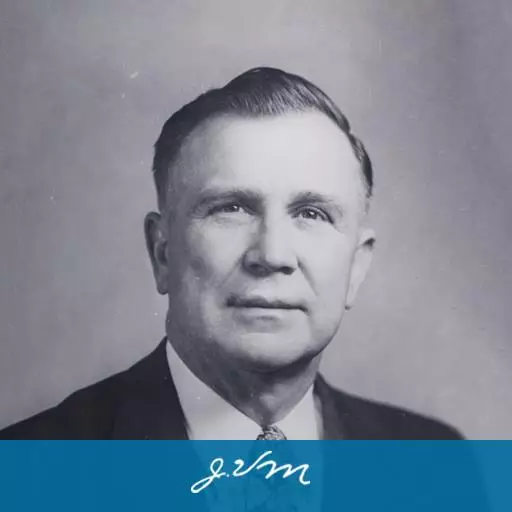
The Stranger of Galilee


What if Jesus stood right in front of you—and you didn’t know it? That’s the striking picture Dr. McGee draws in this message. Discover why people missed Him then and how we can experience Him fully now.
Steve Schwetz: Welcome to Thru the Bible on this glorious Resurrection Sunday. We're celebrating the moment that changed everything: the empty tomb, the risen Christ, and the living hope that anchors our faith.
I'm Steve Schwetz, inviting you to hop aboard the Bible Bus as our teacher, Dr. J. Vernon McGee, introduces us to someone that he calls "The Stranger of Galilee." Imagine this: the most important person you could ever know walks right past you, and you don't recognize him. Well, that's the tragedy the prophet Zechariah describes and the heartbreak of Jesus' first coming.
He came to his own people, but they didn't know him. Yet through his wounds, through his sacrifice, he opened the way for us to know him fully. Before we begin, I want to share a letter from a fellow listener in Kenya that reminds us of the saving power of the one who rose again for us. He writes:
"For most of my life, I've felt like a failure, especially in my struggle against sin. It haunted me and stole my joy, but through this program, God saved me. As I listened, I learned how to stand against sin, and God truly gave me the strength to overcome it. I'm a new person. I have a real peace and joy. I also learned from the example of the apostle John. When Peter denied Jesus, others pulled away from him, but John stayed."
"Many believers distance themselves from those who fall, and some never find their way back. John shows us a better way: to stand with one another, restore one another, and love like Jesus." What a great reminder on this Resurrection Sunday of our Savior who still makes all things new. Let's pray together as we begin.
Heavenly Father, on this resurrection morning, would you open our hearts to see Jesus more clearly, and help us to grasp the depth of his love, the power of his sacrifice, and the hope that we have because he lives? Teach us through your Word, Lord, and draw us nearer to the risen Savior. In Jesus' name we pray, amen.
Here's Dr. J. Vernon McGee with the Sunday sermon on Thru the Bible.
Dr. J. Vernon McGee: Our subject this morning is "The Stranger of Galilee." And the launching pad on which we shall take off today, the first two are found in the 13th chapter of Zechariah, verses 6 and 7: "And one shall say unto him, What are these wounds in thine hands? Then he shall answer, Those with which I was wounded in the house of my friends. Awake, O sword, against my shepherd, and against the man that is my fellow, saith the Lord of hosts: smite the shepherd, and the sheep shall be scattered: and I will turn mine hand upon the little ones."
And then back in chapter 12, verse 10: "And I will pour upon the house of David, and upon the inhabitants of Jerusalem, the spirit of grace and of supplications: and they shall look upon me whom they have pierced, and they shall mourn for him, as one mourneth for his only son, and shall be in bitterness for him, as one that is in bitterness for his firstborn." Mistaken identity has been the source of plots of writers for both comedy and tragedy.
But this becomes even more tragic when it moves out of the storybook world of myth and comes into real life. I read of a mother some time ago who had not seen her daughter for 17 years. Both of them were among the displaced persons after the war in Europe, and the daughter had been taken from the arms of the mother when she was a baby. She hadn't seen her in 17 years. The girl was almost 20 years of age—18 or 19 years of age.
And so the mother heard that she was coming to this country, and she'd have an opportunity to see her. She was so anxious to see her; she spent all the savings she had to get to New York City. She was there when the ship docked, but when the girl came down, she did not know her. She went right by her, almost touched her sleeve, and did not know the girl. And they got separated again, and newspaper reporters became interested. It was not until both got to Chicago were they able to get mother and daughter together.
This business of mistaken identity can cause great tragedies, but the greatest tragedy of the ages is expressed in 11 words in the 11th verse of the first chapter of John: "He came unto his own, and his own received him not." And John the Baptist elaborated upon that a little farther on in this first chapter of John when he says, "John answered them, saying, I baptize with water: but there standeth one among you, whom ye know not."
How tragic to have one that is so important to know, so important that it's life eternal to know him, and then to have him in your midst and not know him. How tragic that is. And our Lord at the conclusion of his ministry almost wailed when he says, "Because thou knewest not the time of thy visitation." And Paul later on could write, "But their minds were blinded: for until this day remaineth the same vail untaken away in the reading of the Old Testament; which vail is done away in Christ. But even unto this day, when Moses is read, the vail is upon their heart."
How tragic it is to have somebody in your presence right before you and it's important to know him, and then to have an iron curtain let down and you do not know him at all. Zechariah is the prophet that emphasized the fact that when he came the first time, he was not recognized. He is the prophet who emphasizes the fact that when he comes the second time, he will be recognized.
In fact, it's Zechariah who by inference says that when he comes the second time, they'll know him, and they'll not know him as we sing, "I shall know him, I shall know him, by the print of the nails in his hands." They will wonder about those nail prints and ask the question, "Where did you get those?" And what an amazing thing it will be in that day. It is Zechariah who tells us that the remnant are going to express amazement and they're going to mourn because of him when they see him at his second coming.
Zechariah sets before us the fact that redemption is the high word at the first coming of Christ and that revelation is the high word at the second coming of Christ. He says that at the first coming of Christ the emphasis is reconciliation; at the second coming, it's recognition. At the first coming of Christ, it's the incarnation that's in the foreground; in the second coming, it's identification. The first coming, it's the mystery; the second coming, it's the manifestation. In the first coming, there was propitiation for our sins; in his second coming, there is the proclamation of all that he is.
Notice this morning these two. We have first of all redemption, but not revelation at his first coming. It's important to notice this and I'm turning to the 13th chapter now, the sixth and the seventh verses: "And one shall say unto him, What are these wounds in thine hands? Then he shall answer, Those with which I was wounded in the house of my friends. Awake, O sword, against my shepherd, and against the man that's my fellow, saith the Lord of hosts: smite the shepherd, and the sheep shall be scattered: and I'll turn mine hand upon the little ones."
There are those today who discount verse six as a reference to the first coming of Christ. In fact, they say that verse six does not refer to him at all. The higher critics in the school of unbelief were the first ones, of course, to call attention to that. And there is a higher criticism that's very valuable in the study of the Bible. Unfortunately, the unbelievers have been in the vanguard and have been those who have not only led in but followed and have pushed a higher criticism.
Unfortunately, some good men have followed these critics. We live in a day when there is an overweening desire to appear as a scholar. I was amazed to meet with a fellow with whom I was in seminary and find out that he's passing in a certain area in the East as a scholar. Several of us pulled him through Greek, and he today is passing as a scholar. There is a desire today among many ministers to appear intellectual. And you can be sure of one thing: when a person is trying to be a scholar and trying to be intellectual, they don't quite make the grade.
Many Bible schools today become nothing in the world but diploma mills. A degree can't cover up ignorance. If you had all the degrees in the world and you were ignorant, you'd still be ignorant after you got the degrees. I believe sincerely with all my heart that verses six and seven belong together and that they definitely refer to the Lord Jesus Christ. Dr. Pusey, one of the great scholars of the past, said the words are simple; meaning is different. And how true that is.
This morning, I prefer to refer these words here in verse six to the Lord Jesus Christ. And when this question is asked, it'll be asked of him the second time: "What are these wounds in thine hands?" Then he shall answer, "Those which I was wounded in the house of my friends." I can't believe that would refer to false prophets and prophets of Baal. I cannot accept that, especially when I find other scripture like that glorious 22nd Psalm which sets forth the crucifixion of our Lord, and in that you see a clearer picture of Christ than you even find in the Gospels of his crucifixion.
Where he is speaking and you see what goes on in his heart, and he says there in verse 16 of Psalm 22, "For dogs have compassed me: the assembly of the wicked have inclosed me." Then listen: "they pierced my hands and my feet." That, my friend, is certainly a picture of the crucifixion of Christ and it's a prophecy of him. And so here he's asked the question, "What are these wounds in thine hands?" What are they? And his answer first—for he gives a twofold answer—is, "These are what I received in the house of my friends."
Notice that for just a moment. Wounded in the house of those who loved me is a better translation. He doesn't say, if you notice, and the language is very exact—not by those who loved me. Because he was not crucified; those who loved him did not drive nails in his hand. It was those who hated him. He says, "They hated me without a cause." And those that were there—Roman soldiers and religious rulers and the mob beneath crying for blood—they hated him.
And when he says that I received these wounds in the house of those who loved me, it's not by those who loved me but in the house. It's the house of Israel. It's the house of Abraham. Abraham loved him. Our Lord Jesus said, "Abraham saw my day and rejoiced." Abraham loved him. Isaac loved him. Jacob loved him. Moses loved him. Moses says, "A prophet like unto me will the Lord God raise up unto you." And Moses spoke of him. Our Lord says, "Moses wrote of me." Moses loved him.
And David—oh, when the prophet Nathan told him, "David, God is going to bring one in your line, he's going to bless your house." And David, when he was an old man, David says, "God took note of me, and he said he'd send one in my line." And he says, "This only is my salvation, it's my hope, my one hope, one that's coming in my line." And little wonder that the New Testament opens, "The book of the generation of Jesus Christ, the son of David, the son of Abraham." David did love him.
So our Lord is saying here in answer at his second coming, he is saying to them, "These are wounds I received in the house of my friends." But he hasn't answered the question. He merely has said where they were applied. He says, "I was wounded in the house of my friends." But the question is, "What are these wounds in your hand?" He hasn't answered that in the sixth verse. And that's the reason that six and seven must go together because he answers it in the seventh verse. And will you notice it?
He says now—and listen to this, this is God the Father speaking—"Awake, O sword, against my shepherd, and against the man that is my fellow, saith the Lord of hosts: smite the shepherd, and the sheep shall be scattered: and I'll turn mine hand upon the little ones." Now he answers it. It's the Father now that's come forward and said, "Did you want to know about those wounds in his hands? I'll tell you. I'll tell you about those wounds in his hands. Awake, O sword, against my shepherd, and against the man who is my fellow."
The sword here is a symbol of something. Our Lord was not killed with a sword; he died upon a cross. The sword in scripture is a symbol of justice and of death. God again and again says, "I will send the sword upon my people." What does he mean? That he'll send judgment and a judgment of death, if you please. Interesting how God does not take the position of some folk today about capital punishment.
We got a lot of folk that have a soft heart and I'm afraid a soft head. They today say, "Oh, we should never use capital punishment." God says, "Awake, O sword, against my shepherd." It's the sword of justice and a judgment. He's speaking of his death, and it is God saying to it, "Awake." And back in the 22nd Psalm again, which is that glorious psalm of crucifixion that speaks of his death, in the 20th verse, our Lord there cries out on the cross, "Deliver my soul from the sword."
What did he mean by that? He's dying on the cross. He means that he's dying a judgment death. He means that he's being made sin for us, the one who knew no sin, and that he's bearing the penalty of sin and he's dying a judgment death. Listen to him. Listen to the Father. The Father says, "Awake, O sword, against my shepherd." And now listen to the Lord: "I am the good shepherd. The good shepherd giveth his life for the sheep."
The sword has waked up, the sword of justice. And I say it this morning reverently: but the sword of God's judgment against my sin is sheathed today in the breast of Christ. It'll never be lifted against me and it'll never be lifted against you if you've trusted him. It's sheathed in his heart. "Awake, O sword, against my shepherd." Listen to him again. I begin now to draw near to that garden, and I understand so little about the Garden of Gethsemane, but now I get near it and I hear him say, "The cup which the Father hath given me, shall I not drink it?"
And now I understand when he says, "Let this cup pass." It's the cup of judgment. But now he accepts it: "Not my will but thine be done." That is the token of obedience. "Awake, O sword, against my shepherd." That's the token of his obedience, and God spared not his own son but he gave him up freely for us all. What a picture. What a glorious picture that we have there. Our Lord said this using this very verse in Matthew 26:31: "Then saith Jesus unto them, All ye shall be offended because of me this night: for it is written, I will smite the shepherd, and the sheep of the flock shall be scattered abroad."
"I am the shepherd, and the sword has waked up, the sword of God's judgment." It pleased the Lord to bruise him; he hath put him to grief. And when God's judgment fell upon sin, it didn't fall on me; it fell on him, and he's my substitute. He died a substitutionary death for you and me. And that is the badge today of the Father's love. God so loved the world he gave his only begotten Son, that whosoever believeth on him might not perish but have everlasting life.
That sword is the fraternity pin of the Father's love for you and me. The sword of justice buried into the heart of Christ. And we have Peter on the Day of Pentecost giving the all-comprehensive statement of it when he said, "Him, being delivered by the determinate counsel and foreknowledge of God, ye have taken and by wicked hands have crucified and slain: whom God hath raised up, having loosed the pains of death: because it was not possible that he should be holden of it."
You did it, but it was the Father who had waked up the sword of justice. Sin must be dealt with, and he dealt with it there upon the cross—your sin and my sin. And he's dying a substitutionary death. What do those wounds mean in his hands? They mean that you and I will be presented someday without spot and without blemish because he bore the penalty of sin upon the cross. Now, will you notice he says something else here and these are startling, these are world-shaking statements.
Will you listen to him? Here he says, "And against the man that's my fellow, saith the Lord of hosts: smite the shepherd, and the sheep shall be scattered: and I'll turn mine hand upon the little ones." What a picture we have here. He says, "You smite if you please and the sword will wake up against not only my shepherd but against my fellow." And that means my equal. That means the Lord Jesus Christ when he came 1,900 years ago is unique.
Somebody put in my hand this morning—I don't think I have it in my pocket right now—yes, I do: the immaculate conception of Mary is a doctrine of the church. Mary was not conceived as Jesus was conceived. She was a sinner. She called him God her savior. She needed a savior like you need a savior and I need a savior. But the Lord Jesus Christ was unique. He's God manifest in the flesh. And when he came down here and even went to the cross, even when he had to cry out, "My God, my God, why hast thou forsaken me?" God could say then, "He's my fellow, he's my equal."
God was in Christ reconciling the world unto himself. He's my fellow, he's my equal. The early church fathers had a much stronger conception of this than we do today. Oh, I wish this morning that the church today could lay hold of these great truths as these early church fathers did and who Jesus really is. Do you know what they said about him? Athanasius, speaking of him on the cross, he says, "That's the body of God." That's too strong for today's pulpit, but it needs to be said.
That's the body of God that he died in. Tertullian said, "The passion of God." And then he said those who crucified him, they are murderers of God. Ignatius spoke of "the passion of Christ, my God." Will you hear me very carefully? Man killed God. He's guilty of deicide. You say that's too strong for me? I'll make it stronger. If Jesus Christ came back this afternoon and walked the streets of Los Angeles—God manifest in the flesh—before the sun went down, there would be a mob in Los Angeles to kill him.
Men today in sin, in rebellion against God, would kill God if they could. Satan tried to take his place and dethrone him. And man in the Garden of Eden and men today have attempted to get rid of him. They try to rule him out today; they try to run him out of town today. My friend, Jesus was God and they hated him, nailed him to a cross. But at that very moment, oh wonder of wonders, they did not know him, and yet it was God at that very moment putting his arms around those men and saying, "I love you enough to die for you."
Look now briefly at the second great truth that is here. We have in the second coming of Christ the revelation with redemption. We have here reconciliation with recognition. And I'd like to read to you this verse, the 12th chapter, the 10th verse. This is the day that's coming yet future: "I will pour upon the house of David, and upon the inhabitants of Jerusalem, the spirit of grace and of supplications: and they shall look upon me whom they have pierced, and they shall mourn for him, as one mourneth for his only son, and shall be in bitterness for him, as one that is in bitterness for his firstborn."
In that day, he says, "I will pour." Do you notice that? "I will pour" upon the house of David and upon the inhabitants of Jerusalem the spirit of grace. You find that is the figure that's used when he comes the second time in relationship to the Holy Spirit. God has never yet poured out his Spirit as he's going to do it in the future. It was said of the Lord Jesus, he gave to him his Spirit without measure. He hasn't to you and he hasn't to me.
You and I would not be able to contain it. We're told to be filled. We won't hold very much even if we were filled. The little girl prayed, "Lord," she says, "fill me with your Spirit. I can't hold very much, but I can run over a whole lot." That's what we need today is the flowing of the Holy Spirit through our hearts and our lives. And he says, "Yeah, I'll pour upon the house of David." It's the same picture in Joel, the second chapter, the 28th verse that's been so abused: "It shall come to pass afterward," that is the last days, "that I'll pour out my Spirit upon all flesh." That's never taken place.
"Your sons and your daughters shall prophesy, your old men shall dream dreams, your young men shall see visions: and also upon the servants and upon the handmaids in those days will I pour out my Spirit." But you and I living in a day—and it's always been true though for that matter—that you and I can never recognize him. We're as blind to him today as they were when he came, unless the Spirit of God opens our eyes. It's only as the Spirit of grace will open our eyes.
Listen to Paul when he mentions those things that come to us because we're justified by faith. Among them he says, "And hope maketh not ashamed; because the love of God is shed abroad in our hearts by the Holy Ghost which is given unto us." And you can take that love of God many ways. You and I can never love God or have that love manifested through us except by the Holy Spirit. That's only the work of God's Spirit, and it can only come to us through his grace and through his mercy.
When they crucified him there, beneath that cross, there were men who hated him, and they cursed him, they shot out the lip at him—those religious rulers. And I'm confident this morning that there stood there that day a young Pharisee by the name of Saul of Tarsus. He was in Jerusalem and he'd never stay home when his arch-enemy—the one he hated above everyone else—was being crucified. He was there for the show. He hated him. Paul says he obtained mercy.
Listen to this man when he's an old man. He's talking to a young preacher and he said to Timothy in 1 Timothy 1:12: "And I thank Christ Jesus our Lord, who hath enabled me, for that he counted me faithful, putting me in the ministry; who was before a blasphemer, and a persecutor, and injurious: but I obtained mercy, because I did it ignorantly in unbelief." Saul of Tarsus, who wrote of that vail, Saul says it was on my eyes. And there at the cross, I hated him. I shot out the lip at him. I cursed him. I was a blasphemer.
He was the chief of sinners. And then when he wrote to Corinthians, he says, "I was born out of due time, I was a miscarriage, I was born out of due time." Because he knew Zechariah and there's a day coming that when our Lord comes back the second time, when he comes at that time, these people who didn't know him will say, "What mean these wounds in your hand?" He'll say, "I received them in the house of my friends." And the Father will say, "He's my fellow, and you—you killed the shepherd and the sheep will be scattered. But even then, I'm going to pick up the little ones, the little lambs will not get lost."
"But now I'll pour upon the house of David, and I'll pour upon the inhabitants of Jerusalem the spirit of grace." And they'll see and they'll say to him, "Oh, we are sinners." Over the eyes of these people, that vail hung. Paul says blindness in part has happened to Israel. Do you think that the Gentile is not blind? Listen to Paul in 2 Corinthians 4:3 and 4. He says, "But if our gospel be hid, it is hid to them that are lost: in whom the god of this world hath blinded the minds of them which believe not, lest the light of the glorious gospel of Christ, who's the image of God, should shine unto them."
This morning, Satan's trying to put down over your eyes a blind; he's trying to blind you to Christ. Yes, he is. And many say, "I don't see him." Of course you don't see him. It's not because he's not there, your savior today who died for you; it's because you're blind. A story's told that years ago in a coal mine in West Virginia, there was an explosion way beneath the ground. The rescue team went to work frantically with the loved ones of those beneath. They were trapped down there, these miners.
And they dug to him, finally they got through. And just through far enough to begin to get water supplies and they made connection with the light bulb. And when they made that connection, that light bulb came on with all of its several hundred watts. And a young miner stood there, twinning his eyes and saying, "Why don't they turn on the light?" And all that were with him that had been trapped looked at him startled. The light was on. He had been blinded by the explosion. The light revealed that he was blind; it didn't blind him.
Christ is the light of the world. He wouldn't blind anybody. But my friend, this morning, if you say you can't see him as your savior, it's not because he's not; it's because you're blind. Men are blinded today by many different reasons. There are people today blinded by sin. I talked to a young man—and he's such a young man, but he's seen too much of this world. He said to me, "I've listened to you several Sundays and I'd like to do what you tell me to do, but I am too far in sin." Blind, blinded by sin.
Do you see him this morning and you say, "I can't see him, I'm blinded by sin"? There are those today that are blinded by self. I talked to a man several years ago; he was a Mr. Milk-toast type man, nice little fellow. He said to me, "Do you mean to tell me, Pastor McGee, that God would let me be lost? I never did anything that was wrong. I never did. I've never even had a traffic ticket." He says, "You mean God will not accept me?" Blinded by self. Oh, how many people blinded by self.
There are those today that are blinded by prejudice. Oh, I'm sorry for this. There are people that have come here and left because they are prejudiced. They say, "I think that they're hypocrites, and I don't like hypocrites." I have to say that you could only hide back of that which is bigger than you are. And if you are hiding back of a hypocrite today, it's because the hypocrite's bigger than you are. Oh my friend today, don't let them keep you from God. My friend, don't be blinded by hypocrites. That doesn't relieve you of your responsibility today.
There are those today that are blinded by resistance and hardness. They have resisted the gospel so long that it's like a shoe that pinches your toe; finally a corn appears. That's the protection that's been put up against it, and that corn says you won't worry me anymore. And there are people today that are listening to me that your heart's hardened to the gospel. The scripture says, "He that being often reproved and hardeneth his neck shall suddenly be destroyed, and that without remedy." It doesn't mean you'll walk out of here and step in front of a car.
But when you do go, my friend, you won't have a chance to turn then; it'll be too late. It means that the moment you least suspect it is the time you are going. If you think that somewhere down the line you'll make your decision for him, you're wrong; you're hardened. There are those that are blinded today by indifference, flippancy, cynicism. They again have heard it too often. There are folk that have been in the Church of the Open Door since the days of Dr. Torrey. And my friend, if you have, you've heard the greatest preachers of this generation, for they've stood in this pulpit.
Has your life been changed really? Or are you just indifferent to it today? Oh, are you blind today to the glories and beauties of Jesus Christ? Do you see him today? Can you see those wounds in his hands? And do you have to ask today, "What mean those wounds in your hand?" or can you say today, "He was wounded for my transgressions, he was bruised for my iniquities"? May I ask you the question today: are you blinded to him? Are you blinded to him? As you sit there this morning, would you like to just say this, go this far this morning: if the Spirit of God has somehow or another again knocked at your heart's door? And this morning you say, "I want to see him. Oh, I would like for my heart to see that he is the savior of my soul and my personal, oh my personal savior." My friend today, if you'll take that step, he'll meet you.
Steve Schwetz: To learn more about God's plan of salvation—that is, what it means to know Jesus personally and live with the hope of eternal life—I'd encourage you to click on "How Can I Know God" in our app or at ttb.org. There you'll find several free resources designed to walk you through the wonderful gift of God's grace. One of those is Dr. McGee's booklet, *God So Loved*. It's a simple but powerful explanation of John 3:16 that unpacks the depth of God's love for each one of us. It's yours anytime in our app or at ttb.org.
And don't miss the Bible Bus this week as we begin a brand-new journey through God's Word. We're only one message into our introductory series, *Guidelines for Understanding the Scriptures*, and soon we'll step right into the book of Genesis. It's the perfect time to join us. And if you want to be extra prepared, why don't you download your free *Bible Companion for Genesis* and bring it with you as we travel through the studies?
Whether you're studying alone or with a group, our prayer is that this companion would help you linger in God's Word, seeing more, understanding more, and loving him more. Again, the *Bible Companion for Genesis* is available in our app or at ttb.org, or call us at 1-800-65-BIBLE and we'll help you find it. And when you're in touch, tell us how you listen to Thru the Bible. Is it through the app, online, YouTube, or your favorite radio station? However you hop aboard the Bible Bus, this little bit of information really is a huge help as we follow God's lead in taking his whole Word to the whole world.
I'm Steve Schwetz, grateful to celebrate the risen Lord with you. May his grace and peace be with you until we meet again.
Join us each weekday for our five-year daily study through the whole Word of God. Check for times on this station or look for Thru the Bible in your favorite podcast store and always at ttb.org.
Featured Offer


Featured Offer
About Thru the Bible - Sunday Sermon
These Sunday Sermon messages form a collection of the most effective and fruitful sermons given by Dr. J. Vernon McGee during his 21-year pastorate (1949-1970) at the historic Church of the Open Door when it was located in downtown Los Angeles.
Other Thru the Bible Programs:
Thru the Bible - Minute with McGee
Thru the Bible - Questions & Answers
About Dr. J. Vernon McGee
John Vernon McGeewas born in Hillsboro, Texas, in 1904. Dr. McGee remarked, "When I was born and the doctor gave me the customary whack, my mother said that I let out a yell that could be heard on all four borders of Texas!" His Creator well knew that he would need a powerful voice to deliver a powerful message.
After completing his education (including a Th.M. and Th.D. from Dallas Theological Seminary), he and his wife came west, settling in Pasadena, California. Dr. McGee's greatest pastorate was at the historic Church of the Open Door in downtown Los Angeles, where he served from 1949 to 1970.
He began teaching Thru the Bible in 1967. After retiring from the pastorate, he set up radio headquarters in Pasadena, and the radio ministry expanded rapidly. Listeners never seem to tire of Dr. J. Vernon McGee's unique brand of rubber-meets-the-road teaching, or his passion for teaching the whole Word of God.
On the morning of December 1, 1988, Dr. McGee fell asleep in his chair and quietly passed into the presence of his Savior.
Contact Thru the Bible - Sunday Sermon with Dr. J. Vernon McGee
info@ttb.org
https://ttb.org/
Mailing Address
Thru the Bible, Inc.
P.O. Box 7100
Pasadena, CA 91109
In Canada:
Box 25325,
London, Ontario
N6C 6B1
Phone Number
(626) 795-4145 or
(800) 65-BIBLE (24253)