

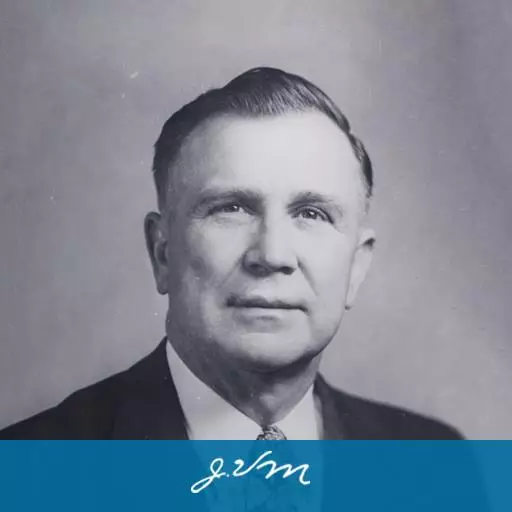
The New Testament Church


What is the New Testament Church? Can we find it in the in-fighting of the Corinthian church or the legalism of the Galatian church? Or is it something else altogether?
Steve Schwetz: What if Jesus showed up at your church this Sunday? Can you picture it? He walks in the main door, maybe says hi to a couple of people, and gets a bulletin and takes a seat in a pew near the back. Nobody really notices him. And after he's gone, you hope the visitor felt welcomed, but you probably don't really give it much more thought. And then the next week, your church receives a letter from Jesus himself telling you what he saw and heard while he sat among you.
Welcome to the Sunday Sermon on Thru the Bible. What I've just described isn't all that far-fetched, really. In fact, this message from Dr. J. Vernon McGee is about Jesus' personal letters to seven New Testament churches mentioned in Revelation. They're his love letters to the early church, sometimes praising, sometimes correcting, sometimes warning. Mostly likely, one of those letters could be written to your church. At best, these seven letters are a great tool to evaluate the practices and heartbeat of our churches today.
Dr. McGee titled this message simply, "The New Testament Church." And it's important to say that for as many ways that God speaks into our lives today, he has a unique and special priority for his church. On behalf of Thru the Bible, let me encourage everyone listening to find a church where you're taught and challenged through God's word and where you can be known and loved by God's people. If you only listen to Thru the Bible, that doesn't fill those needs. You won't find a perfect church, so don't look for that, but it's so important to be a part of a body committed to following Jesus together.
Now, let's pray as we open God's word. Heavenly Father, thank you for your invitation to renew our love for you. Fill us with a longing to be in your presence and love you more and more each day. We ask this in Jesus' name. Amen. Here's the Sunday Sermon on Thru the Bible with Dr. J. Vernon McGee.
Dr. J. Vernon McGee: Our subject this morning is the New Testament church, and we want to turn this morning to the Epistle to the Ephesians. It's the second chapter of Revelation where we are looking at the true Epistle to the Ephesians. Or if you want to put it in other language, there are two epistles to the Ephesians. Actually, the epistle that we have of Paul's that is written to the Ephesians, in the better manuscript, the expression "in Ephesus"—that is, in Ephesus—is not there. It was penciled in apparently because it was a circular epistle.
It was probably the one Paul referred to in Colossians when he speaks of the epistle to the Laodiceans. And it is an epistle that evidently was intended to make the rounds there in the province of Asia where we have seven letters here in the second and third chapters of Revelation. And this epistle of Ephesians that we're looking at today is the first of seven letters to seven churches that our Lord addressed. They're love letters from him.
These churches were in the province of Asia, a proconsular province, not the continent of Asia, nor Asia Minor, but a section that took in at least one-third of Asia Minor. The interpretation of these seven letters in Revelation has been rather controversial. There has been an interpretation that's known as the contemporary. That is, that these letters were addressed to these seven churches, and they had application for that day and meaning, and they have no message or meaning for us today. That is, all of it has been fulfilled and now all that we have is just a historical document.
Then there are those that hold the composite interpretation. That is, that in these seven letters, you have messages to the churches of all ages; that there is something in each one of these letters for all churches of all time. Then there is the chronological interpretation, that what you have in these seven letters is the complete history of the church given in prophetic form when it was given. That you have, beginning with Ephesus, the New Testament church, and coming to Laodicea, the present-day modern church.
Anyway that you interpret this, and I think there's an element of truth in all of these views, but you have in the church at Ephesus, you certainly have one that represents the New Testament church regardless of your interpretation. Because if you say it was meant for just the church of that day, then that's fine. If you mean the chronological, then may I say it represents the first church and still the same one. So this morning, we're all in agreement that this letter is a picture of the New Testament church. And these churches were representative of the New Testament churches of that day.
To begin with, they were right in the heart of the Roman Empire, and they were apparently the most viral and vigorous churches of that day. Now let's come to Ephesus, for it represents today the New Testament church. Someone asks, "What was the New Testament church?" Well, here it is. We're going to look at it this morning. And this is our Lord's own picture of it. This is the early church. This is the church at its best. And it was in the city of Ephesus where you see religion at its worst.
Ephesus was the center of heathen idolatry. Pagan practices there were more degraded and lower than anyplace else. Ephesus has been called the Vanity Fair of Asia. Pliny, that great pagan, said it was the light of Asia. It was both a commercial and religious center and capital of that entire area. Kipling said East is East and West is West and never the twain shall meet, but he was wrong about the first century and he was wrong about Ephesus because in Ephesus, East and West mixed and mingled. The Occident and the Orient came together and threw up their worst.
In the city of Ephesus was the temple of Artimus, or as we have it in the scripture and in mythology, the temple of Diana. Great is Diana of the Ephesians. Her temple in Ephesus was one of the seven wonders of the ancient world. And friends, without a shadow of a doubt, this was one of the greatest buildings that's ever been on topside of this earth. It was the largest Greek temple that was ever constructed. It was 418 feet long by 239 feet wide. It had more than 100 external columns on the outside, 56 feet high, most of them were hand-carved.
This temple was burned to the ground the night Alexander the Great was born. Then they began to reconstruct it and it was 200 years in rebuilding. And this temple became a tremendous influence in the Roman Empire. Four times larger than the Parthenon. Made of Parian marble. Finally it was plundered by Nero and then destroyed by the Goths in 256 AD. It was built on artificial foundations of skin and charcoal, built on a marsh, and it was built that way to protect it from earthquakes. The doors were of hand-carved cypress wood. The staircase was carved out of one vine from Cyprus.
It was an art gallery. The finest works of that day were in that temple, the masterpieces of Praxiteles, Phidias, and Scopas were there. Apelles' famous painting of Alexander the Great hung in that temple. It was the bank of Asia. It was the bank in which all the nations and cities of that day deposited their money. And the most sacred idol of heathenism stood back of purple curtains. Great is Diana of the Ephesians. Diana was an Oriental goddess, and it's not the Greek one that we think of. This is the goddess of fertility. It's the most crude worship known to man.
She's the goddess that had many breasts. She holds in one hand a trident and in the other hand a club. This crude image stood in this glorious temple. And she was worshiped not only in Ephesus but afar. Her images were sent throughout the empire of that day. The worshipers indulged in the basest religious rites of sensuality. Wildest bacchanalian orgies took place that were excessive and vicious. And you talk about reading of the day, things that came out of that temple would make Lolita and On the Beach and Suddenly Last Summer look like one of the Rover Boys' books. It was vicious, vile.
When Paul was on his second missionary journey, he wanted to go to Ephesus, but the Holy Spirit of God restrained him and would not permit him to go. But on his third missionary journey, into this sinful sacristan came the brilliant apostle to the Gentiles. He spent three years altogether in that city. He spent two years in the school of Tyrannus there. Dr. Luke says from there sounded out the gospel throughout all of Asia. Paul had his greatest ministry in the city of Ephesus. He wrote to the Corinthians and said a great door and effectual is opened unto me and there are many adversaries.
After Paul's death, John the Apostle of Love came as pastor of the church. But he was not only an apostle of love, he was one of the sons of thunder and they exiled. This church had the privilege of having two of the greatest apostles as pastors. Now the Lord Jesus Christ speaks to this church in the midst of crass materialism, degraded animalism, base paganism, and dark heathenism. And it's in that kind of a backdrop that this lovely message comes. Now this is a typical New Testament church. This is the church at its best in Ephesus.
Will you look at it? "Unto the angel of the church of Ephesus write; These things saith he that holdeth the seven stars in his right hand, who walketh in the midst of the seven golden candlesticks." In that first glorious vision of Christ, we see the Lord standing in the midst of these lampstands. Here, he's walking up and down, for in that New Testament church, he had freedom. And he's going up and down inspecting these churches, if you please. And he's welcome in the church. He's walking to and fro in the midst of the lampstands, and he stops before the lampstand that's marked Ephesus.
Now will you notice what he says? "I know." And that's not new because that's what he says to all seven of the churches. "I know." That's the formula for all seven of these churches. He says to each one of them when he begins, "I know. I know. I know. I know. I know. I know. I know." And my friends, he knows this morning. He knows. He knows the church. He's interested in the church. He's concerned about the church. And he knows the church. Now will you notice we find here the procedure and the protocol that's used in all of these messages.
We find that there's first a word of commendation. There is a word of condemnation. That's true of all but two churches. That is the next church we'll look at, which will be Smyrna, and the church of Philadelphia. He found nothing in those churches to condemn. But in all the others, he first has words of commendation and then a word of condemnation. Now will you notice with me this morning his word of commendation of this church? There are seven good and outstanding features which mark the New Testament church that are given to us here. Will you notice them?
First, "I know thy works." He says, "I know thy works." Now he says it to all of the churches. If you will examine carefully, he says to each one, "I know thy works. I know thy works." Here it's good works. When we get to Laodicea, it's bad works. But here we have good works. And I want to be very careful this morning, the Lord Jesus Christ is only speaking to his church. He's only speaking to believers. He's not speaking to unbelievers here at all. For God is not talking to the lost world about works. Not at all.
God has the world this morning shut up to a cross, and he's not asking any lost man to do anything. God's not asking any lost man to do a thing. Lost. Will you listen to him very carefully in this connection? Paul writing to the Romans in the fourth chapter, the fifth verse, "But to him that worketh not, but believeth on him that justifieth the ungodly, his faith is counted for righteousness." I've been 11 years chipping at this old stone, that we're all ungodly. I shall continue, even if it sounds repetitious. You and I stand before a holy God today ungodly sinners.
The only way he's ever seen us. "To him that worketh not," and God is not asking an ungodly sinner to do anything. But he is saying to believe. "To him that worketh not, but believeth on him that justifieth the ungodly, his faith is counted for that which it's not. It's counted for righteousness." God saves you because you trust Jesus Christ and that only. Now the Lord Jesus Christ is talking to those that have already trusted his son. They are now saved sinners. And now he's talking to them about one thing and one thing alone, and that is works, good works, please.
It's all he talks about in these seven letters. "I know thy works." That's what he's looking for in his church, works. "For by grace are ye saved through faith; and that not of yourselves: it is the gift of God: not of works, lest any man should boast." Now Paul wrote that to the Ephesians, but he didn't stop there. Will you listen to him? "For we are his workmanship," his poiema, his poem, "created in Christ Jesus unto good works, which God hath before ordained that we should walk in them." You see, Paul wrote to the church in Ephesus and said he saved you by faith, without works.
It's by his grace and not your works, but he saved you unto good works. Will you listen to him as he speaks to a young preacher by the name of Titus? He says it's not by works of righteousness which we've done but according to his mercy he saved us. And then he kept on talking, and he said this, "This is a faithful saying, and these things I will that thou affirm constantly, that they which have believed in God might be careful to maintain good works. These things are good and profitable to men." Now God saves us by faith. After that, he talks to us about good works.
And Paul even began to measure those that profess to be Christians by that standard. He wrote to another young preacher, Timothy, in Second Timothy 1:9. He says, "Who hath saved us, and called us with a holy calling, not according to our works, but according to his own purpose and grace, which was given to us before the world began." So we're told here that we are saved in order that there might be good works. And when our Lord wrote to the church in Ephesus, he says, "I know your good works." The New Testament church had good works.
And that means they were not works of the flesh. That means that these works that they were producing were the fruits of the Holy Spirit. Listen to the writer to the Hebrews in 9:14, "How much more shall the blood of Christ, who through the eternal Spirit offered himself without spot to God, purge your conscience from dead works to serve the living and true God?" Not dead works, not works of the flesh, but the Holy Spirit was producing in them the fruit of the spirit, which is love, joy, peace, longsuffering, and so on.
Again and again Paul says that we are to adorn the doctrine of God our savior in all things. That we're to be ready for every good work. A Christian should be like a good watch: all gold, open face, well regulated, dependable, and filled with good works. The Lord Jesus says, "I know thy works." The second thing that he mentions is, "I know thy labor." Now the labor here is not just another word for works. It doesn't have anything to do with service. It has to do with the person, not his works at all.
It has to do here with the individual. And the word has really two meanings. It has the meaning of weariness. "I know thy labor." You remember it says in the fourth chapter of John's gospel, Jesus being wearied with the journey, he sat down. Our Lord had been so busy with the multitudes and the crowds and now he's gone through Samaria and it's a hot day. He sits down at the well because we're told he was wearied with the journey. This church in Ephesus grew weary in Christian work. They were tired. They were exhausted.
They knew what fatigue was. Do you know what it is to really work for God? We think working for God means to put on our Sunday clothes and come and sit down and have a good time, generally stick our feet under the table for somebody's banquet. That's not Christian service. That's not what the church in Ephesus had. They had labor. The Lord Jesus says, "I know how weary you get. I know how tired you are." There's another prong to this word. It means suffering. We haven't come to the martyr church yet, but it doesn't make any difference whether you're in the period of the martyr church or not.
"If any man will live godly in Christ Jesus, he shall suffer persecution." This church knew what it was to suffer persecution. That's a second mark that our Lord noted. The third thing that he says here, "and thy patience." Now patience is the fruit of the Holy Spirit. It's the longsuffering. But you know God gives us certain fruits of the Spirit if we're filled by the Spirit. He gives them directly to us. Others he works in us. And patience comes through suffering always. He never yet has made a believer patient just arbitrarily.
Man says, "I prayed for patience," and God sent me trouble. Well, God was going to make him patient. God was hearing and answering his prayer. And you'll notice Peter and James both mention that one of these graces develops another grace and so on. Then there is a fourth thing that he mentions here, "and how thou canst not bear them which are evil." This church could not bear evil men. And the word "bear" here is the same word where the Lord Jesus went forth bearing his cross. This church could bear a cross, but it would not bear evil men.
It had no patience with evil men. Isn't it interesting our Lord says, "I know your patience," but I also know that you're not patient with evil, with evil men. Now today, we think we manifest a marvelous Christian virtue if somebody is sinning and we shut our eyes and say, "Are we going to be broad-minded. We're going to shut our eyes to that, and we're going to ignore that." This church had spiritual discernment, and it could tell when evil men came into their midst. The church today cannot tell.
You see Ananias and Sapphira couldn't live in the early church because the church was so holy. They get by today pretty well. A young preacher said to me, "I have a New Testament church." I said, "Has anybody dropped dead recently?" He said, "No, what do you mean?" Well, I said, "If you have a New Testament church, somebody's going to drop dead because this church had no patience with evil men." I wonder if you've ever noticed what the scripture says about this sort of thing? And it has a great deal to say about this sort of thing.
Over in the 16th chapter of the epistle to the Romans, in the 17th verse, I read, "Now I beseech you, brethren, mark them which caused divisions and offenses contrary to the doctrine which ye have learned; and avoid them." Paul says in this part of this epistle to the Romans where he's saying greet everybody, somebody may think that Christianity is just some sort of saccharine sweetness of a group of sob sisters. No, my friend. The believers are to have wonderful fellowship, but when somebody comes into your midst causing divisions, you're to withdraw from them.
That's very clearly stated in the word of God. Paul said to the Thessalonians, "I want you to mark those that are causing divisions in your midst, and I want you to withdraw your fellowship from them." My beloved, a man that is not loyal to Jesus Christ and not loyal to his church should never be put into an office in a church. He's a traitor to Christ, and he's to be avoided. Today the church does not exercise that kind of discernment. Doesn't withdraw from those that gossip and cause divisions in the church. You're commanded to.
The New Testament church, the church that would not bear with evil men. The fifth thing that he says that our Lord noticed in this church, "thou hast tried them which say they are apostles, and are not, and hast found them liars." There were men moving about in that day who were false teachers. They wanted the honor that came as an apostle. This church again had wonderful spiritual discernment. And this church loved apostles. This church was continuing in the apostles' doctrine. That's one of the marks of the New Testament church, it continued in the apostles' doctrine.
And this church loved the apostles. They'd had the Apostle Paul as their founder. They had had the Apostle John as their preacher. They loved apostles. And there came into their midst false apostles, and they knew them. When a preacher came into their midst and said "Shibboleth" and he had a tear in his voice and a pleasing personality and a basso voice and buttoned his collar in the back, they didn't take him in if he denied the virgin birth, if he said Christ was not God, if he said he couldn't believe the Bible was the word of God, if he did not believe Jesus was coming back personally.
They were not taken in in Ephesus. This is a New Testament church if you please. The sixth thing that he says here, will you notice it? "And hast borne, and hast patience, and for my name's sake hast labored." "Hast borne, and for my name's sake." Bearing the cross, their cross. And they preached Christ, and they preached the virgin birth, and they preached that hell was a reality, they preached there was a heaven to gain, they preached that men were saved by the blood of Christ. And they bore for his name's sake.
The seventh and the last word of commendation, "and hast not fainted." "Has not grown weary." I love this actually best of all. Do you know what this means? This means that here is a church that's filled with spiritual vigor and vitality and virility. Here is a church that's alive to God. Never had a Sunday school teacher come in and say, "Here's the literature. I'm through teaching. Nobody around here appreciates me." They didn't grow weary. Always looking to him. Spiritually alive unto God.
Dwight L. Moody once said, "I grow weary in the work, but not of the work." You see, he noticed their weariness, but now they don't grow weary. What's the difference? Well, they did get tired. Moody says, "I get tired in the work, but I'm not tired of the work. I like to keep going." A young preacher came in to talk to me the other day, says, "You know, I don't like to preach. It's so hard." I said, "Get out of the ministry, boy. Get out of the ministry." Oh, when this thing becomes that kind of a burden to you.
And don't do church work like that, friends. Our Lord notices that. "Hast not fainted." Oh, they had all the spiritual vitamins in Ephesus. Now these are the words of commendation. He has one word of condemnation for the church in Ephesus. Will you listen to it? "Nevertheless I have against thee," the object is this clause, "that thou hast left thy first love." Now honestly, that doesn't make much of an impression on us, does it? Does that impress you very much this morning?
"Nevertheless I have against thee, that thou hast left thy first love." I thought he was going to pick out something bigger than that. That seems so slight. That's a triviality. Is our Lord being petty and finding fault? No, my friend. This was where all the trouble began. "I have this against thee, that thou hast left," not permanently, thou didst leave thy first love. And the word "first" here means best. The father brought forth the best robe to put on the boy when he came home.
You've left your best love. What does it mean? It means, friends, that the most vital wonderful thing in any religion for that matter is love. That's the very heart of Christianity. Christianity is not a business transaction. I've been to a seminary that was orthodox, but it was so cold. Christ put on the barrel head his blood for my redemption. Is that true? That's true. But you haven't begun to tell the story when you say that. The reason he did it, he loved me and he gave himself for me. And John says we love him because he first loved us.
The church in Ephesus had an intense and enthusiastic devotion to the person of Christ, which only the Holy Spirit can bring to pass in believers. It was so intimate. It was so wonderful. It was so glorious. That the church today, the Laodicean church, knows nothing about it. The martyrs knew about it, and it's hard today to understand those martyrs who'd go in and just have him build a fire around them. And old Polycarp said, "I wish I had a hundred lives to give for him. He did so much for me." I must confess I don't understand that.
Love so amazing, so divine. Samuel Rutherford, his wife said, "I used to miss him at night. He'd get up out of bed." I found out after a while where he was. I go get his great big overcoat, I'd find him in his study kneeling at a rocking chair. Frozen to death and didn't even know it was cold, talking to him. Oh, how he loved him. David Brainerd, the missionary to the Indians. If you've never read his story, you ought to read it. Dying of TB, called consumption in that day. He tells about how he'd climb up on his horse, ride out through the woods to go to another Indian village.
And as he would ride, he'd grow so weak he'd just fall off, lie unconscious sometimes even in the snow. Come to, get back on the horse, and then go to prayer and ask Christ to forgive him for failing him. I don't think we know much about that today, do we? A little rain will keep a lot of folk away today. Doesn't take much in Southern California. Christianity's a love affair. I was up in New England years ago and two girls that worked in a textile mill, one had been transferred to another department and they hadn't seen each other in a long time.
In the meantime, one of them had quit and when they met on the street, one said to the other, "Are you still working at that old textile mill?" "Oh," she says, "no, I'm not working anymore. I'm married." Not working anymore? Why she was working harder than she'd ever worked before. At the mill, she only worked eight hours. She had to get up and cook his breakfast at 6 o'clock and no union will permit that. And she worked late at night. She cooked his meals and sewed up his socks. Says, "I'm not working anymore. I got married."
What a story. In the morning when he went to work, she held him in a fond embrace and she says, "I'll miss you all day." And everything she did during the day, she did for him. She prepared the meal that evening and as she prepared it, she looked down the road and in a little while, there he came. She went down to meet him. Then there came a day though, when she didn't tell him goodbye in the morning. There came a day when he started to work, he said, "I'm going to work." And a voice from upstairs says, "Goodbye."
And that night when he came in, nobody was looking for him and he came in, he said, "I'm here." She says, "Is that you?" My friend, the honeymoon is over when the voice comes from upstairs and says, "Is that you?" And the first love has been left. The best love has been left. And the honeymoon is over. The church in Ephesus was in danger of letting the honeymoon be over. The Lord Jesus says, "I've noticed that you don't love me like you did at first." That's the test this morning. That's the real test.
It's not how many committees you're on. It's not whether you're a member of this church or any other church. The whole question today is, do you love him? And he notices those things. "I have this against thee, that thou hast left thy first love." Now let me close quickly. What's the remedy? Well, the remedy's easy. "Remember therefore from whence thou art fallen, and repent, and do the first works; or else I will come unto thee quickly, and will remove thy candlestick out of his place, except thou repent."
Remember. Remember. Go back to those early days if you're really converted. Do you remember when you were first converted? I was not brought up in a Christian home. I never even saw a Bible in my home. I never shall forget the first time I went to a Bible study. Honestly, I don't understand some of you folks. Why, I couldn't wait to get there. Thrill it was, study his word. What a thrill. Let me confess, I ask him again and again to restore that thrill. And I have to keep asking him because I find that we're studying Revelation.
There's a danger. Do you love him today? Remember. Remember. Look back at your life. Second, repent. Repent means to turn and go back to him. He's waiting for you. I want to close this morning and I'm speaking to you here and to those of you that are listening in. Why don't you break the shell today of self-sufficiency and that crust of conceit and that shield of sophistication that you wear? That veneer of vanity, that false face and false front? Go to him and say, "Oh, I'm so empty on the inside. I'm so empty. I need reality. Lord Jesus, I cast myself on you."
And do you know? He'll put his arms around you. He said to the church, and I close. He says, "I'll come and remove your candlestick except you repent." He removed it. They left the first love. May God have mercy today on his church that's in a Laodicean period. My friend, you can't measure today how far we are from the church in Ephesus. The church that had so much and seemed to lack so little, but it was so important. "I have this against thee, that thou hast left thy first love."
This morning, I know hardly what to say at the conclusion of this message. If you have come in here today and you've not yet trusted him as your savior, there are only two things that I want to say. One is that he's not asking you to do anything but just believe in him, trust him. That's all. That's the first thing. And the second thing is, he wants you to know that he loves you. That's the whole story. "God so loved the world, he gave his only begotten Son, that whosoever," that's you, "believeth in him might not perish, but have everlasting life."
If you are here today a child of God, far from him, you can't honestly say this morning you love him. There's not that fire in your soul today. There's not that honeymoon love. Why don't you ask him to bring you back into that sweet, intimate, glorious, spirit-filled relationship and make this thing wonderful for you and not a drug, not a burden, not a duty? "I have this against thee, that thou hast left thy first love." Let's go back to Asia, province of Asia in Paul's day. Ephesus is gone. There's nothing there but shapeless ruins. That's all.
Nearby there's a Mohammedan village. And those that are there living in squalor and misery and there's not a believer that lives in miles of that place today. Just a stagnant and malaria-infested marsh and swamp. That's Ephesus today. And out of the oblivion over those shapeless ruins, I hear the echo: "I have this against thee, that thou hast left thy first love. Remember, repent, or I'll come and remove your lampstand." He removed it. They left the first love. May God have mercy today on his church.
Steve Schwetz: If you don't know Jesus Christ as your savior, don't let this opportunity pass you by. When Jesus died for you, he paid the debt created by your sin. The penalty that you owed, well, he paid it in full. And you can be forgiven of your sin and given a new eternal life in Jesus Christ. If you'd like to know more about this wonderful gift, just click on "How Can I Know God" in our app or online at ttb.org. There you'll find a handful of resources by Dr. McGee on how to have a relationship with God.
Or if you'd like to receive a couple by mail, call 1-800-65-BIBLE or write to Box 7100, Pasadena, California, 91109. In Canada, Box 25325, London, Ontario, N6C 6B1. If you already know the Lord Jesus as Savior, but your love for him has grown cold and you really wish that your passion for God was as strong as it used to be, as Dr. McGee said, tell the Lord that you want to have that sweet fellowship restored. You know, John promised in his letter that those who will confess their sins, God will forgive them and cleanse them from all unrighteousness. He's waiting for you to turn back to him.
Listen to this sermon again anytime on our app or at ttb.org. The study of the book of Revelation is one of our Thru the Bible family's all-time favorites. So join us for Dr. McGee's daily teaching on Thru the Bible. And we're only just beginning, so now is really the perfect time to jump aboard the Bible bus and journey through God's whole word with us. We're in for some great studies this week. Dr. McGee is just getting to the letters that Jesus addressed to the seven churches in chapters two and three, so you already have a head start.
Now, Dr. McGee's notes and outlines for Revelation are also a really big help in our study. So download our free digital book, Briefing the Bible, that contains all of them. Or call us at 1-800-65-BIBLE and we'll send you an abridged paperback copy by mail. I'm Steve Schwetz. For all of us at Thru the Bible, we're praying for you and pointing you to Jesus Christ, the great lover of our souls. As we go, I leave you with these words from Second Thessalonians 3:16. "Now may the Lord of peace himself give you peace always in every way. The Lord be with you all."
Featured Offer


Featured Offer
About Thru the Bible - Sunday Sermon
These Sunday Sermon messages form a collection of the most effective and fruitful sermons given by Dr. J. Vernon McGee during his 21-year pastorate (1949-1970) at the historic Church of the Open Door when it was located in downtown Los Angeles.
Other Thru the Bible Programs:
Thru the Bible - Minute with McGee
Thru the Bible - Questions & Answers
About Dr. J. Vernon McGee
John Vernon McGeewas born in Hillsboro, Texas, in 1904. Dr. McGee remarked, "When I was born and the doctor gave me the customary whack, my mother said that I let out a yell that could be heard on all four borders of Texas!" His Creator well knew that he would need a powerful voice to deliver a powerful message.
After completing his education (including a Th.M. and Th.D. from Dallas Theological Seminary), he and his wife came west, settling in Pasadena, California. Dr. McGee's greatest pastorate was at the historic Church of the Open Door in downtown Los Angeles, where he served from 1949 to 1970.
He began teaching Thru the Bible in 1967. After retiring from the pastorate, he set up radio headquarters in Pasadena, and the radio ministry expanded rapidly. Listeners never seem to tire of Dr. J. Vernon McGee's unique brand of rubber-meets-the-road teaching, or his passion for teaching the whole Word of God.
On the morning of December 1, 1988, Dr. McGee fell asleep in his chair and quietly passed into the presence of his Savior.
Contact Thru the Bible - Sunday Sermon with Dr. J. Vernon McGee
info@ttb.org
https://ttb.org/
Mailing Address
Thru the Bible, Inc.
P.O. Box 7100
Pasadena, CA 91109
In Canada:
Box 25325,
London, Ontario
N6C 6B1
Phone Number
(626) 795-4145 or
(800) 65-BIBLE (24253)