

The New Jerusalem, the Eternal Home of the Church


Ever wonder what heaven will really be like? Take a breathtaking look at the New Jerusalem—the place God is preparing for His people. It’s more than clouds and harps; it’s a real home filled with light, beauty, and the presence of Jesus Himself. No sin, no sorrow, no darkness—just joy, life, and the kind of hope that changes how you live today.
Guest (Male): Welcome to the Sunday sermon on Thru the Bible. If you've ever wondered how to stay faithful and joyful while waiting for Christ's return, Dr. McGee's message, "The New Jerusalem, the Eternal Home of the Church," will help. Let's pray and get right to our sermon.
Heavenly Father, thank you for the promise of eternity with you. Would you open our eyes to see your promises clearly and our hearts to trust you more deeply? In Jesus' name we pray, amen. Here's the Sunday sermon on Thru the Bible.
Dr. J. Vernon McGee: Now candidly, I'm very happy to come to the 21st chapter of the book of Revelation because at a time like this, we need to see a very wonderful picture, and there's a wonderful one coming up before us. Eternity is unveiled here in chapter 21. A new heaven, a new earth, and a new Jerusalem. A new era and the eternal abode of the Lamb's bride. And we will be then new creations in Christ Jesus without the old nature that manifests itself so much today.
Now let me come to the text itself. He says, "And I saw a new heaven and a new earth, for the first heaven and the first earth were passed away, and there was no more sea." This is quite interesting. John says, "I saw." And that's the oft-repeated statement of John to remind us that he was a spectator to all of these scenes. In other words, he's a witness to the panoramic final scene which ushers in eternity here. That's very important.
Now as the long vista of eternity is before us in this chapter, we've moved not only from time to eternity but to a new creation. A new heaven, a new earth, a new Jerusalem, great. And the redeemed have previously received glorified bodies like Christ. All things have become new, and a new universe suggests new methods and approaches to life. New laws will regulate the new universe. The entire lifestyle will change, and here are some of the changes that are suggested by these next two chapters. And I've listed here six of them.
Number one, there'll be the total absence of sin and temptation and testing in the new creation. This in itself makes a radical difference. And then the second, the New Jerusalem coming down from God out of heaven does not mean another satellite for the earth, but rather the earth and all of the new creation with all of the galactic systems will revolve about the New Jerusalem because it's the dwelling place of God and of Christ.
And then the third radical change, the law of gravity as we know it will be radically revised. There'll be traffic between the New Jerusalem and the earth. Now I do not think the earth dwellers, those saved in the Old Testament and in the great tribulation period and in the millennial period, are going to be able to leave this earth. But the church has already left the earth, and its dwelling place is the New Jerusalem. And I believe that we'll have entirely different bodies, and the law of gravity will not affect us.
Now the fourth great change, there'll be no sun to give light, for God himself will supply it directly to the universe. There'll be the absence, therefore, of night. And there's no night there because we just won't need that time to rest because we've got new bodies. Now the fifth, there'll be no longer any sea on the earth. The sea occupies most of the earth's surface today, approximately three-fourths of the total surface is water. Now this denotes a revolution in life upon the earth.
And there'll be no fish to eat, and apparently man will be a vegetarian, even in the millennium and in eternity as he was in the Garden of Eden. Fruit is the only diet of the eternal man. Then the sixth is the presence of Christ and God, together with the throne of God made visible, and it ushers in a new day for man and the new creation. Now in verse two, I read, "And I saw the holy city, New Jerusalem, coming down out of heaven from God, made ready as a bride adorned for her husband."
Now we come to the part that should interest us. This is where we're going to live. When you talk about going to heaven, what do you think about? It's to most people just the beautiful isle of somewhere. Well, it's a definite place. It's a city called the New Jerusalem. It's a planet within itself. Very candidly, very little is said in Scripture about heaven, but here it is. And that's the reason this ought to be important to us.
He says, "I saw the holy city, New Jerusalem, coming down out of heaven from God, made ready as a bride." Now I can't think of a lovelier description of this than that: a bride, made ready as a bride. This New Jerusalem shouldn't be identified, by the way, with the old Jerusalem, the earthly Jerusalem down here. May I say that this is the first time we get a glimpse of it. I think it's been around. The Lord Jesus said he was going 1,900 years ago to prepare a place for you, and he's been preparing this home for his bride, the church.
And it actually is the fulfillment of what Paul wrote in talking to the Ephesians. He says in the fifth chapter, beginning at verse 25, "Husbands, love your wives, even as Christ also loved the church and gave himself for it, that he might sanctify and cleanse it with the washing of water by the word." And I think that there will be at the judgment seat of Christ the straightening out and the judging of believers. Everything will have to be straightened out in their lives; everything that's wrong will have to be corrected and all sin will be dealt with there.
Rewards will be given out. And he's going to do something else. He's going to cleanse the church there with the word. You know the Word of God is a mighty cleansing agency, and it is today, "that he might present it to himself a glorious church, not having spot or wrinkle or any such thing, but that it should be holy and without blemish." Now this is the picture we're getting here in Revelation 21, that the holy city, the New Jerusalem, is coming down from God out of heaven and adorned as a bride for the husband.
You see the marriage took place before the millennium, and here we're after the millennium now, and this has sure been a long honeymoon, hasn't it? Well, I think it's one that's going to go on into eternity. Now will you notice, I come to verse nine, and we are told here in verse nine, "Come hither, and I will show thee the bride, the Lamb's wife." Now the appearance of this city is the quintessence of beauty, refined loveliness, and uncontrolled joy.
Lofty language describes her merits, and descriptive vocabulary is exhausted in painting her portrait. And the contemplation of her coming glory is a spiritual tonic for those who grow weary on the pilgrim journey down here. The New Jerusalem is really a post-millennial city, and that sounds strange coming from me, I'm sure. For she does not come into view until the end of the millennium and the beginning of eternity.
Now this city was evidently in the mind of Christ when he said, "I go to prepare a place for you," but the curtain does not rise upon the scene of the heavenly city until earth's drama has reached a satisfactory conclusion. Earth's sorrow is not hushed until the endless ages begin. Now the New Jerusalem will be to eternity what the earthly Jerusalem is to the millennium. The earthly Jerusalem does not pass away, but it takes second place in eternity.
Righteousness reigns in Jerusalem. It will dwell in the New Jerusalem. Imperfection and rebellion exist even in the millennial Jerusalem. Perfection and the absence of sin will identify the heavenly city. Just as a king's queen is of more importance than the place of his government, thus the New Jerusalem transcends the city of earth. This will cast no reflection on the earthly city, nor will it cause her inward pain. She can say in the spirit of John the Baptist, "He that hath the bridegroom is the bride."
Now will you notice here, the New Jerusalem is the eternal abode of the church. The New Jerusalem is the home of the church. It's the hometown of the church. This is a city toward which the church is journeying as she pitches her tent in that direction. Now we're to look at this home, and we're given the architect's blueprint here in this 21st chapter. "Come hither," he says, "I'll show thee the bride, the Lamb's wife." Now what follows is a description of the city.
We have seen the psychological or the spiritual aspects of it that are wonderful, and to me more wonderful than these physical, but believe me, these are worth contemplating. Now we must pause here to consider the relationship of the city to the citizens, the city proper to the church. Certainly we're not to infer that the empty city without the citizens is the bride. The citizens are identified with the city in the next chapter.
Those outside are identified here in chapter 21:8 as disenfranchised. Although a distinction between the bride and the city needs to be maintained, it's the intent of the writer to consider them together. Now this passage is a description of the adornments which reveal something of the love and worth that the bridegroom has conferred upon his bride. Now we read in verse 10, "that great city, the holy Jerusalem descending out of heaven from God."
Now certainly this city has no counterpart among earth's cities. They're built upon an earthly foundation, and they come up from the bottom. This city comes down out of heaven. She originates in heaven, and God is her architect—that is the Lord Jesus—and he's the builder. Although the city comes down out of heaven, there's no suggestion that she comes down to the earth. The earthly city never goes to heaven, and the heavenly city never comes to earth. Just how far down the city descends is a matter of speculation.
Now the passage of Scripture leaves the city hanging in midair. The New Jerusalem will either become another satellite to the earth or, what's more probable and I think is true, the earth will become a satellite to the New Jerusalem as well as the rest of the new creation. This chapter indicates that the city will be the center of all things. All activity and glory revolve about this city. God will be there. It'll be his headquarters, and his universe is theocentric, that is, God-centered.
The New Jerusalem is therefore worthy to merit such a preeminent position for eternity. Now let me read verse 11, "having the glory of God and her light was like unto a stone most precious, even like a jasper stone, clear as crystal." Now Paul instructs the believers to rejoice in hope of the glory of God (Romans 5:2). Now this hope will be realized in the holy city. Man in sin has never witnessed the revelation of the glory of God.
Now the experience of Israel in the wilderness taught them that each time there was rebellion in the camp, the glory of God appeared in judgment. But the manifestation of God's glory strikes terror to a sinful heart. But what glorious anticipation, to be able to behold his glory when standing clothed in the righteousness of Christ. Two wonderful facts make this city the manifestation of the fullness of God's glory.
The presence of God makes the city the source of glory for the universe. Every blessing radiates from this city. And second, the presence of the saints do not forbid the manifestation of the glory of God. Sin caused God to remove his glory from man's presence. In this city, all that's passed. Redeemed man, dwelling with God in a city having the glory of God as the grand goal, which is worthy of God. This city reveals the high purpose of God in the church, which is to bring many sons to glory.
Now the word translated "light" here, phōstēr, is the word for source of light. The city is a light-giver. It originates light and is the source of light, for the presence of God and Christ give explanation to this as he declared, "I am the light. I'm the light of the world," and God is light. The whole city is like a precious gem. This gem is likened unto a jasper stone. Now the modern jasper is multi-colored quartz stone, and the stone referred to here cannot be that, for this stone is not opaque.
Jasper could mean the modern opal, diamond, or topaz. And the stone is transparent and gleaming, which suggests one of these stones, most likely is the diamond. The diamond seems to fit the description better than any other stone known to man. And the similarity of the Hebrew word for crystal in Ezekiel 1:22 to the Hebrew word for ice helps to strengthen the view. The New Jerusalem is a diamond in a gold mounting. This city is the engagement ring of the bride.
In fact, it's the wedding ring. It's the symbol of the betrothal and wedding of the church to Christ. Now the wall and the gates. Notice here, I'm reading. The wall of a city is for protection, and I probably ought to go back and read for you verses 12 through 16. "And it had a wall great and high, and had twelve gates, and at the gates twelve angels, and names written thereon, which are the names of the twelve tribes of the children of Israel: On the east three gates, on the north three gates, on the south three gates, on the west three gates."
Now there are twelve gates to the city, three gates on each side. On each gate is the name of one of the tribes of Israel. Now this is very striking and suggests immediately the order of the children of Israel about the tabernacle. The tribe of Levi as the priesthood served in the tabernacle proper. Now the New Jerusalem is a temple or tabernacle in one sense, for God is there with man. The church constitutes the priesthood who serve him constantly. They serve as such in the city and dwell there as Levi did about the tabernacle.
Everything in eternity will face in toward this city, for God is there. The children of Israel on earth will enjoy the same relationship to the city that they did toward the wilderness tabernacle and later the city temple. This city will be a tabernacle to Israel. The children of Israel will be among the multitudes who come into this city to worship in eternity. They will come from the earth to bring their worship and glory.
They'll not dwell in the city anymore than they dwelt in the tabernacle of old. Those who actually dwell there will be the priests, who are the church. The church occupies the closer place to God in eternity, and the bride, like John in the upper room, reclines upon his breast. "Who is this that cometh up from the wilderness, leaning upon her beloved?" asks the Song of Solomon. Well, she's the bride, and she's come up from the wilderness, which is this present world.
But the twelve tribes of Israel will come up to the celestial city to worship three times. Tribes coming up on each of the four sides, and then they will return back to the earth after a period of worship. But the church will dwell in the New Jerusalem. Now I'm going to begin reading at verse 12 of chapter 21 of the book of Revelation, and I'm going to read my translation. Will you notice? Speaking now of the New Jerusalem, it's "having a great wall and high, having twelve large gates and at the gates twelve angels, and names are written thereon, which are names of the twelve tribes of the children of Israel: on the east, the dayspring, were three gates; and on the north, three gates; and on the south, three gates; and on the west, three gates."
"And the wall of the city had twelve foundations, and on them twelve names of the twelve apostles of the Lamb. And he that spoke with me had for a measure a golden reed to measure the city and the gates thereof and the wall thereof, and the city lieth foursquare, and the length thereof is as great as the breadth. And he measured the city with the reed twelve thousand furlongs. The length and the breadth and the height thereof are equal." In other words, it's a cube.
That is, these dimensions that are given are a cube. The shape of this city is really difficult to describe. I think due largely to our inability to translate our concepts from a universe of time to the new creation of eternity. The measurements of the city have given rise to all sorts of conceptions as to the size and shape of the city. I think first of all we ought to examine the size of the city. This is a city that's 1,500 miles on each side and going up.
How can you fit this into our concept today? The amplitude of the city is astonished when first considered, but is commensurate with the importance of the city. Certainly God as creator can never be accused of stinting, economizing, or doing things that reveal littleness. Anything God does, he sure does it in abundance. Now with a lavish hand he garnished the heavens with stellar bodies. Now this city bears the trademark of its maker. The Lord Jesus, the carpenter of Nazareth, is the one who built this city.
Now consider with me the shape of the city. "The city lieth foursquare." That's the simple declaration of Scripture. Now that would seem to indicate that the city's a cube with 1,500 miles on a side. We're accustomed to think of a sphere, that is a ball-shaped object, hanging in space because that's the general shape of the heavenly bodies. And cubes and pyramids are appropriate for earth's buildings, but they're impractical for space, as spheres are impractical for earthly buildings.
Yet it is definitely stated that the city is foursquare. Now I think the difficulty resolves when we think of the city as a cube within a crystal clear sphere. And what you have are the inside measurements, because I think of it as a big plastic ball. When I used to illustrate it, I had a big plastic ball, and I had put in it a cube that touched all corners. And that would mean that with 1,500 miles on the cube inside of the sphere, why it would mean that the circumference would be about 8,164 miles.
Now the diameter of the moon is about 2,160 miles, and that of the New Jerusalem sphere is about 2,600 miles. Thus the New Jerusalem would be about the size of the moon. In fact, it'll be larger, but it'll be a sphere as are the other heavenly bodies. And I personally believe that that is the picture that is given to us here and one that I think we should pay attention to. My thinking is that we live inside of this sphere, not on the outside. Now here on the earth we live on the outside, and that presents a few difficulties.
The Lord had to make the law of gravitation to hold us on the earth or we'd be flying out in space. Now this one will be a city in which you walk just the opposite of the way you walk here. You walk on the outside; there you'll walk on the inside. Now it is said that it's crystal clear. That is emphasized again and again, and the foundations are given to us of this city. This city has twelve foundations and the name of the twelve apostles on them, and that's important now for us to see.
Now the church today is built upon the foundation of the apostles and prophets, Jesus Christ himself being the chief cornerstone. Now that's what Paul said in Ephesians 2:20. Now Christ committed the keys into the keeping of the apostles. On the human level, the church was in the hands of these twelve men. Now to these twelve apostles were committed all the writings of the church. These men preached the first sermons, they organized the first churches, and they became the first martyrs.
And it's not honoring to Scripture to attempt to minimize the importance of the twelve apostles. In a real sense, they were the foundation of the church. To them the church shall be eternally grateful, and this is not to rob Christ of his place, for he is the chief cornerstone. But the church is built upon the foundation that the apostles laid. That's the important thing for us to do. Now these twelve foundations not only have the names of the twelve apostles, but they're twelve different precious stones.
The most beautiful and costly articles known to man are precious stones. These stones express in human terms the magnificence of the city. The superlative degree of gems is used to convey something of the glory of the city to those who now see through a glass darkly. We're going to see through it clearly someday. A close examination of these twelve stones in the foundation reveal a polychrome paragon of beauty, varied hues and tints, form a galaxy of rainbow colors.
The stones are enumerated as follows. Now I'm going to run through this list; I do not want to be wearisome, but this is important for us to see. Number one is the jasper. It is crystal clear, a reflector of light and color. And then the second foundation is a sapphire. That color is blue. The stone occurs in Exodus 24:10 as the foundation of God. And then the third is chalcedony; the color's greenish. It's an agate. Then the fourth stone is emerald, color's green.
And the fifth foundation is sardonyx; the color's red. The sixth foundation is sardius, color's fiery red. The seventh foundation is chrysolite; the color is golden yellow. And then the eighth foundation is beryl, and the color's sea green. And then the ninth foundation is topaz; the color is greenish yellow. And the tenth stone is chrysoprasus, and the color's gold-green. And then the eleventh foundation is the jacinth, and the color is violet. It's the color of the hyacinth.
And the amethyst is the twelfth foundation, and the color is purple. Now the foundations here of the New Jerusalem are constructed of the flashing brilliance of rich and costly gems. Now remember on the inside is Jesus, who when he was here was the light of the world, there he'll be the light of the universe. God the Father is there, and the light shining through that. Well, you see the New Jerusalem, and it's going to light up God's new heavens and new earth as they've never been lighted before.
I think it's going to be the most breathtaking scene that you've ever seen. It will be Jesus Christ, the light and power company then, and the light will shine out in all these brilliant and beautiful colors. I can't think of anything like this. And colors described to us today as dissected light, pass a ray of light through a prism and it's broken up into three primary colors: red, blue, and yellow. And from these three primary colors come all colors and shades of colors.
Light is a requirement for color. Where there's no light, there's no color. Now the New Jerusalem is a city of light and a city of color. God is light, and he's there. And all of this color will be coming out and flooding God's universe. And the New Jerusalem is there acting as a prism, but it would give every color and colors that you and I hadn't even thought of yet or couldn't even dream of. The New Jerusalem is a new planet, and it's inside of a crystal ball, and that's where we're going to live.
Oh, what a glorious place this is. Now I've probably upset you a great deal in giving this type of interpretation because as far as I know, I'm the only one that follows this. Now of course, if you want to follow all these other commentators and expositors, you would sure be in good company. But if you want a new look at the New Jerusalem, I think you'd like to go along with me, at least I hope so. Now the new relationship, God dwelling with man.
And I'm going to read here in verses 22 and 23 my own translation. I'm reading, "And I saw no temple therein, for the Lord God, the Almighty, and the Lamb are the temple thereof. And the city hath no need of the sun, neither of the moon, to shine upon it, for the glory of God did light it, and the lamp thereof is the Lamb." Now God lights the new creation directly by his presence. We called attention to that before without giving you the Scripture, but here it is.
Not only that, but we should have called attention to the fact that there was in the New Jerusalem the street of the city was pure gold as it were transparent glass. That's verse 21. And we were told at the beginning of that description that this city was transparent. That is the thing that gave me the lead and the key to believe that we live on the inside, and everything is transparent. And it would mean that the light would shine from the inside out and going through these different colored stones, every color known to man today but many colors that our natural eyes can't see today.
We'll be able to see them then with the new body that we shall have at that time. Now we're told here that the street was of pure gold, but it's transparent glass. And there are two things there that impress me. It's not streets; this is not a city with many streets. And it is transparent, even the street is. The asphalt, it is gold but transparent gold. Now that leads me again to insist that what we're looking at is the inside of a globe.
And you see this street, I would say, would begin at the four gates and then it would start around in the circle of the globe. And one would be an entrance, the other would be the exit, you see. So that you have here one street, and the fact it's transparent gold means that the light now can shine out. There'll be nothing that would hinder it, not even the street. But here that he said that he saw no temple in it because the Lord God is the light of it.
You see God lights the new creation directly by his presence. After the entrance of sin into the old creation, you remember God withdrew his presence and we're told and darkness covered the face of the deep. Then God made use of the physical lights in his universe, and he put them up like you put up streetlights today or lights in your home. However, in the new creation, sin is removed, and he becomes again the source of light.
And today the Lord Jesus Christ is the light of the world in a spiritual sense. He said in John 8:12, "Then spake Jesus again unto them, saying, 'I'm the light of the world. He that followeth me shall not walk in darkness but shall have the light of life.'" In the new creation, he is the direct physical as well as spiritual light. In the tabernacle, there was the golden lampstand which is one of the finest pictures of Christ. In the New Jerusalem, he is the golden lampstand.
The nations of the world will enter the holy city as the priest entered the holy place in the tabernacle for the purpose of worship. Nations of the earth as well as Israel will come to the New Jerusalem as the high priest of old entered the Holy of Holies. Instead of the blood being brought, why the Lamb is there in person. What a picture that we have there. Now that leads me to move over here to say something more concerning a city and about the fact there's no temple there.
Now the temple which supplanted the tabernacle back in the nation Israel was an earthly enclosure for the Shekinah glory. It was a testimony to the presence of God and the presence also of sin. Where sin existed, God could only be approached by the ritual of the temple. However, in the New Jerusalem, sin is no longer a reality. The actual presence of God with the redeemed eliminates the necessity for a temple.
Although the whole city may be thought of as a temple, some have called attention to the fact that the New Jerusalem is the same shape as the Holy of Holies in the tabernacle and temple where God dwelt, a perfect cube. And that's no accident, by the way. In the city of light, God is present; sin is absent. Therefore an edifice of a material substance is no longer necessary. The physical temple was a poor substitute for the person of God.
The New Jerusalem possesses the genuine article: God in person. It is probably the first place where God will make a personal appearance before man. And what a glorious prospect this is. Now the New Jerusalem is independent of the sun and moon for light and life. What a contrast to the earth today which is utterly dependent upon the sun. The one who is light will be there, and the effulgence of his glory will be manifested in the New Jerusalem unhindered.
What a picture we have. Now we have a new center of the new creation. Verses 24 through 27, and will you listen very carefully? "And the nations shall walk amidst the light thereof." It doesn't say they'll live there; they walk in the light of it. In other words, it'll give light to the earth instead of the sun and the moon. "And the kings of the earth bring their glory into it." Now that's my reason for saying that there will be a great deal of traffic commuting back and forth between the New Jerusalem and this earth down here.
But not only will Israel come up there to worship, but the nations of the world that have entered eternity, they will also come up. That'll not be their permanent abode, but they come up there to worship. And I believe that the church will be the priests at that time. We're told today that we are a priesthood of believers. Now we're told something else, "and the gates thereof shall in no wise be shut by day, for there shall be no night there."
It's nonsense to say that the gates will not be shut at night because there's no night, so he says they'll not be shut by day. In other words, they're going to throw the key away, and there'll be no danger. Gates were put there for a purpose, for protection. When the gate of a city was closed, it meant an enemy was on the outside and they were trying to keep him in that same position. But here we find "and they shall bring the glory and the honor of the nations into it, and there shall in no wise enter into it anything unclean, or he that maketh an abomination and a lie, but only they that are written in the Lamb's book of life."
Now God has apparently accomplished his original purpose with man, and that is fellowship. He now has a creature who is a free moral agent and who chooses to worship and serve him eternally. There can be no night since the Lamb is the light, and he is eternally present. The gates are not for protection as they were never closed; rather they're the badge, the coat of arms, of the church. If you notice that these gates are a pearl, and the pearl of great price has been purchased at a great price.
You see the pearl of great price in that parable that the Lord Jesus gave is that pearl is not Christ that the sinner buys, and of course what is a sinner to pay for Christ? He hasn't anything he can pay. It's the other way around. The fact of the matter is the merchant man that bought that was the Lord Jesus Christ, and the pearl is the church. And it's interesting that a pearl is formed by a grain of sand or something that gets into the life of a little mollusk, an oyster, something like that, and begins to put around it itself a secretion that before long makes a pearl.
And the church has the name there, the pearl of great price is margaritēs; the church has a name, that's her name, it's Margaret. And the Lord Jesus Christ paid a great price to buy this pearl. This pearl was formed from his side. Someone said, "I got into the heart of Christ through a spear wound." He was wounded, you see, for our transgressions, he was bruised for our iniquities.
And the church will be for display of his grace throughout eternity to his absolutely myriads of created intelligences. That's what we'll be. Paul says in Ephesians 2:7, "that in the ages to come he might show the exceeding riches of his grace in his kindness toward us through Jesus Christ." The ages to come, that is in eternity, you and I will be there on display, and they'll look at Vernon McGee and they said, "You see that fellow? He deserved hell.
The Lord Jesus Christ died for him and paid a tremendous price, and he trusted Christ, that's all he had to offer. And now look what the Lord Jesus has done for him." He's made him fit for heaven, made him acceptable in the beloved. And the church will be the fairest jewel of all when he makes up his jewels. You remember we saw back in Malachi the third chapter the day would come when he would make up his jewels, and when he does, why the church is going to be on display.
And that's the reason this'll be the center of the new heavens and the new earth. And the Lamb's book of life contains the names of the redeemed of all ages. No one who was not redeemed by the blood of Christ will be permitted ever to enter the portals of the New Jerusalem. There's a great gulf fixed between the saved and the lost, and the greatest joy that will capture the heart of the redeemed will be that of abiding in the presence of Christ for eternity, "for where I am, there ye may be also."
That's what he said, and this is heaven, friend, to be with him. I said at the beginning of Revelation that it's all about Jesus Christ, and it's about him. He's the centerpiece in God's universe. What a picture that we have here. Now this city, let me say a word about it in closing, because it's his city. It's the place he made. And our attention already has been directed to the fact that a redeemed remnant of Israel makes regular visits to this city of God, and in verse 24 another group is identified as we saw that "the nations of them which are saved shall walk in the light of it, and the kings of the earth do bring their glory and honor into it."
These are the redeemed Gentile nations who will occupy the earth together with Israel for eternity. These nations, like Israel, do not belong to the church, for they're redeemed after the church is removed from the earth before the church came into existence. They come as visitors to the city, they come as worshippers. And in Hebrews 12:22, we're told that there's also present an innumerable company of angels, who evidently constitute the servant class.
The city is cosmopolitan in character. All nationalities meet there, and the created intelligences of God walk the streets of the New Jerusalem. Among the multitudes, there is not one who will bring defilement or sin. How superior is this city to even the Garden of Eden where the lie of Satan made an entrance for sin. No liar or liar will ever enter the portals of the heavenly Jerusalem. All dwellers and all tourists are not only redeemed from sin but have lost their taste for sin.
They come through the gates which are never closed, and the enjoyment of this glorious city is not restricted to the church, although they are the only ones who dwell there. Now I'd like to close chapter 21 with the words of Bernard of Cluny when he wrote these lovely lines: "Jerusalem the golden, with milk and honey blessed, beneath thy contemplation sink heart and voice oppressed. I know not, oh, I know not, what joys await me there, what radiancy of glory, what bliss beyond compare."
Guest (Male): Join us on the Bible Bus each day by downloading our app or visiting ttb.org. Until next time, may God richly bless you.
Jesus paid it all, all to him I owe. Sin had left a crimson stain, he washed it white as snow.
Join us each weekday for our five-year daily study through the whole Word of God. Check for times on this station or look for Thru the Bible in your favorite podcast store and always at ttb.org.
Featured Offer


Featured Offer
About Thru the Bible - Sunday Sermon
These Sunday Sermon messages form a collection of the most effective and fruitful sermons given by Dr. J. Vernon McGee during his 21-year pastorate (1949-1970) at the historic Church of the Open Door when it was located in downtown Los Angeles.
Other Thru the Bible Programs:
Thru the Bible - Minute with McGee
Thru the Bible - Questions & Answers
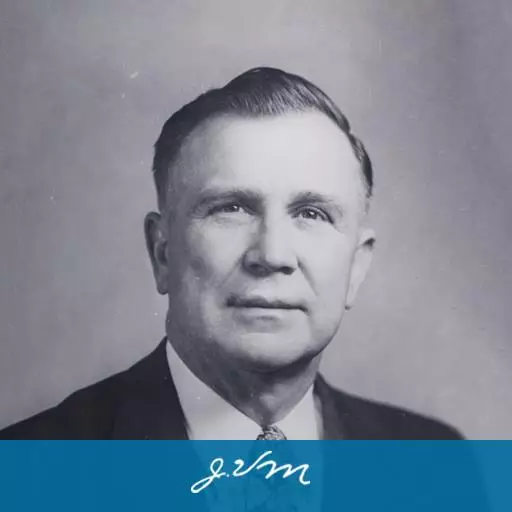
About Dr. J. Vernon McGee
John Vernon McGeewas born in Hillsboro, Texas, in 1904. Dr. McGee remarked, "When I was born and the doctor gave me the customary whack, my mother said that I let out a yell that could be heard on all four borders of Texas!" His Creator well knew that he would need a powerful voice to deliver a powerful message.
After completing his education (including a Th.M. and Th.D. from Dallas Theological Seminary), he and his wife came west, settling in Pasadena, California. Dr. McGee's greatest pastorate was at the historic Church of the Open Door in downtown Los Angeles, where he served from 1949 to 1970.
He began teaching Thru the Bible in 1967. After retiring from the pastorate, he set up radio headquarters in Pasadena, and the radio ministry expanded rapidly. Listeners never seem to tire of Dr. J. Vernon McGee's unique brand of rubber-meets-the-road teaching, or his passion for teaching the whole Word of God.
On the morning of December 1, 1988, Dr. McGee fell asleep in his chair and quietly passed into the presence of his Savior.
Contact Thru the Bible - Sunday Sermon with Dr. J. Vernon McGee
info@ttb.org
https://ttb.org/
Mailing Address
Thru the Bible, Inc.
P.O. Box 7100
Pasadena, CA 91109
In Canada:
Box 25325,
London, Ontario
N6C 6B1
Phone Number
(626) 795-4145 or
(800) 65-BIBLE (24253)