

The Most Complicated Commandment


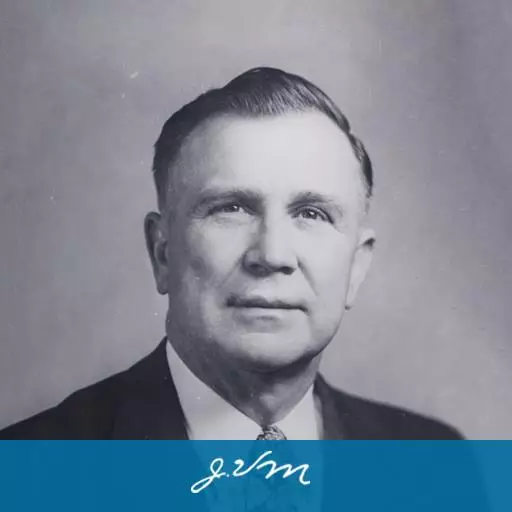
“Thou shalt not kill” may seem like a straightforward command—but is it? In Exodus 20:13, Dr. J. Vernon McGee reveals the surprising depth of the sixth commandment, showing that God’s concern reaches far beyond the outward act to the anger and hatred that can live in the human heart. Sobering and deeply personal, this message reminds us how much we all need the mercy and grace God provides through our Savior Jesus Christ.
Steve Schwetzer: Some commandments seem simple enough at first, just four words: Thou shalt not kill. Well, that's pretty clear, isn't it? Direct, no confusion, right? But what if one of the shortest commandments turns out to be one of the most challenging? What if this command reaches far beyond courtroom verdicts and criminal headlines and straight into the human heart?
Welcome to the Sunday Sermon on Through the Bible. In this never-before aired message from Dr. J. Vernon McGee, our study in Exodus continues with the most complicated commandment. As we turn our attention to the Sixth Commandment, Dr. McGee helps us see that God's concern isn't merely outward actions but the anger, hatred, and brokenness beneath them.
It's a sobering message, but also one of hope because the same God who exposes our guilt also provides a place of refuge in Jesus Christ. I'm Steve Schwetzer, inviting you to grab your Bible and find your seat on the Bible bus as we get started.
And before we get to Dr. McGee's sermon of the day, let's spend a little time hearing from others on this journey through God's whole Word with Through the Bible. First, here's a voicemail from a listener named James.
James: Hello, my name is James and I'd love to tell you the story about how I first found Dr. McGee. I was a cab driver in Sandpoint, Idaho, and I was in between runs, and I heard this old gravelly South Texas voice on the radio, and he was in the book of Genesis, and he was talking about Jacob and Esau.
And I thought that it was a fitting time to call your radio station and let you know that I've been listening to Dr. McGee for, oh, 20 years now. My wife and I, we listened to him every morning, and we're going to start this new journey together as he begins again in Genesis, and I just wanted to say that I'm honored to be able to study with my wife and listen to Dr. McGee, who has over the years taught me so very much. Thank you. God bless. I'll continue to pray for the ministry and continue to pray for the folks around the world who continue to put the radio program out there. God bless you.
Steve Schwetzer: Well, thanks for partnering with us, James. God is answering, and I hope that you and your wife enjoy many more years of growing and learning on the Bible bus together. And here's another voicemail. This is one from Becky in Mesa, Arizona. Here it is.
Becky: So, I basically just recently discovered J. Vernon McGee online and his voice sounded familiar because I remember listening to Through the Bible in my mom and dad's car when I was a little girl, and I'm in my 60s now, and it was such a familiar voice, and I started listening every day and got on the Bible bus, and I realized how solid and wonderful Dr. McGee's teaching is and and how relevant it is today. I just love his his wisdom.
Anyways, I also am wondering if the Bible bus passes, if you actually still if you print those or mail them out because there are a few people I'd like to invite on the Bible bus and I know I could do it just by sharing the website or the app, but I thought it would be kind of cool to actually have the Bible buses like to hand out to my my grandson and some of my friends at work. So, that's my question. I do support Through the Bible monthly, a small amount, but I I love to support places where I am definitely being fed. My name is Becky. I am in Mesa, Arizona. Thank you so much. Bye-bye.
Steve Schwetzer: Well, it's great to hear from you, Becky. Although you probably already received your Bible bus passes, I love mine. I'll answer your question for anyone who is interested. Yes, we'd love to send you some more. They're free. They come in packs of 10, and they're a great way to invite others to join us on this journey through God's Word. You can just give us a call at 1-800-65-BIBLE to request yours.
And if you've handed out some of the Bible bus passes, why don't you take a minute to call or write and let us know about your experience? The number again in case you missed it is 1-800-65-BIBLE, or just send us a note through our app or email biblebus@ttb.org.
Now we got time for one more fellow passenger. Here's an email from Juliana, who asks for our prayers.
Juliana: I've been a born-again Christian for 25 years, and I've also been in Bible study many, many times and listened to many ministers, but the one who stays in my heart because his teaching is profound, deeper and easy to understand is Dr. McGee. I listened to him every day and sometimes again at night when I go to bed.
Being a Christian and knowing the Word of the Lord from the beginning of the Old Testament to the New Testament helps me know when I listen to different preachers, whether they're preaching the true Word of God or interpreting it in a very different way that is not from God. It's so important to know the truth. Knowing that when I leave this world, I know where I'm going gives me peace, tranquility, and the joy of Jesus.
Even though we're going through tribulation in our family, Jesus gives me peace that only He can give. My son Andrew is 55 and has cancer, a disease in the blood. I pray and give everything to Jesus because I trust Him with all my being. I believe nothing is impossible for God. He is the best physician. I'm asking for prayer for my son Andrew and thank you in advance. Also, thank you for continuing the Through the Bible program. I send my prayers for all of you. I'm also part of your World Prayer Team for all the countries where you broadcast. I receive an email every day and I'm happy to read and pray.
Steve Schwetzer: Well, may God bless you and your family, Juliana. Thank you for your prayers and your company on the Bible bus today. We'd invite you to pray for Juliana's son. Remember his name is Andrew, and for all in our Bible bus family who are facing cancer and other life-threatening diseases.
One of the greatest privileges of being part of the World Prayer Team is lifting up needs from around the world and praying for those who are battling illness and heartache and uncertainty and concern for their loved ones who don't yet know the Lord. So if you'd like to join us, why don't you sign up for the World Prayer Team at ttb.org or through our app? As Juliana said, you'll get an email every weekday with a specific prayer prompt and oftentimes testimony or listener stories from a different part of the world. We like to say that over the course of the year, we travel the whole world on our knees, in prayer that is.
And let's pray now as we turn our attention to our sermon and spend time in God's Word. Heavenly Father, thank You that we can bring every burden to You and find peace in Your presence. As we open Your Word, Lord, teach us by Your Spirit and draw us closer to Jesus Christ, our refuge and hope. In His name we pray. Amen.
Steve Schwetzer: Now, here's the Sunday Sermon on Through the Bible with Dr. J. Vernon McGee.
Dr. J. Vernon McGee: The commandment that we are looking at today is the Sixth Commandment, and it reads, "Thou shalt not kill." And if we have a subject this morning, I suppose that it could be entitled murder.
We have definitely come to the second section of the Ten Commandments. Those commandments which were written on the second tablet of stones. And just as surely as we have come to the second section, we have likewise come to the simplest as far as statement is concerned. "Thou shalt not kill."
In the Septuagint, which is a Greek translation of the Old Testament, there are two words that are here, just the verb and the adverb, which is the negative, and actually it could be better translated, "Thou shalt do no murder." It is possible to kill and not murder, as we are going to see this morning.
Now when we begin to inspect this commandment, we find there are other complications that are connected with it. It's not so simple. The fact of the matter is, it's the most complicated commandment of all. The Sixth Commandment is not nearly as simple as a great many folk seem to think. On the surface, it may seem very simple. And so this morning, it'll be necessary for us to dissect it and take it apart and look at it for just a few moments.
I'd like to speak this morning on the intrinsic value of the Sixth Commandment, the inherent nature of the Sixth Commandment, and then the indispensable necessity for the Sixth Commandment, even in this day in which we live.
Now first of all, we want to talk about the intrinsic value of the Sixth Commandment. And perhaps this morning, we could alert you to the importance of it by making a rather startling statement. May I put it like this: The Sixth Commandment is the most important and vital commandment to every person that's in this visible congregation and to those of you listening in.
The Sixth Commandment is basic to all human governments. It's the foundation of contemporary society. It is the bulwark of all civilization. The violation of this commandment was the first outbreak of sin after man disobeyed God in the Garden of Eden. It was the murder by Cain of his brother Abel.
And we read over in the fourth chapter of Genesis, the 11th verse, language like this, for it was his punishment: "And now art thou cursed from the earth, which has opened her mouth to receive thy brother's blood from thy hand. When thou tillest the ground, it shall not henceforth yield unto thee her strength. A fugitive and a vagabond shalt thou be in the earth."
And Cain said unto the Lord, "My punishment is greater than I can bear." And that's interesting at the very beginning, the first sinner who committed this overt act of murder said his punishment was greater than he could bear. And it was true. It's unfortunate that Cain did not turn to a substitute and receive forgiveness because he would provide a substitute, but he attempted to bear in his own body the punishment for his sin.
And yet God forbade that any man should put his hand on Cain, and God put around him a hedge and said, "No man can touch him because of this crime." That seems exceedingly strange. But when you turn a few pages of the Scripture and you come to Noah after the Flood, and believe me, you've moved into an altogether different area now. There has appeared on the earth a great civilization that has been washed out in the Flood, and the man that came through to the other side was Noah and his family.
And not only do we have a new beginning for the human race, but you find God putting man on a different foundation altogether. A foundation that was a little different than Cain rested upon with protection given even to a murderer, and yet that murderer must bear his own punishment even before the Flood.
And I turn to the ninth chapter of Genesis now and read at the fifth verse: "And this is God's instructions to Noah after the Flood. And surely your blood of your lives will I require. At the hand of every beast will I require it, and the hand of man. At the hand of every man's brother will I require the life of man. Whoso shedeth man's blood, by man shall his blood be shed, for in the image of God made He man."
Now, as far as I can tell, this has never been repealed. This was instituted, and of course it is that which is capital punishment, and it was put for the first time in the hands of man that now when a man's life is taken in that which we will see is murder, then the murderer is to have his life taken in turn.
Now, that was never repealed. It's never been revoked. It's the foundation of all government. It was given to protect human life. And I do think that we need to see here how important it is. Why should not human life be taken? Well, may I say to you that the reasons advanced today are not biblical reasons. It's not some sentimental reason where you hear people say today, and even I've noticed several criminals right before they're executed make this kind of a statement, "Well, I owe my debt to society."
And you hear the sentimental reason given, "This crime is so heinous and so terrible that they won who perpetrated it should pay." May I say to you, that's not the basis of capital punishment according to the Word of God. And then, it's never to be a spirit of revenge. It's not an idea of getting even. It's not the government as a big Shylock demanding its pound of flesh.
And, my friend, again, it's not even cold justice of eye for eye and tooth for tooth. That's not the basis of capital punishment. Somebody says, "Well, then that's the reasons that are given to us today. Can there be any other reason?" May I say to you, "Yes." God gives it here: "Whoso shedeth man's blood, by man shall his blood be shed, for in the image of God made He man."
Why this morning is human life sacred? I'll tell you why. Man has been made in the image of God, and this is the only thing that makes human life sacred. If man's an animal and process of evolution, then life's not sacred. If we could only get back to God's basis. God's basis is that He created man in His image, and because God has created man in His image, there should be a reverence for human life.
Because, my friend, when you strike at a human being, it's an indirect way of striking at God, for that man is in the image of God. Though he may be fallen, he's in the image of God. And you strike at God when you put your hand upon that man. And, my friend, that's the only thing that makes life sacred today. That's the only thing that gives value to it. That's the intrinsic value of this law. That's the basis of it.
Man is in the image of God, and because man is in the image of God, you and I dare not take human life. It's not the life in itself, and I'd have you notice this. It's not the life ipso facto, that is the life in itself that is sacred, because in God's economy there have been martyrs that have taken their life, and they have thrown it away and poured it out like water. They did not count it sacred.
The writer to the Hebrews says of that great company, "And others were tortured, not accepting deliverance." And how we need that dedication of human life to God today. A dedication that means something. Not just working at it on Sunday or serving on a committee or having religious entertainment or some little service that we render to Him eight hours a day. We need life today dedicated on the altar to God.
I tell you, that's the only thing outside that the world will be impressed, my beloved. Not our doctrine that'll impress the world, it's our dedication. And how we need that today. Life's not sacred in and of itself. There's a mystery about life. You cannot give it. And, my friend, this morning, you have no right to take it. May I say that only God can give life, and since God is the only one who can give life, He alone can take it or can be taken only according to His law.
No one else has the right to take it. You can't give life. You have no right to take life. Othello in Shakespeare's play, when he went in to murder his wife Desdemona. As he went in, the light was there on the little table, and he made a play upon the two lights. The light that was there in the candle and the one that was in her body, the light of life.
And he said this, "Put out the light, and then put out the light," the candle. "If I quench thee, thou flaming minister, I can again thy former light restore. Should I repent me, but once put thy light," the light of life in his wife. "Thou cunningest pattern of excelling nature, I know not where is that Promethean heat that can thy light relume."
And that was the thing that held his hand back for a while was this, "I wonder whether I dare take her life." Because I can't put it back. But that little light I can blow it out. And then if I've done wrong, if I see I've made a mistake and repent, I can take a match and strike it again. But I can't restore human life.
And there's a mystery about it, and for that reason God says today that it's sacred. May I just voice an opinion this morning? I think that it ought to be illegal to have all of these killings on TV and in movies. I think it's without a doubt one of the most dangerous things because it takes human life and treats it as something cheap, not in the image of Almighty God.
Man's in the image of God. And that's the intrinsic value of human life and the reason it's not to be taken. Then may I speak to you on the inherent nature of the Sixth Commandment. And here is a place where the Revised Standard Version could have done a good job. It did it in so few places that here it could. It had an opportunity to here to make the needed improvement in the translation of the Sixth Commandment, but just it became a parrot and merely repeated.
Revealing again that those who translated it were structural engineers of the mechanics of a language. But they had a woeful ignorance of the beauty of literature and of law and of theology. They would have known that the American Revised Version made way back in 1901, which is a scholarly translation. It translates the Sixth Commandment like this: "Thou shalt do no murder."
That's much better. It doesn't really say, "Thou shalt not kill." It says, "Thou shalt do no murder." And that means, friends, it's possible to kill and not to murder. There's a certain cult today that takes the Ten Commandments but rejects the remainder of the Mosaic Law. May I say to you, that's perfectly absurd because you need all the Mosaic Law to interpret the Ten Commandments, and that's especially true in the Sixth Commandment because there's degree of murder. First-degree, second-degree, homicide, manslaughter, self-defense. And Scripture recognizes all of these.
Now, I want this morning, and I hope I won't be tedious, but I would like to call your attention to these distinctions that are made in the Mosaic Law of the Sixth Commandment, "Thou shalt do no murder." Over in the 21st chapter, which by the way, is just the next chapter after the giving of the Ten Commandments, we have set before us that which is first-degree murder. Will you notice in verse 12, "He that smiteth a man so that he die shall be surely put to death." First-degree murder.
Now will you notice it, and here's premeditated first-degree murder. Verse 14, "But if a man come presumptuously upon his neighbor to slay him with guile, thou shalt take him from mine altar that he may die." God says that if a man plans and plots the murder of another, that he shall be taken even if he goes into the altar and lays hold to the horns of the altar, and that was always a signal of a cry for mercy. God says, "That man shall not have mercy. He shall be put to death."
That's presumptuous. And that's first-degree murder of the very worst sort. Now will you notice even God puts down the penalty for attempted murder. Verse 18, "And if men strive together, and one smite another with a stone or with his fist, and he die not, but keepeth his bed; if he rise again and walk abroad upon his staff, then shall he that smote him be quit," that is, he'll be acquitted. "Only he shall pay for the loss of time, and shall cause him to be thoroughly healed."
May I say to you, that's attempted murder. And a man was not to die for attempted murder. That was certainly ruled out. Then there was, without doubt, one of the most unusual arrangements, and that's the interesting thing about God's arrangements: they're unusual. They're not according to man's way of doing things always.
God had a way of protecting those who had killed innocently, that is, guilty of manslaughter. And they may be negligent, they may have other things may enter in, but God gave them a protection. And you find this over in the 19th of Deuteronomy. There are several passages that deal with this. And I'd like to read these, beginning at Deuteronomy 19, verse 3.
"Thou shalt prepare thee a way, and divide the coasts of thy land, which the Lord thy God giveth thee to inherit, into three parts. And every slayer may flee thither." In other words, God had six cities of refuge in Palestine, three on one side the Jordan River, and three on the other side, both east and west banks of the Jordan. These cities were arranged geographically so that they were able in any part of the promised land to get to them in as quick time as possible.
And the reason was this, that if a man would slay a man accidentally, or maybe even through carelessness, but he didn't mean to kill the man at all. It may be that his brother, or some relative, or even a mob might say they want to do away with this man. They felt that he did do it purposely. Well, this man could flee to a city of refuge. And in that city of refuge, he could not be touched.
And these cities of refuge were the Levite cities, by the way. And they were brought before the Levites, God's priests. And the criminal had an opportunity to state his case. And if it was deemed wise to free the man, that he did it accidentally, then this man could stay inside the city of refuge and be protected, and no one could touch him.
Now will you notice as we move on and read here in Deuteronomy 19, verse 4. "And this is the case of the slayer which shall flee thither, that he may live. Whoso killeth his neighbor ignorantly, whom he hateth not in time past." And now he gives an illustration. "As when a man goeth into a wood with his neighbor to hew wood, and his hand fetcheth a stroke with the axe to cut down the tree, and the head slippeth from the helve, and lighteth upon his neighbor, that he die, he shall flee unto one of those cities, and live."
Now suppose two men, and this is worked, that's really, you must understand, this gets right down where man lives. Two men go out into the woods to cut down trees, to build a house, probably. And as they're out there working, one of the men takes an axe, and as he is cutting the tree down, the head of the axe slips off the handle, strikes the other man in the temple, and he's killed immediately.
Well, that man says, "Well, I'm afraid to go back and tell them in the city where I live because I know this man's brother, and he's hot-headed. And he doesn't like me. And I have an ocean he'd want to kill me immediately. He wouldn't think that I did this accidentally." So this man would go immediately to the closest city of refuge, and there he could not be touched.
He's free there as long as he stays inside the city limits until his trial comes up before the citizens, and until he can be given a fair trial without any prejudice and without any heat. Now, that was God's wonderful arrangement to take care of this type of thing that would come up in Israel.
Now, may I say to you that by inference and interpretation of the law, I think there were many other things that men were held guilty of murder for. And I'm going to just mention a few with no attempt to prove it to you this morning, hoping you will follow through in the Scripture. If a man would strike his father or mother, he was to be put to death because that was considered murder. And if parents failed to discipline a child, and that child grew up recklessly, got into a hot rod, went 70 miles down the road, and was killed, then the parents were held guilty of murder.
A boy or girl that left home and went off into sin and broke a mother's heart or a father's heart so that they died, in God's sight, they're guilty of murder. If a man betrayed a girl, and that girl found that she used to be disgraced, and then would take her own life, commit suicide, that man's guilty of murder in God's sight. And abortion is murder in God's sight.
And the drunk driver who gets into a car and would drive down the highway and kill someone is a murderer in God's sight, and I believe, and I think I could give you Scripture for this, the man who made the liquor and sold it to him's guilty of murder also. Now, I wonder if I could prove that point. I think that one's worth proving, isn't it?
God had certain restrictions on building permits. "When thou buildest a new house, then thou shalt make a battlement for thy roof, that thou bring not blood upon thine house, if any man fall from thence." Now, you see how this operated. Man built a house, didn't put a battlement around the roof, and that was the front porch, the patio in that day. And a man was up on it and fell off. Broke his neck. The man who built that house is guilty of murder. He's an accessory after the fact, and God makes him guilty of murder.
Oh, my beloved, assassins of character, we'll get to that in one of the commandments, was guilty of murder. To go around the corner and to say something about a man, to lift a knife and stick it into the back of his character. That, in God's sight, was considered murder, my beloved. May I say that this law had many ramifications, but we must move on this morning, and I'd like to speak lastly, the third place about the indispensable necessity of the Sixth Commandment.
And when you get to the New Testament, you will find that this commandment was not repealed or revoked. As we have said heretofore, that all of the commandments are repeated for Christians with the exception of the Sabbath Day. And this commandment, "Thou shalt not do any murder," is given in the New Testament. But our Lord did something quite remarkable. He lifted it to the nth degree.
Now, somebody says, "I know saying this morning, there can't be any universal application of this commandment. Very few people are murderers." Well, honestly, in a congregation like this this morning, I have an ocean, we don't have over a dozen here. Maybe sitting right next to you this morning without you knowing it, there's a murderer. But don't move.
But I'm not sure that all of us can escape this morning. Will you listen to our Lord as He took the Sixth Commandment and lifted it to the nth degree? "Ye have heard that it was said by them of old time, 'Thou shalt not kill; and whosoever shall kill shall be in danger of the judgment.' But I say unto you, that whosoever is angry with his brother without a cause shall be in danger of the judgment; and whosoever shall say to his brother, 'Raca,' shall be in danger of the council; but whosoever shall say, 'Thou fool,' shall be in danger of hell fire."
Now, I think we can simplify this because we do need to make a transposition here. The second statement, and there are three statements in verse 22. The second statement goes with the very first, that is, verse 21. Now, let me read it like this and see if it doesn't make more sense to you. "You've heard it said by them of old time, 'Thou shalt not kill. Whosoever shall kill shall be in danger of the judgment. And whosoever shall say to his brother, 'Raca,' shall be in danger of the council.'"
That is the rabbis, Christ's day, and the word "Raca" is the same as "fool." It means moron. And to say that, the rabbi said, "You could be brought into court and tried for it." Now the Lord Jesus said, "I want to say something else to you." "But I say unto you, that whosoever is angry with his brother without a cause shall be in danger of the judgment. And whosoever shall say, 'Thou fool,' shall be in danger of hell fire."
Now, my beloved, that's very solemn and serious. You ever drive down the highway and somebody cut in on you, and you unconsciously say, "That fool"? You never did that? May I say to you this morning that in God's sight you're guilty of murder. Anger is the basis of all murder. And if you've ever been angry with someone, and I have an ocean most of you have, if you've ever been so angry with someone, "I'd like to choke him." "I'd certainly like to take a spoke out of his wheel." "I'd certainly like to do something to him."
May I say to you, "Why didn't you go through with it?" You were afraid, of course. And you have a certain background, but that's the thing that's back of murder, and in God's sight He says anger is murder. Somebody says this morning, "Well, I don't think that could be true. I know a lovely person. They're cultured and refined. You don't mean to tell me you think this morning that they're guilty of murder in God's sight?"
Well, they're not if they've never been angry. If they've ever been angry, they're murderers in God's sight. It's in our hearts. Out of the heart, the Lord Jesus said, proceed the ugliest things you've ever seen, and among them is murder. It's anger. Are you prepared this morning to defend yourself against God and say you've never been angry and to say this morning you're not guilty of murder before Him?
Maybe you want to raise some technical point and say like some folk will, "Well, that's in the Sermon on the Mount, that's not for us today." May I turn to the last book written in the New Testament, the last book written in the Bible, which is an epistle, the Epistle of First John, the third chapter. Will you listen to this? "Whosoever hateth his brother is a murderer. And ye know that no murderer hath eternal life abiding in him."
What are you going to do now? The Holy Spirit this morning as God's attorney for He's called that, He brings this morning a charge against you and against me and says in God's sight, "We're murderers." Do you want to plead innocent? May I this morning suggest to you that you'll have a difficult time proving yourself innocent before God? I suggest you plead guilty.
Plead guilty. Cast yourself upon the mercy of the court because honestly, He's got another charge. You remember Stephen when he stood up before that group that day, the Sanhedrin, he says of whom ye have been the betrayers and murderers. And there stood Saul of Tarsus, a murderer. And this morning I must say that I put him to death. Hadn't been for my sin, he never would have gone to the cross, for he was made sin for us. He knew no sin, that we might be made the righteousness of God in Him. You and I put Him to death.
May I say to you, why don't you plead guilty? But somebody says, "But Peter wrote, 'Let none of you be judged as a murderer.'" We got to defend ourselves here. Oh, I want to tell you this morning you can defend yourself. There is a city of refuge this morning. You can flee to it, and you'll find mercy. That city of refuge is Christ.
You remember that when Saul died, Abner, his captain, fled to one of the cities of refuge. He knew David would probably kill him. He'd been guilty of so many murders. And Joab, whose brother had been killed by Abner, he went to Hebron, for Hebron was a city of refuge, and he lured Abner out. He says, "Come out here, Abner, I got something to tell you."
And Abner made the mistake of his life. He came out of the city of refuge on neutral ground, and Joab killed him. And David went to the funeral, walked back of it and wept, and he said, "I'm not guilty of this. Nor my throne, nor my reigns guilty of this. I'd never have put him to death." But then he said this, "Died Abner as a fool died." Why? Why did Abner die like a fool? He could have been safe in a city of refuge.
And he was foolish enough to be lured out and killed. Friend, this morning, you and I stand as sinners before God. How foolish it is. How foolish it is to try to somehow or another to defend ourselves and say we're not guilty when God says we're guilty. Oh, to flee to the city of refuge and cast ourselves upon a Savior.
And the Scripture suggests that you're a fool if you don't do it. Died Abner as a fool died. He could have been safe, and this morning, you can be safe. You say, "How do you know?" I know because a thief died on the cross with Christ, two of them, and Mark says that they were murderers also. And Christ turned to one of those thieves who was looking for a city of refuge and said, "Today thou shalt be with Me in Paradise." Are you this morning in the city of refuge?
How firm a foundation, ye saints of the Lord, is laid for your faith in His excellent Word? What more can He say than to you He hath said? To you who for refuge to Jesus hath fled. Fear not, I'm with thee. Oh, be not dismayed, for I am thy God, and I'll still give thee aid. I'll strengthen thee, help thee, and cause thee to stand, upheld by my gracious omnipotent hand. How foolish it is today to think you can stand before God and not be guilty. How wise it is to come to the Savior. He's the city of refuge and find safety and security, for He saves murderers. He saves sinners.
Steve Schwetzer: We've got more from Dr. McGee this week on the daily program of Through the Bible. Listen on the app, at ttb.org, or call 1-800-65-BIBLE if we can help you find a station near you. I'm Steve Schwetzer and as we go, I pray Psalm 139:23-24, that the Lord will search your heart, lead you in His truth, and guide you in the everlasting way. May His grace give you peace, and His Spirit keep drawing you closer to Jesus. Amen.
Steve Schwetzer: Join us each weekday for our five-year daily study through the whole Word of God. Check for times on this station or look for Through the Bible in your favorite podcast store, and always at ttb.org.
Featured Offer


Featured Offer
About Thru the Bible - Sunday Sermon
These Sunday Sermon messages form a collection of the most effective and fruitful sermons given by Dr. J. Vernon McGee during his 21-year pastorate (1949-1970) at the historic Church of the Open Door when it was located in downtown Los Angeles.
Other Thru the Bible Programs:
Thru the Bible - Minute with McGee
Thru the Bible - Questions & Answers
About Dr. J. Vernon McGee
John Vernon McGeewas born in Hillsboro, Texas, in 1904. Dr. McGee remarked, "When I was born and the doctor gave me the customary whack, my mother said that I let out a yell that could be heard on all four borders of Texas!" His Creator well knew that he would need a powerful voice to deliver a powerful message.
After completing his education (including a Th.M. and Th.D. from Dallas Theological Seminary), he and his wife came west, settling in Pasadena, California. Dr. McGee's greatest pastorate was at the historic Church of the Open Door in downtown Los Angeles, where he served from 1949 to 1970.
He began teaching Thru the Bible in 1967. After retiring from the pastorate, he set up radio headquarters in Pasadena, and the radio ministry expanded rapidly. Listeners never seem to tire of Dr. J. Vernon McGee's unique brand of rubber-meets-the-road teaching, or his passion for teaching the whole Word of God.
On the morning of December 1, 1988, Dr. McGee fell asleep in his chair and quietly passed into the presence of his Savior.
Contact Thru the Bible - Sunday Sermon with Dr. J. Vernon McGee
info@ttb.org
https://ttb.org/
Mailing Address
Thru the Bible, Inc.
P.O. Box 7100
Pasadena, CA 91109
In Canada:
Box 25325,
London, Ontario
N6C 6B1
Phone Number
(626) 795-4145 or
(800) 65-BIBLE (24253)