

The Camels Are Coming


Sometimes the most important moments arrive quietly, after a long season of waiting. Dr. McGee walks us through the story of Isaac and Rebekah—a journey marked by prayer, trust, and a decisive step of faith. It’s a reminder that God is at work behind the scenes, faithfully bringing His plans together in His perfect time.
Steve Schwetz: Some of the most important moments in life really begin pretty quietly with a decision, a prayer, or a step taken in faith. Welcome to the Sunday sermon on Thru the Bible. In his message, "The Camels Are Coming," Dr. McGee takes us to Genesis 24, where God's guidance unfolds through ordinary obedience and remarkable trust. It's a great sermon, so let's pray and get started.
Father, as we come to Your Word, steady our hearts and draw our attention to what You want us to see. Teach us to trust Your leading and then to respond with willing hearts. In Jesus' name, amen. Here's the Sunday sermon on Thru the Bible with Dr. J. Vernon McGee.
Dr. J. Vernon McGee: Our subject of the morning is: The camels are coming. And as you can well understand, our subject today is not original, but it was taken from the 63rd verse of this 24th chapter of Genesis: "And Isaac went out to meditate in the field at the eventide: and he lifted up his eyes, and saw, and, behold, the camels were coming."
The story of the choosing of a bride for Isaac, I believe is one of the loveliest love stories that has ever been recorded, either in the scripture or out of the scripture. It has a bewitching charm, it has a sweet pathos, and a strange fascination as we read it again and again.
We have seen in this series on Genesis that Isaac is a type of the Lord Jesus Christ in his birth—a miraculous birth. We saw also that he is a type of the Lord Jesus Christ in his being offered by the father upon Mount Moriah. And now in the choosing of a bride, the picture continues and is finalized. In fact, this is the grand finale that we have in this section.
But at the very beginning, may I say this: we need to distinguish very carefully between that which is a historical event and that which is spiritual truth. And we want to be very careful this morning. There is the narrative, and then there is the application of it. Then we have the interpretation, and then the illustration, and we'd like to separate them and certainly distinguish between these two.
Now, first of all, let's look at the narrative. It’s simply stated; it is this: Abraham sent his servant back to the old hometown, if you please, back to Mesopotamia, to choose a bride for his son Isaac. Candidly, he did not want Isaac to marry one of the daughters of the Canaanites. He did not want his son to marry one of them, but one from back where he came from.
And he sent his servant on the mission. He did not send Isaac. And this was according to the custom of the day; actually, there's nothing strange about it because parents made the choice in that day. And so we are going to see that this choice that was made is actually a marvelous, wonderful picture of the Lord Jesus Christ in choosing the church.
And that is something that follows in the Word of God. When you come to the final story concerning Christ and the church, the picture is the bridegroom and the bride. In Revelation 19:7, we read: "Let us be glad and rejoice, and give honor to him: for the marriage of the Lamb is come, and his wife hath made herself ready." And then again in the 21st chapter, verse 2: "And I John saw the holy city, new Jerusalem, coming down from God out of heaven, prepared as a bride adorned for her husband."
So that we have this picture that runs through, and it is true. But returning now to the narrative, we find that when we come to this story here, the emphasis shifts definitely from Abraham to Isaac. No longer is Abraham important as far as the story is concerned, but Isaac becomes all-important.
And the servant was instructed to go back to Abraham's country and to choose a bride. And of course, his first objection was this: "Perhaps the girl wouldn't want to follow me back here." And Abraham said to him, "If she refuses to follow you, then you're discharged from your duty. But your duty is to go back and to see if there is not one that God has chosen to be the wife of my son."
And so the servant goes, and you can imagine with what reluctance that he went along. He did not know what he would encounter. And finally, he arrives back in that land, and he comes to the well at eventime. And it was the time that the women came out to get the water because they are the ones that carried it in that day. And I noticed at the well even around Samaria that even today, the women are still the ones that carry the water. They do a great deal of the work.
And then this servant, he does something that is quite remarkable. As you notice, he asks God for leading. He did not know how he would be led, and he stops and has prayer. He wondered just what to do next. And he asked that God would send out the girl that would be the one. And Rebecca came out.
And a wonderful thing is said concerning her here: "The damsel was very fair to look upon, a virgin, neither had any man known her: and she went down to the well, and filled her pitcher, and came up." She's beautiful. And today we still have the leftover—the Puritan—but this is a carryover today that somehow or another God can't use beauty. Well, you go through the Word of God and see whether He did or not.
And this girl here, that is to figure so largely in the story of scripture, was beautiful, and the Spirit of God records it very definitely. But not only was she beautiful, she was not dumb. In fact, she’s a quite lovely person. And we read, "And the servant ran to meet her, and said, 'Let me, I pray thee, drink a little water of thy pitcher.'" She said, "Drink, my lord." And she hasted, and let down her pitcher upon her hand, and gave him drink. Notice how courteous she was, and that was a custom of that day.
And not only courteous, but when she had done giving him drink, she said, "I will draw water for thy camels also, until they have done drinking." And a camel does quite a bit of drinking, by the way. And that was quite a chore for her, but notice how considerate she was. She’s quite a very interesting person here.
Now the servant stands there. She's drawing the water for the camels. He's wondering. "The man wondering at her held his peace, to wit whether the Lord had made his journey prosperous or not." And he's waiting there upon God. You see the wisdom and the patience of this man. He doesn't move hurriedly at this juncture at all. He's waiting to see the hand of God in this.
And then he brought forth gifts for her. We're told here that he gave her earrings and he gave her bracelets. Now to us today, that may sound meaningless in many ways, but actually, they were bridal gifts. He's making it very clear to her his mission, that he's come on behalf of another, and that he's looking for a bride, and he offers her these gifts.
And then he asks for and he receives the hospitality of the home—the home of Bethuel. And she again says, "Why, there is an abundance of room in my father's house for you, and there's an abundance of food to feed not only you but your camels, and I want you to know that you're welcome." And so we read, "And the man bowed down his head, and worshiped the Lord."
He knew now that he was in the will of God. He knew now that he was having the clear leading of God in his life. That was clear. And may I say to you, friend, this morning, if you're a Christian today and you do not know what it is in, especially in certain circumstances, to have the clear leading of God, you've missed the greatest thrill of your life.
I feel sorry for these Christians who are always talking about, "How can I find out God's will for my life?" My friend, haven't you yet got into a position where you have had the clear leading of God? Why, there's nothing as thrilling as that. And this servant here, now uncertain at first, moving carefully, rather gingerly, even wondering, now he's sure.
Listen to him. He said, "Blessed be the Lord God of my master Abraham, who hath not left destitute my master of his mercy and his truth." Now here is the secret: "I being in the way, the Lord led me to the house of my master's brethren." Now if you wait till you get into trouble, we find this today.
I counseled with a young married woman the other day and she says, "And I'm seeking the Lord's will." I says, "Did you seek it when you got married?" And she said, "No." Well, you have to be in the way for the Lord to lead you. I do not think that you can expect it to be ipso facto, hocus-pocus, to straighten out in a fifteen-minute conference a mistake that you've been spending all your life making.
May I say, friend, this morning to you, that it's when you and I are in the way, the Lord leads. It's not when you're way out on the periphery of life and far from God that you can expect Him to come in all of a sudden and shine light upon your pathway. "I being in the way, the Lord led me." What a thrilling experience this was for this servant now, as he's just following through in all of this. He does not know yet what the outcome will be, but obviously, why the outcome is going to be good because he now has the leading of the Lord.
He goes into the home of Bethuel, and he states his mission, if you please. I want you to notice here this man's urgency now, as he has God's mind in the matter. There was set meat before him to eat. After he got in, they wanted to entertain him. They prepared a meal for him and asked him to eat.
Listen to him. "There was set meat before him to eat: but he said, 'I will not eat, until I have told mine errand.'" And Bethuel said, "Speak on." Go ahead if it's that urgent that you're putting it before eating your meal, then let's hear it. It must be important.
And then this servant told his story. And it was a thrilling story, by the way. It was a story of how God had led him. He begins like this: "And he said, 'I am Abraham's servant.'" That's where he begins. "I'm Abraham's servant." He doesn't even give his own name. We'll see why in a few moments.
He tells about his master Abraham. He after all was related to Bethuel. And he tells about how after he had left that land and gone into Canaan, how God had blessed him, how he'd become a great man, a wealthy man in that area, how in his old age, God gave him a son by miracle. And he makes that very clear.
"And Sarah my master's wife bare a son to my master when she was old: and unto him hath he given all that he hath." The son was to inherit everything. Now he says, "One day God asked him to offer him yonder upon Mount Moriah, and he went up there. And in a most miraculous fashion, he was given back to him like receiving him from the dead," which he did in a figure.
"Then," he says, "now my master wants to get a bride for his son. And he sent me back here on this mission. And when I arrived here, I stopped at the well, and I prayed, and Rebecca came out. And I asked God to lead me, and I saw who she was. And I found out what a fine person she was. And I believe that she's the one that God has chosen to be my master's son's bride. And I'd like to know if you would concur in me taking her back."
And he tells the story. He tells about those providential dealings that brought him up to that moment. And I want to tell you as these men listen to the story here, they wondered. And here is their reaction in verse 50: "Then Laban and Bethuel answered and said, 'The thing proceedeth from the Lord: we cannot speak unto thee bad or good.'"
I think that when this servant got through with his story, that Laban and Bethuel, the brother and the father, looked one at another puzzled. They said, "My, we never heard anything like this before, and we never thought it would work out like this. We don't know what to say to you. We can't even say good or bad. We don't know what to say. Behold, Rebecca is before thee, take her, and go, and let her be thy master's son's wife, as the Lord hath spoken."
We see the hand of God in all of this. And so the servant immediately, they did eat and drink, he and the men that were with him, and they tarried all night. They rose up in the morning and he said, "Send me away unto my master." He said, "I'm in a hurry now. I want to get back. I want to take Rebecca back with me."
And then they said to him, "Well, wait just a minute. This thing has happened so sudden. Let her stay ten days. Let's have a celebration. Let's have a farewell party. Let's have time." This man said, "No, I'm in a hurry. I must get back." And then they called Rebecca and said unto her, "Wilt thou go with this man?" And she said, "I will go."
I like that girl. My, I want to tell you she gave a forthright decision. There's no beating around the bush here. There's no trying to carry water on both shoulders. Now, she carried it on her head anyway. This girl has made a decision. Now they begin the journey back to the home of Isaac.
And they began this journey, "And Rebekah arose, and her damsels, and they rode upon the camels, and followed the man: and the servant took Rebekah, and went his way." It was a long, arduous journey across that desert. There were dangers on every hand. It was a trip that was filled with hardships. And friends, riding a camel is not easy.
And so this girl, she made this trip. It wasn't an easy trip to make at all, but she made it. My, what a decision that she had made. And she comes back now, and when they arrive, they find that Isaac has been preparing a place for his bride. He's been thinking about her because we read here: "Isaac came from the way of the well Lahairoi; for he dwelt in the south country. And Isaac went out to meditate in the field at the eventide: and he lifted up his eyes, and saw, and, behold, the camels were coming."
He was looking for her. And finally, this long, wearisome journey has come now to an end. "And Rebekah lifted up her eyes, and when she saw Isaac, she lighted off the camel." Today she would have lighted a camel, but then she lighted off of one. For she had said unto the servant, "What man is this that walketh in the field to meet us?" And the servant had said, "It is my master." Therefore she took a veil and covered herself.
The journey's over now. The man that she sees is her lover, her husband, and the Lord. And we read, "And Isaac brought her into his mother's tent, his mother Sarah's tent, and took Rebekah, and she became his wife; and he loved her: and Isaac was comforted after his mother's death." And you're almost prone at this time to say, they lived happily ever after. But we'll find out they didn't. Didn't work out quite that way.
But my friend, the real picture that is here of the other bridegroom and the bride did work out, and they will live happily ever after. And so I'd like for you to consider with us now the illustration and the application of this wonderful story. For it's a picture of Christ and the church.
Now there are many facets that are here, and this is such a thrilling story that there's a real danger of us wanting to read in more than is here. And many have done it in the past, and I'll attempt to restrain myself this morning, but there's certain things that are quite obvious here.
First of all, let me say that the Father has a single purpose in this story here. Abraham wanted to get a bride for his son. And may I say to you that that is the purpose of God the Father, His supreme purpose. The Lord Jesus when He was here gave a parable at the end of His ministry in the 22nd of Matthew, verse 2: "The kingdom of heaven is like unto a certain king, which made a marriage for his son." And the king is God the Father, and the son is God the Son, the Lord Jesus Christ.
That's the purpose of God is to get a bride for His Son. And then all the purposes of the Father are fulfilled in the Son. I wonder today as we look at the world, we sometimes think that certain areas of the world and certain countries today—and as important as it is for Israel to get back in the land, and that's important—right now the big business of God the Father is getting a bride for His Son. That's His purpose in the world today. And all the purposes of the Father are to be fulfilled in the Son.
Listen to Him when Paul prayed in Ephesians 1, let me plunge in at verse 20: "Which he wrought in Christ, when he raised him from the dead, and set him at his own right hand in the heavenly places, far above all principality, and power, and might, and dominion, and every name that is named, not only in this world, but also in that which is to come: and hath put all things under his feet, and gave him to be the head over all things to the church, which is his body, the fullness of him that filleth all in all." God's purposes are in the Son, just as Abraham's were in Isaac. He wanted a bride for Isaac.
Now the bride was chosen actually before she knew it, way back yonder in the land of Canaan, long before the servant went to Mesopotamia. We are told, "But thou shalt go unto my country, and to my kindred, and take a wife unto my son Isaac." And today we're told, "According as he hath chosen us in him before the foundation of the world." And I'm not going to make anything of that this morning other than to say the bride was chosen before she knew it.
Then the fourth thing: the servant here is a picture of the Holy Spirit who's in the world today. He came into the world to call out a bride for Christ. That's His purpose. He's in the world today on one mission, and that is to call out the church. And all conversions today are the work of the Holy Spirit, never the work of a man.
It's His strategy today that we need to follow, not ask Him to follow ours. He does use a human instrument, but in the final analysis, any conversion is the work of the Holy Spirit. It's the Holy Spirit who's in the world to call out a bride today for the Son.
Now, here is something else: here we see the church from Christ's viewpoint, and that's quite wonderful, by the way. We see the church here from His viewpoint. And I'm glad to have His viewpoint. Listen to this: "The damsel was very fair to look upon, a virgin, neither had any man known her: and she went down to the well, and filled her pitcher, and came up."
Frankly, it's not my viewpoint of the church at all. I have an altogether different viewpoint. I have a friend; he was formerly an assistant of mine, and he has come up with this, and it's my picture too, by the way: "Like a mighty turtle moves the church of God, brothers we are treading where we've always trod. We are much divided, many bodies we, strong in faith and doctrine, weak in charity."
That's the picture of the church today from my viewpoint. But do you know what He sees when He looks at the church today? He sees something altogether different than that. He sees one that—let me turn here to the fifth chapter of Ephesians. This is the picture of the church as He is going to present her someday to Himself.
"Husbands, love your wives, even as Christ also loved the church, and gave himself for it; that he might sanctify and cleanse it with the washing of water by the word, that he might present it to himself a glorious church, not having spot, or wrinkle, or any such thing; but that it should be holy and without blemish."
That's His picture of the church as He's going to present it to Himself someday. And Paul writing to the Corinthians says, "For I am jealous over you with godly jealousy: for I have espoused you to one husband, that I may present you as a chaste virgin to Christ." What a picture of the church!
And the picture is this: "And to her was granted that she should be arrayed in fine linen, clean and white: for the fine linen is the righteousness of saints." What a picture! And here you have the picture as the Lord Jesus Christ sees the church.
Then you will notice the urgency here of the servant. We noted that in the narrative that he said, "I must state my business. I'm in a hurry." And then there is the enthusiasm of this girl Rebecca. "The damsel ran, and told them of her mother's house these things." She says, "This man has come. He is a servant of a great man from the land of Canaan. He's looking for a bride for the son, and he's told me about him." And they said, "We're interested also."
The primary business today of the church is to present Him to this world. That's our business. I'm afraid today that the church is engaged in marching, and the church today is engaged in improving this world. And you can be sure of one thing: when Rebecca went through that desert, she didn't stop to set out flowers. She says, "I'm on the way to meet the most wonderful person there is."
My friend, this morning, the church has more or less lost its way. We need to recognize today that the supreme goal of the church is to present Him today. And that today He's calling out one that He Himself alone can present faultless. And today we're told that we're pilgrims and strangers in this earth.
By the way, let me ask this very personal question this morning: what is your big business? What is the goal of your life? What is the supreme ambition of your life today? What is it? May I say to you, the business of Rebecca was to go and meet the bridegroom. There is a song that we used to sing; if I could have, I would have sung it for you this morning, but the song is this:
"I'm a stranger here within a foreign land,
My home is far away upon a golden strand.
Ambassador to be of realms beyond the sea,
I'm here on business for my King.
This is the message that I bring,
A message angels fain would sing:
Oh be ye reconciled to God."
What a message today! And yet the church is engaged in subsidiary and secondary business today. And many believers today have become so entangled with the things of this world they've forgotten that our business is to tell men about a Savior who died for them on the cross.
Now will you notice something else here that I believe is quite wonderful here? This servant did not speak of himself. Have you ever noticed that the Spirit of God never, never speaks of Himself? You find that He always speaks of the Son. And every ministry of His is in connection with the Son.
Our Lord Himself said that, we saw it in the upper room discourse, John 16:13: "Howbeit when he, the Spirit of truth, is come, he will guide you into all truth: for he shall not speak of himself; but whatsoever he shall hear, that shall he speak: and he will show you things to come. He shall glorify me: for he shall receive of mine, and shall show it unto you. All things that the Father hath are mine: therefore said I, that he shall take of mine, and shall show it unto you."
The Spirit of God is in the world on the business of taking the things of Christ and showing them unto us. He doesn't speak of Himself. The servant, when he came in before that family, he didn't say, "Now look, I want to tell you what a hard job I have back yonder with Abraham, and how important I am to him, and that I happen to be the one that has control of all of his goods," for he did have. He didn't even tell his name. He didn't speak of himself.
He said, "I have a master, and he's a great man. He has much goods, one of the richest men of the East. And he has a son, and that son's a wonderful son. And I'm looking for a bride for him." And then he told about how that boy was born. He told about how he grew up. He told about how he was offered upon the altar.
And as the servant is telling that in that home, I can see them sitting around the fire, and yonder out at the edge there sits a beautiful, olive-complexioned girl—she was a Syrian. Dark, long tresses, and her brown eyes flashing in that firelight, and she's listening. She hears that story about him.
And then the father and the brother said, "My, this is beyond us. Evidently God is in this. We'll call the girl." And they say to her, "You've heard the story, wilt thou go?" And she said, "I will go."
The Holy Spirit is in the world to woo a bride for Christ. He's speaking to the hearts of sinners about Christ. And my friend today here and listening in, you'll have to make the decision. You are going to be the one that'll say, "I will go" or "I will not go." It's up to you. And you can argue election all you want to, for the invitation is whosoever will may come.
Now they started out on that desert. Long, hot trek across the sands of the burning desert on camel. After a long, hot day's journey, they came to an oasis in the evening, and a fire was built because on the desert it gets cold in the evening. And they sit around the fire, and Rebecca's weary, she's tired, and perhaps she's homesick, and I think maybe a little discouraged. And then she says to the servant, "Tell me again about Isaac. What was it you said about his birth? Tell me about the time that the father took him yonder to the top of the mountain to offer him as a sacrifice. Tell me that story again. Tell me about how wonderful he is."
And the servant told it again. Tell me the old, old story of Jesus and His love. Are you getting tired of hearing it, friends? May I say as she listened, she longed to come to the end of the journey. I think the next morning she's up bright and early. She says, "Let's be on our way."
The citizens of the desert as she went through, they were impressed. They said, "Say, this girl means business. It must be a wonderful man she's going to meet." I'm not sure but what some of them would like to have gone along. One of the reasons today, friends, one of the reasons today that the world outside is not impressed is because we're not impressed. We're not on the way to meet a heavenly bridegroom. We're planting flowers in this world.
And as Dr. George Gill in his very courteous, lovely manner used to say, and it was so startling coming from him—he says, "The church is making the world a better place for men to go to hell in." And that's what they're doing.
She hadn't seen him, but she loved him already. Peter says to you and me, "Whom having not seen, ye love." And Peter didn't say, since he had seen him, that it would be wrong. He said that's wonderful.
Then finally the day arrived, it was the end of the journey. And do you notice what the record says? She saw him first. She says, "What man is this?" Looking for him. And then we read: "And she had said unto the servant, 'What man is this that walketh in the field to meet us?' And the servant had said, 'It is my master.' Therefore she took a veil and covered herself."
The bride has made herself ready. Isaiah said, "He hath clothed me with garments of salvation, he hath covered me with the robe of righteousness, as a bride adorneth herself with her jewels." And that was what this girl did. You and I today are to make ourselves ready, clothed in His righteousness, when we trust Him.
And then will you notice, "And Isaac brought her into his mother's tent, his mother Sarah's tent, and took Rebekah, and she became his wife; and he loved her: and Isaac was comforted after his mother's death." Looking for that blessed hope and the glorious appearing of our great God and Savior Jesus Christ.
And you notice how the record tells us here: Isaac went out to meet her. May I say that the scripture makes it very clear that His coming to the earth and His coming for His church are two entirely different matters? We like to speak of He comes for the church. I'd like to turn it around as this record has it: we are going to meet Him, my beloved. When you speak of His coming for the church, we are going to meet Him.
Remember Paul put it like this, he said, "The dead in Christ shall be raised first: we that are alive, we'll be caught up together to do what? Meet the Lord in the air." He's not coming to the earth at that time. We meet the Lord in the air. Isaac went out to meet his bride, if you please.
My beloved, that's the thing that's immediately ahead of us. And when we get there, the journey down here that seems so long will be over. The burden today that's so heavy, the sorrow today that's so deep, and the hearts today that are so broken, it'll all be over. And the moment, the moment has come when we'll look back and this life will seem but just a moment.
Again, may I refer to the upper room discourse? Seven times in the 16th chapter the Lord Jesus said, "a little while." In five verses there he kept saying, "a little while." "A little while, and ye shall not see me: and again, a little while, and ye shall see me." My friend, this life is just a little while. Doesn't last long.
And it won't be long till He'll be here. Oh, I'm no fanatic saying that today and I'm not saying He's coming today, or tomorrow, or next year. But the scripture says, "The revelation of Jesus Christ to make known events which must shortly come to pass." And again, Job said that the triumph of the wicked is short. And Paul to the Corinthians in 3:13 says the day of Christ will disclose it because that day's soon. And in 1 Corinthians 7:29, "Brethren, the time is short." Word of God says this little life is very brief. And it won't be long until He come.
And by the way, the Holy Spirit is weary, and I do not mean to be irreverent. The last invitation of the Bible in Revelation is, "The Spirit and the bride" are looking up saying, "Come!" The Holy Spirit is tired of the journey also. And I do not know about you this morning, but I'm ready to get off of this camel world that I've been riding on. It's been a rough ride. I'm of the opinion that I do not even want to ride a mile.
Listen to Isaac. "Isaac came from the way of the well Lahairoi; for he dwelt in the south country. And Isaac went out to meditate in the field at the eventide: and he lifted up his eyes, and saw, and, behold, the camels were coming." Isaac went out to the well Lahairoi. He is the water of life. And the last invitation to the sinner today is, whosoever will, let him take the water of life freely. And until He come, He's at the well. He's dispensing the water of life and He'll give it to any that will come.
Fact of the matter is, I say it reverently, He's peddling water. He's knocking at your door. "Behold, I stand at the door and knock: if any man open, I'll come unto him, sup with him, he with me." Think you death will stand a-knocking where the door is shut?
"Jesus waiteth, waiteth, waiteth, but thy door is fast. Grieved away thy Savior goeth. Death breaks through at last." At the door where He's been knocking, and He won't, He won't force His way in. You'll have to let Him in. But that very door that you shut against Him, one day death will come and he won't even knock—he breaks in and he'll take you.
But the Savior is at the door with the water of life. Isaac is waiting at the well Lahairoi. "If any man thirst," any man, let him come unto me and drink. And I'm sure that out yonder listening in today, there's many of you that have shut the door. And He won't rush it, He won't force an entrance, but He'll knock and He's knocking this morning. I'm not trying to frighten anyone. He may knock again tomorrow. I'm sure He will. But one day death will break that door down. He's coming in. And God is patient, and He knocks. And the Savior today stands at that well with the water. If any man thirst, let him come and drink.
Steve Schwetz: This week on the daily program of Thru the Bible, we continue our journey in Genesis. I hope that you'll hop aboard the Bible bus, and don't forget to invite a friend to ride along with you. To listen, download our app, visit TTB.org, or call 1-800-65-BIBLE to find a station near you. I'm Steve Schwetz, and I look forward to meeting you back here next Sunday.
Join us each weekday for our five-year daily study through the whole Word of God. Check for times on this station or look for Thru the Bible in your favorite podcast store, and always at TTB.org.
Featured Offer


Featured Offer
About Thru the Bible - Sunday Sermon
These Sunday Sermon messages form a collection of the most effective and fruitful sermons given by Dr. J. Vernon McGee during his 21-year pastorate (1949-1970) at the historic Church of the Open Door when it was located in downtown Los Angeles.
Other Thru the Bible Programs:
Thru the Bible - Minute with McGee
Thru the Bible - Questions & Answers
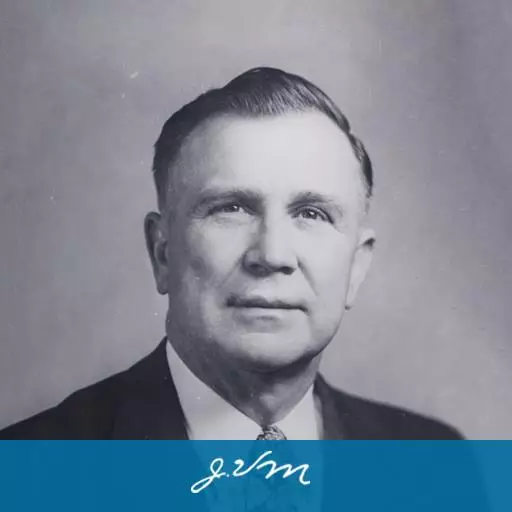
About Dr. J. Vernon McGee
John Vernon McGeewas born in Hillsboro, Texas, in 1904. Dr. McGee remarked, "When I was born and the doctor gave me the customary whack, my mother said that I let out a yell that could be heard on all four borders of Texas!" His Creator well knew that he would need a powerful voice to deliver a powerful message.
After completing his education (including a Th.M. and Th.D. from Dallas Theological Seminary), he and his wife came west, settling in Pasadena, California. Dr. McGee's greatest pastorate was at the historic Church of the Open Door in downtown Los Angeles, where he served from 1949 to 1970.
He began teaching Thru the Bible in 1967. After retiring from the pastorate, he set up radio headquarters in Pasadena, and the radio ministry expanded rapidly. Listeners never seem to tire of Dr. J. Vernon McGee's unique brand of rubber-meets-the-road teaching, or his passion for teaching the whole Word of God.
On the morning of December 1, 1988, Dr. McGee fell asleep in his chair and quietly passed into the presence of his Savior.
Contact Thru the Bible - Sunday Sermon with Dr. J. Vernon McGee
info@ttb.org
https://ttb.org/
Mailing Address
Thru the Bible, Inc.
P.O. Box 7100
Pasadena, CA 91109
In Canada:
Box 25325,
London, Ontario
N6C 6B1
Phone Number
(626) 795-4145 or
(800) 65-BIBLE (24253)