

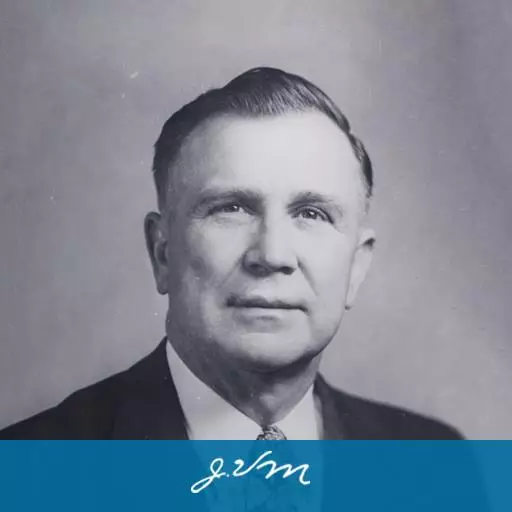
Israel Faces the Sunset of Life


As the long, restless journey nears its end, Israel faces the sunset of life. Dr. J. Vernon McGee looks at Jacob in his final days—a man once marked by striving, now leaning into faith. The deceiver has become a worshiper. Through blessing, remembrance, and hope, we’re reminded that a life shaped by God may end quietly, but it never ends without purpose, promise, and the faithfulness of God.
Steve Schwetz: Jacob lived a full, complicated life. He walked in his own strength, he paid dearly for it, and then finally learned what it means to depend on God. Now, at the close of Genesis, we meet him not as a restless young man but as Israel, a prince with God, nearing the end of his life.
Welcome to the Sunday Sermon on Thru the Bible. In his message, "Israel Faces the Sunset of Life," our teacher, Dr. J. Vernon McGee, walks us through the final chapter of Jacob's story and then shows us that it isn't about what he built or what he accumulated, but what he learned. Scripture tells us that when Jacob was dying, he worshipped while leaning on his staff, a powerful picture of dependence on the end of a long journey with God.
I'm Steve Schwetz, and before we begin, Thru the Bible's president, Greg Harris, is here with me to share some letters, this time from our home group members in Bangladesh.
Greg Harris: That's right, a place that you and I have had the chance to be in together. We've seen home groups at work there. For those who may not know, a home group is nothing more complicated than a home Bible study. It's just that Dr. McGee is their teacher in their mother tongue, and we have hundreds of different languages where Dr. McGee's teaching has been translated for the purpose of these small home groups.
This is a pretty rough place to do ministry. It's 98% Muslim. There's a small percentage of Hindus. We met some Hindus in parts of the country we traveled to.
Steve Schwetz: I am continually amazed and blessed at the impact that these radio home groups, small groups, have had all around the world. I think back to when we went to visit Bangladesh and just the amount of effort—I mean, we came, and frankly, they treated us like royalty.
Greg Harris: They don't know us very well. It's very humbling. People probably don't realize we do get treated like VIPs, and we don't feel like VIPs because we say, well, it's just Steve, it's just Greg. But we're representing all of us, and we understand that.
So what we talk about as a team is if people treat you like a VIP, then use that to bless people. I've seen you do it. You encourage people, you pray for people. We challenge them to be faithful to God's word. Believe it or not, they look to us for leadership. It's an honor, but what God does in these groups is amazing.
Steve Schwetz: Let's get to the testimonies. Here's one from Ratan. He says, "I run a grocery shop. For years, jealousy ruled my heart. I couldn't tolerate the success of others, and instead of celebrating them, I often tried to stand in their way.
Everything began to change when I received a media player and started listening to your program every day while working in my shop and once a week with my home group. As I listened to God's word, I discovered a powerful truth: God is love, and he calls us to love others. Through scripture, God opened my eyes to my own weakness and sin. He transformed my heart and replaced jealousy with love. The people I once envied are now the people I care about and pray for. Jealousy no longer controls me. I no longer envy anyone's success. Thank you, God, for changing my life through your living word."
Greg Harris: The more letters we get from around the world, the more it shows that the human heart and human nature is the same everywhere. Cultures are different, but everybody struggles with sin. I love how the word of God not only convicts people of sin but then it gives them hope. It helps them repent and move in a good direction.
Now, here's a listener named Guttam, and he tells us, "A few years ago, I was baptized in my church, but it was only a ritual. I had no real experience of salvation. I didn't read the Bible, I didn't know how to pray, and my life was marked by constant conflict. There was no peace, no joy, and no direction.
Everything changed when I received a media device. As I began listening to God's word, I changed. I finally understood the true meaning of salvation. I confessed my sins and received Jesus Christ as my savior. From that moment on, my life was different. Now every day I listen to God's word on the media player and spend time in prayer. Once a week, I share what I'm learning with my home group members. God's word has taught me how to live differently, and I am putting those teachings into practice. Please pray for me that I may continue to live according to the word of God."
Steve Schwetz: That is so encouraging because it shifts your mind in the way you think about fulfilling the Great Commission. It's not just "go into all the world and tell people about the Gospel so that they believe and get baptized." No, it's make disciples, and disciples need to be discipling and learning, and you do that through engaging with the word of God.
The home group provides the community for which they can serve one another, and it becomes this thing that God designs. Thru the Bible gets to play a part of it, and in extension, you get to play a part in that because you can pray for this ministry and you can support it. There is so much going on around the world. Our hope is that you are excited about the excitement that we see and hopefully that we're communicating to you even in this program.
Greg Harris: This is from Minoti. "I serve as a home group leader. A few years ago, I accepted Jesus as my savior through baptism, but at that time, I didn't fully understand what salvation truly meant."
There's that same example again. Maybe there was some type of a crusade or something that got people to walk an aisle and get baptized, and then the guy's like, "Nothing really happened."
She continues, "God later opened a new door in my life to know him more deeply. When I received a media kit, I began learning who Jesus really is and all that he had done for me. Through God's word, my faith grew clearer and stronger."
Steve Schwetz: Such an encouragement. Greg, unfortunately, I think we're about out of time, so we'll leave the remaining letters for another time. Would you pray for us as we begin?
Greg Harris: Father, we're just rejoicing as we see your spirit working through your word and through our humble efforts just to show people what your word says. We see it through Dr. McGee's teachings. Thank you that you're doing all of these wonderful things, bringing more and more men and women, boys and girls into your kingdom. We praise you for it in Jesus' name, Amen.
Dr. J. Vernon McGee: Our subject of the morning is Israel Faces the Sunset of Life. We're not thinking here of the nation, but rather of the individual who we know better as Jacob. But his name was changed to Israel, and in the last days, he truly lived up to that wonderful name: a prince with God. So today our subject is Israel Faces the Sunset of Life.
Guest (Male): By faith Jacob, when he was a dying, blessed both the sons of Joseph; and worshipped, leaning upon the top of his staff.
Dr. J. Vernon McGee: There is an ancient Egyptian riddle which goes something like this: what animal is it that when it is very young, it goes on four legs? When it becomes mature and adult, it goes on two legs? And when it becomes old, it goes on three legs? And the answer to that, of course, is man. For man, when he begins life, crawls on all fours. And then when he becomes adult, he stands and walks on two feet. But when he becomes an old man, he gets a walking stick and a cane or some sort of a staff and leans on it, and then he walks on three legs.
Certainly, this riddle expresses the life of Jacob. We find in his birth that even when he was born, the word of God tells us that he was twins. He had a brother, an older brother, Esau. But he didn't want him to be first, and he reached and took him by the heel. In fact, that's the way he got his name, Jacob: one that's a usurper, a supplanter. And he took hold of his brother's heel, and that became characteristic of him.
Not only in reference to his brother, but anyone else that tried to get past him, he would seize everything that was in sight and in his grasp. He tried his best to be first in everything. He went on all four, you may be sure. He took what he wanted, and he took it by any method that pleased him. Most of the methods that he used in those early days were not condoned of God at all.
Then he became a young man and he walked then on two feet. He walked in his own strength and by his own ability. He depended on his own cleverness and his own ingenuity to get what he wanted in life. He was able to take care of himself, and he did right well. He didn't need God because he was getting everything God had promised him and more besides by doing it his own way.
Then he went away, as we've seen some time ago, to visit Uncle Laban. When he went there, he was a proud, self-contained young man, self-sufficient, self-opinionated, self-assertive, a very aggressive young man. But one who was contemptible and despicable in all of his ways and one you cannot admire at all. That was this young man.
But he went to school to Uncle Laban, and Uncle Laban put him through the mill. Finally, after 20 years of a very hard life, he returned back to the place where God had called Abraham and his father Isaac. Now he comes back, but on the way back, God must deal with him because this man cannot continue to represent God down here and live as he has lived because his life certainly did not commend the profession that he made.
He came to Peniel, the brook Jabbok. We were there a little over a year ago. It's a rather desolate, bleak place even today. They've put now a bridge over the creek. It has a stream of water that still flows down there. It was there that God met this man. The record of it is back in the 32nd chapter. In case you might have forgotten, I'd like to turn back to that and just read two verses from there.
Guest (Male): And Jacob was left alone; and there wrestled a man with him until the breaking of the day. And when he saw that he prevailed not against him, he touched the hollow of his thigh; and the hollow of Jacob's thigh was out of joint, as he wrestled with him.
Dr. J. Vernon McGee: In other words, this is a man that by his own ability had been able to get by, although he'd had a pretty hard time of it for 20 years. Now as he returns, he has before him a brother, and the last time he saw him, he was seeking his life. Back of him was a father-in-law that had no use for him and would take everything that he had.
You can be sure of one thing, that it's not Jacob wrestling that night with God at all. Jacob didn't want to wrestle with anybody. After all, with Esau ahead of you and Laban back of you, you've got all that you can take on for one time, and so he was not looking for a third one. But that night it was God who closed in on this man.
Yet this man had been all of his life able to take care of himself, and he began to use every known hole to try to extricate himself, but he couldn't. Finally, he found out that he was not wrestling with just an ordinary person. Many of us believe it was none other than the pre-incarnate Christ that he was wrestling with.
Finally, he was crippled. In fact, the matter is this one broke his leg. God was prepared to break his neck in order to get him, but he broke his leg, and this man held on. Then God was able to bless him. He went through life limping. He was a cripple. He went through life from this time on leaning on a staff. He's a three-legged man from here on.
From that day on, he could not walk alone. He halted. He needed that third leg. The word of God tells us here in this passage, and what the writer to the Hebrews says, he died leaning on his staff. He went into eternity leaning on his staff, if you please. What a picture we have of this man, a picture of his dependence upon God.
Now he went into eternity resting on God as he had rested upon him from that day yonder at Peniel. Now the question is often raised today: was Peniel the conversion of this man? A great many people feel so, because up to Peniel, this man's life had nothing to commend it. Fact of the matter is, he acted like anything but a man of God. Therefore, does Peniel mark the conversion of the man or the commitment of the man, his surrender to God? Does this begin a yielded life?
That's always been the question, and I must confess this morning I do not know. I can only surmise, and frankly, I feel like it's the latter. This is his commitment to God. This marks the surrender of this man to God. From this time on, he's beginning to rest upon him, and it does not mark his salvation. I think that took place, if it did not before, the time he came to Bethel. It took place there at that place. But I can only, may I again say that, I do not know.
Now again, let's look at this. Here is a man, God's man, who starts out in life living fast and loose. But there comes a day when God lays hold of him and cripples him. Now there are today some professing Christians who do not act like Christians. Frankly, folk do not know whether they are or not. They have learned the language, they've probably even been in a fundamental church. They know when to say "praise the Lord" and they know when to say "amen." They know the vocabulary. They can act the part, and they do a very good job of acting the part.
But they have no fruit in their life whatsoever. Our Lord said, "By their fruits ye shall know them." Every now and then, someone comes to me and says, "Do you think that so-and-so is a Christian?" I'm not permitted to judge. I don't know. But the only thing we can say is there's no evidence of it there. Certainly, there's no evidence at all, for it's by their fruits ye shall know them.
Now God does know the heart and God does know us, and whether we are producing the fruit or not, he knows whether we're genuine or not. But certainly, for those on the outside, there'd be no way of knowing. But I do know this concerning Jacob: that the life of Jacob from Peniel on reveals a new and a changed man. He manifests the fruits of a man of God.
After this experience, he returned to Bethel, for instance, and he built there an altar. He brought his entire family and he had them put away their strange gods, because up to this point, he apparently made no effort to get his family to worship the living and true God. But from this day on, he did just that.
We find that he went into Egypt at the command of God. He's obeying God now, doing the very thing he did not want to do. He did not want to go to Egypt, but he went down there because God told him to go down there. Then when he got into the land of Egypt, we find that he exhibits a wonderful faith.
When he met his son Joseph that he thought was dead, he made the remark: "I never thought I'd ever see your face again, and now I see your children." There was Ephraim and Manasseh. We have that very wonderful interview of old Jacob, and he's now on his deathbed actually. He's dealing with Joseph and these two sons of his, his grandchildren. Listen to him.
Guest (Male): And Jacob said unto Joseph, God Almighty appeared unto me at Luz in the land of Canaan, and blessed me.
Dr. J. Vernon McGee: The faith of this man now in God. He said that back yonder, when I did not deserve it, when I did not merit it, God by his marvelous, infinite, wonderful grace, he appeared unto me and he blessed me. He believed God. Here is a man that now is walking by faith.
Then something else. Here is a man who always took credit, who always attempted to do it himself, who always boasted of his own ability. But listen to him talking to these grandsons. If there's ever a time that a man will brag, it's when he's talking to his grandson. That's when he's going to let them know what a hero he really is. Here was Jacob's opportunity, and he did have something to talk about. He had lived a great life, this man had. But listen to him.
Guest (Male): The Angel which redeemed me from all evil, bless the lads; and let my name be named on them, and the name of my fathers Abraham and Isaac; and let them grow into a multitude in the midst of the earth.
Dr. J. Vernon McGee: The Angel which redeemed me from evil. When he's ready now to give his testimony, he doesn't have any of the braggadocio, none of this self-opinionated viewpoint. His testimony doesn't savor of this braggadocio that you hear today in so many places. It's a testimony, a simple one: the Angel that kept me from evil, may he bless the lads. I haven't anything, Jacob says, to boast of. If I've even been kept from evil recently, it's been because the Angel of God kept me from evil and it's been by his grace. May that be the experience of these boys here.
What a wonderful thing. That doesn't give it all, by the way. He not only now has faith to live, he has faith to die. Will you listen to him here?
Guest (Male): And he charged them, and said unto them, I am to be gathered unto my people: bury me with my fathers in the cave that is in the field of Ephron the Hittite.
Dr. J. Vernon McGee: He now wants to be buried yonder with his forefathers, with Abraham and with Isaac. Faith to live, now he has faith to die. And he has faith in the resurrection. We're going to see that in particular next Lord's day. But faith in the resurrection, and the writer to the Hebrews says that when he was a dying, he blessed the two sons of Joseph, leaning on his staff. He'd walked on that staff now since Peniel, and he walks out into eternity leaning on that staff, trusting God, if you please.
And he says twice here that "I am to be gathered to my people," "I am to be gathered to my people." What a view this is of death for a child of God. We always see just this side of it and we see the loss that comes down here. We see the fact that in this home, this loved one is taken, and there's a loss. But look at it as God's man should look at it. The thing that old Jacob said, "I'm leaving my sons down here, but I'm going to be joined to my fathers up there."
What a homecoming that must have been when that boy got up yonder, an old man now. I think Isaac said to him, "Son, I didn't think you'd make it." And Abraham, I'm sure, said, "I was almost sure you wouldn't make it." But he made it. And he said it's because of the grace of God: "The Angel that kept me from evil keep the lads."
He bids goodbye to his 12 sons, but what a wonderful coming over yonder. Have you ever stopped to think that that's what it'll mean to you, a child of God? You hate to leave those that are your own down here, but you've got some over there, haven't you? Well, you'll be joined to them. What nonsense for anybody to even suggest, will we know our loved ones in heaven? My friend, you didn't really know them down here. Then shall we know even as we are also known. We're really going to know them over there. What a picture this presents for the child of God.
Now will you notice, this man and actually, if it wasn't death, it's humorous. You feel like almost laughing when you read this last verse of the 49th chapter.
Guest (Male): And when Jacob had made an end of commanding his sons, he gathered up his feet into the bed, and yielded up the ghost, and was gathered unto his people.
Dr. J. Vernon McGee: We're told that he even then was leaning on his staff. He hoped he could get down and walk some more because he'd been on the go all of his life. He wanted to keep going, but the time had come now for him to pull his feet up in his bed, and he died.
Now that's not a pleasant experience for anyone. I just can't buy this today, that death even for a Christian is a wonderful experience. I don't think so. Death was a curse that came upon the human race, and it's true that the sting has been removed. But I can never tell when a bee is buzzing around whether he's got a sting or not. I want to tell you, when death is buzzing around, it's not a pleasant sort of thing. I'm wondering if you would forgive me for intruding my own personal feeling at this time.
It was a little over a year ago that I was operated on for cancer, and you never know the outcome of that frightful thing. Then I went after a year's time for a checkup, and I went in fear and trembling. But I was able to report that after the first year, it's all clear, and the X-rays reveal that for which I'm indeed grateful. But I was not ready to go. Somebody says, "Weren't you ready?" No, I wanted to stay.
Dr. Walter Wilson, when I got back from the hospital, called me at home and he says, "I just wanted you to know that your friends in Kansas City were praying to keep you out of heaven." And I said, "Thank you, sir. I appreciate that very much." And I told him the little story that Dr. Vance Havner tells about the preacher one Sunday night. He asked his congregation, "How many of you want to go to heaven?" And everybody put up their hand except the fellow down front.
The preacher said to him, says, "Don't you want to go to heaven?" He says, "I sure do," but says, "I thought you was getting up a load for tonight." And I thought the Lord was getting up a load for tonight, friends. I want to go, but I didn't want to go then. I have great sympathy for old Jacob. I can see him there. He's not lying down. He's got his feet down on the floor, and he's got his hand on his staff. He says, "I'd like to keep going." But the physician said, "Can't go any farther. This is the end for you in this life." And so he just pulled his feet up into bed, but he kept leaning on the staff, and he went out into eternity trusting God.
What a picture. The book of Genesis in many respects is a disappointing book. It begins in such a grand scale. "In the beginning God created the heavens and the earth." Then when you come to the end of the book, or before you even get very far in the book, you start going to funerals. And when you get near the end of the book, Abraham died. And Sarah, his wife, had already died. Isaac and Rebecca die. Rachel had died, and he'd buried her at Bethlehem. And Leah died, and he buried her there at Hebron.
This earth that you and I live in today is a vast cemetery. There's never a moment when there isn't a funeral procession that's not in progress somewhere on this earth. What a picture. This man Jacob now is made into a mummy. Will you notice what it says.
Guest (Male): And Joseph commanded his servants the physicians to embalm his father: and the physicians embalmed Israel.
Dr. J. Vernon McGee: And then there began the longest funeral procession the world's ever seen. It was a funeral procession that many of the leading Egyptians went up to this land, and they buried him there in Hebron where Abraham was. They were all there, buried there, because they had a hope in the resurrection, of being raised from the dead.
But this is the story of man: by man came death. What's beyond? Well, it's a vast unexplored territory. Only three have ever reported from the other side. The Lord Jesus did, Paul did, and John did. They all brought a report of what's over on the other side. And have you ever noticed, none of them said very much about it. God wanted it that way, and God has left it that way, because my friend, he wants you to die leaning on a staff, faith in him.
Many years ago in England, a celebrated atheist died. Before he died, he said to one of his followers that he'd influenced a great deal. He says, "There is one thing that mars all the pleasure of my life." His friend was rather amazed and asked him, "What is it?" He said, "I'm afraid the Bible is true. If I could know for certain that death is an eternal sleep and that the Bible is not true, I should be happy. My joy would be complete. But that's the thorn that stings me. This is the sword that pierces my very soul. If the Bible is true, I'm lost forever. I'm lost forever."
May I say to you, God left it that way. The Emperor Hadrian, who had lived a sinful life—my, he had known what a Roman bacchanalian holiday was all of his life—when he was dying, he said, "No more crown for this head, no more scepter for this hand, no more music for these ears, no more beauty for these eyes, no more pleasure for this body. But oh, my soul! My God, what'll become of me?"
You bet what'll become of him. God left it that way. The Bible teaches that death is merely a door into a larger room. You step from here into eternity. And a walk in space, I should say it's a walk in space. He puts you on a launching pad if you're his, and you get there by faith.
Paul said, "Absent from the body, present with the Lord." Paul wrote his own epitaph. Paul gives it in Second Timothy, which is his swan song. He says, "I am now ready to be offered, and the time of my departure is come." Then he goes on, but he says, "I am now ready." The Greek is, "I am already ready to be offered. I'm ready to go. And the time of my departure is come."
When he used the word departure, in the Greek it's a nautical term. It's one of the most familiar, I suppose the most familiar word to anyone who's ever studied Greek. It's the little verb *luo* that you learn to conjugate real early. It means to loose, it means like untying your shoestring. And the word though is used here with a preposition before it, and it's *analusis*. We get our word analysis from it. "The time of my analysis has come," you could translate like that and be quite accurate.
What he's saying is simply this, though: it's a nautical term. He says, "The time of my departure has come." It's a picture of a sailing vessel. A sailing vessel is getting ready to leave harbor, and everything's been brought on board. Chart and compass is there. Captain comes on board. Then the wind comes up, and the little ship moves out of the harbor. "The time of my departure has come."
Now that's the opposite way that even Christians look at death. I've heard even at funeral services the term used, "Now so-and-so, who in this life was sailing on the sea, has now come into the harbor." That's not death. Paul says, "I've been tied up in the harbor all my life. That's what this life is. I've just been tied up in harbor getting ready for the voyage. And now, the time of my departure has come."
Tennyson, as far as I know, is the only poet that ever caught that. He says in "Crossing the Bar":
"Sunset and evening star,
And one clear call for me!
And may there be no moaning of the bar,
When I put out to sea...
Twilight and evening bell,
And after that the dark!
And may there be no sadness of farewell,
When I embark;
For tho' from out our bourne of Time and Place
The flood may bear me far,
I hope to see my Pilot face to face
When I've crost the bar."
That last is not scriptural at all, if you please. Jesus said unto these two women mourning for the death of their brother, "I am the resurrection, and the life. I am the resurrection, and the life: he that believeth in me, though he were dead, yet shall he live: and whosoever liveth and believeth in me shall never die."
May I say to you today that the Lord Jesus Christ is the Pilot that is on board. He actually is the staff that you lean on. David said, "Yea, though I walk through the valley of the shadow of death." And when he used the term "the valley of the shadow of death," he's not talking about a deathbed experience, he's talking about all of life. You're walking through the death valley. Believe me, living in Los Angeles, my friend, and driving in this great city, you're constantly in the shadow of death. "Yea, though I walk through the valley of the shadow of death," David says, "I will fear no evil: for thou art with me; thy rod and thy staff they comfort me." David said, "I'm leaning on that staff also."
Are you leaning on it? I remember as a young man growing up in Nashville, a very prominent couple. They were very wealthy. The young man was the son of a president of one of the great insurance companies of this country. He was engaged to a girl who'd been a debutante. They were very popular. They had had a very wonderful wedding.
But before their wedding, they had built their home in the swankiest section of Nashville. They built a home, two-story Southern architecture, and they had furnished it with antiques, valuable antiques, in fact invaluable antiques that they had brought from everywhere. The home was beautiful. They were married and started on their honeymoon.
They went over to the Great Smokies over in North Carolina. They were making a turn when they were hit by a truck. Both of them were killed instantly. The father of the boy, grief-stricken, went to that home, turned on the lights, locked the door and walked out. For two years, that home was never opened except to change light bulbs at night. I've driven by that home many a time. It was a lovely home, a beautiful home, but they never crossed the threshold of it.
After I became a Christian, studied for the ministry and went back there as a minister, I've driven by that home. It had been sold in the meantime and others living there, but I thought, they made such adequate preparation for down here. But I wonder, I wonder where they really went on their honeymoon. I wonder if there was a place prepared for them.
The Lord said, "I go to prepare a place for you." And then he said, "I am the way, the truth, and the life: no man cometh unto the Father, but by me." Oh, my beloved, how tragic it is to make such preparation down here and then take a journey and not have a staff to lean on.
Are you leaning this morning on a staff? Jacob did, from the day he met God at the Brook Jabbok. Oh, I do not mean to be pessimistic. You're facing the sunset of life, and I don't care who you are, you're walking through the valley of the shadow of death. That's life. Someone has said the moment that gives us life begins to take it away from us.
For some of you, the sun's high in the sky and it'll be a long time. For others of you present this morning, the sun's already touched the horizon and you don't have but just a few moments left. Are you leaning on a staff? Thy rod and thy staff, they comfort me. Are you trusting Christ as your savior?
I'd like to ask you the question, because you do have to answer it sometime. Are you leaning on that staff which is Christ today? The Great Shepherd he is. He was the Good Shepherd who laid down his life for the sheep. That rod and that staff comforts us. Is it your comfort today? Are you trusting Christ? Right where you're sitting this morning, you can trust him as your savior because he came to this earth and he died in your room and your stead so that death will have the sting removed, so that judgment does not face you. You can trust him and know that whatever comes, whether life or death, that nothing can separate you from the love of God that's in Christ Jesus our Lord.
And it doesn't make any difference how far ahead that day may be when you'll cross over, but you'll need him then. And you need him this morning. And you can trust him this morning while you have your health, all of your faculties, your senses. While you're in good health today, you can trust him. He died for you that you might live. "I am the resurrection and the life," he says. "Though a man was dead and he'll trust him, he'll live."
Steve Schwetz: Jacob finished life leaning on God, and that same hope is offered to you. If you'd like to know more about trusting Jesus Christ and resting in him, just click on "How Can I Know God?" in the Thru the Bible app or visit ttb.org. You can also email biblebus@ttb.org or call 1-800-65-BIBLE, and we'll send some resources to you in the mail.
I'm Steve Schwetz, and I'm grateful to have you on the Bible Bus today with us as we study God's word together. And as we go, I thank God for his promise of Philippians 1:6, that "he who began a good work in you will complete it until the day of Christ Jesus."
Join us each weekday for our five-year daily study through the whole word of God. Check for times on this station or look for Thru the Bible in your favorite podcast store and always at ttb.org.
Featured Offer


Featured Offer
About Thru the Bible - Sunday Sermon
These Sunday Sermon messages form a collection of the most effective and fruitful sermons given by Dr. J. Vernon McGee during his 21-year pastorate (1949-1970) at the historic Church of the Open Door when it was located in downtown Los Angeles.
Other Thru the Bible Programs:
Thru the Bible - Minute with McGee
Thru the Bible - Questions & Answers
About Dr. J. Vernon McGee
John Vernon McGeewas born in Hillsboro, Texas, in 1904. Dr. McGee remarked, "When I was born and the doctor gave me the customary whack, my mother said that I let out a yell that could be heard on all four borders of Texas!" His Creator well knew that he would need a powerful voice to deliver a powerful message.
After completing his education (including a Th.M. and Th.D. from Dallas Theological Seminary), he and his wife came west, settling in Pasadena, California. Dr. McGee's greatest pastorate was at the historic Church of the Open Door in downtown Los Angeles, where he served from 1949 to 1970.
He began teaching Thru the Bible in 1967. After retiring from the pastorate, he set up radio headquarters in Pasadena, and the radio ministry expanded rapidly. Listeners never seem to tire of Dr. J. Vernon McGee's unique brand of rubber-meets-the-road teaching, or his passion for teaching the whole Word of God.
On the morning of December 1, 1988, Dr. McGee fell asleep in his chair and quietly passed into the presence of his Savior.
Contact Thru the Bible - Sunday Sermon with Dr. J. Vernon McGee
info@ttb.org
https://ttb.org/
Mailing Address
Thru the Bible, Inc.
P.O. Box 7100
Pasadena, CA 91109
In Canada:
Box 25325,
London, Ontario
N6C 6B1
Phone Number
(626) 795-4145 or
(800) 65-BIBLE (24253)