

God Created


Everything we believe about God starts with a few powerful words: "In the beginning, God created." Dr. McGee explores the very first verse of the Bible and shows how it shapes our view of God, ourselves, and the world.
Steve Schwetz: Have you ever noticed how the very first sentence of the Bible answers some of the biggest questions that we're ever going to ask? Welcome to the Sunday Sermon on Thru the Bible. I'm Steve Schwetz, and in this study, we're going to go back to the opening moments of Scripture, where God simply and powerfully declares, "God created."
In just a few moments, Dr. J. Vernon McGee is going to help us see why these words are not only the foundation of the Old Testament but the foundation of our faith. So grab your Bible and get your heart ready for our message. And as we do, Greg and I are going to read a few letters from our fellow listeners.
Guest (Male): One of our favorite things to do is just to hear from others on the Bible Bus in English. Let's start with a listener named Hoover, which what a great name, who wrote to say this: "I first heard Dr. McGee on a Seattle radio station in 1980. Since then, I have moved to Oregon. I've been mostly bedbound due to medical treatment during the last two years. I was able to restart with Leviticus, where I listen every morning at 6:00 AM via 1-place.com on Spotify. I listen again at 8:30 AM with my caregiver."
"I've been a Christian most of my adult life. However, after deep contemplation and personal reflection, I decided I never gave all of myself to God. I'm getting baptized on Sunday and am born again in the Holy Spirit. Please send me four packs of the Bible Bus passes. I share them with my team of caregivers, family, friends, neighbors, and people I meet. Please sign me up for the World Prayer Team. You are my personal evangelical outreach ministry, and I do support my local church. Thank you so much for staying faithful to bringing the whole word to the whole world. It's exciting to be a part of."
Steve Schwetz: Wow, way to go, Hoover. The bedbound man who wants 40 Bible Bus passes. I love that image. That is fantastic. And of course, if you've not heard of the Bible Bus passes, they're simple business card-sized cards that have a QR code that will direct the user of their phone to get the app. We also can direct people to other languages. That same site will allow you to get apps in almost 100 other languages. It's a really good soft ask. You just hand somebody the card and say, "Hey, can I give you something that's really meant a lot to me personally?" You're not saying, "Hey, here's a tract." You're just saying, "I've really enjoyed this program." Hand it to them and move on. If they ask questions, great. Otherwise, get your next pass out and get ready to give it out.
This next one is from Anaise. This is a short, sweet one. It says, "I'm a longtime listener and supporter of Thru the Bible. I really do enjoy this app. I use it to help with studying our Sunday school lessons. I can spend the entire week in preparation with Dr. McGee." That is a great way to be using the app as well because obviously, she's not going to be going in sync with the program. You have the ability, for those of you that don't know, to basically start your own journey. If your small group is going through the book of Philippians, you can listen to all of Dr. McGee's teaching on Philippians very easily. It's a great resource in that way.
You can also leave us feedback through the app. We love to get that, and we can tell you that all of that feedback gets automatically uploaded into this very sophisticated system we have because we get so many testimonies and we don't want to lose a single one. One of the things we're going to do in the future in the studio is we're going to do nothing but read feedback we get through the English app. That's going to be fun.
Guest (Male): How about if you read this next one? This is from Jorge, who joins us in Spanish here in the US, and he tells us this: "I wake up at 5:00 in the morning, just like my friend Steve Schwetz. Don't text me at 5:00 in the morning, okay? First, I kneel and pray to have a spiritual encounter with my Lord Jesus Christ. Then I begin exercising while listening to the Bible study, which gives me greater encouragement to keep listening and learning. Thank you for the great dedication to spreading the Word of Almighty God." Just friends, it's great to know that listeners in Spanish all over radio stations we have airing TTB in Spanish, and then of course listeners through our apps can listen in lots of languages here in the US.
Father, we rejoice at the way your Word is just being flung out all over the US and all over the world. We look to you to bring the fruit, bring the harvest. In Jesus' name, amen.
Dr. J. Vernon McGee: Our subject this morning is God Created. These are two words that we've lifted out of the first verse of the first chapter of the first book of the Bible. These two words are the most profound and far-reaching and inclusive that you'll find in the Old Testament. Actually, they constitute a broad subject for the Old Testament. You can write over the entire Old Testament these two words: God Created.
And by the same token, you may write over the New Testament these words: God So Loved. Over the Old Testament, God created everything. In the New Testament, God so loved everybody. Everything and everybody's included. And may I say to you that yonder in the Old Testament, you have revealed the mind and the finger of God. The mind of God is seen in creation, his wisdom. His finger is seen, for the heavens declare the glory of God, and the firmament showeth his fingerwork.
The New Testament reveals the heart of God and the bared arm of God. For you find that when our Lord came, it is said of him that the only begotten Son, which is in the bosom of the Father, he hath declared him. The heart of God's laid bare through that mighty bared arm. Who has believed our report and to whom is that bared arm revealed? And that is the bared arm of God in redemption for a lost world. These are the two great themes of Scripture.
But someone says this morning, is there no love in the Old Testament? Yes, there is. Someone says, isn't there creation in the New Testament? Yes, there is. But it's interesting in the Old Testament, you are four-fifths of the way through the Old Testament chronologically before God ever tells anybody that he loves them. Took him a long time to get around to it. But finally you find him saying through Moses to the children of Israel in Deuteronomy 4:37, "And because he loved thy fathers, therefore he chose their seed after them, and brought thee out in his sight with his mighty power out of Egypt."
God waited a long time to tell anybody that he loved him. But he did all the time. The Old Testament's in no hurry to tell us that God loves. And when you get to the New Testament, you're not through with creation. For we read that this wreck that's in the world today known as mankind, if any man be in Christ, he's a new creation. Old things are passed away and all things become new. And then there's another new creation, the church is his new creation, purchased and washed by blood and water.
This new creation, created in Christ Jesus unto good works, which God before hath ordained that we should walk in them. And on his drawing board today, he has blueprints of a new heaven and a new earth, and that, my friend, is in the New Testament. How wonderful may I say to you this morning, these two testaments dovetail together on the importance of what God has done. God created, God so loved.
Now, these first ten words in English in our translation open the Bible: "In the beginning, God created the heavens and the earth." Or in Hebrew: "Bereshit bara Elohim et hashamayim ve'et ha'aretz." That's the Hebrew. And that's all of the Hebrew I know, but I wanted to show off this morning. May I say that those words tell out the majestic and profound fact that God created all things.
It was Mr. Capron in his book *The Conflict of Truth* that calls our attention to what Mr. Herbert Spencer said years ago. Let me give you his quotation: "The most general forms into which the manifestations of the unknowable are re-divisible are these." Will you notice them? Space, time, matter, motion, force. Isn't it interesting that in these first verses—actually the first two verses of the Bible—you have time: "In the beginning." You have space: "the heavens." You have matter: "the earth." You have force: "the Spirit of God." You have motion: "the Spirit of God moved upon the face." You have it all there, my beloved.
It's very interesting to note that this account that God's given us of creation, and this morning may we be very careful in saying some things that it is not because there's been too much made of it. First of all, may I say to you this morning that the creation account in Genesis is not history. You see, it antedates all history. Everything that's in it is prehistoric material.
And I think that candidly we need to write over it and every book on geology for that matter, ought to write the words that's found in the book of Job: "Where wast thou when I laid the foundations of the earth?" That's God's question. It's a good one. Where were you? In fact, any man that proposes to say what happened here a billion years ago, that brother's guessing. He can't do anything but guess. He may have a good guess, but the question is where were you?
God asks a very good question. So what we have even in Genesis, Moses never saw it. Moses was not there to witness it. No document comes down from those days. It's not history. Actually, there are friends, there are only two methods of approaching a knowledge of the origin of the universe, and one is speculation and the other's revelation. There are only two ways.
The second thing that this account is not, it's not myth. And I mean by that that it's not put together out of the figment of some ancient man's imagination. You take the heathen cosmogonies, and there are many of them by the way. You'll find that all of them are local, they're limited, they're puerile, and they're pusillanimous, every one of them. And the interesting thing that after all these years, the account in Genesis reveals the superiority to them in simplicity of expression and sublimity of conception.
And what we have is a universal record, a record for all mankind. And if you want to make a comparison, we do it in our book on *Briefing the Bible*. Let me give you that, and there are many we could compare it with, but the Babylonian, for so much has been made of the Babylonian. The tablets begin with chaos, the Bible begins with cosmos, perfection. The heavenly bodies are gods in the Babylonian account; in the Bible, they're matter, and that's all they ever are.
And you have polytheistic theology, that is many gods, presented in the Babylonian account and in the Bible account, you have monotheistic truth, only one God, my beloved. In the Babylonian account, it's the work of a craftsman, and in the Bible, God spoke. And it's all the difference in the world. Now, let me say something and will you listen very carefully? The account in Genesis of creation is not science. It's not. I insist this morning it is not science.
Oh, the flood tide of books that have been written proving that Genesis is scientific. Now, I know that that's disappointing to some. And I know immediately somebody says, "Then you mean it's unscientific?" Oh, no, not at all. I want to say to you this morning, I'm thankful that the Genesis account is not scientific, and I'll tell you why. You see, science is progressive, and science of a thousand years ago, brother, is it outmoded today. In fact, science of 50 years ago is out, and right now we are told that certain experiments that are being made in New Jersey may absolutely revise our thinking about matter and gravitation altogether.
Aren't you glad that the Bible is not scientific? And if you say it is, then I ask you, what theory of science does the Bible follow? Because the Natural Museum of Natural History in Paris lists 79 theories of the origin of this universe which were one time held as scientific and they are all exploded today, including the last, the nebular hypothesis. Aren't you glad that the Bible years ago did not espouse the nebular hypothesis? It didn't. The interesting thing is that if science ever reaches anything that is final and conclusive and perfect, it will dovetail with the Scripture.
You see, science doesn't have all the answers today at all, and any scientist who's reliable and honest will tell you that they do not. You see, these theories are out, and the very interesting thing is that if you want to take the Genesis account today and put it down by the side of the finest thing man has composed—and we have it here. This was written in *Life* magazine some time ago. It's written by the finest writers in America today and they took the finest statements of scientists and this is what they came up with. Listen to it.
"For perhaps one-half of the long span of earth history, the planet earth lay barren and lifeless under its canopy of air. The waters of its oceans rose and fell with the pulse of the sun and moon and stirred with the respiration of the winds. But in them, no living thing moved. Above them, the great continental platforms loomed rocky and bleak, devoid of green as the landscape of the airless moon."
"Then at some indeterminate point, some say two billion years ago, some a billion and a half, the entity called life miraculously appeared on the surface of the deep. What form it took, what concatenation of physical circumstances brought it into being, science cannot specify nor indeed reply with assurance to the question: what is life?" May I say to you, friend, I want more information than that.
And if after all these thousands of years, that's all they can tell me, I must confess I'll have to go somewhere else. You better get another explanation for the origin of this universe, my beloved. But it's been interesting that down through the centuries, some of the greatest scientists this world have ever seen have been believers, simple believers in the Word of God.
I wish this morning I could take time and give you the statement of Sir Isaac Newton, James D. Dana, and others, but let me give you Sir J. William Dawson, who is put at the top of the list today. He says the order of creation as stated in Genesis is faultless in the light of modern science. May I say to you, there's no conflict between science and the Bible for the simple reason that the Genesis account is way yonder above and far beyond any place science happens to be today.
Then my beloved, let me say one final thing that this is not. The Genesis account of creation is not the result of reasoning. It's not the result of philosophical speculation. It does not begin with some clever cliché. It doesn't begin on any kind of basis to prove God or even his universe. Doesn't begin that way. Very interesting, the latest thing that's out, that man is descended now from seaweed. That's the new approach, by the way. My, that sure relieves the monkeys of a lot of responsibility, doesn't it?
And if you see a great big tall fellow walking down the street like Brother Ralph Scoble, you can see that he probably did come from seaweed. But what about the little short ones today? But my beloved, may I say to you this morning that that's out, and the Scripture doesn't attempt to present it that way. And somebody says, then what do we have in the Word of God? Will you listen to me now very carefully?
What we have in the Genesis account of creation is a religious and redemptive record of the origin of the universe and it is revelation. Pure and simple, it's revelation. Doesn't claim to be anything else. Revelation from God. And that's what the writer to the Hebrews meant in the eleventh chapter, the third verse when he says, "By faith we understand that the worlds were framed by the word of God, so that things which are seen are not made of things which do appear." It is revelation. We receive it by faith.
Now, I want to illustrate that this morning and I go back to one of the greatest minds that the world's produced and that was Paley. In his wonderful *Evidences of Christianity*, and I want to lift out this morning from his chapter on natural theology, his illustration. I want to bring it up to date, and that's the only part about it that'll have any McGeeisms in it this morning, friends, but we'll bring her up to date.
Now here it is and will you follow us very carefully? It'll help us understand what God has said to us in the Genesis record. This is the classic illustration. Now suppose that America put up a satellite this past year and suppose that this satellite girdled the globe for several months and then it crashed in the jungles of South America, intact, still going beep-beep-beep. Or it would have a different language than Sputnik. I don't know, but there it is in the jungles.
Down there in the jungles, there is a tribe of Aztec Indians who've got cut off from mankind. They've had no contact with the rest of the world for over a thousand years. They know nothing of what's going on. They're a very intelligent people, however, and one of their most intelligent men is out walking through the jungle and all of a sudden he hears this noise, never heard anything like it before, and he follows it and he comes upon this satellite. He's never seen anything like it before.
His first question to himself is, where did this thing come from? And then he begins to investigate because he's an intelligent man. He said, "Now, I'm acquainted with all of the vegetation in this area. I don't think this thing grew here." And he begins to investigate and he comes to the conclusion it didn't grow there. Then he says, "Well, maybe this thing evolved because some of the elements that are in this are in the soil here and it may be this thing evolved."
And being an intelligent man, he comes to the conclusion that couldn't happen. And so he wonders. He says it came out of the heavens because you can see it made a tremendous impact here in the ground. This is very difficult ground here to get into with this rock and yet it went right on in. Must've come out of the heavens. Evidently, there is a designer up yonder in the heavens somewhere. He's an intelligent person and wonder what he looks like? And he—oh, he's wise, my, how wise he is to make a thing like that.
And he follows that line of reasoning and he says he has power, he threw that thing down here, my, what power he must have. And he keeps on reasoning. He comes to some definite conclusions about the maker of that satellite, and frankly, friends, some of them are accurate and some of them are inaccurate. But he reasons.
Now, while he's following this all-absorbing line of thought and his train of thoughts just going right along, he hears something else in the jungle. Somebody's coming through the brush and all of a sudden there breaks out in the opening a stranger and says to him, "Have you seen a very large gadget here?" He said, "Yes, here it is right over here." And this man steps up and looks at it with a smile and he tells this Indian, "I made that. I'm the maker."
And he has some gadgets with him that somehow or another are in touch with the instruments in that satellite. And say, oh, friend, don't you see that immediately and instantaneously, the position of the Indian has changed in reference to that satellite. His relationship to the satellite now is in reverse. Oh, he has no more weird guesses about it. The man tells him all about it. He gives him a very vivid and detailed account of it that makes an impression upon him.
And now with intense reality, he understands more about it, although many of the things the man says he doesn't understand. It's beyond his realm of knowledge altogether. And actually, he's not told some things that are new. He'd figured those out for himself. But he's confirmed in it, you see. Now, look. He now knows the person who made the satellite. Will you follow me? No longer does he question the satellite about the maker of it. Now he questions the maker about the satellite. And my brother, that's different.
It's not now the mechanism revealing the mechanic, but it's the mechanic revealing the mechanism. That's different. That's what the writer to the Hebrews intended: "By faith we understand that the worlds were framed by the word of God, so that things which are seen are not made of things which do appear." This universe we live in reveals an almighty Creator. He is an omnipotent designer. He has all wisdom.
But my brother, we no longer now reason from creation up to the Creator. But now creation is revealed by the Creator down to the creation. And that's different. Oh, that's different. We believe this morning that God created the heavens and the earth, not by some philosophical speculation, not by reasoning, not even by science with all due respect to so many Christian scientists today that are attempting to prove it and they're doing a good job.
But that's not the reason we believe it. We believe it because it's a revelation of Almighty God. We've come to know God. By faith we understand. We trust now in God. And our confidence is in God, not some theory about creation, not some theory about origin of the universe. Now, wait just a moment. I'll tell you why we don't.
You see, when a man figures out something from creation and he reasons up to God, actually what he's doing, God becomes his creation. He makes him. And you see, the man becomes proud of the fact of what he's done. "Boy, am I smart. I figured this out and I figured all the way up to the Creator." Reminds you of the nursery rhyme: "Little Jack Horner sat in a corner eating his Christmas pie. He reached in his thumb, pulled out a plum, and said, 'What a smart boy am I.'"
And so man today goes to creation and reasons up and then he says, "Boy, am I smart. I figured out God did this." Now, that's not the way we do it. This is the way. I come to this revelation from Almighty God. I'm humbled. I become a little child. He speaks and I'm dumb. I bid my imaginative and speculative mind be still and I say to my rebellious heart to listen. I take my place at his feet and I only say, "Speak, Lord, thy servant heareth."
And now, faith is the substance of things hoped for, the evidence of things not seen. He tells me now, will you follow me? He tells me now that he made this universe. He tells me that he created the heavens and the earth. He tells me really how he did it. "By faith we understand that the worlds were framed by the word of God." He spoke and it came into existence. And say, isn't that what they're playing with today, taking matter and putting it into energy? Isn't that what atomic fission is? God spoke energy and it went into matter. Man's just reversing it today.
We understand God did it. You've got to put your pegs down somewhere, brother. And so now like a little child, we listen to him. He says, "In the beginning, God created the heavens and the earth." What nonsense man has come up with. I regret that Usher ever attempted to date the Bible. It's thrown so many people off. I took this out of *Liberty* magazine way back in 1939. Here was a question asked: "What according to biblical records is the date of the creation of the world? 4004 BC." What nonsense. The biblical records do not give you a date. God says, "My child, you wouldn't understand."
Way back yonder in the beginning. Billions or two billions of years these scientists are saying now. I think they're a bunch of pikers. You see, God's got eternity back of him. It could have been trillions of years ago. He's in no hurry. He was back there trillions of years ago. Didn't have anything to do, I guess he did it then. He says, "My child, you don't understand. In the beginning, God created the heavens and the earth." That's not all. He made all things richly to enjoy.
He made man. He made you, he made me. He's the moral ruler of the universe and he made certain laws and ordinances for the functioning of his creation. And then this creature that he created, man, who he gave free moral agent, that man disobeyed God. He disbelieved first, disobeyed, and as a result, he had to be punished. And sickness came and sorrow came and death came to man.
But look, God so loved man that he became man's redeemer. And my friend this morning, the Maker did come down. They said, "Call him Jesus. He shall save his people from their sins." But he is Emmanuel, he's God with us. Maker came down. And he says, "I made it. All things were made by him and without him was not anything made that was made. For by him were all things created that are in heaven and in earth, visible and invisible. All things were made by him and for him."
And then he said when he got down here, he says he's going to work on a new creation. "If any man be in Christ, he's a new creation." For in Christ Jesus, Paul said to the Galatians, neither circumcision availeth anything nor uncircumcision but a new creation. "We are his workmanship," now speaking of the church, "created in Christ Jesus unto good works." And on his drawing board there are the plans for a new heavens and a new earth.
And there's a day coming when all of his creatures are going to gather before him and they're going to sing to him because he is the Creator. Yonder in Revelation 4:11, "Thou art worthy, O Lord, to receive glory and honor and power, for thou hast created all things, and for thy pleasure they are and were created." That's not all. Right now, this is a friendly universe and it's not because John Dewey's progressive method of education teaches it either. It's because the Word of God says this is a friendly universe. For every creature of God is good and nothing to be refused if it be received with thanksgiving.
We're living in a friendly universe. Oh yes, sin is entered and some tragic things. But my beloved, all the way through the Word of God, men are prompted to praise God because he's the Creator. Will you listen to some of them in Psalm 8:3? "When I consider thy heavens, the work of thy finger, the moon and the stars which thou hast ordained." Psalm 104:24, "O Lord, how manifold are thy works. In wisdom hast thou made them all. The earth is full of thy riches."
And then in Isaiah 40, listen to this: "Lift up your eyes on high and behold, who hath created these things, that bringeth out their host by number? He calleth them all by names by the greatness of his might, for that he is strong in power, no one faileth." My friend this morning, and even today, as Christians, we're to praise him. Some of our hymns today emphasize the fact he's our Creator. "When morning gilds the skies, my heart awaking cries, may Jesus Christ be praised."
And I'm not sure that I dislike the song that goes: "This is my Father's world, and to my listening ears all nature sings and round me rings the music of the spheres. This is my Father's world, I rest me in the thought of rocks and trees, of skies and seas, his hands the wonders wrought." God created.
But my brother this morning, do not go to the thing he created. It won't tell you much and you might get off the track. Go to the one who created. The invitation today is: Mr. Jones, meet your Maker. He made you. He made you. You are his creature. Since he made us, we belong to him. We are part of his universe. We belong to him.
And my brother, he did something else. When man went off the track and man went astray, God redeemed him and he's redeemed us today. We belong to him. And this morning, the invitation is to every person who has a free will. I beseech you therefore brethren by the mercies of God that ye present your total personalities to God. And the word for present is actually the same word translated in the sixth chapter as yield, and it should be that. I beseech you therefore brethren by the mercies of God that you yield your total personalities to him. He made you, he redeemed you.
Out in Pasadena, they put up some new traffic signals at certain corners. Now they do not have stop signs. They've put up a yellow triangle and on it it says yield. And for those coming down one street, they're to yield. The other street has right of way. I was going home the other afternoon and I came to one of those corners. There was a bad wreck there. Somebody didn't yield. Somebody didn't yield.
May I say to you this morning, he's coming down through his universe. His will is going to prevail. It's going to be too bad if you get to the corner and don't yield. He's coming through. He's coming through. Be an awful wreck if you don't yield. He's the Creator. He made you, he redeemed you. But he says this morning, "I've put up the sign: yield. Yield yourself to me."
I want to do what I did the first Sunday I was here. I do not think I've done it every year, but most every year. I have rededicated myself. I've never asked a congregation to do anything that I don't do. And this morning, I'm asking you to rededicate yourself to God, yield yourself. You belong to him. He made you and he redeemed you. It's tragic when a little creature thinks he can interfere with God's tremendous universe and shakes his little fist and says, "I'm going to have my way. I'm going to live my life and I'm going to do it the way I want to do it."
He's put up the warning at the corner, brother: yield. Be a wreck if you don't yield. And along the shoreline today, there are multitudes of wrecks of those who didn't yield at the crossroads of life.
Steve Schwetz: Are you right with the God who created you? It's a question that every one of us needs to answer. The one who spoke the universe into existence also made a way for you to know him personally through his Son Jesus Christ. And if you want to understand God's plan of salvation or if you're ready to begin a new life in him, just click on "How Can I Know God" in our app or at TTB.org. There you'll find clear and simple resources that walk you through what it means to trust the Creator who also became your Redeemer. Or you can call us at 1-800-65-BIBLE, and we'll put a few of those resources in the mail to you.
I'm Steve Schwetz, inviting you to join us next Sunday as Dr. McGee gives us another great message from Genesis, this time on Cain and Abel. As we go, I'll leave you with this blessing from Isaiah 26, verses 3 and 4: May the Lord keep you in perfect peace as your mind stays on him. Trust in the Lord forever, for in him is everlasting strength.
Today's study is always available, free to stream or download, thanks to the generous and faithful investments from your fellow Bible Bus travelers. Just go to TTB.org or download our app to listen again anytime. As always, we'd love to know what's God teaching you.
Featured Offer


Featured Offer
About Thru the Bible - Sunday Sermon
These Sunday Sermon messages form a collection of the most effective and fruitful sermons given by Dr. J. Vernon McGee during his 21-year pastorate (1949-1970) at the historic Church of the Open Door when it was located in downtown Los Angeles.
Other Thru the Bible Programs:
Thru the Bible - Minute with McGee
Thru the Bible - Questions & Answers
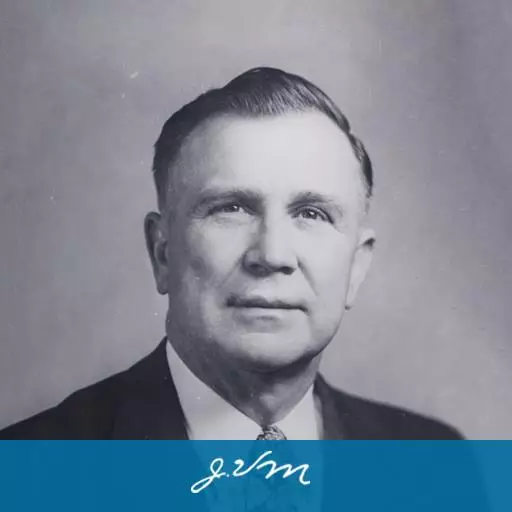
About Dr. J. Vernon McGee
John Vernon McGeewas born in Hillsboro, Texas, in 1904. Dr. McGee remarked, "When I was born and the doctor gave me the customary whack, my mother said that I let out a yell that could be heard on all four borders of Texas!" His Creator well knew that he would need a powerful voice to deliver a powerful message.
After completing his education (including a Th.M. and Th.D. from Dallas Theological Seminary), he and his wife came west, settling in Pasadena, California. Dr. McGee's greatest pastorate was at the historic Church of the Open Door in downtown Los Angeles, where he served from 1949 to 1970.
He began teaching Thru the Bible in 1967. After retiring from the pastorate, he set up radio headquarters in Pasadena, and the radio ministry expanded rapidly. Listeners never seem to tire of Dr. J. Vernon McGee's unique brand of rubber-meets-the-road teaching, or his passion for teaching the whole Word of God.
On the morning of December 1, 1988, Dr. McGee fell asleep in his chair and quietly passed into the presence of his Savior.
Contact Thru the Bible - Sunday Sermon with Dr. J. Vernon McGee
info@ttb.org
https://ttb.org/
Mailing Address
Thru the Bible, Inc.
P.O. Box 7100
Pasadena, CA 91109
In Canada:
Box 25325,
London, Ontario
N6C 6B1
Phone Number
(626) 795-4145 or
(800) 65-BIBLE (24253)