

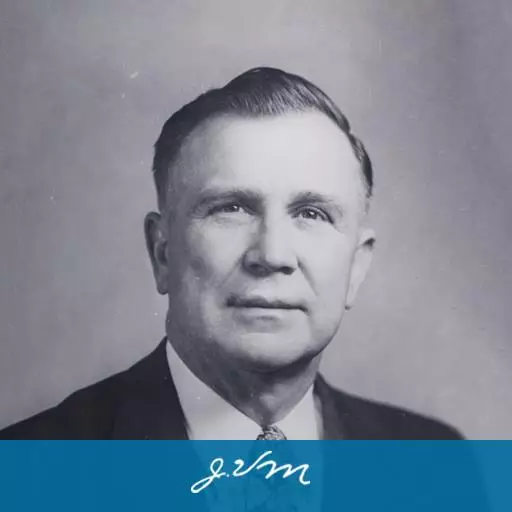
Contrary Winds, Troubled Waters, and You in the Boat


The presence of trouble does not mean the absence of the Lord. In Matthew 14, the disciples are exactly where Jesus told them to be—and still they find themselves battling wind and waves. Dr. J. Vernon McGee brings us into that storm and shows us a Savior who saves just at the right time. If you’re rowing hard against the current, be encouraged: the Lord has not lost sight of you, and He will see you through.
Steve: What do you do when the winds are against you and the waters won't settle either? Welcome to the Sunday Sermon on Through the Bible. I'm Steve Shwetzer, your host, and in our message, Contrary Winds, Troubled Waters, and You in the Boat, we step into a scene that may feel all too familiar: a small boat, a dark night, a storm rising, and faithful followers doing exactly what Jesus told them to do, yet finding themselves in trouble. In Matthew 14, Dr. J. Vernon McGee takes us into the Sea of Galilee to see what it means to trust the Lord, not in calm waters, but in the middle of a storm.
So, while you get comfortable and find your place in God's Word, let's hear from a few fellow listeners who are going through the Bible with us this time from Kenya. If you've prayed with us for Kenya before, then you might remember that it's a country of great spiritual hunger and diversity, with dozens of languages and communities that are spread across vast and often remote regions. Now, in many of these places, access to consistent biblical teaching is limited. But through radio and digital platforms, God's Word is reaching into small villages and large cities and, most importantly, changing lives. Here's just a few notes that we've recently received.
A listener of our Turkana program shares this: "The program makes me have a self-check to ensure I'm on the right track in my salvation journey." And then another person writes, "The teachings encourage spiritual growth and help me deal with life challenges, knowing that God is on the throne." And then from this time, a Swahili-speaking listener, we hear this: "Praise God, our family listens together every evening, and we discuss the teachings afterward. It really helped us grow spiritually as a family." And then a listener who joins us in his language of Somali wrote, "The program has greatly helped me strengthen my Christian faith. I appreciate how spiritual topics are explained slowly and clearly in a way I understand. Listening every evening at 6 p.m. has helped guide my life, encouraged me to read the Bible more, and strengthened my relationship with God."
Aren't these great letters? God's Word is changing the lives of brothers and sisters that we're never going to meet this side of heaven. And if you'd like to be a part of our world prayer team, which continues to travel and pray around the world every weekday, you can join by signing up at TTB.org. Let's pray together. Heavenly Father, thank you that your Word does reach every corner of the world and every corner of our hearts. As we study, Lord, help us to trust you in the storm and then to follow you in obedience. We're grateful to rest in the knowledge that you see us and care for us in every situation. In Jesus' name we pray. Amen.
Here's the Sunday Sermon on Through the Bible with Dr. J. Vernon McGee.
Dr. J. Vernon McGee: Now, this morning, our subject is "Contrary Winds, Troubled Waters, and You in the Boat." Much that the Lord Jesus did is associated with the little Sea of Galilee. In fact, he moved his headquarters to Capernaum at the northern end of that little sea, and as far as I can tell, he never changed his headquarters from that place. And around Capernaum and that particular area, he himself said that most of his mighty works were performed.
Now, we come this morning to look at one of those incidents that's connected with that sea, and there's no incident that I think that's more pleasurable and profitable to consider than this one that is before us today. It immediately follows and it's intimately associated with the feeding of the 5,000. And we break in at verse 22, "And straightway Jesus constrained his disciples to get into a boat and go before him unto the other side, while he sent the multitude away." In this entire incident, there is a note of urgency.
You find it in this word "straightway" and the word "immediately." It occurs again in verse 27, "And straightway Jesus spoke unto them, saying, Be of good cheer." And then again in verse 31, "And immediately Jesus stretched forth his hand." That note of urgency runs through this entire incident that's given to us here. And John, who records this same incident, and the fact of the matter is, he gives the reason for the urgency, for the reason that our Lord Jesus is moving as fast as he is here because ordinarily he did not move like this. But the reason is that when he fed the 5,000, they wanted to take him and make him king.
Well, he wouldn't want that. That's not the way he's to become king. He'll not come in through the tummy. He's no gingerbread king. He comes in through the heart and never through the stomach. He had fed them, and they liked it. And they wanted to get in on the program, and so they wanted to make him king, and he immediately got away from that crowd. And he went down to the sea, and he sent his disciples, put them in a little boat, and he immediately said to them, "You get to the other side." Those were his instructions. They were his commands. And then we're told, "He retired alone in a mountain to pray."
Now, you have there this scene, and it's a picture actually of today. The disciples are out yonder on the little Sea of Galilee, and they are in a storm, as we shall see. They are in the place of peril. He yonder has retired to the mountain in prayer. And he's in the place of peace and prayer. And that's a picture of today. That's a picture of him today. He has passed on to the Father's right hand. We're told he's our intercessor. He's in the place of prayer and of peace today. And down here on this earth, those that are his own are in the place of peril. Because I'm sure that most of you will agree that there's a bit of a storm blowing through the world right now, and the church is in that storm today.
Now, this is one of the many pictures we have in the Gospel of Matthew. It was the method of Matthew to record certain episodes that were capsule pictures of the wider context of the Kingdom of Heaven. In other words, you're given a bird's-eye view of a breathtaking landscape of the purpose of God in this world. You have the same thing later on in the Mount of Transfiguration. He's yonder on top of the mount with those that are his own, three of them, and there are two that have come back. Moses and Elijah are with him there. The dead saints, the living saints are with him. And down here upon the earth, you have the disciples at the foot of the mountain. A man with a little fellow, that his own son, demon-possessed, and the disciples are helpless. Another picture of today. He's yonder, if you please, with the Old Testament and the New Testament saints. His church is down here at the foot of the mountain in the presence of a demonized world today, and never has the church been as helpless as it is at the present hour. It's a picture of today. There are other pictures here.
I return back to this one. And this morning, let's look at the disciples who are in the place of peril first. Now, these men are sailing according to orders. They have orders from him to cross to the other side. His instructions have been given, and they are attempting to follow his instructions. It was late evening when they started. The sun was beginning to drop down yonder in the west, behind the mountains. Not really mountains according to our estimation. They're not over a thousand feet high. But it's a rather rugged scene there. And late in the evening, we're told, it's thrilling to be there in the evening and watch the sun go down. It's at that time that God dips his brush in a bucket of light and he paints fantastic scenes on the sky. It must have been that way because there was a storm coming up.
And these men, as they continued to row, they are sailors for the most part. They're familiar with that little Sea of Galilee. And actually, everything seemed to be fine. But night came on, and nothing was heard but the swish and the splash of the oars as these men were bending their backs to the oar, crossing to the other side at his command. And then all of a sudden, a storm broke on the little Sea of Galilee. And it was dark. The sea was rolling. The waves were angry. And there in the darkness, it's night. It's a bad night for a sailor to be out, let me tell you.
Now, these men, and I still insist, although I was corrected here several years ago, that they were doing a strange thing for the sailors in that day. And I learned that a few months ago down in the Caribbean, that when you're in a sailing vessel, that the thing to do is to tack. You never go the direction you're going. I don't know why, but you don't. If you're going this way, you don't go that way. You go this way. Then you go that way, and then you go this way, and it takes you four hours to get where one hour ought to take you. And these men, were though not tacking, and that was the custom. I found out that's the custom on that little sea. When you got a sailing boat, you tack. They're not tacking. They have the nose of that little boat pointed right into the fist of that storm. And I insist that they're wrong. That they shouldn't do that. These men are sailors. They knew that sea. They should have been tacking. And they should have made it for a harbor because that storm would indicate that.
That's the picture that's given to us. And Mark adds this detail. Matthew, Mark, and John record this incident. Mark says they were toiling and rowing. And that meant they had their backs bent to the oars, going right into that storm. And ordinarily, a storm like that in that day would take a sailing vessel off its course. You'll recall that when Paul was going to Rome, and they put him on this sailing vessel. He warned them not to go, but they went anyway. It was rather foolhardy. But after they got out into the Mediterranean, they got caught in this storm, and they were off their course two to three hundred miles after the storm was over. These men are not doing that. They should have tacked and have gone in a direction that would have brought them in a harbor. And they're doing it but this foolhardy thing. They're doing it for one reason.
Had you and I been there and said to them, "Look, fellows, you are smart sailors, why are you going directly into this storm as you are?" And they would have said, "Jesus commanded us to cross to the other side." And Mark makes it very clear where they were going: to Bethsaida. "And we're headed toward Bethsaida. We have clear-cut orders from him." And I'm sure that some of us would have said, "Well, look, I don't think you ought to go there because this storm has come up, and apparently he was not aware of it." And I think all of them would have smiled and said, "Apparently, you don't know him. He knew the storm was coming, and he sent us into the storm. And why he sent us into the storm, we don't know, but he sent us into the storm, and we're going through to the other side."
And I think then, you and I would have been very generous, because we live in this kind of a day. We would have said, "Now, look, I think that the thing for you to do is to get into the harbor and get out of this storm, because I'm sure he would understand." We could mouth, I think, a thousand pious platitudes to explain to them that he wouldn't want them out on the sea in a storm. They should get to the harbor. That's what we do today.
But again, they would have said, "He said for us to go to Bethsaida." And you and I then would have added this. We would have said, "Maybe you won't make it." And I know they would have smiled then. They said, "Look, he never told us that we'd miss the storm. He has told us we'll make the harbor." And my friend, that's all that he's told you and me today. He never said we'd miss the storm. He did say we'd make the harbor. That's the thing that is important here. It's easy to criticize these men, I recognize. They were quite human. They were filled with faults. They blundered. They made many mistakes.
But the thing here that makes me feel like throwing my hat in the air is, they were going into that storm because Jesus had commanded it, and they're asking no questions. They were fighting that storm. Grimly, resolutely, silently, wearily. They're ready to fall, but they're going into the storm because he commanded it. Dead fish float downstream. It's only a live fish that'll go upstream. These men had something, a courage. They had a steadfastness. They were completely yielded to him in this matter. And they were going there, and they had this that seems to be absent today from Christians. We today, when we go, it gets rough. I tell you, we reef our sails. We run with the storm and beat it into the first harbor we can get into. There's very little standing today for the Lord in this world.
I remember years ago of studying under a very wonderful Bible teacher, the Epistle to the Romans. And he began the seventh chapter of Romans by saying, he said, "Now, this is a chapter that all Christians should miss. You ought never to get into the seventh of Romans. You should get into the eighth of Romans." And you know that sounded good to me. And I must say that I started out as a minister, very much like a parrot. I merely said what he said. But I hadn't been a pastor long until I came to the conclusion, friends, that I wish some of the saints could get into the seventh of Romans. Because the man that fought the battle in the seventh of Romans is the man that got the victory in the eighth of Romans. And I don't know how you're going to get into the eighth of Romans except going through the seventh of Romans. You've got to know something about the contest. You have to know something about the grim battle that's being fought, my beloved. And if you're not fighting it, well, you're not in on it.
We are living in a day when we walk on rubber heels. We ride on rubber tires. We sit and sleep on rubber foam. And we write a few rubber checks. And we turn in rubber if there's anything we want to see. We don't want to miss a thing. We are softest today. But the man in the seventh of Romans is the man that got into the eighth of Romans. And this little boat is pointed into the storm, and they may be fighting a losing battle, but they're going into that storm because he commanded it.
Now, I want to say something this morning, and I hope I'm not misunderstood. I find I am sometime. But right now, we are, or the world, I should say, is going through a fad. And that fad is to go to the psychiatrist and the psychotherapist and have him tell what's the matter with us. And we're passing through that period. I trust the Lord, we'll get through it one of these days. It's a kick that the world is on today. And there's some families today that now have a family psychiatrist, just like they have a family doctor. And it looks like some need it, by the way. But frankly, I believe there's too much of this today. Because I can well imagine that you could be in that boat, and if it was a modern up-to-date story, Simon Peter would say, "Fellas, I think we ought to head for the harbor. I really don't like it out here because my mother was out on this Sea of Galilee, right in this particular area in a storm, and she was carrying me, and I've inherited all that, and I just hate storms. I think probably we ought to get to the shore somewhere."
And then I can well understand that Nathanael will say, he says, "Well, when I was a boy, I want to say that I fell in the water, and I almost drowned before they got me out. And I've just hate water. And I don't like the way the storm's putting water all over us. Let's head for the shore." And then I can understand that Thomas, good old Thomas, he said, "Well, I want you to know that in my home I was unloved. I wasn't wanted. And during that time, I built up a hostility to boats and to storms. And I didn't really want to come out here to begin with. I didn't like the command. Let's beat it into the harbor."
May I say that they didn't have those outs in that day. I'm a little disturbed today. People are now going to the psychiatrist first. Then they come to the preacher. And it seems like the preacher's sort of the last resort today. And when they come our way, they're desperate, you can be sure of that. But so far, I have not found one psychologist or psychiatrist that's telling these people that they are to face life with its ugly realities. And you don't blame your mother for it. And you don't blame your background for it. That you're responsible to God. And that by the grace of God, you can overcome your problem, whatever that problem is. I want to pass this on today, and I certainly am going to sound square in this day in which we live, but I'm going to pass it on this morning. Because these things are not heard today.
Have you come to the Red Sea place in your life, wherein spite of all you can do, there's no way out? There's no way back. There is no other way but through. We need Christians today who are going through because he commanded it. And they're not going to blame their mother or their background or circumstance or their condition, that the trouble is they are a rotten, miserable sinner. And that they have a lost nature themselves. And that is the basis of their problem. Will you listen? "He leadeth me" is true for all the past, with all its clouds and all its sunshine too. And true for all the days that are to come. He leadeth me, and he'll carry through. Do we believe that today? I'm not sure we act like that today.
Then listen to this one. Oh, the psychiatrist never recommends this. But God's Word recommends it. "Lord, bend that proud and stiff-necked I, help me to bow the neck and die. Beholding him on Calvary, who bowed his head for me." And instead of lying today on the psychiatrist's couch, it might be well to go to the foot of the cross and lie there for a while. I think that would solve a great many problems.
I was thrilled when General Douglas MacArthur went up to West Point and delivered his final message. And I think it's the greatest that he ever gave. He repeated these three words a dozen times. "Duty, Honor, Country." I told you I was going to be square, but Douglas MacArthur was square too. We need some square folk today. "Duty, Honor, Christ." We need more of that in the Christian's life. And by the grace of God, I'm in the storm. And by the grace of God, I'm not going to blame it on anyone else. By the grace of God, he brought me here, and by the grace of God, he'll see me through. We need that today. We see very little of it.
Oh, the song we sing today, and how we love it, a little chorus, "Safe am I." I wish I could sing. I'd sing it for you here. My, we sing, "Safe am I." I can well understand Simon Peter leading those fellows out there in that boat in that. He said, "Boys, it looks rough out here. We're in a dangerous spot." But we like the "Safe am I" spot today. Let me leave that.
I'd like to come now to where he is. They're in the place of peril. He's in the place of prayer and peace. And he has them in mind. Mark, in his Gospel, adds a note that's wonderful. "He saw them toiling and rowing." Does he care? Is he interested? Does he love them? "He saw them toiling and rowing." Darkness didn't shut him out. And my friend this morning, he sees you. Great many people say today, it looks like he's deserted me. No, he hadn't. He has his eye on you. "Well, why didn't he get me out of this?" He didn't say he'd get you out of it. He said he'd see you through.
Paul went to the Lord. He's like the rest of us. "Lord, I have a thorn in the flesh. I wish you'd remove it." He gets no answer. He goes back the second time, and he says, "Lord, I have a thorn in the flesh. Apparently, you didn't hear me the first time." He goes back the third time, and he said, "I don't want to annoy you. But apparently, you're not listening. I have a thorn in the flesh. I want it removed." The Lord said to Paul, "I heard you the first time. And I not only heard you the first time, I answered you. The answer's no. I'm not going to take the thorn away. You're going to find out my grace is sufficient for you. I'll see you through. I'll see you through, Paul." My beloved, that's the lesson he wants us to get.
Now, he goes to them. His eye is on his own. And he went to them walking on the water. I had a professor in college who was an ordained preacher, but he never believed the Bible. And he had an explanation for this. He said, "Now, Jesus really didn't walk on the water. He walked along the shore, and the disciples thought they saw him walking on the water." Now, I don't have faith enough to believe that one. To begin with, it's a storm and it's darkness, and you can't get a boat that close into the shore to see. If you do, you're in trouble. And the second thing is, that professor wasn't there. He doesn't know. The record that we have is all that we have, and either you accept the record, or you throw it all out.
And John says they were 25 or 30 furlongs in the midst of the sea, and at that particular area, and when we went by there, I tried to look, and friends, you couldn't see anybody from the shore. You're two miles. Even on a clear day, you're just not going to be able to see that clearly. And they were out at least two miles. They're crossing from the traditional spot where he fed the 5,000, coming actually, east, where I used to think it was westward, going to Bethsaida, that's on the east side. And that's where the storms come from, is on that east side. And they're going right into it. It's just lots easier for me to go back and determine who he is, and he is the Son of God. And by him all things were made that have been made. And the creator's walking on the water that he made. I find no difficulty with that. But I do find difficulty with him seeing two miles, or for them to see two miles in that storm. I don't think they could do it. He can.
Now, he walked to them, and it looks as if he would go by. I think that Simon Peter was sort of the coxswain, which means that he was up in the prow of the boat and giving instructions. And that sure would be a proper place for him. And the others were bending at the oars, and naturally, they were not seeing what was coming toward them because they're rowing. Simon Peter's up at the other end looking the opposite direction, and all of a sudden, he sees him walk by him. He would, as if he'd go by. Now, it says they thought that they saw a ghost. And somebody says, "See, they're superstitious." Oh, I don't know whether they are or not. The Negro man over in Memphis several years ago, he said, "I didn't believe in ghosts either until I saw one." And these men were in that position. They didn't believe in ghosts any more than you do. But what would you do if you saw someone walking by on the water? And that's what they saw. They had to come up with some logical explanation to satisfy them.
And then notice what our Lord did. "But straightway Jesus spoke unto them, saying, Be of good cheer. It is I. Be not afraid." Every time the supernatural breaks into the natural, you'll always find the Lord Jesus saying, "Be of good cheer," or "Be not afraid." That's what he said when he came back from the dead. That was his introduction to them each time. "Be not afraid. Fear not. Be of good cheer." I'm sure that's what he wants to say to us today, the supernatural Lord at the right hand of God. And we're told here that the storm ceased when he got into the boat. Well, he's the master of the sky. He's the master of the sea. And I personally believe that this reveals him as indeed the Son of Man, as well as Son of God. It reveals him as the one that took Adam's place, the last Adam. Adam was given dominion over this earth and he lost it. The Lord Jesus recovered that, and I think that's the reason he performed miracles like this, was to demonstrate what Adam had had before. Adam could have controlled a storm. But man can't today. He can he just can't control it in spite of all he knows. He just does not control this earth that we live on.
Several years ago, they built a a dam on the Colorado River, the one in Texas. There's a Colorado River down there, and it was the third dam. And they invited down one of the Texas politicians in Washington to come down and dedicate it. And he came down. I was living in Texas at the time. And he made quite a speech. And he waxed eloquent. He told about how man had conquered nature now, and that man was the master. Before that politician got back to Washington, we had a rain. And I mean the kind of rain that you can have in Texas. It washed out all three of those dams. May I say to you, man doesn't control nature, but he controls nature. And that is the purpose of this. When he came into the boat, the storm ceased. And then Simon Peter asked to do something. This is a little byplay here, and very briefly, I'd like to just look at it as we conclude.
Simon Peter said, "Bid me come unto thee on the water." And I do not know why, but most commentators, oh, they criticize him for that. They said he shouldn't have done that. Again, may I say to you that thank God for one man in that boat that said, "Bid me come unto thee on the water." Here is a man that wants to venture something for God. May I say to you that that's another note that is silent today in the church. Venturing something for God. Really willing to stand. Really willing to pay a price. Really willing to go out for God. "Bid me come to thee on the water." And then I've heard them say that he failed. He did not. May I read this? "And Peter answered him and said, Lord, if it be thou, bid me come unto thee on the water." And he said, "Come." "And when Peter was come down out of the boat, he walked on the water to go to Jesus." He walked. Don't say he failed. He walked on the water. But something happened. The same thing happened to him that's happened to me. Maybe it hasn't happened to you. "And when he saw the wind boisterous, he was afraid. And beginning to sink, he cried, saying, Lord, save me."
This man, as long as he kept his eye upon the Lord Jesus, had no problem. It's when he put his eye on those waves. And that's the problem today. May I come back to it? I think it's wrong today to turn people to the turmoil that's going on within them. Of course, we're all sinners. When I studied abnormal psychology, I went in to the professor, for I was working in under him as his assistant. And I went into him one day, and I said, "Doctor, we have not yet studied any form of abnormality. But what I've discovered, I have some of the symptoms." And he began to laugh. He said, "Do you know, I wondered when you'd be coming." Because he said, "All the class has been here now." And he said, "If you really want to know, I have them too." He says, "We all have them." Of course, we do. We are abnormal. We are sinners. We are not what God wanted us to be.
So, let's quit looking down in here. It's not pretty. It's never pretty down in here. But look to him. Look to him today. Maybe you weren't loved in your home. But he loves you. Maybe you have had a rugged experience. But he has brought you up to this moment. Hasn't he? Why do you think he's going to let you down now? Simon Peter got his eyes off the Lord. But when he did, he cried out, "Lord, save me." And I like this better for sinners rather than "Lord, be merciful to me a sinner." This is really coming from the heart of a man that wants to be saved. "Lord, save me." It's the briefest prayer in the Bible. Many years ago, I had a program in Pasadena where I asked questions and didn't answer them. I like that one better than the one I got now, where we answer them. But we asked questions, and we asked the audience, the listening audience, to send in the answers. And one of the questions we asked was, "What's the shortest prayer in the Bible?" You'd be amazed the number of people that sent in the so-called Lord's Prayer. And it's not. And I did not get a right answer the first week. I asked it the second week. And I didn't get a right answer the second week. And the third week, I asked it again. And some fellow, he sent this in, "Lord, save me." It's the shortest prayer in the Bible. "Lord, save me."
And when I gave this out, many people wrote in and said, "This is so short, we couldn't think it's a prayer." Well, we're accustomed to Sunday morning prayers. We preachers, oh boy, are we wordy. Can you imagine Simon Peter beginning as we begin on Sunday morning. "Lord, thou who art the omnipotent, omnipresent, omniscient one." He'd have been 20 feet underwater before he got to what he wanted. I want to tell you, this man wanted to move to it in a hurry. Oh, we need that urgency in prayer too today. "Lord, save me." And that's the kind of a prayer that got an answer. "And immediately Jesus stretched forth his hand, caught him and said unto him, O thou of little faith, why didst thou doubt?"
Getting away from him. "And when they were come into the boat, the wind ceased." And John says, "And immediately they were at the other side." That worried me for years. It says they were they were immediately. John says, "They were at the other side." And I confess, one time, I couldn't explain that. And a retired preacher down in Georgia came up to me, and he said, "Young man, let me pass on to you something I learned years ago." He says, "John is the apostle of love, and that's the language of love." And let me explain what I mean. He said, "When I was a young fellow, I courted a girl in a buggy." And he said that we lived about three miles from the church, and she lived about three miles on the other side of the church. And he said, "Sunday afternoon, I'd hitch up the buggy, shine up the buggy, and the harness and get in and I'd drive over to get her. Then we'd drive to church on Sunday evening." And then he says, "We'd drive home after the service." He says, "That was the shortest three miles I've ever gone in my life." He says, "We just got in the buggy, and just like that, we were there at her home." Then he said, "Later on, I had to get in the buggy and come right back by that church." And he said, "Far as I know, it was the same distance." But he said, "Late at night, when I was by myself, I thought we'd never get to the church. Oh, it was so far."
When he's in the boat, immediately you're at the land. There's a bit of a storm blowing through the world right now, and I can't blame anybody else. My problem is my relationship with him, and I want to pledge my allegiance to him. He's my savior, and he's my Lord. God delivers from going through this as just a ritual. May it elicit something from us today that'll cause us to live for him in this hour and stand for him. Oh, how we need it. And my friend, if we don't get it, the church is doomed. It's doomed unless there are men and women willing to pay a price, willing to pledge their allegiance to him. May I ask you this? Is he really in the boat with you this morning? He wants to get in the boat with you. In fact, he wants to take over. Not just chart and compass come from thee. He is the chart. He is the compass. "I am the way, the truth, and the life. No man cometh unto the Father but by me, and him that cometh to me, I will in no wise cast out."
Steve: Contrary winds, troubled waters, and yet he never lost sight of them, and he hasn't lost sight of you either. If you'd like to know more about trusting Jesus Christ, really placing your life in his hands, click how can I know God in our Through the Bible app or visit TTB.org. Or just call us at 1-800-65 Bible, and we'll send you a few free resources by mail. And then we'd also love you to join us on the daily program of Through the Bible as we continue traveling through the entire book of Matthew. And to help you go deeper, download our free Bible companion for Matthew from our app or at TTB.org. It's really a great resource with summaries, scripture links, and reflection questions that'll help you think through and then apply what you're learning.
So, when you're in touch, why don't you tell us how you listen? Is it through the app or online, YouTube, your favorite radio station? However you hop aboard the Bible bus, we'd love to know. I'm Steve Shwetzer, and I sure hope that you'll come back next week with one of Dr. McGee's most popular messages that we'll be airing from the top of the Mount of Olives from Matthew chapters 24 and 25. Until then, I pray Isaiah 43:2 over you: that when you pass through the waters, he will be with you, and that through the rivers, they shall not overflow you. Join us each weekday for our five-year daily study through the whole Word of God. Check for times on this station or look for Through the Bible in your favorite podcast store and always at TTB.org.
Featured Offer


Featured Offer
About Thru the Bible - Sunday Sermon
These Sunday Sermon messages form a collection of the most effective and fruitful sermons given by Dr. J. Vernon McGee during his 21-year pastorate (1949-1970) at the historic Church of the Open Door when it was located in downtown Los Angeles.
Other Thru the Bible Programs:
Thru the Bible - Minute with McGee
Thru the Bible - Questions & Answers
About Dr. J. Vernon McGee
John Vernon McGeewas born in Hillsboro, Texas, in 1904. Dr. McGee remarked, "When I was born and the doctor gave me the customary whack, my mother said that I let out a yell that could be heard on all four borders of Texas!" His Creator well knew that he would need a powerful voice to deliver a powerful message.
After completing his education (including a Th.M. and Th.D. from Dallas Theological Seminary), he and his wife came west, settling in Pasadena, California. Dr. McGee's greatest pastorate was at the historic Church of the Open Door in downtown Los Angeles, where he served from 1949 to 1970.
He began teaching Thru the Bible in 1967. After retiring from the pastorate, he set up radio headquarters in Pasadena, and the radio ministry expanded rapidly. Listeners never seem to tire of Dr. J. Vernon McGee's unique brand of rubber-meets-the-road teaching, or his passion for teaching the whole Word of God.
On the morning of December 1, 1988, Dr. McGee fell asleep in his chair and quietly passed into the presence of his Savior.
Contact Thru the Bible - Sunday Sermon with Dr. J. Vernon McGee
info@ttb.org
https://ttb.org/
Mailing Address
Thru the Bible, Inc.
P.O. Box 7100
Pasadena, CA 91109
In Canada:
Box 25325,
London, Ontario
N6C 6B1
Phone Number
(626) 795-4145 or
(800) 65-BIBLE (24253)