

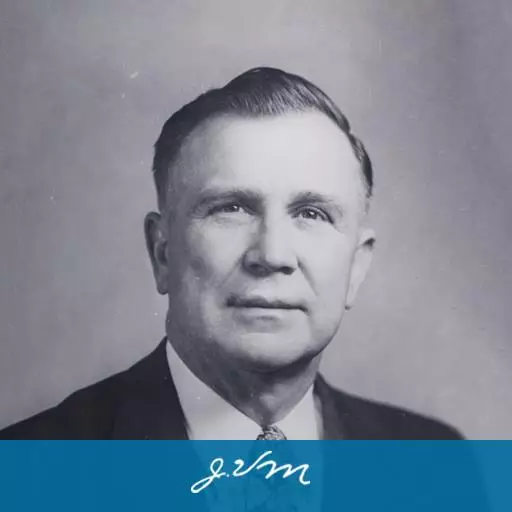
Chickens Come Home to Roost


What if the choices we try to forget are the very ones shaping our future? In this striking message from Genesis 29–32, Dr. J. Vernon McGee follows Jacob’s long journey through deception, discipline, and finally surrender. With honesty and urgency, he reveals the unbreakable spiritual truth that whatever we sow we will also reap and shows how even God’s correction is an invitation to grace, restoration, and a life made right with Him.
Steve Schweitz: What keeps people consistently coming back to God’s word, reading it and studying it day after day, year after year, generation after generation? For many around the world, the answer is the faithful teaching of Dr. J. Vernon McGee.
Welcome to the Sunday Sermon on Through the Bible. I’m Steve Schwetz, and today is really a very special day on the Bible bus. We’re turning our attention to Chickens Come Home to Roost. It’s a beloved message from Dr. McGee because it speaks with honest clarity and deep hope straight to the human heart. These Sunday Sermon messages carry a different kind of warmth. They feel personal, pastoral, urgent in the best sense of the word. And today’s message is one of those sermons that people remember long after they’ve heard it.
Before we get to it though, I want to share messages from a few of our Spanish-language listeners, brothers and sisters whose stories remind us why God’s word matters so much. Dolores from the United States recently left this comment on Facebook. “Thanks to you, I can hear the word of my good Lord every day. I used to listen to and read the word, but I fell short in understanding it. And I truly love how wonderful it is to be able to learn from you. I’m grateful to all of you who make it possible for us to have the privilege of hearing and learning from the word of my great God. Thank you and may the Lord continue to bless all of my brothers and sisters in faith. I send you all a big hug.”
Well, isn’t that beautiful? Simple gratitude for understanding God’s word more clearly. And you know, that’s exactly why this ministry exists. It’s to help people hear, understand, and grow. Now, here’s another note. This is from Pedro in Argentina. “I’m from a small town with limited resources, and God always gave me the desire to study and learn about him. Your studies are incredible. I listen to them every day and learn and study a lot. I searched for Dr. McGee’s full study and made a copy, which was hard because it’s so big, but it’s helped me tremendously. I teach a small group and use many of your outlines to teach. You are a great blessing.”
Well, that’s how the word of God moves, isn’t it? One heart changed, then another, and then a whole community is touched. Here’s a listener from Colombia named Inez. “When my husband was a child, he lived in a town where after working in the fields, people would gather at night around the radio and listen attentively. Later, we came to faith in Christ and searched for answers to biblical questions with Dr. J. Vernon McGee. And here we are. I especially loved the musical themes and the reflection before the teaching. La Fuente de la Vida has been a great program.”
Well, isn’t that an encouragement? And then here’s one. This is a brief one from Sami in Mexico. “I’ve come to know God’s tender care through the power of his word. In seasons when loneliness has felt especially heavy, scripture has been my source of strength and comfort. Again and again, the Lord brings passages to mind that assure me I’m never truly alone. The real joy is found in his presence and lasting delight at his side. I’m deeply grateful for these gifts of grace. May God bless you all.”
Well, that’s the quiet miracle of scripture, isn’t it? It meets us in hunger, in our questions, even in loneliness, and then it reminds us that we’re never truly alone. And maybe that resonates with you today. Because the truth is, your story matters too. The way God first met you right where you were, the way he’s teaching you, correcting you and comforting you, or drawing you closer right now. These stories encourage believers all over the world more than you might think.
So sometime soon, why don’t you write and tell us what God’s doing in your life as a result of spending time in his word? Your story could be the very thing that someone else needs to keep going. You can share it online at TTB.org, through our app, or by writing to us at Box 7100, Pasadena, California, 91109, or in Canada, Box 25325, London, Ontario, N6C 6B1. Or you can always call and leave your story on our voicemail line. We especially love hearing from you that way.
And now, as we turn to our message, let’s pray. Father, thank you for your word that reaches across languages and nations and generations. And thank you for every listener whose life is being changed by the truth of scripture. As we hear this message now, Lord, quiet our hearts and open our minds and help us to respond to you with faith and obedience, in Jesus’ name. Amen.
Here’s the Sunday Sermon on Through the Bible with Dr. J. Vernon McGee.
Dr. J. Vernon McGee: Our subject of the morning is, Chickens Come Home to Roost. This morning, we have a text, and the text is found in the sixth chapter of the Epistle to the Galatians, verses 7 and 8.
“Be not deceived. God is not mocked, for whatsoever a man soweth, that shall he also reap. For he that soweth to his flesh shall of the flesh reap corruption; but he that soweth to the the Spirit shall of the Spirit reap life everlasting.”
This statement of the Apostle Paul in Galatians is an axiom of life. It’s a law of humanity. It’s like the law of gravitation. It is one that operates in all the different areas of this world. It’s applicable to any sphere or situation, or any strata of society. The entire spectrum of life is covered by this law. Move it into any area, move it into the realm of biology. Go first to botany, in plant life.
You sow corn, you get corn. You sow oats, you get oats. Whatsoever a man sows, that shall he also reap. Move it into the realm of zoology, the animal world, and you will find that cows beget cows, lions beget lions. You can take it into the bovine, or the canine, or the avian family, and you’ll find that it works. Chickens come from hen eggs. That’s a profound statement to make, I know, but it certainly is a true statement, and I’m not this morning debating whether it was the chicken or the egg first. Since then, it’s always been chickens come from hen eggs, because there’s a law that operates, whatsoever a man sows, that shall he also reap.
If you want turtles, you must have turtle eggs. Now, it is true that pearls do come from oysters, and I heard of a girl that got a diamond from a nut, but that hasn’t anything in the world to do with this law, I can assure you, because it still works in all the different departments of life. You take in the realm of political economy, put it on the national level, and go back to the very beginning, and you take that first great world empire. God said through Daniel, “You’ve been put in the balances, weighed in the balances, and found wanting.”
God says what you sow as a nation, that you will reap. Righteousness exalteth a nation, but sin is a reproach to any people. You take it into the spiritual realm, and it’s true today for both the saved and the unsaved. It’s true of those that are children of God, and those that are far from God, and without God in the world. The person who is saved does not abrogate this law because he happens to be saved. And by the same token, the person who’s unsaved does not abrogate the law at all. It operates in the life of every individual here and has lived on the earth.
Haman built a gallows to hang Mordecai on, and he was hanged on that gallows. Justin the apostate, who killed Christians in his army and used the soward to exterminate them, was exterminated by the soward on the battlefield. We were down in New Orleans, and we went through the French Quarter, and they showed us the Napoleon house that’s down there.
It’s not that Napoleon ever lived in that house, because he never did. But it was prepared for him, and it was made ready for him, but he never got there. It was a dream that never did come true, unrealized and unfulfilled. And this man died in loneliness and in bitterness on the island of Elba, never permitted to come. The man that had dashed so many dreams to the ground, the man that had brought disappointment and loneliness to so many people in Europe, it came to him, because God says, “Whatsoever a man sows, that shall he also reap.”
Hitler and Mussolini, they probably stirred up more strife and bloodshed than any two men that have lived. And these two men died by violence and bloodshed, because you don’t break that law even when you’re a dictator. Al Capone was the gangster that had a gang that controlled liquor during the Prohibition era and prostitution, especially in Chicago. But a girl took an awful revenge on him. For he died of paresis. Paresis is a softening of the brain caused by syphilis.
May I say to you, God says, “You don’t break his law.” Be not deceived, God is not mocked, whatsoever a man sows, that shall he also reap. The world outside calls it poetic justice and recognizes it. The poet expressed it like this, “There is a destiny that shapes our ends, rough hue them how we will.” The Greeks put it in a bromide like this, “The dice of the gods are loaded.” And they are, because you don’t, you don’t break this pattern, not in this life.
The philosopher has expressed it like this, “The fortuitous concurrence of circumstances.” And the man on the street just calls it bad luck. But this morning, we call it, Chickens Come Home to Roost. Hamlet, who had seen the disaster, and who could say, there’s something rotten in the state of Denmark. He could say finally this young prince, “Oh that this too too solid flesh would melt, thaw, and resolve itself into a dew, or that the Everlasting had not placed his cannon against self-slaughter. How stale, flat, and unprofitable seem to me the uses of this world.”
Chickens do come home to roost. Jezebel played fast and loose, and thought that she would get by with it, but she didn’t get by with it. Because the prophet had already said, “The same way in which you took the life of an innocent man and the dogs licked his blood, the dogs will actually eat your flesh.” And it came to pass the same way. Marilyn Monroe was a sex pot, was an idol of American young girls. May I say to you, she was a suicide. Ill-starred. And Brigitte Bardot has tried several times to commit suicide.
Because there is a law that operates that God says, “Be not deceived. God is not mocked, whatsoever a man sows, that shall he also reap.” Now, this text actually was not given to the unsaved. It wasn’t given to the non-Christian at all. It was given for the child of God. That’s what Paul means. When he’s writing to the Galatians, and he follows through by saying to the Christian if you please, “If you sow to the flesh, you shall of the flesh reap corruption.” That’s for the Christian. “And if you sow to the spirit, you shall reap life everlasting.”
Now, this, this text here is, I think, one that is applicable to a man in scripture as no other man. Jacob is the most conspicuous example that we have in scripture of the operation of this text. And I want to said right here at the beginning that Jacob was God’s man. He was chosen before he was born. He played fast, and he played loose with life, the devil’s out. But he was God’s man through it all. His conduct did not conform to the position that he had before God, but he was God’s man in spite of what he did, and in spite of his life, he’s still God’s man.
But he lived like the devil’s disciple. And you begin to see him starting early in life. He bought a birthright from his brother that had already been promised to him, and God would give it to him in his own good time, but why should this young fellow wait? When he’s sharp enough, and he’s clever enough, and he’s crooked enough to get it on his own. And he got it on his own, in a way that God could not honor, and did not honor. And then he deceived his father, at the time of the blessing.
He pretended to be his eldest son. He went and got a goat, killed a goat, took the smell of it and put it on him, and the blood on him, and took the goat’s skin and put it on top of his hand, and let his father feel. He deceived his father. He had no right to do that. And he did all of this, and he seemed to get by with it, and God did nothing. And I think Jacob would have promoted the idea that God is dead. But a day of reckoning was coming. Payday, someday.
He fled to the land of Haran. He had to leave home because of Esau. And he came to the house of his uncle Laban. He sought refuge and asylum there. He wanted to wait until the storm blew over at home and then he’d return, but he moved into a hurricane. What he refused to learn at home, Uncle Laban is going to teach him in a far country. This boy is the prodigal son now, and he runs off to Uncle Laban and expects to be treated well.
But Uncle Laban sent him to college. UH was the name of the college, not the University of Haran, but the University of Hard Knocks. He spent 20 years in that university and he graduated Magna Cum Laude. That is Jacob’s experience. And he hadn’t been there but a month until Uncle Laban said to him, “I want you to know that I don’t want you to work for me for nothing.” And who had said anything about working?
One thing for sure, this boy hadn’t said anything about it. But Uncle Laban says, “When you stay with me, you pay your board bill, and I want you to know that I’m going to put you to work. And you’ll not work for nothing.” And so, he said, “What shall I pay you?” And here we start now with the first lesson. And the very interesting thing is, he had discovered that this boy had fallen in love with his youngest daughter, Rachel. And so, the time came and he said, “I’ll, I’ll work for her seven years.”
We are told that those years went by so quickly. And the story goes something like this. We’ll let the Spirit of God tell it in Genesis 29, verse 16. “And Laban had two daughters, the name of the elder was Leah, and the name of the younger was Rachel. Leah was tender eyed, but Rachel was beautiful and well favored. And Jacob loved Rachel and said, ‘I’ll serve thee seven years for Rachel, thy younger daughter.’” And Laban said, “It’s better that I give her to thee than that I should give her to another man. Abide with me.” And then the loveliest thing that’s said about Jacob at this time is this, “And Jacob served seven years for Rachel and they seemed unto him but a few days for the love he had to her.”
He loved her, and he worked seven years. Now, the day for the the ceremony has come. And in that day, the bride was always brought well veiled, covered entirely. Uncle Laban knows a few things also. So, Uncle Laban shifted girls. And when it says that Leah was tender eyed, that’s just a nice way of saying she was not very good looking. And so, the thing that happened was he thought he was marrying Rachel, the younger daughter, and he got Leah. And we’re told in verse 25, “It came to pass that in the morning, behold it was Leah.”
And he said to Laban, “What is this that thou hast done unto me? Did not I serve with thee for Rachel? Wherefore then hast thou beguile me?” Listen who’s talking. This is the boy that pretended to be the elder son. He was the younger son. He deceived his father, and now he is deceived in the exact way in which he had deceived. Because God said, and you got to come to the end of the Bible, because if he’d said it at the beginning, you might not have believed it. But now you have too many examples. And God says, “Jacob, be not deceived, God is not mocked.”
You’re my man. Whatsoever you sow, that shall you also reap. If you sow corn, you never get cotton. And in the exact way in which you deceived, that’s the way you’ve been deceived. And he’s just now starting to college, by the way. That was his freshman year. He’s just now beginning to learn some things. But that night, the honeymoon was over. And he now goes to work again for seven more years for Rachel.
And Laban very cleverly said, verse 26, “It must not be so done in our country to give the younger before the firstborn.” Dear Uncle Laban hadn’t told everything. He said Jacob, “There was a little item there that I overlooked. We have a rule and a law in our country that you don’t give the younger daughter in marriage before the older daughter. I forgot to tell you that. So, you have Leah now. Do you want to serve for Rachel?” You can be sure of one thing, but this is not God’s best for this man.
And we find now in verse 30 that he loved also Rachel more than Leah. And we’re told that there’s strife in the family. And when Rachel saw that she bare Jacob no children, Rachel envied her sister. So that now we have in this home envy and strife. And I say it this morning, very kindly, but I want to say it, that home of Jacob, yonder in the land of Haran, that he founded was a hell on earth. Oh, how this man is learning. You don’t beat God at his own game.
Because when God says if you’re going to sow it, you’re going to reap it, and I don’t care what you sow, God says you’ll reap it. And so, this boy is learning now. Now, he’s been a very clever boy. You remember he bought a birthright, and he got it at a reduced rate. He only gave a bowl of soup for it. Very cheap for what he got. It was a bargain price. But you know Laban likes bargains also. And will you listen to this poor boy after 20 years, and listen to him as he begins now to cry out.
“This 20 years have I been with thee. Thy ewes and thy she-goats have not cast their young, and the rams of thy flock have I not eaten. That which was torn of beasts, I brought not unto thee. I bear the loss of it. Of my hand didst thou require it, whether stolen by day or stolen by night. Thus I was, in the day, the drought consumed me, and the frost by night, and my sleep departed from mine eyes. Thus have I been 20 years in thy house. I served thee 14 years for thy two daughters and six years for thy cattle, and thou hast changed my wages ten times.”
You talk about having a union. This boy Jacob needed a union to belong to because this man is constantly changing his wages. And he never knows from one day to another what might happen. This man, who had bought a birthright, who was clever and slick in that dealing, found out that chickens come home to roost. And now he’s being treated the same way.
Then we have, I suppose, the the classic example in this man’s life is the story of Joseph. You will recall that Joseph was his favorite son. The the boy that he loved because he was the son of Rachel. And his brethren hated him, and you’ll recall that they sold him into Egyptian bondage. And then they wanted their father to think that he had been killed. And they took that coat of many colors, and of all things, they killed a goat and dipped it in the blood of the goat. This is the man that took the skin of a goat and deceived his own father. Now, as a father, he’s deceived the very same way.
And it was the saddest day of his life. This man found out that there is an axiom of God that operates, “Be not deceived. God is not mocked, whatsoever a man sows, that shall he also reap.” And just because he’s God’s man, he won’t escape, especially when he’s playing fast and loose. Now, that’s not an isolated case in the word of God. Very briefly, let me mention some others.
There’s the story of David. David committed an awful sin, and let’s not play it down, it was awful. God said it was awful. And why do you think it’s awful? Because the word of God says it’s awful, my beloved. But the thing that David did, the King of Babylon did it every day and got by with it, seemingly, but you see David is God’s man. And there stood that man, Nathan, God’s prophet, right before him. And he tells the story of a man that took a little ewe lamb that belonged to a poor man.
And David could see the sin in somebody else, but he couldn’t see it in himself. And you know, that’s our trouble. We have spiritual astigmatism. We can see where the other man is wrong, but we can’t see our own. And so, this this man, David, red-headed fellow that he is, he stands up and he says, “If that man’s in my kingdom, he shall be punished. Who is he?” Took a lot of courage for Nathan to lift his hand and point at it and say, “Thou art the man.”
It’s not my brother, nor my sister, but it’s me, oh Lord. And so, this man, David, could have had Nathan executed, but he didn’t. He went immediately to God in confession. And one of the greatest confessions that’s recorded in the word of God is this confession of David. Psalm 51, “Have mercy upon me, O God, according to thy loving kindness, according unto the multitude of thy tender mercies. Blot out my transgressions.” Listen to him again, verse 7, “Purge me with hyssop, and I shall be clean. Wash me, and I shall be whiter than snow.” And then listen to him again, “Cast me not away from thy presence. Take not thy holy Spirit from me. Restore unto me the joy of thy salvation, and uphold me with thy free Spirit.”
He confessed it. But you see, God says, “Be not deceived. God is not mocked. David, you can’t get by with it.” Have you read the rest of David’s story? I’m afraid a great many people just see this one blot on an otherwise outstanding life. From that day on, God took him to the woodshed, put the lash on his back, and as far as the word of God is concerned, he never took the lash off of his back. He had done a disgraceful thing in breaking up another man’s home. Read what happened to David’s daughter.
He did an awful thing in murdering another man. Read what happened to Absalom, the boy he loved above everything else in life. God said, “David, you don’t get by with it.” The interesting thing is, I can’t find anywhere where David cries out to God, “I feel like saying, O God, leave him alone. You’ve hit him enough.” But David never said that. He said, “As the hart panteth after the water brook, so panteth my soul after thee, O God. Regardless, I’m coming to you. I want to be right with you.”
Oh, how we need that deep working of the Spirit of God today in the lives of Christians who are in sin. I tell you, God still has a woodshed, and he still uses it. Then we find this man, David, never crying out to God, never did he cry out to God. He’s not the only one. You come to the New Testament and somebody says, “Well, when you get to the New Testament, it’s different.” No, it’s not. Peter says to the Lord Jesus in the upper room, “I’ll die for you.”
He denied him that night, denied him three times. But our Lord said, “Peter, there’s a law that operates. You will be crucified.” And he was. Peter, when he was crucified, tradition says, asked that his head be put down. He says, “I’m not worthy to die like my Lord died.” Paul the Apostle stood one day a young man and saw another young man. That first martyr of the church and he’s responsible for his death. They put the clothes at the feet of this young Pharisee, Saul. And that young man saw that man stoned to death and gave the word for it.
Now, on the Damascus road, he comes to Christ, and somebody says, “Well, his sins are forgiven.” Yes, they are. He’s a child of God. Yes, he is. But you forgot, there is a law of God that says, “Be not deceived. God is not mocked, for whatsoever a man sows, that shall he also reap.” Well, will he go through that? Yes, he will. Follow him. First missionary journey. Comes to Antioch of Pisidia, and then the hatred is building up against him. And finally, the crowd take him out, and the mob stones him to death. Was he dead?
Listen to him. Paul says, “I knew a man once.” You did, Paul, who was he? “I’m the man. I knew a man once. He was caught up to the third heaven.” You mean you were caught up to the third heaven? Yes. When? “When they took me outside of Lystra, yonder in the Galatian country and stone me to death.” Were you dead, Paul? Yes. Did God raise you from the dead? Yes. The young man that had seen Stephen stoned to death has the same thing happen to him.
We’re told today that if we would judge ourselves, we’d not be judged. God says he doesn’t want to do this, but if you and I won’t deal with that which is wrong in our lives, God will. Where did the prodigal son get his whipping when he came home? No. There was a fatted calf there. There was a robe, there was a ring, there was a banquet, there was joy when he came home. He got an awful whipping in the far country. Because God says, “Whatsoever you sow, you’re going to reap.”
Let me come back now with Jacob. There came a day when God closed in with Jacob yonder at the Brook Jabbok. I stood there, and I thought of that man. He had played fast and loose. He had been a disgrace to God, but he was God’s man. He was a prodigal son now coming home. And God says, “Jacob, you can’t go on living like this.” That night, God moved in on him. A man wrestled with him that night, broke his leg, but God got him that night. Because he is God’s man.
This inexorable and inflexible law that knows no exceptions is one of the greatest proofs this morning that God is not dead, my beloved. It’s operating today. Just in the apostate, I referred to him. Oh, how that brutal Roman hated Christians, and he found out that they were in his army. He found out a young commander in his army was a Christian. He brought him in. He took him and flogged him, and then ready to kill him, and he said to him, calling him by name, “Where is your carpenter now?” Justin thought he was dead.
And this young officer said, “Sir, he’s making a coffin for the Emperor.” And he was. For that young man was killed, became a martyr. But the next day out on the field of battle, this man who thought he was invulnerable was mortally wounded, and as he fell on the battlefield, he reached into his breast, what’s covered with blood, put in his finger and flung it into the air and said, “Thou hast won, O Galilean, thou hast won.” And he fell back dead because he always wins.
My friend, may I say to you, God is not dead. He’s still moving, and he’s moving in the nations of the world today. We’re trying today to build a great society without a so great salvation. We’re trying to have peace today without the prince of peace. And God says, “There is no peace, saith my God, to the wicked.” And my friend, we can’t have peace today.
After World War II, we became big brother to the world. We sent our dollars abroad to buy friends and peace. We worshiped the Almighty dollar, and we thought the world would worship it, but they didn’t. They didn’t buy our line. We wanted to live in peace and plenty at home. Surfeited with materialism, security in sin was what we wanted. And we forgot God. We did a good job of forgetting him.
Oh, we were religious, having a form of godliness, but denying the power thereof. Church membership after the war climbed like a thermometer in August in a cornfield in Illinois. And we produced synthetic saints. They was phoniest $3 bill. And today we have a tremendous church membership all over this land. And right now liberalism is confessing that it is bankrupt today.
They humanized the Lord Jesus Christ. They naturalized the Bible, they socialized the gospel. They devitalized salvation, immunized the cross, emasculated regeneration, and fumigated sin, and they reply today redemption as if it’s a cosmetic. That’s all in the world today. That they’re after is just as little as possible. We’ve forgotten God.
What about fundamentalism? Well, we’ve made quite a few religious clubs today, filled with spiritual snobs. We’re afraid to venture forth into an evil world today. Fundamentalism today needs to begin to reach out, my beloved, and not be satisfied with our little religious clubs today. May I say to you, where are Christians today taking stands on moral issues? Right here in Los Angeles, I noticed coming in yesterday on the train that a politician, and you have to admit he’s a politician, running for office has spoken out against an immoral art display.
Why aren’t Christians today, individual Christians speaking out today? Where are the layman today to stand for God in this hour? We have a lot of Christian chickens. Well, we do not seem to have the courage today. The only thing we criticize today is the preacher, and we only do that in certain little groups. While we don’t take a stand for those things today that Christians should be taking a stand on.
Oh, today to get in the arena of life and stand for God. My friend this morning, God is alive, and he’s moving in the affairs of the world today. I honestly don’t think he’s attending church right now. But our Lord said to those religious leaders in his day, and I think he’d say it to us this morning, “Ye search the scriptures, for in them ye think ye have eternal life, and they are they which testify of me, and then that whale that came from his soul, and ye will not come to me that you might have life.”
And then listen to him, “If ye believe not that I am he, ye shall die in your sins.” God is not dead, but you and I are, and life is only through him today. I close. I had the privilege of while I was away, of doing something that I very seldom unable to do. I was with two millionaires. One was in Illinois. A man that met us at the train the other morning at 4:30 in the morning, turned a car over to us. He told me when I was there before his story, he and I sat waiting for the train late at night.
He told me how as a young man he played fast and loose. And he said, “My one desire was to get rich.” And he said, “I accumulated a fortune.” A million dollars. And he lost every dime of it. He became bitter, went into further into sin. And then through a wonderful miracle, he came to Christ. And he says, “When I came to him, I no longer wanted to become rich.” But he’s worth a million today. His friends say in Peoria that he has a Midas touch. I guess he’s in a dozen businesses that he can’t touch a thing, doesn’t turn to gold.
He said to me, “Oh, how God dealt with me.” And then he brought me to himself. You don’t beat him. The dice of the gods are loaded. And our God says, “Don’t roll them with me. I know exactly how they’re coming up, and they’re not coming up in your favor. Don’t play with me. Be not deceived. God is not mocked. For whatsoever a man sows, that shall he also reap.” The other man was down in Florida. He’s retired. Lovely, cultured, refined man and his lovely wife.
He told me, he said, “I was saved late in life. He never missed a morning service or an evening.” He said, “I never had Bible study before. Friends, you don’t know how wonderful it is to teach folk that have never had Bible study.” They came up to me that last evening and she said to me, “Tears and I.” She says, “I can’t tell you what this week’s meant to us.” If I did, I’d break down. She held onto my hand for a moment, turned and walked away. Then he in a very wonderful way.
He said, “You know, I came to God late in life. I look back upon my life in which I spent just making money.” Oh, he said, “If I could only go back and live it over. Be not deceived. God is not mocked, for whatsoever a man sows, that shall he also reap.” You sow corn, you get corn. You sow oats, you’ll get oats. You sow wild oats, and I guarantee you, you’ll get wild oats, and you’ll get an abundant crop. Chickens do come home to roost.
Steve Schwetz: Come travel with us daily on Through the Bible as our study in Genesis continues. Listen whenever it’s convenient for you on the Through the Bible app, at TTB.org, or call 1-800-65-BIBLE to see if your local Christian radio station carries it. If you’re joining us each day, be sure to use Dr. McGee’s notes and outlines. They’re all included in one digital book called Briefing the Bible. You’ll find it for free download in our app or at TTB.org. You can also call 1-800-65-BIBLE and we’ll gladly send you an abridged print copy at no cost. And when you’re in touch, remember it’s so helpful for us to hear how you listen. There are so many great options, and your feedback guides us so that we can make ministry decisions and strive to be good stewards of your financial support. It’s especially useful to your local radio station too. So, if that’s how you listen to us, be sure to give us the call letters whenever you reach out, and thanks in advance for your help. I’m Steve Schwetz, praying this blessing over you from 2nd Thessalonians 3, verse 5. “May the Lord direct your hearts into the love of God and into the patience of Christ. Amen.”
Dr. J. Vernon McGee: He washed it white as snow.
Steve Schwetz: Join us each weekday for our five-year daily study through the whole word of God. Check for times on this station or look for Through the Bible in your favorite podcast store and always at TTB.org.
Featured Offer


Featured Offer
About Thru the Bible - Sunday Sermon
These Sunday Sermon messages form a collection of the most effective and fruitful sermons given by Dr. J. Vernon McGee during his 21-year pastorate (1949-1970) at the historic Church of the Open Door when it was located in downtown Los Angeles.
Other Thru the Bible Programs:
Thru the Bible - Minute with McGee
Thru the Bible - Questions & Answers
About Dr. J. Vernon McGee
John Vernon McGeewas born in Hillsboro, Texas, in 1904. Dr. McGee remarked, "When I was born and the doctor gave me the customary whack, my mother said that I let out a yell that could be heard on all four borders of Texas!" His Creator well knew that he would need a powerful voice to deliver a powerful message.
After completing his education (including a Th.M. and Th.D. from Dallas Theological Seminary), he and his wife came west, settling in Pasadena, California. Dr. McGee's greatest pastorate was at the historic Church of the Open Door in downtown Los Angeles, where he served from 1949 to 1970.
He began teaching Thru the Bible in 1967. After retiring from the pastorate, he set up radio headquarters in Pasadena, and the radio ministry expanded rapidly. Listeners never seem to tire of Dr. J. Vernon McGee's unique brand of rubber-meets-the-road teaching, or his passion for teaching the whole Word of God.
On the morning of December 1, 1988, Dr. McGee fell asleep in his chair and quietly passed into the presence of his Savior.
Contact Thru the Bible - Sunday Sermon with Dr. J. Vernon McGee
info@ttb.org
https://ttb.org/
Mailing Address
Thru the Bible, Inc.
P.O. Box 7100
Pasadena, CA 91109
In Canada:
Box 25325,
London, Ontario
N6C 6B1
Phone Number
(626) 795-4145 or
(800) 65-BIBLE (24253)