

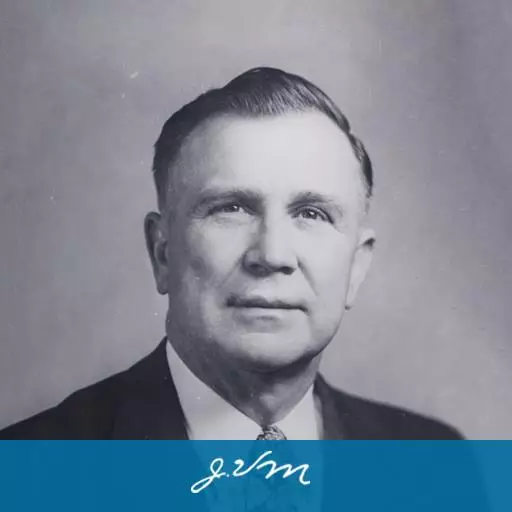
Bird Watching


After the flood, Noah waited—watching, listening, and trusting God to show him what came next. Dr. McGee explains how the simple act of sending out birds reveals a deeper lesson about patience, discernment, and learning to rely on God when the future isn’t clear. It’s a reminder that faith often means looking for God’s direction instead of rushing ahead.
Steve Schwetz: Five months is a long time to be stuck anywhere. Especially when you don't know how much longer it'll last. Well, Noah and his family were confined inside the ark with no timeline, no updates, and no way to step outside. Just day after day, waiting and watching, trusting that eventually the storm would pass. Welcome to the Sunday sermon on Thru the Bible with Dr. J. Vernon McGee. I'm Steve Schwetz and our message, Bird Watching, takes us to Genesis chapter 8.
Now, at first that title might sound maybe a little unexpected, but Dr. McGee uses this moment in Noah's story, the sending out of the raven and the dove, to point us to something very special and practical. Noah wasn't just checking the weather. He was learning when it was time to move forward and when it was wiser to wait. And in that waiting, we see a clear picture of where real security is found.
Now while everything outside the ark was uncertain, the safest place to be was right where God had put them. In Bird Watching, we're going to follow Noah's careful steps and then learn what it looks like to trust God while we're waiting for what comes next. It's a great sermon, so let's get to it. Let's pray. Heavenly Father, would you help us to slow down and just pay attention? Give us understanding as we listen and then guide us as we wait on you. In Jesus' name, Amen.
Dr. J. Vernon McGee: The subject of the morning is bird watching. Noah and his family spent five months plus, do not know how much more, but certainly more time. There are others that feel like he spent a year inside the ark. But we can say this morning quite specifically he spent five months plus inside the ark. Humanly speaking, it was a grueling, rigorous, severe, and trying experience. I'm afraid that my patience would have been exhausted.
And I'm sure that the accommodations in the ark were not as luxurious or convenient and comfortable as modern travel is today. After all, the ark was not designed for lush living and for travel for tourists. It was a floating barge to carry human life over from one side of the judgment of the flood to the other side. But what does it mean to the Christian in this modern day in which we live? It was, in fact, a very odd contraption.
What was the purpose of the ark? What lessons are we to learn from the ark? For I'm convinced that we're to learn certain lessons from it. Remember Paul, in writing to the Romans in the 15th chapter, verse four? He says, "For whatsoever things were written aforetime, they were written for our learning." That's the purpose. That through patience and through comfort of the scriptures, we might have hope. Therefore, this is recorded here for our learning, and that you and I today might have comfort and might have hope.
First of all, let me say that the ark was a place of safety. Let me turn over to the sixth chapter of Genesis, verse seven. "And the Lord said, I will destroy man whom I have created from the face of the earth, both man and beast and the creeping thing and the fowls of the air, for it repenteth me that I've made them." And then dropping down to verse 13. And God said unto Noah—let me move back, verse 12. "For all flesh had corrupted his way upon the earth, and God said unto Noah, the end of all flesh is come before me, for the earth is filled with violence through them, and behold, I will destroy them with the earth."
Now the flood was a judgment from God for the violence of man and the corruption of the human family. And as we've seen before, it had come to the very sad state where only one man was left. And if God had waited for another generation to appear, there would have been no one saved. It would have been the extermination of the human family. Now the only place of safety in the wide, wide world was in that ark. That was the only place. Now I want to mention something that this morning, I'm sure, is familiar to most of you today, but I want to mention it.
There is one part of the construction of the ark that we ought to note. God said first of all to Noah, "Make thee an ark of gopher wood. Rooms shalt thou make in the ark, and shalt pitch it within and without with pitch." Now this is the first instructions concerning materials. It was to be of gopher wood, an acacia wood that's very much like our redwood, indestructible. That is, water would have no influence on it whatsoever. But the interesting thing is that he was told to pitch it within and without. But the word that is used in the Hebrew is an amazing word. It is the word *kopher*, and it means to cover actually.
It's used 70 times in the Old Testament, and it's translated nine times out of ten to cover. Or it's translated to make an atonement, which means to cover. It was a covering for sin, atonement was. There was a covering in the Old Testament by the blood. That's the entire meaning of the altar. The thing that made the top of the box of the ark a mercy seat was the blood; it was covered there. And that's the way God dealt with sins in the Old Testament. He never did remove them at all.
And you'll notice Paul says that, speaking of the death of Christ, in Romans 3:25. He says, "Whom God set forth to be a propitiation through faith"—and may I change that, a mercy seat through faith—"in his blood, to show his righteousness because of the passing over of the sins done aforetime in the forbearance of God." Now the sins done aforetime are not personal sins of individuals, but it's the sins before the cross of Christ, back in the Old Testament. All God did was cover it.
He never took it away. And those in the Old Testament actually were saved on credit. It wasn't paid for at all. The penalty had not been paid. And when Christ went to the cross, he gathered up all the bills of the past. He took Abraham's sin, he took Noah's sin—for Noah was a sinner—and he took David's sin—for David was a sinner—and he died on the cross to remove the sins. But up to that point, it had been covered. That is the great truth of the Old Testament.
Now today, God no longer covers sins. He won't do that anymore. He removes sins today. And that's what Paul meant when he went to Athens, the cultural center of the world. And when he gave that famous message there on Mars Hill, he said to them among other things in Acts 17:30, "And the times of this ignorance God winked at, but now commandeth men, all men everywhere to repent." There was a time when God actually winked at sin and he'd cover it over when a man brought a sacrifice.
But now Paul says God's not doing that anymore. You must face up to it because Christ has come and it's either Christ or judgment. There's no other alternative at all. And that's what John meant, "Behold the Lamb of God that taketh away." Doesn't cover sin now; he takes away the sin of the world. God's dealing with it differently. And will you note, Psalm 42:7 says, "Deep calleth unto deep at the noise of thy waterspouts: all thy waves and thy billows are gone over me."
Noah was safe in the ark because there was coming one who would go down into the waters of judgment and all the waves would pass over him. And that's the reason that Noah could be saved. Not because he was superior—he was not. Noah could hear the pounding of the waters and the waves on the outside and he knew he was safe. He was in the only place of safety. And my friend today, the judgment of sin must come, and the only place of safety today is in the ark, which today is Christ.
And I'm convinced this morning there are multitudes of people that need to know that. I'm convinced that they need to have that type of assurance today that only the word of God can give. I can say to you, if you happen to be a disturbed person today, this is given to us as a picture to show that here is Noah and his family inside the ark, and that place was the safest place in the world. Actually, that ark could not sink. It could not go down.
And if you've trusted the Lord Jesus Christ as your savior, you're safe today. Absolutely safe. There are three arks that are mentioned in the Old Testament. You have, of course, this ark of Noah being the first one. And then you have the little ark that Moses was put in in the bulrushes. And if you'll notice, it was an ark also with pitch on it to keep the water out. And then you have the ark of the covenant.
Three arks that are mentioned. The ark of Noah speaks of the fact that the sinner is sheltered from the wrath of God and protected from the judgment of God. Safe in the ark, if you please. Moses in the bulrushes in that little ark speaks of the fact that the sinner is safe from the machinations and devices of Satan that he cannot overcome, and that there's no temptation that's taken any believer but that which is common to all of us. And God always with the temptation will make a way of escape.
There is an ark for the believer today. And then there is the ark of the covenant. That ark of the covenant contained three things, and one of the things was the Ten Commandments. And Paul says that that law condemns us. And this ark, which is Christ today, delivers us from the condemnation of the law. For the law condemns all of us. The law was given that every mouth might be stopped and the whole world become guilty before God. But Christ, my friend, saves us from the condemnation of the law.
There is salvation and the ark reveals the only three ways that you can be saved from these three things: from judgment, from the machinations of Satan, and from the condemnation of the law. Then there's something else that the ark speaks of; it speaks of security. Not only safety in salvation, but security for time and for eternity. May I say that Noah may not have had every gadget and modern device for comfort on board, but Noah was secure. Absolutely secure inside that ship.
We're told something quite interesting concerning it in the seventh chapter of Genesis, verse 16. I read this: "And they that went in, went in male and female of all flesh, as God had commanded him: and the Lord shut him in." Will you notice that? God shut him in. Noah was no navigator. He didn't have even a compass on board. He had no chart, no log. I think that Noah was the first one to sing, "Jesus, Savior, Pilot Me over Life's Tempestuous Sea. Unknown waves before me roll."
That was his experience at least. But he knew that he was in the hand of God. God shut him in. And there was not only safety, there was security inside that ship. May I say that's a picture for us today. The child of God is told, "And I give unto them eternal life, and they shall never perish, and no one shall snatch them out of my hand. My Father, which gave them me, is greater than all, and no created thing can take them out of my Father's hand."
God shut him in. And the child of God that has come to Christ, he's put into the hand of Christ, which is the hand of deity, but over that goes another hand of deity. And my friend, nothing can take you out of that. Nothing. Absolutely nothing. That's the thing that he says. Again Paul wrote in Colossians 3:3, "For ye are dead, and your life is hid with Christ in God." If you're today in Christ, you're in the ark, and you're as safe as Christ is today.
Just as safe as he is. If something's going to happen to him, then something's going to happen to you. And whatever happens to him will happen to you, and whatever happens to you will happen to him. In Christ, life bound up in the bundle of life with him, if you please. That's not all. Our Lord said this: "John 18:9, That the saying might be fulfilled which he spake, Of them which thou gavest me have I lost none." Not one.
And then Peter writes in his epistle—and if anybody could have got lost, it would have been Simon Peter. He says, "Who are kept by the power of God through faith unto salvation ready to be revealed in the last time." 1 Peter 1:5. And that could be the name of the ark: Kept. Those that were in it were those that were kept by the power of God, and the child of God today is kept by the power of God, if you please. So that there was security inside the ark.
I believe, and I should put it like this, that a place in that ark was more valuable than any spot on earth. It was more valuable than an acre of ground in Babylon at the corner of Hollywood and Vine. And you'd have been more secure in that ark than you'd been owning real estate today. It wasn't a floating palace, but there was real security in that ark. It was not equipped with lifeboats; it *was* a lifeboat.
A member of the Vanderbilt family, when the Titanic went down, he came to a fellow that had come up out of the steerage, a poor European coming into this country, who had a place in a lifeboat. And he said to him, "I'll give you one million dollars for your place in the lifeboat." And this poor fellow, he just shook his head and smiled. He said, "This place is not for sale." My friend, the place in the lifeboat's not for sale, but it's available for you today and it's the only safe place in this universe.
You didn't need life jackets in the ark because it could not sink. It's the picture of the salvation that we have in Christ. There was safety and security. But friends, let me come back to where I began. Five months in the ark is enough to try the patience of any man. James mentions the patience of Job, but I wish he'd mentioned something about the patience of Noah. Five months. I think he was impatient. You say, "How do you know?"
I think he was impatient because he did something quite unusual. He tried to get out a little soon, tell the truth. He wanted to get out of that boat as quickly as he could. And he did something unusual. He sent forth a raven, which went to and fro until the waters were dried up from off the earth. Now frankly, my judgment is that Noah knew nothing about birds. He'd never sent that raven out. I think he made a mistake sending that raven out. The raven didn't return. Raven gave him no information whatsoever. He learned nothing from it.
What happened to that raven? Well, that raven went out and found that there was a banquet going on on the outside, and he was the only guest. Dead carcasses were floating on top of the water and boy did he have fun. You think he's going back in the ark when there's so much to eat outside? Why he could eat the flesh of captains and of kings and of elephants. That's the raven, if you please. An unclean bird, and twice in Leviticus and Deuteronomy it's labeled by name as an unclean bird.
And in the Olivet discourse, our Lord said something that to me is the most difficult thing that's in the Olivet discourse. He said, "For wheresoever the carcass is, there will the eagles be gathered together, the carrion." And the raven was a carrion. And so when he got out of the ark, you know where he went. And John in Revelation, the 19th chapter, says, "And I saw an angel standing in the sun; he cried with a loud voice, saying to all the birds that fly in mid-heaven, Come and be gathered together unto the great supper of God; that ye may eat the flesh of kings, the flesh of captains, the flesh of mighty men, the flesh of horses and of them that sit thereon, and the flesh of all men, both free and bond, and small and great."
And I take it this raven had the first invitation and he got there first. He got there to eat those that had been judged. And he'd no notion to return to the ark, and I don't think that Noah knew very much about birds. Now he had to send forth another type of bird altogether, a different species. And we're told here, "And it came to pass at the end of forty days that Noah opened the window of the ark which he'd made. He sent forth a raven, which went to and fro until the waters were dried up from off the earth." Didn't return.
"Also he sent forth a dove from him to see if the waters were abated from off the face of the ground." Now the dove was a clean bird, different from the others. But the dove found no rest for the sole of her foot, and she returned unto him into the ark, for the waters were on the face of the whole earth. Then he put forth his hand and took her and pulled her in unto him into the ark. Now the dove brought back information. The dove went out; it was a regular homing pigeon, if you please.
And that dove didn't care for dead flesh. There was no banquet out there, anything outside that interested the dove. He was glad to get back to the safety of the ark, and so he came back. So Noah used him to make a second trip. He stayed yet other seven days, and again he sent forth the dove out of the ark. So the dove goes forth again. And this time, notice what happens. You see Noah by this time is a confirmed bird watcher. You want to know what he did inside the ark?
I do not know those first few months, but I do know this: there came a time when he was the first bird watcher. Did a lot of watching of the birds. "The dove came in to him in the evening, and lo in her mouth was an olive leaf plucked off. So Noah knew that the waters were abated from off the earth." The dove came back the second time, and this time it had an olive leaf, which meant there was an olive tree somewhere. And by the way, plants were not destroyed in the flood.
And that's the reason he took no plants. He didn't take any potted geraniums with him inside of the ark; wasn't necessary. The flood did not destroy that which is plant life. Now you notice he waited again, then he stayed yet other seven days and sent forth the dove, which returned not again unto him anymore. And the minute that that dove did not return—and I think Noah watched. He's doing bird watching.
I think he said to Ham, "Go over there, you look on that side." He said to Japheth, "You watch that side." And he said to Shem, "You watch that side and I'll watch this side. Let's wait for the bird." If I may use expression, it's all for the birds then. And these boys reported, "We don't see it." And Noah said then, "I know the judgment of the flood is past, or the dove would be back in a place of safety." Will you notice this for just a moment. All great truths of the Bible are germane in Genesis.
I take the position there's nothing new in the rest of the Bible; all revealed here. You may need the searchlight of the word later on to go back and see it, but it's here. And I believe that the Bible teaches that every believer has two natures. He has an old nature and he has a new nature. The word of God says, "If any man be in Christ, he's a new creation." Old things, not just a few little habits, but old relationships. No longer joined to Adam, but now joined to the living Christ, indwelt by the spirit of God.
Tremendous thing. And God all the way through his word is trying to teach his people the difference between the clean and unclean. And you and I, living in the day of the new morality, which is old sin, and they're trying to break down that which God through the centuries has been teaching, that there's one thing clean, another thing unclean all the way through the word of God. Will you listen to what he has to say? In Isaiah 64, verse six, listen: "But we are all as an unclean thing."
That's the condition of every man that comes into this world, and I know nothing that is hated today like that, the doctrine of the total depravity of the human race. We're living in a day that denies it and proves it by the way they're living. "We are all as an unclean thing, and all our righteousness are as filthy rags; and we all do fade as a leaf; and our iniquities like the wind have taken us away." The word of God makes it clear we have an old nature, and that we have a new nature if we're a child of God.
And you don't get that new nature by self-improvement. Job 14:4 says, "Who can bring a clean thing out of an unclean?" That question hasn't been answered. Who can do it? No one can do it. The raven represents the old nature. The Lord Jesus said, "That which is born of the flesh is flesh." That old nature that loves the carcasses of this world and feeds on them. They don't call it carcass, though. They have other names for it.
And then there is the other. The dove represents the new nature. "That which is born of the flesh is flesh, but that which is born of the spirit is spirit." And it's interesting, isn't it, that the Holy Spirit is set before us as a dove? That's the way he came up on Christ. The new nature, if you please. Now will you listen to what the word of God has to say concerning this? I turn first to Galatians the fifth chapter, and I want to read just a few verses here.
Galatians 5:17, 16. "This I say then, Walk in the spirit"—or walk by means of the spirit—"and ye shall not fulfill the desire of the flesh. For the flesh warreth against the spirit, and the spirit warreth against the flesh: and these are contrary the one to the other, so that ye cannot do the things that ye would." Then he gives the works of the flesh. Here are the old dead carcasses. I'll not read it; it's an ugly brood. And then you have the dove, the fruit of the spirit is love, joy, peace, long-suffering, gentleness, goodness, faith.
You have here the old nature and you also have the new nature. And that's what Paul's talking about in the eighth chapter of Romans. Listen to him here: "For they that are after the flesh do mind the things of the flesh." They like carcasses. They like old dead horses. They like that which is putrefied. "But they that are after the spirit, they mind the things or obey the things of the spirit." They have that dove nature.
"For to be carnally minded is death, but to be spiritually minded is life and peace. Because the carnal mind is enmity against God: it's not subject to the law of God, neither indeed can be." And that's the reason we're having today this spirit of lawlessness. "Let us break their bands asunder, let us cast away their cords from us." The bands of the word of God, the cords of the laws of God. "Let's get rid of the word of God, let's get rid of everything, and we'll live as we please."
And they're proving that the word of God is accurate. "They that are in the flesh cannot please God." It's impossible, and they're doing exactly what they should do. "But ye are not in the flesh, but in the spirit, if so be that the spirit of God dwell in you. Now if any man have not the spirit of Christ, he is none of his. And if Christ be in you, the body's dead because of sin, but the spirit is life because of righteousness."
The raven went out into a judged world. He found a feast. It was a dead carcass. I've often thought that maybe he came upon the bloated carcass of a dinosaur. He thought it was the millennium. Restless though, he flew back and forth from one carcass to another, up and down, but he didn't want back in the ark. But the dove went out into a judged world also. He found no rest, no satisfaction, no peace. And he returned to the ark until the judgment was past and he knew he was safe.
Friends, it's a question of viewpoint. It's a question of attitude and relationship to the world. How do you look at this world today? Do you remember that when our Lord said to Jerusalem after he wept over it, "O Jerusalem, Jerusalem, how many times I would have gathered you." And then he said, "Your house is left unto you desolate." And it even shocked the apostles and they said to him, "Look at the buildings of the temple."
And then he said this very thing to them that he says, "Do you see the buildings of the temple? Not one stone will be left upon another." How do you look at Los Angeles today? Looks pretty good, doesn't it? But is it a dead carcass for you? Are you a child of God that is feeding out there today? That's where the ravens eat. Our Lord says those that are his are in the world, they're not of the world. You can't build a wall around you; we're not to move into a monastery.
He says, "Love not the world, nor the things that are in the world." We're in the world, but we're not to love these things. Are you feasting on the dead carcasses of this world? Oh, I know somebody says, "No, I really am not. I don't get drunk. I don't lie. I don't cheat. I don't tell dirty stories. I don't commit adultery." I didn't ask that. I said, "Are you feeding on the carcasses of this world?" You know some Christians today can't distinguish the difference between a dead carcass and a piece of angel food cake.
Did you know that a new job, a new business, a new home, a new car, a new wardrobe can become a carcass? These things are all right and proper in their places, when they're put in their places. But these are things that you can feed on to the exclusion of actually staying out of the ark. Where are you feeding today, Christian friend? Where do you get your sustenance today? These things of the world are robbing believers today of time with God and with the word of God.
They're dulling their spiritual life so that they've eaten so much of the carcass that they don't like the bread of life today. There are many church members feeding on these dead carcasses of the world to the extent that they've lost their spiritual appetite, their zeal and zest for the things of God. And the church today has become a hospital for sick saints instead of a school for those today that are growing and going in the things of Christ.
I think it's time some Christians were taking an inventory. Why you can let a church social or a banquet be nothing in the world but a carcass when you rule him out. Will you pardon my impertinence this morning? What kind of a bird are you anyway? But really, where are you feeding today? What really brings satisfaction and joy to your heart? Are you eating on the carcasses of this world? Or are you a dove that's rejoicing in the safety of that ark?
Actually, I did forget to tell you that there was only one door in the ark, only one door. I forgot to mention that. It had a window all the way around. It had three stories, but it had only one door. Only one. My friend, you had to come in there. The Lord Jesus Christ said, "I'm the door, by me if any man enter in, he shall be saved." Peter says there's none other name under heaven given among men whereby we must be saved.
And Paul yonder again in Athens—let me lift out chapter 17 of Acts, verse 31—"Because he hath appointed a day in the which he'll judge the world in righteousness by that man whom he hath ordained; whereof he hath given assurance unto all men, in that he hath raised him from the dead." Only one door to the ark today, friends, and that's Christ. One other thing and I'm through. This is the further and final word.
Had you noticed the invitation here in chapter seven, verse one? "And the Lord said unto Noah, Come thou and all thy house into the ark; for thee have I seen righteous before me in this generation." He said to Noah he saw him righteous because he brought the sacrifice. But you notice the invitation. That's the thing. This is the first time that the word 'come' occurs in the Bible, and it occurs over 500 times. And Dr. Griffith Thomas is the one that calls our attention to this.
He says that when he said to Noah, he didn't say, "Go into the ark." That's interesting. If he had said 'go,' it would have been a command, but it's an invitation. Come into the ark. 'Come' also denotes fellowship. 'Go' always denotes departure and separation. Go, go, go. But he says 'come,' and it means he'd be in there with him. Come with me into the ark. The Lord Jesus said, "Come unto me, all ye that labor and are heavy laden, and I'll rest you." That's his invitation.
We come to him. "Believe on the Lord Jesus Christ, and thou shalt be saved, and thy house"—that means if they believe, will be saved. God said to Noah, "Come with your house into the ark." That's God's invitation today. To come into the ark. And the interesting thing is that the door is wide open. I close with this verse, two verses of scripture over in the 12th chapter of the Gospel of John.
There is a passage of scripture that's been ringing in my ears. Verse 23. "And Jesus answered them saying, The hour is come that the Son of man should be glorified." You see, Philip and Andrew came to him and said there's some Greeks that want to see you. And it is assumed that our Lord didn't see them, but it doesn't say that. I assume he did see them, because we're told that he spoke to them. Jesus answered them, and I take it 'them' means these Greeks.
And he was yonder in the court where only the Jews could go. He came into the outer court, which was the court of the Gentiles, and he came to these Greeks and he says, "Fellas, I'm glad you wanted to see me. You're a little premature. You're a little early. But let me say this to you, the hour is come. I'm right now on the way to the cross. The hour's come that the Son of man may be glorified. Verily, verily, I say unto you, except a corn of wheat fall into the ground and die, I haven't anything for you yet."
"I've ridden in Jerusalem; I've offered myself as king to my people. That's all I have to offer them now. But I'm now going to the cross and I'll offer to the Greeks, to the Jews, I'll offer to the world a salvation because a grain of wheat must fall into the ground and die; and if it die, it will not abide alone." And then he said this interesting thing to them: "If any man serve me, let him follow me: and where I am, there shall also my servant be: if any man serve me, him will my father honor."
He says to these Greeks, "The hour's come, I'm right now on the way to the cross. Follow me, and you'll find salvation. You're a little premature. You're a little early. But I'm now going to send this gospel to the ends of the earth that all men might have an opportunity to be saved and come in at the one door into the ark of safety." Friends, there's a storm blowing in the world right now. Already there is a cloud the size of a man's hand on the horizon, and judgment is coming on this earth.
And I'm no fanatic for saying it either, because men in all walks of life today say we're moving to a crisis. Are you in the ark, the only place of safety today, in Jesus Christ? Are you in the ark? "I'm the door, by me if any man enter in." And you enter by faith, by trusting him. Follow him to the cross—he died for you. Follow him to the tomb—he'll come forward. Follow him as he ascends, and follow him to where he is right now at God's right hand, and accept him as savior.
Steve Schwetz: Waiting isn't easy. When life doesn't move on our schedule, we're tempted to rush ahead or look for answers everywhere else. But Noah waited and trusted that God would make the next step clear, and he did. Sometimes the safest place to be is simply where God has already put you. And we'll learn more about trusting God this week as we travel through Genesis on the daily Bible program, Thru the Bible. So hop aboard that Bible Bus that we have and invite a friend to join you.
And you can always listen online at ttb.org or also through our app. Or maybe if you want to find a local radio station that carries Thru the Bible, just visit the website or call us at 1-800-65-BIBLE. Again, that's 1-800-65-BIBLE. And when you're in touch, would you tell us how you listen, whether it's by app, online, YouTube, radio, or maybe some other way? That information really does help us follow God's lead as we take his whole word to the whole world.
I'm Steve Schwetz, and I'm going to meet you back here next Sunday. As I go, I pray Psalm 121, verse eight, asking the Lord to watch over your coming and going now and forevermore. Amen.
Guest (Male): Join us each weekday for our five-year daily study through the whole word of God. Check for times on this station or look for Thru the Bible in your favorite podcast store and always at ttb.org.
Featured Offer


Featured Offer
About Thru the Bible - Sunday Sermon
These Sunday Sermon messages form a collection of the most effective and fruitful sermons given by Dr. J. Vernon McGee during his 21-year pastorate (1949-1970) at the historic Church of the Open Door when it was located in downtown Los Angeles.
Other Thru the Bible Programs:
Thru the Bible - Minute with McGee
Thru the Bible - Questions & Answers
About Dr. J. Vernon McGee
John Vernon McGeewas born in Hillsboro, Texas, in 1904. Dr. McGee remarked, "When I was born and the doctor gave me the customary whack, my mother said that I let out a yell that could be heard on all four borders of Texas!" His Creator well knew that he would need a powerful voice to deliver a powerful message.
After completing his education (including a Th.M. and Th.D. from Dallas Theological Seminary), he and his wife came west, settling in Pasadena, California. Dr. McGee's greatest pastorate was at the historic Church of the Open Door in downtown Los Angeles, where he served from 1949 to 1970.
He began teaching Thru the Bible in 1967. After retiring from the pastorate, he set up radio headquarters in Pasadena, and the radio ministry expanded rapidly. Listeners never seem to tire of Dr. J. Vernon McGee's unique brand of rubber-meets-the-road teaching, or his passion for teaching the whole Word of God.
On the morning of December 1, 1988, Dr. McGee fell asleep in his chair and quietly passed into the presence of his Savior.
Contact Thru the Bible - Sunday Sermon with Dr. J. Vernon McGee
info@ttb.org
https://ttb.org/
Mailing Address
Thru the Bible, Inc.
P.O. Box 7100
Pasadena, CA 91109
In Canada:
Box 25325,
London, Ontario
N6C 6B1
Phone Number
(626) 795-4145 or
(800) 65-BIBLE (24253)