

Questions & Answers 3041


1) Did God have a beginning?
2) In your teaching on John 11:25, 26 you indicate that the term "dead" is referring to spiritual death. Are you saying that a spiritually dead, unregenerate man who believes in Christ will be saved?
3) Were the disciples in God’s will when they chose a replacement for Judas?
4) What is your scriptural support for the Old Testament saints being raised after the Tribulation?
5) Will there be Jews and Muslims in heaven?
6) Is the mention of pastor and teacher in Ephesians 4:11 a single gift or two separate gifts?
7) What does Luke 6:26 mean when it says "woe unto you when all men speak well of you"?
Guest (Male): Are all men speaking well of you? Is this a good thing, or could it possibly be bad? What would Jesus say? Well, these are just a few of the questions that we'll deal with, so stay with us.
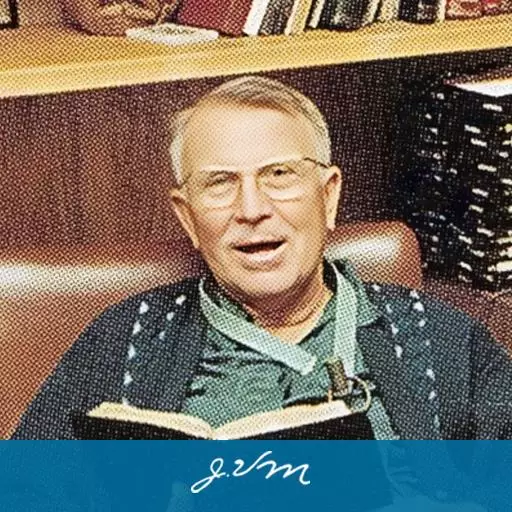
This is the Questions and Answers program with our Bible teacher, Dr. J. Vernon McGee. This program is a ministry of the Thru the Bible Radio Network. We begin today's program with a real chestnut of a question from a listener in Tobaccoville, North Carolina. He says, "Could you please explain the idea of the origin of God? Did God have a beginning?"
Dr. J. Vernon McGee: There have been many ways of trying to explain this, which deals with the infinite, and our finite minds today cannot grasp the great truth of the fact that God is infinite, that He had no beginning and has no end. Personally, I cannot cram that in this little brain of mine, but logic makes it absolutely essential to take that position.
This has been a question that man has wrestled with, even those that have had no contact with the Bible. In India, one of the favorite beliefs is this world we live on is held up by a man. He's got it on his shoulders. He's an Atlas, only there it's on a little different basis. The man is standing on an elephant. And then they forgot to tell us what the elephant was standing on, you see.
That always is the position that you have to come to if you use logic. You have to come up with some kind of an explanation. The interesting thing is that the cults have done that too, and they always try to give a beginning to God somewhere in the past, and some even say that He had a father and mother and that sort of thing.
May I say to you that the Scripture is very careful to say that God did not have a beginning. It says, "In the beginning, God." Well, where was He? What did He do? Well, "In the beginning, God created the heavens and the earth." Now, that's the beginning of all material creation, but back of that is God.
Well, what about His beginning? Well, can you go farther back than that in the Bible? Yes. You go to the Gospel of John, the first verse. "In the beginning was the Word." That was way back of Genesis 1:1. "And the Word was with God, and the Word was God." That's the Lord Jesus Christ. "The same was in the beginning."
And do you notice that is "was"? In the Greek, it's the imperfect tense. The imperfect tense in the Greek is a little different than it is in the English. It means continued action. It means that you go back as far as you can in your thinking, and the Lord Jesus comes out of eternity to meet you. And when He does, He's already the Ancient of Days.
And you can just go as far back in your thinking as you want to go and put down your peg. But anywhere you put down your peg in eternity past, the Lord Jesus is already a "was." "In the beginning was the Word." That's marvelous language, by the way.
And then the Psalmist put it like this: "From everlasting to everlasting, thou art God." And the word "everlasting" is a little bit more picturesque and vivid in the Hebrew. It means "from the vanishing point." From the vanishing point of the past to the vanishing point of the future, thou art God. Now the vanishing point is that "was." You go back as far as you want to, and that's the vanishing point. You just say, "I can't go any farther back than that." Well, then God's already there, friends, and He was.
Guest (Male): We have here another question from a North Carolina listener, and this one is from Ashboro. She writes, "In your study on John chapter 11 verses 25 and 26, you indicate that the term 'dead' is referring to spiritual death. Are you saying that even a spiritually dead unregenerate man who simply believes in Christ shall live eternally—that is, be saved?"
Dr. J. Vernon McGee: Yes, that's the way I understand it. Now, I recognize that some theologians have to interject here the doctrine of election, which I believe in, but I don't know anything about it. And I've never read anything from any of these men that convinced me that they knew anything about it. The doctrine of election is just like the question we've been discussing. This is something that belongs to God.
God says, "My thoughts are not your thoughts, my ways are not your ways. As the heaven is higher than the earth, so are my ways and my thoughts." So when you try to put me in a box and say, "Well, the man is dead spiritually, and that he can hear the Gospel and be saved," he sure can. That's the way I got saved. If you're saved, that's the way you got saved.
And what about the doctrine of election? May I say to you, I don't know anything about it. I believe it, but I can't explain it. God has never let me see that list. And until He does, I'm not going to even pretend that I am an authority on that type of thing. I do know that we've been able to speak on the radio here, and we've seen some of the most remarkable things happen that are imaginable.
A man and his wife, way up in Alaska, ninety miles north of the Arctic Circle, and they heard our program. They ridiculed it. They called me a cowboy. I didn't mind that so much, but they continued to listen. And finally, one day she got really interested and began to listen, and she was saved. She was spiritually dead; she was saved. Trusted Christ as her Savior.
And she said her husband professed that he did, but shortly after that, he committed suicide. She's left alone in that little cottage up there where there aren't but twelve people in the little town. And you know what that woman has done? She came down to Montana, I think it was, or Wyoming, went to a Bible school and took the course, graduated, and she's going as a missionary to Muslims in North Africa.
May I say to you, I don't argue these things. I just know what happens today when the Word of God is preached to spiritually dead people. And I wish these folk that are spending so much time arguing about election would get with it and come go with us, and let's take the Word of God out yonder and see things happen because it's happening today. Happening in India, it's happening in the Muslim world. What a wonderful opportunity there is to get the Word of God out today.
And we would like to say to this party, in answer to your question, that we do believe that a person who's spiritually dead... And the Lord Jesus said that the dead are going to hear. Now that doesn't mean you have to be physically dead and stuck down in a tomb because it doesn't really mean that at all. It means, "a man though he were dead, yet shall he live."
Let me give you the whole passage of Scripture since I've referred to it. It's over in John 11 verse 25. "Jesus said unto her, I am the resurrection and the life. He that believeth in me, though he were dead, yet shall he live." Now there it is in black and white. I believe that. And not only believe it, I know it, because I've seen that work—that they hear the Word of God, the dead, and they live.
"And whosoever liveth and believeth in me shall never die. Believest thou this?" And that's the question He put to Mary, and I think He puts it to you and He puts it to me today. I don't know about you; I believe it.
Guest (Male): Continuing our questions from North Carolina, we have this one from a listener in Charlotte. She writes, "Were the disciples in God's will when they chose a new disciple to replace Judas in Acts the first chapter?"
Dr. J. Vernon McGee: Well, very personally now, I take a position that is a little bit different than the popular viewpoint is today. First of all, you're in a transitional period. The Lord Jesus has just left them, and He's breathed on them and said to them, "Receive the Holy Spirit." They were not yet baptized with the Holy Spirit. That is for service. That is for doing something.
And they were told to just tarry in Jerusalem until they were endued with power from on high. So actually, they were not to witness, and yet they had the facts of the Gospel. They were not to do anything in the world except wait. And Simon Peter wasn't good at waiting, as you well know. He was a very impetuous type individual, and so he wanted to do something about it. And he did something about it. He had an election. He was one of the first politicians that we've had, by the way. And he wanted to vote one in.
Well, I can't find anywhere where they were told to do that. They were never told to do this, and they're in a holding pattern. That's all. And that's a bad place to be. When I'm on an airplane, I don't like to get out to the runway and wait for ten planes ahead of me to take off. I got on the plane to fly, not to get out there and sit on the runway for thirty minutes to an hour. That to me is not very comfortable.
I have great feeling for this man Simon Peter. Simon Peter says, "Let's get going. Let's start flying." And so he had an election, and they elected Matthias. He met all the conditions. He had seen the resurrected Christ, been with him, but that didn't mean that he would be the twelfth apostle because there were at least 120, and we're told that 500 saw Him at one time.
So there'd be a great many that could have been. And Paul, Saul of Tarsus, saw the resurrected Christ. In fact, he was blinded by Him in glory. He's the man that we believe is the one that was chosen by the Holy Spirit because the Spirit of God now uses Paul the Apostle, the apostle to the Gentile.
Now I know today that there's a great deal being said to make Matthias the twelfth apostle, but we have no confirmation that he is an apostle by something that he did. Now it's going to be said, "Well, there are other apostles that doesn't say that they did something." But yes, it does say that they were all witnesses, speaking for the Lord there on the Day of Pentecost. So don't say just cause that they didn't do anything, they did do something, and that they were all witnesses. And there's the record that is given there of it.
Guest (Male): An Oklahoma listener was reading Dr. McGee's comments on Philippians 3 verse 11, and he says, "You say that the Old Testament saints will be raised at the end of the tribulation period. What Scripture do you use to back this thought up?"
Dr. J. Vernon McGee: All right, I want to give you the Scripture now that shows that the Old Testament saints are raised at the end of the Great Tribulation period. Let me read all of this passage here that is down to the answer and it's found in the 12th chapter of the book of Daniel, beginning at verse 1.
"And at that time shall Michael stand up, the great prince which standeth for the children of thy people: and there shall be a time of trouble, such as never was since there was a nation even to that same time: and at that time thy people shall be delivered, every one that shall be found written in the book. And many of them that sleep in the dust of the earth shall awake, some to everlasting life, and some to shame and everlasting contempt. And they that be wise shall shine as the brightness of the firmament; and they that turn many to righteousness as the stars forever and ever."
That's the passage of Scripture I think that makes it very clear that the Old Testament saints are to be raised at the end of the Great Tribulation period. And then I think the whole tenor of Revelation is revealing that. The church is a separate body actually from the tribulation saints, although they're actually part of the first resurrection. It would seem that they go through the Great Tribulation period, and that 144,000 were there on Mount Zion. They're not part of the church. They obviously are those that I think are raised at the end of the Great Tribulation period. Now I recognize that there's a great deal of disagreement in this area of prophecy today.
Guest (Male): Now this listener in Holtville, California, was met with silence when he asked this question to a Sunday school class. He writes, "In heaven, there will be Christians. How about Jews and Muslims?"
Dr. J. Vernon McGee: Well, you've asked the type of a question that would I think draw silence like that. If you want to switch over and say the Scottish people, and what would your answer be to that? Well, the answer to that would be: if they accept Christ as Savior, they are then, by the baptism of the Holy Spirit, put in the body of believers, the church, and they will be in heaven in the church.
Now put that back with the ones you've asked. How about Jews and Muhammadans? They'll be in heaven if they accept Christ as their Savior and by the baptism of the Holy Spirit, they've been put in the body of believers. And I think that what you're after though is: will the religion of the Jews save him today? Will the religion of the Muhammadan save them today? And the answer is no.
Paul made that very clear, and Peter, when he stood before the nation that is as it was represented by the Sanhedrin. He says, "There's none other name under heaven given among men whereby we must be saved." And so it's very easy to answer your question, friend. The thing is that today, there are many Jews. Percentage-wise, there are as many Jews that are becoming Christians as there are Americans are, English, or French, or Spanish people. The percentage is just about the same.
And as far as Muhammadans are concerned, the Muslim world has now been cracked, and there are many that are turning to Christ today. So the Word of God is going out. And let me push that just a little bit farther here with you. What are you and your church doing to get the Gospel to these two groups of people that you've asked about?
We today have a broadcast in Hebrew going to Israel. We have a broadcast in Arabic that's going to the entire Arabic world, all the way from Turkey around the whole crescent into North Africa. So that, I don't know, maybe you'll be interested in getting the Gospel to those people. We need help very much to get the Word of God to them.
Guest (Male): A Tyler, Texas, listener sent us this question concerning Ephesians 4:11. She says, "Many Christians today interpret pastor and teacher as 'pastor-teacher' as one in the same gift. Is that correct?"
Dr. J. Vernon McGee: And it absolutely is not correct. I think that it might be well just to turn there to Paul's letter to the Ephesians and look at what is said and then from that deduce what I think he's actually saying. In 4:11, he says, "And he gave some apostles, some prophets, and some evangelists, and some pastors and teachers."
Now each one of these is a separate gift, and it means the men with these gifts are given to the church. That's the meaning that is here. He gave to some apostles, that is, the early church was given apostles. They had to have it to establish the church. Not necessary today. Some prophets. Now, and some evangelists. An evangelist means actually missionary. And to some missionaries. And sending out missionaries is a pretty important work of the church, by the way. And some pastors and some teachers.
Now He gives to the church these men that they've been put together and have called the pastor-teacher. It sounds good. We've had several in the past, oh, I would say, twenty-five or thirty years of my ministry and that we've come through in an affluent period and the church has prospered, it's lulled in luxury. And it's gone after like the church in Laodicea. It's boasted of the fact it's rich. Rich in teachers and rich in everything. Just filled with a whole lot of smart people. And they're very busy patting each other on the back.
Therefore, there has sprung up this idea that a man has a gift of a pastor-teacher. Well, I agree with Dr. Chafer. He says, "I never met a man in my life that I thought had two gifts." And Dr. Chafer was a good musician and a real theologian too, by the way. And how would he explain it? Well, he believed that his was a teacher, and he followed that, not a musician.
Now I understand "pastor" to mean one that looks over the flock and after the flock. That actually in our day, it'd be to visit the Christians that are in the local church. To see how they're getting along, see if he can be helpful, because all of us have problems today and he's there to offer his help. He's a pastor. Then there's another with the gift of teaching. And his gift of teaching is one thing.
Now I've had about forty years of being in the pastorate, and I never met a man that I thought was a pastor-teacher. I know several men that I think are the finest pastors I've ever met in my life. But they're the most boring speakers that I have ever listened to. They just can't teach at all. One man, when he sits down and talks to you, is the most interesting, engaging person. Minute he stands on his feet and begins to talk, you want to go to sleep.
Then I know certain men that have been great preachers, but they sure have been a lousy pastor. They just didn't have that gift. Now I personally don't think that any man has both gifts. I know there are a lot going around claim they got the gift of pastor-teacher. They just think they have. But nevertheless, it's abroad today and it's part of this soft Christianity that we have right now. Believe me, we are still in the Pablum age, and Pablum is being dished out today.
May I go even a step farther? I hear very little Gospel being preached today. A lot of legalism is being preached, but very little Gospel actually is being preached. I'm glad you asked this question. This is one somebody should have asked a long time ago.
Guest (Male): We end today with a quick question from this Whittier, California, listener. He writes, "Luke 6:26 says, 'Woe unto you when all men speak well of you.' Will you tell me what is meant here?"
Dr. J. Vernon McGee: May I say to you, it means exactly what it says, and it says exactly what it means. It means woe unto you when all men speak well of you. Now I'll tell you exactly what our Lord meant. We're living in a day when even among Christians, the idea is how to make friends and influence people. And if you are a person that can get along with everybody and you do not have any convictions of your own and you don't stand on your two feet and stand for something and say something, then you're considered a nice, sweet little saccharine sweet Christian.
May I say to you, you're nothing in the world but a coward. Someone has said today that silence is golden, but sometimes it's yellow. And that I believe is the thing that's true today. We're living at a day when men need to stand on their two feet and speak. I think one of the reasons that God has blessed Billy Graham is that no matter what group he goes before, he stands on his two feet and he states the Gospel in clear-cut terms.
And we need men like that today. We've got too many preachers that are trying to please everybody and as a result, well, I don't think they please anybody. At least they're not pleasing to the Lord. Now our Lord said, "Woe unto you when all men speak well of you." That means that you're compromising if all men speak well of you. For the Lord Jesus Himself said, He says, "The world hated me."
Did you know He was a failure according to the world's standards today? He was a miserable failure. He didn't make friends and influence people. Why, all Jerusalem wanted to crucify Him. They hated Him, and they nailed Him to a cross. And if He were back in Los Angeles, they'd run Him out of town again. One of the difficulties is they don't run us out of town; they take us for granted instead of taking us seriously today. Oh, to recognize the truth of the statement you've given us: "Woe unto you when all men speak well of you."
Guest (Male): This is a tremendous truth, as are all the truths in the Word of God. If you'd like to know and understand the truths of God's Word, then we suggest that you contact us for a complete listing of Dr. McGee's publications and audio CDs that we make available for purchase. Truth and knowledge come by studying God's Word. So join us Monday through Friday on the Thru the Bible program that's heard on this station. We'll continue Dr. McGee's five-year journey through the whole Word of God.
Notes and outlines are available when you ask for them without any cost to you, or you can download them for free from our website as well at ttb.org. To let us know of your interest in getting a copy of our resource catalog or to be placed on the mailing list for the notes and outlines, then call us at 1-800-65-BIBLE, Monday through Thursday from 6:00 AM to 3:00 PM Pacific time. Visit us online at ttb.org or write to Questions and Answers, for those in the US, Box 7100, Pasadena, California, 91109. In Canada, Box 25325, London, Ontario, N6C 6B1. Until next time, we hold to this truth that our God will answer all your prayers and solve all your problems.
Featured Offer


Featured Offer
About Thru the Bible - Questions & Answers
Questions and Answers offers Dr. J. Vernon McGee's signature wit and wisdom in answering Bible questions sent to him by radio listeners throughout his years of ministry.
Other Thru the Bible Programs:
Thru the Bible - Minute with McGee
Thru the Bible - Sunday Sermon
About Dr. J. Vernon McGee
John Vernon McGeewas born in Hillsboro, Texas, in 1904. Dr. McGee remarked, "When I was born and the doctor gave me the customary whack, my mother said that I let out a yell that could be heard on all four borders of Texas!" His Creator well knew that he would need a powerful voice to deliver a powerful message.
After completing his education (including a Th.M. and Th.D. from Dallas Theological Seminary), he and his wife came west, settling in Pasadena, California. Dr. McGee's greatest pastorate was at the historic Church of the Open Door in downtown Los Angeles, where he served from 1949 to 1970.
He began teaching Thru the Bible in 1967. After retiring from the pastorate, he set up radio headquarters in Pasadena, and the radio ministry expanded rapidly. Listeners never seem to tire of Dr. J. Vernon McGee's unique brand of rubber-meets-the-road teaching, or his passion for teaching the whole Word of God.
On the morning of December 1, 1988, Dr. McGee fell asleep in his chair and quietly passed into the presence of his Savior.
Contact Thru the Bible - Questions & Answers with Dr. J. Vernon McGee
info@ttb.org
https://ttb.org/
Mailing Address
Thru the Bible, Inc.
P.O. Box 7100
Pasadena, CA 91109
In Canada:
Box 25325,
London, Ontario
N6C 6B1
Phone Number
(626) 795-4145 or
(800) 65-BIBLE (24253)