

Questions & Answers 3040


1) Can you explain the meaning of the unjust steward in Luke 16?
2) Can you explain your comments on the embalming of Jesus?
3) What is the sin unto death in 1 John 5:16?
4) How do we know God’s will?
5) Will we have a physical body after the resurrection?
Host: We've all searched for it one time or another. Sometimes, it seems to elude us; on other occasions, it's so unmistakeably obvious. What am I talking about? God's will. Today, we'll deal with the often-asked question of knowing God's will, along with a number of other important questions. So, stay with us.
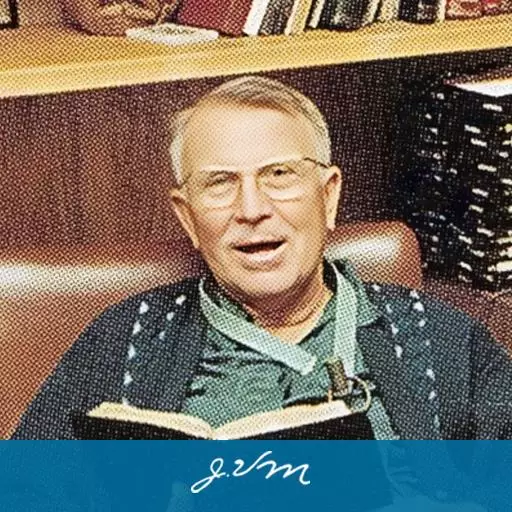
We're listening to the question and answer program of Thru the Bible Radio with our teacher, Dr. J. Vernon McGee, whose answers to the questions of his many listeners for over 30 years have been preserved for our education and edification today and for years to come. Parables are stories that generally explain one main point or fact. Jesus used parables as he taught the people, and many of these parables require some effort in digging out the meaning. So, it's not unusual for us to get a question like this one from a listener in Altadena, California, who writes, "Would you please explain the meaning of the passage in Luke 16:9?"
Dr. J. Vernon McGee: That has to do with that parable of the unjust steward that our Lord told. Verse 9 reads like this: "And I say unto you, make to yourselves friends of the mammon of unrighteousness; that, when ye fail, they may receive you into everlasting habitations." Now, that is a strange passage of Scripture. In fact, that seems at first examination to be a very dangerous parable our Lord gave. He seems to have set a precedent of rather commending an unjust steward for being unjust, but that's not what he commends him for.
Actually, what our Lord is doing is giving a parable here that's almost by contrast. You know, parables were stories that were told to illustrate great spiritual truths. A parable, by the way, is a sort of a yardstick. In fact, parable means—"ballo" means to throw, "para" means by the side of. You take a yardstick, put it down by the side of a fence, and it'll tell you how high it is. It's a parable of the fence, for it'll tell you in either feet, yards, or inches how high that fence is. And a parable is something that you put down by the side of something else. Someone has defined a parable as an earthly story with a heavenly meaning. That again is very good.
Now sometimes, and Luke by the way is the only one who gives the parables by contrast, I personally think this is one of those parables by contrast. Our Lord goes out into the business world, the ways of the world, that world that you and I are told "love not the world, neither the things of the world." Now, in the world, here is a steward, and a steward is supposed to be faithful. Well, this steward's not faithful at all; he's disloyal to his employer and to his master. And his master found it out, and he fires him. He tells him that on a certain date, you're through, you'll be dismissed.
Well, this old boy is not satisfied with that. He still has the authority of a steward, that is, to handle the business of his master. And so in the remaining time that's left to him before he is dismissed, he calls in those that owe his master. He calls in all of the ones that are debtors, and he says to them, "How much do you owe my master?" And he says, "Well, I owe him $50," let's say. "Well," he says, "now I'll tell you what I'll do. I'll settle with you 50 cents on the dollar. You give me 50 cents on the dollar, give me $25, and I'll give you a receipt for $50."
Well, that fellow says, "My, that's pretty good, and that's pretty nice of you to do business with me like that. And I want you to know that if you ever need a friend or ever need help, I want you to come around. I'll be very glad to accommodate you sometime when you're in need." Well, he goes down the list of all of those that were debtors, and he accommodated all of them. He was crooked.
But you see, a little later on when he got fired, he went around to this man, maybe another man that owed instead of $50, he owed $5,000. And he said, "I tell you what you'll do. You give me $2,500, and we'll settle the account." And that man says, "Well, believe me, I appreciate it, and I want you to know that someday I hope I can extend the favor." Well, it isn't but a few months until this boy comes around; he's dismissed, you know. He comes around and he says, "Well, I want you to know I'm around to get that favor now. I wonder if you could let me have a thousand, maybe." Why, the man said, "Of course I can, you saved me $2,500. I'll be glad to let you have a thousand dollars."
Well, this boy took care of himself. Now that was crooked; that was wrong in every way that's possible. Now our Lord went on to say that the children of this world with their sharp methods, the methods that the child of God is to hate, they are wiser than the children of light. Because the people in this world use money. They go for it, by the way, and they'll make a sharp trade. But the children of God, they're not smart at all. They don't use their money rightly.
In other words, some fellow comes by maybe on the radio and says, "I'm taking up an offering for the blind cats on the island of Paga-Paga or some place out in the South Pacific, and I'm just wondering if you wouldn't send in a nice offering for these poor little blind cats." And some person that's moved by that, they send in an offering. Well, actually, there are no blind cats out at Paga-Paga or wherever the place might be, and so the fellow, he's really running a religious racket. But this man that gave to it, he didn't investigate at all.
As a result, he gave to this. Now that man is not being wise. He ought to invest his money in God's work in such a way that when he arrives yonder in heaven, he'll get a reward. There'll be folk there, not blind cats, or not giving to something they know nothing about, but giving to a mission or a missionary that they know or a work that they know is winning souls for Christ. And then when they get over there, why, there'll come somebody up to them and say, "Say, I want to thank you for giving the money to go as a missionary. If you hadn't have given, why, he'd never been able to bring the gospel to me, and it is through his ministry I've come to Christ." They'll receive you into everlasting habitations. Be smart, our Lord says, in the use of your money, Christian friend. Don't be gullible. You see, you're responsible. You should investigate, my friend, before you give, and know something about it. You should be assured that what you're giving to is a work that's honoring the Lord.
Host: In John chapter 19, Dr. McGee speaks about the embalming of Jesus and the connection embalming had with Egypt. This Wilmington, Ohio listener writes, "I shared your comments with a Jewish lady and she got very upset. She said this connection was untrue and that many of the Egyptian customs were abandoned after the Exodus. Could you please elaborate on your comments pertaining to embalming?"
Dr. J. Vernon McGee: And that had to do of course with chapter 19 where Nicodemus came and brought myrrh and aloes, a hundred-pound weight, and that they rubbed that into the body of Jesus as they wound it with linen garments. And that was the method of embalming in Egypt, by the way. And where did Israel get it? Well, may I say this: this Jewish woman is absolutely accurate. Someone has said that it took God one night to get Israel out of Egypt, but it took God 40 years to get Egypt out of Israel. And he attempted to get out of their entire lives the heathenism and paganism and idolatry of Egypt, and it took him a long time to do that, by the way.
And I thoroughly agree with this woman on that. But you probably misunderstood, or maybe I did not make it exactly correct, or maybe I didn't state as much as I should have. It is the belief now of some scholars that it was the Israelites in Egypt who developed this method of embalming that preserves the bodies so long that has produced what they're finding today, mummies, which were embalmed bodies. And I used that term rather loosely; I should have been I think a little bit more explicit when I said that the Lord Jesus Christ was made a mummy by these two men, Joseph of Arimathea and Nicodemus, when they took the hundred pounds. Imagine that! And wound the linen clothes around and put that myrrh in.
And that sealed, you see, the body in so that air could not get to it. And myrrh was a preservative, and that's the way the bodies were preserved. Now it is believed by many scholars that Israel developed that method in Egypt, in that it actually was their method of burial and that they passed that on to the Egyptians. And I'm of the opinion that there's a great deal of evidence for that, and certainly Israel used that method. And that method, by the way, in and of itself speaks of an afterlife. Evidently, the Israelites impressed that greatly upon Egypt while they were down there, of the afterlife. And you find these Pharaohs buried with everything that's imaginable that they were going to be using in the next life, and their body was made a mummy. But as I say, it's believed that Israel is the one that developed that process of burying the dead.
Host: We turn now to a short question from a Hollywood, California listener who writes, "Could you please explain the meaning of 1 John 5:16?"
Dr. J. Vernon McGee: Now let's turn to 1 John 5:16 and read: "If any man see his brother sin a sin which is not unto death, he shall ask, and he shall give him life for them that sin not unto death. There is a sin unto death: I do not say that he shall pray for it." Now, the thing is that John is writing to believers. And he's talking about believers committing a sin unto death, and the death that he's talking about is physical death. That means that it is possible for a believer to commit a sin that is a sin unto death. That is, if he commits that sin and persists in it, there will come a day when God will reach down and take that child of his out of this world by death. In other words, death would be the judgment of God upon him, removing him from the scene and place of witness.
Now I want you to look at that with me for just a moment. John says that "if a man see his brother sin a sin which is not unto death"—well, how do I know whether it's a sin unto death? Is it a certain specific sin? No, for different men it might be different things. So that when you see a brother sin a sin that you don't know whether it's a sin unto death or not, you shall not sit in judgment on him. You shall not go and criticize him for it, but you should go to God in prayer and pray that it might not be a sin unto death and that the Lord might keep him in the world.
Now you see, that's the reason that the sin is not mentioned. Now there are certain sins unto death that we know about. Ananias and Sapphira committed a sin unto death. They lied to the Holy Spirit, and they fell down dead there in the early church. They committed a sin, a sin unto death. May I say to you that this boy John Mark turned yellow on the first missionary journey, but it wasn't a sin unto death because he was given another opportunity and he made good. And finally Paul could say, "Bring John Mark with you for he's profitable to me for the ministry."
So you can see that what you and I might think would be a sin unto death, and I would have certainly interpreted John Mark's sin to be that, I have a notion that Paul prayed for him and I know his uncle Barnabas prayed for him that it might not be unto death. You see, friends, as God's child he can't let you and me just go on and on in sin if we're his child, because he must judge us. And when we will not be disciplined and not turn from it, then he finally will reach down and call us home.
And the illustration that I use: a mother has a sweet little angel by the name of Willie. And so she's working in the kitchen and Willie goes out in the backyard to play, and his mama tells him, "Now if you go out there and are a good boy, you can stay out and play. Now the little brat next door, why, her little Willie was having trouble with him and says, 'You better get along with him, and if you don't get along with him, why, you'll have to come in the house.'"
And so little Willie goes out to play and the brat next door comes over to play with her sweet little angel. And so after a little while, she's busy in the kitchen, why, she hears a cry and it's coming from the brat next door. And she goes out on the back porch and looks, and sure enough, there is her precious little Willie on top of the brat next door just beating the stuffin' out of him. And she says to her little angel, "Willie, Willie, didn't I tell you that if you were not a good boy, you were going to have to come in the house?"
And he says, "Yes, Mom." By this time he's crawled off of the boy next door, not beating him up anymore, and she says, "Now I'm going to give you one more chance. Now if I hear that you're doing this again, I'm going to come out and take you in the house." "Yes, Mama." So she goes on about her work again in the kitchen. Another 30 minutes goes by, maybe an hour, then she hears that familiar cry of the brat next door and she goes out on the back porch.
And this time, the same familiar scene greets her: her precious sweet little Willie is on top of the brat next door, just beating the stuffin' out of him. She said, "Willie, get up here and come in the house." He says, "Mama, don't want to come in the house." She says, "Come in the house." He says, "I don't want to come in." She says, "I know you don't want to come in, but I told you that if you did this again, you'd have to come in." And so she goes out, gets him by the hand, and leads her sweet little angel, who's now yelling at the top of his voice, crying he doesn't want to go in.
But she takes him in. May I say that our Heavenly Father sometimes says to his child down here, "I want you to do a certain thing or not do a certain thing." And then we as the child persist in either doing or not doing what God wants us to do, and then he finally has to come down, take us by the hand, take us through the doorway of death and bring us home. That, my friend, is the sin unto death. Now for you it may be one thing, for me it may be something else. But when you see any child of God commit a sin not unto death, you should pray that it might not be unto death because there is a sin unto death and there's a sin not unto death. And we should pray that it might not be unto death and the Lord would give the child of his another opportunity.
Host: Now here's a letter from a home-bound individual in Claremont, California, and she says, "How do we know God's will?"
Dr. J. Vernon McGee: Now may I say this: there is today a belief that God's will is sort of like a stop and go sign, or it's like a marker on one of these freeways, a half a mile to a certain turnoff and you turn off there, and that's all there is to it. And I'm afraid that there are a great many Christians today that are giving the impression that it's that simple, because I hear people talk about God's will as if it was a light sort of thing, they had no trouble finding out what it was.
And I'm of the opinion that a great many people today that are talking so glibly about the will of God and how easy they got into it, and they just can't understand why the rest of us don't find it so easy, I'm not sure they're in the will of God. What I think is that they have picked out, and these people that I've noted particularly that talk like that, generally find a pretty easy way of life. And they accept the easy way of life as being God's will. I don't think it is at all.
I think that, frankly, they found an easy way and they call that the will of God, because they just can't imagine that their Heavenly Father and they're his dear little child and his little pet, and he just would never put a burden on them or give them any difficult task. And he'd certainly remove all the stones from their pathway. So they take an easy course and they call it the will of God. Now that disturbs a great many sincere Christians today because they are not able to find God's will that easy.
May I say to you, if you are one of those like this dear lady, don't be disturbed. And I'll tell you why. God's will is not a stop and go sign where you come to a corner and the green light comes on and you know that that's the way to go. Or you come to the crossroads and the marker has been put up there for you and you're able to follow it right on through. In fact, some of them go so far as to give the impression that there's an angel standing at their crossroads, not only pointing but telling them which way to go.
Why, a dear lady tried to tell me that, an angel that appeared to her during the night and told her that a certain course was the right course. It's quite interesting that angel sure did fool her, because it didn't work out as she thought it would work out. And you know what it was? It was when I first came to the Church of the Open Door. She said she was led to buy a house out here and she was going to take in boarders. She was confident that was God's will for her.
And this house, why, she'd even seen it in a vision, and when she went to buy it, why, there it was, just like she'd seen in her dream. Do you know where that house is today? Well, it's not there because the freeway goes right over where it was. Isn't it funny that the angel told her to pick a house right on a freeway? And the poor lady, believe me, she nearly lost her shirt when she had to give up all of that because apparently there were other complications.
But it's interesting today to hear people talk about how easy it is to find God's will. It's not easy at all. I remember that when I was having a great deal of struggle as a young preacher attempting to find out what God's will was concerning a matter, I heard the late Dr. Harry Ironside, whom I regard and did regard very highly, I heard him say this. He said, "In 90% of the decisions that I have had to make in life, at the time I made them, I did not know for sure it was God's will."
He said, "I only knew that I was doing the best I could and I seemed to be led. It was not until later did I find out what God's will was." He said, "In most of the cases, I found out the decision I made was in God's will, but some of them were obviously not in God's will and I had to back up." May I say that that was the greatest comfort that I ever received, because I had listened to these super-pious people talk about how easy it was to find God's will.
Now, why is that true? Why doesn't God put up a sign board or why doesn't he have an arrow pointing out of heaven, showing us which way to go? Well, I'll tell you why: God does not give road maps to any individual. And these super-pious folk, they seem to have a road map; I don't think they do. I don't think anyone does. And if they do, then God's given them the second best. You see, the reason he doesn't give you a road map and let you know is because if you had a road map, you'd have your nose stuck in the road map and take your eyes off of him.
I think he wants us, many times when we've made a decision, to walk lightly. You walk softly, if you please, not knowing whether we're in God's will. And you know, at a time like that we'll stay closer to God than we will any other time. Oh, I have found that on several occasions. I wasn't sure I was in the will of God. I remember that when I first came to California, I think the first three months that I was out here were the most precious months I ever had of walking with God.
You know why? I wasn't sure I was in his will, I wasn't sure I was in his will. It wasn't until about six months after that that I was sure that I was in the will of God. You see, I believe that you're not always going to know. And the reason is, God's trying to keep you very close to him. So don't be disturbed when these people pop up, and you'll always have these super-duper pious folk popping up today. And believe me, they act as if they've got a road map for the rest of their lives.
If they have, I feel sorry for them. They're going to miss a great many blessings, but I just think they're kidding themselves. And my dear fearful friend, may I say to you, when you come to the crossroads, you do have to make a decision by prayer. And you know whether your heart's yielded or not, then you step out. And I'm confident of this: you're going to know whether you're in God's will, and you'll be drawn very close to him. And those will be the most precious moments and days of your Christian life. So don't mind it if you're not quite sure at every step that you've made.
Host: A Los Angeles listener sent this question: "I've been told that we are going to have a spiritual body in heaven, yet others have said we will have a physical body without pain. Didn't Christ have a physical body after the resurrection? If so, why wouldn't we also have a physical body?"
Dr. J. Vernon McGee: May I say that we are specifically told, as he is, so shall we be, and that we are to be raised in his likeness. John in his first epistle says, "Beloved, it doth not yet appear what we shall be; but we know that when he shall appear, we shall be like him." So that this is a very clear-cut statement that we're to be like him. Now Paul, in writing, speaks of the resurrection, that it's sown a natural body and that it's raised a spiritual body.
The interesting thing to note is that it is a body that's carried over and that a body is the important thing. Sown a natural body, that is a body that's dominated by an old nature and that is a body that is strictly psychological. But it's going to be raised a spiritual body, that which is dominated by a renewed and regenerated spirit and that the Holy Spirit will give the leading and the guiding. So that the important thing is that there is a natural body and there's a spiritual body, but both of them are a body. And it's merely a difference there, you see, of the one that dominates and the one that controls: the natural body controlled by the old nature, the spiritual body controlled by the spirit. So we will someday have a new body, glorified body, that we're told.
Host: The best way to understand many of these issues is to dig deep into the word of God through diligent and dedicated study. To help you in your study, we have available numerous publications and CDs by Dr. McGee. For a listing of many of our products, ask for our resource catalog. You can also study through the word of God in five years when you join us each weekday during the Thru the Bible Radio program that can be heard on this station. Dr. McGee journeys through the Scriptures book by book and chapter by chapter.
If you'd like to be on the mailing list for notes and outlines, and you'd like to make a request for the resource catalog, write to Questions and Answers. For those in the US, Box 7100, Pasadena, California, 91109. In Canada, Box 25325, London, Ontario, N6C 6B1. This program has been brought to you by the faithful friends and supporters of Thru the Bible Radio Network.
Featured Offer


Featured Offer
About Thru the Bible - Questions & Answers
Questions and Answers offers Dr. J. Vernon McGee's signature wit and wisdom in answering Bible questions sent to him by radio listeners throughout his years of ministry.
Other Thru the Bible Programs:
Thru the Bible - Minute with McGee
Thru the Bible - Sunday Sermon
About Dr. J. Vernon McGee
John Vernon McGeewas born in Hillsboro, Texas, in 1904. Dr. McGee remarked, "When I was born and the doctor gave me the customary whack, my mother said that I let out a yell that could be heard on all four borders of Texas!" His Creator well knew that he would need a powerful voice to deliver a powerful message.
After completing his education (including a Th.M. and Th.D. from Dallas Theological Seminary), he and his wife came west, settling in Pasadena, California. Dr. McGee's greatest pastorate was at the historic Church of the Open Door in downtown Los Angeles, where he served from 1949 to 1970.
He began teaching Thru the Bible in 1967. After retiring from the pastorate, he set up radio headquarters in Pasadena, and the radio ministry expanded rapidly. Listeners never seem to tire of Dr. J. Vernon McGee's unique brand of rubber-meets-the-road teaching, or his passion for teaching the whole Word of God.
On the morning of December 1, 1988, Dr. McGee fell asleep in his chair and quietly passed into the presence of his Savior.
Contact Thru the Bible - Questions & Answers with Dr. J. Vernon McGee
info@ttb.org
https://ttb.org/
Mailing Address
Thru the Bible, Inc.
P.O. Box 7100
Pasadena, CA 91109
In Canada:
Box 25325,
London, Ontario
N6C 6B1
Phone Number
(626) 795-4145 or
(800) 65-BIBLE (24253)