

Questions & Answers 3039


1) Why did Jesus tell Mary not to touch Him in John 20:17?
2) When did the apostles receive the Holy Spirit? John 20:22 seems to indicate it was earlier than at Pentecost.
3) Why does Matthew give us the genealogy of Joseph instead of Mary like in Luke?
4) Does God hate some and love others?
Guest (Male): Does God hate anyone? Scripture says that God hates Esau. So how can a God of love hate? Stay with us to hear the answers to these questions and more.
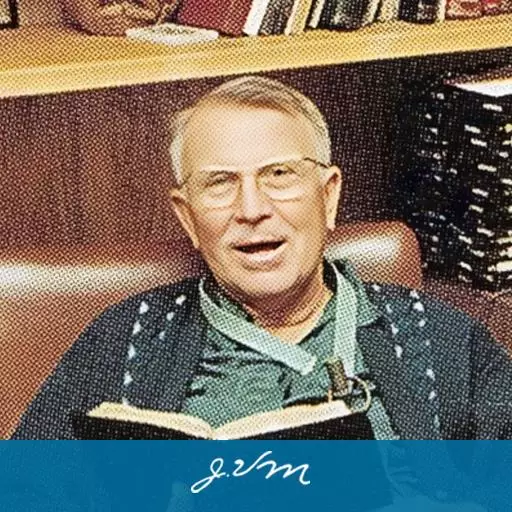
Steve Schwetz: This is Steve Schwetz of Thru the Bible Radio, welcoming you to another edition of the Questions and Answers program with our Bible teacher Dr. J. Vernon McGee, who answered the questions of his many listeners during his over 30 years of ministry.
Our first set of questions comes from a listener in Everett, Massachusetts, and they're all from the 20th chapter of the Gospel of John. He says, “Could you please explain verse 22 of John chapter 20? I thought the apostles didn't receive the Holy Spirit until Pentecost, but this verse seems to indicate otherwise. Could you also explain John 20:23 and John 20:17?”
Dr. J. Vernon McGee: Now, if you don't mind, I'll take them up in the order in which they appear and that means I'll take your last question first and that is John 20 verse 17 and I'd like to read it. Jesus saith unto her, “Touch me not, for I am not yet ascended to my Father. But go to my brethren and say unto them, ‘I ascend unto my Father and your Father, and to my God and your God.’”
Well, first let me say that I don't know exactly what you're after in that there's several things that probably I should bring out. He said to her, “Touch me not, for I am not yet ascended to my Father. But go to my brethren, say unto them, ‘I ascend to my Father and your Father, and to my God and your God.’”
First of all, let me say that He at that time was the great high priest on the way to present His sacrifice in the Holy of Holies, that is into heaven itself, as the writer to the Hebrews said, that He presented His sacrifice. And I take the position—you don't have to do it unless you want to be right of course—but I take the position that He presented His literal blood in heaven and that He was on the way there and because of that He said, “Touch me not.” He was the high priest on the way.
But He said, “You go and tell my brethren.” And then if you'll notice He said, “I ascend to my Father and your Father.” You see the relationship in the Trinity is Father, Son, but not that the Son was generated. It's a different kind of relationship. He is the Father of the Lord Jesus Christ, we're told. But in a way in which He's not our Father. He becomes our Father when you and I trust the Lord Jesus, believe on Him. Then we are born again into the family of God, and God the Father becomes our Father then. And that is a distinction that He very definitely is making in this passage of scripture.
Now, let's move on down and I come then to your question verse 22. Probably I should read verse 21 to get the background a little better here. Then said Jesus to them again, “Peace be unto you. As my Father hath sent me, even so send I you.” And when He had said this, He breathed on them and saith unto them, “Receive ye the Holy Spirit.”
Now, a great many of the expositors, and I have read many of them on this particular section here, make a great deal about Him breathing upon them, His breath, and the word for breath is the same word for Spirit, *pneuma*, all of that sort of thing. But I don't think that is the thing that you have in mind. And to me, that's never been the problem here at all. The problem is the one that you raise here, which I think is a good question, by the way. You say, “I thought they received the Holy Spirit at Pentecost, but this verse sounds like they received it before.”
Now, I would like very much to call your attention to something and I need to give you a little background here and that means that this is a transition period that took place in the past. And that is in that three-year ministry of the Lord Jesus that culminated in His death, His burial and His resurrection, and His ascension back to heaven and actually that 40-day post-resurrection ministry that He had. Now, that's all transition period.
You see, these people have been brought up under the Mosaic law and that's the great question that Paul wrestled with and presented. Why has God, after all these years of giving them the Mosaic law, has He dumped it? And all the promises He made Israel, are they now null and void? And His work now is with something new, the body of believers, the church. And that is a good solid question, by the way. It rests on a good basis. Has God thrown it aboard? Paul says no, He hasn't.
But God now, because of the failure of the nation Israel, God now is going to do something new and different. And He will call a people out of the world, both Jew and Gentile, into the body of believers, the church. And that's the thing that He's going to do now. So that the law hasn't been set aside null and void. You can't steal now because you say we're not under law. The point of it is that's not given as a rule of life. Now, the Holy Spirit's going to become the rule of life for the believer. Old things have passed away and all things become new, but it was difficult to get that through to those men, His apostles in that day, and that became a great transition period.
Now, there were several things that I need to call your attention to. One of these is this: back in Luke 11 verse 13, the Lord Jesus said to His apostles, “If ye then, being evil, know how to give good gifts unto your children, how much more shall your heavenly Father give the Holy Spirit to them that ask Him?” He told them at that time, this was the beginning of His three-year ministry, that the Father would give them the Holy Spirit just by asking. And apparently they did not ask.
Then you come to the period that now after His death, burial and resurrection, He's going to ascend back into heaven. He'll not be with them now. He will appear to them, but when He ascends back to heaven, He'll not be with them. They have 10 days there of waiting for the Day of Pentecost. Now, they are totally without the Holy Spirit. Now, these men are not going to be able to follow the Lord Jesus. They demonstrated very clearly at His death. They were scattered like sheep. One man sold Him, another man denied Him. And I think the whole crowd would have denied Him had not the fact that when He appeared to them after the resurrection, He breathed on them and said, “Receive the Holy Spirit.”
Now, I believe that was the regeneration of the apostles. I think that was the thing that took place there. And also that the Holy Spirit is going to come and indwell them and also to baptize them. He made several very wonderful statements there in the upper room in John 14 verse 16. He says, “I'll pray the Father. He'll give you another Comforter, that He may abide with you forever, even the Spirit of truth.”
So, the Holy Spirit came on the Day of Pentecost to do two things that had not been done before. These men, I consider, were regenerated. They were born of the Spirit of God and I think this is when it took place. It couldn't have taken place until after His death, burial and resurrection. They now have the gospel. But to begin with, there's no church. So, the Holy Spirit, He said, “You'll be baptized with the Holy Spirit not many days hence.” That means they would all be put in one body of believers, called the church, the body of Christ.
And that takes place by the baptism of the Holy Spirit. Scripture makes that so clear: by one Spirit are we all baptized into one body. That took place on the Day of Pentecost because the Lord Jesus said, “You're going to be baptized with the Holy Spirit not many days hence.” But when you get the historical record of the Holy Spirit, it doesn't say they were baptized. It says they were filled with the Holy Spirit. So that the other ministry of the Holy Spirit, which is for service, which is for living, so that on the Day of Pentecost they were baptized into the body of believers, which was not an experience, but it was the work of the Holy Spirit that brought them into one body.
And where the Spirit of God is, there's unity. If you're a believer in the Lord Jesus Christ and you're over at Kalamazoo, Michigan and you are down in Largo, Florida right now and you believe in the Lord Jesus Christ, you and I are—all of you are—we're all in the same body. Now, you may call yourself a Baptist if you want to or a Presbyterian or even a Catholic or something else. You can call yourself all this, but if you're a Christian, you're in the body of believers. We're all in that one body and the Holy Spirit has made us one there. We ought to act more like it, I think. We've built all these big fences that divide us today, and how tragic it is that that has taken place.
Now, the Holy Spirit brings us in. But now if we're to witness as these men did on the Day of Pentecost and if we are to live for God, then the Holy Spirit needs to fill us. So these men were on the Day of Pentecost baptized and filled. Now, what I'm trying to say to you, we're in a transition period here. He told them at the beginning of the ministry if they would just ask the Father that He was such a wonderful, He'd give them the Holy Spirit. These men apparently never asked.
And then after His death, burial and resurrection, the gospel now is, He breathes on them and they receive the Holy Spirit. They now are regenerated. But on the Day of Pentecost, they were baptized with the Holy Spirit. They were put in the body of believers and the church came into existence. The Day of Pentecost is the Bethlehem of the Holy Spirit. He was born on the Day of Pentecost. And then they were filled so they could witness to others and there 3,000 people get saved. That is the picture that's given to us, I think, in the word of God. And you're in a transition period here and I do not know why that isn't emphasized more today because it should be emphasized.
And believe me, I've spent a lot of time emphasizing it. And I'm not through, by the way, because this part says, how about verse 23 here? And He says, “Whosesoever sins ye remit, they are remitted unto them; and whosesoever sins ye retain, they are retained.” Well, what is it that will enable you to be forgiven of your sins? Well, the gospel. That's the only thing in the world. I have no power, no one else has any power to say to somebody, “You're forgiven.”
Only the Lord Jesus Christ was able to say, even to that woman who was a harlot, He says, “Neither do I condemn you.” But He also told her to go and sin no more. That what she's done was sin and He alone can forgive sin. So that what is it today that even the Lord Jesus told Peter—and He meant it for all the apostles—“I'm given to you the keys of the kingdom.” Who carried those keys? Well, the scribes carried at their waist keys that were symbolic of their office that they're the only ones that can unlock the scriptures.
And now He says to those that are believers, that's the reason that I emphasize so much today on the radio about our foreign broadcasts. Now, we are reaching people throughout the world that are hearing the gospel for the first time in their own language. And that thrills me because as far as Christian programs are concerned, we've got them thick in this country today. But we've had a lot of gospel preaching. Maybe God now wants these people to hear that have not heard before. But we have the key. We have the only message that will remit their sins. We can't remit the sins, but the Lord Jesus can. The gospel can set them free and we need to pass that word on.
Steve Schwetz: From a listener in Ada, Oklahoma comes this question: “Why does Matthew give us the genealogy of Joseph instead of, like Luke, the genealogy of Mary?”
Dr. J. Vernon McGee: That is a very interesting question and I could only wish this listener had a copy of my book on the Gospel of Matthew. *Moving Through Matthew* is the title of it, and I take up this particular problem and fact of the matter, I've gone so far as to draw a chart illustrating why Matthew gives us the genealogy of Joseph and in the Gospel of Luke you find the genealogy of Mary.
Now, there is a reason for that. You see that from the line of Joseph, why, our Lord gets the legal title to the throne of David. And from Mary's line, He gets the blood title to the throne of David. That is one of the very interesting—fact, I think one of the most amazing things that you find in the genealogies that are given of our Lord. One in the Gospel of Matthew, which presents Him as King. There you have the legal title to the throne of David. In the Gospel of Luke, which presents Him as Son of Man, you are given Mary's genealogy.
Now, why is it that this is done? And I think I can shed just a little bit more light on this question because you will find in the genealogy in Matthew, the one that you've referred to, a name that is indeed quite interesting and it's found in verse 11. It says, “Josias begat Jechonias.” Now, that is a very interesting statement. God has in here Jechonias. Now, what about this man Jechonias? May I say to you that if you would turn back to the prophecy of Jeremiah, you would find that God had some very definite things to say about this man.
Fact of the matter is, God said that no one in his line could sit on the throne of David. In other words, this man's line would absolutely be cursed and no one from that line could sit on the throne. Now, will you notice? I turn back to Jeremiah the 22nd chapter and the 24th verse. Now, here is Jeremiah speaking concerning Jechonias or Jehoiachin or as he's called here, Coniah. Now, let me read this. “‘As I live,’ saith the Lord, ‘though Coniah the son of Jehoiakim king of Judah were the signet upon my right hand, yet would I pluck thee thence; and I'll give thee into the hand of them that seek thy life, and into the hand of them whose face thou fearest, even into the hand of Nebuchadnezzar king of Babylon,’” and so on.
Then in verse 28, “Is this man Coniah a despised broken idol? Is he a vessel wherein is no pleasure? Wherefore are they cast out, he and his seed, and are cast into a land which they know not? O earth, earth, earth, hear the word of the Lord. Thus saith the Lord, ‘Write ye this man childless, a man that shall not prosper in his days: for no man of his seed shall prosper, sitting upon the throne of David, and ruling any more in Judah.’”
Now, this man Coniah, that the name given here is Jechonias or Jechonias as given in Matthew's genealogy. Yet you have a line that follows after him, but none of them sat on the throne of David. They cannot. God pronounced a curse upon him. Now, this man here, because of his great sin, God pronounced the curse upon him. May I say that he was a vile person and a grave sinner, so much so that God said that in this line, the line of Jechonias, no one's going to sit on the throne of David. They cannot. God pronounced a curse upon it.
Now, the reason the name Coniah is given and Jechonias not given is the “Je” is the same that you find in the Hebrew word Jehovah and it's God's name. God took His name away from this man and he's not Jechonias here, but just Coniah. God took His name from him. In other words, he's a godless man and God has absolutely withdrawn apparently from the man and pronounced this curse upon the line.
Now, Joseph is in that line, by the way. Therefore, although he has the legal title to the throne of David, yet God has said no one in his line can sit on that throne. How are you going to get around that? Well, may I say to you that Mary's Son was not the son of Joseph. Did not come through Jechonias. Came through Mary's line that came through another son of David, not the son of Solomon at all. But you find another break that is given and as a result, you find in the Gospel of Luke an altogether different genealogy. And that genealogy comes down through a son of David by the name of Nathan, I suppose named after David's friend Nathan the prophet. And it's through that line that Mary came. She was a daughter of David. And you see He gets the blood title from Mary. He gets the legal title from Joseph. And there is a remarkable fulfillment of prophecy here.
Steve Schwetz: After reading the passage of scripture which says, “Jacob I have loved, but Esau I have hated,” this Costa Mesa listener asks, “Does this passage mean that God hates some and loves others?”
Dr. J. Vernon McGee: Well, may I say to you that it is very clear in the prophecy of Malachi that God says here at the very opening of it, by the way—one that just opens up the book—God says, “I have loved you, saith the Lord. Yet ye say, ‘Wherein hast thou loved us?’ Was not Esau Jacob's brother? saith the Lord: yet I loved Jacob, and I hated Esau.”
Now, God never said that when the boys were born, although at that time God made a distinction. And this man Jacob was chosen. And if you follow the lives of the boys in their natural lives, the boy Esau is much more attractive at the beginning than Jacob. Esau's a very rugged, outdoor type of fellow, the kind that we all admire, a hunter, one that loved to be outside, athletic type. Jacob was a boy tied to his mama's apron strings and quite a schemer and conniver.
Yet, you know, a great many folks don't always reveal on the surface just what they are down underneath. Now, actually this boy Esau was a real rascal. He had no appreciation of spiritual values, no understanding of them at all. In fact of the matter is, he's willing to sell his birthright, which entailed two very wonderful things: it led to the coming of Jesus Christ, and it meant the one who held it was the priest in his family, that he was the religious leader.
Well, Esau didn't want it. He'd rather have any time a good square meal than to have that. He had no spiritual understanding or appreciation of spiritual values at all. Now, you have to follow all the way through the Bible the story of those two boys. And you find that one boy became a great nation, and that's the nation Edom and the Edomites. If you want a picture of them, look in the little prophecy of Obadiah. A nation that lifted itself up by pride, declared its ability to live without God, a godless people. And then God judged them. And that's the thing God hates, is that pride of life, is that human idea that man has the ability to live without God. Now, God hates that and that's what God hated in Esau.
Now, God loved Jacob, not his crookedness or that sort of thing at all. But God loved the man that had a desire for the things of God and was even willing to be crippled. And the time that God was dealing with him, he said, “I'll not let thee go unless thou bless me.” A man who honestly wanted a blessing from God. Now, that was the difference in the two boys.
But that didn't cause God at the time to hate one, love the other. You've got to wait till they become nations, come to the end of the book of the Old Testament and when you do, then God now is in a position to say, “This is the way that it is,” and that's a statement that is made.
I must conclude by saying the thing that Dr. Griffith Thomas said. There came in one day into the study of Dr. Griffith Thomas a young student who said to him, as this question is said, “Dr. Thomas, I do not understand why God would hate this man Esau and love this man Jacob.” And he says, “That's a puzzle to me, that passage of scripture.”
And Dr. Griffith Thomas asked him specifically what about it that you don't understand? Well, he says, “The thing I don't understand is why would God say that He hated this boy Esau?” Well, now Dr. Thomas said, “You know, I'm having trouble with that passage of scripture too, but my trouble is not yours. I can understand why God would hate Esau, but I can't understand why God would love Jacob.”
Now friends, that's the real mystery today. Why would God love you and love me? It's easy to see that God will hate sin, punish sin, but it is difficult to see how God could love any of us. That is the marvel of His grace and the wonder of His grace.
Steve Schwetz: These questions today have been powerful and important and we hope that you've been stimulated by Dr. McGee's answers and are moved to search the scriptures for its great depths. If you'd like more information on today's issues, then we suggest that you contact one of our service operators for our resource catalog. I'll provide you with our contact information in just a moment.
The Thru the Bible Radio program with Dr. J. Vernon McGee continues with its five-year study through the whole Word of God, book by book and chapter by chapter. Notes and outlines are available when you request them without charge or obligation, or you can download them anytime from our website at ttb.org.
To make your request for the resource catalog or the notes and outlines, call our offices at 1-800-65-BIBLE, Monday through Thursday from 6:00 a.m. to 3:00 p.m. Pacific time. For those of you who'd prefer to write, send your letter to Questions and Answers. For those in the US, box 7100, Pasadena, California, 91109. In Canada, box 25325, London, Ontario, N6C 6B1.
This program has been brought to you by the faithful friends and supporters of Thru the Bible Radio Network.
Featured Offer


Featured Offer
About Thru the Bible - Questions & Answers
Questions and Answers offers Dr. J. Vernon McGee's signature wit and wisdom in answering Bible questions sent to him by radio listeners throughout his years of ministry.
Other Thru the Bible Programs:
Thru the Bible - Minute with McGee
Thru the Bible - Sunday Sermon
About Dr. J. Vernon McGee
John Vernon McGeewas born in Hillsboro, Texas, in 1904. Dr. McGee remarked, "When I was born and the doctor gave me the customary whack, my mother said that I let out a yell that could be heard on all four borders of Texas!" His Creator well knew that he would need a powerful voice to deliver a powerful message.
After completing his education (including a Th.M. and Th.D. from Dallas Theological Seminary), he and his wife came west, settling in Pasadena, California. Dr. McGee's greatest pastorate was at the historic Church of the Open Door in downtown Los Angeles, where he served from 1949 to 1970.
He began teaching Thru the Bible in 1967. After retiring from the pastorate, he set up radio headquarters in Pasadena, and the radio ministry expanded rapidly. Listeners never seem to tire of Dr. J. Vernon McGee's unique brand of rubber-meets-the-road teaching, or his passion for teaching the whole Word of God.
On the morning of December 1, 1988, Dr. McGee fell asleep in his chair and quietly passed into the presence of his Savior.
Contact Thru the Bible - Questions & Answers with Dr. J. Vernon McGee
info@ttb.org
https://ttb.org/
Mailing Address
Thru the Bible, Inc.
P.O. Box 7100
Pasadena, CA 91109
In Canada:
Box 25325,
London, Ontario
N6C 6B1
Phone Number
(626) 795-4145 or
(800) 65-BIBLE (24253)