

Questions & Answers 3032


1) Can you speak to the issue of morality in light of Exodus 34:7?
2) How should we understand the warning of Isaiah 66:24?
3) Can you explain the heave and wave offerings mentioned in Numbers 18:11?
4) Where did the fine flour come from that was used in the meal offering in Leviticus 2:1?
5) How did God speak to Moses?
6) Who are the people in Revelation 18:4, since the church has already been raptured?
Guest (Male): How does God speak to us today? Is it through dreams or visions? Maybe He could speak to us through angels? Well, stay with us to find out what the Bible teaches on the way God communicates His will to His children.
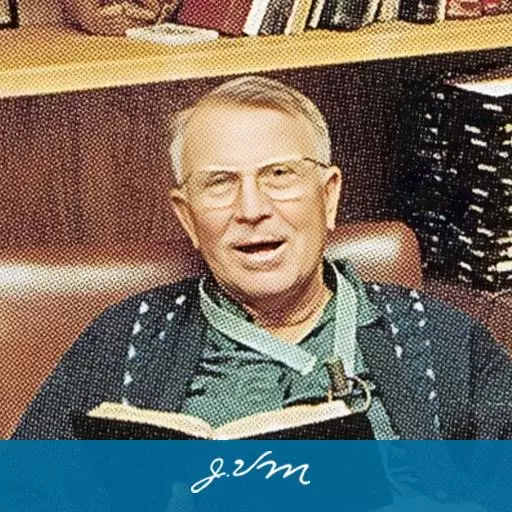
Steve Sweets: This is Steve Sweets for the Thru the Bible Radio Network, welcoming you to another edition of the Question and Answer program with our Bible teacher, Dr. J. Vernon McGee, who for over 30 years answered the questions of his listeners.
Without further delay, let's get to those questions and Dr. McGee's answers. We begin today's questions with this one from a listener in Gardena, California. He says, "Would you please explain and elaborate the meaning of Exodus 34, verse 7?"
Dr. J. Vernon McGee: I have several things I'd like to say about that. I'll turn to Exodus 34:7 and read all of it. It says, "Keeping mercy for thousands, forgiving iniquity and transgression and sin, and that will by no means clear the guilty; visiting the iniquity of the fathers upon the children, and upon the children's children, unto the third and to the fourth generation."
May I say to you, first of all, this is something that God gave to the children of Israel and it's part, actually, of the Mosaic Law. You see, Moses records this at the time God gave the second tablets of the law. At that time, God drew a line, and that line is a line that's been rubbed out today between right and wrong, between that which is moral and that which is immoral, that which is honest and that which is dishonest, that which is clean and that which is unclean. God draws a line here and says there's a difference.
Today, it's rather amusing that all of these liberals are for you not murdering them. They don't want you to murder them, but you can commit all the adultery you want to and you can lie all you want to, just so you don't lie to them and harm them in any way. Any civilized society, you have to make a difference between right and wrong, between that which is moral and that which is immoral.
The Bible morality's been rubbed out, and it does have something about murder and all that sort of thing. They're not quite ready to rub that out because the liberal likes to sleep at night and he wouldn't be safe at night. Now, I'm saying all of this to be able to say this: God is a holy God as well as a God of love.
Here, He says on one side, "I'm a merciful God, I'll forgive sin." But if you go on in your rebellion against Me, I'll punish you. Talking to Israel, He said that punishment will go down to the second, third, and fourth generation. I think that states a great principle. It was given to the nation Israel and it worked out in their life.
You want to take David, for instance. David's sin was passed on to Solomon, and Solomon's sin was passed on to his son, Rehoboam, and the kingdom was split right down the middle. Their sin went on and on. Abraham's sin worked itself out and is still working itself out today in the Middle East. Just think of the murders that have been committed there in the past few years because of the sin of one man way back, and that was a sin actually of adultery. It was one that was suggested by his own wife; she was entirely wrong.
May I say to you that whether you like it or not, you're going to have to draw a line between right and wrong, and between a holy God and a God of love. He's both. Therefore, the great principle is stated, and I think it works out today in a way probably that you and I do not recognize.
I think I've told this before. An eye specialist, a very fine Christian in Nashville, invited me one Monday morning to go with him out to the general hospital. He was going to operate on the eyes of blind children and some that were partially blind. They brought them in there from the blind school.
I watched several of the operations, and I'll be honest with you, it made me sick. When he took a little breather, I told him that I thought I'd be leaving, which I did. But I asked him, I said, "Why are all these children blind?" He looked at me and he says, "Because of the sins of their fathers." He says they had venereal disease, and it passed it on to the children.
He says you can put it down that that statement in the Bible is very accurate. I think a great principle is stated there. Maybe you don't like it, but you see, He's a merciful God, He'll forgive sin. But if you are going to persist in going on in it, as we are today as a nation, look at our present condition as a nation. We've never had problems like we've had today, and we won't deal with the root of the problem.
All this problem about abortion, whether it is right or wrong, the problem goes back to the act that produced the child. Nobody has said that. I saw on a program where they interviewed girls that had children out of wedlock, and they asked them. Nobody suggested that it might be wrong to have sex before you're married. You're old-fashioned if you do that. But you see the problems that we get in. God says, "I'll visit the sins of the fathers on the children." That ought to make the fathers today sit up and take notice, but they don't. They like to criticize that passage of scripture. It's still in the Bible and still accurate. A great principle is stated there.
Steve Sweets: Now this listener in Southside, West Virginia, also has a question about a particular passage of scripture. She writes, "Could you please explain Isaiah 66, verse 24?"
Dr. J. Vernon McGee: Let me read the verse and then I have a brief comment on it. I will comment on my comment, by the way. The verse reads, "And they shall go forth, and look upon the carcasses of the men that have transgressed against Me: for their worm shall not die, neither shall their fire be quenched; and they shall be an abhorring unto all flesh."
The important thing to note is that Isaiah closes with the Lord being the one who decides the destiny of both the saved and the lost. Three times in the last section of Isaiah, there occurs this statement: "There is no peace, saith my God, to the wicked." That is what God is saying here, in fact, although He's not saying it in words. In other words, He is depicting here the condition of the lost.
"There is no peace, saith my God, to the wicked." He has made that statement already in this book, and the three sections of the last division of this book are divided like that, and each one closes with that statement: "There is no peace, saith my God, to the wicked." Now, that's going to be their condition throughout eternity. No peace, no rest, no contentment, no God.
That is exactly what this verse is saying here. The book of Isaiah closes with this third warning that there is no peace for the wicked. I insert in my book, "He that hath ears to hear, let him hear." That is the message that God is giving: that the wicked have no peace here and they're not going to have peace hereafter.
All of this today of the drinking and the use of drugs, what does it reveal? Every evening here in Southern California, literally several million people climb up on a bar stool to try to find a little rest, a little contentment, and they can't find it. They can't find it in that bottle, because that bottle eventually gets them into trouble. God says, "There is no peace, saith my God, to the wicked." That's exactly what this verse is saying here, and that is the meaning of it.
Steve Sweets: Our next three questions, interestingly enough, all deal with Moses and the Mosaic Law. The first comes from a listener in Santa Fe, New Mexico. She says, "Would you please explain the meaning and purpose of the heave and wave offerings mentioned in Numbers 18, verse 11?"
Dr. J. Vernon McGee: I'm just going to read the one verse they refer to and make some statements relative to it. I'm reading Numbers 18:11: "And this is thine; the heave offering of their gift, with all the wave offerings of the children of Israel: I have given them unto thee, and to thy sons and to thy daughters with thee, by a statute forever: everyone that is clean in thy house shall eat of it."
Well, let me say that the heave and wave offerings both got their name from the very fact that they were not put on the altar and made a burnt sacrifice, or a sin offering, or a peace offering, or meal offering. They were not put on the altar at all; they were waved before the altar or lifted up before the altar as a gift to God. That's where they got their name.
Now, the wave offering was part of the animal. If a man wanted to give a whole animal, it would be pretty hard for him to lift up a 500-pound steer and wave it. So, generally, it was a lamb, but even an entire lamb would be pretty hard for the average person to lift up. So, it was the right thigh that was lifted up. The animal was cut up, actually butchered, and the right thigh was lifted up and made a wave offering. It was not burned, and it was generally that part of the peace offering and also the meal offering.
Very candidly, this is what went to the priests, to the Levites. They were not herdsmen; they could not raise sheep. They could not plant grain; they were serving the Lord in the temple and in other ways for the people, and instructing them. For that reason, this is what they received. If you'll read the book of Leviticus, if you're interested in this, you'll find other parts of the animal that went to the priests.
Then the heave offering was different from the wave offering in that it was a portion that was taken away from that which was already offered to the Lord. It was eventually sacrificed. That was part of the ritual, and it's a very lengthy ritual, and I never went into details. But I look at it this way: that Mosaic system was a long, exhausting ritual that was carried on.
I sometimes call attention to the fact that the laver was probably the most used article of furniture there was. The priests, everything they did, they had to go there and wash their hands. I have a notion that probably two priests met there, both of them washing their hands, and one says to the other, "I sure get tired of coming here washing my hands." I think the other one would say, "Yeah, look at mine, I've got dishpan hands. I've been here so much today."
I think maybe if Aaron overheard them, he'd say, "Well, don't you see what God's trying to tell us? That if you're going to serve God, you've got to be clean." There's a great spiritual message there. To me, the important thing about all these rituals is to get the spiritual message. Don't miss that. Don't try to get the detail of whether this part of the lamb, whether it was the front leg or the back leg, or the left hind leg, or what leg it was, went to the priest. That's not the point for us today.
It has a great spiritual message, and it's just like a great many people: they can't see the forest because of the trees. They miss the great spiritual lessons that are there. Now, I say all that because the Mosaic ritual is complicated. When anyone tells me, "Well, we need to get back to the Mosaic Law," of course, what they mean is the Ten Commandments. But that's not the Mosaic Law; that's a very small part of it. Nobody today that's talking about getting back to the law or keeping it, nobody keeps it. Israel does not keep it anymore. No one is keeping the Mosaic Law in all of its details. Thank God we are under grace today.
Steve Sweets: Continuing to look at the Mosaic Law, we come to a question from a listener in California who says, "Where did the fine flour come from that was used in the meal offering found in Leviticus 2:1?"
Dr. J. Vernon McGee: If you're acquainted with that, that's a meal offering, and you know the meal offering really was a bread offering. It was Mother Moses' recipe for making bread. It reads like this: "And when any will offer a meal offering unto the Lord, his offering shall be of fine flour; and he shall pour oil upon it, and put frankincense thereon."
First of all, I'll tell you where the fine flour came from. Now, you know the way that they made it in that day was to take a pestle and then a bowl or a dish; it was hewn out of stone. They put the grain in there, and then they began to beat it. It's owing to how long you beat it. Now, it's true that even when they had fine flour, it didn't look like the flour that comes from General Mills today, or from any of the mills that they have up in Minnesota. But actually, it was fine because it was beaten fine; that's the very simple answer to that.
Now, were the people able to carry enough grain out of Egypt with them to last all the time? Well, remember, this is for the offering, and you didn't have to have that much grain for the offering. Also, when they passed through the wilderness, there were places that were oasis, some large oasis where they could purchase grain. I'm sure that was the way that they did it; they were able to purchase grain. They could not have it to eat all the time because they were complaining even about the manna.
The manna, so we're told, could be beaten also. I've got the ridiculous statement that I make when we study about the manna: the manna could be fixed many ways. It could be beaten, it could be made into cakes, it could be fried, it could be boiled, it could be eaten raw. It could be done many different ways. I like to think that maybe Mrs. Moses—she doesn't figure in this very much—but maybe she got out a cookbook, *Mother Moses' Recipes for Manna*, and the different ways you could fix manna.
One of the ways you could beat it, and it could be beaten by the pestle down into the bowl that had been hewn out of the rock. My problem would be: how did they carry those heavy rocks with them along the desert? They couldn't take time every night to hew out a new one. So, that would be a problem for me, but that's not the point. The point is they did it, and they did have the grain.
I trust that I've answered that, but don't miss the spiritual message. That meal offering speaks of the humanity of Christ. He was a beaten flour. He wasn't emotional; He wasn't up one day and down the next. He wasn't subject to all of these different moods that most of us are guilty of. He was the same in His humanity as He was in His deity: the same yesterday, today, and forever.
Steve Sweets: From a listener in Glenmoore, Pennsylvania, comes this question: "In many places in the Old Testament, it says, 'And the Lord spoke unto Moses saying.' How did God speak to Moses? I know that in this age of grace, He speaks through His word, but there are many questions I have and I can't find the answer."
Dr. J. Vernon McGee: Well, may I say to you that in the formulation of the canon of scripture, God spoke in many ways. He spoke sometimes through an angel. He actually spoke sometimes through dreams; He spoke through Joseph by dreams. Sometimes He spoke audibly to the individual.
I believe that on the top of Mount Sinai, God spoke audibly to Moses. Moses couldn't see anyone. God is a spirit, you know. In fact, Moses finally asked. When anyone says that Moses saw God, all he saw was the glory of God, and God manifested His glory. That glory was visible in the Tabernacle.
The only people that ever have had a visible presence of God. Now the church does not have a visible presence. The Lord Jesus drew down the curtain on that in two ways. When He came, He laid aside His glory. When they talk about what did the Lord Jesus empty Himself of—not His deity, but His glory—He laid that aside, the prerogatives of deity. The glory was not manifested at all.
Moses saw the glory of God. But if you have had a dream recently, as a lady told me some time ago when I was up in the Northwest. She had a dream and the Lord Jesus stood at the foot of her bed and talked to her. I suggested to her that she probably ought to pay attention to what she had for dinner the night before; that might explain her dream because He didn't speak to her.
I asked her the question, "What did He look like?" She said, "Just like He does in all His pictures." But the interesting thing is the pictures that we have of Jesus are not pictures of Him, but of some Italian during the Middle Ages who posed for the picture. That's what we have, and that's what she saw, so she said.
She may have had a dream that she did, but God's speaking in His Word today. He spoke many ways in getting His Word through to man, and one of them was to speak audibly, and I think since you make the mention to Moses, I think it can be said.
Featured Offer

Featured Offer
About Thru the Bible - Questions & Answers
Questions and Answers offers Dr. J. Vernon McGee's signature wit and wisdom in answering Bible questions sent to him by radio listeners throughout his years of ministry.
Other Thru the Bible Programs:
Thru the Bible - Minute with McGee
Thru the Bible - Sunday Sermon
About Dr. J. Vernon McGee
John Vernon McGeewas born in Hillsboro, Texas, in 1904. Dr. McGee remarked, "When I was born and the doctor gave me the customary whack, my mother said that I let out a yell that could be heard on all four borders of Texas!" His Creator well knew that he would need a powerful voice to deliver a powerful message.
After completing his education (including a Th.M. and Th.D. from Dallas Theological Seminary), he and his wife came west, settling in Pasadena, California. Dr. McGee's greatest pastorate was at the historic Church of the Open Door in downtown Los Angeles, where he served from 1949 to 1970.
He began teaching Thru the Bible in 1967. After retiring from the pastorate, he set up radio headquarters in Pasadena, and the radio ministry expanded rapidly. Listeners never seem to tire of Dr. J. Vernon McGee's unique brand of rubber-meets-the-road teaching, or his passion for teaching the whole Word of God.
On the morning of December 1, 1988, Dr. McGee fell asleep in his chair and quietly passed into the presence of his Savior.
Contact Thru the Bible - Questions & Answers with Dr. J. Vernon McGee
info@ttb.org
https://ttb.org/
Mailing Address
Thru the Bible, Inc.
P.O. Box 7100
Pasadena, CA 91109
In Canada:
Box 25325,
London, Ontario
N6C 6B1
Phone Number
(626) 795-4145 or
(800) 65-BIBLE (24253)