

Questions & Answers 3026


1) Who are the three shepherds in Zechariah 11:8?
2) Does Acts 15:1-29 teach that the Gentiles are not required to follow the Law?
3) Why does Acts 21:20 say that many of the Jews were zealous of the Law?
4) Is it true that Satan cannot duplicate the miracles Jesus performed?
5) What is doctrine?
6) Where do we get our souls? From our parents or from God?
7) Who is the woman mentioned in Revelation 12?
Guest (Male): Where does our soul come from? Does it come from our parents or does it come from God who implants the soul at conception? Does the Bible provide us with any insights into this process or are we left to our own speculations? Well, stay with us to find out the answer to these questions and many more.
Guest (Female): How firm a foundation, ye saints of the Lord, is laid for your faith in His excellent word! What more can He say than to you He hath said?
Steve Schwetz: You're listening to the Question and Answer program with our Bible teacher Dr. J. Vernon McGee. This is Steve Schwetz for the Thru the Bible Radio Network. Would you join us for the next 30 minutes as we benefit from the wit and wisdom Dr. McGee provided in answering the questions posed by his listeners?
Today we'll begin our program with this question from a listener in Miami, Florida. He says, "Would you please explain who the three shepherds of Zechariah 11:8 are?"
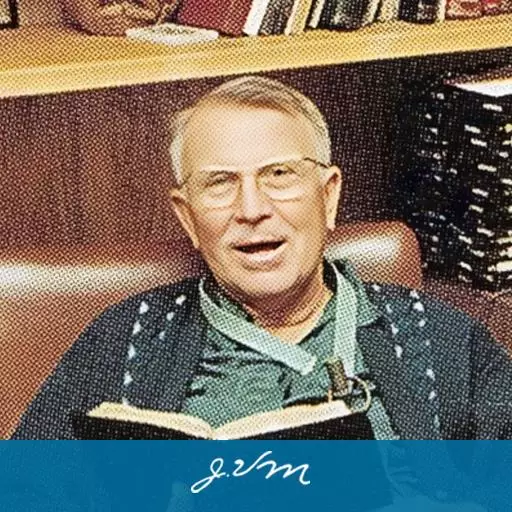
Dr. J. Vernon McGee: Well, I'll read that and then we'll say a word or two about it. "Three shepherds also I cut off in one month; and my soul loathed them, and their soul also abhorred me."
Well, that is in the book of Zechariah. And when we were studying it, you will recall that we called attention to the fact that it was highly symbolic. Candidly, I consider the book of Zechariah more symbolic than the book of Revelation and much more difficult. And this is certainly a highly symbolic statement.
So that the explanation that I gave in my book on Zechariah, I said three shepherds also I cut off in one month were probably the false prophets. So that that was as far as I felt that I was willing to go in print.
And the reason is because this particular juncture, there's been a great deal of speculation. Dr. Unger's very helpful commentary on Zechariah has this comment and I'd like to share this with you.
It says, "The Hebrew reads 'the three shepherds'. Despite the temptation which this rendering offers to project numerous bizarre identifications, Henderson cannot be far afield though when he declares, and now quoting Henderson, 'The only construction which is at all entitled to any notice is that which regards the language as descriptive of the three orders of rulers in the Jewish state: the priests, the teachers of the law, and the civil magistrates.'
These were the people of influential prestige by whom the nation's affairs were managed and to whose wickedness, which reached its acme when they crucified the Messiah, the destruction of the state is to be ascribed."
And may I say to you that I think that is a very good explanation of it. However, there are those that go so far as to say that this refers to the prophet, priest, and king, and that the Lord Jesus is in contrast to these three shepherds; that He is the true prophet, the true shepherd, and the true king, and these are the false, the three false ones.
And again, may I say that that is all suppositional. And that's the reason that I was not more specific or definite because anything that you would give would be certainly in that area. But I'm delighted to have the question and to be able to make those comments on it. Yet very candidly, I'm not convinced in my own mind and heart just exactly what Zechariah had in mind. And I'm delighted that that has nothing in the world to do with my salvation or my walk with the Lord or my future prospects. But it's quite interesting and if I had some accurate information, I'd pass it right on to you.
Steve Schwetz: Our next question comes to us from a listener in Portland, Oregon. She writes, "I have a question about the council which met in Jerusalem according to Acts 15:1 to 29. Am I right in my understanding that the point being made is if the Jews could not keep the law, then it was not right to require the Gentiles to attempt to do so? Yet in Acts 21:20 it says many Jews had believed and were all zealous of the law. Could you explain this?"
Dr. J. Vernon McGee: Well, may I say that you give the impression there that the apostles encouraged them to be zealous of the law. Now, let's look at the picture here and I'll turn to the verse that you've given us, which is Acts 21:20.
And we read, "And when they heard it, they glorified the Lord and said unto him, Thou seest, brother, how many thousands of Jews there are which believe; and they're all zealous of the law."
Now, you must understand the situation that existed in that day. And the book of Acts records actually the transition period between law and grace. Now, the apostles were all brought up under the law. I think Simon Peter, for instance, kept the law all of his life. He was in the habit of it. I don't think he ate pork at all, except that time that he made a foray up to Antioch and I think that he regretted doing what he did there and certainly Paul rebuked him for it.
But Paul now is the apostle to the Gentiles and he is now returned from his missionary tour that took him all the way across Asia Minor into Europe. And multitudes of Gentiles had turned to Christ. Now when he got back and gave his report, why they told him, well, things have been happening here also. Literally thousands of Jews here have turned to Christ and they are zealous of the law.
Now, it's not because they'd been converted that they were zealous. They were zealous of the law to begin with. They were brought up under it and though they didn't keep it, they were zealous of it and so they continued under it. And may I say this too you: that they could continue if they wanted to. That is the wonderful thing about the grace of God, you see, that if you are converted and you have been, for instance, a person that has been under law and you have not eaten pork, never eat pork at all, just because you're converted you don't have to start eating pork. You can just keep eating as you always have and avoid pork.
But the thing is two things, I should say: you now can eat pork if you want to. If you don't want to, you don't have to. But don't tell your brother that he can't eat pork just because you don't. We're under grace.
So coming back to what we've said before, Paul says whether you eat meat or whether you don't eat meat doesn't make a bit of difference, not a particle of difference. For meat does not commend you to God. And so it's not morally wrong and it certainly wouldn't be morally wrong for these people to keep the law.
So I think that you have gained the impression by reading that these people were urged to keep the law. Well, actually they were not urged to keep the law. They did it of their own free will and they were disturbed that Paul was telling people they'd have to give up the law if they accepted Christ. And Paul didn't say that, by the way. Paul sure followed many of the customs that a Jew would follow. He very frankly said that when I'm with the Jews, I act like a Jew. When I'm with the Gentiles, I act like a Gentile. I'm become all things to all men and I'm doing that that I might win some of them to Christ. Now I've labored that point because I feel very frankly you've got a good point there.
Steve Schwetz: We now come to a question from a listener in Valdosta, Georgia. He says, "I have been thinking that there are things that only God can do which Satan cannot do. Is it right to say that Satan cannot duplicate what Jesus did in the form of healing the blind, the sick, the lame, the casting out of demons, as well as raising the dead?"
Dr. J. Vernon McGee: Well, may I say that I would want to change your statement just a little before I would consider it right. I believe that the one thing that Satan does is imitate. He's a great imitator and he imitates Christianity. And anything that he can brainwash people today into believing that it's Christianity when it's not, he'll certainly use that.
Now, I am in no position today to say that Satan is not able to heal or that he is able to heal. I don't know. I'm of the opinion that he would use that if he could. And also the lame. And certainly he wouldn't be able to cast out demons. The Lord Jesus when he was accused of casting out demons by the power of Satan, he made it very clear that a house divided against itself couldn't stand.
I don't think that he would do that. But I don't think he can raise the dead. The very interesting thing is that in the early church, the apostolic church, only the apostles seemed to have the power of raising the dead. Peter raised the dead, we have an instance in the book of Acts, and also that of Paul the apostle. These two men raised the dead, but it was not prevalent afterward at all. In fact, we don't have any attested to in historical evidence anyone had that power at all.
And the very interesting today, faith healers are not going around to the cemeteries or to the undertaking establishments and raising dead at all. And I've never seen a dead person wheeled into one of these healing services yet. I just don't think that the devil can do that and I don't think any man can do that. I think that was restricted to the apostles in that day and it was an attestation to their apostleship.
Steve Schwetz: Here now is a simple but important question from a listener in South Bend, Indiana. She says, "What is doctrine?"
Dr. J. Vernon McGee: Well, doctrine is the gathering together of the scriptures into logical sections and an orderly presentation of the teaching that concerns certain great subjects.
Now let me illustrate that. The Lord Jesus Christ is presented in scripture in many, many places and in many, many ways. So that I have here a book on what's known as Christology. That presents the doctrine of Christ. That is the doctrine concerning Him. About His birth, about His life, about His person, about His work, about what He has done, what He is doing, what He's going to do. And you gather together all the scriptures that relate to Him and you present that in an orderly way and that's called a doctrine concerning the person of Christ.
Now you have the doctrine, for instance, the doctrine of Christian living. There's a great deal said about the doctrine of Christian living and you'll find that in the word of God. Then there's a great deal said about man: creation of man, his fall, his history. And all that sort of thing is called anthropology, the doctrine of man.
Doctrine is the orderly presentation of the great subjects of the word of God. And I think that's the best that I can give you right off the top of my head.
Steve Schwetz: We come now to a theological question. This person says, "Where do we get our soul? Do we get it from our parents or from God?"
Dr. J. Vernon McGee: Well, may I say to you, and I'm going to try now to deal with this, it actually has to do with the doctrine of the creation of the immaterial part of man. Does God create it at the time that the child is conceived in the womb? Or does He create it at the very beginning with the creation? Why, He created just a whole lot of souls and waited for the bodies to come along.
Well, may I say to you, there are actually three theories. One is known as the pre-existence theory of where we got the psychological and spiritual part of our nature. Where did it come from? Did we get it from our parents, the ones that transmitted to us our bodies? Or as we've indicated, when God created at the beginning, was He creating these souls? Now, that's where, by the way, transmigration of the soul fits in. The transmigration of the soul: that the real you was one time way back yonder, might have been a cow. And that's the reason in India, you know, they just don't kill cows because you may be killing your mother-in-law, you can't tell.
Well, may I say to you, all that that does, it reveals a longing in the person's heart to identify himself in this great universe and in the plan and program of God. It does reveal that. There's no question about it. But may I say to you frankly there is absolutely no basis scripturally for that type of thing.
Now, the other is what is known as the creation theory. That is the theory that actually I was taught in my denominational seminary. I went to a Presbyterian seminary. I was taught the creation theory. And that is that at the time of your birth, that your spirit and soul is created of God and God puts that in very much like He did at the creation of Adam.
Well, many of us believe, and I believe now, that actually creation ended with the creation of man and when God breathed into him, soul and spirit, he became a living person. I believe that was the last act of creation and that from then on, father passes to son everything that he gets. His psychological makeup. And I think that's quite evident.
When my second grandson was born, I was in the Hawaiian Islands and my wife sent me a picture of the little fellow that, you know, right after his birth. Well, actually a baby at that time is not very pretty. And I was greatly disappointed when I looked at that picture. He looked like a boxer to me, prize fighter, and he just wasn't that kind of a child. And then I found out that as he grew along that his looks improved, but his nature got worse. And I heard my wife and my daughter talking about him. There's not a blonde in the family on both sides except myself. I'm the only one that is a blonde. And this little fellow is a blonde, a redhead. And I heard them say that this little fellow look like me. And that was the first time that I noticed how beautiful the little fellow was. Very good-looking little boy, I'd like to tell you.
But they said that mean disposition that he was very much like his grandfather. Well, I immediately saw that they were looking at the little fellow the wrong way. He does have a sweet disposition, you gotta get to know him. A very attractive little fellow.
And now he not only got a physical body, but he got a nature, you see. And that is what is known as the traducian theory that this man says he has now come to. Well, the traducian theory was taught in the seminary where I did my graduate work. And I found out that Dr. Shedd, another theologian and one I think of equal competence to Dr. Hodge any day in the week, why he took the traducian theory. And that is that you get everything that you get, your psychological part, from your fathers.
And I think that that is the answer to a great many other questions. And I'm going to bring in at this particular point a question that I think that I should bring in here. And this theory has a great deal to do with it. That someone was circulating the thought that blood is given to the embryo through the male.
Well, may I say to you, I'm no biologist and no scientist to make no claim to be one. But I discovered very frankly that was espoused by a man who claimed to be a scientist, but he was also very anti-Semitic and he did not want to say that Christ, the Lord Jesus, was a Jew. Well, He was. He got a human nature.
And that statement I learned from a very excellent scientist out here, Dr. Bolton Davidheiser. He takes the position, in fact he tried to get this man to retract his statement that blood is given to the embryo through the male. And this man would not do it and that he would not use it as an argument related to the virgin birth of Christ. And the man would not reject that at all. And so this of course has caused Dr. Davidheiser to lose respect for the integrity of this man.
Now, I bring all that in because you can see that all of this is related actually back to the traducian theory. Now may I say this to you: that I accept the traducian theory and agree with this man that has sent in the question and he's wanted me to discuss it. And I don't think I should go any farther than that. However, very frankly, you've moved in on a great theological discussion today where there is difference of opinion.
And whether you are a creationist or traducianist, really and truly in my book, it doesn't really move mountains nor is it going to change the world. It is not nearly as important to teach that Christ died for our sins and not spend time arguing about where He got the blood. May I say to you, I do think it's important to make sure that it was human blood. But He was holy, harmless, undefiled, and separate from sinners. He had no sinful nature. But He did get a human nature. And that human nature is something that comes actually from our parents today. But you see, He was born of the Holy Spirit and Dr. Luke was careful to say that holy thing which is born of thee. Now I've been able to answer two questions here at the same time and as you can see, we're digging deep this morning. And very frankly, I'm not too happy about doing that because we want this to be a popular program and there are so many other questions that are more vital.
Featured Offer


Featured Offer
About Thru the Bible - Questions & Answers
Questions and Answers offers Dr. J. Vernon McGee's signature wit and wisdom in answering Bible questions sent to him by radio listeners throughout his years of ministry.
Other Thru the Bible Programs:
Thru the Bible - Minute with McGee
Thru the Bible - Sunday Sermon
About Dr. J. Vernon McGee
John Vernon McGeewas born in Hillsboro, Texas, in 1904. Dr. McGee remarked, "When I was born and the doctor gave me the customary whack, my mother said that I let out a yell that could be heard on all four borders of Texas!" His Creator well knew that he would need a powerful voice to deliver a powerful message.
After completing his education (including a Th.M. and Th.D. from Dallas Theological Seminary), he and his wife came west, settling in Pasadena, California. Dr. McGee's greatest pastorate was at the historic Church of the Open Door in downtown Los Angeles, where he served from 1949 to 1970.
He began teaching Thru the Bible in 1967. After retiring from the pastorate, he set up radio headquarters in Pasadena, and the radio ministry expanded rapidly. Listeners never seem to tire of Dr. J. Vernon McGee's unique brand of rubber-meets-the-road teaching, or his passion for teaching the whole Word of God.
On the morning of December 1, 1988, Dr. McGee fell asleep in his chair and quietly passed into the presence of his Savior.
Contact Thru the Bible - Questions & Answers with Dr. J. Vernon McGee
info@ttb.org
https://ttb.org/
Mailing Address
Thru the Bible, Inc.
P.O. Box 7100
Pasadena, CA 91109
In Canada:
Box 25325,
London, Ontario
N6C 6B1
Phone Number
(626) 795-4145 or
(800) 65-BIBLE (24253)