Free Newsletter
Pattern for Giving

References: 1+Corinthians 16

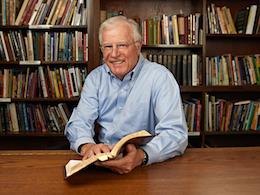
Our check stubs speak volumes. How we use our money says something about our commitment to Jesus Christ, and this is especially true in the realm of our giving. But what biblical principles should govern our approach to this matter? Are Christians under an obligation to tithe what they own? How should we prioritize where we put our resources? In this series, Alistair brings the teaching of the apostles to bear upon these issues. Every discussion about our giving must begin with the fact of God's giving to us, he says. Therefore, the attitude that we should have toward giving to the work of the gospel is not one of legalistic compulsion but one of thankful response. Join Alistair as he teaches on the subject and offers five practical ways to test your own heart on the matter.

Now Playing

You should begin receiving your subscription within the next 48 hours. If you signed up for a weekly newsletter, you should receive your first issue within seven days.

At OnePlace.com, we take extra care to avoid sending email to anyone who doesn't really want to receive it. Remember, you can unsubscribe at any time by clicking on the appropriate link at the bottom of any email you receive.

Thanks again, and enjoy your subscriptions.

 Close

Start your day out right with revised and updated reflections on the Gospel from C.H. Spurgeon and Alistair Begg

2x Week - Listen to popular pastors broadcasts on today's relevant topics, read inspirational articles and discover new ministries and podcasts recommended by OnePlace.
Free Newsletter Free Newsletter

To receive email newsletters, updates and special offers from OnePlace.com, select your newsletter(s), enter your email address and hit "Subscribe" Privacy Policy / Terms of Use

Featured Offer from Truth For Life Sermons

A Little Book for New Theologians: Why and How to Study Theology
Theological questions surround our lives, whether we are conscious of it or not. For some, the questions are as simple as, “Is there a God?” and “How can I be assured He exists?” For others, the considerations may probe deeper, and center upon conversations such as, “What is God’s true nature?” and “How sovereign is God over my life?” Any dialogue or introspective contemplation about God is, by definition, theology, whether the person is a child or a PHD in philosophy. According to author and college professor Kelly Kapic, “Theology is not reserved for those in the academy, it is an aspect of thought and conversation for all who live and breathe, who wrestle and fear, who hope and pray.” In his book, A Little Book for New Theologians, Kelly Kapic provides a clear, straightforward way to distinguish between the academic study of God’s Word and the assimilation of God’s Word into daily life.