
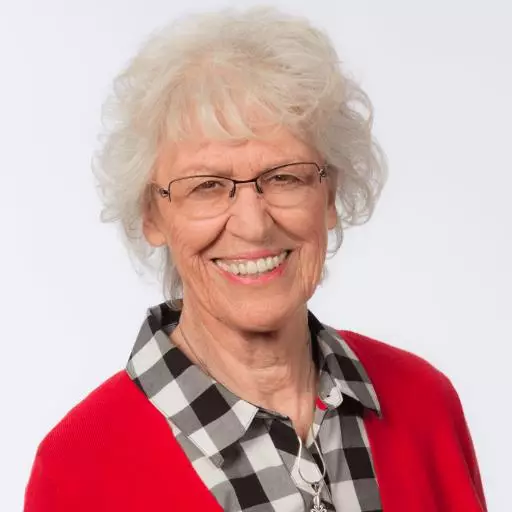
Telling the Truth for Women
Jill Briscoe
He Created Me


Our mere existence is evidence of God's love. When God creates, He creates in love and with purpose. He knows our days, our actions, our thoughts, before we even begin to exist.
In this message, Jill Briscoe reminds us that our reaction to God's love for us, as displayed in our creation, ought to be like David's in the psalms—a reaction of praise and obedience.
Jill Briscoe: I'd like you to turn in your Bible or have it open at Psalm 139. I'm going to begin a series on the love of God, the love of God for us, not our love for him, but his love for us. I'm going to be looking at the word *hesed*, the word in the Old Testament, not the New, the word in Hebrew for the Old Testament was written in Hebrew that is used to translate the word *hesed*, the love of God.
The greatest need of the human heart is love, is to be loved, and to be able to have the capacity to love in return. I don't know if any of you saw the *Highway to Heaven* and you remember the angel, Michael Landon. There was a very touching part in that presentation where Arnie, who was a retarded child, aged about nine or ten, leaves home. He leaves home because his father laughed at him. His father beat him. His father said he talked funny, and indeed he did. He had a crooked mouth. He had slurred speech.
Guest (Male): And so Arnie left home and tried to make a life of himself on the streets among the garbage cans. And one day as he was living in this large box with his best friend, a cat named Thomas, if you remember, he needed some food for him and Thomas. And so he went into a store and he shoplifted. He shoplifted a tin of cat food. And somehow he took it back and managed to get the lid off it. And he also shoplifted some candles. And he put the candles in the top of the cat food for his birthday. And he wished. He closed his eyes as we do when we have candles on a cake and he made a wish. "I wish someone would love me."
Jill Briscoe: To be loved is the greatest need. Many people live all their lives without being loved, maybe because we're like Arnie, we're socially unlovable. Or maybe there's nothing wrong with us at all, but our circumstances have taken us to a place where because of our birth, because of our family, because of our culture perhaps, because of the country that we've been born in, because of our environment, it has meant that we live our lives through this period of time called life after the fall without being loved.
In Lloyd Ogilvie's wonderful book, *God's Transforming Love*, he says this: "Some of us have emotional malnutrition as a result of an inadequate expression of love in our childhood or present families. And we find it difficult to give to others what we have not experienced ourselves. Others of us have felt rejection or the excruciating pain of a broken relationship. We need to be loved and to learn to love again in return. It is the greatest need of the human heart."
And yet, I think you know as well as I do that men and women are looking for love in all the wrong places. Basically, in the places of our relationships, because women live their lives and dream their dreams in the area of their relationships. If our relationships are going well, we're going well. We're doing all right. One of the most alarming things Ogilvie says is the realization of the absolute fact in life that other people cannot satisfy the need we have to be loved.
I talk to many women all over the world and specifically in the States. And they say to me things like this all the time: "If only I'd had a different father, then I would know what it was to be loved. If only I'd had a different mother. If only I'd had siblings that loved me." Sometimes we see a photograph or we see something on television where we're told there is a very close-knit family. And sometimes perhaps there's a little bit of envy, "I wish we'd had a close-knit family. I wish our brothers and sisters still stayed together and kept in touch." You see that advert and you have this wonderful picture of this perfect family scattered all over the United States but loving each other. Maybe you don't feel like that.
I remember reading little children's letters to God, I don't know if you saw that little book. One of the children's letters to God said this: "My brother is a rat. You should give him a tail, ha ha." Typical child, probably aged five or six, being very honest about his sibling relationships. He didn't feel loved and he didn't show much love either. But we go through this thing: if only I'd had a different father, a mother, a sister, a brother, a friend, a husband, a wife, then I would know what it was to experience being loved. And yet even in the very best of our human relationships, there is no love that can fill that love need within us.
And this is because we are made to be loved by God. We are made to be loved by God. Our emotional needs are part of our created nature. God made us with this great big need-love: "I need to be loved." He made us like that, but he made a matching component. The love that he has for us is that matching component. He matches the need that we have. We are created for a relationship with him, and only in fellowship with God can we fill that emptiness of the emotional nature that we experience.
And you say, "Yes, but which God?" How many people are into New Age? They say there are gods in nature. They say there are gods here, there are gods there. There are many gods that can satisfy the need we have to be loved. And yet the Bible teaches there is only one God. You just need to just do a cursory look through the book of Isaiah. Isaiah 44:6: "This is what the Lord says, Israel's King and Redeemer, the Lord Almighty: I am the first, I am the last. Apart from me there is no God." And again in Isaiah: "I am God, there is no other" (46:9). "I am God, there is none like me. Before me no gods existed. They weren't formed, nor shall there be after me. I, even I, am the Lord. Beside me there is no Savior."
The God of the Bible claims to be the only God, or the highest God. One of his names means "the highest of all the gods people have." He is the highest, the only true God.
Guest (Female): I was able to go to Europe and got off the plane, got into a car, and was driven three hours to be met by thousands, literally thousands of young people, 3,000. They had come from 57 different nations to sleep on concrete floors in sleeping bags and to prepare themselves for a ministry. They were students recruited by Operation Mobilization for summer missions throughout the world, but specifically in Europe. And it was an incredible privilege to speak to those 3,000 young people on the eve of their sending out.
I couldn't help thinking, where will they go? Well, we know because of Psalm 139 that God knew before we sent them out exactly where they go and what would happen. But it was fun for me, a creature of time, to read some of those reports. And this was one of them: the Love Europe summer team in Hamburg operated a book table in the city's main railway station. There they met Saeed from Jordan. He'd rejected Islam as a religion of fear and was searching for God. He'd read the Bible but didn't understand it. Then Saeed met an Arab Christian on the summer team, and they talked for two weeks, sometimes through the night.
One night as he watched an Arabic video explaining why we need Jesus, he began to cry. At the end he gave his heart to the Lord. The next day it was clear that Saeed had had a deep understanding of the step he'd taken. He asked to be baptized right away and afterward said, "When I was a Muslim, I used to read the Quran and cry from the fear it created in me. Now I look in the Bible and cry because of the love that God has for me."
Jill Briscoe: This young man had been trying to find his needs met, the need to be loved, in his religion. And all he had found is a great fear. But when he found the God of the scriptures, of the Christian scriptures, of the Jewish scriptures, then he said, "Now I know I am loved by God." So we will never, I believe, experience what it really means to be loved as we're created to be loved unless we know the Creator's God, the Creator who is revealed through the Jewish and Christian scriptures. That's the greatest need of the human heart.
But you say, "Well, all right, but what is love? If I don't know what this love is that I've been looking for and wanting and thirsting for and hungering for, how do I know that I'll experience it when I'm being loved?" I need you to turn with me quite briefly to 1 John, the epistle of John. This bears study, it bears meditation, it bears taking home with you and opening and digging into for yourself. But there is a passage of scripture here in 1 John chapter 4 where God's love and ours is talked about, but specifically God's love.
"Dear friends," verse 7, let us love one another, says John, "for love comes from God." And in John 4:16 it says, "for God is love." This God the Bible speaks about. This is the God who the Bible claims is love. Love comes from this God. Now the New Testament was written in Greek, so the word here is *agape*. It means to be primarily concerned with the other person's well-being irrespective of their reaction or condition, irrespective of their response. It's unconditional love. Not "I love you if you're good," "I love you if you're pretty," "I love you if you pray," "I love you if you go to church." It is "I love you whether you do all those things or whether you never do all of those things." I love you however you react or respond to me.
Now how do we recognize love, this sort of love? When it is demonstrated, how do we recognize love we have for each other? When somebody does something in action to show us that they love us. In fact, *agape* love acts to show us that it loves, or that he loves. This passage of scripture talks about the greatest love. The greatest need of the human heart is to be loved. The greatest love that the human heart needs is here demonstrated for us, 1 John 3:16. Two 3:16s in John. You know the first one, John 3:16, don't you? For God so loved the world, *agape*-ed the world, that he gave. How do we know God loved? He gave. He demonstrated his love in Jesus.
1 John 3:16 again in John's epistle says this: "This is how we know what love is." Do you want to know what love is? "Jesus Christ laid down his life for us." He showed us his love in sending Christ, his one and only Son, so that we might live through him. And this scripture says so we may know and rely on the love God has for us. He sent his son to show us what real love was all about. In 4:10: "This is love." If somebody wants you to define what real love is, here it is: "This is love: not that we loved God." You cannot look at human love even at its height and say that is love. It is sullied, it is spoiled, it is tinged with selfishness if we are doing the loving because we are fallen creatures.
So it isn't that we loved God. This is love: not that we loved God, not our love, but that he loved us and sent his son as an atoning sacrifice for our sins that we might live through him. That we might live in love. That we might experience this love. That we might, verse 16, know and rely on the love God has for us. "Whoever lives in love lives in God and God in him."
So how do we begin to experience this love when this love is in us? How does it get in us? By his spirit. He lives in us. How does he live in us? He lives in us when we invite him by his spirit. The Holy Spirit is the spirit of God. God is love. The Holy Spirit is the spirit of love and he can come and fill that matching, gaping hole, that God-shaped hole within us. The love of God is then shed abroad by the Holy Spirit who is in us.
You know, this really rings a bell. Instead of talking to people about "You need Jesus Christ," talk to them about love. Ask them if they have ever been loved. That's a wonderful way to open a conversation. And then you can take this passage of scripture, read it, learn it, learn it off by heart, step them through it, just as I have done for you.
God is love. Christ is God. The Holy Spirit of God, who is love, this spirit of love can come into our hearts and satisfy the need we have to be loved. People are really interested in that. And so we have a message for the world as we can explain to them that God is the one who wants them to experience his love in their lives.
1 John 4:13: "We know that we live in him and he in us because he's given us of his spirit. And we have seen and testify the Father has sent the Son to be the Savior of the world. If anyone acknowledges Jesus is the Son of God, God lives in him and he is in God. And so we know and rely on the love of God that he has for us." Do you know and rely on the dependable, *agape* love of God? Now you can trust the love of God that he has for you. It is the greatest love.
And yet you know something? Many of us have done this and yet we do not experience the love of God. Many Christians feel like that. I have to tell you that I come from a home where I was loved. I was loved by my father. I was loved by my mother. I was even loved by my sister. I was loved by my friends. I was loved by a couple of teachers, I remember. And I was loved by the children that I taught. I was loved at college by the professors. I was a very loved child when I really sat down even this morning to think about how I have been loved in my life. I am such a fortunate, privileged person.
And yet at the age of 19, coming from a loving, warm heritage—not a Christian heritage, but a loving heritage—I was a needy college student. I needed to be loved. I was looking here and looking there and investigating different religions and opportunities where there was a God who said he could give me this love. How could I be so loved and yet feel so unloved? It wasn't enough. It was never enough. My father's love, my mother's love, my boyfriend's love—it was never enough. There always had to be something else.
And yet the day that I accepted Jesus Christ into my heart, I remember lying in a hospital bed saying over and over again, "I am loved." That was my first reaction to my conversion. And for the first time, even though I had been loved by all these human people, that was never enough. I knew deep down that I was loved. And yet I meet Christians all over that have the greatest lack. Yes, the greatest need is to be loved. The greatest love is the love that God demonstrated in coming down, walking into our lives to live his life within us at the cost of the cross. And yet even though his spirit lives in us and we know these things in our head—I'm quite sure I haven't told any of you anything that you do not know up to this point—you do not feel loved by God. It is a lack. You do not understand the love of God and you do not appropriate what you have. You do not enjoy, you do not experience the love of God.
And that's what this series is going to be about. And that's why I want to turn our attention not from the fact that we must love God, because that's where we usually come from. "We've got to love him more, we've got to worship him more, we've got to serve him more, we've got to stir it up, we've got to worship more, we've got to get into this mystic feeling because I don't love God enough and I don't love my husband enough and I don't love my children enough and I don't love my church enough." And when you're covered with guilt, you don't do very well in loving anybody. Guilt is a kill-joy and it's a kill-love. And what we need to do is to turn our eyes away from our love for God to God's love for us. Not put the cart before the horse.
I have a human illustration that hopefully will help of this. And I've never told this story before. I've never thought about it in relation to anything before. But my mom and dad had a wonderful love. They had a wonderful marriage. They loved each other as highly and deeply as two human beings could, two human beings that were not believers. They really loved each other. And one day I asked my mother, "How did you and Dad meet? How did all this happen? Tell me your love story."
And my mother, rather shyly because in England you don't talk about things like that—I mean, you talk about them all the time over here—I asked my mom, "How did you meet?" And very shyly she said, "Well, I was living in Scotland and my parents emigrated to England over the border and we became English and we were very poor. And I went to work in a factory ironing clothes, and I was ironing clothes all day. And I used to go to a club at night, a social club, and there I met your father, I met Bill."
And so Peggy meets Bill. And my dad comes from quite a wealthy home. My dad did come from quite a wealthy home and he was very proud and very independent. And he determined at the age of 15 he would never work for anyone but himself. And so even though his parents wanted him to train and go to be a banker and be respectable and safe and all of that, he started knocking on people's doors around the neighborhood and asking to mend their bikes. He was very good, he'd never been trained, but he just knew mechanics. And so he started to mend bikes and bring them back to his little garage on the side of his double semi-detached house in Liverpool.
And he was very good at mending bikes and then he saw an old car sitting where the bike was and said, "Do you want me to fix it up?" and he began to fix up cars. And then he began to build—turned out to be the biggest automobile business in the whole of England. And that's where he started at the age of 15. And he fell in love with my mother. And my mother didn't want anything to do with him. She said, "I don't want to see you, I don't want you around, just get lost. I'm not interested." And he tried everything he could and she just wouldn't even go out with him.
And in the end he cornered her at this social club and he said, "Peggy, give me six months. Please give me six months. Go out with me for six months. And at the end of that time, if you never want to see me again, I promise I'll walk out of your life and that'll be it." And so reluctantly she said, "Okay, you can have six months." And she began to go out with my dad. And he began to love her unconditionally. He began to demonstrate his love for her and he courted her. And at the end of the six months, he took her out for this meal and his heart was in his mouth and he said, "Okay Peggy, do you want me to walk out of your life? I promised you if you do, I'm going." And she said, "No, I love you. I love you."
And you see, we love him because he first loved us. It's as we receive, as we perhaps reluctantly, perhaps even hostilely, begin to even allow him to show us his love, teach us how he loves us, demonstrate his love to us, then our hearts begin to be strangely warmed. And we end up saying, "I don't want to lose you, I don't want you to walk out of my life. I love you." We love him because he first loved us.
Now the demonstration of that love as we have seen is in the sending of Jesus in the New Testament. The word *agape* love helps us to study that and it was very tempting for me to just stay right there along with the New Testament. And yet I want to take you into the Old Testament in these studies, and I want to look at the Old Testament concept of *hesed*, the counterpart to *agape*. The word means to do good on behalf of another. A love that never fails to love. You know, it says in 1 Corinthians 13, "Love never fails." And you say, "What you mean? Love does fail, it stops. I've experienced that in my own life." But the love of God never fails to go on loving even when we stop loving him.
*Hesed* is the greatest love of the Old Testament as *agape* is the greatest love of the New. The steadfast love of the Lord never fails. He is lovingly kind, he is unfailing love. And when that word is used in your translation, the Hebrew translation of the Old Testament, it is always translated *hesed*. And it is most widely used in the Psalms. David was the best at responding to the love of God. David used the word *hesed* more than anyone else. In the book of Ruth, it's scattered from beginning to end. Or the book of Esther, for example, the name of God is never used and yet the word *hesed* appears. And so there he is.
Now David came to understand and appropriate so many facets of the *hesed* of God. You know, the love of God is like a diamond. The love of God is like a diamond. Once Stuart and I were back on an anniversary, we visited the Tower of London. We'd never done it before even though we're English. And we stood in a line for two and a half hours to see the crown jewels. And I kept saying, "This cannot be worth it. This is absolutely ridiculous, standing in line to see the crown jewels. They're just a, you know, whole lot of jewels."
However, when we eventually got our turn to file past the crown jewels, it was worth it. I have never in my life in all the wonders of the world I've been privileged to see seen anything like it. If you ever get a chance to go to London, stand as long as it takes to see the crown jewels. And what they have done is gather these incredible diamonds and jewels and display them absolutely starkly on a black velvet cloth in a lighted canopy and turn them. And as the jewels turn, every single facet is caught by the light beaming down on them. And we stood there for a long, long time, how many times those diamonds turned because every single facet was different.
And the love of God is like that. And I am praying that God will help us together to be able to look at a facet of the love of God, a facet of his mercy, or a facet of his grace, or a facet of his dependability, or a facet of his covenant love, a facet of his promise. So many facets that this word *hesed*—this word *hesed* is the diamond that we can look at bit by bit as we turn to the scriptures. And my aim is to come to the end of these talks and for you to walk out of this place saying, "I'm loved. I'm really loved." Then we'll be on the road to being able to live a life of loving God and loving others. It'll spill out once you know you're loved.
Now one of the facets I want to start with is this creative love of God. How do we know we are loved? Because God created us. God is love. If God creates, he creates in love. He creates in love. It was the middle of the night. Mrs. Jesse poked her husband in the ribs. "Wake up, the baby's on its way," she said. Mr. Jesse pulled himself out of a deep sleep. He went to wake Eliab, his oldest son. "Go and get the midwife," he told him. "Hurry." Eliab did so. She came only just in time. After all, this was Mrs. Jesse's eighth son. Also, she'd had two daughters incidentally.
The cry of the newborn split the night. "A boy, another boy!" Jesse exclaimed with great joy. "His name shall be David." So David, son of Jesse, destined to be King of Israel, was born. God had created baby David in love. His birth is recorded for us in Ruth—how fitting, for this is another book in the Old Testament where *hesed* is scattered from the beginning to the end of it. And the first time we ever read the name of David, this David, is in the closing chapter of the book of Ruth in chapter 4 where we see this family, Boaz having married Ruth, and Ruth having had this baby, Obed. And then we get the little genealogy: Obed begot Jesse, Jesse begat David. David is born.
Which is the greatest birth now apart from the birth of Jesus Christ? If I asked you that question, what would you say? Which was the greatest birth this world has ever seen? You know what you should say? Mine. Mine. For David, his birth was the greatest. He wrote a psalm about it, Psalm 139. You might want to turn there just so I can remind you of some of those things. But when David thought of his birth, he said, "I am no ordinary child. I am special."
You know, when Moses was born, the scriptures tell us in the book of Hebrews that he was no ordinary child. And I always smile when I read that. Every mother says that, don't they? Every time a baby is born, they are no ordinary child. This is the greatest birth. And yet we should really praise him because we are fearfully and wonderfully made. Have you ever spent an hour praising God for your personal birth? For the fact that you were born? For your creation? Have you ever done that? David said you should do it. He said, "I'll praise you because I am fearfully and wonderfully made."
And you know, as you praise God for his creative grace in making you, you will understand a little bit of the love of God. He made me. I can know I am loved because of the trouble that he took. He took an awful lot of trouble. He took an awful lot of time. He took an awful lot of talent to make me. This tapestry that hangs here is the loving embroidery of one of our members. Took her ten years to embroider this. It is absolutely incredible. It is a labor of love, ten years. It is probably one of the most beautiful pieces of tapestry I have ever seen. And yet even though it took ten years and would rank right up there for tapestry, it is still not alive. It still only reflects the greater tapestry, the greater embroidery.
For you and I, as you know, were embroidered in our mother's womb. So God in his creative genius embroidered us. He made our little minds connected with little threads called dendrites. And if you take them out and unspin them, do you know where they would reach? From here to the moon and back. That's how long all those wires are that clip all our thinking processes together. I think that's what's wrong with me, I've got a few wires missing or something. Dendrites. We are fearfully and wonderfully made. Look at the symmetry of this embroidery. Look at the pattern of it, how balanced it is. Think of the symmetry of your body, of God's love as he wove your teeth and your nose and your hair and all that stuff together. Your veins. In fact, when it says he wove us together, it is talking about this piece of embroidery and thinking about the veins of the body, the connections there.
Think of your heart. Medical science tells us it would take a small gas truck to pump enough blood for us every day. If you didn't have a pumping system pushing that stuff round your body, you would need to be connected to a small gas truck every day. And God put it all together inside us as he lovingly made a baby. And what about making that baby? Gynecologist told me, if we compare what a sperm must do to fertilize an egg, an athlete would have to run 70 miles per hour for 320 miles to get there. Incredible. That's what God did. And he made us capable of doing it for each other. The same hairs that carry the egg down carry the sperm up. How do they know to stop wafting around in one direction and start wafting in the other? Because God in love wove us as beautifully as this tapestry.
Little boy was bending over some flowers once and he straightened up and said, "Well done, God." And you know, when you think of your birth and the miracle of those nine months as he wove you in that small dark studio without any light, for darkness and light, we read in this psalm, is all the same to you. What a great artist as he labored in secret. Great artists usually labor in secret. There's usually an unveiling. And the unveiling for us was our birth. Our nativity, our nativity of grace. And we are born to bless him for it. "I praise you because I am fearfully and wonderfully made."
God works in the darkest place, but look what he produces. "My substance was assembled, all the essential materials of my being. I was curiously wrought in the lowest part of the earth," embroidered with such great skill. Man is wonderfully, wonderfully, wonderful. We know that, and it should show you how much you're loved. In love he wove me. He hemmed me in. He doubled and folded me down and strengthened the edges to prevent me unraveling. He finished me off. He finished me off.
And if there is a genetic problem, if there is a problem with this embroidery, it is simply because of sin. And one day we will have a new body where there are no defects. But I'm more than body. He made my soul and spirit too. And he lovingly created those parts of mine that think, feel, and decide as accurately and incredibly as he created my body that I can see. And yet he created a mind that can think and emotions that can feel and a will that can decide, knowing what we'd do with them. Knowing what we would do with them.
He made our days. He created a day to match the person that we are and what he would wish we would do with it. He thought it out. He planned it beforehand. He created all of us and he created all our days. "Every day ordained for me is written in your book before one of them came to be." My comings and my goings, my risings and my sittings. He knows what motivates my choices, and he knew it before he ever made me. You see, God never has a thought he hasn't had. That would presuppose he didn't know something. God knows everything. He is all-knowing. So he's never had a thought he's never had. That means you and I have been on his mind forever.
He knows you. He has never un-known you. You have been heavy on his mind. He created you in eternity, and for nine months created you in time that he created out of eternity. But you have always been there. Not only has he known you in eternity, always known you, he has known everything you would do with what he made. What you'd do with your hands. What you'd do with your eyes. What you'd do with your body. What would you do with your secret special parts? He knew.
And even though he knew, even though he's acquainted with all our ways, he made us anyway. And when David thinks of that, he says, "In sin did my mother conceive me, but in love did my God create me. In sin did my mother conceive me." That's what David said. And you know, God didn't drown him at birth like a defective kitten, even though he knew what baby David would do. And God knew about Bathsheba. And God knew about that steamy night of sex. And God knew about that adultery. And God knew about Uriah who would be murdered by that baby's hand and that baby's wicked mind. And he knew about that marriage to the poor widow and the cover-up. And he knew about the blood-stained hands of David that would prevent him ever building a temple for the Lord. And yet he brought him to birth.
That's what the love of God is all about. For when God thought about David's nativity, he thought simultaneously about another one, his own. Another nativity. God outside of time doesn't have a sequence of one thought after another. Remember that. No, God in his experience knowing what David would do brought him to birth and gifted him and embroidered him and made him an incredible young man, and gave him choice and set him on his way.
And yet my nativity is a day of grace like that. For knowing what we would do, he brought us to birth. And he didn't drown us like a defective kitten. Knowing that every day he had a plan for us that we messed up, went our own way, used the members—the incredible members of this body—in ways that broke his heart, he still made us.
My nativity, day of grace,
Taken from the frame of thy weaving,
Displayed to wandering eyes.
My nativity, day of grace,
A tapestry of time,
A labor of your love that overwhelms me.
My nativity, watched by angels,
Guarded by my God.
Cradled in your care, I rest.
My nativity, pale reflection of another daily day
In this our little universe,
When thou didst come my soul to save.
My nativity causing thy nativity.
Thy nativity, day of grace and glory,
Embroidered in thy mother's womb
With scarlet thread, godly baby thing.
Lying in a cooling world, hot small star from heaven
Fallen to our universe.
For who? For what? For when? For why? For me.
Thy nativity defies the mind's most marvelous thoughts to comprehend.
Thy nativity, God's kiss on the wet cheek of lost mankind,
Telling us he loves us.
What name this baby?
I hear the father's proudest tones:
*Hesed* his name shall be, *Hesed*.
You are loved. You are loved. And the aspect of that love, that diamond, grace—knowing, knowing as thoroughly as Psalm 139 tells us he knows all things, our comings, our goings, our doings, our sinning—he made us. Let's pray.
Lord, the greatest need of the human heart is indeed to be loved. You created us like this. We cannot help needing to be loved because you made us to need to be loved. But you made us to need to be loved by you. And so often we have tried to fill that incredible vacuum with the love of other people that, though that can bring some comfort, some assurance, some help, ceases when the loved one dies or goes away or leaves us or rejects us and is never enough.
And Lord, as you embroidered us within our mother's womb, as you knit us together, as you did that, you knew, didn't you? You tell us in David's love psalm about his birth and his destiny that you knew our comings and our goings. You knew when we got up resolutely to do the thing that was wrong or right. You knew when we lay down to rest. You saw us in our infancy and in our childhood. You saw us in our teens. You saw us in our young adulthood. You saw us in our marriage or our singleness. You saw us in our old age and our death before we were ever born. And yet you still brought us to birth. What love. What incredible grace. You loved us. And Lord, today we would thank you for your love shown to us in our createdness. Thank you. Amen.
Featured Offer

When life takes an unexpected turn, it’s easy to feel overwhelmed, uncertain, and alone. In her message, “Weathering the Storms of Life,” Jill Briscoe shares biblical truth to help you trust God in the middle of fear, doubt, and difficulty—reminding you that even when circumstances change, He remains steady.
As thanks for your gift today, we’ll send you Jill’s message along with 12 beautifully designed Scripture cards to encourage you on your journey of faith.
Your support helps share life-giving Truth with people searching for hope in the midst of their own storms. Thank you!
Past Episodes
- A Lifetime of Wisdom
- A Little Pot of Oil
- A View from the Porch Swing
- Are You Good Soil?
- Art of Leadership
- He Came to Give Us Life
- Heart Hunger
- Here Am I, Send Aaron
- Hidden Treasures
- Hope for the Disheartened
- How Do I Find Joy?
- How to Be Up When You're Down
- Lessons from the Boy Jesus
- Let's Talk
- Life Lessons
- Life that Works
- Living Above the Circumstances
- Living in the Word
- Living Love
- Lost and Found
- Searching
- Seeing Through Suffering
- Shaking Up Your World
- Shelter from the Wind
- Six Things a Mother Can't Do
- Slaying Giants
- Solid Ground
- Spiritual Arts
- Take 5: A Christian Point of View
- The Balancing Act
- The Cutting Edge
- The Fatherhood of God
- The Heart and Soul of Friendship
- The Heartbeat of the Master
- The Holy Spirit
- The Holy Spirit and You
- The Innkeeper's Daughter
- The Names of God
- The New Normal
- The Power to Change
- Triumph in Trouble

Featured Offer
When life takes an unexpected turn, it’s easy to feel overwhelmed, uncertain, and alone. In her message, “Weathering the Storms of Life,” Jill Briscoe shares biblical truth to help you trust God in the middle of fear, doubt, and difficulty—reminding you that even when circumstances change, He remains steady.
As thanks for your gift today, we’ll send you Jill’s message along with 12 beautifully designed Scripture cards to encourage you on your journey of faith.
Your support helps share life-giving Truth with people searching for hope in the midst of their own storms. Thank you!
About Telling the Truth for Women
Telling the Truth exists to make available sound biblical teaching, practically applied, with a view to producing lives that glorify God and draw people to Christ. The whole of our ministry is to encourage, console, strengthen, teach, and train.
About Jill Briscoe
In addition to sharing with her husband in ministry with the Torchbearers and in pastoring a church in the United Sates for thirty years, Jill has written more than forty books, travelled on every continent teaching and encouraging, served on the boards of "Christianity Today" and "World Relief," and now acts as Executive Editor of a magazine for women called "Just Between Us."
Jill can be heard regularly on the worldwide media ministry called "Telling the Truth" She is proud to be called “Nana” by thirteen grandchildren.
Contact Telling the Truth for Women with Jill Briscoe
info@tellingthetruth.org
Brookfield, WI 53005-4633
Outside North America
Telling the Truth
PO Box 204
Chessington
KT9 9DA
United Kingdom
800.889.5388
Outside North America
0800.652.4120