
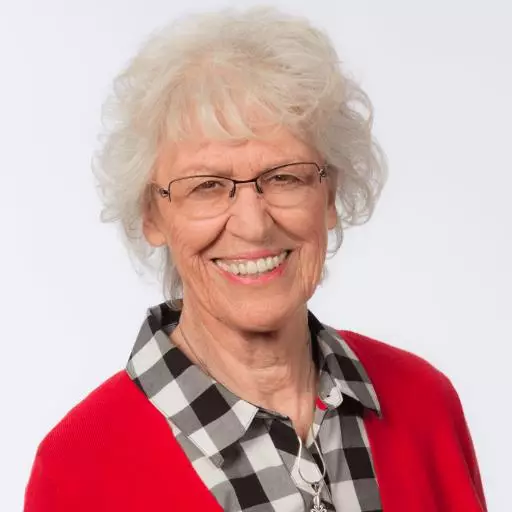
Telling the Truth for Women
Jill Briscoe
He Promised Me


When man makes promises, he rarely follows through. God, on the other hand, can make promises the size of eternity, and He always follows through! God promised David that He would give him a throne that would never pass away. God promised to bring a new covenant to His people through David’s line, a covenant that would bring an eternity where there are no broken promises.
In this message, we learn of God’s faithfulness in His grand promises. We can trust His promises because they are based on His unfailing love!
Jill Briscoe: We're talking about the promises of God today, the promises made by a good God, a God of love. For remember, the Bible talks about *hesed*, which is the Hebrew word for the love of God. It is a love that we know perhaps too little about in this day and age. But every boy and girl, every man or woman that I meet and talk to has a need—a great big heart need—and it's the need to be loved. It's the need to be able to give love in return.
That's what this is all about. We've been looking at the life of David because it's in his life that we see a man just like you and I, a human being who is able to understand how to receive the love of God and experience it for himself, and that makes one a completed person. God is a promise-making God, and of course, all this is wrapped up in His character.
Guest (Male): If God is not holy, if God is not good, if God is not kind, then how can we trust His promises? We have to be convinced in our own heart and mind that God's holiness and goodness and justness can allow us to rely on His word. Now, David wrote a lot of Psalms. He wrote a lot of Psalms about the Word of God, and one specifically is a very long Psalm. It's the longest Psalm in the book of Psalms; it's Psalm 119.
In that Psalm, David says this, "May your unfailing love, *hesed*, come to me, O Lord, your salvation according to your promise." And then again, just a little further on in the Psalm, "Your hands made me and formed me. Give me understanding to learn your commands. I know, O Lord, that your laws are righteous. According to your promise to your servant, may your unfailing love be my comfort." And so here, David talks about *hesed*, the love of God, and he links it to the ability that this loving God has to make loving promises.
Jill Briscoe: Now, you know, we take perhaps this a little bit for granted. If you said to anybody that professed to be a Christian, "Do you believe that God is a God of love?" what would you expect them to say to you? You would expect them to say, "Sure, God is good. God is love." It isn't like that all over the world. My husband and I had the opportunity to go to many different countries and to walk into the worship centers of people that worship in a very different way than we do, that believe in a god who is very different in character than the Jewish God, the Christian's God.
I remember going with one of our missionaries into a Buddhist temple in Thailand called "Hell." What a dreadful name for a temple! But what they have done is they have created something that is sort of halfway between Disneyland, not to be disrespectful, and a temple. They have all sorts of moving staircases and figures that are made that, as you walk past them, machines start them into operation. Music comes; ghost sounds. And yet it is also a Buddhist temple.
What they've tried to do is show children and people what they have to expect after they die. You walk into the beginning of this temple, into the door, and you see this lady and gentleman, this couple who have died, and they're walking over the bridge from life into death. As soon as they come in there, then all these scenes begin to open up before you as you walk along the corridors of this temple, and you see the most dreadful things.
You see these people in a sort of purgatory, suffering for the things they have done in this life. You see one of the men having his tongue ripped out because obviously he'd said things he shouldn't have said. You see the woman pleading for mercy and not receiving it. You see one of them getting their stomach ripped out because they have been a glutton and not possessed their appetites; they have let their appetites possess them. Then, of course, you see one of them even upside down with their head in a frying pan because they have thought things that they should not think.
So, you get to the end of this awful walk through this temple, and you come to the Wheel of Fortune. For Buddhism includes in it a lot of luck, and it just depends where the Wheel of Fortune stops what you come back into this next life. For they believe in a return to this life as another person or, if you haven't been that good, as an animal or, if you haven't been that good, as an insect. It just depends where the Wheel of Fortune, the luck wheel, falls on a picture, which you become. And then the last scene is you see the man walking back as a person, and you don't see the woman. I presume she's an insect and she's coming back as something like that.
To me, this isn't very promising. Not only isn't it very promising, it doesn't speak of a god who is a very promising god in any sense or form. What a blessing it is. I remember coming out of that temple thinking, "We have a God of love." What a message we have to give to the whole world: that God is a God of *hesed* and we can trust His promises because He is as big and as great as His promises.
Years and years ago, my husband and I lived in a little tiny cottage in England and we served a youth ministry. We didn't get much money, and so we didn't have any money to go on holidays. Perhaps we'd go home and visit our parents. But I remember going six years straight without a real break and saying to my husband, "We really need a holiday." He said, "Well, I don't know how we're going to manage to have one."
One day he came in and he said, "Jill, I've got some wonderful news for you. We are going to have a holiday." And I said, "Oh yes? Where? At mother's or your mother's?" He said, "No, we're going to Spain. We're going to get on an airplane, we're going to go where the sunshine, we're going to go to a beautiful hotel, and we're going to be there for two weeks, all expenses paid." I interrupted him and I said, "Don't joke. That's not funny." Because to me, he was just teasing me. I knew that he had the will to promise me these things, but he did not have the means. We did not have the means. He couldn't come through on his promise.
A promise is only as big and as great as the promiser. However, he kept on telling me about this holiday, and then he said to me, "Norman said so." As soon as he said those three little words, I said, "You pray, I'll pack." I went upstairs really excited, realizing that I could put on my schedule, on my calendar, a holiday in Spain, all expenses paid. For Norman was a rich businessman. He had the means, and he had the ability to do that for us.
I knew why he was going to do that for us, because Norman had been converted under my husband's ministry and he wanted to do something to help us in return. He was a wonderful man. I remember when he got converted, he said to my husband, "I want to invite all the people that are in my mobile homes." He owned all the mobile home parks around the biggest lake in the English Lake District, Lake Windermere. He wanted to let all these people know that he had come to Christ. He was totally unchurched; he didn't have a clue about what a real Christian was or the church was. But he came to faith in the Lord and he was so excited, he wanted to share his faith.
So he invited all the people that lived in these mobile homes to come and hear my husband speak. He said, "I'll get them all there and I'll give them a free coffee and cream tea, a real English tea, for free, and then I'll get a band in so they can have some music, and then you can tell them what you told me." I remember going down to the slopes of this beautiful, beautiful part of the world that is where we come from, our home, and there was Norman, and as good as his word, he had thousands of people there.
He had a band there, and to my horror, just before my husband got up to speak, they played "Another Little Drink Won't Do Me Any Harm." Now, they did that simply because they didn't know what else to do or to play. However, my husband did his best after such an introduction, and we had a wonderful time. But Norman promised, and Norman had the ability to come through.
How much bigger is God than Norman? God is big enough and great enough and powerful enough to promise us what He will, and He will only promise us what He can come through on. We can rely on God. He gives us a hope or expectation that is huge and it is based on His unfailing love.
What did He promise David? Well, to read that we need to turn in the Bible to 2 Samuel chapter seven. Let me just fill you in on a little bit of the background here. David had been a shepherd boy. Samuel had come into town, if you remember, he had anointed David and said, "You are the future king of Israel." Now there was another king, King Saul, on the throne at the time. But God's spirit had been withdrawn from Saul.
From the time he was anointed by Samuel, God's spirit came upon David. A little bit different in the Old Testament to the New Testament. In the Old Testament, the Holy Spirit came on whom God sent him for a time, for a specific task, often at the point of anointing. Kings were anointed, prophets were anointed, priests were anointed—anointed for a specific task for a specific time. In the New Testament, of course, the Holy Spirit comes into our heart to abide forever. He doesn't come in and go at whim.
Here, God had withdrawn the Holy Spirit from Saul, and He anointed David to be king. From that moment, the power of God came on David in an incredible way. Well, David had a lot of years to wait until he became King of Israel, but eventually he became King of Israel. God gave him rest from all his enemies, and he'd had many enemies. At that point, David says, "Now it's time I made a house for God. It's time I made a permanent temple." Tabernacle's fine to cart here and there and moveable and all of that, but now is the time when we need to build a temple of the Lord and I'm going to do it.
Nathan the Prophet at first says, "That sounds a great idea, David. Do it." But then God speaks to Nathan at night and He comes to Nathan and says, "Go and tell my servant David," and this is verse five, "This is what the Lord says: 'Are you the one to build me a house to dwell in?'" And then He goes on to say, "No, your hands are full of blood. You're a man who has killed. Your son Solomon will do that."
Then if you come down here a little bit, verse eight: "Now tell my servant, this is what the Lord Almighty says: 'I took you from the pasture and from following the flock to be ruler over my people Israel, and I have been with you wherever you have gone. I have cut off all your enemies. Now I will make your name great, and I will provide a place for my people Israel, but you're not going to do it. The Lord declares to you, the Lord Himself will establish a house for you.'"
So David comes and says, "I want to build a house for you," and God sends Nathan the Prophet to David to say, "No, David. I'm going to build a house for you." What does this mean? Was God going to build David a temple? No, He's talking about his family. "I am going to give your descendants something very special. I'm going to make a promise. I'm going to make a promise that from generation to generation, your family is going to be blessed. And specifically, because I am going to send my one and only son, great David's greater son, into your family line. And I will give you a throne that will never, ever pass away."
God is talking about eternity. God is saying to David, "I am going to give you far more than you could ever ask or dream. I am going to promise you that there will never cease a man from your line to sit on the throne of earth and heaven forever and ever." David is absolutely overwhelmed at this.
Guest (Male): In verse 18, David responds, "Who am I, O Sovereign Lord, and what is my family, that you have brought me this far? And as if this weren't enough in your sight, O Sovereign Lord, you have also spoken about the future of the house of your servant. Is this the usual way of dealing with man, O Sovereign Lord? What more can David say to you? For you know your servant, O Sovereign Lord. For the sake of your word and according to your will, you've done this great thing and made it known to your servant. How great you are, O Sovereign Lord! There is no one like you, and there is no God but you. Who is like your people Israel? And now, O Lord God, keep forever the promise you have made concerning your servant. Do as you have promised. Do as you have promised."
Jill Briscoe: Now we know that God loves us. David knew that God loved him. God had invented him; in His genius, He had crafted him in his mother's womb. And God saw his spirit and saw his heart. God knew him, and David knows that God knows all about him—the good and the bad. God also invested David. Not only did He invent him, He invested him with His Holy Spirit. And He included David in the promises of Abraham.
Now we need to turn to the New Testament to get a little glimpse of what this means, because you and I are included in the promises God made to David. We can be part of this kingdom of God that God is telling David about. We can be part of the kingdom where Jesus Christ, great David's greatest son, sits on the throne. We can go to heaven when we die, and we can live in this afterlife, an incredible situation, experience, the Bible tells us, where "eye hasn't seen and ear hasn't heard, neither has it entered into the heart of man, the things that God has prepared," promised, "for those who love Him."
In Ephesians, Paul is talking to people like you and me, people that aren't Jews. He's talking about the promises that God has made, the promises to include us in all these wonderful, wonderful promises. Listen to this: "In Him we were also chosen," anointed, "having been predestined according to the plan of Him," the big plan that God has for all who will trust in this, "who works out everything in conformity with the purpose of His will, in order that we, who were the first to hope in Christ," says Paul, "we Jews, might be for the praise of His glory. And you also," you Gentiles—the Gentiles represent us that are non-Jews—"in order that you Gentiles could be included in Christ when you heard the word of truth, the gospel of your salvation. Having believed, you were marked in Him with a seal, the promised Holy Spirit, who is a deposit guaranteeing our inheritance until the redemption of those who are God's possession, to the praise of His glory."
Now what is Paul saying here? He's saying He invented you and I, Jews and non-Jews, which takes in the whole of the world. He invested those who would; He anointed those that would with the promised Holy Spirit, the one who is the seal. He's the one who includes us. If we have the Holy Spirit, we are included, we are invested, and all the promises of God can be claimed. We can claim those promises.
It's a lovely picture here. He says the Holy Spirit's like a deposit, like a promise, like a seal. You could say in our language, like an engagement ring. When we promise somebody we'll marry them, rings are exchanged. They're exchanged again in our wedding ceremonies at the wedding, aren't they? But in our Western culture, if a man asks a woman to marry him, he gives her an engagement ring. What is that? It's a deposit guaranteeing the coming inheritance. It's a deposit, it's a seal, it's a promise. An engagement ring is a promise that the man is going to come through on.
In the old-fashioned weddings, you know, you'd stand face to face and you would promise each other that "with all your worldly goods, you did endow." They don't do that anymore. But it's a wonderful picture that the Holy Spirit is like God's engagement ring. When we realize that we are sinners and that we need to ask God's mercy and God's loving grace and be forgiven, He forgives us and He invests us with the Holy Spirit. He gives us His engagement ring.
And He says, "Now there it is in your life. There is my Holy Spirit. It is a deposit, a promise of the guaranteed inheritance when one day there will be a marriage in heaven, the marriage supper of the Lamb, and you will be enjoying all that I am preparing for you in that wonderful, wonderful experience after we die."
God invented us, God invested us, God included us. I remember the time that my husband gave me this particular ring, my engagement ring, and it was not a very romantic situation. My husband is more practical than romantic, although he can be very romantic. I remember thinking in my romantic way and poetic enjoyment that he was surely going to ask me and use some really poetic language—maybe a little bit of Milton, a little bit of Shakespeare, you know, that sort of thing. So you can understand my great disappointment when he got the ring out of the box to give it me and put it on my finger and said, "Well, Jill, that's that."
Guest (Male): That's that! Well, I thought I've got a whole lifetime to work on him and get him a bit more romantic as we go along. And yet you know when God places the Holy Spirit within our life, He says, "That's that." And it can be the most romantic thought you ever had. That's that! There is a certainty, there is a promise. The man stands behind it. An Englishman's word is his bond, we used to say; I'm afraid it isn't so anymore. God's word is His bond.
I remember when Stuart's mother led him to Christ and that little boy asked Jesus into his heart. His mother took Revelation 3:20 and said, "Look, Stuart, it says if you open your heart, I will come in. God promises He will come in if you open the door of your heart. And that is the word of a gentleman." That is the word of a gentleman. What a gentleman is God; He never breaks His promises.
Jill Briscoe: And so David says, "I know He invented me, I know He invested me with the Holy Spirit, and now He is including me and my family in the big picture." You know, one of the names of God is El Olam, the God of the big picture. God's big picture is so much bigger than the little pictures we have of what He's doing and the plans He has for us in our lives.
So we are included in God's promises. Another word for promise is covenant. That's an old-fashioned word, but it's a very good word to learn about. God is a covenant-making and a covenant-keeping God. Now anyone can make a promise, as we've said; not everybody keeps a promise. There is a difference between promise-makers and promise-breakers, promise-keepers. God always keeps His promises.
Do you ever get that sense of betrayal if somebody promises you something and they don't keep it? Have you ever had a child say to you, "But Mom, you promised me!" and there is outrage if you promise a child something and you don't come through? There is outrage in their reaction. There is something in us that feels outraged, betrayed, if somebody doesn't keep a promise to us. Why is that? Because we're made in the image of God. He is outraged and betrayed if we do not keep our promises to Him. Because we are made in His image, we're made like God, we have that same sense, that part of God inside us that is outraged if somebody betrays us.
And so when we think of covenant, we think of a big promise, the best sort of promise that can be made. When that covenant is broken, God is horrified. God is horrified. Now making promises and covenants were part and parcel of life in the Near East. It pervaded early society, and let me talk to you a little bit about that for a moment. In the very early days, Arabs would make covenants with Arabs, and they would cut their wrists or they would have a blood covenant. They would mix their blood; sometimes they would even drink their blood or they would sprinkle blood over each other.
The elements that go into making promises were very simple. You would decide, two people would decide to make a covenant. Terms would be stated: "This is the promise we're making to each other." An oath would be taken by each on themselves, not on each other: "You keep this promise; I promise to keep this oath." They would swear by something larger than themselves. They would bring a curse on themselves if they broke the oath. These would be word things that would happen between the two parties.
Then usually an animal would be slain. Why would an animal be slain? Because what's dead cannot break promises. And when you looked at the animal that had been slain over this promise, you thought, "Well, that—that's a symbol. This promise must never be broken. It can never be broken. A dead animal cannot break a promise." And so that was a very important part of the whole ritual in the days that we're talking about, in David's days, what he understood about covenants.
Then there were treaties of equals where there was parity, brother to brother. Hiram and David made one of those treaties when David wanted wood to assemble for the temple that Solomon would build. He made a covenant, he made a promise to Hiram who had the wood; Hiram made a promise to David that he would deliver the wood. Treaties of equals, kings to kings.
But the main covenants in the Bible were vassal treaties: the big king making a promise to the small king. Some were benevolent: the big king would protect the little king if the little king ever got into trouble. Some were malevolent: the big king didn't like the little king very much, and there was an obligation there imposed by a superior on an inferior. The little king would have to come once a year and reiterate that covenant, make new promises, pay more taxes. So you could have a benevolent covenant or a malevolent covenant.
So God takes this thing that's going on in society and uses it as a picture of what He wants to promise Israel. "I am your husband," He says, "You are my wife." It's like a marriage covenant, but it's bigger than that. It's a business deal. It is a covenant of all covenants, a standing contract between us. "But I am the big king, and you are the little king."
And the one element about this covenant that was going to be different is that it was a covenant of *hesed*, a covenant of love. None of the other covenants in the Near East ever had that element in them. And what difference did that make, you might say? This is the difference it made: God said to the little king—us, the little people, He shall be our God, we shall be His people—"If you ever break my covenant, it won't make any difference. I will never break my side of the bargain."
And so the covenant lamb—the lamb is the covenant animal of the Old Testament—was slain at the Passover as a symbol that God kept His promises, specifically to redeem out of this world a people for Himself. So God used this common element to explain covenant to people.
Now, you can see these covenants all the way through the Old Testament; we don't have real time to get into this. We have the covenant that God made with Noah, for example. Certain obligations were put on Noah, and God put a rainbow in the sky. God paints His promises in such bright colors, doesn't He? And He said, "Noah, never again will I destroy all mankind with a flood." He does promise that this world will be destroyed eventually before the new heavens and the new earth, with fire, but never again by flood. Every time we see a rainbow, we can be reminded that God's promises are as big and as great as His word.
And then came Abraham, and God made him a wonderful, wonderful promise. He said, "Abraham, you don't have a son, but you're going to have a son, even though you're an old man. And your descendants are going to be as many as the sand on the seashore, as the stars in the sky. Look up," He says in Genesis 15 to Abraham, "See all those stars? Your children are going to be that many. And out of those children, there will be some who will keep their side of the covenant I'm making with you, with me—a faithful few. And out of those, out of a tribe, out of a specific family, I will choose a man and a woman—a woman called Mary, a man called Joseph—and I will visit your world. I am the covenant animal."
Now when we get to the New Testament, of course, all of that springs into life. I think of the new covenant that Jesus talked about in His blood. Every time we take communion, we remind ourselves of that. Jesus is linking the old covenant, God's promise that a life would be shed, a perfect lamb at the Passover, in order to ratify this covenant. God would put His seal and sign on this covenant; an animal would die and the promise would never be broken.
Jesus Christ was the Lamb of God. You see, in the Old Testament, we have a covenant of works: you try and keep the covenant. In the New Testament, we have a covenant of grace. We have broken the covenant; we often break our promises to God. We are so often the unfaithful wife that the prophet speaks about in the scriptures.
And yet in the book of Hebrews, we learn lots and lots about this new covenant that's going to be so different once we understand it. The book of Hebrews, of course, explains all that stuff in the Old Testament that I've been talking about, the old covenant. The covenant of law and grace is now mixed in the new covenant.
Guest (Male): So when David sat before the Lord, and he thanked the Lord for the promises He was making, even though I'm sure he didn't fully understand it, he understood these things about the covenant that we read in 2 Samuel chapter seven. He understood that he would have a son to succeed him who would establish the kingdom of David—that son was Solomon. He understood that Solomon would build the temple for the Lord. And he understood that the throne of David, that his descendants would sit on that throne forever. And that one day, God Himself would send His Son, the Son of David, who would become the eternal king of an eternal kingdom through his family. No wonder he said, "Who am I, O Sovereign Lord, and what is my family, that you have brought me this far? As if this weren't enough in your sight, O Sovereign Lord, you've also spoken about the future of the house of your servant. Is this your usual way of dealing with men, O Sovereign Lord?"
Jill Briscoe: And so even though David's sins justified God's chastening in his lifetime, God's loving promise of heaven, and Jesus Christ on the throne of it, and the invitation to the world that would respond, was forever. You can see that in 14, 15, and 16.
As history wound itself on—for history is His story—there were many people that challenged that throne, that kingship of David. There was one specific man who challenged it; he was not of the line of David, and he tried to get rid of David's descendants. And at that point, one of David's descendants said, and this is in 2 Chronicles 13:5, "David made this with a covenant of salt." God made this with David; God leaned out of heaven and said, "David, there will never cease a man to sit on your throne."
And they had a covenant of salt. What was that about? Salt was often used in covenants, and apparently, David's covenant with God on this piece was sealed with salt. Why? Salt is a preservative. It's a symbol of enduring, everlasting things. It keeps things from deteriorating. Those days, if they had fish to send from one city to another, they would sprinkle the fish with salt.
And so this descendant of David reminded this usurper that was trying to take the throne: "Listen, God made this covenant. You cannot overrun us. You might for a little while, but God has promised there will never cease a man on the throne of David forever and ever. God's promises will be worked out in history." He is indeed the New Covenant promiser.
In Ezekiel 36:36, there's an interesting little passage of scripture. It talks about the dismay of the people of God in the Old Testament, how their hearts kept breaking this covenant. They tried to keep it, but they couldn't. And the prophet Ezekiel says, "Listen, God promises you something in New Covenant times," which is the times we live. God will give you a new spirit; He'll put a new heart in you. He'll remove from you your heart of stone and give you a heart of flesh. He'll put His spirit in you and move you to follow His decrees and be careful to keep His laws. You will live in the land I gave you, you will be my people, and I will be your God.
Guest (Male): Now, in Jeremiah and Ezekiel, prophets promised this new era where there would be a new power within us to keep our side of the covenant with God. Now we need a heart transplant for that, don't we? We need the heart of Jesus, we need His person, we need His personality, we need His Holy Spirit to keep our side of the bargain. God is a promise keeper, but we can keep our promises too. He has loved us with an everlasting love; He will give us His everlasting love that we might love Him back and keep our part of the bargain.
Jill Briscoe: Now at the beginning of this talk, I talked about the picture God uses: the picture of the marriage relationship. And you know, that's why it's very important that Christian marriages stick together. God is using them as a picture of His relationship with man, with His people. And when Christian marriages fall apart, people say, "Well, the picture's spoiled. People can break their promises." And it's not a good thing for God; His picture is spoiled when Christian marriages don't make it. Just as in the Old Testament, when Israel was unfaithful—Israel the wife of Jehovah, the husband—was unfaithful, then all the surrounding nations looked and said, "Well, look what happened to that marriage. Didn't do them any good. They broke their promise."
And so we need to keep our promise. The marriage relationship is a wonderful picture, and especially in the book of Hosea do we see this. Hosea was told by God to marry a prostitute. He married this woman, Gomer, who became the mother of his children. But even the children, God said, had to have names like "unfaithful" and "broken promises" and things like that, because this little family became a picture of what God was trying to say to Israel about His covenant love relationship with them.
And then He said to Hosea, "Now go and buy her back. Take some redemption money. She's living with this man. Go and pay the redemption money and buy your wife back." And Hosea did. And then God says, "Now this is a picture of what I am trying to do with my unfaithful wife, Israel. Therefore I," says God, "am now going to allure her and lead her into the desert, speak tenderly to her. I will give her back her vineyards and make the Valley of Achor a door of hope. There she will sing as in the days of her youth, as in the day she came up out of Egypt. In that day, you will no longer call me 'my master'; you will call me 'my husband.'"
He talks about renewing this love relationship. And so Hosea went and did that, and Gomer came and lived back with him. And everybody around said, "What a wonderful thing. This husband has redeemed his wife back. He's speaking tenderly to her. He has wooed her back. He has won her back. He has courted her back."
And all this happened in the Valley of Achor. What does this mean? Well, the Valley of Achor can become a door of hope, God says through the Prophet Hosea. The Valley of Achor was the place where a man messed up. He was told to not take plunder. God was sending His people out; they overcame a village, a town, and they were told not to touch anything, just to burn the lot. And this man saw these lovely clothes and he saw some silver, and he took it back and he buried it in his tent. And Israel stopped being able to win their battles.
And so Joshua didn't know what was happening. God said, "Don't spend your time praying; there's sin in the camp. Somebody has done something that they shouldn't have done. Go and find that family, find that man." And they found this man, Achan, and he confessed to the fact that he had taken some of the things God had said must be destroyed, buried them in his tent. Nobody else could see them, but remember, God can see everything.
And so Achan and his whole family were stoned to death, and the sin was put away from Israel. And then they began to win their battles again. That happened in the Valley of Achor. That man represented being unfaithful to his God in the Valley of Achor.
And now God says, "I can open a door of hope for you. There's a door of hope in our relationship with God, even if we've been unfaithful, even if we've sinned, even if we've done dreadful things like this man did, like David was to do with Bathsheba. There is a door of hope in the Valley of Achor."
What is that door of hope? God has made a promise to us. He has said, "I will never break my side of the bargain. We can be reconciled with each other. I can come back into your life and you and I can begin this marriage that we should have, that would be a testimony to the people around."
I don't know where you are in your relationship with God at the moment. I don't know if you have no hope that you could ever get back into touch with the Lord. Somebody said to me last week, "I just feel so out of touch with God." And I talked to her a little bit and found out why. There had been some sin in the camp; she had buried something in her life that had destroyed her relationship, cut off her relationship with her Heavenly Husband.
And we were able to repent of that, and I was able to bring her back to the presence of God so she could say she was sorry, and there was a reconciliation. How could I promise her there would be a reconciliation? Because God made a covenant promise: that's that. Doesn't matter what you do, it doesn't matter how you behave, "I will be your God and you will be my people."
Guest (Male): For our 35th wedding anniversary, my husband bought me a little badge, a little brooch, and it says "Mizpah" on it. What does it mean? It's two hearts connected with hearts. It's very old, it's very lovely, lovely little piece of jewelry. And Mizpah is Hebrew, and it means "The Lord watch between thee and me while we are absent one from another."
It comes actually from Genesis. Do you remember the story of Jacob and Laban, his uncle? Didn't get on very well and they had all sorts of problems. In the end, Jacob took off with Laban's two daughters and went to go back to his land where he'd come from in the first place. Laban chased after him with his army, and they found each other and they managed to reconcile, and they made a heap of stones, which is often done when you make a covenant.
And they made a promise to each other. Laban said, "Now I'm not going to be there to see how you do with your marriage to my two daughters. I'm not going to be there to watch over that. But I want you to promise me that you won't take any other wife, that you'll be faithful to my daughters. Whether I'm there, whether I can see what you're doing—out of sight, promise me."
And the two made a promise, and they called that place Mizpah: the place where they promised each other, "The Lord will watch between us while we're absent one from another."
Jill Briscoe: And that's why my husband gave me that badge, because in many, many years of traveling in our ministry, we have been apart one from another. But we made a marriage covenant years and years ago. Remember? Stuart said, "Jill, that's that. I will be faithful to you." And I said, "Stuart, that's that. I will be faithful to you." And the Lord watch between us while we are absent one from another. We will be true to our covenant, and God has given us the power to be true to those promises.
Now God wants to say to you, "Let's have a Mizpah. Let's come together, let's put away our differences, let's reconcile, you and me, and I will watch over you wherever you go, even though you cannot see me, even though my presence isn't obvious. There can be a time when we can come back together."
So where are you in the story? Have you broken promises? I want you to know that God never, ever breaks His promises. He is a promise-keeping God. You can see it if you get into the Old Testament. Look at all the covenants; just take that word "covenant" and follow it through in your Bible, if you have a good reference Bible, and you will see that God keeps His promises.
He put a rainbow—has there ever been a flood that drowned everyone in the world? There's been floods that have drowned a lot of people in some of the world, but there's never been a flood that drowned everybody in the world because God is a promise-keeping God. He is a promise-keeping God on our relationship with Him. Whatever we do, whether we behave like Gomer as far as God is concerned, whether we prostitute ourselves and love the world before we love Jesus, He will forgive us. He wants us to come back, and He reminds us then, whenever there is a covenant, there is an animal slain. Jesus was slain to make this covenant possible.
Next time you take communion, remember that. "This is the new covenant in my blood." It reminds us of what God has done. For He promises us not only a relationship here through the Holy Spirit, but a relationship in heaven where He will be on the throne and where there will be no more broken promises. One day, we will be like Him, and He cannot break a promise. So we will not be able to break a promise one day. We are in the making; we are not perfect yet, but we are being perfected. We are included in the covenant that God made with man. Let's pray together.
Heavenly Father, thank You for Your promises. Thank You that You are a promise-keeping God. Thank You that in the Bible You give us a very simple picture of two parties making promises to each other, a contract, and sealing it in blood. Thank You that You take that picture and show us that You have made a covenant, a promise to us, and that we can enter in, be included in that, and realize that You sealed it with Your own blood, the blood of Your Son, Jesus Christ, and that in Him the promise was ratified.
And we can claim it, we can count on it, wherever we are, whatever we've done, however near or far we are away from God. We can come back, we can have a Mizpah, we can meet with You, we can work it out, and You can bring us back into harmony with Yourself. Teach us how this works in practicality and keep us faithful, dear Lord, for we realize that a waiting and a watching world needs a model of faithfulness and promises that keep true. Help us give that model, Lord, for Your great glory and Your kingdom's sake. Amen.
Featured Offer

When life takes an unexpected turn, it’s easy to feel overwhelmed, uncertain, and alone. In her message, “Weathering the Storms of Life,” Jill Briscoe shares biblical truth to help you trust God in the middle of fear, doubt, and difficulty—reminding you that even when circumstances change, He remains steady.
As thanks for your gift today, we’ll send you Jill’s message along with 12 beautifully designed Scripture cards to encourage you on your journey of faith.
Your support helps share life-giving Truth with people searching for hope in the midst of their own storms. Thank you!
Past Episodes
- A Lifetime of Wisdom
- A Little Pot of Oil
- A View from the Porch Swing
- Are You Good Soil?
- Art of Leadership
- He Came to Give Us Life
- Heart Hunger
- Here Am I, Send Aaron
- Hidden Treasures
- Hope for the Disheartened
- How Do I Find Joy?
- How to Be Up When You're Down
- Lessons from the Boy Jesus
- Let's Talk
- Life Lessons
- Life that Works
- Living Above the Circumstances
- Living in the Word
- Living Love
- Lost and Found
- Searching
- Seeing Through Suffering
- Shaking Up Your World
- Shelter from the Wind
- Six Things a Mother Can't Do
- Slaying Giants
- Solid Ground
- Spiritual Arts
- Take 5: A Christian Point of View
- The Balancing Act
- The Cutting Edge
- The Fatherhood of God
- The Heart and Soul of Friendship
- The Heartbeat of the Master
- The Holy Spirit
- The Holy Spirit and You
- The Innkeeper's Daughter
- The Names of God
- The New Normal
- The Power to Change
- Triumph in Trouble

Featured Offer
When life takes an unexpected turn, it’s easy to feel overwhelmed, uncertain, and alone. In her message, “Weathering the Storms of Life,” Jill Briscoe shares biblical truth to help you trust God in the middle of fear, doubt, and difficulty—reminding you that even when circumstances change, He remains steady.
As thanks for your gift today, we’ll send you Jill’s message along with 12 beautifully designed Scripture cards to encourage you on your journey of faith.
Your support helps share life-giving Truth with people searching for hope in the midst of their own storms. Thank you!
About Telling the Truth for Women
Telling the Truth exists to make available sound biblical teaching, practically applied, with a view to producing lives that glorify God and draw people to Christ. The whole of our ministry is to encourage, console, strengthen, teach, and train.
About Jill Briscoe
In addition to sharing with her husband in ministry with the Torchbearers and in pastoring a church in the United Sates for thirty years, Jill has written more than forty books, travelled on every continent teaching and encouraging, served on the boards of "Christianity Today" and "World Relief," and now acts as Executive Editor of a magazine for women called "Just Between Us."
Jill can be heard regularly on the worldwide media ministry called "Telling the Truth" She is proud to be called “Nana” by thirteen grandchildren.
Contact Telling the Truth for Women with Jill Briscoe
info@tellingthetruth.org
Brookfield, WI 53005-4633
Outside North America
Telling the Truth
PO Box 204
Chessington
KT9 9DA
United Kingdom
800.889.5388
Outside North America
0800.652.4120