
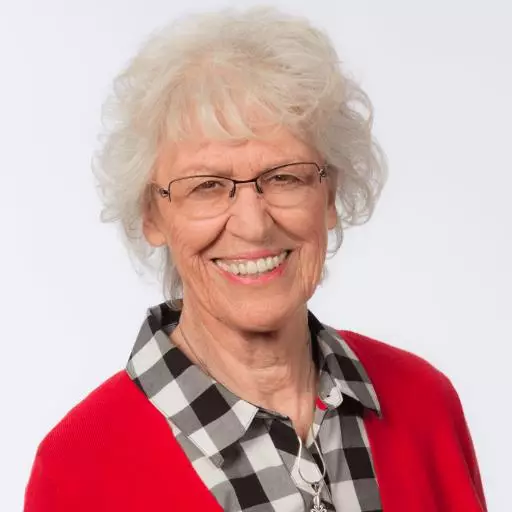
Telling the Truth for Women
Jill Briscoe
He Chose Me


It’s easy for us to question God when He chooses us for a task. We feel unqualified, like God has made a mistake. But God often chooses the unexpected to do His work. David was the definition of unexpected. He was the youngest, the smallest shepherd boy, but he was chosen by God to be king.
In this message, Jill shows us that all of us have been anointed and given the ability to receive a calling and equipping from God.
Jill Briscoe: The greatest need of the human heart is to be loved and to be able to give love in return. Brett Easton Ellis's novel, *Less Than Zero*, has quite a pungent comment here. He offers a most graphic description of the moral and spiritual poverty behind the contemporary facade of wealth, success, popularity, and power. In a dramatically staccato way, he describes the life of sex, drugs, and violence among the teenage sons and daughters of the super-rich entertainers in LA.
The cry that arises from behind all this decadence is clearly, "Is there anyone who loves me? Is there anyone who really cares? Is there anybody who wants to stay home for me? Is there anybody who wants to be with me when I feel like crying, when I'm not in control? Is there anyone who can hold me and give me a sense of belonging? Is there anyone who loves me?" Our kids in affluent Hollywood.
The love of God, the greatest love, is the only thing that can fill the greatest need. For God created in the human soul the capacity to love him, the ability to contain the love of God. Our souls have no sides. It isn't that there's a little tiny place inside us somewhere where Jesus can come and live and once that's filled up, that's it. Our souls have no sides. There is no limit to the capacity the human soul has been made, created for.
A God who created that emotional need within us had a plan. His plan had to do with what happened when the human soul was lost, when the love of God, the light of God, the life of God was withdrawn because of sin. The Bible, the Old Testament and the New Testament, tells us about that love. From Genesis to Revelation, there is a red thread of love that runs through the scriptures. In the Old Testament, the word is *hesed*. In the New Testament, the word is *agape*.
This is a grace love. A grace love is a love that knows all about us and the worst about us, but loves us just the same. As we are looking into the Psalms particularly as illustration in the life of one man, David, about these things, it is quite natural that his Psalms speak of this love. The whole basis of this whole series is going to be Psalm 139 and understanding how God has created us to receive and to give this love, his love.
We thought about the fact that God knows us so well, and yet loves us just the same. Remember what David said in Psalm 139? "I am known, and yet still loved. Thou hast searched me and known me." Searched, probed, investigated, explored, scrutinized, looked for as someone looks for hidden treasure. Perceived my thoughts from afar. He is aware of me. He's conscious of me every moment of my day.
Discerned, has the shrewd ability to see the differences in the shadow of my thinking. Familiar with all my ways. The word has to do with family, related to family, closely acquainted on intimate terms with me. He knows me by frequent association. He knows me completely, fully, perfectly, entirely. All my ways, all my life, to him lies open. He's never surprised. Nothing is misunderstood.
Others might misunderstand me. He never misunderstands me. He knows what rules I walk by. He knows what end I walk towards. He knows what company I keep as I walk through this land, through this world, through my life. All my ways. In fact, with all of my behavior, he's familiar. God is independent of words. He doesn't need my words to tell him my intentions. He understands my thought from afar.
Though you should give but a glance at my heart, oh Lord, and see me as one sees a passing meteor moving afar, yet you would by that glimpse sum up all the meaning of my soul, so transparent is everything to your perceiving glance, as one commentator says. Not that God is distance from my thoughts. He understands them while they are distant from me. Before I've thought them, he knows them. I love that thought. He gives me a glance as if I'm a passing meteor and knows me that thoroughly. I am known, and yet I am loved.
Before men, we stand as opaque beehives. Before they can see the thoughts that go in and out of us, but the work they do inside of a man they cannot tell. Before God, we are as glass beehives and all our thoughts are doing within us as he perfectly sees and understands. This is not to say that God is snooping. He's peering at us. He's suspiciously poking around in our lives. Whatever God does, he does in love. He creates in love. He knows in love.
The master designer bends his head over the weaving frame, takes a needle in the shape of a thorn and weaves a baby. He pricks his hand and blood falls upon the black threads, turning them scarlet red. Tears in his eyes, the weaver stops not until a baby's cry announces the fearful and wonderful work is finished. The weaver smiles, his eyes luminous with love, and stitches his name on his masterpiece. It says *hesed*.
*Hesed* is the Hebrew word for love, grace love. Think about this great love of God for us. A love without conditions. There is someone that loves you. Not if you're good, if you go to church, if you're pretty, if you're clever, if you're gifted. He loves you, period. I want to look at one little item in the New Testament before we turn to our illustration of David and how he received God's love and knew it and experienced it for himself.
So, I would like you to turn in the New Testament briefly to Romans Chapter 5. Now remember, we are powerless to love as we should love. We are so dependent. We are such beggars. We have to ask him for the right prayers to praise him with. We can't think of any of that on our own, as we will see today. He has to give us words to thank him for. He has to give us ideas. He has to give us everything. We are such beggars.
It's very hard for us to love everybody. A little comment in that marvelous little book, *Children's Prayers to God*, gives us a clue. A little girl said, "Dear God, I bet it's very hard for you to love all of everybody in the whole world. There are only four people in our family, and I can never do it." From the mouths of babes. How does he do it? How does he do it? Well, he does it because he's God, and only God can do it.
Romans Chapter 5, verse 6. "You see, just at the right time, when we were still powerless to save ourselves, to do anything, Christ died for the ungodly. Very rarely will anyone die for a righteous man, though for a good man someone might possibly dare to die. But God demonstrates his own love for us, *agape* for us, in this: while we were still sinners, Christ died for us. For if, verse 10, when we were enemies, we were reconciled to him through the death of his son, how much more, having been reconciled, shall we be saved through his life?"
They are some of the most wonderful verses. I remember as a new believer learning those verses off by heart. In fact, I learned a lot of scripture that is still with me today in those early days. I would recommend learning scripture. The younger you are, the better it is to start. It really is. My glasses come in handy. My hearing aid is fine. My false teeth are just dandy, but I sure do miss my mind now. That's what happens when we get old.
And yet, I remember. This is the old King James. "God commendeth his love toward us in that while we were yet sinners, Christ died for us." Romans 5:8. Say the beginning of the verse, say the verse, and say it after the verse. Romans 5:8. "God demonstrates his own love for us in this: while we were yet sinners, Christ died for us." Now I've thought about that this week specifically. Very rarely will anyone die for a righteous man, though for a good man someone may possibly dare to die.
But who's going to die for an enemy? Who's going to die for a sinner? While we were yet enemies of God, Christ put his life on the line and his desecrated body was dragged through the streets of Jerusalem for us. How do I know God loves me? Because he came and died for me, not because I was a good person or an innocent person, but because I was a hostile enemy of God. Didn't matter because that is the nature of love. While we were yet enemies, Christ died for us.
It is the realization of that love that brings from our heart the response. We love him. Why? Because he first loved us. You can't stir it up and you can't make it happen. It's as you realize, as you hang your heart over the cross of Christ, then and only then will you understand and then and only then will the love respond to grace love. I remember learning some wonderful hymns in my early days of my conversion. Hymns that are still my favorites today and I never hear them sung because they are not even in the American hymn books.
But one of them that I learned again by heart, for that was a habit too, was this hymn. "God made me for himself to serve him here with love's pure service and in filial fear. To serve him here for him to labor now, then see his glory where the angels bow. All needful grace was mine through his dear son whose life and death my full salvation won. Grace that would teach me how to serve him more. Grace that would crown me when my work was o'er. And I, poor sinner, cast it all away and I lived for the toil and the pleasure of each day as if no Christ had shed his precious blood, as if I owed no homage to my God. As if they'd never dragged his body through the streets of Jerusalem. Oh Holy Spirit, by thy power divine, melt into tears this thankless heart of mine. Teach me to love what once I seemed to hate and live for God before it be too late."
The love of God for us, how he loves us. And now as we turn our eyes from the New Testament back to the Old, I want you to turn to 1 Samuel Chapter 16. We're going to see something that God did to David that is relevant to you and I today. We're going to think about God choosing us, anointing us. The Lord said to Samuel, "How long will you mourn for Saul since I've rejected him as king over Israel? Fill your horn with oil and be on your way. I'm sending you to Jesse of Bethlehem. I have chosen one of his sons to be king."
The Lord said, "Take a heifer with you," because Samuel said, "How can I go? Saul will kill me if he knows I'm going to anoint a king." "Take a heifer with you," said the Lord, "and say, 'I've come to sacrifice.' Invite Jesse to the sacrifice and I will show you what to do. You are to anoint for me the one I indicate." Samuel did what the Lord said. When he arrived at Bethlehem, the elders of the town trembled and they said, "Do you come in peace?" "Yes, in peace. I've come to sacrifice to the Lord," said Samuel. "Consecrate yourselves."
Set yourselves apart, aside, cleanse yourselves and come to the sacrifice. He consecrated Jesse and his sons. Jesse was the chief tribesman in the village. He had eight sons and two daughters. When they arrived, Samuel saw Eliab and thought, "Surely the Lord's anointed stands here before the Lord." But the Lord said to Samuel, "Don't consider his appearance or his height for I've rejected him. The Lord doesn't look at the things man looks at. Man looks at the outward appearance, but the Lord looks at the heart."
Then Jesse called Abinadab and had him pass in front of Samuel. But Samuel said, "The Lord hasn't chosen this one either." Jesse then had Shammah pass by, but Samuel said, "Nor has the Lord chosen this one." Jesse had seven of his sons pass before Samuel, but Samuel said to him, "The Lord hasn't chosen these." So he said to Jesse, "Are these all the sons you have?" "Well, there's still the youngest," Jesse answered, "but he's tending the sheep."
Samuel said, "Send for him. We won't sit down until he arrives." So he sent and had him brought in and he was ruddy, that means he had red hair, with a fine appearance and handsome features. Then the Lord said, "Rise and anoint him. He is the one." So Samuel took the horn of oil and anointed him in the presence of his brothers. And from that day on, the Spirit of the Lord came upon David in power. Samuel then went to Ramah.
What a thing it is to be chosen. Can you imagine that experience for David in front of all his brothers? Now the feast would involve an awful lot of people. It would involve all the people in the village. But at the time that Samuel eventually got around to anointing the one that God had chosen, the family was left and only the family knew what had happened. But David knew. There was no question about that. You know what an incredible thing it is to be chosen, anointed, set apart, consecrated, chosen out, selected out of the mass of people. It's a wonderful thing.
But especially when you know who he chose. Remember Bathsheba. Remember the carnage David wrought. Some of the things he did to the people. God would not allow him to build the temple because his hands were covered with blood. And yet God chose him. It reminds me very much of John Newton. John Newton lived in a small town and you can see his grave in a cemetery in the parish churchyard in Olney, England. I've been there.
There's a granite tombstone with the following inscription: "John Newton, clerk, once an infidel and libertine, a servant of slavers in Africa, was by the rich mercy and love of our Lord Jesus Christ, my savior, preserved, restored, pardoned, and appointed to preach the faith he had long labored to destroy." And I'm sure you all know *Amazing Grace*. And I'm sure you all know that it was John Newton, a slave trader, a torturer of men, one of the worst, who was incredibly won to God through reading a couple of books on the cross of Christ.
And the basis for *Amazing Grace*, do you know where that comes from? Do you know why he wrote *Amazing Grace*? Because he read the life of David, one like himself. And the verse he was thinking about when he wrote this was this, David's words: "Who am I, oh God, and what is my family, that you have brought me this far? And as if this were not enough in your sight, oh God, you have spoken about the future of the house of your servant. You've looked on me as if I were the most exalted man. You have chosen me."
Amazing grace, how sweet the sound that saved a wretch like me. I once was lost, but now am found, was blind but now I see. 'Twas grace that taught my heart to fear and grace my fears relieved. How precious did that grace appear the hour I first believed. Through many dangers, toils, and snares, I have already come. 'Tis grace hath brought me safe thus far and grace will lead me home. John Newton, King David, Jill Briscoe. Put your name in there. Amazing grace.
The incredible thing is the sort of people that God anoints and God chooses. "Fill your horn with oil," Samuel was told, "and be on your way. I am sending you to Jesse." "What shall I do when I get there?" said Samuel. "I'll tell you." So he got his little horn and he filled it with the precious anointing oil. It had to be made in a special way. God's recipe. People were told they'd be put to death if they sold that oil on the market. Everybody would have bought it and the person that sold it would have been so rich you would not have believed.
But God said, "No, you don't do that because this is my recipe and this particular oil is all meaningful and symbolic." And Samuel, the priest of Israel, filled his horn with that oil and set off, not knowing what he was going to do when he got to this house. How would he know which one God had chosen? And I'm sure if you were Samuel, you'd have all sorts of ideas, the sort of person God was going to choose to consecrate.
Now the horn of oil had to do with God's sovereign purpose. What is God's sovereign purpose? God's sovereign purpose is to redeem a people for himself. This is God's world, remember, and he wants it back. The world that broke his heart. This is God's world. He made it. This is God's world. It went wrong. This is God's world. He wants it back. So his sovereign purpose is to redeem out of this world those who will.
Whosoever will may be redeemed, may come. There's an open invitation. The Spirit and the Lord says come. The church says come. Jesus says come. And so God's sovereign purpose that is written from Genesis to Revelation is to pull out from this wasted, violent, hostile, terrible world a people for himself. Take them home to heaven and give them a new heavens and a new earth and redeem them.
And to put this plan in action, he chose a tribe. He chose a man, Abraham, actually, and said, "In thee will all the nations of the world be blessed. You're going to have descendants. They'll be as many as the stars in the sky and out of this nation, out of this nation of Israel which I have sovereignly chosen, one day will be the family that I myself will step out of heaven and enter. And I will come in the person of Jesus Christ to redeem, to save, to forgive this people."
That is God's sovereign purpose. And this horn of oil speaks of it. For out of that people that God had chosen, God was making a king, a leader, so that the people could be that missionary nation that they were meant to be and tell the whole world, "You can become a proselyte. You can become an Israelite in the heart and circumcised in your heart. You can be part of this promise. We are waiting for God to come. We're waiting for God to come in the shape of the Messiah."
Now have you ever wondered why he chose Israel? "Well yes," you say, "I think the Jewish people are wonderful. They're clever. That's why he chose them. They're bright and they were going to be so many as the stars of the sky. There were so many of them. That's why he chose them. God needed as many people as he could. He chose them for those reasons." Well, according to Deuteronomy 7:7, we're wrong.
"The Lord did not set his affection on you Israel and choose you because you were more numerous than other people, for you were the fewest of all people. But it was because the Lord loved you." There's *hesed*. It was because *hesed* and kept the oath he swore to your forefathers that he brought you out with a mighty hand and redeemed you from the land of slavery from the power of Pharaoh. Know therefore the Lord your God is God. He's the faithful God. He keeps his covenant of love to a thousand generations of those who love him and keep his commandments.
It was because the Lord loved you Israel and for no other way. The strange mysterious choosing of God. And you know there is something about this choosing that defies our worldly minds, isn't there? Why did God choose Israel? Because he loved him. Why did God choose David? Because he loved him. Now when Samuel got to Jesse's house, his eyes went immediately to Eliab.
Eliab was the biggest. Eliab was the oldest. And you know what Samuel said, remember? "Surely this is the one God's chosen. Surely this is the one that God has chosen." And you know the problem is our minds are so full of the way the world chooses that it gets into our thinking. Why do people get chosen in this society? If they've got money or because of their lifestyle, because of their sex appeal, because of their power, because of their credentials, because of their influence, because of their achievements.
What the person has done, not who the person is. And we can fall into this trap when we are thinking of how God would choose. We can fall into this trap ourselves by choosing those sort of people even to come to our children's little parties. Who are you going to choose? Why do you choose who you choose? What's the criteria? And there's a danger to try and live a life dominated by a desire to be relevant in my community as determined by the media, our friends, and our culture.
But the things that are relevant to others in our choosing are often totally irrelevant to God. And when Samuel looked at Eliab, he said, "Surely." And God said, "Surely not. Surely. Surely not. Don't look at his height. Look at his heart. Don't look at his height. Look at his heart." What do we look at? We look at the height, the physique, the body, beautiful. And we choose.
My daughter was doing some research on children and friendships in classrooms and she found out that it was the prettiest and the best-looking little boys that got chosen all the time among their peers and even by the teachers. Now I know as teachers, I'm one, we're not supposed to do that. But we get so messed up in our thinking and the ones we indicate, he doesn't indicate. Being chosen is so important, isn't it?
Chosen as a cheerleader by the coach. Chosen for a date by a boy. Chosen as a wife by a man. Chosen for promotion by the boss. Chosen for a lead in a play or to sing a solo by the producer or the choir director. Being chosen makes you feel very special, signaled out from the masses. Do you realize you've been chosen to be a Christian? You are the one he indicated.
And God came along with his little horn of oil, speaking of the Holy Spirit, and poured him into your life. And he says to his world, "I have chosen her. I have anointed her with the Holy Spirit." Chosen to be a Christian. You have been selected. For God doesn't look on your height. He looks on your heart. And he doesn't say how much does she love me. That's nothing to do with it. He chooses you.
I love the little passage in Luke's Gospel. You don't need to turn to it, but at the beginning of Luke 2, it says this: "In those days, Caesar Augustus issued a decree that a census should be taken of the entire Roman world." Important person, Caesar Augustus. "This was the first census that took place while Quirinius was governor of Syria." Important person, Quirinius. Everyone went to his own town. All these people: Caesar Augustus, Quirinius, etc, etc.
While all this was happening, God came and spoke to a family and he chose John. Just a little nobody man. And all these important people were around. Now this is not to say that God does not choose important people in our society. Of course he does. In 1 Corinthians 1, he however says this: "God chose the foolish things of the world to shame the wise. God chose the weak things of the world to shame the strong. He chose the lowly things of the world and the despised things and the things that are not to nullify the things that are, so that no one may boast before him."
"It is because of him that you're in Christ Jesus, who's become for us wisdom from God, that is our righteousness, holiness, and redemption. Therefore let him who boasts boast in the Lord. Not many of you were wise. There are a few who God chooses by human standards. Not many are influential, but there are a few that God chooses. Not many were of noble birth, but there are a few." But the majority of the people that God chooses are like John, like you, like me.
Just little dust people, dust ladies eating our dust food and taking our dust pills and dressing in our dust clothes, standing behind a dust pulpit, reading a dust Bible. Little bits of dust, but dignified by divinity, folks. He took his horn of oil, the Holy Spirit, and he poured him into our life and that's what choosing means. That's what choosing means. I don't know if many of you saw the little play *Choices*.
For me, the best song in the play and as I wrote it, I was thinking about these things. And there's little worm, do you remember? God chooses little worm to go to Nineveh. Go to Nineveh, little worm. Why would he choose little worm? There's all these big worms and he chose little worm. He also chose Jonah, who didn't do what God wanted him to do, and we all identified with the worm, I hope.
"I wouldn't choose me if I were to choose," she sang. "If I was the Almighty and I didn't want to lose, wouldn't choose a small thing. I'd likely choose a tall thing. Wouldn't choose me to do his will. Why I'd choose a wise worm attending private school, or a perfect little worm who never breaks a rule. I wouldn't choose a weak thing, a frightened little meek thing. Wouldn't choose me to do his will."
But he didn't choose the wise, and he didn't choose the good, and he didn't choose the handsome as we often think he should. He chose little worm so that he could get the glory. He chose humble, simple people to tell out the gospel story. He chose little worm, a willing worm to do his will. Amazing who we think he'll choose. "Oh, he'll choose the best soloist, he'll choose this wonderful Christian. He'll choose them, but he'll never choose me."
"I'd choose a rich worm who'd saved up all his money, or a swift busy bee who grew sweet on all that honey. I wouldn't choose a weak thing, a frightened little meek thing. I'd choose a big fish that could swim the deepest ocean, or a frog that could croak and make a great commotion. If I were God I wouldn't choose me, but thank the Lord you're not. Thank the Lord I'm not."
God chooses irrespective of our response to him and our reaction. We're chosen by grace love. And as Samuel looked at Eliab, the biggest and the handsomest, and as he looked at his brothers, God said, "I don't look at them like you look at them. I look at the heart." And so he said, "Anymore?" and they said, "Well, there's still the youngest, he's tending the sheep." When David came in, who was moderately good-looking, not as tall as Saul, Saul was head and shoulders above everybody else, but remember don't look on his height, look on his heart.
God said to him, "Rise and anoint him. He's the one. He's the one." And you know what I want you to think of? I want you to think of God Almighty and you. Forget about everybody else here. When you became a Christian, God said, "She's the one. Rise and anoint her." The Holy Spirit came into your life and God said, "She's the one. Not because you're clever, not because you're gifted, not because you're anything. His sovereign mysterious will, he chose you to be his."
The early church, they practiced anointing after somebody had become a Christian to speak to this very thing. In the Old Testament it was for kings and prophets and priests, but in the New Testament, all believers are anointed. And in 1 John Chapter 2 verse 20, God's special people, you and me are talked about and it says there that we have the anointing in ourself and it's speaking of the Holy Spirit.
What does this mean? It means many things. But one thing it means is that as we are anointed by the Spirit, we are illuminated, we understand the truth of God and it has specific relation to understanding the scriptures and making them make sense to other people. And you and I have been anointed. Yes, some of us are speakers and some of us are teachers and some of us are leaders and we have in measure the gift of an evangelist or a teacher, some of us.
But all of us have been anointed and given the ability to receive from God the knowledge of the words that will make the difference, the words that will make the difference. I remember getting this truth when I first became a Christian and it was as if God came to me and said, "Consider yourself. Grace love filled his horn with oil and looked for me. He found me in a hospital busy being sick."
"You're the one," he said. "Consider yourself chosen." He poured the consecration oil of the Spirit into my life. "But I'm only a student teacher," I mumbled. "I know." "I don't even get A's," I confessed. "I know." "I'm the youngest in my family. My sister's much prettier, cleverer than me." "I know. Nobody's of any real importance has signaled me out before. I've never been chosen. I'm someone important, don't you think?" he replied. "I noticed you, Jill. Consider yourself anointed."
"But anointing sounds so grand. Isn't it for missionaries and pastors and priests and presidents?" "Consider yourself a president," he said. Then he put his hand under my chin, made me look up into his face and I saw he was smiling at me. "Consider yourself loved," he said ever so gently, and I did, and life began. And one aspect of this anointing has been the Spirit's help with words for me.
Now I'm certainly no David, but like you I've been faced almost daily with the need for a word of wisdom for a teenager, a word of comfort for the bereaved, a word of caution for the teenager, a word of witness for a friend. On Monday my best friend died. Carmen was for me a precious dear friend, an aunt to my children, much, much to me. And Stuart and I had the incredible privilege of spending a couple of days with her and her husband while she was very alert and with it.
And as she sat in a chair, she discussed her funeral arrangements and she planned it all out. And I was dreading her asking me to do something because I knew she was going to. And during that afternoon she looked at me and I said, "Is there anything else we can do?" and she said, "Yes Jill, will you write me a poem?" And of course I said yes. I had a marriage retreat and two other things to do before the funeral on the Monday.
And I remember going up to the marriage retreat and Stuart had to come back and take the services, which gave me Saturday night. I had three hours on Saturday night after teaching for four hours. And I remember glancing through this lesson and saying, "Okay, I have the anointing in me. Lord, I am totally incapable of doing this, of finding the words. And what words? And knowing the family and knowing the importance of who is there and this extended, wonderful, marvelous family. Many of them very prominent people, needing the Lord. Who's sufficient for these things? Certainly not me."
But I said, "Fill your little horn, Lord. Anoint me." And from that moment, the power of God gave me the ideas and I would like to share them with you, for this is nothing of me. This is simply what it means to be anointed by the Lord, in my case, in my personality. "Carmen, greatest God and heavenly artist," and I have to just stop and explain to those of you that do not know Carmen, she was an artist par excellence and all around the sanctuary were pictures of her roses that she painted, exquisite.
"Greatest God and heavenly artist, see our sense of loss and grief, speak a word of heavenly comfort, bring a breath of sweet relief. On the canvas of our memories framed oh thoughts of years past, dip your brush in Carmen colors, paint a portrait that will last. Picture of a cherished mother, precious daughter, wife and friend, aunt and mentor, Jesus lover, he her master, savior, friend. Tears are over, grief forgotten, joy now swells and fills her soul. Loving God diffuses anguish, body, soul and mind makes whole. Carmen, new dimension living, purposeful existence knows, seeing God prepare his palette, watching Jesus paint a rose."
"Brushing sunsets with light's colors, misting meadows with his breath, praising him in exultation, Carmen laughs with God at death. Precious dear one, missed already, as your loved ones mourn your loss, may your death be our reminder, we can join you through his cross. Door to life, God's rich atonement, gift of love, his tomb displays, cost God's son his death to open heaven's joy to one who prays. On the canvas of our memories, framed oh God for years to be, dip your brush in Carmen colors, paint a picture just for me. Carmen, vibrant life enjoying, perfect health and wholeness knows, watches God prepare his colors, helps her Jesus paint a rose." Let's pray.
God, I thank you for the anointing you promised. You said your Holy Spirit would seal us and fill us and make this word of God make sense and give us what we need, wretches that we are, for you have saved us, you have redeemed us, you have given us your Holy Spirit, you have chosen us to be your children. Why God for nothing that we are, wretches that we are, we had a part in desecrating your son and yet because you loved us, you died for us and you chose us and you anointed us. And for this we praise you, for Christ's sake, amen.
Featured Offer

When life takes an unexpected turn, it’s easy to feel overwhelmed, uncertain, and alone. In her message, “Weathering the Storms of Life,” Jill Briscoe shares biblical truth to help you trust God in the middle of fear, doubt, and difficulty—reminding you that even when circumstances change, He remains steady.
As thanks for your gift today, we’ll send you Jill’s message along with 12 beautifully designed Scripture cards to encourage you on your journey of faith.
Your support helps share life-giving Truth with people searching for hope in the midst of their own storms. Thank you!
Past Episodes
- A Lifetime of Wisdom
- A Little Pot of Oil
- A View from the Porch Swing
- Are You Good Soil?
- Art of Leadership
- He Came to Give Us Life
- Heart Hunger
- Here Am I, Send Aaron
- Hidden Treasures
- Hope for the Disheartened
- How Do I Find Joy?
- How to Be Up When You're Down
- Lessons from the Boy Jesus
- Let's Talk
- Life Lessons
- Life that Works
- Living Above the Circumstances
- Living in the Word
- Living Love
- Lost and Found
- Searching
- Seeing Through Suffering
- Shaking Up Your World
- Shelter from the Wind
- Six Things a Mother Can't Do
- Slaying Giants
- Solid Ground
- Spiritual Arts
- Take 5: A Christian Point of View
- The Balancing Act
- The Cutting Edge
- The Fatherhood of God
- The Heart and Soul of Friendship
- The Heartbeat of the Master
- The Holy Spirit
- The Holy Spirit and You
- The Innkeeper's Daughter
- The Names of God
- The New Normal
- The Power to Change
- Triumph in Trouble

Featured Offer
When life takes an unexpected turn, it’s easy to feel overwhelmed, uncertain, and alone. In her message, “Weathering the Storms of Life,” Jill Briscoe shares biblical truth to help you trust God in the middle of fear, doubt, and difficulty—reminding you that even when circumstances change, He remains steady.
As thanks for your gift today, we’ll send you Jill’s message along with 12 beautifully designed Scripture cards to encourage you on your journey of faith.
Your support helps share life-giving Truth with people searching for hope in the midst of their own storms. Thank you!
About Telling the Truth for Women
Telling the Truth exists to make available sound biblical teaching, practically applied, with a view to producing lives that glorify God and draw people to Christ. The whole of our ministry is to encourage, console, strengthen, teach, and train.
About Jill Briscoe
In addition to sharing with her husband in ministry with the Torchbearers and in pastoring a church in the United Sates for thirty years, Jill has written more than forty books, travelled on every continent teaching and encouraging, served on the boards of "Christianity Today" and "World Relief," and now acts as Executive Editor of a magazine for women called "Just Between Us."
Jill can be heard regularly on the worldwide media ministry called "Telling the Truth" She is proud to be called “Nana” by thirteen grandchildren.
Contact Telling the Truth for Women with Jill Briscoe
info@tellingthetruth.org
Brookfield, WI 53005-4633
Outside North America
Telling the Truth
PO Box 204
Chessington
KT9 9DA
United Kingdom
800.889.5388
Outside North America
0800.652.4120