
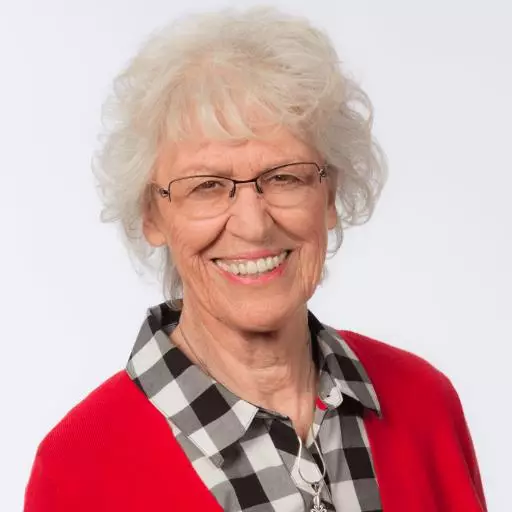
Is There Life After Sin?


Do you believe that some sin is too big for God to forgive? Do you wonder if someone who has sinned can be restored and renewed? Can God use them again? Can God use you again?
Be comforted. There is “life after sin,” as Jill Briscoe shows us by exploring the life of David.
In Psalm 51, David writes about turning around and running into the arms of the loving, merciful, compassionate God who was waiting for him, waiting to take him back. Do you need to turn and run in to the arms of God? He’s waiting for you, too.
Jill Briscoe: When the historian wrote David's life story, he was kind. In 1 Kings 15, he said this: David did that which was right in the eyes of the Lord and he turned not aside from anything that he commanded him, save only—two sad words—save only in the matter of Uriah the Hittite. David broke seven of the Ten Commandments in one night of sensual indulgence. Sin is coming short of God's standard, breaking his commandments, and it has consequences. Is there any sin too big for God to forgive? Can someone who's sinned be restored, renewed? Can God use them again? In other words, is there life after sin?
We're going to look at Psalm 51 and see what this Psalm teaches us about God, about sin, and about forgiveness. David thought he got away with it. He covered his tracks and a year and a bit later, Nathan appeared. He said, "David, I've got a story for you. There was a man who had a lot of sheep, a lot of lambs, and he was very rich and wealthy. Then in the same area, there was a poor man who had one little ewe lamb. Just one. He nursed it and it was like part of the family, treated it like a daughter. It ate at the family table."
One day, a traveler came and the rich man wanted to make a feast to welcome him. Instead of going to his many herds and many cows and sheep and lambs, he went and took the little ewe lamb that belonged to the poor man. He killed it, he dressed it, and he presented it to the traveler and they had a great feast that night. David's anger burned and he said, "He shall surely die." Nathan said, "Thou art the man. Thou art the man, David." David said, "I've sinned." Nathan said, "You're forgiven, but..."
The "but" of consequences. We have the right to sin, the freedom to do it, but we don't have the right and we don't have the freedom to choose the circumstances. Last time I talked to you, we talked about David losing some giant battles. Lazy, middle-aged, both physically and spiritually. He was roaming on the roof, trouble waiting to happen. Instead of being out fighting the battles of the Lord, he'd let his discipline slip. He hadn't been to the inner place, the innermost place that we read about in this Psalm, probably for a long, long time.
Giant temptation saw his chance and he set him up, which he will if we're roaming on the roof. He saw a beautiful woman bathing herself and he didn't get off the roof. David stole Bathsheba. Bathsheba, meanwhile, was on her proverbial roof, too. She was skinny-dipping in the courtyard in full sight of the flat roofs and the people that were wandering around in the cool of the day. She was so happy to be stolen by David. How on earth did all of this mess happen?
Well, we have an enemy who wants to bring us down. We have Satan and his army of giants waiting for his opportunity. Giant temptation brought along his brother, giant deception. Giant deception said to David, "You can stop whenever you want to. No harm, one more look, one more picture, one more push on the computer. Just one more, one more. You can stop when you like." Bathsheba, you'd never go too far. He only wants you to go and have a meal with him. Why not? Have a nice evening. You're lonely, husband's out of town.
It reminds me of a story of a man who had a circus. His name was Trumble and he liked snakes. He played with them, he trained them, and he used to get them when they were just little snakes, baby snakes, and play with them a lot so they got used to him. Then one of them grew and grew. It was a little python, actually. He trained this python that grew to an incredible length to wrap itself around his body so that only its head was up there. The man was disappeared inside, wrapped around by the python.
One day at the height of this act, there was a piercing scream as the python crushed the man to death. That'll happen playing with the snake. At any moment, Trumble could have put his heel on that little snake. "I can do this. I've got it. Just play with it a bit." Are you playing with the snake? As for Bathsheba, she was like the little moth around the proverbial flame. Fascinated. "I won't get too near. I'd never do that. I could do this without doing that." Round and round the flame until those gossamer wings touched the fire and it was all over.
"I'll never do that." Have you ever said that to yourself? "I'd never do that." Never say never. In fact, the Bible says let he or she that thinks they stand take heed lest they fall. Years ago, I met a beautiful girl in Australia. She was a pastor's wife, actually. Big-boned, beautiful Australian girl. I'd been teaching the life of David. This is years ago. She came up to me at the end and said, "I can't relate to you, Jill." She said, "I'm married. We have this wonderful church, great husband, two kids. I would never commit adultery. Murder, yes. Adultery, no."
We laughed. I said, "Have you ever had the chance?" "Oh, yes," she said. That didn't surprise me; she was absolutely gorgeous. I said, "Tell me what happened when you had the chance to commit adultery." She said, "Well, it was a man in the church, actually. He was hanging around and I realized there was something going on, so I just kept my distance. I know how to tell him that I'm not available as well as a woman, I know how to tell him I am. It was easy." I said, "Tell me about the man." She described the man and I said, "Well, sounds a bit like King Lear. It's easy to say no to King Lear, but wait till David moves in next door."
Something inside me said keep in touch with her, and so I did and we began a correspondence. About two years later, I got a frantic note all the way from Australia: "Pray for me. David moved in next door." She didn't get off the roof. Gone was her marriage, gone was their ministry. Gone, gone, gone. She played with the snake. David said, "You know, God desires truth and honesty in the inward parts." That was wrong with David, and that might be wrong with us. We neglect the inner place.
We neglect going to God and saying in the words of David, "Search me, oh God, and know my heart. Try me and know my ways. See if there be any wicked way in me and lead me in the right way, the way everlasting. Surely you desire truth, honesty." We have to be honest with ourselves. So you're in a situation and there's some sort of chemistry with some other person who doesn't belong to you, belongs to someone else. Be honest. Call it by its real name: "I'm attracted."
Go to the deep place, inner place you can go anytime, any moment, any day, and talk to him about it. Help! Very quick prayer; it's all you need. The whole of the forces of God will be at your disposal to get off the roof, to say no to the temptation. Surely I was sinful from birth, sinful from the time my mother conceived me. Does this mean that Mrs. Jesse had been playing around? No. What's it talking about? It's talking about something the Bible talks about, of our sinful nature happened in Eden. That's where it all began.
Every single child born, starting with Cain and Abel, the first two children, inherited from the fallen nature of Adam and Eve a bias, a bias to sin. In England, there's a game called bowls. You get on a nice piece of green and you have a little white bowl, a little one, and you throw it out. Then you have a great big black bowl. The idea is to get the black bowl as near to the white jack as you can without touching it. That sounds like a game for old people, and it is.
However, it's harder than you think and I'll tell you why. Because in the black bowl, there is a bias, a weight off-center. So the harder you aim it straight—"I'm going to get it straight"—something pulls it off-center. That's a perfect picture of our sinful nature. Our parents can aim us straight, our teachers can aim us straight, our pastors can aim us straight. But something in me says, "But I want to do something else." Paul had it right. The good that I would, I don't do. And the things I shouldn't do, I do because of my sinful nature.
Who will deliver me from the body of this death? Thank God, Jesus, he says. There is another power that balances the bias. That power is God himself. Solomon, David's son, said, "Guard your heart. Out of it are the issues of life. It's the wellspring of life. Your heart is like a well." He should know. Guard it. He uses a picture of a well being polluted by dirt. In the Old Testament, in Isaac's day, Isaac was called the well-digger. The reason he was called the well-digger was he dug wells, new ones.
Then the Philistines, who were around in Isaac's days, traditional enemies of Israel from the giant bit—they had giants, that's where we get Goliath and all of those—well, in Isaac's days, they would go around and say, "Let's take all the water away from them and then Israel will die of thirst." So they would put dirt, they would pollute the wells. Isaac's whole life, he's called Isaac the well-digger in the Bible. He went around either digging new wells or getting the dirt out of the old ones. He'd put guards on them, soldiers, to guard the well.
Solomon said, "Your heart is like a well. Guard it. Out of it are the issues of life." Which Philistine's been putting pollution and dirt in your well? Well, clean it out. Clean it out. That's our job. God's job is to cleanse us and make us well again. So you keep the well clean and you walk in the light. You are just in your judgments. You are proved right when you speak. You're justified by what you say. What we do is let the light of the word—"Your word is a light, your word is a lamp, your word is a light to my way," says David.
So we let the light, the purity, the holiness of God in and we're honest. Years ago, I was walking down a dark road in Liverpool, England. It was winter. It was mucky and dirty, the streets were mucky with slush and mud. A lorry—a truck, sorry—went by and splashed me, covered me with dirt. I couldn't really see it because the lamppost was right the way down the street and didn't look too bad. But the nearer I got to the lamppost, the more I realized how dirty I was.
In 1 John 1:9, we're to walk in the light as he is in the light. As his light shows us the dirt, the blood of Jesus cleanses us and goes on cleaning us up, goes on cleansing us from all sin. Never say never. Never say never. You don't know if you were put in a certain situation how you'd respond, and nor do I. But you can know that in sin did my mother conceive me and there's a bias, and I need to cling to God. How well do you do clinging to him?
Knowing your heart thoroughly, running to him when you're tempted by giant temptation. So David sins. Bathsheba gets pregnant. Uriah comes home but didn't cooperate with David's scheming, got himself murdered for his trouble. Now David compounds it all by taking Bathsheba as his wife. Nathan comes to David and David says, "I've sinned." But God has forgiven you, but the circumstances that will follow. You cannot sin without there being ripples all over the place.
You say, "Well, Jill, you're wrong. I've been sinning sort of quietly and privately and there haven't been any ripples. I got away with it; I've hidden it." No, no, no. David said, "Forgive me my sin. I have done it in your sight." The kid sang it: God sees us. God was there. God knows. And you know that too. You know because David says, "It's haunting me. I can't get away from it. It's everywhere. I can't go to sleep without thinking about it. I can't wake up in the morning and maybe I even dream about it. It haunts me."
Two people know, God and you. In David's case, a whole lot of other people knew. Uriah knew. Joab knew, commander of the army that put Uriah in the front to get killed. He knew. Most people think Uriah knew when he came home, but he certainly knew after he was dead, I'm sure. All sorts of people knew. Sin has consequences. Yes, it does. What sort of sin are you thinking about? You say just little sin. All sins are big sins because they're all sin. In fact, it says in the Bible if you've broken one of the laws, you've broken them all.
Sin is huge in the eyes of God. He hates it because he loves you. Turning to God, David runs into the arms of a loving, merciful, forgiving deity. One reason that people do not confess their sin: "I haven't dared to come to God because I see him as an angry God. I see him as a harsh God. I feel like a sinner in the hands of an angry God. So I've nowhere to go with my sin." What does David say about this God that he runs to? He is merciful, number one. Verse one: He is unfailing love. He is compassionate.
Three things: He's merciful. What's that word mean? He has pity on us. We don't like that word and it's lost a bit of its meaning. In the Old Testament days, it was used with mother-love connotations of a mother moaning over a hurt child. Oh, just deep, gut-level gasping. Pity. Mercy. Lovingkindness, covenant love. God says in the Bible that my love lasts from Genesis to Revelation, if you wish, from generation to generation. It never runs out. Covenant love, permanent love, constant love, never-failing love. That's the God you can run to.
Compassion. When Jesus looked at a crowd of people one day, he said they're like sheep without a shepherd and he was full of compassion. Means his stomach was tied in knots. That's how God looks at you. That's what he thinks about what you've done or someone's done to you, whatever. He hates it because he loves you. I was in a meeting and the music director, before he introduced a song about the fatherhood of God and how we need to run into his arms, told a little story just in passing.
He said, "I'm a grandfather. I was left to look after a four-year-old, mine. I was exhausted after about half an hour, so I went and made myself a cup of coffee and left him in the living room. Mistake. Suddenly there was a crash. I ran into the living room and there on the floor lay one of the most precious things we had in the house. It was given to us by our parents. It was a piece of pottery and there it was, knocked off the table by the young boy, lying shattered on the ground. The kid took one look at my face. He turned and ran."
"I ran after him. He came to the door; he couldn't go any further. He turned around, his back to the door, and looked at me. Then he took off into my arms and I caught him. He put his little face against my neck and he said, 'I'm sorry, Papa. I'm sorry, Papa. I'm sorry, Papa.' In that moment, God said to me, 'Why don't you do that more often? Why don't you do that more often?'" David does it. He turns around and he runs into the arms of a loving, merciful, compassionate God who is waiting for him.
And he writes Psalm 51. He writes about his guilt and he writes about his shame. Guilt is what you are; shame is what you feel, basically. That's a huge simplification, but guilt is what you are. You're guilty. You're guilty if you come short of perfection, which is what God demands. So all have sinned and come short of perfection. Shame is what you feel. Horrible, gut-level thing, haunting thing. David says, "Blot it out!" He uses a word: guilty as charged. Think of yourself in a courtroom charged with a crime that you're guilty of.
It's written in a book. David says, "Blot it out, oh Judge of all the earth that has to do right. Can you do that?" Yes, God can. God is the one who forgives me. He's the merciful God. He's the gracious God. Grace: G-R-A-C-E, God's riches at Christ's expense. Because of Jesus, he can do it. This is how God showed his love among us, that he sent his one and only into the world that we might live through him. This is love, not that we loved God but that he loved us and sent his Son as an atoning sacrifice for our sins.
We can know and rely on the love of God for us. Wash me. He felt so dirty. Ever felt dirty inside? Horrible, isn't it? Wash me. This isn't a light wash. Those of you who are moms and you have kids playing soccer, or worse, football in the rainy season. The kids come in, strip off, leave it all on the floor or wherever, and you have to wash it, right? And there's that deep embedded dirt. That's the word that's used. You have to knead it out. You have to scrub it out.
That's what David says: Scrub me, scrub me, wash me, get down to the deep, deep dirt. That's what the blood has done for me. Has it done it for you? The life of God given, his blood shed, got right deep down to the deep, deep dirt and cleansed you. There's no such thing as secret sin. That's a question I've had this weekend. "But mine's such a little sin and nobody knows about it. Nobody knows about it." Like porn, just you and the computer. That's the most secret sin people think.
But it pollutes. It's like a plague. I happened to be in India when a plague broke out in the '80s. I was in the place it broke out. Bubonic plague; it's called Gujarat, the place. I came down to have my meeting and the cook had cooked for 250 people. It was a family camp and we were going to talk about marriage and family. Nobody there except the cook, me, and the lady that had invited me there, Juliet. Juliet said, "Where are the people?" He said, "I don't know, but something's going on in the town." And the plague had broken out.
Some people in hospital had caught it in hospital. The soldiers were there with their guns trained on them and said, "Stay in the bed or we'll kill you." And they said, "Well, I'm going to die anyway." They got out of bed and ran home and they took the plague all over India. It's a very interesting time to be in India. A lot of plague stories. They tell me about a plague hundreds of years ago where the people with the plague ran home to the family and gave it to everybody. As they died, the corpses were hidden in the basement.
Of course, they didn't want their neighbors coming and killing them so they wouldn't get it. But if we keep our sin huddled up in the premises of our nature, we will be infected to death and the people we love will be infected, too. A note in a commentary says, "Ask the Holy Spirit to find the inhabitants of the soul I never dreamed I'd find. Find the reptiles within that begin to uncoil and hiss at you. Ask, 'Can it be I've been carrying such a nature as this for 30, 40, 50 years?'" Sin can't be hidden.
David says, "Oh, forgive me. Blot it out, even blood guilt. Blot it out, wash me, cleanse me." Then he begins the second part of the Psalm. Absolutely fabulous: Recreate me. It's all upbeat from now. Create a pure heart in me, a new heart. The word he uses is the one that's used in Genesis where God created in the first place. What did he create? Something out of nothing. Chaos reigned, remember, and God hovered. He hovered and brought order out of chaos. David uses that same word and he has the same thought in his mind.
There's chaos in my life. Hover over me, Holy Spirit, do your work, your recreating work. Recreate a pure heart in me. Only God can do this. Only God can make an unholy person holy. Satan's not going to do it. You can't, I can't. God can. Recreate me. Is there life after sin? Yeah, if first you come in humility with a broken and contrite heart. How'd you get a broken heart? You ask him to break it. Go on, I dare you. Sort of hurts, but it's necessary.
There is no forgiveness without confession and repentance. That means a broken and contrite heart. You need to bring your heart and hold it in your hands before a merciful, loving, kind, compassionate God who hates sin and what it's done to you because he loves you. You need to pray a very simple prayer: Break it. Break it. He will. So don't bring it unless you're willing for that. You come broken, you come distraught, you come so sick of yourself. "How could I have done that? How could I have thought that? How could I have not done that?"
All of that stuff and you bring it to God. God, by a creative act, will restore you. Recreate me, renew me, make me new. Restore me, restore the joy, he says. Have you lost the joy? Well, of course you've lost the joy if there's been no confession and repentance. How can you have joy? One point in the Psalm, David talks about it's like having my bones crushed. I've forgotten, I've lost the sense of your presence. In your presence is fullness of joy. Sin interrupts the uninterrupted presence of God in your life.
That has to be mended. One of my favorite contemporary songs is "Teach Me." Teach me to dance to the beat of your heart, teach me to move to the power of your spirit. Teach me to walk in the light of your presence, teach me to dance to the beat of your heart. Teach me to love with your heart of compassion, teach me to trust in the word of your promise. Teach me to hope in the day of your coming. Teach me to dance to the beat of your heart. Have you lost the joy? Why don't you come? Come back.
Let all my movements express a heart that delights to say yes, a will that leaps to obey you. Let all my energy blaze to see joy in your face. Let my whole being praise you. Teach me to dance to the beat of his heart. You want to dance to the beat of his heart again? Of course you do. Of course you do. So what's stopping you? God will renew that right spirit in you. He will restore your joy. Takes the blood. David says, "Cleanse me with hyssop and I shall be clean." What's that all about?
It's all about lepers. Many lepers in David's day, many lepers in Jesus' day. Leprosy is horrible. It's mucky, it's dirty, it smells, horrible odor. White patches, your hair falls out, your scalp becomes red and open, raw flesh. Very contagious and you have to live outside the camp. David said, "I need the hyssop and I shall be clean." What's the hyssop? Well, sometimes by the grace of God—for there was no human cure, no medicine, no herb—sometimes God would reach down in pity and compassion and love and heal as a sovereign act.
Create new flesh and heal the man or the woman or the child. They would send a message and the priest would come with a pot, and in the pot clean water and two live birds, and a scarlet thread, and hyssop which is a little plant you find in the walls in the Middle East, spongy. He would bring the pot and the leper would stand there and the priest would examine him. If he found indeed the disease gone, he would kill the bird and put the blood in the pot, and take the live one and dip it in the blood and let it go into the open field.
Then he would turn to the man and say, "Where's the lamb?" The man would bring the lamb, usually his parents or his family had sent for this grand occasion. He would kill it and take the blood and put it on the man's earlobe, the man's big thumb, right hand, and his right foot, indicating that God had service for the man to do. What did David say? "Now I'm going to teach sinners your ways. Now I have a new life of service. Now I'm going to be a blessing instead of a curse."
And the leper cleansed would come back into the family and into the community of faith, and God would begin to restore him to Israel again. David said, "I feel like a leper. I feel like a leper and what I need is the hyssop. God needs to clean me up and only God can do it." Do you know what the blood has done for me? Do you know what the blood has done for me? He has cleansed me. He's set me free. What does David say? "Give me a freeing spirit to sustain me." Want to be free? That's what the blood has done for Jill Briscoe years ago. Do you know what the blood has done for me? Has the blood done that for you? Do you know what it cost him to do that for me? His one and only, Jesus.
Featured Offer

Your generous gift today is worth twice as much—thanks to a $82,000 Match—to help Telling the Truth finish the financial year strong and reach more people searching for truth in the year ahead.
As thanks for your gift, we’ll send you Stuart Briscoe’s book, A Peace of My Mind, a powerful resource that shows you how to experience God’s “perfect peace,” even in uncertain and challenging times.
Request your copy when you give today to have your support DOUBLED by the Match and help more people experience life in Christ through the timeless message of the gospel. We’re grateful for you!
Past Episodes
- A Lifetime of Wisdom
- A Little Pot of Oil
- A View from the Porch Swing
- Are You Good Soil?
- Art of Leadership
- He Came to Give Us Life
- Heart Hunger
- Here Am I, Send Aaron
- Hidden Treasures
- Hope for the Disheartened
- How Do I Find Joy?
- How to Be Up When You're Down
- Lessons from the Boy Jesus
- Let's Talk
- Life Lessons
- Life that Works
- Living Above the Circumstances
- Living in the Word
- Living Love
- Lost and Found
- Searching
- Seeing Through Suffering
- Shaking Up Your World
- Shelter from the Wind
- Six Things a Mother Can't Do
- Slaying Giants
- Solid Ground
- Spiritual Arts
- Take 5: A Christian Point of View
- The Balancing Act
- The Cutting Edge
- The Fatherhood of God
- The Heart and Soul of Friendship
- The Heartbeat of the Master
- The Holy Spirit
- The Holy Spirit and You
- The Innkeeper's Daughter
- The Names of God
- The New Normal
- The Power to Change
- Triumph in Trouble

Featured Offer
Your generous gift today is worth twice as much—thanks to a $82,000 Match—to help Telling the Truth finish the financial year strong and reach more people searching for truth in the year ahead.
As thanks for your gift, we’ll send you Stuart Briscoe’s book, A Peace of My Mind, a powerful resource that shows you how to experience God’s “perfect peace,” even in uncertain and challenging times.
Request your copy when you give today to have your support DOUBLED by the Match and help more people experience life in Christ through the timeless message of the gospel. We’re grateful for you!
About Telling the Truth for Women
Telling the Truth exists to make available sound biblical teaching, practically applied, with a view to producing lives that glorify God and draw people to Christ. The whole of our ministry is to encourage, console, strengthen, teach, and train.
About Jill Briscoe
In addition to sharing with her husband in ministry with the Torchbearers and in pastoring a church in the United Sates for thirty years, Jill has written more than forty books, travelled on every continent teaching and encouraging, served on the boards of "Christianity Today" and "World Relief," and now acts as Executive Editor of a magazine for women called "Just Between Us."
Jill can be heard regularly on the worldwide media ministry called "Telling the Truth" She is proud to be called “Nana” by thirteen grandchildren.
Contact Telling the Truth for Women with Jill Briscoe
info@tellingthetruth.org
Brookfield, WI 53005-4633
Outside North America
Telling the Truth
PO Box 204
Chessington
KT9 9DA
United Kingdom
800.889.5388
Outside North America
0800.652.4120