
Telling the Truth for Women
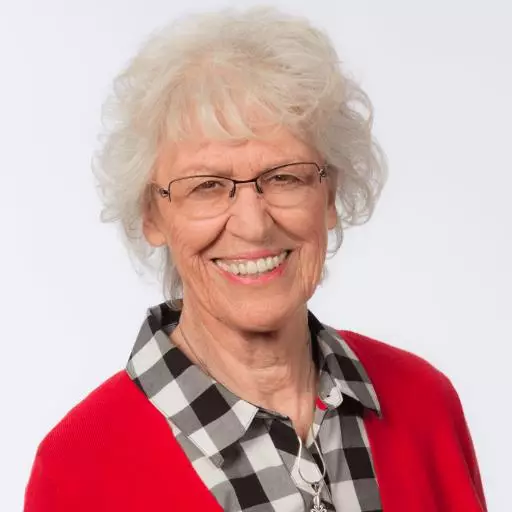
Jill Briscoe
To the Ends of the Earth


As disciples of Jesus, we know we’re called to spread the good news of the Gospel. But sometimes we fret about exactly where our mission field is, and to whom we’re meant to share God’s Word.
In this message, Jill Briscoe puts it bluntly: “It doesn’t matter where you’re standing, that’s your mission field.” She explains how God fills the gaps of our inadequacy as we obey his command to tell others about the liberating love of Jesus.
As part of her message, Jill tells the compelling story of how she and her husband, Stuart Briscoe, began their lifetimes of evangelism in the United States and around the world.
Jill Briscoe: And I'd like you to turn in your Bibles to Matthew chapter 28, Matthew chapter 28. Very familiar words. Matthew 28:18-20: "All authority in heaven and earth has been given to me. Therefore, go and make disciples of all nations, baptizing them in the name of the Father, Son, and of the Holy Spirit, and teaching them to obey everything I have commanded you. And surely I am with you always."
Preach the gospel. Watch that. The good news that you don't need to go to hell, you can go to heaven. There is a heaven, and there is a Christ to take us there. That's what all of this is about. I want to talk about three words: strategy, synergy, energy. And it's all there in these verses. Go. Therefore, go into all the world and make disciples of all nations. Strategy, the going.
Baptizing them in the name of the Father, Son, and the Holy Spirit and teaching them to obey everything I've commanded you. For that, we need synergy. That's what the church's mission is all about. And church isn't somewhere you go; church is something you are. Okay? And then three, "Surely I am with you always." Where are we going to get the spiritual power to do this? From the Spirit. "Surely I am with you always," says Jesus.
Now, our mentors, the people that have meant more in our lives than anybody else on earth probably in ministry, our mentor Major Ian Thomas, went to be with the Lord at the age of 93. And I want to tell you a little bit of his story because it's one of his sayings that I want to leave with you. He was a war hero. He fought in Italy.
And as they came up Italy, there is a big castle there called Cassino, Mount Cassino. And it was a fortress on a big hill. It held the view over the main road to Rome. It was essential that the Allies took the Germans at Mount Cassino. Actually, they shouldn't have been in the castle because there had been an agreement with the Nazis and the Allies that they wouldn't touch the castle because the treasures of Italy, the art treasures of Europe and from Italy, were in that castle.
They put them there to keep them safe during the Second World War. And there was an agreement that we would not bomb it and the Nazis would not use it. However, of course, Nazis being Nazis, they took the castle, they reinforced it, they put their guns in there, and they put their best line of defense overlooking that last road to Rome. Major Ian Thomas, a major in the British Army, was given the job of taking Mount Cassino with his fusiliers.
And they got there. Probably the bloodiest battle of Second World War II at the end of the war was fought at Mount Cassino. And they managed to take a lot of the soldiers, and there was a lot of loss of life. And they didn't know there were only 20 soldiers left in the place after all the fighting was over, but they were still getting gunfire, so they knew that they hadn't won the castle yet.
And in the middle of the night, Major Thomas said to his lieutenant, "Come on. Let's go and see what we can do." And really against orders, he and his lieutenant secretly wound their way up to the caves where the first line of Nazi soldiers were high up against the castle wall. Major Thomas spoke totally fluent German. And snapping out commands in perfect German, he told the people within the sound of his voice, "We are to surrender. Come out."
And they did. And Major Thomas and his lieutenant took the last 20 soldiers, that's all there were, captive. They thought it was a German officer telling them that they needed to surrender. They brought a tablecloth with them to surrender. Major Thomas and his lieutenant took them all captive and marched them down to the British Army, and the battle was over and the war incidentally was won. It couldn't be won without taking Mount Cassino. For this, he received two medals.
And Stuart and I were taking 65 Americans on a Christian heritage tour. We got to the Tower of London, and everyone was looking at this and that and the other. And Stuart said, "Come on. Let's go and see if we can find it." It being that tablecloth that is in the Tower of London in the Fusilier Museum of World War II. And there it is with the story of how Major Thomas and his lieutenant tricked the Nazis into surrendering. And by the old tablecloth that's there in the case is Major Thomas's Bible.
So if you ever get to the Tower of London, go and find it. He was a war hero. And after the war was over, he was sent to Germany, and he was supposed to requisition German homes, turn people out so the army could go in. He was in charge of keeping Berlin as the war came to an end. And he was a Christian believer. He'd been an evangelist before the war, a doctor. He was going to be a doctor, and then he got into evangelism.
And he and another major in the British Army pulled all their resources and sent a message back to his 23-year-old wife, Joan Thomas: "Go and buy Capernwray Hall." They had been looking for real estate, and this was a castle that held 300 people in the middle of nowhere in the gorgeous English Lake District. Because these Christian men intended to have a place where young Nazi youth, committing suicide, disillusioned generation of young people—Germany's best, Hitler took Germany's best for his Nazi youth—and meeting them in Berlin, Major and his partner decided to buy a place in England and see if they could reach that generation of Germans.
At the same time, the British government said, "Well, we've got a plan. We'll give money and bring Nazi youth over to Britain, to the UK, which was absolutely shattered. There was nothing left in our country after the war. Put them in English homes and teach them democracy and Christianity." That was their idea. They'd overlooked one very obvious thing: that no British family wanted a Nazi youth in their home, thank you very much. There were no takers.
And Major heard about this, and he wrote to the British government, and he said, "Give them to me. I have a place." Major had written to Joan, she'd gone to an auction, she'd bought a castle. That's a story in itself. And the British government began to help Major Thomas to fund groups of ex-crack Nazi youth to come to the British Lake District and be exposed to another way. And my husband lived near Capernwray Hall. He was a bank inspector at the time.
And he heard about this crazy Major whoever and these weird German Nazis. I mean, all the rumors got going in the countryside, and the British didn't know what was happening and were very suspicious. But Stuart, at the age of 25, 26, and three of his friends just walked into the castle to see what it was all about. And my husband was the very first group. And he walked into this huge castle. The army had had it during the war. It was just a wreck. They had to start from scratch.
And here was Major Thomas, his back to the fireplace—I can see it now—and this group of Goebbels's son, you're not old enough to know all these names, but the top Nazi families, if you wish. Their children were sitting in a circle around Major Ian Thomas. And that's how our mission began. It was a mission of the British to that disillusioned area of Germans. And Stuart and I were privileged to serve Major Ian Thomas. We left our careers and served with them for 13 years in Britain before we came to Elmbrook Church.
I managed to be in the country when he died and had the wonderful privilege, which I'll be thankful for forever, of going to his funeral in Colorado. We have a center in Colorado, a Capernwray center. And I sat in that church about an hour before the service began, and they had pictures of Major and Joan and Capernwray, and I cried my way through it—three and a half hours, three and a half hours. What did you do, you say?
We listened to people who came from all over the world. Among whom was a man who was German, lives in Estes Park where Capernwray is, has a German restaurant. Three years ago, he met Chris Thomas, Major's son, and he said, "You're British?" And Chris said, "Yes." They're having a meal in this restaurant. And he said, "A British man saved my life. A British major, actually."
And this German restaurant owner in Estes Park where our center is talked to the son of Major Thomas. And Chris got a clue, and he said, "Were you at Cassino?" And he said, "I was one of the 20, and he saved my life because if we had not surrendered to him and been captured, I'd be dead." And Chris said, "Let me introduce you to him." Isn't that incredible? And sitting there in that room watching pictures of his life and his investment in our world for Jesus Christ, his sayings were rolling on the back.
And Major has a legion of sayings. You need to get his book, *The Saving Life of Christ*. *The Saving Life of Christ*. And one of the sayings that kept coming back as we went an hour early to get in was: "Go where you're sent, stay where you're put, and give what you've got." Okay? Go where you're sent, stay where you're put, and give what you've got. And basically, it was his Acts 1:8 sermon or his Matthew 28 sermon, go into all the world and preach the gospel.
And I just want to take those three words and send you away with them. Go where you're sent: strategy. Stay where you're put: you're going to need synergy. Give what you've got: you need energy. Into all the world, the whole gospel for the whole world. That's our strategy. Don't strategize before you go; go as you strategize. Just go. Those disciples, they didn't sit around in Jerusalem and have a strategy, "Well, where should we go? Should we go to Europe? Should we go to Galatia? Should we go to Ephesus? Should we go?"
They went. They just were scattered through persecution, they didn't have an option, or they just went. And when they got there, they figured out the strategy. And we do it the other way around basically a lot of the times. But just put yourself into a non-believing environment somewhere. Just go. Just go. Consider yourself sent. You say, "Well, that's not my gift." It's your responsibility whether you have the gift or not.
Is the supermarket you shop at part of your world? Is the gas station, the airport, the train, the tennis club, the office, is your family, your next-door neighbor? I saw on the TV the other day that now when you buy a house, if you go to a real estate agent, they will find out who your next-door neighbor is before you buy it. Did you see that? Because you might not want to buy the house if you figure out all about your next-door neighbor.
And what an amazing thing. Whoever your next-door neighbor is, that's your world. That's your world. Is the school your kids go to part of your world? Yes, it's part of the whole world, isn't it? Are the pubs in your area part of your world? Yes. Are the prisons that are in your environment part of your world? Yes. The cinemas, the restaurants, the beauty shop. You say, "It's not my ministry." It's your world.
What do you mean it's not your ministry? It's your world. And our vision is too small. The world is going to hell in a handbasket, folks. Hell is where hope ends and all of the wishes die. And this is our world. It doesn't say go to the male world, go to the female world, go to the world. Doesn't say the black world or the white world, the rich world or the poor world, the reading world or the illiterate world. Go into all the world.
And if you're a disciple of Jesus, this is your world. And consider yourself sent. "As the Father sends me, so I am sending you," said Jesus. You being you and me and everyone else. Acts 1:8, "How will I do this?" Another saying of Major Thomas's: "I can't. And God says I never said you could. I will. I always said I would." Right? Of course we can't. This is too big. It's too hard. It's too difficult.
And God says, "Right. Not too big for me, not too hard for me. And I am with you always, you see. And you will receive power when the Holy Spirit comes on you." Acts 1:8: "You will be my witnesses in Jerusalem, in Judea, Samaria, and to the ends of the world." After about five years of being at Capernwray or four years, Major walked into Stuart's office one day, and he said, "I have been—"
Stuart was secretary and treasurer. He'd been a bank inspector, so he was handling all the international money, and he was the treasurer of the fellowship, which was growing to many countries all around the world. And he didn't do too much preaching even though he could, and he'd been working with kids. Major didn't even know that. But he found out one day that Stuart did a bit of preaching, and he said, "You know, I want to hear you," and he heard him one day, and he said, "That's great. Now," he said, "get out from behind that desk. I'm sending you to America."
"I had three months ministry there. They want me to go back everywhere. I've told them I can't come, but you will come instead of me, and on my recommendation, I'm going to send you to America for three months daily ministry." And then he read a list of the who's who of preachers that Stuart would be paired up with. And Stuart said, "I can't do that." And Major Thomas looked at him with his piercing blue eyes and said, "Jesus Christ in you is adequate. Get on with it."
Turned around and walked away. That was our missionary training. I can't. I never said you could. I will. I always said I would. Of course we're inadequate. Our inadequacy is a wonderful place for God's adequacy to be shown. Jesus Christ in you is adequate. Get on with it. When we go to missions conferences and we listen, we hear the same three things. Establish a presence, go where you're sent.
Gain credibility, stay put long enough to do the job. Okay? And three, speak for Christ. Give what you've got. Same three things. So where should I start? Well, where did the disciples start? And for this, of course, we go to Acts chapter 1. They started in Jerusalem. 1:8, "You will receive power when the Holy Spirit comes on you, and you will be my witnesses or martyrs," that word is. "You will be my martyrs or witnesses in Jerusalem, in all Judea and Samaria and to the ends of the earth."
So where do you start? In Jerusalem. And then you go out to Judea, and then you go out to Samaria, and then you go to the ends of the earth. So you start in Jerusalem. Now, where's your Jerusalem? That's what you have to start with. Your Jerusalem for them was between their own two feet. Many of the people in the upper room were from Galilee, but they started in Jerusalem. The mission field's between your own two feet, wherever you're standing. Doesn't matter where you're standing; that's your mission field. Okay?
When I came to Christ, the girl that led me to the Lord said to me, "Now today," I'm seriously ill lying in bed, she totally ignores this, gives me all this pile of books—I was telling some people in the kitchen—to read and write book reports on and learn 500 verses off by heart and what not. And I'm dying. I mean, I'm, you know, she ignores that. And then she says, "Now, everyone that comes to your bedside, you need to tell what you've just done."
And I said, "Well, what have I just done?" Well, she said, "You just prayed with me, and Jesus is in your heart now," and I said—and she'd look, "Here's the head nurse. Tell her." So I didn't have much option, and because I was brought up to obey authority and do what I'm told, never question it. And so she took full advantage of that as well. And so she'd tell me to do it, and I stumbled through something, goodness knows what, hours old in Jesus.
And then I looked at her hopefully and said, "How did I do?" And she said, "Terrible. But you'll get better, you know, just practice. Here's somebody else. There's another nurse. Tell her." Seven times that day I kept telling, and I did, I got a little bit better every time I did it. That's how you learn, right? Start by doing it badly and end by doing it goodly, but practice in between. Where should I start? Jerusalem. The mission field was between my own two feet. She taught me that from the day I was saved.
And that gave me a great sense of excitement, great sense of excitement. I remember being stuck, I felt, at Capernwray as a young mom, three children, husband an evangelist never home, and looking around and remembering that. And all I had were little old ladies around me in little tiny gorgeous little cottages, British cottages. And I remember thinking, "Well, the mission field must be down in the town. The mission field is in Liverpool or Manchester or in the big cities or in the ghettos, and that's the mission field."
And I remembered Jenny had said, "No, the mission field's Jerusalem. It's where you are. You start where you are." And so really in obedience to that principle, I remember putting the kids in the pram and going and knocking on doors. And I got a bit discouraged because none of the little old ladies wanted to come and have a Bible study. And in the end, I got three of them to come. One was blind, and one was deaf, and one had heart trouble, and they're all over 70. I was 24, I think.
And I remember thinking, "Is this the mission field?" I had these three little old ladies obediently there, looking at me. And I said to the Lord in my Bible study that night, "Lord, encourage me. I've got a deaf one, and I've got a blind one, and I've got one with heart trouble. Is this the mission field? Is this Jerusalem?" And that day, believe it or not, my Bible reading, as Jesus read it to me—remember me not reading the Bible to him, him reading it to me—was Isaiah chapter 6.
And it said, "Go and tell this people, those who hear but never hear, the deaf; those who are blind and never see; and those who have hard hearts and heart trouble." And I thought, "This is this people, right?" I've got a deaf one, I've got a blind one, I've got one with heart trouble. And there Jesus said, "Go and tell this people." And so I started with three little—and all the time I complained, "Lord, I'm good with young people. I want to be out in the streets with young people. That's what I did. And I'm not good with—when I'm an old person, I'll reach old people. But I'm 25, you know? I don't want to do this."
And the blind lady decided she wouldn't come out at night. I mean, what difference did it make, right? And then the lady with heart trouble had a heart attack and hopefully went to heaven. That left me with the deaf one. And I remember thinking, "Is this the mission field? Is this what we gave up an incredible career to do? Is this one little deaf lady worth this?" And remember the principle: start in Jerusalem.
And so I screamed Bible verses into her ear. And I was getting very discouraged. And one day, I remember her little face turned, and she heard me, and her little eyes opened and she saw it, and she came to Jesus. The next week she brought her friend, another little old lady, and they brought their friends. And I ended up with 80 little old ladies, and I had to put all the furniture in my little house out in the yard to get all the little old ladies in.
And I was still praying, "Lord, give me my heart, give me my kids." And one day, one of my little old ladies said, "I wish our kids could hear you, Jill." And I said, "Bring them." So they brought their daughters, and they were about 50 to 65. So we're moving in the right direction. And then one glorious day when we'd grown out of my little house and moved into a little chapel down the road, and we had about 250 little old ladies and their daughters, middle-aged ladies, one of the middle-aged ladies said, "I wish our daughters could hear you, Jill," and I said, "Bring them."
And God gave me my kids. But not until I'd been faithful with one little deaf lady. You start where you are. Jerusalem, where's your Jerusalem? That's what you have to figure out. Start in Jerusalem. So where should I start? Jerusalem. What should I do? Preach the gospel. There is a failure of nerve in America about this book and about teaching and preaching it. Well, it's not sufficient. We need to make it more interesting. We need to, you know, make it more light. We need to—I don't know what we need to do.
No, we need to teach it. We need to exegete it. we need to preach it. What do we believe about this? Do we believe there's power to transform? I do. I've seen it all over the world, seen it all over the world. I remember Major Thomas teaching me this lesson. 500 British teenagers totally unchurched sitting in front of him. Street kids, intelligent kids, everything from one to the next. And he preached for an hour, one hour to these kids.
And he preached at this level. I want to tell you that. He took his Bible, and he took it bit by bit, and he broke it small enough for everybody to digest, and he made it live. And I watched that room full of kids defy everything anybody will tell you today. They listened. It's like I was talking to somebody who wants me to write something for children, and they said, "Well, we can get an illustrator, and we can do this, and we could make little figures step up off the page and walk into the living room and," you know.
And I'm saying, "You know, let me just write for kids." And they said, "Well, children, it's the visual age, they won't read." I said, "I sat on a plane next to a young boy, probably 9 or 10, who had 600 pages of Harry Potter in his hand. And no illustration, no illustration." And that was a long journey, and he finished that book. Don't tell me that kids don't read. It's what they read and how it's put.
And you diminish them. And I think people insult Americans with saying they'll only listen for 13 minutes and they'll only, you know, our radio people say you cannot teach the Bible for half an hour. It's over. They'll only listen for 10 minutes. Nonsense. And I think there's a failure of nerve. Preach the gospel. Preach the gospel, proclamation. And be witnesses, testimony, martyrs. Whatever it takes to preach to whoever you have to, do it.
Jerusalem wasn't much fun for the early Christians, I want to remind you. And then make disciples. Disciples, not converts. Not members of your women's ministry. Disciples. That's what we're supposed to be doing. Make disciples who make disciples who make disciples who make disciples. Are we doing that? So how do we make disciples out of converts? That's what we ought to be learning to do.
And who should I do it with? Other disciples. When the day of Pentecost had come, they were all together in one place. So the strategy is to go and start where you are. Just go. Gossip the gospel. Don't shut up. Don't let anybody shut you up. Say, "I'm not an evangelist." Are you a disciple? Can you testify to what Jesus has done in your life? And incidentally, it's not all about you when you begin to testify; it's about him. Be witnesses to me. It doesn't say be witnesses to you.
And when you give your testimony, make sure you're talking about what he has done in your life, not you and how you've changed and your wonderful story. It's his wonderful story and what he's done in your life. But you have to do it together. We cannot do this job. That's what the church is all about. It's not about individualism. There are no mavericks or should not be to get this job done. Synergy.
And I had to look up the word too what synergy it says. Syn, S-Y-N, together or the same, added to energy. A togetherness of energies. That's the idea of the word synergy. It's not yet in our dictionary. This will take place in the upper room of our lives. They were all together in one place in the upper room. There was unity there. There was unity there.
And so they're in the upper room, waiting for the fire to fall, and there's synergy. They are of one mind in one place. They are together, absolutely together. And that's what it's going to take to get the job done: getting our act together, together to go where we're sent and stay where we're put and give what we've got. I tried to think of who's in the upper room. There were some women that had followed Jesus to Jerusalem, it says.
There was Mary the mother of Jesus. Do you realize she received Christ twice? First as an embryo and then his spirit in the upper room. Amazing. And Mary the mother of Jesus and his brothers, it says. So James has now been convinced Jesus is divine, the eldest brother. Joses, his younger brother, it says his brothers, probably his sisters, too. The wives of the apostles were there—Peter's wife. Some of the 70 would be there.
All the people that were totally convinced of Jesus' divinity and the ones that had followed him and been with him in Jerusalem. Still a small group when you think. Utterly inadequate unless the energy, the spiritual fire, falls. Synergy. Two are better than one. I just finished a book on Ecclesiastes, Ecclesiastes 4:9-12. "Two are better than one, they've got a good return for their labor. If one falls down, the other can lift him up. If one's attacked, two can overcome."
Two are better than one. We need each other. We need that synergy, that partner, that John and James. Look for the John and James in your life. And then the misery that comes, if you wish, not only for ministry but for misery you need the synergy. If one falls down, his friend can help him up, but pity the man who falls and has no one to help him up. We need each other. We need the heart partners to get the job done.
And then you think you need the help of other people to master the evil one. You know, they're all in the upper room, in the church, if you wish. But there's a war room incidentally in our lives because we're on a battleground, not a playground. Remember? And the upper room and the inner room and the war room are all involved in this synergy. Though one may be overpowered, two can defend themselves.
And in the old days, they—two friends would stand back-to-back if they were surrounded by people that had come to kill them. And back-to-back, they would face both ways and help each other. They'd save each other's backs, if you wish. And all of that's included in "two are better than one." And there's that synergy of what two can do that one cannot. And God knew that. You know, Jesus sent out his disciples two by two. He sent out the 70 two by two.
Why would he do less today? So we go where we're sent and we establish a presence. And God gives the energy. On this Christian heritage tour, we went to Oxford and saw Wesley's room. It's just as it was. You who are Wesleyites, Methodists, holiness churches here. And here is his room at Oxford just as it was, with his desk and his inkwell. And you can go up the stairs in that room in Oxford College, and as I did, stand amazed and think back to the impact of this man on Britain and on slavery and on all sorts of things that came out of Wesley's ministry.
And then you think of Charles Wesley, and you think of the hymns, and you think of, "O thou who camest from above, the pure celestial fire to impart, kindle a flame of sacred love on the mean altar of my heart. Jesus, confirm my heart's desire to work and speak and think for thee. Still let me guard this holy fire, and still stir up thy gift in me." And all of this is nonsense without Jesus by his spirit living in our hearts and doing it.
Only by his spirit can we stay put. And the middle piece of this of Major's three sayings—go where you're sent, stay where you're put, and give what you've got—is where the church is falling down. We don't stay. We don't persist. We don't stick it out. And when it gets difficult, we quit. We throw in the towel. We don't dig in. We don't unpack. We don't. We don't.
How are we going to stay where we're put when it gets hard? And over and over again, I talk to people who say, "I'm moving on. I'm—" and then they give me this pious, "God has told me to move on." Well, what you do with that? Are you sure God has told you to move on? How do you know? Has he moved you out as surely as he moved you in? Don't dare to leave until he tells you he wants you to leave.
Staying put. Go where you're sent, then stay where you're put until what? Until your part of making disciples and it's laid out there in that verse. What does that mean? You tell them everything Jesus commanded us to do. That's how you make a disciple. Have you done that? Have they got it? Did you teach them everything that Jesus wants them to do? Then maybe it's time for you to move out. I don't know.
Are they baptized in the name of the Father, Son, and Holy Spirit with all that that means? Dying to their own self and living in newness of life. Has that happened in their life? Are they transformed? That's our job. And you can't do it unless you stay put. You can give the gospel and move on, but then what happens? The fruit doesn't remain. And what do you need to stay put when it's hard and difficult and you think will anybody ever believe when you're looking at one little deaf lady saying, "How long do I have to stay put?"
It's going to take the energy of the Holy Spirit. It's not an easy task. Go where you're sent, stay where you're put, and give what you've got. Give what you've got. Not what you haven't. Do what you can, not what you can't. Just stay put until God says move. Now, I want to end with a little personal story illustrating this. When Stuart began to travel at Capernwray, I had got a few kids out of this story I just told you, the children of my old ladies and their daughters.
And I had this group of kids. But it seemed so small and it seemed so insignificant, and I got very discouraged, and I thought, "You know, did we make a mistake laying down—we were doing far more for God in the secular world and in our church in Manchester than—this seems so nothing, Lord. How long do I have to stay put here?" And the Methodist circuit has a lot of little churches in our English countryside, and there's no pastors.
And so one pastor goes on the circuit to all these little churches and probably gets around once a month or once in three months sometimes. They don't have pastors. And so they use laypeople. This was Wesley's whole thing, wasn't it? To get the laity out of the pew and put them to work and send them out. And so I got a little team of my little kids together, and I didn't know what to do with them except put us on the Methodist circuit.
I called up the Methodist pastor and said, "Do you want a little team? Do you want some preachers and people to give testimony and songs?" And he said, "That would be wonderful. Bring me a team. and you can do the little circuit after me, and I'll be here, and you'll be there." And so I did that with this little group of kids. But I didn't know how to preach or teach. I've never been to Bible school. I've never done anything formally. I've done everything informally since then, of course, but nothing formally.
And I didn't know how to give a talk. I'd never done that. I'd given my testimony, I was out in street work, but that's very different from giving a little sermon. And so I borrowed one of Stuart's. And I had real-to-real recording. You know what I mean? Old fashioned—well, you don't know what I mean, you're all young. But the recordings then were on wire reels. And Stuart had a few of his sermons from his work at Capernwray when he was home.
And one of them was one of my favorite sermons, and it was on Lazarus. Lazarus is dead, Lazarus was defeated, Lazarus was dangerous. And it was a wonderful sermon, and I loved it. And I thought, "Well, what I'll do is I'll listen to the wire recording and I'll learn it off by heart. I can do that, I'm a drama teacher, I learn scripts." And so while I was busy with my three little children, I would play this thing over and over again until I pretty well knew it off by heart.
And then I went on the Methodist circuit with my few little teenagers, and they gave testimony and took the offering and led the music and everything, and then I did my Lazarus thing, Stuart's sermon. And I got really good at this because I did it at least 100 times all around, and it began to get really good. And so here I was. And then Stuart was away three months in America doing his thing. He comes home, and it's wonderful to have him back, but it's Sunday, and I'm trying to get the kids ready and get them out the door.
And as he goes out the door, I say, "Where are you going?" He says, "I'm going to Manchester to such-and-such a church. Bye!" And off he goes, and I think, "Oh no. I was there last month and preached his sermon on Lazarus." But surely he has all these sermons. Lord, take Lazarus out of his mind. Don't even let him think Lazarus, not—not—not anything to do with tombs and things like that. Well, I had the most miserable day.
And of course, we didn't have cell phones, we didn't have any way of getting in touch with him so I could say I was there last month and I preached your sermon. So I waited, and he came in the door, and I took one look at his face. And I said, "Lazarus?" And he said, "Lazarus." He said, "Jill, this woman comes barreling up to me after my sermon and says, 'Oh, you stole your wife's sermon!'" Whereupon, he said, "Go and find your own."
And I said, "You go all over the world teaching people how to do this. I don't know how to do it. Why don't you teach me? Then I'll be able to." And he said, "All right. Touché. You're right." He said, "Put your coat on. We're going out, and you're going to find your first sermon." I said, "Really?" And it was England. It was raining. It always is and wet. And I didn't really want to go out, but he made me, and we're walking down this little country lane, and we come to a little bridge near Capernwray.
And underneath is a little pool and a river. And he picks up a stone, and he drops it over the bridge in this pool. And he said, "We're going to stand here till you have your first creative thought." Well, I'm not creative. Isn't it funny, the thing I'm known about or from, that I'm creative? I had no idea. So I always borrowed other people's and just churned it out, somebody else's material. He said, "Yes."
He said, "Creativity takes work." That was huge. Creativity takes work. We think it just drops into our head. No, no, no. Creativity takes work. And so he drops this thing in the pool, and he said, "Which verse does this remind you of in the Bible, that pool?" And I look in the pool, and I think pool, pool, pool, pool, pool, pool. I mean, I worked so hard. I couldn't think of a thing. If only I had a concordance, you know, but I didn't have a concordance.
And he's saying, "Stay here. Think. Look. Pool, pool, ripples." And I got it. My first God-creative thought. Acts 1:8, start at Jerusalem and then Judea and then Samaria to the uttermost parts of the world, and see the ripples go. Got it. Got it. And I went home so excited, and he showed me how to use his books in his study and fill it out and make a little outline and—oh, I tell you, then he went away for another three months, and I preached it 200 times, my Acts 1:8, and I didn't need to use Lazarus anymore.
Although I do love Lazarus because of all of that. And so stay where you're put. And when I got that sermon, it did more than give me a sermon; it gave me my commission. And God said to me, "You be faithful. You stay put here in this little cottage in the middle of nowhere with the little old ladies, tiny handful of kids. and you start in Jerusalem and you go to Judea in the area, and then you go down to Samaria into the cities, and you begin coffee bar evangelism."
I didn't know that was going to happen. And you begin to see the gospel spread in England. And then one day, God will take you to America. I didn't know that. And he will take you to the uttermost parts of the world. You start in Jerusalem. And if I hadn't stayed put, maybe I wouldn't be here today. If I'd thrown in the towel. If I'd said, "God is leading me into something else. God is leading us out of missions back into the business place." I very nearly took Stuart out of ministry incidentally because I wasn't doing very well with this.
But oh, thank God I didn't. Go where you're sent, stay where you're put, and give what you've got. And I can tell you the energy is there. So let me ask you: is your God too small, your faith too weak, your vision too narrow, your heart too cold, your life too cluttered, your reputation too compromised? Is your heart too hurt, your will too weak, your past too present, your friends too distant?
Is your soul too thirsty, your spirit too starved, your prayers too rote, your disciplines too lax? Is that how you came here? Will you go where you're sent, will you stay where you're put, and will you give what you've got? And let's get the good news that there's a heaven to go to, a Christ to take us there. Can we do that? Pray with me.
Thank you, Lord Jesus, for the chance we've had to come with other women in like fashion who desire to go where you send them and stay where you've put them and give what they've got, what you've given them to give. And thank you for the strategy, the synergy, the energy you've promised us. Thank you. Now, send us into all the world to preach all the gospel to all the people for your sake. Amen.
Featured Offer

Every believer faces temptation, but God has not left us to fight these battles alone. Through His Word and His power, we can recognize temptation, resist the enemy’s schemes, and stand firm in God’s strength.
As our thanks for your gift today, we’ll send you Stuart and Jill Briscoe's 4-message series, Triumph Over Temptation. In these practical and encouraging messages, you’ll discover biblical truth to help you overcome temptation, grow stronger in your faith, and experience victory through Christ.
Your gift will help share the timeless truth of God’s Word with people around the world searching for encouragement and the Life found only in Jesus. Thank you!
Past Episodes
- A Lifetime of Wisdom
- A Little Pot of Oil
- A View from the Porch Swing
- Are You Good Soil?
- Art of Leadership
- He Came to Give Us Life
- Heart Hunger
- Here Am I, Send Aaron
- Hidden Treasures
- Hope for the Disheartened
- How Do I Find Joy?
- How to Be Up When You're Down
- Lessons from the Boy Jesus
- Let's Talk
- Life Lessons
- Life that Works
- Living Above the Circumstances
- Living in the Word
- Living Love
- Lost and Found
- Searching
- Seeing Through Suffering
- Shaking Up Your World
- Shelter from the Wind
- Six Things a Mother Can't Do
- Slaying Giants
- Solid Ground
- Spiritual Arts
- Take 5: A Christian Point of View
- The Balancing Act
- The Cutting Edge
- The Fatherhood of God
- The Heart and Soul of Friendship
- The Heartbeat of the Master
- The Holy Spirit
- The Holy Spirit and You
- The Innkeeper's Daughter
- The Names of God
- The New Normal
- The Power to Change
- Triumph in Trouble

Featured Offer
Every believer faces temptation, but God has not left us to fight these battles alone. Through His Word and His power, we can recognize temptation, resist the enemy’s schemes, and stand firm in God’s strength.
As our thanks for your gift today, we’ll send you Stuart and Jill Briscoe's 4-message series, Triumph Over Temptation. In these practical and encouraging messages, you’ll discover biblical truth to help you overcome temptation, grow stronger in your faith, and experience victory through Christ.
Your gift will help share the timeless truth of God’s Word with people around the world searching for encouragement and the Life found only in Jesus. Thank you!
About Telling the Truth for Women
Telling the Truth exists to make available sound biblical teaching, practically applied, with a view to producing lives that glorify God and draw people to Christ. The whole of our ministry is to encourage, console, strengthen, teach, and train.
About Jill Briscoe
In addition to sharing with her husband in ministry with the Torchbearers and in pastoring a church in the United Sates for thirty years, Jill has written more than forty books, travelled on every continent teaching and encouraging, served on the boards of "Christianity Today" and "World Relief," and now acts as Executive Editor of a magazine for women called "Just Between Us."
Jill can be heard regularly on the worldwide media ministry called "Telling the Truth" She is proud to be called “Nana” by thirteen grandchildren.
Contact Telling the Truth for Women with Jill Briscoe
info@tellingthetruth.org
Brookfield, WI 53005-4633
Outside North America
Telling the Truth
PO Box 204
Chessington
KT9 9DA
United Kingdom
800.889.5388
Outside North America
0800.652.4120