
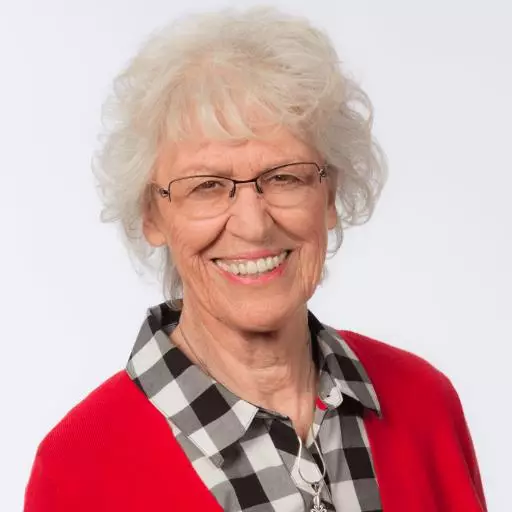
Telling the Truth for Women
Jill Briscoe
The Ministry Heart


Balancing family and ministry is a challenge for all who are seeking to serve the Lord. How do we serve Him without burning out? Will children rebel if the parents get things out of sync? What is balance anyway, and how did Jesus balance His life? The Scriptures have principles that point us in the right direction, while the Holy Spirit helps us to put them into action.
Jill Briscoe: I want to talk about passing on our faith to the next generation. I don't think it's just because of the season of life I'm in, but I arrived somewhere at a conference to speak, and these sweet people had put flowers and stuff in my room and usually a card welcoming me with a Bible verse. This one said—I wasn't quite sure how to take it actually—"Even when I'm old and gray." But then my eye was riveted. "Even when I'm old and gray, do not forsake me, O God, till I declare your power to the next generation."
I can't remember when that was, probably eight years ago now, but it's been here in my Bible ever since. "Even when I'm old and gray, do not forsake me, O God, till, until I have declared your power to the next generation." This is a wonderful season of life. I have to tell you that. Yes, it has its very real disadvantages, physically and otherwise, but I am reveling in the either autumn or winter, I know not, only God knows, of my life. I am reveling in this.
When I think about what we're doing, I am amazed. God doesn't take any account of age. I want you to know that. Spiritual gifts don't age. I want to encourage those of you who are beginning to feel pushed aside or not listened to because of your age. Some of you have shared that with me, and you're only in middle age. The best is yet to be. It really is. I think I wrote somewhere, "Aged wisdom lent the spirit's intelligence knows when to open its mouth." There are things that come, hopefully from experience and wisdom gained by experience, that the Holy Spirit can lean on in our lives.
Old age lent the spirit's intelligence knows when to open its mouth. Hopefully, we learn a little tact. We learn a little wisdom. We learn when to keep silent and when to speak. I would not say that I have learned all the things I should be learning at all, but I am finding a confidence that I never had in middle age. I want to recommend this aging process to you, wrinkles and all. I'm serious. I want to recommend it. It's a wonderful stage of life.
In Proverbs 31, there is a queen in the first nine verses that we never really look at. We only rush to the bionic Christian lady that lurks in the rest of the chapter and fortunately didn't exist, save in the imaginings of the person that wrote the chapter, the perfect woman. She wasn't a woman, but the woman that did exist is in the first nine verses. The sayings of King Lemuel, an oracle his mother taught him. Here is a man writing the first verses of Proverbs 31 about his mother. I love this passage.
Not only is he writing about his mother, he's writing about his mother's advice. Now, those of you who have teenagers, you are sitting there saying, "Yeah, can I imagine my 14-year-old growing up and writing a book of my advice?" It's so far out in left field perhaps for you at this stage. But wait a bit. Here he is. He said, "I want to tell you the burden of my mother." The word is burden, oracle is burden. "I want to tell you her heart." He's talking about his mother's heart.
As you look at this, and I don't have time to unravel this for you, but I'm recommending it for your own heart, have a look at what he had learned from his mother. It's really very simple. He said, "My mother loved me. My mother prayed for me. And my mother taught me." Those three things you will find. Just take those down and go and put them in the right places in these verses.
"My mother loved me. 'Oh,' she said, 'Oh.'" This "Oh" is the expression of anxious love in the language in which it was written. It's an expressive "Oh." She loved her children. You know, that's the best thing you can do for your children. I am saying this advisedly because we all know this, you love your kids. But do you always love them, especially the one most like you? Because you see everything you don't like about yourself in that kid.
"Oh, I love you." The best thing you can do for your child is to love your child. If you don't know what that means, figure it out. I never usually recommend my own books, but there's a book out there, *Love That Lasts*, and it's an exegesis, hopefully, on 1 Corinthians 13 on the passage "Love is patient, love is kind," and each chapter defines and describes what that looks like when you do it for your child.
Find in the Word of God a description of agape love and measure yourself up. You know, the Bible says in James that the Bible should be like a mirror, and you're supposed to look in the mirror and it's supposed to reflect back what is really there. You're seeing what's really there. You can't see it, I can't see my face, but when I look in a mirror, I can see what others see. That's how we should treat the Word of God. As we look in it, we see mirrored what? Well, find the places in the scriptures that talk about love, that describe love, that showcase love in relationships and find out what you're supposed to be doing for your child.
How does love behave if you dig into all that? Well, love listens, doesn't lecture. How good are we at that aspect of love for our children? If you really want to love your kid, listen to them. Kids ever say to you, "You never listen to me"? My kids have said that to me. "You never listen." When they were growing up, it was true. You have to learn to listen with love without lecturing. Bite your tongue. When you're a grandparent, it's even more important. Stuart says you know grandparents because they have holes in the end of their tongue.
I was in Abidjan in Ivory Coast at a school years ago. There were two coups already on this trip for SIM Mission. So, we kept getting sent to another country that hadn't invited us and didn't want us. But because of the coups that were happening, the military coups behind us, they'd shut the country and they'd say, "Well, what do we do with our guest speakers? Let's send them to the next country." So, we ended up in Ivory Coast in a Christian school that served all the missions in that part of Africa, Ivory Coast school.
As we came in the gate, I asked God, I said, "Why am I here?" There was a gorgeous blonde kid sitting up in a tree at the entrance to the gate. She was probably about 17. God said, "That's why you're here. That's it." Trying to follow that nudge of the Spirit, I found her in the dining room the first day, sat next to her and began to do the hard work of winning the confidence of that child, that she might like me. Because if they don't like you, they're not going to listen to you.
I had to do that quickly. We didn't know how long we were going to be as they just closed the school down and gave us a spiritual emphasis for five days with those kids that was totally unplanned for. So, I began to do the work that God wanted me to do in this kid's life. I found out she was a Wycliffe kid. Her parents were buried in the jungle somewhere. The time had come for her to decide where to go for college and all of this, and there was no one really to ask, no mom, no dad.
God gave me the incredible privilege of being her mom in that situation and listening. She was a little angry. She was angry at the mission. She was angry, just a little angry, you know, the typical thing that happens in that situation. I wanted to jump in how many times a day and start lecturing? Open my Bible and say, "Now, this is what you need to do, and this is where you need to go." God kept saying, "Listen, listen, listen."
It wasn't until the very last day that I tentatively said, "Let me share some things with you." She listened to me. When I was going, she pushed a little note into my hand and said, "I knew that you loved me because you listened to me. And because you listened to me, I listened to you." Big lesson. Ask yourself sometimes in this church of 100 people, 200, whatever, "Who am I here for this Sunday?" Could be a kid, 17 years of age, who's at odds with their parents but would listen to you if you listened to them.
Love listens. So, she loved this kid. And this King Lemuel says, "Let me tell you what my mom did right. She loved me. She loved me. And then she prayed for me. She prayed for me. 'Oh, son of my womb, oh, son of my vows.'" That is referring to the dedication prayer she prayed in that culture at the dedication service of her child. It was her prayers, if you wish. She prayed for me. He remembered that. He said, "She prayed for me."
I want that legacy left in my children or my grandchildren's lives. The best thing I can do is to be Nana, "She prayed for me every day of her life." I have to earn that. I want them to remember me. My Nana prayed for me every day of my life. Most of them know that. In fact, one of our teenagers—we have 13 grandchildren now, two going to college—one of them said to me a couple of years ago, "I'm going to a concert tonight, Nana." I said, "Oh, really? Where?" So-and-so. "And who's playing?" I listened and listened. I said, "Who are you going with?" "Oh, just my friends from school."
I said, "You know, I don't think it's a very good idea." "Oh, it's fine. It's absolutely fine, Nana," and on and on and on. I said, "Danny, listen to me. I don't think it's a very good idea." So, he started again and I said, "Okay, I'm just going to pray about it." He swung around and said, "Don't do that!" I'd really got his attention. I thought, "Thank you, God. This kid's really frightened of Grandma's prayers. I have done my job." Because he knows God answers my prayers, and he actually relies on that, looks for that. She prayed for me.
And she taught me. The word is a very interesting one. It's very strong. The Hebrew word means to chastise, correct, instruct, punish, reform, reprove. It can be used as "sore." She was serious. Her teaching was serious. She used every single method that you can debate, the boundary thing and the punishment thing and the timeout thing and all of this and everything else, and maybe chastised him literally, we don't know.
Whatever it took, she taught him. You know, there's a verse in Proverbs that says, speaking to the son, "Son, obey your mother's teaching and your father's instruction." I think it's the other way around. But another Proverbs verse says, "Obey your mother's teaching." So, in the Old Testament certainly, the mother's job was to teach the children. She did it with ritual for the feasts, and as she involved the children in making unleavened bread, she would be teaching and saying, "Let me tell you what this is all about," etc., etc. She taught the children.
She was very practical. She said, "It's not for kings, O Lemuel. It's not for kings to get drunk." She named it. She wasn't nebulous. "Be good." What does that mean? "If you're going to be a king, live like one, Lemuel. Kings don't get drunk. It's not for kings to get involved with women, with sexual addiction." She spelled it out. Rules for kings. You can look up Proverbs 16, verses 12 and 15. It's all laid out. She was coming from knowledge passed on to her to train her boy for kingship.
That's what we're supposed to be doing, training little kings and queens and princesses for God. I used to say to my mother, because we had pictures of Princess Margaret and Princess Elizabeth and their little coats going to church, and we bought little coats like theirs. It was a real thing. I remember saying to my mother, "Why can't we be princesses?" She said, "You're my princesses, darling." It was never quite enough. I wanted to be a *real* princess. We want our children to want to be princesses and princes for God, to be royal, really to have royal behavior.
There's a marvelous story of the King of England's two sons. They were messing around in Hyde Park, and one of them said, "I bet you anything, a shilling in those days, that all policemen have bald heads." The only way they could find out is to get rid of the helmet and see. The other one said, "You're wrong." But they were kings' sons, so they didn't know how to remove a helmet. A little scruffy urchin comes along from London and says, "What's the matter?" They said, "Hey, we'll give you a shilling if you can knock the policeman's hat off." "Oh, easy." Off comes the hat. He's got a bald head.
The two boys were working out their money and their debts, and the policeman arrives and gets hold of them and says, "You've accosted my person. What's all this about? What's your name?" One of them said, "Duke of York." "Don't you dare be cheeky! What's your name?" "Well, actually, I am the Duke of York." "Okay. What's your name?" "I'm the Prince of Wales." By now, he's getting pretty annoyed. He turns to the little urchin and he says, "And what's your name?" He digs the Prince of York in his ribs and says, "I won't let you down." He says, "I'm the Archbishop of Canterbury."
Now, why is that so amusing? Because on many grounds, the policeman didn't believe they were the king's sons. Why? Because they weren't behaving like kings' sons, right? The little urchin didn't believe they were who they were because could you get two princes behaving like that? So, this mother is saying, "Live like a king, and I'll tell you what it looks like." Teaching our children means spelling it out. Don't leave them hanging and wondering.
When we first came here and our children got up into the teenage years, Bob Henley, a wonderful person who used to sing for the Billy Graham crusades, they became our youth pastors. They were fabulous youth pastors. They were the ones that invested in our children's lives. I will ever be thankful to Bob and Jane Henley. His ministry as a youth pastor—let me encourage all you youth pastors' wives here—this is the fruit of it.
He had a sex talk with the group then once a year. Now we have it once a week. But in those days, it was between him and the kids, and he would always say, "You do not need to tell your parents what we're going to talk about, so you're free to ask any question you want. But this is between your youth pastor and you." When they come home, of course, I'm dying to know what's going on here. I say, "Well, what did Bob say?" "Can't tell you, Mom. We don't need to tell you. It's just about Bob's rule."
I kept hearing about Bob's rule. So, of course, I was on a mission then to figure out what it was. The two oldest never let me know. I tried everything. But Pete was a little more vulnerable. He was 13, I guess he was. I went up to say goodnight, and he says, "Mom, I'm too old for you to kiss me goodnight." We were wrestling and kidding on the bed. He by then was six-foot-six. He grew all that six-foot-six height when he was 13 or 14. So, it was no contest, but I eventually missed him and kissed his neck. He said, "You broke Bob's rule!" I said very casually, "Oh, what's that?" He, without thinking, said, "Well, don't lie down, nothing below the neck, and keep everything on." I said, "That's it?" He said, "That's it."
All my children have testified that that rule saved them in some situations. Very simple. Not "be good," but he spelled it out. When eventually our eldest son, David, married Rose's husband, when he got married, he got a telegram from Bob: "Forget the rule." But if you're going to raise a royal, you have to be royal yourself. You have to love them and they need to know it. You have to pray for them and they need to know it. And you have to teach them. You have to teach them whatever that takes. Give it, spell it out, talk it out, work it out, all of that. And then you'll raise a royal.
There's no guarantee, however. God had a son, put him in paradise, and he still went wrong. You can do it all right like God did, but the kid has his own will or his "won't," and they are responsible to God for their choices. But you can sure do a lot along the way to make the environment so that these children and pastors' kids have very specific needs. So, that's what we need to do. We need to love them. We need to pray for them. And we need to teach them.
I want to just read you a prayer that you could use, a time when one of my children was in deep trouble. This was a poem I wrote on a very dark day.
Dear son, this cup of sorrow must be drunk, it is for thee.
But be sure he holds the goblet. Dear son, 'tis he.
Hurting one, he is your father, saw his son upon the cross.
Understanding pain and parting, knows so well your loss.
Bruised was he, but never broken. Dim the flax burns in the storm.
He will strengthen you with power. He will lead you home.
Firstborn of beloved children, joy and pride we have in thee.
Father, hear this mother's heartbeat, cradle him for me.
Featured Offer

When discouragement sets in, where can you turn for lasting hope?
In their encouraging 5-message audio series, Hope for the Disheartened, Stuart and Jill Briscoe share biblical truth to help you anchor your hope in God and rely on His strength and timing, even when life feels overwhelming.
We’ll send you Hope for the Disheartened on USB or as a digital download as our thanks for your gift today. Your support helps us share the timeless truth of God’s Word with more people searching for true comfort, hope, and encouragement. Thank you!
Past Episodes
- A Lifetime of Wisdom
- A Little Pot of Oil
- A View from the Porch Swing
- Are You Good Soil?
- Art of Leadership
- He Came to Give Us Life
- Heart Hunger
- Here Am I, Send Aaron
- Hidden Treasures
- Hope for the Disheartened
- How Do I Find Joy?
- How to Be Up When You're Down
- Lessons from the Boy Jesus
- Let's Talk
- Life Lessons
- Life that Works
- Living Above the Circumstances
- Living in the Word
- Living Love
- Lost and Found
- Searching
- Seeing Through Suffering
- Shaking Up Your World
- Shelter from the Wind
- Six Things a Mother Can't Do
- Slaying Giants
- Solid Ground
- Spiritual Arts
- Take 5: A Christian Point of View
- The Balancing Act
- The Cutting Edge
- The Fatherhood of God
- The Heart and Soul of Friendship
- The Heartbeat of the Master
- The Holy Spirit
- The Holy Spirit and You
- The Innkeeper's Daughter
- The Names of God
- The New Normal
- The Power to Change
- Triumph in Trouble

Featured Offer
When discouragement sets in, where can you turn for lasting hope?
In their encouraging 5-message audio series, Hope for the Disheartened, Stuart and Jill Briscoe share biblical truth to help you anchor your hope in God and rely on His strength and timing, even when life feels overwhelming.
We’ll send you Hope for the Disheartened on USB or as a digital download as our thanks for your gift today. Your support helps us share the timeless truth of God’s Word with more people searching for true comfort, hope, and encouragement. Thank you!
About Telling the Truth for Women
Telling the Truth exists to make available sound biblical teaching, practically applied, with a view to producing lives that glorify God and draw people to Christ. The whole of our ministry is to encourage, console, strengthen, teach, and train.
About Jill Briscoe
Jill Briscoe was born in Liverpool England in 1935. Educated at Cambridge, she taught school for a number of years before marrying Stuart and raising their three children. In addition to sharing with her husband in ministry with Torchbearers and in pastoring a church in the United States for 30 years, Jill has written more than 40 books, traveled on every continent teaching and encouraging, served on the boards of Christianity Today and World Relief, and founded Just Between Us, a Christian magazine for women. Jill can be heard regularly on the worldwide media ministry called Telling the Truth. She is proud to be called “Nana” by 13 grandchildren.
Contact Telling the Truth for Women with Jill Briscoe
info@tellingthetruth.org
Mailing Address:
Telling the Truth
12660 W North Ave
Brookfield, WI 53005-4633
Phone Number: