
Telling the Truth for Women
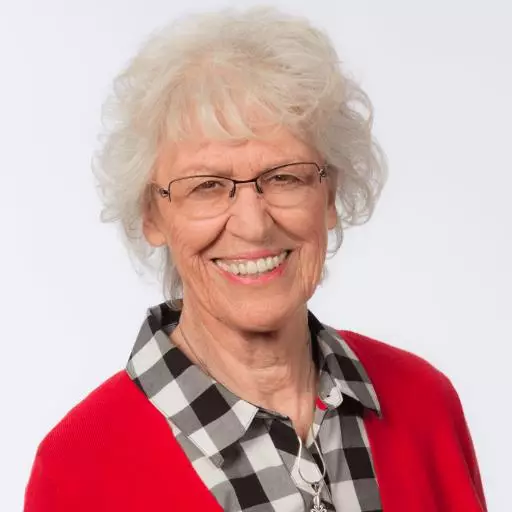
Jill Briscoe
The Forgiveness of God


God came in Christ to offer us forgiveness through the cross. He rose again the third day and set about bringing the world back home. “Talk to me,” says the Father. “Prayer is the means; I have made a way.” But there is a problem—we don’t know how.
Guest (Male): God was in Christ reconciling the world to himself. He came in him to forgive us, to run down the road from heaven to earth, and say to a world of prodigals, "Come on, come home."
Jill Briscoe: Last week we addressed the fatherness of God as seen in the Scriptures, in the stories that Jesus told like the story of the prodigal son, but also in direct teaching. One day when the disciples were gathered around Jesus, they said, "Teach us to pray, like John the Baptist taught his disciples. Lord, you teach us to pray." Jesus said, "When you pray, say, 'Our Father which art in heaven.'" That's where it all begins. A Christian worldview includes a belief in the Father heart of God.
Today I want to address forgiveness, the forgiveness of God. As I typed my notes out in script form, I always pressed the spell button when I'm done and to my surprise, it kept coming up with one word I'd spelled wrong all the way through these 20 pages. It was forgiveness, and I had spelled it "forgive mess," which is fine, I left it. So there it is in my script: for the forgiveness of God forgives the mess. Mess in our families, the mess in our world, the mess that we make, and the mess that others make for us. He forgives, he wants to forgive it all.
Now, the disciples listening to Jesus and certainly listening to his parable of the prodigal son, I'm sure would think, you know, that's the problem with us. We don't know where to start. Think of the prodigal sitting in the pigsty, coming to himself, coming to his senses and saying, "I'm going to go home to my father. I've just had it. What's the point of sitting in a pigsty when I could be a prince?" It's the point of conversion, of turning around and heading back where he belongs, to the heart of God.
So he rehearses what he is going to say. Do you ever do that? Do you ever have a looming confrontation with a child or an employee or a friend or somebody in the family? You sit there thinking in the pigsty of this relationship or whatever it's happened to it, "What am I going to say? What's the first thing to say?" Because I'm going to take the initiative, I'm going to go home. You come up with the first sentence. That's a very practical, good thing to do, to figure out what the very first thing you're going to say is. That's all you need to do and just go say it, and then let the river cut its own channel from then on in.
So that's what we need to do. Where do we start? Where do we begin when we sit on the steps of our soul in the deep place where nobody goes, and the Lord comes and sits with us, and we begin this incredible conversation called prayer? I got a letter from a listener in the UK from our radio program the other day. She said, "I listened to you yesterday and it was as if your preaching was to me. I've been diagnosed with breast cancer. I've been trying to pray to God for healing, but because I hadn't practiced praying, I found myself praying Christopher Robin prayers. So would you pray for me, my sister? Thank you and God bless you."
She didn't know where to start. Here she is in deep trouble. She's in a pigsty of pain, if you wish. She wants to get to the Father. she wants to talk to the Father, but she doesn't know where to start. So she asks somebody else to pray. It took me back to my childhood because Christopher Robin, for those that aren't mothers and you don't have children's literature around the house, A.A. Milne is a British writer who wrote wonderful books for children all about Christopher Robin. One of them was on prayer, "Christopher Robin's Prayers."
I remember as a little girl in my school learning that particular prayer, and it's very simple and it's sort of cute. "Little boy kneels at the foot of the bed, droops on his little hands little gold head. Hush, hush, whisper who dares. Christopher Robin is saying his prayers. God bless Mommy, I know that's right. Wasn't it fun in the bath tonight?" See how quickly he gets distracted. "The cold so cold and the hot so hot. Oh, God bless Daddy, I quite forgot. And now real distraction. If I open my fingers a little bit more, I can see Nanny's dressing gown on the door. It's a beautiful blue, but it doesn't have a hood. Oh, God bless Nanny and make her good. Mine has a hood," now he's really off, "and I lie in bed and I pull the hood right over my head and I shut my eyes and I curl up small and nobody knows that I'm there at all. Oh, thank you, God, for a lovely day. And what was the other I had to say? I've said bless Daddy, so what could it be? Oh, now I remember, God bless me."
Christopher Robinitis. It's cute when you're five or six. Not very cute when we're 20, 30, 40, 50. And yet many of us have never graduated from Christopher Robin prayers. It's fine to say God bless Mommy, Nanny, Daddy, etcetera, and we should and we do, but is that what God intends when he said if you want to learn how to pray, shut your eyes, listen to me: "Our Father who art in heaven, hallowed holy be your name. Thy kingdom come, thy will be done." Very different from God bless Mommy and Daddy and me and that's it, now I get on with my day.
So we all need to start somewhere. I well remember becoming a Christian and being invited to a mission's prayer meeting. I had no idea what that meant. I didn't know what a missionary was, I didn't know what missions was, but I went along with some of my students downtown Cambridge to the beautiful library. The library at Cambridge must be one of the most gorgeous buildings in the world and have the most incredible collection of books in the world. There was the librarian, who happened to be a believer and wonderful, wonderful man of God, and he was leading the mid-morning 12 to 1:00 prayer meeting for students and we were praying for the world.
It was a new planet. I had never sat in a group of 700 or 800 students on their lunch hour, foregoing lunch to come and pour their heart out that the kingdom may come within the heart of people around the world. I sat there amazed, and then I thought, "Oh, he's expecting all of us to say a prayer out loud." I had never had that concept before, I didn't know what to say, but I thought, "Well, I may as well start." I jumped in and I prayed my very first prayer out loud in a prayer meeting. Very simple, it went something like this: "God bless Africa. Amen."
Well, it was a start. However, at the end, this venerable, incredible man came up and very gently said to me, "I'd like to talk to you about your prayer." He said, "Which part of the great continent of Africa is your concern? Is his kingdom making progress in the hearts of men there? Which mission are you getting thoroughly informed about? Which particular tribal problem are you focusing on? And how are you seeing yourself as part of the solution, Jill? Are you finding a heart cry of response to the need as you pray?" I realized that "Bless Africa" isn't going to do it.
That's where we begin. And that's all right if that's where you are, but don't stop there. What you need to do is get second things first, because what we have is first things: me, me, my, my first, and the second things in our mind is so often his kingdom, his will, his work, the will of God in the work of God in the world of God. That's second. Now what we've got to do is get second things first and really learn how to move the hand of God that the kingdom may come in the hearts of men and the world of prodigals may come home.
So, kingdomness. If you are praying for anything, make sure that you're adding at the end, "and if there's any way I could become the answer to this prayer, count me in." It might be a scary thing to pray, but unless we are willing to become, as this man reminded me, the answer to our own prayers. What happened to me as I decided, a busy student though I was, that every single lunch hour from now on I needed to be downtown Cambridge sitting in that library praying my heart out, my heart on its knees, and as I did that for the world, for Africa and Asia and Middle East and all over the world, something happened. I packed my suitcase, I was ready to go. It got into me. The Father heart of God for the world of God. I caught it, and that's what should happen when we pray.
Kingdomness, use me. I have a friend in Russia. She was at Oxford, brilliant student, got a job in the foreign office, and she got converted the last semester of her time up at Oxford. Somehow she got involved with a mission called Operation Mobilization, and in the little break they had, they went behind the Iron Curtain. The wall was still up in Berlin at that point, and they smuggled themselves in with a load of Bibles and in East Germany, they began to do evangelism. Catherine was just mesmerized by this whole thing.
As a brand new Christian, she came back and I think it was shortly before she took her final exam, she watched the television. On the television was the sight that we all saw of the wall coming down in Berlin. She had tears running down her face and she started to pray for the people that she had met on that team, that mission team. "Lord, now they can hear about you, now your kingdom can come in their hearts. How wonderful, how wonderful." And then she stopped. God said to her in that little tiny room at Oxford, "And who's going to tell them, Catherine? Who's going to tell them?" And Catherine said, "Okay, here am I, send me." She canceled a job that she'd got in the foreign office and she joined Operation Mobilization. She's now in Russia. I've been up to Siberia with her. I've seen her heart for her world, for her Russians. I know where it began. It began as she sat in front of a TV and her heart on its knees began to pray for the people in East Germany. You know, you'll never be the same if you dare to get heart involved that his kingdom come in the world.
"Use me, send me. Don't pray send somebody else. 'Here am I, send somebody else,'" that's what we usually pray. Or, "Lord, you know," we say loudly, "I'm willing to go," but secretly we're planning to stay. God does not appreciate that dishonesty. So God squandered his heart on us when he gave us Christ, and we need to squander our life for the love of Jesus in prayer and in action all over the world. What is the kingdom of God? Well, Jesus was here once and he was walking around and he said, "The kingdom of God is among you," because he the king was among them.
Another time in the upper room, he said to his disciples, "The kingdom of God shall be in you. I'm going away, but I'm going to send my spirit. I am with you, but I will be in you." When the king is in us, then that just helps us look at the world a whole different way. There's a wonderful little passage you can look at sometime in Isaiah chapter 32. It's also in Isaiah chapter 32. It talks about when the king reigns. It's talking about the reign of Israel and when you get a good king on the throne, he chooses good counselors and the counselors choose good officers and the officers choose good police and the whole nation settles down. When the king reigns, it's also a messianic psalm, when the king reigns.
Then it gives three pictures. When a king, a good king reigns, three things will happen. Every man, every woman, every boy, every girl will be like the shelter from the wind, a refuge from the storm, and the shadow of a mighty rock within a weary land. A windbreak, a watershed, and a wall. Marvelous picture. When the king reigns in my heart, when he's boss, when he's Lord, and if he isn't Lord of all, he's not Lord at all. When he's Lord, when he's king in my heart, my life will be like a windbreak. I'll get on my knees, and as the blast of the enemy comes against somebody that I love, prayer puts up that great big barrier between us. We can be a windbreak. We can take the blast. We can take the sorrow, we can take the pain.
And we can become a watershed. We can divert the water of life in the direction of a thirsty person. And we can be a wall, something solid and reliable like a rock in a weary land. The shadow of a mighty rock. We're not the rock, the Lord is the rock, but we can be the shadow of the rock. What's a shadow? Looked it up in the dictionary: an inescapable companion. So if I insist on being an inescapable companion of my Lord in prayer, do you know what's going to happen? People are going to look at me and say, "Something about that person. Secure, upright, integrity, rock-like, I like it. I sense it's a shadow of something behind them." They're going to beat a path to your door and say, "What's the secret of your life? You're living your life out loud and it's shouting something to me and I want to know, I want to understand. What's the message?"
Well, the message is: find Jesus as Savior, let him invade your life by his spirit. Remember he is Lord, you don't make him Lord, he is Lord. So he comes in to be who he is and then let him rule, let him reign. Kingdomness first of all in my heart, and then he'll start and bring the world back home, even using you and me, one sinner at a time. You know, I know Jesus prayed when he was a little boy. I know that he prayed as he was growing up in Nazareth. I do not think Jesus Christ learned to pray to his Father at the age of 30 to the age of 33. Of course not.
I believe he prayed for his family, James and Joseph who didn't believe in him, and all the rest of his sisters and brothers. I believe he prayed for his mother. I believe he prayed for his father Joseph, his dear beloved earthly father, got sick. I believe he prayed for him, and as Joseph went through the front door ahead of his earthly family, Jesus prayed for all the mourners in his extended family. I believe he prayed for the neighbors in Nazareth. I believe he prayed for the customers who came to his small business in town. I believe he prayed for his debtors, the people that never came through and paid him for all the hard work he'd done building their houses. I believe he went to collect his debts and I believe he heard the story, and I believe if he knew it was poverty or was problem, I believe he forgave the debts.
I believe he did more than forgive the debts standing on that doorstep, I believe he prayed for that family. He prayed. I believe he prayed for the Romans, I believe he prayed for the slaves, I believe he prayed for the children and the women in his society. I believe he prayed for all those poor, horrible situations he saw on the side of the road, the great big crosses because the Romans had this wonderful habit of hanging people on crosses all along the roads in every province that they controlled. It was a sort of visual graphic reminder: if you ever dare to have an uprising against us, that's where you're going to end, like Barabbas and his two friends. So Jesus Christ as a boy would see people on a cross. Do you think he prayed for them? I believe Jesus prayed for the people on the cross. Jesus grew up talking to God about everybody he met, and so must we.
How do you pray? You just pray. It's language, it's talk. You pray as you go to the gas station. You pray as you see a sad face standing in a line. I pray when I'm traveling all the time because I know there are people I might pray for and I might be the very first person who has ever, ever prayed for them. Think about it. What a privilege. And then because you're praying for them, the young woman just this last trip, struggling with two babies and a three-year-old on a plane. Guess what happens? Everybody asks to change seats and get away from them, right? I asked to change seats and go and sit and help her. You know what that did? Quite incredible. I wouldn't have done it if I hadn't seen her struggling and as a grandmother, my heart went out to her and I began to pray for her and I prayed for her because she didn't have anybody helping her. I prayed for the little kids. I had no idea, only God knows the situation, she wasn't met the other end, nobody came to meet her, she was struggling with her bags and kids. But you know what happened as I just prayed for her? "Lord, if she's never heard of you, send somebody, and here am I, send me if you want me." And I just changed seats and sat down and said, "Can I help you with these kids?" You should have seen her face.
It was so easy, but what did that for me was as I was in an attitude of praying, just in my Nazareth life. That's where it begins and that's where you practice prayer. And for you parents and grandparents, what a great place to be to pray for your children. I was sitting at a World Relief board meeting and on the screen came one of our missionaries, Mike. "Oh," I said to Scott, "he's one of our missionaries from Elmbrook, yes." My mind went back to Jakarta in Indonesia where Stuart and I were visiting as we sat around the table late at night and I said to Mike, "Tell me your journey, tell me your story. How did you, a young, bright, American young man, get to Indonesia and be involved now in tsunami relief and what's the journey?" He said, "Well, that's easy. My parents had a globe and a map and as a little boy of six and seven, every mealtime we focused on a different part of the world." He said, "I don't know what it was about my dad, he had this fixation on Indonesia. And he said that's why I'm here. I caught it. No question. I started to pray as a little boy for Indonesia. That's why I'm here in the tsunami among the victims."
What an easy thing to do. What an incredibly easy thing to do. That's what we tried to do with our kids. Bought a map, we bought a globe, which hasn't helped me much. I never know where I'm going, I don't know where I am, and I don't know where I've been when I come back. Stuart just gave up a short time ago and said, "Well, you know, too old now, she'll never learn. But never mind." And he's always glad to see me when I wander in the door at the end of a trip and say, "Oh, you turned up, did you? That's good." But I've tried and I still am trying to get inspired. You only get inspired if you get informed.
You say, "Well, I'm too busy. I have all these kids and they're all in soccer." That's busy. I understand. So I always say to parents, "Do you worry?" Grandparents, do you worry about your kids? Grandparents especially, they're totally out of control, that's the problem. Parents are too, but they just don't admit it. Grandparents out of control, but you're not really because you've got knee work to do. One of the members at this church has a little piece of property on the freeway and he puts up these wonderful huge great big billboards. Has anybody seen that? Yeah. Do you remember what the one at the moment says? Yeah, "Knee mail." God always hears knee mail. Isn't that cute?
But if you're a mother, if you're a grandmother or a parent, do you ever worry about your children? Why don't you start there? You don't think you have extra time to pray for your kids and the kids of the world. Take worry time. Do you know how much time you spend worrying? Shape it into a prayer. Worries hate that. They squirm and they throw their toys out of the cot and have a tantrum, but get hold of the worry that you're worrying about. Get on your knees and say, "This is what I'm worrying about," and shape it into a prayer to your Father. That's time you can use. Nobody worries more than a mother, yet mothers live longer than anybody. Why? Because as her children grow older, she switches from worrying to praying and then she becomes indispensable to God. So he lets her live longer. For God knows that if there's anyone more precious to a family than a mother who worries, it's a grandmother who prays. Yeah, true.
Ruth Bell's wonderful poem, "Prodigals and those that love them." If you have a prodigal, buy that book. "Prodigals and those that love them." One of my favorite poems in that book. "Listen, Lord, a mother's praying, low and quiet, listen please. Listen what her tears are saying. See her heart upon its knees. Lift the load from her broad shoulders till she sees and understands. You who hold the world together, hold her problems in your hands." Everything falling apart? Guess what? The Father holds things together. So talk often to the Father about your prodigals. Thy kingdom come.
And now it's our turn. Oh, you're so glad you say, "Jill, you've told me I felt so guilty I've sat here, now I can't pray for myself and I have to pray for the world, and every time I'm thinking about my prayers I'm getting more and more ashamed. And now it's my turn: 'Give me this day my daily bread.' What are you going to say about that, Jill? See, there is a bit where I can pray for me." No, doesn't say give me today. What does it say? Give us today our daily bread. And even in the permitted, good petition for our needs to be met that Jesus instructed us to pray about, there are things we need to learn. Prayer is a declaration of dependence on God and you wouldn't have bread and I wouldn't have bread today at lunchtime if the sun didn't shine and the rain didn't fall and the seed didn't germinate, and guess what? You can do nothing at all about that.
Thank you for our daily bread, our daily bread. And another thing about praying about that regularly is it reminds you how totally dependent we are. There's a wonderful verse in Proverbs 30 verse 8: "Give me, Lord, enough food to live on, neither too much or too little. If I'm too full, I might get independent saying, 'God, who needs him?' If I'm too poor, I'll steal and dishonor the name of my God. Just give me enough." What's enough? A little bit more than what I've got. Never have enough. Enough is daily bread. Neediness, not greediness. We need to pray about that in our affluent, crowded lives in America. We need to pray. Show me, somehow show me the necessity of the state of my dependence on you for my daily needs. Remind me, remind me for that. And God says, "Ask me. I want you to ask me. If a son asks a father for bread, will he give him a stone or a serpent? No, no, he'll give him bread. Good gifts to those that he loves."
And so we are to ask. Physical needs, spiritual needs, relational needs. Forgive us our debts as we also have forgiven our debtors. Keep us forgiven with you and forgiving others. First Corinthians 13: love doesn't keep a record of wrongs. Doesn't keep books. Are you keeping a book on someone? Are you writing down every little thing they've done to you, said to you, thought about you in your perceptions or reality? Are you keeping a running record? Love doesn't keep books. Cancels the debt like he canceled the debt against us. He has canceled our indebtedness. And once we believe in the size of what God has forgiven us, we will have no trouble at all. It will be a given to be able to forgive the little things that people have done to us.
How does this work? We start with us. Where did Jesus say this whole thing on forgiveness starts? We have to say to him, "Not forgive them for what they've done to me." No, get the first thing first: "forgive me what you need to forgive me for." And the knowledge and the experience of knowing you're forgiven will then turn around and bless other people. That's how it works. But until we understand, and those of us that have not murdered our mother with an axe or those of us that have not committed adultery and those of us that have little sins find this hard. Those of us who are big sinners find it easy, because a big sinner, somebody that's made a big mess, realizing God is able to forgive the big mess as much as he can forgive the little mess, are so overwhelmed, absolutely overwhelmed. They never have to think twice about running towards somebody else who's hurt them, never have to think twice.
I have a friend who went to see a woman who was about to be executed. The woman asked her to be present at her execution. And she said to her, "Frances, are you absolutely sure you became a believer, you've come to know Jesus? You know your sins are forgiven. You know in one hour's time you're going to go through that front door and you're going to be with God. You do know that, don't you?" And she said, "Yeah, I do know it. I do know it, but my sin is so big. I've killed. I've taken life. It's so big." And my friend told her about walking along the beach on a holiday and seeing a little crab come out of a hole, little tiny hole. Then she walked along and a child was making a sandcastle and the hole was bigger. And then she walked along and there were some men excavating and helping with the erosion, and it was a huge great hole. And as she walked, the tide came in and guess what? It filled up the hole.
That's what the blood of Christ does. Fills up the hole. I don't care if it's a big hole, I don't care if it's a little hole. But you know something? Even the little hole hurts God as much as the big hole. Sin hurts God. And another thing about forgiveness: to withhold forgiveness from someone is a sin, is a sin, is a sin, is a sin. It's a sin of omission just as big a hole as a sin of commission. And so not to initiate, not to refuse to hold something against somebody. The nursing of the grudge, the pampering of those bad memories, the firing up of the bitterness inside you is sin. And God wants you to be free from that.
There is such a freedom when you let it go, but you won't be able to let it go unless you're at the foot of the cross. An African told me a story once of having a dream and seeing a man walk up a hill and recognized himself, and it was Calvary and the crosses were at the top. And then he found out that Jesus was walking behind him, but Jesus was having a hard time because he could hardly stagger up the hill. He was almost crawling because he had this huge great burden on his back. And the African went to help him and he said, "Lord, are you carrying the sins of the whole world to Calvary?" And the Lord said, "Oh, no. Just yours. Just yours. Just yours." And guess what? He forgave it.
God the Father forgave what we did to God the Son as he took our sins to Calvary. And now he offers that forgiveness to us. Deliver us therefore from the evil of nursing the grudge, deliver us from the temptation. And Satan and God, the kingdom of darkness and the kingdom of light, are in this battle at the moment. You can read about that in Ephesians and what prayer has to do with it. But devilness, we need to be delivered from the evil one, as Jesus prayed in John chapter 17. We have an enemy. You can see his footprints. You can see his footprints through your life, around your family. But we have a Father in the forest, and when we cry, "Father, are you there?" God is always there.
But so is that wretched creature. So is that wretched creature. And God and the devil use permitted pain and problems to two opposite ends. The devil to destroy us, and God to make us and strengthen us and deliver us from ourselves. Permitted pain is used if we allow it by the devil to destroy us and by God to strengthen us and make us like Christ. Two kingdoms.
And so the wonderful prayer finishes: "For thine is the kingdom and the power and the glory forever and ever, Amen." And it's like bookends. "Our Father which art in heaven," holy marvelous Father, and at the end, the other bookend, "Thine is the kingdom, the power and the glory." It's God first and God last and God everything else in between. It's all about him. Right? Not about us. And yet he lets little "us" into it in his Father's arms. He picks us up and he holds us close to his heart and says, "I'm going to give the kingdom to you, little flock. Don't be frightened. Kingdom's going to be yours, and the king of the kingdom's going to be yours." And he wants us to feel the beat of our Father's heart.
I wrote a piece years ago for Decision Magazine called "Shelter from the Storm" and I found it the other day. I'd like to finish with it. I was barely six years of age and I remember sitting by a roaring fire in the Lake District where we had fled the bombs in Liverpool. My father was home from the war on leave and he was sitting in a big armchair. I can see it now. And a storm had broken outside and the wind and the rain were lashing against the windowpanes. But we were nice and safe and warm inside and I was watching it, but I was old enough to understand that a greater storm was raging that involved the whole world. And the fire was warm and my father, relaxed and reading the paper sitting in his big chair, suddenly became aware of my little bit of insecurity and apprehension and he put his paper down and he smiled at me and he said, "Come here, little girl. Come on, come here." And suddenly I was in his arms leaning against his shoulder and feeling the beat of my father's heart.
And I've thought about that day many times and I've realized how my Heavenly Father shelters me from the storms of life. When torrents of sorrow swamp me at my mother's funeral, I sought the reassurance of my Heavenly Father's presence. And when winds of worry whipped away my confidence as I faced gangs of youth people in street evangelism, I glanced up to see my Father's face. And when floods of fear threatened to drown me on 9/11 2001, as I sat in an airplane flight 292 United, high in the sky and the pilot came on and said, "All the borders are closed, all the boundaries are closed, it's a national emergency. I have to make an emergency landing and I can't tell you why." When that happened to me, I sensed my Heavenly Father all over again say, "Come here, little girl." And in my airplane seat, I climbed into his arms, leant against his shoulder and was safe.
And as I rested, as you rest in that safe place, knowing my Father is bigger than any storm that beats against the windowpane of my life, I can watch the rain, I can listen to the thunder, I can listen to the crackle of the twigs, the branches snapping. I can know that creature is out there, but here I can feel the beat of my Father's heart. Jesus, lover of my soul, let me to thy bosom fly, while the nearer waters roll, while the tempest still is high. Hide me, oh my Savior, hide, till the storm of life is past. Safe into the haven guide. Oh, receive me home at last.
Do you know what I'm talking about? Does anybody know what I'm talking about? Do you want to know what I'm talking about? Let's pray.
Father dear, our Father who art in heaven, oh heavenly holy Father. I would ask that you just don't do a Christopher Robin at this point. Concentrate on your Father, the fatherness of God, and in your mind you can cry your way through the Lord's prayer, you can just sit in quietness and let the Father hold you against his heart. You can do what you like, but just connect, will you? Just just come. Amen.
Featured Offer

When discouragement sets in, where can you turn for lasting hope?
In their encouraging 5-message audio series, Hope for the Disheartened, Stuart and Jill Briscoe share biblical truth to help you anchor your hope in God and rely on His strength and timing, even when life feels overwhelming.
We’ll send you Hope for the Disheartened on USB or as a digital download as our thanks for your gift today. Your support helps us share the timeless truth of God’s Word with more people searching for true comfort, hope, and encouragement. Thank you!
Past Episodes
- A Lifetime of Wisdom
- A Little Pot of Oil
- A View from the Porch Swing
- Are You Good Soil?
- Art of Leadership
- He Came to Give Us Life
- Heart Hunger
- Here Am I, Send Aaron
- Hidden Treasures
- Hope for the Disheartened
- How Do I Find Joy?
- How to Be Up When You're Down
- Lessons from the Boy Jesus
- Let's Talk
- Life Lessons
- Life that Works
- Living Above the Circumstances
- Living in the Word
- Living Love
- Lost and Found
- Searching
- Seeing Through Suffering
- Shaking Up Your World
- Shelter from the Wind
- Six Things a Mother Can't Do
- Slaying Giants
- Solid Ground
- Spiritual Arts
- Take 5: A Christian Point of View
- The Balancing Act
- The Cutting Edge
- The Fatherhood of God
- The Heart and Soul of Friendship
- The Heartbeat of the Master
- The Holy Spirit
- The Holy Spirit and You
- The Innkeeper's Daughter
- The Names of God
- The New Normal
- The Power to Change
- Triumph in Trouble

Featured Offer
When discouragement sets in, where can you turn for lasting hope?
In their encouraging 5-message audio series, Hope for the Disheartened, Stuart and Jill Briscoe share biblical truth to help you anchor your hope in God and rely on His strength and timing, even when life feels overwhelming.
We’ll send you Hope for the Disheartened on USB or as a digital download as our thanks for your gift today. Your support helps us share the timeless truth of God’s Word with more people searching for true comfort, hope, and encouragement. Thank you!
About Telling the Truth for Women
Telling the Truth exists to make available sound biblical teaching, practically applied, with a view to producing lives that glorify God and draw people to Christ. The whole of our ministry is to encourage, console, strengthen, teach, and train.
About Jill Briscoe
Jill Briscoe was born in Liverpool England in 1935. Educated at Cambridge, she taught school for a number of years before marrying Stuart and raising their three children. In addition to sharing with her husband in ministry with Torchbearers and in pastoring a church in the United States for 30 years, Jill has written more than 40 books, traveled on every continent teaching and encouraging, served on the boards of Christianity Today and World Relief, and founded Just Between Us, a Christian magazine for women. Jill can be heard regularly on the worldwide media ministry called Telling the Truth. She is proud to be called “Nana” by 13 grandchildren.
Contact Telling the Truth for Women with Jill Briscoe
info@tellingthetruth.org
Mailing Address:
Telling the Truth
12660 W North Ave
Brookfield, WI 53005-4633
Phone Number: