
Telling the Truth for Women
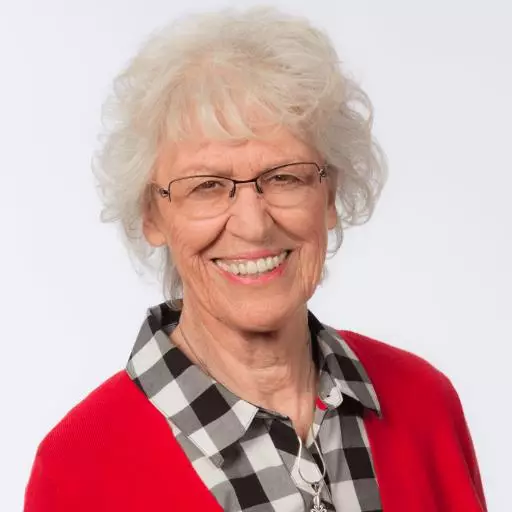
Jill Briscoe
Tending the Kingdom's Garden


It’s easy to see when a garden needs watering. The plant leaves begin to wilt, the ground becomes dry, and cracks appear. And if the plants aren’t tended to, they’re at risk of withering and dying.
It’s the same with people who need Jesus. In this message, Jill Briscoe helps us understand what’s at risk and asks us to dedicate ourselves to impacting people in our sphere of influence.
Jill Briscoe: Father God, as we open Your word again, Your word, may those things You wish to teach many, many people be the words You want shared out of all the ones that could be shared. Bring to mind those things that need to be said, take from my mind those things that are not needed this time, and remind us all of things we know because so often we forget to remember. In a very familiar story, remind us of what perhaps we've forgotten. For Jesus' sake, amen.
Last time we met together we talked about Jesus' parable, the parable of the sower and the seed. We talked about his wonderful day of teaching by Galilee. Wouldn't you have loved to have been there? I would. What a storyteller Jesus must have been. And he uses a teachable moment to tell the story of the sower and the seed.
Those of you that have had the privilege, as we've had the privilege, of going to Galilee know that there are hills rising up from the beautiful Lake Galilee. It was a perfect amphitheater for the way that the Lord Jesus used to teach the crowds. And he'd had a whole day of telling stories. If you go back before this event in Mark and Matthew, you'll see that the crowds had been around him all day, and he didn't vary his teaching.
Sometimes he varied his teaching when he was by Galilee. He would go to a little bit of theology if you wish, or explain the beatitudes. But this day, it had been story after story after story. Everybody loves a story. Young people, old people, middle-aged people, all of us love a story. And so Jesus had used this teachable moment, and I'm quite sure the visual was within sight. The visual of the farms and the farmland was in sight from where the people were with him, where the people were listening.
It was a lesson about the importance of responding to the words that Jesus was saying. Not just listening, not just having their ears tickled in a cute little parable or puzzle, a word puzzle. No, there was a truth, many truths sometimes, in the stories that Jesus taught. Parables, remember, are earthly stories with heavenly meanings or earthy stories with heavenly meanings, as someone has said. So, truth wrapped in a story. Great way to go.
As Stuart and I travel this world, we love to say to people, "Tell me your story. Tell me your story." And within the story, the personal story of how that person came to faith in Christ, so often there is a piece of scripture that is part of it. And so often, interestingly enough, there's a parable, there's something that they've heard in the Gospels that has caught their attention. So truth is for all times. Jesus' parables are just as familiar and useful today as they were when he was alive. They're like riddles, if you wish, they're like puzzles.
So the farmer goes out and sows the seed, remember? You can read about this in Mark chapter 4 and in Matthew. He sows the seed. One of the Gospels says that the farmer is the Son of God. And so now Jesus is explaining the story, as un-wrapping the story and bringing out the spiritual truth. The farmer is the Son of God. He is the word himself. He is the word. Do you remember? The word became flesh and moved into the neighborhood. The word became flesh and dwelt amongst us.
And the farmer sends out his workers into the vineyard or the farmyard, whichever you wish. And the seed, if it takes root, brings a harvest of life. It's got to die to multiply. It's got to be buried. It's got to be sown. If it stays in the barn, in the basket, that's how it'll stay, in the barn, in the basket. One seed, hard, no life, until it dies, until it's sown, until it's buried. That's why the sowing is so important.
Jesus sowed his teaching of the kingdom in the crowds around him. He plowed it in with illustration and story. He wept over it, he watered it with his tears, and he harvested some of the fruit in his lifetime. After Pentecost, he expanded his farming operation globally. Go into all the world and sow and water and harvest. And as he looked into the future, which only he being God could do, he saw that the fields were white and there weren't enough harvesters and there weren't enough sowers and there weren't enough waterers.
So this was the background of the story that we started to look into. It talks about all the farmers. Jesus was talking to his disciples. Who are the farmers? The Son of God, the chief farmer, and we are the farmers if we count ourselves disciples of Jesus, followers of him. And that's the problem. Why didn't he use the angels? Job would have been done by now. The problem is the farmhands. That's the problem.
Where are the farmhands? Jesus said the laborers, the farmhands, are few. Well, they're mainly sitting in the farmhouse, putting on another log on the fire. Cozy, nice. Bad weather outside, right? Where are the farmers? Watching television in the farmhouse, playing with their toys? Where are the farmers? Jesus said, "Pray the Lord who is harvesting." I love that. The Lord who is harvesting. Pray that Lord who is harvesting and is shouting to all of us, "Come and join me. Come and join me. Come into the harvest." Pray that he would thrust out—the word is hurl—hurl out with the power of God, convicting and convincing people to get out there and sow the seeds.
The farmland depicted in this parable as waiting, just waiting. I remember coming to Christ as a student in a hospital bed at Cambridge. I got sick, got rushed into hospital in the middle of the night. And I remember the girl in the next bed to me who was very sick. The weather in her life was terrible. She was in great pain, but she still sowed into my life. She had every excuse in the world not to notice the patient, the young student that had just been brought and put in the bed next to her.
As she is going in for her third back operation—nothing was working, in great pain—she starts to tell me about Christ. She throws some seed over me. She didn't need to do that. And coming out of the anesthetic after the operation, she's looking for me. "Are you there, Jill? Are you still there, Jill?" "Yes, I'm here. What is this?" "Oh, good, good. I'll tell you tomorrow. I'll tell you tomorrow." Raining hard in that girl's life, storming. Where would I be? I wouldn't be here now if she hadn't sowed my barren field, a field that was screaming, "If only someone would tell me."
And that's what Jesus said the fields, or the land, is screaming: "If only someone would tell me." As I was thinking about this part of the story, and we're going to talk a little bit about the seed today, as I was thinking about it, I was just thinking about all the excuses that we give. I've given them all. I meet people that give them all for not getting out and sowing the seed. And I scribbled this just coming home on the plane the other day:
"I have arthritis in my arm, and I am old, you know. I used to farm when I was young, I'd gladly work and go. But surely God will bear with me if I pass the job to others. I'm in a mission-minded church with sisters and with brothers. My right arm has arthritis, and I am old, you know. And clearly as a bell I heard, 'Use your left arm and go.'"
Right? What's the matter with us? What's the matter with us? It's just one excuse. If it's not "I'm too old," it's "I'm too young. Grow up," right? "I'm ignorant." Get wise. "I'm too busy." You're too busy. All excuses. People say to me many times, "I could never do what you do, Jill. I hate flying." Better than a donkey. A lady said to me not long ago, "No, I couldn't do it. I have to take my pillow." Take your pillow! I can't believe it. If we really were honest and had the excuse for staying in the farmhouse, they would probably be as thin excuses as these.
Or, "I don't want to farm my own farmland. I want to farm yours." You know, think about it. If the farmer just took the seed and went to the next farm and started farming that guy's farm, he'd come out and say, "What are you doing? Farm your own fields." Look out the farmhouse window. That's what God wants us to do. And it's the hardest place. Isn't the family—your family, my family—isn't it the hardest place to sow and to water and to harvest? It certainly is for me.
So the farmer goes out. Most natural thing in the world for a farmer to farm. It's just natural. You'll know how to do it. "I don't know how to do it." Do you think a farmer knows how to do it? How does he know? Because he's a farmer. It's easy. And it's not hard to be generous. He that goes out generously and scatters a lot of seed will reap generously. And last time we talked about taking a seed at a time and putting it in people's lives. No, just scatter it. Throw it around. Empty your basket, and in all weathers.
So the farmer goes out and the seed is sown. Three things: life is in the seed, it must be sown, and watered, or it will abide alone, and God will grow it. God will grow it. God will make it grow. Life is in the seed. I have so many illustrations of this. In England—you know where England is, UK—quite near where we lived, there is a beautiful little church. It's absolutely fabulous. And it's very old and it's tiny, and it has those pews, old English pews that have little doors on them, in ancient wood, all carved. And the family would open their door to their family pew and walk in and then shut the door until the service was over.
Just charming. In the graveyard, which is also charming—I love old English graveyards. Being of morbid and negative frame of mind, I like to walk round graveyards when I'm home. But I love that graveyard because right in the middle there is a very, very old grave. It's huge, and it's concrete like this. But something very amazing: the concrete of the grave is split, and through the concrete is a tree. It's an oak tree. Don't know if you know English oaks; they're one of the biggest trees that we have. A little seed was underneath the coffin, and it grew right through.
What a picture of life coming through death. And the whole grave was split open. And I love to go to that little place and just sit and look at it. Next time I go, I'm going to take a picture. That's the power of the principle of life in the seed. And that's the power of the life in the word of God, which is what we're talking about today. It just splits it open.
Another illustration is down in California where the biggest trees in the world grow, the sequoia trees. Stuart and I were at a camp down there speaking, and there was a scientist lady there who used to take people at the camp to give lectures about the sequoia trees. And there's so much that you could use as illustration in what she—I just wrote and wrote and wrote, very early in the morning. And then I said to her at the end, "Thank you so much. I'm collecting seeds, and this would make a wonderful illustration for a series that I'm doing on the sower and the seed. So I need a cone from this largest tree in the world."
And so I'm standing among this circle of trees. They always grow in circles, and their roots, incidentally, don't go down—I'm sure you know this—they go this way and they all intertwine and they hold each other, quite shallow. I love that. Lots of illustrations there, right? So I'm in the middle of this circle of sequoia trees at that point, and I'm looking for my cone, my seed of this tree. And so I bend down, I find a gorgeous cone. Now there's all sorts of fir trees all around, but this is the sequoia circle.
And I say to the scientist lady, "Oh, look at this. Isn't this fabulous?" It's about this big, just gorgeous. She takes it out of my hand, throws it away, kneels down and starts rummaging around and finds the sequoia seed cone. Do you know how big it is? No bigger than my fingernail. It's the smallest fir tree seed in the world. Can you imagine? All that power in that little tiny seed, and out comes the sequoia tree.
So there is power in this. If we didn't believe this, we wouldn't be doing what we're doing. If you didn't believe this, you wouldn't be doing what you're doing. You wouldn't be believers, perhaps. Do we believe? Are we convinced of the power of the word of God, the seed of the Almighty? Life is in the seed, and it must be sown, and it must be watered.
Now, in 1 Corinthians chapter 3—and I want to look at this for a minute—1 Corinthians chapter 3, Paul has sowed the seed among the Corinthians, the pagan people of Corinth. And there is life. And Apollos has been watering it. And I want to talk about watering today. I believe anybody can and should sow the seed. I also believe all of us must do the watering some way. Today, make sure you've watered somebody. Anybody can water. Anybody can chuck seed around. Anybody can water. And that's what's exciting.
And Paul says to the Corinthians, who are arguing about which preacher they like best. One says, "I like Peter," and another says, "Oh, I like Paul," and another says, "I like Apollos." And they're all arguing, and one says, "Well, I follow Apollos and I go to, you know, Peter's church," etcetera, etcetera, etcetera. And he says:
"You are all worldly. For since there's jealousy and quarreling among you and divisions, aren't you worldly? Are you not acting like mere men? For when one says, 'I follow Paul,' and another, 'I follow Apollos,' aren't you mere men? What after all is Apollos, and what is Paul? Only servants through whom you came to believe, as the Lord has assigned each his task. I planted the seed, Apollos watered it, but only God makes it grow."
Wow. So neither he who plants nor he who waters it is anything, but only God who makes things grow. The man who plants, the man who waters have one purpose, and each will be rewarded according to his own labor. For we are God's fellow workers or farmers. You, Corinthians, are God's field, God's building. And then he changes the whole picture of the farmer and the field to building and builders. I love the way he changes his metaphors all the way through his speaking. I love metaphors, I love pictures.
And so, what is watering? What does this mean? "I planted," says Paul—we've talked about that, sowing—"Apollos watered. Only God makes things grow." And when I read that, I thought, "Well, what did Apollos do?" And I didn't know in my ignorance—I mean, I've read it, it just never dawned before—that in the Acts of the Apostles in chapter 18, there's a whole piece of scripture about what Apollos did and what watering meant. And it's very exciting.
And so, in Acts chapter 18, Paul is talking about where he's been and what he's done. And it goes on and on and on. He strengthened the disciples in these places. He watered. Okay. So he not only sowed this seed and that seed and all the other seeds. For example, he starts in Corinth, he sails to Syria, he comes to Ephesus. He leaves two companions, Priscilla and Aquila, there. He takes a boat, he goes to Antioch, he sows and he strengthens, he waters. After that, he goes to Galatia and then he goes to Phrygia, in Pamphylia, that is, and strengthens the disciples. He does the watering. After that, he goes to another place that nobody's ever been before and sows.
Paul was both a sower and a waterer, but mainly the task assigned to Paul was the sowing in places the field had never been sowed before. What he needed were people to come behind, people like Priscilla and Aquila, leaders of the church, people like Apollos to come and water and strengthen and encourage the disciples. And so I wanted to know, okay, so what did Apollos do? What did he do? Well, in Acts 18:24, it gives you a list. He was a learned man, he spoke and taught accurately the things of God.
To water someone, you need to know your Bible. You need to be able to encourage and teach people at every level—children, adults. Age doesn't mean anything; just teach everybody you can. Water, you know, not a drop here and a drop there. Water like yourself, just everywhere you go. And actually, that's something that's helped me hugely when I get in front of a group, or two groups or three groups in one week. I ask the question, "Who's in front of me? Is this a field that's never been sowed? Does it need watering? Does it need both?"
And it hugely helps me to know how to adapt or how to go to which part of the scripture to talk, to change if I need to change. Who is in front of me? What's this field? And I always ask that question who's in front of me before I go and speak. The people that have invited us now, tell me again who will be in the auditorium today, who will be in your home today. Mighty in the scriptures, it says. He was mighty in the scriptures. I want to be mighty in the scriptures. Are you mighty in the scriptures? You say, "Well, that's for people that go to seminary." No, no, no.
Paul and Apollos—well, Paul was learned in the Jewish faith, but he hadn't been to evangelical seminary, and neither had Apollos, and neither had the disciples, and neither had the people around Paul. Priscilla and Aquila, who were teachers and waterers. And incidentally, Paul left them at Ephesus, which is where they met Apollos. And so everybody's watering everyone. I love this. Everybody's watering everyone. The disciples were watering each other. We need to take our little watering can with us wherever we go.
He was teachable and humble because Priscilla and Aquila took him, and he wasn't quite up to speed on the Holy Spirit. He hadn't heard the teaching of the Holy Spirit. So he was teaching everything he knew, which was considerable, of the Bible, but he needed someone to help him and fill him in on the Holy Spirit. And Priscilla and Aquila took him home, it says in the book of Acts, and explained to him fully what had happened. Teachable and humble, he learned from this humble couple of new believers, these disciples, as they watered Apollos so he could go and water everyone else.
And that's what we should be doing. We should be passing on our faith to our children, to our friends, and just doing what people need in front of us. What else? He helped them much who had believed through grace. He helped—the word is "encouraged." He was an encourager. What is a waterer? Somebody that just encourages somebody. Who is this person in front of me? What level is he at? Does he know Christ? Does he nearly know Christ? Does he really know Christ? Has anybody strengthened him like Paul was watering, and what can I do to take them to the next level of strength in Christ? And that's the question you should be asking: who is in front of me? Does he need sowing? Does he need watering, etcetera, etcetera? Maybe he needs weeding, and we'll talk about that next time.
So, he was a waterer. He refuted the Jews and that publicly, showing by the scriptures that Jesus was the Christ. Can we do that? Can we find the students who are losing their faith, the twenty-somethings, and take the scriptures and convince them that the scriptures are true and Jesus is the Christ? They were doing it then. That is watering. He knew what he believed, he knew why he believed it, and he watered thoroughly the people that he found in front of him.
So, I want to be an Apollos. Not only do I want to sow the seeds, and not only do I believe in the power and the principle of life in the seed, but I also want to water. And all of us probably will do more watering in our lives than we'll do more evangelism in our lives. And so my question to you is: who needs watering today? Look out your farmhouse window.
Years ago, when Stuart and I were at mission, we lived in the country. We lived among the UK farm fields. And I had three small children, and my husband was busy with the mission and away a lot. I was in this little gatehouse, and I had had a wonderful time as a teacher among the rough kids in the streets of Liverpool. And I was missing it because now I was shut up to three small children. And when you're shut up with three small children, you become like them. You eat like them, you talk like them. It's really very distressing.
And if you're not having any adult people around, it's really tough. And one day I was asked to take an adult speaker from the big castle, the mission, to the train station. And I was so delighted, a real adult! I put him in the car, oh, it was so wonderful. And when we got to the train station, his name was Dr. Fred Train, he said to me, "Jill, go and find some adult company this week." I said, "What? Why do you say that?" And he said, "Well, on the way here, you looked in the fields and you said, 'Freddy, look at the moo-cows.'"
True story. And so I had been shut up to small children for too long. But it was also very frustrating to me, and I kept thinking, is this mission? Is this why we gave up our careers to come? And I'm closed here to the little children, which is fine, but looking out my farmhouse window, all I saw was other little farmhouses with little old ladies in them. I was in my twenties. I liked little old ladies, but you know, they weren't my idea of evangelism and watering and all of that.
And I remember frustrated about this, and in the end, actually it was through Isaiah chapter 6. But also with this parable in mind, I looked out my farmhouse window and I saw the little farmhouses and I thought, "Well, I'll start there." And took the children, went starting knocking on doors of these little old ladies. And I remember the first door I opened to me and her look of horror because I'd taken my children with me—a family always farms together, you know.
And David, who's the eldest, had wanted to help Mommy ask the lady to the Bible study I was starting. And so he said to the lady, offering her a bunch of flowers—tulips—that he'd just picked from her garden, in fact all around her door she'd carefully planted them and they were now absent and in David's hand: "Nice flowers for the lady! Come to Mommy's Bible study, learn about Jesus." Well, she didn't come, which is no surprise.
And I thought, "Is this mission? Is this sowing? Is this—oh, my Lord." I went to three or four others and they said no they didn't want to come, and then I got three of them to come. One was blind, one was deaf, and one had heart trouble. They were all over seventy; I was twenties. So I get them in my little farmhouse, my gatehouse, and I begin. The lady who was blind decided she wouldn't come out at night. What difference did it make? But never mind. The lady who had heart trouble had a heart attack and hopefully went to heaven. That left me with the deaf one.
And for a few weeks I screamed Bible verses into this little lady's head, getting more and more frustrated and more and more depressed. But one day, she turned her little head and saw it, cocked her little ear and heard it, and she came to faith. And the next week she brought her friends, and it began. In the end, I had to move out of my little room into the chapel down the road, and we filled it with 80 little old ladies or something.
And by then I'd opened my heart to little old ladies and loved them. And one day they said, "I wish our kids could hear you, Jill." I said, "Bring them." So they brought them, and they were between probably 50 and 70 years of age. So we were moving in the right direction, okay. I wanted my kids. And one day those middle-aged ladies said, "I wish our kids could hear you," and I said, "Bring them." And God gave me the kids, which is where my heart was, but not until I'd been faithful to sow and to water one little deaf lady. I learned a huge, huge lesson. Where did she live? Right outside my farmhouse window. Look out your farmhouse window.
Pray with me. Father God, take Your word home and may it bring forth fruit in our life to Your glory. Amen.
Featured Offer

When discouragement sets in, where can you turn for lasting hope?
In their encouraging 5-message audio series, Hope for the Disheartened, Stuart and Jill Briscoe share biblical truth to help you anchor your hope in God and rely on His strength and timing, even when life feels overwhelming.
We’ll send you Hope for the Disheartened on USB or as a digital download as our thanks for your gift today. Your support helps us share the timeless truth of God’s Word with more people searching for true comfort, hope, and encouragement. Thank you!
Past Episodes
- A Lifetime of Wisdom
- A Little Pot of Oil
- A View from the Porch Swing
- Are You Good Soil?
- Art of Leadership
- He Came to Give Us Life
- Heart Hunger
- Here Am I, Send Aaron
- Hidden Treasures
- Hope for the Disheartened
- How Do I Find Joy?
- How to Be Up When You're Down
- Lessons from the Boy Jesus
- Let's Talk
- Life Lessons
- Life that Works
- Living Above the Circumstances
- Living in the Word
- Living Love
- Lost and Found
- Searching
- Seeing Through Suffering
- Shaking Up Your World
- Shelter from the Wind
- Six Things a Mother Can't Do
- Slaying Giants
- Solid Ground
- Spiritual Arts
- Take 5: A Christian Point of View
- The Balancing Act
- The Cutting Edge
- The Fatherhood of God
- The Heart and Soul of Friendship
- The Heartbeat of the Master
- The Holy Spirit
- The Holy Spirit and You
- The Innkeeper's Daughter
- The Names of God
- The New Normal
- The Power to Change
- Triumph in Trouble

Featured Offer
When discouragement sets in, where can you turn for lasting hope?
In their encouraging 5-message audio series, Hope for the Disheartened, Stuart and Jill Briscoe share biblical truth to help you anchor your hope in God and rely on His strength and timing, even when life feels overwhelming.
We’ll send you Hope for the Disheartened on USB or as a digital download as our thanks for your gift today. Your support helps us share the timeless truth of God’s Word with more people searching for true comfort, hope, and encouragement. Thank you!
About Telling the Truth for Women
Telling the Truth exists to make available sound biblical teaching, practically applied, with a view to producing lives that glorify God and draw people to Christ. The whole of our ministry is to encourage, console, strengthen, teach, and train.
About Jill Briscoe
Jill Briscoe was born in Liverpool England in 1935. Educated at Cambridge, she taught school for a number of years before marrying Stuart and raising their three children. In addition to sharing with her husband in ministry with Torchbearers and in pastoring a church in the United States for 30 years, Jill has written more than 40 books, traveled on every continent teaching and encouraging, served on the boards of Christianity Today and World Relief, and founded Just Between Us, a Christian magazine for women. Jill can be heard regularly on the worldwide media ministry called Telling the Truth. She is proud to be called “Nana” by 13 grandchildren.
Contact Telling the Truth for Women with Jill Briscoe
info@tellingthetruth.org
Mailing Address:
Telling the Truth
12660 W North Ave
Brookfield, WI 53005-4633
Phone Number: