
Telling the Truth for Women
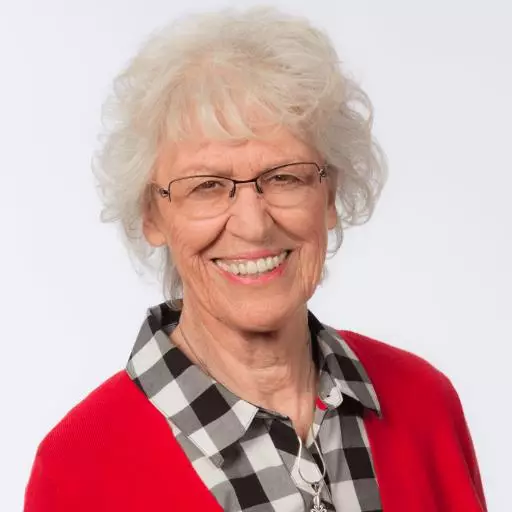
Jill Briscoe
Sin in the Camp


Have you ever noticed how kids try to hide things they've done wrong—a broken family heirloom, a bad report card, or a dent in the car? As much as he or she tries to hide the mistake, most often the parents find out. The same is true of our sin. As much as we try to bury our sin, God always knows about it. But how do we confront it?
In this message by Jill, she teaches us what to do with sin so that we can make God the true ruler of our lives.
Jill Briscoe: If you'd like to turn in your Bibles to the book of Joshua. Now then, being very morbid by nature, some of us are not morbid by nature, but I am. That's why I love writing books on Job and Jeremiah and Lamentations and things like that. I'm naturally drawn to parts of the Scriptures that are negative.
I'm married to a positive. I don't know if you're married to a positive or you're the positive married to the negative, but usually opposites attract. And then they irritate after that. But what attracts you in the first place is usually what you don't have in yourself. And then you get married and you start trying to make them like you, which is a stupid thing to do because the idea is complementarity of that other person.
But I am the negative one and so I love going to graveyards. Fascinating places. You really don't understand that here, but if you were English you would because the English graveyard is a beautiful place to go to. There is such history there and there are such fascinating things written on all the little tombstones. It's a great place to go.
I remember somebody telling me what the hypochondriac's epitaph was. Before I tell you this joke, I have to explain something because last time I told it, there was no response and I realized they didn't know what a hypochondriac was or what an epitaph was. A hypochondriac is somebody that always thinks there's something wrong with them all their lives when there isn't. An epitaph is what somebody says about you when you're gone or puts on your gravestone. That's what's so fascinating visiting English graveyards because there's some fascinating stuff in there. Do you know what the hypochondriac's epitaph was? "I told you I was ill."
That was on a gravestone, so you can see why it's interesting. In the history of England, the Anglicans and the Methodists split. The Methodists came out of the Anglican Church and Wesley was an Anglican. He never was a Methodist. They were called Methodists because of their method, the new method that he brought into or tried to bring into the Anglican Church of renewal and revival and simplicity and contemporary singing. He liked to preach where the people were, not where they weren't, so he would go out to the highways and byways.
There was a lot of enthusiasm in their singing and in their meetings and the Anglicans thought this was very disrespectful to God. So they connected enthusiasm with the Methodists and really preached against it in that Puritan era of the Anglican history. In one of the Anglican graveyards I happened to be in, I read this: "Here lies Joseph Riley, the preacher of this church, who served the good Lord for 48 years without enthusiasm."
I wondered if that could be put across other people's gravestones in the ministry across the world. I said to Stuart, "You know what I'm putting on your gravestone, don't you?" And he said, "What?" I said, "Here lies Stuart Briscoe who never anticipated any major difficulty." All his life, some huge major difficulty looms and he says, "Oh, I never anticipate any major difficulty." So that's going on his tombstone. And he said, "What makes you think you're going before you?" I don't anticipate any major difficulty. Epitaphs.
So you have the name and then in a sense you have the nature of the person that lived. If we could have had an epitaph for the man I want to talk about, whose name was Achan, it would have been very easy to find it because the Bible gives it. His name was the troubler of Israel. Actually, the word means disaster. This man was a disaster waiting to happen and he happened.
So we're going to read his story and find out a little bit of what went wrong and what happened. And then the twist at the end of the story, which is such a wonderful thing as out of this disaster comes hope and life. Let's call it what it is: disaster. Out of it comes hope and life. But let's read the story and let me just remind you that Jericho has fallen. They've had this incredible battle, they've marched round and round and shouted and blown the trumpets and all the walls have fallen down and they've taken the place.
However, when the man with the sword, the angel of the Lord, gave Joshua instructions, among those instructions was this, verse 18 of chapter 6: "Keep away from the devoted things so that you will not bring about your own destruction by taking any of them. Otherwise you will make the camp of Israel liable to destruction and bring disaster on it." That was all part of it. Before the angel of the Lord had finished giving him instructions.
This is how you're to do it and this is the order of the army and this is what you've got to do and take the ark, and do not touch. It is devoted to the Lord. Now this little phrase "devoted to the Lord" means irrevocably given over to the Lord. Sometimes the Lord would say in that campaign through Canaan, "You may put the silver and the gold in the Lord's treasury. You may take the animals to yourself." And other times he would say, "Nothing left." No animals, no people, no silver, no gold, no treasures, even for the Lord's treasury.
As I did a hop through Scripture to figure it out, every time it's different. There are instructions here to do this, there are instructions there to do that. And what he says you can do one place he doesn't say you can do the next. So it's interesting to me that when Jericho, the first big battle in Canaan, when that was taken, his instructions were nothing. You don't touch anything at all. Otherwise you will make the camp of Israel liable to destruction and bring disaster on it.
So, verse 26 of that chapter: "At that time Joshua pronounced the solemn oath: 'Cursed before the Lord is the man who undertakes to rebuild this city Jericho. At the cost of his firstborn son will he lay its foundations; at the cost of his youngest son will he set up the gates.'" In Canaanite behavior, when they built a new city, the king of the city would sacrifice his eldest son at the gate as the gates were set up. And often they would sacrifice the youngest son at the dedication of the city.
This was one of the practices that was abominable to God in their culture. When Jericho was rebuilt, that's exactly what happened. If you have a reference Bible, it'll probably lead you to the reference of the king that rebuilt Jericho and sacrificed his eldest son. So in a sense it was a prophetic statement of Joshua that this would happen. So the Lord was with Joshua and his fame spread throughout the land. But, the Israelites acted unfaithfully in regard to the devoted things.
Achan son of Karmi, the son of Zimri, the son of Zerah of the tribe of Judah, which is a pretty good heritage if you trace it back. He came from godly stock and Judah at that, the tribe of Judah out of which David would come, out of which Christ would come. So his spiritual credentials were pretty good. The Lord's anger burned against Israel because the son of Zerah of the tribe of Judah took some of them.
Now Joshua sent men from Jericho to Ai, which was the next place to go after Jericho. This was near Beth Aven to the east of Bethel and told them, "Go up and spy out the region." So the men went up, spied out Ai, they came back and said to Joshua, "Oh, we don't need to take everybody with us. Let's just take 3,000 men. This is a city that's dead meat." In other words, this is easy. So verse 4, 3,000 men went up, but they were routed by the men of Ai, who killed about 36 of them.
They chased the Israelites from the city gate as far as the stone quarries and struck them down on the slopes. At this the hearts of the people melted, and became like water. Then Joshua tore his clothes, fell face down to the ground before the ark, remaining there till evening, and the elders of Israel did the same. They sprinkled dust on their heads and Joshua said, "Lord, Sovereign Lord, why did you ever bring this people across the Jordan to deliver us into the hands of the Amorites to destroy us?
"If only we had been content to stay on the other side of the Jordan. Oh Lord, what can I say now that Israel has been routed by its enemies? Canaanites and all the other people will hear about this and they will surround us and wipe out our name from the earth. What then will you do for your own great name?" And the Lord said to Joshua, "Stand up! What are you doing down on your face? They have violated my covenant which I commanded them.
"They have taken some of the devoted things. They have stolen, they have lied, they have put them with their own possessions. And this is why the Israelites cannot stand against their enemies. They turn their backs, they run because they've been made liable to destruction. I will not be with you anymore unless you destroy whatever among you is devoted to destruction. Go, consecrate the people, tell them consecrate yourselves in preparation for tomorrow."
"For this is what the Lord of God of Israel says: 'That which is devoted among you, O Israel, you cannot stand against your enemies until you remove it.' So in the morning present yourself tribe by tribe." And they presented themselves before Joshua and the elders and tribe by tribe was taken. And as each tribe was taken, the Holy Spirit said to Joshua, "Not this tribe, not this tribe, not this tribe." All through the day.
Early the next morning, verse 16, Joshua had Israel come forward by tribes. Judah was taken. And the clans of Judah came forward and he started to take the Zerahites. He had the clan of the Zerahites come forward by families, and Zimri was taken. And then he had his family come forward and Achan son of Karmi, the son of Zimri, the son of Zerah of the tribe of Judah was taken. And apparently the Holy Spirit said to Joshua, "This is the man."
And he said, "My son, give glory to the Lord, the God of Israel and give him the praise. Tell me what have you done? Don't hide it from me." And Achan said, "It's true. I've sinned against the Lord the God of Israel. This is what I've done. When I saw in the plunder a beautiful robe from Babylonia, 200 shekels of silver and a wedge of gold weighing 50 shekels, I coveted them and I took them. And they're hidden in the ground inside my tent with the silver underneath."
Joshua sends messengers, they run, they find the things, they take them, they bring them to Joshua and Achan and they take all this and his cattle and his donkeys and his sheep and his tent and all that he had to the Valley of Achor, which was actually named after the judgment and the punishment of this family. And Joshua said, "Why have you brought this disaster on us? The Lord will bring disaster on you." And all Israel stoned him and after they'd stoned the rest they burned them and over Achan they heaped up a large pile of rocks, which remains to this day.
The Lord turned from his fierce anger and the place has been called the Valley of Achor, the Vale of Tears, ever since. Then in chapter 8, the Lord says now, and they go up against Ai and they overcome it. Now I know that there are a lot of questions in our minds about this whole thing. There should be. If we've never wrestled with how could God tell his people to destroy women and children and here a family of their own, you need to wrestle with it. But for this study, I want to take a picture that we have here and apply it.
Now Ai was a little tiny ruined city. No walls, no fortifications, nothing. That's why when the spies went up they said we don't need to take the whole army, just let 3,000 people go and it's ours. It had just had a king actually, it just got a king. But it had not had a king, so it hadn't had leadership. It was in ruins, which was not a good idea in Canaan. You needed defenses, you needed moats, you needed all sorts of things to survive each other in the land of Canaan in those days.
But you see they were self-confident. They had just won the battle of Jericho. They didn't ask the Lord. Joshua made his own decision and in his own self-effort he went up against a ruin and was overcome. A little town. Ai means little tiny town. Not only that, it was a ruin. One thing that happens after we have had a big battle in our lives, after we have won a victory, is that we go down in front of Ai. You've won the big thing and then you get put flat on your face by the little thing.
I can think of battles that I was facing in mission work, big things, and I was doing quite well with the bears and the lions to tell you the truth. But it was the little things like mice that I wasn't doing well with. I'd be out in the streets in very dangerous situations and it was wonderful. I just loved it. It was difficult, it was troublesome and there were big, big Jerichos to face. But I would come home very late or early in the morning into my little tiny house and my husband would be the other side of the world and I would hear the mousetrap go as I walked in, boom.
All these little field mice would come into our house and I'd have to catch them and I was defeated by the mouse. Incredible. Little Ai. So I was doing very well with the big things, with the loneliness and with the big giants in my life and the Jerichos of my life, but then I was defeated by these mice because I couldn't take them out of the trap. So I would throw them over the fence. Well, Stuart was away a long time, about three months. When he would come back, he would ask me for the books.
Now he was a bank inspector when we first got married and he asked me for the books. I thought he meant start a library. I said, "What do you mean the books?" He said, "Well, I want you to write down everything you've spent in a book." I said, "You're kidding." So I tried to do it. I never, ever did it right. He would do it all day in the bank, chasing people that cooked the books as we said, and then he'd come home and he'd get mine and it would take him longer to figure mine out than it had everybody else's because I always made it balance. And he could never figure out how because it certainly shouldn't have done it.
Instead of balance, I'd put "left to spend." So then he'd sigh and say, "Well, all right, where is it?" And I'd say, "I've spent it." So you can see we're very different. But here were these books and I'd give them to Stuart and we were living below poverty level, 1,000 pounds a year, which is about 2,000 dollars a year, three kids and all the rest. So it was very important what I spent my money on. And he'd say, "50 mousetraps?" I said, "Yes, I can't take the mice out of the trap, so I just buy more and throw them over the fence."
He'd say, "Where are they?" Over the fence. So he'd have to get over the fence and undo them all and take out all the things. This was not good. But I was defeated by a mouse. And the devil really doesn't matter to him whether you're defeated by a mouse, by a just-a-little-nothing, or a huge great thing in your life, a Jericho. He just wants you defeated. He just wants a habit in your life that you can't get hold of. And that can really bring you down.
Now there are many pictures and types in the book of Joshua and I would like to use the picture of Joshua as the spiritual side of us and Achan as the worldly, fleshly side of us. Joshua as the spiritual, Achan as the fleshly side of us. What do I mean by that? Well, the word the Scriptures use in the New Testament to talk about the natural part of us that we're born with—we're not born with the spiritual part of us, we're born natural men and women—is the flesh, or self, or the old man.
If you ever doubt your children are born natural, come and talk to me. You'll be the first one I've ever met. I mean did you ever teach your child to answer back? Who crept into your house and told them to be naughty? They just know how to do that all on their own. My mother used to get so upset with me when I said that my children were born in sin. Little sinful things. Cute, gorgeous, sinful things. She said, "How can you say that? They're just perfect. I can't imagine how you can say that."
But when you get to know them. Natural person, you're born a natural person. That's what a natural person does, he lives after natural things, after natural desires. Spiritual people, what do they do? They live after the spirit. How does that happen? You receive the spirit of God. You're born from above. You're born once of the flesh, John 1 says, then you're born of the spirit. And you receive God's spirit. You partake of the divine nature. Christ by his spirit comes into your heart and you become a spiritual person who thinks about spiritual things.
The Bible talks about a third sort of person and they call them a carnal person, a fleshly person, a worldly person. What are they? They were a natural person, they became a spiritual person, but they're living like a natural person. That's a carnal person. You're not living like Joshua, you're living like Achan. So all of us have a disaster waiting to happen inside us, your worst self, if you like, without Christ.
What did Achan do? First of all, he violated the ban. Achan is never content with the contents of life that he has. The flesh is never content with what Christ has seen fit to provide us. I coveted, I saw, I wanted. To see it is to want it. To want it is to have to have it. To have to have it, you do anything. You violate the ban. God bans certain things. What does he ban? Well, there are things that are off limits and there is a list of them, actually, in Exodus, of course. God's "no-no's," if you like.
What is under the ban? Well, for Achan, a Babylonian garment, clothes were under the ban. A wedge of gold and silver were under the ban. Does that mean that money is forbidden, is under God's ban, that clothes are under God's ban? No. For Achan they were under the ban. It just depends. It means that sin lies in disregarding our relationship with God and what he's telling us at that particular moment is under the ban.
There are obvious things that are always under the ban. Idolizing another human being is under the ban instead of worshipping God. Bad language, blasphemy, swearing. What's banned? Making the Sabbath your day instead of his. Treating your parents badly. What's banned? Violence that's lethal, that ends in murder. There's lots of things that are under the ban. But there's also what God has not given you permission at that particular time in that particular place. And that can change. One battle it's under the ban, the next time it isn't.
What do you say to me, what's under the ban in this situation, God? He knew what was under the ban and you will know very well what's under the ban. I think of Jesus, he was hungry. Turn these stones into bread. It was under the ban. At that particular time in that particular place his father had said no. He had the power, but he didn't have the permission. He had the power to satisfy his legitimate need, but he didn't have the permission. Another time he fed 5,000 people and I'm sure he fed himself and his disciples because he had the permission.
It's a question as he says of living by every word that proceeds out of the mouth of God, of saying to the man with the sword, the Lord, "Can I do this? Can I take this? Is this for me? Is this not for me?" I think of Amy Carmichael, single lady missionary out in India. Of course she wanted to be married like any normal red-blooded young woman would. She had an opportunity later in her missionary career to marry somebody else that was heading up another mission, but he was in Africa, she was in India, and he felt very called to Africa, she felt very called to India.
He said we love each other, there was nothing wrong with it, but it was under the ban. In her book she says it wasn't that it was right and it wasn't that it was wrong. God said to her, "It's not that it's right or wrong. I have something different for you. Not this time, not this man, not this place." And so it can be something good, it can be something bad. In this instance it was something that God had said no to.
So he took it, he saw it, he had to have it. The greed need took over because Achan has a greed need. Never content with such things as God has given. Whatever you have, yours wants more. Achan always wants more than he's got and he thinks if I had more, then I'd be happy. You can never satisfy the flesh, he has a stomach that is always hungry. And so he takes the stuff and he buries the evidence. He violated the ban and he buries the evidence. That's what the flesh does.
He couldn't enjoy it. He buried it in his tent. He probably had to wait till dark to dig it up and look at it in the light of a candle. And that's what happens in this instance. Blatant sin, you can't enjoy it. You bury it in a deep hole in your soul. And then you begin to lie. This relates so closely to me with Ananias and Sapphira in the New Testament. Remember the story, how they lied to the Holy Spirit and they said they had given a gift to the church that they hadn't given.
Peter under the inspiration of the Spirit like Joshua under the inspiration of the Spirit said, "What got into you? How could you connive together to lie to the Holy Ghost?" They lied and sin, the consequences are hiding. You're always hiding. Think of Genesis. They run away and hid behind a tree. They took the fruit. Was the fruit bad? No, it was under the ban. Nothing wrong with the fruit. Their disobedience and their relationship to God, that's what was wrong.
So they took the fruit and then they run and hid. And God came and they heard the voice of the Lord God and they were afraid to come out because there is always hiding connected with giving in to the flesh and doing what God says you shouldn't do. So he took something, he violated the ban, he buried the evidence, and he began a great cover-up. That's what happens. The flesh always tries to cover up. Bury it, push it down, repress it.
I think of the Ananias and Sapphira thing. Peter said, "You've lied to the Holy Ghost." And here was Achan, fighting the battles of the Lord. On the outside he looked a great soldier. Doing it all like everybody else was doing it. But God saw and you cannot cover it up. You can try to bury disobedience, dig a hole in your soul and cover up the consequences because you don't want anyone to know. But God says it's in his tent. I'll show you where it is. You cannot hide it from God.
Can you imagine when they got all Israel together and they started to take the clans and the tribes? Can you imagine what he felt like? And incidentally the whole of his family, they had buried it, they had taken it, they were all in it together. Fear of being found out and he infected the camp. Sin always has its social consequences. He affected his family, he affected the camp. You cannot live a worldly, natural, carnal life and not affect the camp, the church, the fellowship. The ripples go on and on.
So what happened? Joshua was praying about it and God says quit praying. It's not a bit of good. "If I regard iniquity in my heart, the Lord will not hear me." And the word "regard" means if I know there is something that has not been dealt with, I have not brought to the light of God, I have not allowed him to cleanse me from and deal with in my life, then he will not hear me. So you can quit praying, quit coming to Bible study, quit serving God. You just don't go on with the motions because nothing's going to work.
Joshua had to come back to the man with the sword and allow the Lordship of Christ to take over to do what God told him about the situation. Now, that's where victory begins to come. The question of who is sovereign, who are you going to obey? Are you going to obey God or the part of you that wants whatever it is more than you want what God wants you to want? The Lordship of Christ means who is sovereign. Is he just resident or is he president in your life? Tell me, who's running the show?
I'm English and we have a Queen. I remember when she was in 23, or 24, and she was abroad with Prince Philip. She was met by a royal messenger to tell her that her father, a very beloved king, who had taken over from his brother who had abdicated the throne for the love of a divorced woman, Mrs. Simpson. This king who never wanted to be king, he's called the Reluctant King, but made a good king, came to the throne and Elizabeth of course was his daughter.
He died and she had to come back from that African trip. I remember watching the coronation with the whole of the world or certainly the whole of England as Queen Elizabeth was crowned. And it interested me that everybody, everybody came and knelt in front of her as their sovereign and said something like, "My Lord or my liege and my sovereign," and they bowed in front of her and they acknowledged that she was their sovereign. But from that day to this, she has never issued an order, never signed a decree. She is a figurehead.
Who does that? The Prime Minister. He does that. I think that's a pretty good picture of a lot of Christians' lives. Jesus is the figurehead. "My Lord and my liege." But it's the Prime Minister. It's the "I," it's the "me" that signs the decrees and orders my life and makes the decisions and gives the orders. The Lordship of Christ means that he's the president, not the resident. So the Lordship of Christ has to be put into effect in your life. Is he Lord of your life?
The work of the Spirit has to be cooperated with. The Spirit of God wants to convict you of the sin or the worldliness or the fleshly, whatever it is, and convert you, turn you around from going the direction you're going into victory, into the promised land. Now Joshua got up, faced up, dug it up, gave it up. I don't have time to deliver all that, but that's what he did. First of all you've got Achan. Secondly you've got Achor, the Valley of Tears. Three times this valley is mentioned in Scripture.
The first time it's mentioned is in this disaster that happened in the history of Israel. The second time is in the book of Hosea the prophet. To this day, it says this mound of stones, this gravestone with this epitaph Achan the troubler of Israel, that mound, that monument stood in that valley. Actually, all Israel was told to tell the story to their children as an example of the disaster that one man can bring upon the whole of the congregation of Israel.
And in the book of Hosea chapter 2, there is the most marvelous little passage of Scripture. The prophet is told to go to Israel, who is behaving like an unfaithful wife, and tell Israel that God is like a faithful husband. And in verse 14, the hope, the promise is given through the prophet to Israel: "Therefore I'm now going to allure her. I will lead her into the desert and speak tenderly to her." This woman, this Israel who has behaved like a prostitute. "There I will give her back her vineyards. I will make the Valley of Achor a door of hope."
What a marvelous verse. In this Vale of Tears, in this disaster, there is a door of hope. A door of hope. I don't know what disaster we bring upon ourselves from our disobedience, but there is always in the Vale of Tears a door of hope. God does that. The other place that the Valley of Achor is spoken about is in Isaiah chapter 65 verse 10: "Sharon will become a pasture for flocks and the Valley of Achor a resting place for herds for my people who seek me."
This marvelous picture of the Valley of Achor from the disaster that it had been because of the door of hope that God had given, the hope of forgiveness, the hope of restoration, the hope of coming back into a right relationship with him, of making him president instead of resident, of putting all that right, of cooperating with the Spirit, of walking after God's ordinances and after the spirit instead of after our fleshly natural nature. Then there will be a resting place. Then there will be a place for the sheep and a place of the lambs to rest and find pasture.
God promises that that is possible. In the types and pictures of Scripture, I think this is just an absolutely beautiful one. At the last part of this, let me just give you a personal illustration in my own life. This is a long time ago when Stuart and I were living and working among young people in youth work full-time in England, missionaries. The Achan in me coveted something that God had not seen fit to allow me to have at that particular time in that particular place.
It was a good thing. It was my husband's company. But Stuart and his ministry were irrevocably devoted to the Lord's service. It was under the ban. So I buried my resentment and I hid it and my anger from others. I began to plan how I could get what I wanted, namely my husband's company. I know what it's like to be able to go on going out to battle and looking like a soldier when all the time buried deep in my soul is this pain and resentment and bitterness and sin.
You speak the language, you sing the hymns, you counsel people, you can go out in outreach, you can do street work. I know, I did it. Marching out there looking like this soldier. Impeccable. Judah in my background. But I was caught. I was made aware God knew about the wedge of gold and the Babylonian garment that I'd buried in my tent. How does God put his finger on what's wrong in our life when we're trying very hard to hide it from him and everyone else?
He does it through people sometimes. He does it through a book, a tape, somebody's life, a testament. For me, he did it through my senior missionary Major Ian Thomas preaching. I would still be sitting there because I was a missionary and we had 300 kids a week from all over Europe to deal with. I would come and I would sit on the back row. It's funny when you're struggling with something, I usually sit in the front row, but if I'm struggling I sit in the back row.
It's body language. I just do not want to be near the blessing here near the front. I want to be where I don't need to listen and I can be distracted. So here I was sitting on the back row and trying not to listen to his sermon. Have you ever done that? You can do a pretty good job. However, suddenly he caught my attention. He said some of you here, I can't remember what he was talking about, but he was talking about being ineffective and out of touch with God.
He said, "Some of you are absolutely out of touch with God and everybody knows it." And he got me and I thought, "No, nobody knows it. Nobody knows I'm out of touch with God. Nobody knows what's in my tent that I've buried in the hole in my soul." He said, "Everybody knows it because they're not receiving anything from you." I thought, "Right, right." Then the shame, how embarrassing that people must know that there was something wrong because I wasn't being a blessing, I wasn't flowing, I wasn't going anywhere.
My family knew it, my husband certainly knew it. My mission would eventually know it. It was affecting the whole camp. So, I did what Joshua did. I faced up to it, I dug it up, and I gave it up. My Vale of Tears became my Valley of Achor with the door of hope. The hope meaning that God would forgive me, cleanse me, and fill my heart. My life, that valley became a place for flocks to dwell in, for people to be fed because that's what happens when God opens a door of hope in your Vale of Tears.
I love pictures and I worked with pictures and I love types and all that stuff in the Bible and I think this is an absolutely beautiful one. But let me bring it down to where you're at. Do you have a singing heart? Are you happy in the Lord? If not, could it just be that you have allowed Achan to have his way and you've buried something deep down there that you think nobody knows about? It's spoiling your life, your spirituality, your walk with God.
You don't get anything out of this. You're like Joshua flat on your face. It's no good praying. He wasn't getting anywhere. God said you can quit that until you put this right. You can go to prayer and you're saying, "Oh Lord, I pray for Africa and I pray for young moms." And God says, "What about this?" "Yes, yes, and I pray for this and I pray for that." "And what about this?" "Yes, Lord. Amen." And you get up and go out. And he says, "Just quit it. Not hearing that anyway. Not hearing that anyway."
This is so important. I heard about a lighthouse and the guy was there and it was a very dangerous place. This is a true story. A wind came through, like a tornado, and smashed one of the windows, just on one side. He put up some cardboard because he didn't have anything else to put up. So there was one part dark, just one. And would you know it, that particular time before he could get that seen to and the glass put in again, a ship coming up on that side of the lighthouse foundered on the rocks.
Why is it so important to have no part dark in our lives? Because would you know it, that's the time a ship, a little ship or a big ship, will come up on that side of our life and they won't see the light and they'll founder on the rocks. Let's pray together. Dear Lord, thank you for this story. Thank you for the picture it gives us, the perfect picture of this wretched, selfish, greedy us without Christ.
Thank you for the reminder that Joshua, the spirit, the one who is in touch with God, is in there as well if we know you. We have a choice, as Joshua had a choice, to put to death the flesh, put to death the works of the flesh and they're all laid out for us in Scripture, and live after the spirit. As if Achan is dead. Potentially he is, Lord. One day he surely will be gone. But we can live dead to sin and live to thee. It's possible in the power of the Holy Spirit.
Lord, as we grapple with the principles of these things laid out in Romans 7 and all over the Bible, help us to make it practical in our own life. Show us how to get in touch with the power to say yes to God. Show us if the Lord is really Lord in our lives. Show us what we've buried. Help us to dig it up and bring it up and give it up so that you may see it and judge it and put it away from us in order that we might win in the battle of life and the victory that we have ahead of us.
None of us knows what sort of life lies ahead of us. Lord, we need to be very, very thoroughly in touch with you, growing, knowing God so that we can live well in a bad situation. So teach us to live after the spirit. We ask it for Christ's sake. Amen.
Featured Offer

When discouragement sets in, where can you turn for lasting hope?
In their encouraging 5-message audio series, Hope for the Disheartened, Stuart and Jill Briscoe share biblical truth to help you anchor your hope in God and rely on His strength and timing, even when life feels overwhelming.
We’ll send you Hope for the Disheartened on USB or as a digital download as our thanks for your gift today. Your support helps us share the timeless truth of God’s Word with more people searching for true comfort, hope, and encouragement. Thank you!
Past Episodes
- A Lifetime of Wisdom
- A Little Pot of Oil
- A View from the Porch Swing
- Are You Good Soil?
- Art of Leadership
- He Came to Give Us Life
- Heart Hunger
- Here Am I, Send Aaron
- Hidden Treasures
- Hope for the Disheartened
- How Do I Find Joy?
- How to Be Up When You're Down
- Lessons from the Boy Jesus
- Let's Talk
- Life Lessons
- Life that Works
- Living Above the Circumstances
- Living in the Word
- Living Love
- Lost and Found
- Searching
- Seeing Through Suffering
- Shaking Up Your World
- Shelter from the Wind
- Six Things a Mother Can't Do
- Slaying Giants
- Solid Ground
- Spiritual Arts
- Take 5: A Christian Point of View
- The Balancing Act
- The Cutting Edge
- The Fatherhood of God
- The Heart and Soul of Friendship
- The Heartbeat of the Master
- The Holy Spirit
- The Holy Spirit and You
- The Innkeeper's Daughter
- The Names of God
- The New Normal
- The Power to Change
- Triumph in Trouble

Featured Offer
When discouragement sets in, where can you turn for lasting hope?
In their encouraging 5-message audio series, Hope for the Disheartened, Stuart and Jill Briscoe share biblical truth to help you anchor your hope in God and rely on His strength and timing, even when life feels overwhelming.
We’ll send you Hope for the Disheartened on USB or as a digital download as our thanks for your gift today. Your support helps us share the timeless truth of God’s Word with more people searching for true comfort, hope, and encouragement. Thank you!
About Telling the Truth for Women
Telling the Truth exists to make available sound biblical teaching, practically applied, with a view to producing lives that glorify God and draw people to Christ. The whole of our ministry is to encourage, console, strengthen, teach, and train.
About Jill Briscoe
Jill Briscoe was born in Liverpool England in 1935. Educated at Cambridge, she taught school for a number of years before marrying Stuart and raising their three children. In addition to sharing with her husband in ministry with Torchbearers and in pastoring a church in the United States for 30 years, Jill has written more than 40 books, traveled on every continent teaching and encouraging, served on the boards of Christianity Today and World Relief, and founded Just Between Us, a Christian magazine for women. Jill can be heard regularly on the worldwide media ministry called Telling the Truth. She is proud to be called “Nana” by 13 grandchildren.
Contact Telling the Truth for Women with Jill Briscoe
info@tellingthetruth.org
Mailing Address:
Telling the Truth
12660 W North Ave
Brookfield, WI 53005-4633
Phone Number: