
Telling the Truth for Women
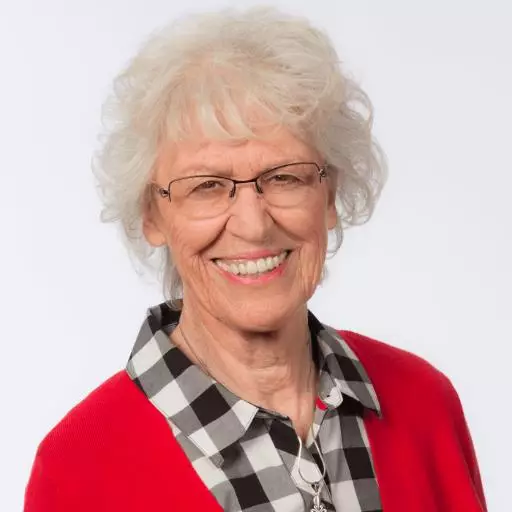
Jill Briscoe
Searching for Serenity


Is true peace possible? How can I feel deep tranquility inside? Jill points us to Jesus as she reads several verses that will help us feel held together when everything around us is chaotic.
Jill Briscoe: Let's pray. Father, help us to refocus on this passage of scripture, what it's saying, what it's saying to us, and what it can say through us to a world that is so confused and running after human wisdom, which is so lacking in every respect. We ask that as we think about what your word says, that it would make such sense to us that we could make it make such sense to other people who are looking for some reason to be and to live and to try and figure out how to behave in this world of ours. We ask it for Christ's sake. Amen.
Somebody asked me, "Is it possible to backslide?" I'd used that word. I don't believe it's possible to backslide out of God. Some people say you can lose your salvation, and others say you can't. But there is a verse in scripture that says your life is hid with Christ in God once you accept him. There's a verse in scripture that says Jesus, speaking, "Anybody that comes to me, I will in no wise cast out." Nobody can snatch you out of my Father's hand. If you think of the Father's hand and think of a penny standing up in it, the penny can fall down, which Solomon fell down, but it can never fall out.
The reason it can't fall out is because this is your life, if you like. Your life is hid with Christ in God, so this is your life. And when you accept Christ, he puts you in God, so your life is hid with Christ in God. And you'll come out of Christ the day Christ comes out of God. So that's how safe I believe you are. However, you can be a natural man who became a spiritual man who's living like a natural man. And that's what I believe happened to Solomon.
When that happens to a Christian, it's very important that you know your way back or you can help people to find their way back because there are a lot of what I would rather call them back-holding Christians instead of backsliding Christians. They're holding back from God, or they're deliberately doing things that they know is not a lifestyle that's pleasing to God. And yet they're miserable because once you have been walking after the spirit, to start to walk after the flesh is very unhappy. It's an unhappy situation. It's like walking along a roadway and you've got one foot up on a curb and one down, and it's a very uncomfortable sort of way to walk.
So we have here a situation that we are living in the grace place, which is grace for people that are back-holding as well as grace for people that have never found Christ at all. And that's where we're living. But it's such a brief time that there's urgency about finding our way back to God. So here we have a man with aged wisdom, lent the spirit's intelligence, opening his mouth, adding his experience, and wanting to save us a whole lot of heartache by not making the same mistakes.
So he says in chapter 12, verse one, "Remember your creator in the days of your youth, before the days come when you can't remember anything anymore." That's a good idea. Remember your creator in the days of your youth. Stuart was down in one of these Sun City places where all these old people go at the age of 55, whenever they retire, to upwards. And there was a darling lady that was hosting him. She was a little old lady and she was still driving. Stuart said he kept saying, "I'd rather walk, thank you very much," than have her drive him. But she was in her 80s, he was staying with her.
One day she was late getting to the meeting and he'd walked. And she got a speeding ticket. And so she managed to talk her way out of it. And Stuart said, "How did you talk your way out of it?" She said, "Well, I just... he was such a nice young policeman, just a young boy." And she said, "I said to him, 'Well, you see, I'm sorry I was speeding, officer, but I had to get there before I forgot where I was going.'" I understand.
So there's a lot of things you forget, like reading the scroll with all God's instructions on and figuring it out that you're not going to do anything but lower the temperature of everyone around you if you are out of touch with God. What happens is you go cold. If you go cold, you lower the temperature of everybody around you spiritually. And you cannot live the Christian life on your own without being responsible for what happens as people watch you, as people take note of your lifestyle. It's going to affect them. And as you read the story of Solomon, just make a list of all the people it affected.
What happened in his life and in his family and in his country in Israel as a result of his messing around, basically. And God had said, "Leave the horses alone. If you're going to multiply horses, you're going to be in trouble because when the battle is fought, people think it's the horses, the horse power, and they won't think it's me. And leave the women alone because they'll steal your heart away. And yes, I'll give you wealth and I'll give you health to live a long life. But don't let the wealth get you, you get the wealth."
Not only was the teacher wise, but he imparted his knowledge, his experience, to the people. Somebody gave me a verse... I keep getting verses from people about old age lately. And people keep saying things to me like, "If you could do things differently," which make me feel very old. But it was a good verse and I carry it with me. It's Psalm 71:18, "Even when I'm old and gray, do not forsake me, oh God, till I declare your power to the next generation."
And as Stuart and I have circled the globe in this last couple of years, and specifically this conference I've just been with the US troops, they are so young. Now I mean this, it's not just the policeman looking younger, they're 18, 19, these kids. And we've celebrated three or four birthdays while we were there, a 20-year-old, a 21-year-old. And they just look and seem so young. And it was such a joy for me to be a mom and to be a grandma to them, apart from the blessing I was able to bring from the scriptures because that's what those young people need at the moment. And certainly for their children, they're far away from their grandparents. And that's hard at this point where they're being mom and dad and going through this situation.
And I thought about my verse again, "Even when I'm old and gray, do not forsake me, oh God, till I declare your power to the next generation." And just the hunger the young people of today have to be able to look to those of us who are older, even in our 40s, as a model and as somebody who is holding their marriage together. Here's Solomon saying, "Okay, now you can trust me. Now I'll give you the benefit of my wisdom. Now I will mentor you, you will be my pupils and I will help you."
But there had to be a coming back. And I want to talk about regrets. I want to talk about regrets. Regret is another name for conviction of sin for the believer. And I just want to talk about this because I find that people live with regrets and you don't need to. Regrets can lead you back to a vibrant faith in God. And they're useful, but you have to know what to do with them. When I think about regrets, I think about Solomon.
I heard about a man in a circus who had a little tiny snake. It was just this big, and he'd play with it and put it in his palm of his hand when it was born. It was unbelievably small. And this guy had a circus, he was British, but his big thing was snakes. Big snakes, huge snakes. And he used to do his thing with these snakes and everybody thought this was wonderful. And he just played with this little snake. And at any minute he could have, when it was tiny, put his heel on it, but he never did that.
And the snake grew and grew and grew and grew, and he taught it to put itself... he'd just stand there in the middle of the circus ring and the snake would wind itself round his body until the man had disappeared and all that you could see was the snake's head. And this was the crowning act. And he used to take it all over the place, all over Europe. And I believe it was in Europe one day that there was a piercing scream as the python crushed him to death. He just played with it and played with it and played with it until it played with him.
And that is a good picture of what sin does. And I'm sure when Solomon married that Egyptian woman, Pharaoh's daughter, the first step, when he... he just thought, "Well, you know, I can play with this." But that's what will happen. He played the fool, just like Saul played the fool. Well, somewhere along the line he returned to God and God gave him a second chance. And that's what God is like.
Regrets have to do with the past. What's the language of regret? "If only," "What if I'd," "Why didn't I," "I should have." Things you could have done differently. And usually they're personal. What I've thought, what I've done or not done. There are sins of commission and there are sins of omission. Okay? And if you think about some of the regrets you have, they'll probably fit into one or two of those. You've either committed things you wished you hadn't committed or you've omitted things you wished you hadn't omitted.
And there is huge regret in your heart. In the dictionary, it says that it defines regret as sorrow or remorse over something that has happened, especially over something one has done or left undone. "If only I should have." But grief and remorse are defined as to bite or gnaw. To bite or gnaw. And have you ever had that sense inside you of this gnawing sense of, "Oh, why did I do that? Why did I say that? Or, oh, why didn't I take that opportunity? It was there right in front of me and I didn't do it."
It also defines it as a deep torturing sense of guilt felt for one's actions, a keen pain or anguish excited by a sense of guilt, self-reproach. All of that goes into the word regret. Now maybe you haven't any regrets, but I bet you know people that have. How are you going to help them? Well, we know that anybody that comes back to God has regrets. And you need to read Psalm 51 sometime because that is Solomon's father's statement of his regrets, of the huge conviction after his sin with Bathsheba that resulted in two deaths, the death of their own child and the death of Uriah the Hittite, that Nathan the prophet said David murdered as if he'd done it with his own hand.
And this was Solomon's father. Now remember, here we have this young king and he has the mighty King David as his model and mentor and father. But you know that Solomon knew all about that because Solomon was the result of David and Bathsheba. Both his mother and father committed adultery. And Solomon wasn't the baby that died, he was the brother of the baby that died. But when Solomon thought of his mom and dad, he knew where he'd come from. And he knew what both his mother and his father had done.
He modeled, I'm afraid, after his father a lot, but he didn't need to. And I know he had regrets. When I think of regrets and people ask me that, is there anything you would have done differently? And what they're saying is, "Do you have any regrets?" Of course I have regrets. Everybody has regrets. I think the idea is to try and get home without too many regrets or regrets that haven't been dealt with at the foot of the cross. I have regrets that my mother only lived an hour and a quarter away from me in England, and I never saw her enough.
All I needed to do was get in the car and go an hour and a half and take the children down to her, but I did it probably every three or four months. I didn't know I was going to leave England, never see them again, that my mother would never come and visit us because she had agoraphobia and couldn't get on a plane. I didn't know that. And I've spent a lot of time saying, "Oh, if only, why didn't I? I should have."
And then I think of living at Capernwray at Bible school and being very busy with ministry with three children, husband as an evangelist on the road all the time. But up the road within walking distance was this wonderful Christian center where they had this Bible school. And all I needed to do was get a babysitter and walk up the road and listen to the lectures. You see, I didn't know I was going to come to America and would start speaking and teaching and writing, I had no idea.
And so I was just busy in the Lord's work, but I wasn't taking in, I was just giving out. Giving out and giving out. And I have paid the price. I've had to do it myself. I've had to play catch-up, I've had to pull all-nighters. And all I needed to do was walk up and take it. Have you ever neglected something right under your nose spiritually? We have regrets, omissions, never mind commissions. Do you ever say, "Oh, I wish I hadn't drunk so much, I wish I hadn't messed with drugs, I wish I hadn't slept around, I wish I hadn't eaten so much, I wish I'd stuck to my diet, I wouldn't have the health problems I do now"?
Hear about the lady that cookies were a real problem. And there was this gorgeous Mother Cookie thing on the way to work and the smell would come through the car windows and she never thought about winding them up. So she would pray on the way to work, "Lord, if there's a parking place, it really means you want me to go and get a cookie. And if there isn't, then I'll just go on to work." And so she was going along and going along and there wasn't a parking place. And she was telling me this, and she said, "So the third time round the block..." That is not victory.
So regrets have to do with what we'd do differently if we could do it over again. And they stop you maximizing the moment, seizing the day. And so they have to be dealt with, they have to be dealt with. Do you ever say, "I wish I'd said no to my kid when she pushed me to say yes to that party"? That's a regret I have. Wish I'd put more rules out there, wish I'd finished school. So regrets have to do with the past. Secondly, regrets have to do with the fall, not autumn, not that fall. The fall as in Adam and Eve.
Ecclesiastes 3:1-11 talks about life under the sun, under heaven. The things that God never intended to be. It's not what God intended. And if you read again tonight before you go to bed, Ecclesiastes 3:1 following, then just make a note of all the things you know God did not intend to be in the perfect world that he made. He did not intend for us to live 120 years, which he determined. Man's lifespan he says in Genesis 6 will be 120 years. He intended us to live forever. Intended us to live forever. He did not intend us to bite and claw each other to death. Did not intend us to reject each other and betray each other, abuse each other. He intended us to love each other, nurture each other, encourage each other. Things are not the way they ought to be, that's for sure.
Do you ever wonder if God has any regrets? Well, he does. They're written about in Genesis 6:1-8. Let's just look at that quickly. Genesis 6:1-8. Things are at a pretty pass. He's looking around the world to see if there's any righteous man and not finding too much. And the Lord says, "My spirit will not contend with man," verse three, "for he is mortal, his days will be 120 years." God saw... the Lord saw, verse five, how great man's wickedness on the earth had become, and that every inclination of the thoughts of his heart was only evil all the time.
And the Lord was grieved that he had made man on the earth. God ever have regrets? Yeah, he has regrets, he had regrets. "I'm sorry I made you." So the Lord said, "I will wipe mankind whom I've created from the face of the earth, for I am grieved that I have made them." I hate that. I hate that, that God was sorry that he'd made us. Sometimes when I'm listening to teenagers who've got a terrible background, they tell me that they've heard their father say, "I wish you'd never been born." And the deep pain of that is something I cannot certainly relate to from a loving family. It is excruciating pain.
"I wish you'd never been born." In fact, one of our missionaries was told that by her father nearly every day of her childhood. "I wish you'd never been born." God wished we'd never been born. And he said so. He was grieved that every inclination of the thoughts of his heart was only evil all the time. And so he decided to wipe them out. But the fall explains all this, but the cross addresses it. And this is the grace place, you see.
And the Holy Spirit makes it real and gives us power to live fearing God and obeying his word. And God dealt with his regrets through grace, and we must do the same. The end of this passage, "But Noah," verse eight, "found grace in the eyes of the Lord." And if you get to heaven before me, find Noah and say thank you because you and I are existing today because of Noah. We would not be here, and nor would the generations and generations and thousands of generations before us because God was about to crunch it all up and start all over again.
And if you'd been God and I'd been God, so would we have done, looking down at what we were doing to his earth and to each other. But Noah found grace and the grace place in the eyes of the Lord. One man. And God looked at him and said, "Well, if there's one man, there'll be one woman and another man and another woman." One man, that's enough. So regrets have to do with the past, but regrets also have to do with the fall, the fall of man.
So how do we deal with regrets? Let the love of God and the grace of God loose on them instead of stuffing them or just suffering them. I have a friend in Germany whose husband was one of the brightest and best Christians in the country. He was brilliant, he used to be the interpreter, the chosen interpreter for any major Christian speaker that came through. He was one of Germany's best. And he was one of our best missionaries. He was a dear friend. Stuart married these two.
And then one terrible day, he was driving 12 students from our Bible school there on the Autobahn where the speeds are lethal. And a motorbike came the opposite way right through the window. And his face... the girl next to him was killed, a young 18-year-old, and the rest of them were pretty banged up and damaged. But our friend lay, they said, without any brainwaves. But his wife pled with the doctors, "Please don't take him off the support." And so they didn't.
And incredibly, miraculously, after months in a coma, he came back to life. Most of him came back to life. But in those early days, I remember this young woman who actually I'd led to Christ when she was very young. She said to me, she was pregnant at the time with her fourth child. She said, "Everything I loved is gone, and everything I disliked has stayed. That's all there is. Everything I loved is gone."
And that wonderful young woman put her head down and went to it. And now of course all her children, two of them are doctors actually, have left and gone. And this incredible man with half a brain preaches in a very simple way. You'd think he was probably eight or nine years of age. Is well known all over the country, is invited to take church services. And all that's left is his faith in Jesus, very simple, child-like. And he talks about loving Jesus and pleasing Jesus and takes one little verse of scripture and there is power there. It's quite incredible to listen to him, hard to look at him, but incredible.
But you know, awful things happen like that. Terrible things happen in the grace place. And I remember that young woman struggling, "If only I hadn't married him. Or if only the things that I loved could have been left." And so there's lots and lots of things that have to do with regrets. What we have to do is let the love of God loose on them and see what God can bring. He can redeem the mess, yes he can. And he's doing it all over the world.
And regrets have to do with saying sorry. Sorry to God and sorry to people. Regrets have to do with our conscience, though you can chloroform it, and much to do with the work of the Holy Spirit. Conviction is having healthy regrets. You can have healthy regrets. So what does a healthy regret look like? A saint on her knees saying sorry because the Holy Spirit has convinced her something is wrong, converted her to his way of thinking about the matter.
And what we have to do is ask ourselves, "Can I still do something about this? What can I do? What can I do about these regrets?" I got the strangest parcel about a couple of months after we got here. This is a long time ago now, we got to America. And it was from one of our au pair girls. We worked at this Bible school and many of the young women from the European area wanted to be au pair girls and learn English. So they would come and help us with the children, help me with the kids and the other families on the base.
And then they'd go to the lectures and go to Bible school in the afternoons and evenings, and so they'd help in the morning. And this particular girl was a wonderful helper. She knew how to house-keep, which the Germans and the Swiss know better than anyone in the world. They take one whole year in school to do housecraft, and they are marvelous at every sort of craft, housecraft there is. And she had been a wonderful help to me. And I stayed in touch with her.
And it was only a couple of months after we got here, I got this parcel and I thought, "Well, that's so, I haven't heard from her for years." And I opened it and read the letter, and to my amazement she said, "You know, it must be 15 years or whatever since I lived with you, Jill, but I have some regrets. I regret that I took these things from your house. I stole them." And they were nothing things, absolutely nothing. A nice mirror with a handle on and you know, but just, just nothing, really. We didn't have anything that was worth stealing, actually.
But she had wrestled with this. And she said, "I have fought this forever. I have said, 'God, forgive me,' and he said, 'Yes, I do, but is there anything else you could do about this? Is there something you could do to put it right?'" It's called restitution. It's called restitution. And so in the end she bundled them up and she sent me a letter and she said, "I'm sorry I took these things from your house." So as you're thinking of your regrets and as you're going to let the love of God loose on them and as you bring them to the cross of Christ where there is healing and help, ask yourself, "Is there still something I could do? Is there a letter I could write?"
Or if there isn't a letter I could write, maybe there's a phone call I could make. Maybe I could have a cup of coffee. Maybe I could just face somebody up and just bite the bullet or pick up the phone. All those things that we hate to do. Is there something I could still do? And when you read the story of Solomon, you'll see a lot of things he could still do, which he did. He made restitution. And conviction should lead to confession, and confession should lead to restitution.
When you think about Psalm 51, let me give you some pointers and maybe you can just scribble these down. Read the Psalm. Ask, "What is David regretting?" You'll find that in verse 1, 3, 6, 14. What is he regretting? What is he feeling? What is he doing? As he begins to confess, how does he do that? What words does he use? What does that tell you? Is he being honest? Is he coming clean? That's all part of real repentance.
And what is God doing? So look at what David is doing, and then look at what God is doing. There's one little thing in there that is very interesting to me. He says, "Cleanse me with hyssop and I shall be clean, wash me and I shall be whiter than snow." Cleanse me with hyssop. Hyssop was a little flower that grew out of the wall. And if you read 1 Kings, you'll find the bit where Solomon became very knowledgeable about plants. And it says he taught people all about the hyssop that came out of the wall.
It's like a little sponge. I saw it in the Holy Land last time I was there. It just... cute little sort of spongy flower that's in all the crevices of the wall and it's called hyssop. And it really is, it feels like a sponge. Now hyssop was used to dip in the blood of the sin sacrifice in the temple and to be put on the priest, on his mouth, on his ears, on his hands, on his feet, and also to cleanse the leper. If a leper came to the priest, which he had to do and the priest saw as the doctor-priest that he was clean and could come back into the camp among the people, he would dip the hyssop in the blood and he would put it on the leper and say, "You're cleansed. Now you can go back and live with your family."
And David felt like a leper. Felt like a leper. Felt awful. And he brought all that muck to God. "Surely, surely," he kept saying, "I have sinned. Surely I've transgressed. Surely I'm in iniquity. Surely I've done all these things. But cleanse me with hyssop and I shall be clean, wash me and I shall be whiter than snow." Isaiah, what does it say in Isaiah? It says, "Come unto me. Let's reason together. Let's talk about this. Agree with me about your sin," says God, "and you will be white, white as wool," God says there. White, white, white.
And when you feel black and mucky and dirty, what must it feel like for God to cleanse you? Well, regrets can drive you to that place of help if you let it, if you let them. And so as we finish this particular session, I want to do another little acrostic with you on REGRET. Just come to the throne room with me and let's, let's pray about this. Come to the grace place, as it were.
Repentance or contrition is sorryness, being sorry, feeling sorry, feeling sad. What you need to do is gather your regrets and bring them to the cross. He's waiting. And you should have come sooner. R is for remember. Remember what brought you here. Go there. What do you regret? Revisit the situation in your mind. E: Express what you feel about the things you regret. It hurts. I hate myself. I hate her, him, them. Tell him.
G: Grieve. Let your tears talk. It's all right. Give yourself permission. You can use language, "Lord, I grieve what could have happened, what should have happened, what happened." R: Receive. We don't know enough about receiving in prayer. Receive forgiveness, healing. You can use words like, "Help me, heal me, mend me, hold me." Put yourself in the receiving mode.
E: Entreat him to give you wisdom, a life skill to deal with the situation. Is there something I should do, say, write, let go? T: Thank him for a new start. If we confess our sins, he's faithful and just to forgive us our sins and to cleanse us from all unrightness. Solomon let his regrets bring him back to God, and we can too. Lord, hear our prayers and let our cry come unto thee. For Jesus' sake. Amen.
Featured Offer

When discouragement sets in, where can you turn for lasting hope?
In their encouraging 5-message audio series, Hope for the Disheartened, Stuart and Jill Briscoe share biblical truth to help you anchor your hope in God and rely on His strength and timing, even when life feels overwhelming.
We’ll send you Hope for the Disheartened on USB or as a digital download as our thanks for your gift today. Your support helps us share the timeless truth of God’s Word with more people searching for true comfort, hope, and encouragement. Thank you!
Past Episodes
- A Lifetime of Wisdom
- A Little Pot of Oil
- A View from the Porch Swing
- Are You Good Soil?
- Art of Leadership
- He Came to Give Us Life
- Heart Hunger
- Here Am I, Send Aaron
- Hidden Treasures
- Hope for the Disheartened
- How Do I Find Joy?
- How to Be Up When You're Down
- Lessons from the Boy Jesus
- Let's Talk
- Life Lessons
- Life that Works
- Living Above the Circumstances
- Living in the Word
- Living Love
- Lost and Found
- Searching
- Seeing Through Suffering
- Shaking Up Your World
- Shelter from the Wind
- Six Things a Mother Can't Do
- Slaying Giants
- Solid Ground
- Spiritual Arts
- Take 5: A Christian Point of View
- The Balancing Act
- The Cutting Edge
- The Fatherhood of God
- The Heart and Soul of Friendship
- The Heartbeat of the Master
- The Holy Spirit
- The Holy Spirit and You
- The Innkeeper's Daughter
- The Names of God
- The New Normal
- The Power to Change
- Triumph in Trouble

Featured Offer
When discouragement sets in, where can you turn for lasting hope?
In their encouraging 5-message audio series, Hope for the Disheartened, Stuart and Jill Briscoe share biblical truth to help you anchor your hope in God and rely on His strength and timing, even when life feels overwhelming.
We’ll send you Hope for the Disheartened on USB or as a digital download as our thanks for your gift today. Your support helps us share the timeless truth of God’s Word with more people searching for true comfort, hope, and encouragement. Thank you!
About Telling the Truth for Women
Telling the Truth exists to make available sound biblical teaching, practically applied, with a view to producing lives that glorify God and draw people to Christ. The whole of our ministry is to encourage, console, strengthen, teach, and train.
About Jill Briscoe
Jill Briscoe was born in Liverpool England in 1935. Educated at Cambridge, she taught school for a number of years before marrying Stuart and raising their three children. In addition to sharing with her husband in ministry with Torchbearers and in pastoring a church in the United States for 30 years, Jill has written more than 40 books, traveled on every continent teaching and encouraging, served on the boards of Christianity Today and World Relief, and founded Just Between Us, a Christian magazine for women. Jill can be heard regularly on the worldwide media ministry called Telling the Truth. She is proud to be called “Nana” by 13 grandchildren.
Contact Telling the Truth for Women with Jill Briscoe
info@tellingthetruth.org
Mailing Address:
Telling the Truth
12660 W North Ave
Brookfield, WI 53005-4633
Phone Number: