
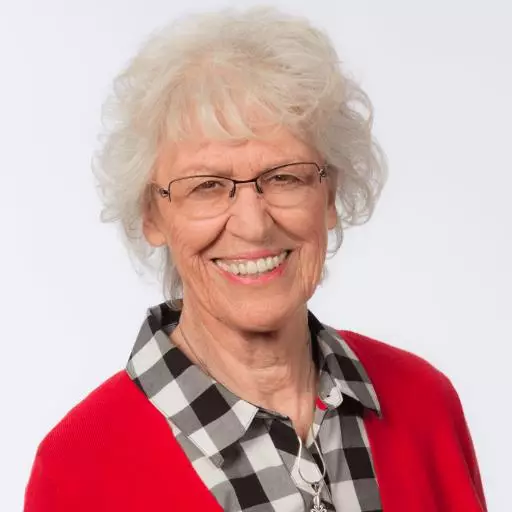
Telling the Truth for Women
Jill Briscoe
Praying for the Family


It’s easy to get discouraged when we’re praying for a family member or a loved one and we just don’t see God answering our prayers. In those times, we might tend to tell God how and when He should answer the prayer instead of having faith that His answer to our prayers might be in a way or at a time that is different than we imagine—but better!
In this message, Jill gives us the example of Elijah and the widow and her son at Zarephath. Sharing her own personal stories, Jill encourages us to keep praying for our loved ones in any circumstances.
Jill Briscoe: I know that the topic we are going to talk about where prayer is concerned today is one that is going to get everybody's attention because we're going to be talking about praying for the family. If there's one thing that's going to touch everybody at a point of need, I think it's this particular message.
I have so much I want to share, and I have no idea what God wants for me to share with you out of all this medley of material that just tumbled out of the life of Elijah at this point. I wasn't really expecting it. Why don't we start with a word of prayer?
Heavenly Father, Holy Spirit, take those things out of the treasury of this Your word that You have been alerting me to concerning this matter of prayer and specifically in praying for the family. Order it, Lord, in my mind. May I freely take of those things that You bring to mind. Block out those things that today will not be necessary to talk about. Lord Jesus, refresh us, encourage us as we come to You now together around Your word. I ask it for His sake. Amen.
This, as I say, is a topic of high interest. Peak viewing hours, if you like. Not one of us here has a family where there is not need of prayer. No question. Some of us have, in a sense, more needs than others perhaps. Some of us perhaps come from families where there is not one member who at this point is headed for heaven.
We are burdened with the desire to see people that are not believers become believers in our homes. Some of us have children that are causing us problems—problems, struggles in our prayer life because we are getting a little panicky here. Perhaps we have heard things from their lips or seen things that alert us to the fact that there is a struggle going on and that God is not winning.
We come with a great heart cry: "How can I pray more effectively for the children in my family that are in need?" Perhaps it's our extended family. Perhaps it's people that are far away. But the neat thing about prayer is you can be right there with them anytime you want. Whether they be at Timbuktu, you can go by simply bending your knees and entering the throne room on their behalf.
Even though families are in conflict and there's personality clashes and there's broken relationships, estrangement, and there's strangers living in the same house bound by law to a loveless marriage, God has something to say to us of great encouragement today in the matter of praying for our family.
We want everybody to love each other. Now, this is one of my Achilles' heels. I have this insatiable insistence that my children love each other. I don't know if you're into this stage yet. You probably have to be a little bit older. But even when your children are little, don't you have this huge heart desire that they love each other? Love each other!
I remember my mom saying to me when we were emigrating to the United States, and I was in my 30s and my sister was in her 30s, "You're going to be a long way away from each other, but the only thing my dying wish will be is that you two stay close, my sister and I, and that you love each other." It mattered too much to my mother. It probably matters too much to me that my David and Judy and Peter love each other.
It causes a lot of tension when they come home because I'm hurrying around insisting they love each other all the time. I have been told by each of them individually, "Lay off, Mother. We love each other. We love each other. It's all right. We love each other." But we will love each other our way, and you will not make us do it. You can't do that.
However, I can pray about it. They cannot stop me doing that. So I back off if they tell me I'm being too insistent on them loving each other and I say, "Very well," and I get on with my little work and I bow my knees to the Lord Jesus Christ and I say, "Let them love each other, Lord," in prayer. You know, that works. That works. It is absolutely incredible what can be achieved in prayer.
I was reading my little children's letters to God with great delight, and I read these things. A little girl called Darla writes to God: "Did you really mean, 'Do unto others as they do unto you'? Because if you did, I'm going to fix my brother." I like that one. "Dear God, maybe Cain and Abel would not kill each other so much if they had their own rooms. I love it. It works with my brother."
Then, "Dear God, I bet it's very hard for you to love all of everybody in the whole world. There are only four people in our family, and I can never do it." There is a child saying, "I need to love them and they need to love me and I need to love my brother and my brother needs to love me. How is it going to be achieved?" It's a great weapon is prayer.
In fact, I was reading in this wonderful old book, "Prevailing Prayer" by DL Moody. He has this thought, and then I picked up a prayer letter and Rick Warren said, "People may resist our advice, spurn our appeals, reject our suggestions, and not accept our help, but they are powerless against our prayers." Good quote. People may resist our advice, spurn our appeals, reject our suggestions, and not accept our help, but they are powerless against our prayers.
Now, Elijah was known to be someone who had the greatest weapon of prayer ready to go and used it all the time. Generation after generation had told the stories to their children about Elijah. Those children coming down from the children of Israel had heard about it sitting in the tent door at the end of the day. "He was a man for his time," said Father to the child. "He was used of God to take on the establishment gone dangerously rotten," said the mother to her daughter.
The priest would talk about Elijah and say, "He turned a nation's heart back to God." I'm sure the children would ask the question, "What was his secret?" The answer was simply his prayers worked. He knew how to pray, and his prayers worked. He prayed and it rained, and he prayed and it stopped. James said, "He prayed" and "he prayed." The effective, fervent, continual prayer of a righteous man avails much. A man of few words and many prayers.
Maybe that's what we ought to work on—being women of fewer words and more prayers. As effective on His knees as on His feet. So he was trained at Tishbe. Who prayed for Elijah? Have you ever wondered that? Who was there in his family? Was it grandmother? Was it grandfather? Was it great-grandparent? Was it aunt? Was it uncle? Was it mother? Was it father? We do not know because we are not told. We only know he lived at Tishbe. We don't know.
But somebody did. If you would raise a Samuel, be thyself a Hannah. Who prayed for Samuel? Hannah. "For this child I prayed." So it's really no surprise that he was known from one end of the country to the other by the end of his life as the prophet, priest, and king, in that sense, before a king had ever been in Israel because a mother prayed.
Who prayed for you? For some of you, that's easy to answer. For some of us, it's hard. When my husband met me and met my family, he said to me one night as we were sitting talking, getting to know each other just before we were engaged, "Who prayed for you?" I said, "No one." He said, "No, somebody prayed for you. You are here, a blade of grass in a sea of concrete, Jill. Somebody prayed for you."
I said, "Well, I know it wasn't my mom probably, and I don't think it was my dad. I'm thinking around my aunts and uncles, and none of them are, as far as I know, believers or go to church. It wasn't my sister." He said, "What about your grandparents?" I said, "No, I never knew my grandparents. I knew one grandparent. I think he was in his youth a Presbyterian. Maybe it was him."
He said, "What do you know about your mother's parents?" I said, "Really nothing. In fact, I'm ashamed I don't know anything about them at all." He said, "Well, maybe it was them." I said, "No, I'm sure it wasn't, Stuart." I asked around and I kept saying, and he kept insisting, "Somebody prayed for you. You don't get a Jill Briscoe out of this. Somebody prayed for you."
As I was preparing this talk, I looked over at my bookshelf in our house where I have old things. I realized I had four Bibles stacked up that my sister had packed up and given to me when my mother died. I walked over and I haven't really attended to them or looked at them before. I picked them up.
One was my first Bible. One was my father's Bible. I sat down and I began to read. It wasn't underlined anywhere. It just had his name in the front. It was the King James. I went back to the shelf and I picked up another one. It was my grandparents' Bible, my mother's parents. I read their names in the front. At the bottom it said, "Given by the fellowship of the something Presbyterian Church in Scotland."
Oh, so my grandparents were Scottish Presbyterians. Maybe they prayed for me. Then I picked up this and I opened it and I never remember seeing it before. I found that it was my mother's brother's Bible. I began to think, "Yes, didn't Uncle Jim—wasn't he an elder in the Presbyterian Church?"
I thought back to the day I went home and told my mother that I was converted. She looked very puzzled, bless her, and tried to understand what I was trying to tell her. I wasn't doing a very good job telling her. She said, "Well, are you going to go to church now?" I said, "Well, yes, I'd like to start and go to church, Mother." She said, "Well, I hope you'll go to ours."
I said, "Mother, I'd love to. Where is it?" She said, "Well, you know, Jill, we are Presbyterians." I said, "Mother, I'm thrilled! I had no idea. I'm so excited." I mean, I'd just been converted. To have my mother tell me she was a Presbyterian was like giving me a gift of gold. I said, "Well, I'll go to our church. Yes, I don't mind." You know, I didn't know which church I should go to or anything.
We got the newspaper out to look to find out where it was. Literally. She said, "Oh, here's one, and maybe this is ours." So you know why my husband said somebody prayed for you. You don't get a conversion like yours out of nothing. It doesn't just happen. When I opened this Bible and I showed it to Stuart—it's literally falling apart—it's underlined all over, and there's a piece of paper in it.
It says this: "Everyone coming to Christ means God is working somewhere in their history. They are prayed for. Hallelujah." Isn't that something? I sat and wept. So maybe it was my mother's brother, Uncle Jim, who I hardly knew, who was a Presbyterian elder, who prayed for his sister's child—me, his niece—and I came to Christ.
Who prayed for you? Who prayed for Elijah? Somebody did at Tishbe. The power of prayer. My grandfather, if it was him indeed, or my Uncle Jim, whoever it was, never knew about my conversion. But you pray anyway. One day when we get to heaven, he'll know as I run to greet him and he runs to greet me and I say, "Thank you, because you prayed for me, I'm here."
The power of prayer. You can choose to be someone like that that gets going in the matter of praying. God is going to use everything at Tishbe. Look back at your past and thank Him for the things you do not know about and you cannot see and you are unaware of. Thank God, even today, maybe you've never done it before, for the people unknown to you who invested time on their knees stepping out of time into eternity in order to bring you from time to eternity. That's prayer.
There are Tishbes in our lives and there are Cheriths in our lives. You know as well as I do that Elijah spent time at Cherith. He discovered and developed the hidden life of prayer. It's a place where all the props are taken out from under us and we're down to God. You can expect if God is going to make you a mighty woman of prayer, you're going to be down to God at some point in your life.
That does not mean necessarily that you'll be out in the street and homeless and destitute. It might mean that you are in the middle of plenty but you will be brought down to God by circumstances and God working in your heart and life somehow and how, I have no idea. Because God is intent—He loves you too much to leave you comfortable. He loves you too much to leave you in a situation where you are not driven by circumstances to God, to find Him all-sufficient.
Elijah ended up in a ravine fed by ravens. Now, what was happening here? God was getting ready for Zarephath, for family life. He was going to be part of a family, not his own, another person's family. So God was preparing him for Zarephath. God wants to develop our hidden life because He is preparing us for family.
At the moment, you are in the family that God has chosen for you to be in. You are married to the man that God wants you to be married to. You are in family. You are in Zarephath. It is not your own family in Tishbe; it is Zarephath. It is a family that God has chosen for you. In the measure that you develop your hidden life, that is the measure of how well you will do in your family.
He was taught a day-by-day, moment-by-moment dependence on the ravens, on the bread. There is a rhythm of refreshment and nourishment that we have to get into in our Christian disciplines so that we can be the people that God wants us to be. We have to learn to ask in His name. We ask. How many times Jesus told His people to ask, to pray? Matthew 6. "If two of you agree on anything you ask, it will be done for you by my Father in heaven."
Now, there are conditions. One of the conditions was "in His name," and that means many things. "You will seek me and find me when"—there's the condition—"you seek for me with all your heart." "I tell you, whatever you ask for in prayer, believing you receive it, you shall have it." There's the condition.
"Confess your sins one to another," says James in 5:16. "Confess your sins one to another and the fervent, expectant prayer of a righteous man then will avail much." There's the condition. "We will receive from Him anything we ask because"—there's the condition—"we obey His commandments and do what pleases Him."
What are those conditions? Contrition, wholeheartedness, faith, obedience, righteousness, holiness. Those are conditions of prayer. Elijah fulfilled those conditions. The "ifs" of prayer that lead to the "thens" are very interesting to think about. "If my people, who are called by my name, will humble themselves and pray and seek my face, then will I hear from heaven and will forgive their sin and heal their land."
Just look at that one verse. "If"—there's the "if." These are the conditions: "If my people who are called by my name" (condition number one); two, "will humble themselves and pray and seek my face"; three, "turn from their wicked ways and live" (holiness). "Then will I hear from heaven, forgive their sin, and heal their land."
Now, it doesn't mean we have to ask all the right way to be heard. Because here in the story that we're going to look at quickly, we have, in 1 Kings 17, a widow—a widow who wasn't a Jew, a widow who didn't know how to say it right, a widow that didn't go to the temple and take her offerings so that she could be cleansed and in the right frame of mind. She was untaught. She didn't know Elijah's God. In fact, she was a Baal worshiper. In fact, she lived in Jezebel's country. In fact, she lived under Jezebel's nose near Tyre, where Jezebel had come from.
She believed, no doubt, in Baal. She believed, no doubt, in Astarte, and she prayed to those gods from a different nation. And yet God heard her prayer. "So how can this be?" you're saying, Jill. "In one way that he will if and then, and yet she was doing it all the wrong way and God heard her prayers, the prayers of her heart." He answers prayer according to the light we've received, I believe.
I mean, you expect more from a literate man who can read the instructions than from an illiterate man who can't read instructions, don't you? God expects more from literate, biblically literate people in the matter of all faith, but certainly in the matter of prayer, than He does from illiterate people that can't read the instructions and have never heard the instructions.
So He judges and hears according to the light He's received. The scriptures are replete with the answers of prayer to people who know very little but, according to the little they know, they exercise faith. In fact, Jesus was constantly bringing attention to people like that—the Syrophoenician woman. "Great is thy faith, O woman!" He was constantly amazed at the faith of people outside of Israel.
In fact, it says in the New Testament, Elijah was not sent to a widow in Israel; he was sent to a woman who didn't live in Israel, who worshiped Baal. God said, "That's the widow. That's the widow. I see her heart." God looks on the heart. Remember when David was out keeping the sheep and Samuel came to anoint a king? All the men walked in front of him, all the sons of Jesse.
He said, "It must be this one. It must be that one. It must be the other." The first one was the one that his heart leaped up. "It must be him! Look at his height!" God said, "No, look at his heart." The world says, "Look at his height." God says, "No, look at his heart." People are writing literary novels, and they're the things at the moment everybody's reading.
If you don't look like a hunk, or if you're a woman, you're not a knockout, you don't get your novel printed. So if you don't look very good visually, look at your height. What you've written isn't relevant because they want that big picture on the back. That's the world. Look at the height; don't look at the heart. God looked at the widow's heart.
Elijah arrived, and let me tell you the story. Out of Cherith, because the brook dried up—a 100-mile trek in the burning heat without water, without food, probably trying to keep in the shadow of the caves and under trees because, remember, the armies of Ahab were looking for him. There wasn't one country, the Bible tells us, where Ahab had not sent troops to find Elijah.
Why? Because he believed Elijah had put a curse on the weather, and he wanted to torture him into reversing it. He wanted to find this prophet. The prophet had appeared in front of him and Jezebel and said, "There is not going to be any rain according to my word. Unless I say so, no rain." Ahab said, "Let's go get him and let's make him say so."
So they were out; they were looking. Maybe he saw some of those soldiers on that 100-mile trek. You can pick out a man in the desert a mile away. So maybe he ran. But he arrived at the gates, and there was a little widow woman picking up sticks to make her last meal. Elijah says, "How about a drink of water?"
She says, "Yeah, I just got a little tiny drink of water because all the brooks have dried up here, just like they've dried up in Israel. But I'm just making my last meal." "Well, would you like to give me a little bit of your last meal?" She didn't say, "Well, no, I really wouldn't." She was scraping the bottom of the barrel and coming up empty herself. She was literally dying of malnutrition and starvation, and so was her child. Her difficulties were absolutely extreme.
But God knew the difficulties are to faith what gymnastics are to boys—a means of strengthening their muscular fiber. So he asked her to share her last meal, and she came through. God knew she would. He trusted her with an incredible task: to keep His prophet hidden and alive right under Jezebel's palace windows in her own hometown. Probably that was the safest place to put him. Surely Jezebel would never think of looking for him there.
This woman had been commanded by God, the Bible says, to feed him. "Go to Zarephath; I have commanded a widow woman to feed you there. It's the only place you're going to be safe: there." She does what he asks her. Elijah must have been amazed that she did this. Never shortchange what the Holy Spirit does before you arrive on the scene. That's something I've learned in the matter of prayer: never shortchange what the Holy Spirit's done before you arrive on the scene.
I'm sure I've shared before how I went home to see my mother when she was dying. I was absolutely staggered. I sat in a chair and watched what the Holy Spirit had done before I arrived on the scene. In fact, someone else led my mother to Christ right in front of my nose three days before she died.
You know what was so absolutely marvelous about all that? I sat and watched 35 years of prayer being answered. As I watched that miracle unfold, I saw prayers I had prayed 30, 40 years ago being answered right there in front of me. Never shortchange what the Holy Spirit's been doing before you get there in answer to your prayers. Every prayer you pray for every member of your family does not fall to the ground. Not one of them. You might not get to see it; God was merciful to me in that I did.
I want to talk briefly about the principles, and I've put them in a poem. I'm going to use the poem quickly as headings, and you might want to jot this down, then you'll have the whole poem at the end. Let me give it you. It comes off Mark 11:23 out of "The Message," Peterson's "The Message."
It's talking about if you want to say to this mountain "move," it'll move. You know, if you've got enough faith in prayer. Jesus said matter-of-factly, "Embrace this God-life, really embrace it. Nothing will be too much for you. This mountain, for instance, just say 'Go jump in the lake.' No shuffling or shilly-shallying. It's as good as done." I love that.
I think back to the prayer life I had when I was first a believer. I was running around telling mountains to jump in the lake left, right, and center. I knew they would and they did. Believing, faithful prayer. Then I asked myself, "Did I get old or something? Did I get middle-aged in my praying? When's the last time I told a mountain to go jump in the lake?"
This is the poem: Ask Him to do it, but don't tell Him how.
Ask Him to answer, but don't tell Him now.
Ask Him to give you the strength for the task,
Then thank Him for giving much more than you ask.
Ask Him to cleanse you whenever you pray;
Be honest with God at the end of the day.
Ask for the power and faith it will take
To say to this mountain, "Go jump in the lake."
Okay, let's put it on this story. Ask Him to do it, but don't tell Him how. Elijah's starving. He's in trouble. He's hunted. He's going to be killed. God says, "Go and I'll feed you by the ravens." Now, God told him that before he ever went to Cherith. I can see Elijah standing there knowing that Obadiah, who served Ahab, was a secret believer and had hidden, squirreled away some prophets in the cave and was feeding them.
If I had been Elijah and God had said, "Now I'm going to hide you and you're going to need to be fed," I think I would have thought, "I'll help God out to answer this prayer. I'll tell him how. Lord, give me this day my daily bread. If you just tell me where they are in the cave, I'll join them." That would have been my immediate reaction.
I find myself doing this all the time. I ask God to do it, and then I tell Him how. Do you do that? "Lord, I need some bread, I need a place to hide. So thank you very much that you're going to show me how to find Obadiah's prophets and thank you very much that I'm going to share their bread and you've got it all laid out." And you tell Him how.
Ask Him to do it, but don't tell Him how. God does not answer your prayers the way you think He should. He answers them the way He thinks He should. He just wants you to ask and leave the "hows" to Him. "Don't tell me how," I hear Him say to me over and over again. "Don't call me anymore; I'll call you," He says.
How could Elijah have ever thought of being kept alive by a widow woman in Sidon? I mean, it was absolutely ridiculous. All sorts of widow women in Israel. You know, God said, "I have commanded a widow woman to feed you." He would have immediately thought, "Well, thank you very much. I know Mrs. Smith, she lives down the road. She'll feed me. She's a widow in Israel." No, don't tell Him how. Don't tell Him how. Ask Him to do it, but don't tell Him how.
I have a nephew, much prayed for, much loved. Over the years, as I've prayed for this wonderful young man who is a doctor—a chief medical officer in the hospital in an African country. A chief medical officer. I've prayed for him, and I've told God how I want these prayers answered. I have envisioned and imagined him coming in contact, seeing he's in Africa, with missionaries. I mean, that's "how," isn't it?
"God, thank you that he is in this situation surrounded by missionaries. He takes a missionary plane and goes out and does clinics and things. This is obviously how you're going to answer my prayers." And God says, "Don't tell me how, Jill. Just ask me." So I quit telling him how a long time ago. Well, how did He?
He came home three years ago with a beautiful, beautiful young girl from that country. They had a baby, they got married, and then they had another baby. I began to send them books for the baby—books that Stuart and I have written. I got a letter from this little girl: "Dear Auntie Jill, these are wonderful books. I'm using them in Sunday school. I'm using them in Sunday school! Do you have any more? And do you have any of those books that I read in Shirley's house when I was there? Because you'd written them, I think, and I picked it up and it said so many wonderful things."
Well, I sent a jumbo jet flying in that direction, a great big container of books for this beautiful young lady. Don't tell him how. Now, never in a million years would I have figured that one out. And we don't need to. That's the excitement of prayer—asking and then sitting back to watch the "hows" expectantly, looking for the rain cloud. Ask Him to do it, but don't tell Him how.
Ask Him to do it, but don't tell Him now. That's the next thing we do. Now! It's got to be now! I think of Zechariah praying for the baby when he was young with Elizabeth. "It's got to be now, Lord. It's obvious you're going to have to give us this baby now while my wife can still have babies." Well, Elizabeth stopped being able to have babies. Time was long gone; her body was long gone.
Zechariah was in the temple praying—you know the story in Luke's gospel—and the angel comes and says, "Hail, Zechariah!" He says, "Hail." "I've come about your prayer." "My prayer?" "Yes, I've come about your prayer." "About Obadiah's rheumatism, Lord? That prayer? About Elizabeth's heart problem, Lord?" "No, about the prayer. About the baby."
You know, the angel just comes in and ignores time. That prayer that Zechariah and Elizabeth had prayed as a young couple was long gone, long forgotten here—but not there. God totally ignores the clock. Just as if it had been today, the angel said, "I've come about the prayer." And of course, Zechariah was totally overwhelmed. Don't tell him now, but believe it will be. If you are asking for God's glory, for God's name, for His sake, it'll be. And it was. Don't tell him now.
You know, Elijah arrived when she was cooking her last meal. The timing was perfect. While he was there, the little boy got sick and sick and sick. Sometime later, the son of the woman who owned the house became ill. He grew worse and worse and worse—slow, lingering death. Finally stopped breathing. Finally stopped breathing.
That word means after a long, long time. This was not a sudden death, as in the case a little later on of Elisha, who had a similar experience with a little boy that went out in the sun and by noon was dead. No, this was a watching, like watching the brook dry up, watching the life dry up.
Elijah, who had become part of this little family in the providence and plan and purposes of God, watched a little boy who had become very precious to him, very special to him, and a boy that he had prayed for, die. Now, I can imagine they had nothing else to do. The widow lady was down on her knees praying to Baal and Astarte, and I can imagine that Elijah was down on his knees by the other side praying for that little boy to Jehovah. And he prayed and he prayed and he prayed, and his prayers didn't get answered.
What do you think he was praying? "Now!" That's what he was praying. "Now!" God said, "No, not now. Don't tell me how and don't tell me now. Later. Later." You know what happened. It was wonderful. He says to the lady, "Give me your son." He takes him from her, carries him to the upper room where he was staying, laid him on the bed, and he cried to the Lord: "Lord my God, have you brought tragedy upon this widow I'm staying with by causing her son to die? How could you do this?"
Then he stretched himself on the boy three times and cried to the Lord, "O Lord my God, let this boy's life return to him!" And the Lord heard Elijah's cry, and the boy's life returned to him and he lived. Elijah picked up the child and carried him down from the room into the house and gave him to his mother and said, "Look, your son's alive." Then the woman said to Elijah, "Now I know that you're a man of God and that the word of the Lord from your mouth is truth." She came to believe. She came to believe.
Well, ask him to give you the strength for the task. It takes strength to say to somebody, "Give me your child. I will take him to my upper room in prayer." It takes strength. It takes strength. Have you done that to anyone lately? Have you said to a friend, "Give me your child. I want to take him to my upper room"?
It took strength for Elijah to carry that child in his arms close to his heart, lay him on his own bed, make contact with a dead body (which he was forbidden to do by law as an Israelite). Do whatever it takes! Give myself in whatever measure in prayer, in believing prayer, that this boy will live.
Ask him to give you the strength for the task. It's hard to keep praying when the child appears dead. I remember when I was praying for a teenager years ago, the Lord gave me that verse of Jairus' daughter: "She is not dead, but sleeping. She is not dead, but sleeping." I said, "O Lord, awake her."
God awoke that particular teenager who appeared very dead indeed. But you know it was work because prayer is work, and prayer that works, works. It took much, much, much—Elijah praying before we saw the life of God transform that child in conversion life. So it takes emotional strength to keep carrying and to keep crying out to God for children.
I've often told you the story of the lady that said to me once, "Give me your child." It was when I've told you my crocodile story. She sent me a new one because I've worn out the old one—this little crocodile. I shared with her in a prayer room how I was concerned for my daughter at the age of 12 as she came up into this frightening world.
She sent me the first crocodile with its mouth tied up with a ribbon because I'd said I feel as though I'm putting her on the Nile among the crocodiles. She said, "Ah, but you put the child in the ark, in Christ." Then, as you know, Moses was never safer than when he was among the crocodiles because he was where God was looking over him in the ark. He was safe.
So she said, "Many crocodiles out there, but prayer will tie the mouth up." She sent me a new crocodile and said, "Maybe the other one's worn out, but I'm still carrying your child to the upper room." That lady that I hardly knew, because I shared my heart and my need, said to me, "Give me your child."
What a wonderful thing it is to say that to somebody that we love and that we're fond of. What a wonderful thing it is to carry your own children to the upper room, kneel down and cry to the Lord. Ask Him to give you much more than you ask, and He will. God gave the widow and Elijah much more than they asked for that child—resurrection life.
They didn't ask for resurrection life at first; they asked for healing. What a blessing it was that the child wasn't healed, for God gave them much more than they asked. What I have been doing lately is making a little list of the "much mores" of the prayers that I've asked. Try and do that. Look around the situation. Yes, God answered prayer, but He answered it much more than we could have ever asked or dreamed of.
And ask Him to cleanse you whenever you pray. Be honest with God at the end of the day. The widow says to him, "Have you come here to remind me of my sin?" Because as the boy was dying, some hidden sin in her past, probably to do with her worship which was all tied up with sexual rites, came to mind. She thought, "Maybe it's my fault. Maybe it's my sin and that's the reason the child is dying. And here's this holy man in my house, and he's come to remind me of my sin and it's because of my sin. It's my fault that my child is dying."
Elijah goes up and he too cries and says, "Lord, is it something to do with the fact that I'm here? Did you bring me here that you would deal with this woman's sin and you're taking her child?" Both of them ask God to deal with that in their lives. "To cleanse us." We cannot pray powerfully unless we ask God to cleanse us.
Then we're ready to say to this mountain, "Go jump in the lake." I mean, this was a dead body. That's a mountain. That's a mountain. That's a mountain. But prayer is the earth-moving equipment. "All my mountains will be valleys," my verse that the Lord gave me. "All my mountains will be leveled. All my mountains will be roads," it says in the New Living. All my mountains. This is a mountain, Lord. Now, the earth-moving equipment is prayer and faith.
I can say, "Lord, make my mountain a road in order to give you access that you can come in on that road into this situation." That takes place in prayer. So I would just encourage you. If you're praying for your family, remember Elijah, remember the widow of Zarephath. Don't shortchange what the Holy Spirit has been doing in answer to your prayers already, even if you see absolutely nothing.
Remember you're going to be just the right place at just the right time for somebody. You are going to be the answer to somebody's prayer as well as praying for your own family. Be aware of that. Be aware of the needs of your friends and your family and say to people, "Give me your child." Carry that child to the upper room—the hidden life in here—and bring him to God. Ask for life in whatever they need.
God will hear. He won't do it how you think He should, and He won't do it now. He'll do it in His good time, which is the best time. But He will do it. When He does it, He'll give you much more than you ask. You'll see. Pray with me.
Heavenly Father, thank You for Your word. Thank You for this story—this wonderful story hidden in the life of Elijah. Lord, I know that the hidden life prepares us for the home life. Cherith for Zarephath. I know that Tishbe, Cherith, and Zarephath prepare us for Carmel—for taking on the enemy, for bringing God back, for serving You as Elijah did on that mountain.
Help us to learn our lessons well. Our Tishbe lessons, our Cherith lessons, our Zarephath lessons. Lord, whatever child it is who needs believing prayer on their behalf, teach us how to pray with effect, powerfully. For You promised that the prayer of a righteous man accomplishes much, works wonders, is effective.
Help us do the work of prayer. For prayer that works, works. We believe it. Help us not to worry too much about fulfilling all the jots and tittles of the conditions. Help us certainly to cleanse our hearts in this moment of silence.
Take me as I am, Lord, and make me all Your own. Keep me all this day, Lord, underneath Your sway, Lord. Make my heart Your palace and Your royal throne. Cleanse us to do the work of prayer. We ask it for Christ's sake. Amen.
Featured Offer

When discouragement sets in, where can you turn for lasting hope?
In their encouraging 5-message audio series, Hope for the Disheartened, Stuart and Jill Briscoe share biblical truth to help you anchor your hope in God and rely on His strength and timing, even when life feels overwhelming.
We’ll send you Hope for the Disheartened on USB or as a digital download as our thanks for your gift today. Your support helps us share the timeless truth of God’s Word with more people searching for true comfort, hope, and encouragement. Thank you!
Past Episodes
- A Lifetime of Wisdom
- A Little Pot of Oil
- A View from the Porch Swing
- Are You Good Soil?
- Art of Leadership
- He Came to Give Us Life
- Heart Hunger
- Here Am I, Send Aaron
- Hidden Treasures
- Hope for the Disheartened
- How Do I Find Joy?
- How to Be Up When You're Down
- Lessons from the Boy Jesus
- Let's Talk
- Life Lessons
- Life that Works
- Living Above the Circumstances
- Living in the Word
- Living Love
- Lost and Found
- Searching
- Seeing Through Suffering
- Shaking Up Your World
- Shelter from the Wind
- Six Things a Mother Can't Do
- Slaying Giants
- Solid Ground
- Spiritual Arts
- Take 5: A Christian Point of View
- The Balancing Act
- The Cutting Edge
- The Fatherhood of God
- The Heart and Soul of Friendship
- The Heartbeat of the Master
- The Holy Spirit
- The Holy Spirit and You
- The Innkeeper's Daughter
- The Names of God
- The New Normal
- The Power to Change
- Triumph in Trouble

Featured Offer
When discouragement sets in, where can you turn for lasting hope?
In their encouraging 5-message audio series, Hope for the Disheartened, Stuart and Jill Briscoe share biblical truth to help you anchor your hope in God and rely on His strength and timing, even when life feels overwhelming.
We’ll send you Hope for the Disheartened on USB or as a digital download as our thanks for your gift today. Your support helps us share the timeless truth of God’s Word with more people searching for true comfort, hope, and encouragement. Thank you!
About Telling the Truth for Women
Telling the Truth exists to make available sound biblical teaching, practically applied, with a view to producing lives that glorify God and draw people to Christ. The whole of our ministry is to encourage, console, strengthen, teach, and train.
About Jill Briscoe
Jill Briscoe was born in Liverpool England in 1935. Educated at Cambridge, she taught school for a number of years before marrying Stuart and raising their three children. In addition to sharing with her husband in ministry with Torchbearers and in pastoring a church in the United States for 30 years, Jill has written more than 40 books, traveled on every continent teaching and encouraging, served on the boards of Christianity Today and World Relief, and founded Just Between Us, a Christian magazine for women. Jill can be heard regularly on the worldwide media ministry called Telling the Truth. She is proud to be called “Nana” by 13 grandchildren.
Contact Telling the Truth for Women with Jill Briscoe
info@tellingthetruth.org
Mailing Address:
Telling the Truth
12660 W North Ave
Brookfield, WI 53005-4633
Phone Number: