
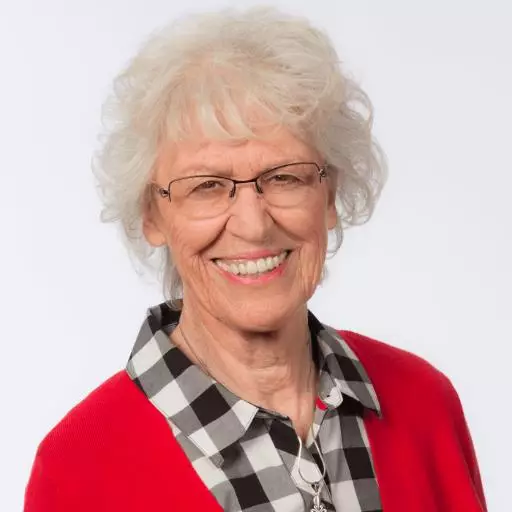
Telling the Truth for Women
Jill Briscoe
Naomi - Bitterness


Life can be rough. Bad things happen. It's easy to take those bad things and walk down the road of bitterness where our relationships with friends and family suffer. In this message, Jill tells us how Naomi's experiences made her an empty, bitter woman, but she got back on track with the help of her daughter-in-law Ruth and became a full, better woman.
Jill Briscoe: Now then, I have thoroughly enjoyed being with you and talking about running on empty. As I was coming today along the little road, there is a bar. Outside there is a great big banner. It's called the Filling Station. In fact, I haven't noticed it before. Maybe it was because my mind was full of this series on running on empty.
But I looked at it, and the "i" of filling is a bottle. It's sort of tipped on one side. Actually, it's very clever. But it's just the Filling Station, and then the "i" of the filling is this bottle. Of course, the whole idea is to come in and get filled up. I thought about that as I drove along here. I thought about all the things that people try to fill their lives up with, specifically drink, of course.
How sad it is because even though they can physically fill their life up with liquor, their soul gets emptier and emptier. So many times, the liquor sadly destroys not only their physical health, but their family. It's very important what we fill our lives up with.
Now, there are people in the Bible that tried to fill their lives up and found that life itself emptied them. We're going to look at one of those. We thought of Hannah together, who had a problem with bitterness. Today, we're going to look at Naomi, who had a problem with brokenness. She was a broken woman, and we're going to find out why.
Somebody said to me in the lobby just before I came in, "I'm so glad it's Naomi today because my mother-in-law is coming to stay. Hurry up, talk, talk." Because, of course, this is the book. If you're having a problem with your mother-in-law, or you're a mother-in-law and you're having a problem with your daughter-in-law, hardly the case probably with this group, get into the book of Ruth.
That's where you need to live for a little while. That's what I did when my mother-in-law was coming to stay for three months. It was a huge help. In fact, I lived there for the 18 months after that because Mom didn't go home. I might tell you that story.
Now then, what was the matter with Naomi? She basically gave me the title of this whole series because, in Chapter 1, Verse 20, she says this to the people that are welcoming her home again after she's been away for a little while: "Don't call me Naomi, call me Mara, which means bitterness, because the Almighty has made my life very bitter. I went away full, but the Lord has brought me back empty."
"I went away full, but the Lord has brought me back empty." She was, in a real sense, running on empty. So, we're going to find out the reason for this. Let's read a little bit from the first chapter.
Chapter 1, Verse 1: "In the days when the judges ruled, there was a famine in the land. A man from Bethlehem in Judah, together with his wife and two sons, went to live for a while in the country of Moab. The man's name was Elimelech, and his wife's name was Naomi. The names of his two sons were Mahlon and Kilion. They were Ephrathites from Bethlehem, Judah, and they went to Moab and lived there. Now Elimelech, Naomi's husband, died, and she was left with her two sons. They married Moabite women, one named Orpah and the other Ruth. After they had lived there about ten years, both the boys died. Naomi was left without her two sons and without her husband. When she heard in Moab that the Lord had come to the aid of His people by providing food for them, Naomi and her daughters-in-law prepared to return home from there. With her two daughters-in-law, she left the place where she'd been living and set out on the road that would take them back to the land of Judah."
Now, this family had had a good start. Elimelech's name means "My God is King." The family lived in Bethlehem, which was the place of blessing. Its name means "The house of bread." It was the town that God was going to bless, of course, with His own presence. He was going to visit Bethlehem. He was going to be incarnated there. It was the little town of Bethlehem that was going to be such a blessing to the whole world, to you and to me, and to mankind in general, as the Savior of the world would be born there.
Elimelech's name gives you a clue to his character, as those Hebrew names always do. "My God is King." He married Naomi, whose name means "pleasant." It means, really, she was a barrel of laughs. She was just a great woman. She was a happy woman. She was a pleasant woman. And so, "My God is King" married "pleasant."
If you want to spiritualize the story, it's not a very good thing to do. You wonder if there was some sort of compromise because they had two children called Mahlon and Kilion, whose names mean "sickness" and "pining." There's a little sermon there: when "My God is King" marries "pleasant," the result is sickness and pining, if you want to spiritualize it.
We do know that they did have either bad luck or made some bad decisions. We're not quite sure which. Maybe it was circumstances that drove them from Bethlehem to seek a better place for their family. Maybe because their boys were sickly and pining, which would definitely be the reason they'd named them Mahlon and Kilion, maybe the father thought the best thing I can do for my children in this time of famine in Bethlehem is to take them where there's more food and there's a healthier environment. And maybe that's why he went to Moab.
But he certainly wasn't taking spiritual considerations into account. He was, perhaps, following the sun. I can't believe sometimes how people pick up and take their family somewhere else for reasons like that. Stuart has often talked to young couples, particularly, that say, "Oh, we're getting out of Milwaukee. We're going to Florida. We just want to get to Arizona. We want to follow the sun. It's more healthy, it's better." And that is a good reason.
But they have not taken into account the church. They have not taken into account their children's education, perhaps, or the environment, or the whole way of life of the people. Not a few times, I have met families who have moved for no better reason than following the sun, and they have said, "Did we ever do the wrong thing?"
Now, not all of them, obviously. Many of them have found good churches and good environments, and it's been good for their business and everything else. But here and there, in fact, not too long ago, I had a woman say to me, "It has been a total disaster. We made that decision without any reference to the Lord. We left the place of blessing. We were in good shape when we were here in Milwaukee, but it has not turned out well for the family, and their marriage is in a great deal of trouble at the moment."
So, this, perhaps, was the situation with Elimelech and Naomi. Bethlehem was the place where it was all going to happen spiritually. But they made some decisions perhaps based on compromise, and they ended up in Moab. It was a disaster for Naomi. She lost her husband there. Maybe the dietary laws that God had given the children of Israel had been a saving factor if she'd stayed in Bethlehem. We don't know. The Moabites didn't bother about any of those. They ate all sorts of stuff they shouldn't have been eating. There was not the hygiene. There were not the rules and the laws that God had put into place in the life of Israel.
And the two boys died as well. Naomi was left, and then God visited His people, as she puts it. She heard there was bread in Bethlehem, and they begin to move back. Now, Orpah and Ruth were good to Naomi. You know, not everything that comes out of Moab is bad. There are some wonderful unbelievers. I love that title of Joe Berry's book, "Beloved Unbeliever." It's about winning your non-Christian husband to Christ. Good book. And some good things were said in that book, and I love the title, "Beloved Unbeliever."
There are some beloved unbelievers that don't belong to us, and there are some beloved unbelievers that do. Wonderful people. Naomi had two sons that chose right. They chose two wonderful, wonderful girls, Orpah and Ruth. Naomi thanks them in Verse 8. "Go back each of you to your mother's home. May the Lord show kindness to you as you have shown to your dead and to me."
These were kind women, good women. They had fulfilled their responsibilities as wives, even though they were Moabitish women. The Moabites had terrible religion. They sacrificed their firstborn children many times. If there was a plague or if there was a famine, they felt that the gods required this. It wasn't that they enjoyed it, but they did it. And they had sexual orgies and temple prostitutes part of their religion.
And yet, here were two girls who were kind to their dead and kind to Naomi. She thanks them for this. But then she says to them, "I think you should go back home." The road to fullness for Naomi lay in dealing properly with the people around her. She had good, good companions. She was a true friend even though she was a bitter woman.
The hard thing is when you're broken and you're bitter because of the way that life has treated you, you tend to lose all your friends. Not so Naomi. She was a good mother-in-law. Very good. First of all, she must have shared laughs with these girls. She was able to laugh at herself, I think, because they loved her. A woman who is very miserable—misery loves company, they say, but company doesn't love misery. People don't like being around miserable people.
I don't think Naomi ever lost her sense of humor even though life had dealt very bitterly with her. Maybe that's why Orpah and Ruth loved her so much and left everything behind to go back. If Naomi had not said to Orpah, "Go back," I think Orpah would have come to Bethlehem. She was not buying into Naomi's religion. She went back to her gods, it says, and to her father's house and to her country.
But she was on the way to Bethlehem. It was Naomi's ability not to clutch and not to be possessive, and not to allow her bitterness to destroy the people around her, that is a lovely characteristic of this mother-in-law. I remember when I had to tell my own mother that I was coming to America. I was dreading it, absolutely dreading it. I knew that she would be absolutely devastated, that she wouldn't possibly understand. And I didn't want to leave her.
But I was torn. I was torn in five different directions. My husband was over here, and I was over there, and the children were without a daddy. It was very, very difficult. And yet, I had a widowed mother and I had a sister, and it didn't seem very fair to leave my sister with all the responsibility for my mom, when I was the believer and I wanted to take that responsibility.
So, my heart was breaking that day as I got in the car. Stuart was over here in America, and the decision had been made. I went to break the news to my mom. I remember I got right through the whole day trying to tell her. And something would come up and then there'd be a silence and I'd think, "Now, Jill, go on, say it." And I just couldn't.
Right at the end of the day, about 4:30 in the afternoon, I said, "Mom, I've got something to tell you. Stuart's been invited to take a church in America, and we think it's the right thing to do. We're going." I always remember how she burst into tears. The first thing she said was, "How could you leave me? How could you leave me?" I had no answer to that. I just cried with her and said, "I don't want to leave you."
I tried to talk positively about airplanes—only seven hours—and she would come, and how wonderful it would be, and we would see more of each other because she could stay a long time. She said, "Jill, you know I'll never come. You know I'll never come." And I knew she would never come. She never did come. She said, "I'll never get on an airplane, you know that. I've never flown. I'll never do that."
Well, I said, "We'll come back." And she said, "Well, you won't be able to afford to come back." And she said, "I'll never see my grandchildren." Oh, it was awful. It was just terrible. This went on for about 10 or 15 minutes, and I just didn't have anything left to say. Suddenly, my mom, being the Naomi that she is—the wonderful, wonderful woman that she was—she dried her eyes and blew her nose and she said, "Just listen to me. I don't know what's the matter with me," she said. "I left my mother and I left my father. They lived in Scotland and I came all the way down here to England, and I hardly ever saw them again. And you should go. You should be with Stuart, and that's where you belong, and so should the children have a daddy. This should have happened."
Then she began to laugh at herself and poke fun at herself because that's what she was like. "What is best for you?" she was saying. And that's exactly what Naomi was like. My mother was my Naomi. Wonderful, wonderful woman. You know, there are many, many wonderful people that live in Moab. There are Ruths and there are Naomis in that sense. There are Orpahs. And she was saying in essence, "Why should they suffer? This is my problem."
She urged them, it says, to return home. Well, we know what Ruth's response was. Remember the names of these women? Orpah means "stubbornness" and Ruth means "friendship." True friendship says, "No, I will go with you. I will identify with you. Where you die, I will die; there will I be buried." When Naomi realized Ruth was determined—the King James says, "steadfastly determined"—to go with her, she stopped urging her.
When she saw she was steadfastly determined to go with her, it's real friendship that makes the difference between a bitter woman and makes her into a better woman. If there is difficulty in your relationship, particularly in the mother-in-law/daughter-in-law relationship, then the thing you've got to do is be a Ruth. I faced this in my mother-in-law relationship. I had a wonderful relationship with my own mother. I struggled with my relationship with Stuart's mom. She was a very strong woman. We were very different. Just like Naomi and Ruth were very different, coming from different cultural heritages, so my mother-in-law and I were very different.
We didn't have hardly anything in common except the man we both loved. One of the things that helped me was to remember that's why I was married, because she bore a son. Except for Mother, I would not be married to Stuart Briscoe. I remember to thank her for that as much as I could. That helped a little bit. But we were very, very different. It was this passage in the book of Ruth that I came to when I knew she was coming to stay for a period of time.
I thought, "All my life I've been an Orpah. I've kissed my mother-in-law and gone my own way. No hostility, no war, just nothing." And that's not good enough. Because God demands of us a Ruth relationship. If we cannot be a Ruth, then who can? If Christ cannot make that much difference and I am simply an Orpah, even the world can do that—kiss their mother-in-law and go their own way.
But who can say, "Your God shall be my God, your people shall be my people. Mother, I will try and understand you, where you're coming from, even though you're so different from me, even though we think differently and dress differently, and even though we worship differently. I'll go with you. Your God will be my God. I'll try and find out how you're coming and where you're coming from."
I remember making that decision before God. "Lord, make me a Ruth. Help me to be a Ruth." And it was just as well I prayed that prayer because God took me up on it. Be very careful when you pray prayers like that; He always takes you up on it. Very shortly after Mother-in-law had come, she got sick, and she discovered yet one more of the terrible life of cancer that she had.
It was here in Milwaukee, without any medical insurance, that she spent the last 18 months, nearly the last 18 months of her life. Five operations, three months chemotherapy. It was a nightmare. It was a total nightmare. We came very, very close to selling everything everybody possessed to pay the bills. We had no idea what was going to happen. No idea. We wondered if we would have to go back to England.
But Mother had put her house on the line. We didn't have any money. We came with 10 suitcases, and for 14 years we'd earned $1,000 a year. How could we do this? Well, God provided in many, many ways. Mother decided in the middle of a night, in typical fashion, that she wanted to go home to England to die. And so she did. But I tell you, it was hard. And this verse leaped out to me, "Where you die, there I will die."
And it called from me for a Ruth relationship. I would love to stand up here and say, "And so girls, God made me a Ruth and I was good little Ruth instead of being an Orpah, and isn't it wonderful, and that should make you all feel guilty if you're not a Ruth." But I can't tell you that in all honesty. I was a Ruth when it mattered. That was a miracle. But many times, I'm afraid I was an Orpah because you don't learn to be a Ruth overnight.
I had to learn to be a Ruth in the last 18 months of my mother-in-law's life. And from my bitter experience, I would urge you to start a little bit before that if you can. Because when it matters, you don't suddenly begin to behave and to think and to have a relationship that you've never had before. Takes time. God, in His mercy, gave us many "Ruth times" together, Ruth and Naomi times.
My mother-in-law taught me how to die, and she said I taught her how to live. There was reconciliation and there was blessing and there was love and there was shared laughs. I remember right in the middle of that awful period where she was having this chemotherapy and the church were very loving and kind and concerned—they were helping me take her every day. But for some reason, they wanted to just give those little touches.
So they were bringing us—it was poinsettia season. I remember. Do I ever remember. We had a house full of poinsettias. I think we must have had 30 poinsettias. It was sort of very embarrassing when somebody brought another one; we'd have to hide most of them and bring the new one in, and bring the guest and thank her profusely. Well, this got to be just funny.
And it wasn't that we didn't appreciate everybody's love and care and poinsettias, but to this day when I see a poinsettia, I giggle. I think of Mother giggling. You have to find things to laugh about, folks, when somebody's dying of cancer, or you'll just—you know, it's too much. Laughter is great therapy. God gives us those things.
I always remember Mother looking out the window of the old house, which had great big windows, as two cars drove up this time. Two women got out with their hands full of poinsettias. Mother said, "Oh, Jill, there's more poinsettias coming!" And we were just fit to be tied, we were giggling so much. I said, "You open the door, I'm laughing too much." She said, "No, no, you get rid of these, I'll open the door for the next."
But I tell you, she was a Naomi, a wonderful, wonderful Naomi. And God can do it. Christ can work those things in your life. You've got to be steadfastly determined to go with her. "Where you die, I will die." That's what it's going to take. "I" has to be crucified if you're going to have a godly friendship with a bitter person. Mother was bitter. Life had dealt very bitterly with Mom Briscoe. And she would say to you—and she did say in those days—"I'm a bitter woman. Life has been bitter for me." And if there's going to be betterness coming out of that, then you've got to be a Ruth. Got to learn to be a Ruth. There's no way around it. And those of you that are really having a hard time, you can do it.
Featured Offer

When discouragement sets in, where can you turn for lasting hope?
In their encouraging 5-message audio series, Hope for the Disheartened, Stuart and Jill Briscoe share biblical truth to help you anchor your hope in God and rely on His strength and timing, even when life feels overwhelming.
We’ll send you Hope for the Disheartened on USB or as a digital download as our thanks for your gift today. Your support helps us share the timeless truth of God’s Word with more people searching for true comfort, hope, and encouragement. Thank you!
Past Episodes
- A Lifetime of Wisdom
- A Little Pot of Oil
- A View from the Porch Swing
- Are You Good Soil?
- Art of Leadership
- He Came to Give Us Life
- Heart Hunger
- Here Am I, Send Aaron
- Hidden Treasures
- Hope for the Disheartened
- How Do I Find Joy?
- How to Be Up When You're Down
- Lessons from the Boy Jesus
- Let's Talk
- Life Lessons
- Life that Works
- Living Above the Circumstances
- Living in the Word
- Living Love
- Lost and Found
- Searching
- Seeing Through Suffering
- Shaking Up Your World
- Shelter from the Wind
- Six Things a Mother Can't Do
- Slaying Giants
- Solid Ground
- Spiritual Arts
- Take 5: A Christian Point of View
- The Balancing Act
- The Cutting Edge
- The Fatherhood of God
- The Heart and Soul of Friendship
- The Heartbeat of the Master
- The Holy Spirit
- The Holy Spirit and You
- The Innkeeper's Daughter
- The Names of God
- The New Normal
- The Power to Change
- Triumph in Trouble

Featured Offer
When discouragement sets in, where can you turn for lasting hope?
In their encouraging 5-message audio series, Hope for the Disheartened, Stuart and Jill Briscoe share biblical truth to help you anchor your hope in God and rely on His strength and timing, even when life feels overwhelming.
We’ll send you Hope for the Disheartened on USB or as a digital download as our thanks for your gift today. Your support helps us share the timeless truth of God’s Word with more people searching for true comfort, hope, and encouragement. Thank you!
About Telling the Truth for Women
Telling the Truth exists to make available sound biblical teaching, practically applied, with a view to producing lives that glorify God and draw people to Christ. The whole of our ministry is to encourage, console, strengthen, teach, and train.
About Jill Briscoe
Jill Briscoe was born in Liverpool England in 1935. Educated at Cambridge, she taught school for a number of years before marrying Stuart and raising their three children. In addition to sharing with her husband in ministry with Torchbearers and in pastoring a church in the United States for 30 years, Jill has written more than 40 books, traveled on every continent teaching and encouraging, served on the boards of Christianity Today and World Relief, and founded Just Between Us, a Christian magazine for women. Jill can be heard regularly on the worldwide media ministry called Telling the Truth. She is proud to be called “Nana” by 13 grandchildren.
Contact Telling the Truth for Women with Jill Briscoe
info@tellingthetruth.org
Mailing Address:
Telling the Truth
12660 W North Ave
Brookfield, WI 53005-4633
Phone Number: