
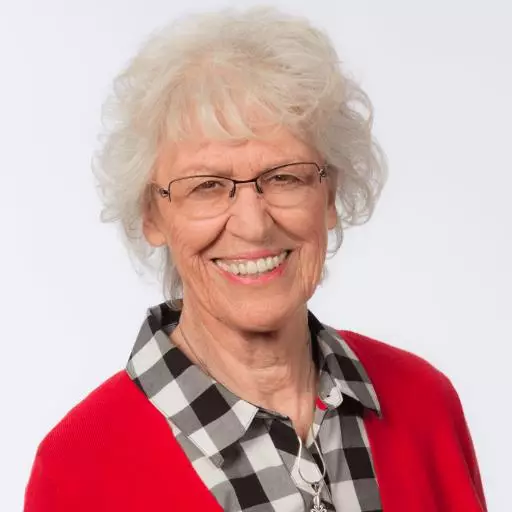
Knowing God


Relationships need nurturing, and that takes time and effort. It’s the same with God. You may have been introduced to Him, and even initiated a relationship with Him, but how well do you really know Him?
Jill Briscoe: Now, if we're going to know God, we've got to be introduced to Him. And He gives us that invitation in the book of Isaiah, chapter one, verse 18. "Come and let's reason together, says the Lord. Though your sins are like scarlet, they shall be as white as snow. They are red like crimson, they shall be as wool."
"Come, let's reason together." That really means, "Come, let's agree together to do something about this distance that's come between you and me." Because God is speaking to His people.
So, the first thing that happens is an invitation is issued to these people, and it's up to them whether they receive it or not. This is from the King of Kings, through the prophet Isaiah. God is issuing a very, very important invitation, and it's up to each of them individually and collectively as a nation to respond.
During the middle of all the hectic mail, my husband came in from the end of the drive with a letter in his hand and, well, a pile of letters, and he was sorting them out, and he said, "Oh!" And threw it in my direction, and I got down to it in the end. And it said in the corner, "The White House." And I thought, "Which White House?"
I know there's a White House on my left where my neighbor lived, and I knew there was one down the street, and I thought, "Which White House?" And so, I opened this little envelope quite casually, and I thought, "Well, who's having fun with me?" And I put it back in the envelope and went on with my mail, and Stuart said, "Well, are you going to go?" And I said, "Go where?" And he said, "To the White House." And I said, "Don't be silly, it can't be." Really.
And I took it out again, and I realized it was indeed an invitation for this morning in Washington to have this breakfast. So, then there was another little card somewhere in here that said, you had to, what was it, "Please respond to the Social Secretary at the White House at your earliest convenience, giving dates of birth and social security and all of that stuff."
So, I left it actually for a day, and it was all over the holiday period, and I started to try and call, and I wanted to tell you something, they don't work over Christmas. And I just kept getting an answering service, so I left it another day or so, and then I rang back. So, it was three days before this event that I eventually got somebody back at work in Pennsylvania Avenue, and they took my social security number, and I flew out. I had prayer breakfast with Christian, with ecumenical leaders from across the country.
So, here I have this invitation. An invitation invites an introduction. I've heard all about this man, obviously. He is the President. I see him on television, but I have never met him, but I have been invited to meet him. I shook his hand, and I met him, and he met me. Invitation invites introduction.
Now, introduction initiates a relationship. As I came back, the people who knew about it came running up to me and said, "Well, what's he like?" Now, come on, here I am in this long line of people. I've shaken his hand. I have been introduced, but I can't tell you really what he's like because introductions have to initiate a relationship, and then it takes nurturing. Nurturing takes time and effort.
I sat next to someone that knows him very well. I have been introduced, he had been introduced. We both knew him, but the person next to me had nurtured that relationship, had taken time and effort and had the opportunity to get to know what he was really like.
Now, if we are going to get to know God, we have to certainly be invited, and we have all been invited to a far greater place than the White House. You know, it isn't who's in the Great White House that matters. It's who's on the Great White Throne.
In the end, in the end. And what was so wonderful about the breakfast, Ann Lotz Graham stood up and made that statement at that breakfast, more or less in similar words, that the invitation from the Great White Throne to the human race to come to breakfast, or more specifically to a wedding feast of the Lamb, is the most important invitation any of us can ever, ever, ever receive.
And so, introductions initiate relationships. Relationships need nurturing, however. Nurturing takes time and effort, and it's the same with God. And many of us here have been introduced to Him. There has come a time when we have actually met Him. Not that we have shaken His hand, but we have knelt down at His feet, right? And we have said, "Jesus, come into my heart."
We have said some words that have initiated a relationship. We have been introduced, but how well do we know Him? How well do we really know Him? Knowing God means knowing what He is like, knowing who He is. That in this passage of Scripture in Isaiah one, we learn first of all that God is like a Father.
Now, we learn that God is like a Father because He says in verse two, "I reared children and brought them up, but they've rebelled against Me." But it's over in Hosea chapter 11 that we get a little glimpse of the Fatherhood of God. Many of the prophets talked about God as a Father. We sang a song about it, about the Fatherhood of God, inviting His children to come to Him.
"When Israel was a child, I loved him. Out of Egypt I called My son. The more I called Israel, the further they went from Me. They sacrificed to Baals. They burned incense to images. It was I who taught Ephraim to walk, taking him by the arms, but they didn't realize it was I who healed them. I led them with cords of human kindness, with ties of love. I lifted the yoke from their neck and bent down to feed them."
Do you see those images of the Father and the child? They're absolutely beautiful. Here we have the picture of a loving Father. What is He doing? Well, the Bible says that this loving Father is raising and caring for children, that He is bending down to feed them, that He is taking them by the arms and teaching them to walk, that He called them from trouble, from out of Egypt, and He cared for them, and He protected them.
God is like a loving Father. What is God like? He is a loving, loving Father. He's also a hurt Father, however. And back in Isaiah chapter one that we've just read those few verses, we read, "I reared children, I brought them up, but they've rebelled against Me." Those of us that have reared children and brought them up, if you've ever had the experience of a child who is in rebellion, then you know a little bit of the heart of God. You know a little, little bit of the heart of God.
Because He has a world full of children that He has reared and brought up, who have rebelled against Him. And I'm not talking about the world in general. I'm talking about the church. I'm talking about His people. Israel in the Old Testament, Christians in the New Testament. He has taken us by the arms, He's taught us to walk, He's bent down to feed us, He has cared for us.
And then He says in Isaiah, "The ox knows his master, the donkey his owner's manger, but Israel doesn't know. My people do not understand." He says, "I get more respect from my dog and cat than I do from you. I get no respect from My children. No respect at all." What God is saying, "That hurts Me, especially when you treat Me like that continually, when you have no respect for Me. You don't call Me sir. In fact, you treat Me worse than My dog and My cat, My ox and My donkey."
And so, God is like a Father, but He is like a hurt Father. He's grieved, He's brokenhearted. But He's a wise Father. Now, if you remember, Jesus taught us to say "Abba Father," to treat God as a wise, loving Heavenly Father. And He told parables and stories about God as Father, didn't He?
And of course, the most famous one, the most famous story that He told is about the prodigal son. Prodigal son that said to his father, "Give me, give me, give me, give me," and his father gave him and gave him, and off he went and took his inheritance before his time and wasted it all with rebellious living and ended up in a pigsty. Remember?
Now, the father in the story was wise. Why was the father wise? Because he didn't chase him down the road, because he didn't go after him. He waited for him. He waited for him. He gave him the dignity of choosing his own actions. He gives us the choice of our actions, but He does not give us the choice of the consequences of them.
"Yes, you can choose what you want to do," He says, "but you cannot choose the consequences of your actions." They're set. And if we rebel, and if we do not live as God wants us to live, and if we make bad choices, we cannot choose the consequences of them. All of us know this. There are consequences to bad choices. And so, He's a wise Father. He's wise because He lets us live with the consequences of our actions. He gives us over.
In Romans one, over and over again, it says, "God gave them over. God gave them over to their own choices, their own bad choices." That's what a wise Father does. It doesn't mean He does not stand on the rooftop in a forgiving mode, waiting for the son to come running down the road. It doesn't mean that as soon as He sees the son coming, He takes off, which the father did in the story, and meets him that last lap of the way, but He waits. He waits till the son says, "I'm a fool. I got to go back to the Father. I got to get myself right with God," and starts that long, long walk home.
Those of you that have read Ruth Graham's book on prodigals will remember the story. And those of you that haven't, do. Put it in your library. Please God, you'll never need it, but it's a great book. A great book for parents who have a Franklin Graham in the family, who have a prodigal. And Ruth's tender wisdom as a parent, Billy's tender wisdom as a parent is an incredible story. And they let him go. They let him go, but they stood on the rooftop in prayer.
And they watched, and they prayed. And one day, Franklin Graham appeared on that long road home, and he said, "I'm a fool. I'm sick of being sick of myself. I'm coming home." And that's what wise fathers do. Sometimes He lets us go into the dark tunnel. Sometimes He lets us go, or lets the storm envelop us in order to drive us into our Father's arms. Let me read you something I wrote quite some time ago, when I was thinking about this shelter from the storm.
I well remember sitting by a roaring fire on a Sunday during the war years. Our family had fled the bombs that rained down on us one night, chasing us hundreds of miles away to the beautiful English Lake District. But that particular day was different. The mists were gone. A storm had broken over our heads. The rain slashed against the window panes like giant tears, and thunder grumbled away as if it was angry it had to hang around all day.
I didn't like storms much. After all, I was only young, barely six years of age. But I was old enough, however, to understand there was a bigger storm that was raging than the one that beat against our window pane. There was a battle going on involving everyone in the whole world, but at that moment, it all seemed very far away. The fire was warm, my father was sitting in his big chair, relaxed and reading the paper. Besides, I could see his face. And suddenly, as if he was aware I needed a little bit of reassurance, he put down his paper, and he smiled at me, and he said, "Come here, little girl," in his soft, quiet, but commanding voice.
And then I was safe in his arms, lying against his shoulder, and feeling the beat of his heart. Now, whatever the weather, I could watch the rain and I could listen to the thunder all day. And I thought, "This is a grand place to be." Why, my father was bigger than any old storm that beat against my window. And I've thought about that incident many times. As the storms of sorrow swamped me at my mom's funeral, I've sought the reassurance of my Heavenly Father's presence.
And when the winds of worry whip my confidence away as I face gangs of wild young people in street evangelism, I've glanced up to see my Father's face. And as floods of fear have risen in my spirit as I've waited in a hospital for the results of frightening tests, I've heard my Heavenly Father say, "Come here, little girl," and I've climbed into His arms, and I've leaned against His shoulder, and I've murmured, "This is a grand place to be." As I rest in that safe place, believing my Father is bigger than any old storm that beats against the window pane of my life, I can watch the rain and listen to the thunder and know it's all right. For here, I can hear the beat of my Father's heart.
"Jesus, lover of my soul, Let me to Thy bosom fly, While the nearer waters roll, While the tempest still is high. Hide me, oh my Savior, hide, Till the storm of life is past, Safe into Thy haven guide, Oh, receive my soul at last."
And sometimes He allows the storms of life to drive us into the arms of God. He allows us to choose, and then He allows us to endure or to experience the consequences of those choices. And you see, this little girl was looking for a shelter from the wind. This small child needed her father's arms around her. This dependent one knew the reassurance of her father, the sense of his presence. Didn't stop the storm, but it stopped the storm in her heart.
And so, now I had a place of refuge, and here my father's voice calmed me down and fortified me. From this safe vantage point, I could not only face the world in its mess, but take it on. And so, we have a loving, Heavenly Father. He's loving, He's hurting, but He's wise. And we are like children. We're rebellious, and we're rude, quite honestly. We're just rude. We are rude.
And I, I don't know where respect went for God, but when there is respect for God, there is holy living. When there is respect for God, we mind Him. You know, my father raised me in the war, fought for me and England and the world. And after 1945, he rebuilt the business, worked all hours, rebuilt the country with everybody else, to provide for me and educate me.
He raised me, He cared for me, He fed me, He bent down to feed me, He took me by the arms. He was a wonderful, wonderful father. At the age of 14, however, I began to go absolutely wild as a teenager. I got into the wrong company. I started going to the park at night, where all the kids congregated, just to have fun. I had my feet on the edge of everything that kids can have their feet on the edge of. I wasn't over the line, but I had my toes ready to go.
And one night, there was tennis courts, and there was, it was just the gathering place, really, of the kids in that whole town. One night, my sister, she's three years older than me, was coming home from an event, and walked through the park and saw me. And she saw the young people that I was with. I don't think we were doing anything that was, wasn't, was too upsetting. But when I got home that night, I found my sister waiting for me. And she sat me down on the bed, and she closed the door, and she said, "Jill, I want to say one thing to you. If you get pregnant, it will kill Dad. Do you understand?"
Then she went out the door and shut it behind her. I was not a believer. I was into all sorts of stuff, or just about to be. But that statement alone stopped me getting pregnant. Now, why? I remember shortly afterwards going to a very wild party where I could have got pregnant. And one of the young men that was there taunted me and said, "You're afraid of what your father will do to you." And I said, "No. I'm afraid of what I'll do to my father."
And it was this huge respect that I had for my dad. Even though I wasn't a believer, even though I didn't come from a Christian home, this right fear. I didn't want to dishonor him or hurt him because I loved him. Now, that's the secret of the Christian life, folks. Don't say you love God if you're living like the devil. If you love Him, you'll be afraid that what you do will dishonor Him and hurt Him.
And so, I learned that God is like a Father and we are like children. Secondly, God is like a Doctor. Isaiah one. "Our sinful nature, a people loaded with guilt, a brood of evildoers, children given to corruption." This is verse four. "They've forsaken the Lord. They've spurned the Holy One of Israel. They've turned their backs on Him. Why should you be beaten anymore? Why do you persist in rebellion? Your whole head is injured, your whole heart's afflicted. From the sole of your foot to the top of your head, there's no soundness, only wounds and welts and open sores."
God is like a Doctor. Now the diagnosis, we've already read it. I've just read it to you. What is the prognosis? Well, "Why should you be beaten anymore? Why do you persist in rebellion?" This is disaster. You can't get cleansed, you can't get bandaged, you can't get soothed with oil, and the whole chapter goes on to say that if you don't get medicine, you're going to die. "You're sick. The whole head is sick. The whole heart is faint." The whole heart is faint.
And so, God is like a Doctor. And when we get soul sick, as a believer, He's the Divine Doctor. He makes the diagnosis, realizes we're pretty beaten up, perhaps, with the consequences of bad choices, that as Christians still free to choose, we've made a mess. We haven't got ointment, we haven't got bandages, can't patch things up ourselves. Nobody else can do it for us. And the prognosis is, "Why invite punishment? Will you rebel forever?" Disaster in the end, 27 through 31.
But it says in this same chapter that the Lord Jehovah is the Redeemer, and the repentant people of Judea will be redeemed. He refers us. Doctors, good doctors, make referrals. They say, "What you need is this." And what is the referral that He makes? To the clinic of the cross, to Doctor Jesus. Redemption alone, the blood of Christ, can heal us. "With His stripes, we are healed."
So, if we're messed up, we go to the Doctor. God the Father refers us to the cross. "Come now, agree with Me, though your sins be as scarlet, they shall be as white as wool." These people are sick with guilt. Have you ever been sick with guilt? Have you known, have you ever, is it nearly destroyed you? Now, only God can deal with that because your guilt, if it's true guilt, not false guilt, I mean, if you feel guilty about something you don't need to feel guilty about, that's one thing.
But if it's true guilt because you've sinned, and God has blessed us with the ability to feel guilty to drive us into His arms and find forgiveness and get the guilt dealt with, then there is only one place that that can be relieved. "Full salvation, full salvation," says the hymn. He can save us from the sin's guilt and power. Sin has power, but it also has guilt. And God can deal with it. He can forgive us.
"Though your sins be as scarlet," the word is double-dyed. So scarlet, the word scarlet is, is the material they used to use in the dye, the, the material, and they used to double-dye it. They used to dye it once, and then they used to dye it again. It was rich, rich crimson. Now, what can get a stain out like that? Funnily enough, another stain, red as well, the blood of Christ. "Come unto Me, and I'll make you clean," says Jesus.
So, we are like the patient. We are sick, we are sore, and we are stupid because there's only one who can mend the soul that's diseased by sin. That's the soul maker, and we don't go there. And then the third picture is the husband. God is like a husband. Let's read some of these verses, Isaiah 1:21. "See how the faithful city," that's Jerusalem, "has become a harlot." That's the problem.
Now, it says in another translation, "See how Jerusalem, once so faithful, has become a prostitute." In the Old Testament, the picture is of God as the husband, Israel as the wife. In the New Testament, it is Christ is the husband and the church is the bride. It's, it's a picture that God uses because of the word covenant, promise, promises that are made in the youth of the couple to each other.
And God uses this picture over and over again because Israel, His bride, has broken the covenant over and over and over again, and has broken the heart of God. There is an agony of unfaithfulness. God is like a faithful husband. There is nothing as painful, I believe, as the rejection of a once-loving partner. That is a pain that nothing can touch. Nothing. It's agony.
I was talking to someone not long ago, and they said, "I can hardly breathe. The emotional pain is so intense." And I thought to myself, "That's how God feels. That's how He feels. He can hardly breathe because the emotional pain is so intense." God is like a husband. He is faithful. But it's in the book of Hosea that we see the picture and the whole story of Hosea, of course, so beautifully portrayed back in chapter three and four.
And of course, the story in Hosea, if I can just remind you, if you don't know it, is that Hosea is married to a woman who cannot stay in her own bed. She is unfaithful. She commits adultery, and he's the prophet. He's the prophet in town. Doesn't stop Hosea's wife, Gomer. Some people think she was unfaithful before he married her, that she was a prostitute before he married her and that she had a couple of kids before he married her because children of unfaithfulness are talked about.
When he married her, she had three children with him, and then she began playing up again, playing around. And off she went. And God says in chapter three, "The Lord said to me," Hosea speaking, "Go, show your love to your wife again, though she is loved by another and is an adulteress. Love her as the Lord loves the Israelites, though they turn to other gods and love the sacred raisin cakes."
So, Hosea goes, and by now she has become a slave to the man that she went off with, because he has to buy her, and you only buy slaves. And the price of a slave, the price of a slave is 30 pieces of silver. He pays 15 shekels of silver, not 30, a homer of barley. In other words, he's probably too poor to pay it all in cash. And so, he pays in kind and in cash, and he redeems Gomer.
She comes back, and he says, "Now, I want you to live with me." And the word is, that's live together, separated for a while, let's have a period of purification. I don't want you running around again. And apparently, she comes back to him, and they begin again. And God uses what has happened in Hosea's life as a picture of what He wants to happen with His people, the faithful husband and the unfaithful wife. What a fantastic, fantastic picture this is.
And we are like the wife. We have committed spiritual adultery, if you like. We are faithless, and we are helpless. So, what happens when we're helpless, when we're slaves, when we're caught in this situation, when we've gotten away from God, when maybe it's not huge sins? Maybe it's just the little things. Next, I'm going to be talking about the little foxes that spoil the vineyards.
Sometimes it's the big bears that are plodging all over the vineyards and spoiling the fruit. Other times it's the little foxes. It's the little things. And the devil really doesn't matter if it's a big bear or a little fox, as long as the fruit is spoiled, as long as he messes your relationship up with God. And so, what do we have to do? Well, we have to come.
And we look now as God offers the renewal of the covenant. He offers in this story of Hosea a new betrothal. Look in verse 14 of chapter two. "I'm now going to allure her," the unfaithful wife, Israel, the picture of the whole nation having been unfaithful. "I will lead her into the desert. I will speak tenderly to her. There I will give her back her vineyards, make the Valley of Achor a door of hope."
"And she shall sing as in the days of her youth, as in the day she came up out of Egypt." That little phrase, "The Valley of Achor, a door of hope," is one of my favorite verses in the Scriptures. Let me just divert a minute to remind you that when Israel was about to take the promised land, one man and one family violated the instructions. And instead of destroying Jericho and everything in it, they saw some nice clothes and some silver things and some jewelry, and they took it even though God had explicitly told the Israelites not to touch any of the plunder, anything, to destroy it by fire.
And they buried it in their tent. Do you remember the story? Buried it in their tent. That man's name was Achan. And Israel, not knowing about this, Joshua not knowing about this, nobody knowing about it except this one family, took off to fight Ai, which is a little, tiny, unprotected place. They didn't even have an army. They didn't even have walls. So, Joshua said, "Oh, we don't need to take the army. Let them have a day off. We'll just take so many men and go up, and Ai will be ours." Jericho was one thing, we needed everybody, the whole cabosh, but now we don't need anything, let's go and take Ai.
So, they went up against Ai, and if you remember what happened, the men of Ai came out of those ruins and killed these men, these Israelites. And they came back, and Joshua went to the tent of meeting, which was outside the camp, if you remember, fell on his face before God. And God said, "Get up off your face. Don't bother praying to Me. There's sin in the camp." So, Joshua quits praying, goes to deal with the sin.
And God, in a miraculous way, had him bring family after family, after family, after family, until the tribe was taken, the family was taken, the man was taken, and God, in some way, indicated that Achan was the man. And Joshua said, "Why have you troubled Israel?" And Achan confessed, and he took the leaders to his tent, and they dug in the ground, and they found the forbidden things. That man and his family and all those forbidden things and everything he had was taken outside the camp, and they were stoned to death.
And that valley where that happened was called the Valley of Achor, after Achan. It was a terrible thing. It was one of the low places in Israel's history, many, many lessons there. But what an incredible thing here. Look at this. "I'm going to allure Israel. I'm going to lead her into the desert and speak tenderly to her, and there I will give her back her vineyards, and will make the Valley of Achor a door of hope." The place of their greatest failure, the place of the greatest sin, He opens a door. And you know what the Valley of Achor means? A valley of tears. A valley of tears. "In your valley of tears, I'll open a door of hope."
And if we know what it is to agree with God about the sin in our lives, and the things that have hurt Him, as we have treated God with no respect, as we have sinned in whatever way, as we have hurt our Father, our Husband, as it were, then we can agree that our sins are red like crimson. And even if we have drastically sinned, however guilty we are, whatever we have done, there is a door of hope, a door of hope. It's shaped as a cross, you see, shaped in the shape of a cross.
"Come now, let's reason together. Let's agree together that this is a bad scene," says God. "But though your sins be as scarlet," double-dyed, "they shall be as white as wool. Deal with the guilt, take away the shame. You and I will be together again. We'll start to nurture our relationship together." That's what the invitation is, to wash us white as snow.
"White as snow, white as snow, though my sins were as scarlet. Lord, I know, Lord, I know that I'm clean and forgiven. Through the power of Your blood, through the wonder of Your love, through faith in You, I know that I can be white as snow."
Now, I remember as a student, sitting in my professor's room after I came out of hospital, reading my first Christian book. It was called *Calvary Road* by Roy Hession. It's still around, I think Moody put it out. And I had been converted in hospital the previous week, and I was now out of hospital and recuperating, and sitting by the little gas fire in this old Cambridge college. It was very glamorous to look at but thoroughly miserable to live in. Stone walls and big stone slabs, and it was hard to get warm.
And I was huddled up, and I opened this book that somebody from InterVarsity had given me, called *The Calvary Road*, and I began to read. And I read very simply what the cross meant. I, I can't really remember all about it, but I began to cry, great, great tears of sorrow for my sin. And even though I'd said the prayer in hospital, I don't know what happened to me in that room except the overwhelming horror of what I had done to God just overwhelmed me.
And there was a little image in the book. It was a man kneeling at the cross, and it said, "Lord, bend this proud and stiff-necked 'I'. Help me to bend the neck and die, remembering, remembering the one who died for me at Calvary." Something like that. But it had this man standing straight, and then bent. "Bend the stiff-necked 'I', beholding Him who died for me on Calvary."
And I remember crying and crying and crying. I still cry today because I'll never, ever get over the fact He made me white as snow. White as snow, though my sins were as scarlet. Lord, I know. Lord, I know that I'm clean, forgiven. Through the power of Your blood, through the wonder of Your love, through faith in You, I know that I can be white as snow.
When I get to Heaven, and I say, "Jesus, do You remember that, for I cannot forget it?" He's going to say, "What? What, Jill? Your sins and iniquities are forgotten. I will remember no more." And my intent is never to hurt Him again. Never, ever, ever to hurt Him again. "Come now," says God, "pray with Me. Let's reason together," says the Lord. "Though your sins be double-dyed, hey, they shall be white as snow."
God is like a Father. Climb up into His arms. Lean against His shoulder. This is a grand place to be. Feel the beat of His heart. His broken heart because He loves you so. And God is like a Doctor. He's the only one. Is there a balm in Gilead that heals the sin-sick soul? Yeah. Ask Him to heal the hurts, the internal bleeding of your soul.
God is like a Husband. He opens a door of hope in the valley of tears. "White as snow, white as snow, though my sins were as scarlet. Lord, I know. Lord, I know that I'm clean and forgiven. Through the power of Your blood, through the wonder of Your love, through faith in You, I know that I can be white as snow." Lord, You have been here for this we praise You. We do not want to leave this place. For God is here. Lord, we take You with us, though. God behind us, God within us, God before us. May this be the beginning of a renewed covenant and relationship with You. We ask it for Christ's sake. Amen.
Featured Offer

Your generous gift today is worth twice as much—thanks to a $82,000 Match—to help Telling the Truth finish the financial year strong and reach more people searching for truth in the year ahead.
As thanks for your gift, we’ll send you Stuart Briscoe’s book, A Peace of My Mind, a powerful resource that shows you how to experience God’s “perfect peace,” even in uncertain and challenging times.
Request your copy when you give today to have your support DOUBLED by the Match and help more people experience life in Christ through the timeless message of the gospel. We’re grateful for you!
Past Episodes
- A Lifetime of Wisdom
- A Little Pot of Oil
- A View from the Porch Swing
- Are You Good Soil?
- Art of Leadership
- He Came to Give Us Life
- Heart Hunger
- Here Am I, Send Aaron
- Hidden Treasures
- Hope for the Disheartened
- How Do I Find Joy?
- How to Be Up When You're Down
- Lessons from the Boy Jesus
- Let's Talk
- Life Lessons
- Life that Works
- Living Above the Circumstances
- Living in the Word
- Living Love
- Lost and Found
- Searching
- Seeing Through Suffering
- Shaking Up Your World
- Shelter from the Wind
- Six Things a Mother Can't Do
- Slaying Giants
- Solid Ground
- Spiritual Arts
- Take 5: A Christian Point of View
- The Balancing Act
- The Cutting Edge
- The Fatherhood of God
- The Heart and Soul of Friendship
- The Heartbeat of the Master
- The Holy Spirit
- The Holy Spirit and You
- The Innkeeper's Daughter
- The Names of God
- The New Normal
- The Power to Change
- Triumph in Trouble

Featured Offer
Your generous gift today is worth twice as much—thanks to a $82,000 Match—to help Telling the Truth finish the financial year strong and reach more people searching for truth in the year ahead.
As thanks for your gift, we’ll send you Stuart Briscoe’s book, A Peace of My Mind, a powerful resource that shows you how to experience God’s “perfect peace,” even in uncertain and challenging times.
Request your copy when you give today to have your support DOUBLED by the Match and help more people experience life in Christ through the timeless message of the gospel. We’re grateful for you!
About Telling the Truth for Women
Telling the Truth exists to make available sound biblical teaching, practically applied, with a view to producing lives that glorify God and draw people to Christ. The whole of our ministry is to encourage, console, strengthen, teach, and train.
About Jill Briscoe
In addition to sharing with her husband in ministry with the Torchbearers and in pastoring a church in the United Sates for thirty years, Jill has written more than forty books, travelled on every continent teaching and encouraging, served on the boards of "Christianity Today" and "World Relief," and now acts as Executive Editor of a magazine for women called "Just Between Us."
Jill can be heard regularly on the worldwide media ministry called "Telling the Truth" She is proud to be called “Nana” by thirteen grandchildren.
Contact Telling the Truth for Women with Jill Briscoe
info@tellingthetruth.org
Brookfield, WI 53005-4633
Outside North America
Telling the Truth
PO Box 204
Chessington
KT9 9DA
United Kingdom
800.889.5388
Outside North America
0800.652.4120