
Telling the Truth for Women
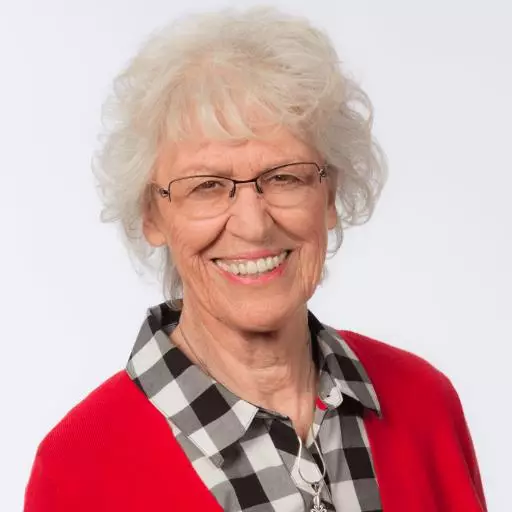
Jill Briscoe
He Gifts Me


At times, we may feel useless, uncreative, ungifted, and unfit to do God's work. But simply by the fact that God has brought us into a redemptive relationship with Him, we can be encouraged that He has gifted us! The Holy Spirit is our gift; He is our anointing to do the good works that God has prepared in advance for us to do.
This message assures us that God has gifted us and God will see us through the tasks He set before us. We can say, as David says, "He has exalted me by helping me to know Him."
Jill Briscoe: I'd like you to turn in your Bibles to 2 Samuel chapter 23. These are David's last words, and it's very interesting. Sometimes, I try and keep in my little notebook that I keep—that writers and speakers keep—I try and pick up last words because they tell you a lot about somebody's life.
I remember a rather poor joke, I thought, but I do remember it, so it couldn't have been that poor. What were Father's last words? I don't know, Mother was with him. It's a bad joke. So, poor Father never got a word in edgewise even when he was dying, apparently.
What are last words? Why are they meaningful? Well, they're meaningful to us if somebody's very close to us and we know and love somebody very much, aren't they? David's last words are actually recorded for us. Jesus' last words are recorded for us. It is finished. Tetelestai. Not "I am finished." It is finished. What's "it"? "It" for Jesus was the redemption of the world. This is my Father's world that broke my Father's heart. My Father wants it back, so Jesus came. That's Christmas and he bought it back.
His first words were a baby's cry, and his last words were tetelestai. The reason I came, the redemption that I came to accomplish, is finished. Now, the last words of David in 2 Samuel 23: very few but poignant.
"These are the last words of David: The oracle of David the son of Jesse, the oracle of the man exalted by the Most High, the man anointed by the God of Jacob, Israel's singer of songs. The Spirit of the Lord spoke through me; his word was on my tongue. The God of Israel spoke, the Rock of Israel said to me: 'When one rules over men in righteousness, when he rules in the fear of God, he is like the light of morning at sunrise on a cloudless morning, like the brightness after rain that brings the grass from the earth.'"
Beautiful words, and we're going to dig into them a little bit today. Somebody else's last words that struck me as a counterpoint or contrast to these last words of David were Byron, the poet Byron. He said, "My days are in the yellow leaf; the flowers and fruit of love are gone; the worm, the canker, and the grief are mine alone." And he died at the age of 36.
And those were his last words. Isn't that sad? "My days are in the yellow leaf" at 36. "The flowers and fruit of love are gone; the worm, the canker, and the grief are mine alone." What a contrast to a man who could say, "When one rules over men in righteousness and rules in the fear of God, he is like the light of morning at sunrise on a cloudless morning, like the brightness after rain that brings the grass from the earth."
What pictures! What are they pictures of? Freshness, faithfulness. The sunrise on a cloudless morning: that is a picture of God's faithfulness. "Great is his faithfulness." The word "hesed" that we're studying, the love of God, is shown by his faithfulness. New every morning are God's mercies. Like a sunrise, we can rely on them.
I remember when I was a little girl of 14, I was with my father in France. The war was over, and people were beginning to travel abroad a little bit. And we were over there in our car. We couldn't find anywhere to stay in the little tiny hotels and houses up in the Swiss Alps, so we slept in a car. Not a very big car; it was pretty cramped. It was pretty miserable. Nobody slept very well. We didn't even have pillows and things to put our heads on.
And I didn't sleep, and so about three or four in the morning, I just got out of the car and left the family there and started wandering around at the height of the Swiss Alps. And I found a little promontory, and I sat there and I watched the sunrise. And to this day, I can relive that incredible miracle of sitting at the top of the Swiss Alps with those incredible mountains—God's creativity, God's genius for this is my Father's world—in front of me and watching the sunrise.
I was not a believer. I didn't know what a believer was. I never went to church. I never opened a Bible. But as Romans 1 says, God's genius and who he is is revealed in the things that he has made, so there is no excuse. Man can see God in his creation. And this little girl at 14 saw this incredible manifestation of the power and the creativity of God.
And I came back to the car and I fiddled out a piece of paper, and I wrote my very first poem at 14, if I can remember it. "The dawn comes swiftly filling me with awe; it seems the other side of heaven's door. That God forgives my sins to me is plain; today, spite of my sin, the sun did rise again." God can reveal himself to people in all sorts of ways.
And the fact, the awesome fact, that in spite of the sin which I was suddenly conscious of—not that I knew that was what it was even, but my inadequacy—God had allowed another sunrise. God's faithfulness, his mercies are new every morning. Of course, I had never read that verse in the Bible.
And David says that we as his children should reflect that faithfulness. We should be like a sunrise in our freshness and our faithfulness. And yet sometimes people perhaps look at our face and they see what? A storm coming. "Batten down the hatches," they say. This is not the face of someone whose life reflects the faithfulness, the sunrise of God, the fact that he is the same day in and day out.
And David said that's, as I look back on my life, what I see: God's faithfulness in my life has helped me to rule, helped me to be who I am and do what I was called to do in a faithful manner, like a sunrise. And people that loved David, people that were close to him, the loyalty he engendered, said that of him. Here is a faithful man. Every morning you can rely on him; he'll just be like a sunrise coming into our lives.
Now, that's what I want to be in the lives of other people. That's what Jesus has been in my life, and that's what I want to be in other people's lives. And I don't want to get to the end of my life and look back and not be able to say I think in small measure I was able to be faithful. I was able to be fresh, like wet grass, clear shining after rain. Is that a picture of your life? Freshness? Even when you're tired, there is a freshness, there is something to take for other people.
So, as David comes to the end of his life, he looks back. He knows that God loved him because God made him. He knows that God loved him because God chose him. He knows that God loved him because he rescued him, comforted him, forgave him—that big blot in his character, that big blot on his life. And today, he knew that God had loved him thoroughly and well because he had gifted him.
God gifts me. That's what we're going to talk about. Because did you notice here he says, "I am the man exalted by the Most High, the man anointed by the God of Jacob, Israel's singer of songs." Now, that's interesting to me. David had so many gifts. He was multi-gifted; he was multi-talented, as many people are. God gifts people sometimes in multi-talented and gifted ways.
He could have said, "I am Israel's commander in chief." He could have said, "I am Israel's king of kings," for he was up to that point. He could have said, "I am Israel's in a sense savior; I saved them from their enemies. I made them secure. I put boundaries around our nation. We are the kingdom of Israel in no uncertain terms; everybody's frightened of us." He could have used all sorts of images to describe himself. Instead, he said, "I am Israel's singer of songs."
Now, I don't know why he chose that particular gift, except to wonder if that's what he enjoyed doing most. That's a very simple thought. When you think of the gifts that you have and the talents that you have, what would you say in your last words? "I have been my family's what?" "I have been what?" What is the gift you would choose? What is the one thing that God has gifted you with that gives you a stab of joy, that you enjoy exercising, that you enjoy doing?
Now, he did give us gifts, gifts to use. And we don't only give gifts to those we love; we give gifts to those we don't love. We give gifts to everybody at Christmas, don't we? And it's a headache, and it's a pain. But we do save the most and best valued gifts for those we love the most and best, right? We love very, very dearly, closely, certain people. And I don't know about you, but I spend most on the people that I love the most and that are closest to me, and I take the most time and trouble probably over those gifts.
So it was with God. Years ago, my daughter, who was always considered the one that thought up all the gifts for the rest of the family—she never quite figured out why—but we'd say, "Judy, think up what Peter can give to David and what David can give to Dad," and she'd say, "Oh, all right," and she would think something up. And we all got very lazy because Judy was the thinker-up of things to give to everybody.
And I remember one day she and I talking, and we decided to give each other time, not things. We had all the things we needed, not all the things we wanted, but we certainly had all the things we needed and over-abundance of them. But the thing we didn't have was time with each other because we lived such busy lives. And so we started to give each other gifts of time.
I remember giving David and Judy, at 14 and 13, a gift of two theater tickets to go and see Romeo and Juliet. I thought this was a great idea; I was struggling to keep the English heritage going in our family. And at this point, Judy at 13 and 14 would cross each other in the corridors at school and separate and go down each side. You know, this was the age they were as brother and sister. So to have to get all dressed up and for David to have to take Judy to see Romeo and Juliet was quite an effort. But I had given that to them, and they had better enjoy it.
So off they went to Romeo and Juliet, and I waited expectantly all evening. And they came back, and I remember saying, "Well, what did you think?" And David said, "Well, they talked funny." I said, "That's English, David." And it really hadn't gone over very well, and they hadn't really understood it and all the rest of it. However, it did force that brother and sister and Judy said, "Well, we had a good time together. David kept going getting me more popcorn and stuff like that." And they really enjoyed it.
And so we started this habit of giving each other time, not things. And it was during that time I was running God Squad here, the junior high work. And I remember talking to a couple of junior high kids and asking them what they were getting for Christmas. And they told me the things they were getting. I was amazed: expensive things, incredibly expensive things.
And one of the little girls—there were two girls actually—one of the little girls said, "You know, I don't really want these things. I want my dad. I don't really want these things. I want my dad." And you know, that's what they were looking for, and in a sense, those two particular kids were being bought off. And so often we do that: we buy people things instead of giving them time with us, giving them ourselves.
And all those children wanted was time with their parents; they really didn't care about the gifts. And what God knows is the thing that we want most and need most is time, not things, from him. And so he gave himself. As our Father, he came at Christmas. He did not bring with him expensive gifts, which he could well have done seeing he owns the universe. He brought himself because he knew that was the greatest gift he could give us.
And David knew that God was the greatest gift he could have and that the giving of God to David was an exalting thing and exalted him. Two words that are rather alike. He says, "I am called, I am exalted by the Most High." "Who am I?" says David. "Someone I was not before God knew me, saved me, came, showed me he loved me. He is my redeemer." How do we know God loves us? He gave us time, not things. He gave us himself. He came. He said, "I am the greatest thing I know you need, and I will come myself to presence myself with you."
And so David says he has exalted me by helping me to know him. You know, just the fact that David knew God gave him this exalted sense of self-worth. Have you ever thought about that? Who are we, little you and little me, that God should want to know us and has desired to know us and has said, "I want to know you, I want to love you, I want to come and share your life, I want to live within you, give you my Holy Spirit." What a thing!
We have the great privilege of personally knowing Dr. Billy Graham and his family quite well. And every time I think about that incredible privilege, I have this sense of exalting in it, and I feel so privileged to have known who I believe is the prophet of our generation. What an experience to know them personally, to be in their home, to eat at their table, and to have that interaction with such wonderful people of God and well-known people of God.
Now, when we think we know God, he presences himself in our lives. We know him. Doesn't that give you a sense of privilege? He has exalted me just by the fact that he's brought me into this redemptive relationship with him. And David feels this: "I am the man exalted by the Most High," and he exalts in this.
Now, this exaltation, this consciousness of knowing the Most High: this results in David feeling called to an appointed task. "I am the man anointed by the God of Jacob." Now, in Ephesians 2:8-9, if you'd turn to that with me for a minute, quite famous verses, good to memorize: "It is by grace you have been saved through faith, this not from yourselves, it is the gift of God." Even the faith we need to put our faith in God comes from God. We are such beggars; we have to ask him for belief to believe in him.
So, we are given the grace and the faith to believe, to trust God. This salvation is not by works; we cannot work our way to heaven. We cannot go to church enough, read our Bible enough, do good works enough. Not by works, so that no man can boast, because then we might say, "I did it! I got to heaven all by myself by being good or doing this or that."
"For we are God's workmanship." He creates that new person within us. In Christ, we are a new creation. Created in Christ Jesus. What for? Just for our own benefit, that we might enjoy the exaltation of knowing God and the sense of what it means to know him? No. For good works. To do good works, which God prepared in advance for us to do.
God prepared good works for us to do in advance. In advance of what? In advance of us even being born. Before you cried as a baby and announced you were born and you had arrived into the earth, God had already prepared certain things, works for you to do. Good works, pre-assigned tasks he has in mind because he knows the future. And in our future, he has said, "For this particular person, this is what I have prepared for them to do."
So, when we say we are called of God into this relationship, we have to realize that God has gifted us to do the tasks he has pre-arranged for us to do. We are gifted to do the pre-assigned tasks, the pre-arranged tasks. And if you think about it, there are tasks for every single one of us. And that should give you a sense of exaltation. God has exalted you. He has trusted you with works he has designed perfectly to fit you as a person and your gifts, your talents, who you are. Everything that you are has gone into making you fit to do those pre-assigned tasks. That's part of your calling, your exaltation, your anointing.
David says, "I am the man who is anointed." And we've talked a little bit about that: the Holy Spirit comes in; he is our anointing. He is our gift. He gifts us with gifts we didn't have before we had the Holy Spirit. Many talented unbelievers, no gifted unbelievers in the sense of spiritual gifts. Many unbelievers are talented; many unbelievers can sing, etc.
But it's the believer who has not only talents but gifts, spiritual gifts. And what are they? The Holy Spirit brings them with him. He himself enables, gifts us, and there are things you can do after you are converted that you could not do before. Absolutely impossible because it's only the Holy Spirit can gift you, and he can only gift you when he lives within your heart.
And so this anointing, David says, he has anointed me as a prophet, as a priest, as a king. Three people anointed in the Old Testament: prophets, priests, and kings. And every single believer are prophets, priests, and kings in a sense. What did the prophet do? He stood in front of the people and he said, "This is what God says." What did the priest do? He stood in front of God and said, "This is what the people say."
And so as God's prophet, we can say, "Thus saith the Lord; this is what God says." I had that opportunity, and this message was in my mind. It was wonderful because I was down at the Ophthalmologists' Convention in the Hyatt downtown Chicago. And there are very brilliant people in this room looking at me, doctors, ophthalmologists. One lady who is having her 50th anniversary, beautiful, beautifully turned out lady, beautiful lady just about to have her 50th wedding anniversary, is not only an ophthalmologist, she's also a doctor and also a psychiatrist and still going strong at her age.
She said, "What are you talking about?" And I was so glad I knew I was anointed. This is a secular group of people, about 60 of them, who are having this luncheon because two Christian doctors decided they'd do this at every convention and invite people, a lot of Jewish people there. And I remember thinking, "Well, what am I talking about?" And so I gave her a little rundown of what I was going to do.
And she said, "I talked last time; I was the speaker last time." So I said, "Oh, that's interesting. What did you talk about?" She said, "I talked about the Id." I said, "Good." My mind was racing. I was thinking, "Oh, yes. Well." She was a lovely lady, and she had a lot of faith. I'm not quite sure the object of her faith, but she was a very, very special, precious lady.
And you know, I thought about the gifts that God has given me, and I was so glad that I count my creativity my greatest gift, just as David counted his creativity his greatest gift. And I said, "Lord, you have anointed me. I believe this is one of the good works you pre-ordained for me to do today. When I get up behind that pulpit, this is a place you have measured for my feet to stand and my mouth to speak and my mind to arrange whatever it is in the wording that you want me to use."
And it was a wonderful thing to rest in that assurance and to claim that anointing: Israel's singer of songs, Jill speaker of words. Whatever it is, there is a confidence that comes when you can say like David, "Look, I am a man anointed by God. I am a man anointed by God." Interestingly enough, when I had finished—it was not one of the easiest meetings I've ever taken in my life—when I had finished, the one Christian lady who had invited me said—and why she said it, I don't know—"You are anointed."
Isn't that interesting? And it was just such an affirmation of everything I'd been struggling with: "How can I possibly do this?" You are anointed. Well, yes, that's the answer. I tell you, there is absolutely no way I could have said anything of significance unless the Holy Spirit had gifted me. So you have a task that you are equipped to do.
And you don't get prizes for gifts, you know. God gifts you, and then he expects you to match what he has given you, the equipment he's given you, to the pre-assigned task he has called you to do. And this works not just in speaking and upfront stuff and all of that; this works in the home. And you know, our pre-assigned tasks are according to who we are, who we belong to.
And when you go back to your kitchen today, remember you are anointed. That is a pre-assigned task, and God has equipped you to do it in a way that honors him. And that should transform even your shopping; it should transform your driving—it's not quite got there with me yet, but it's working. It should transform everything. Yes, it should. It lifts us above the mundane.
And you know, when I think God took David from the sheepfolds and from following after the sheep and made him a king, the Psalms says, "God took me from the sheepfolds," he says, "and he made me a king." But you know, after David was anointed, he went back to the sheepfold for a long time. And he had to learn to be a shepherd before God ever allowed him to be a king. He had to live as a king as a shepherd before he lived as a king as a king.
I remember being shut up to three small children as a missionary wife, wanting to be out there exercising certain of my spiritual gifts, and yet shut up to diapers and to baking and to cooking and to cleaning—three small preschool children, Dad not around very much, a lot to do. No washer, no dryer, English weather that you couldn't dry the stuff outside, so you had to build the fire to dry the clothes. And I had to go and get the wood to build the fire to dry the clothes, and we'd make a game of it, and the kids would "collect sticks"—they still talk about going "collect sticks." And then we'd collect the sticks, and we'd make the fire. It was a long process, a lot of work.
And yet that was the pre-assigned task God had given me to do. And I remember being antsy and wanting to be up at the youth center and with all those kids, and I could never get out. I didn't have babysitters and that sort of thing in that situation. And I remember very definitely knowing that I had to learn what it was to be faithful inside my house before God ever trusted me with anything outside it.
And that I had to live as a mother with preschoolers in an exalting, exalted way, knowing that this was just as important: the way I did everything with those children, the way I cared for them, the way I prepared their food. I remember my mother-in-law teaching me this. She would have everything in the house like a new pin before we went to bed. Now, this was, you know, 8:00 at night. "All right, Stuart, you clean all the shoes." All the shoes had to be cleaned before we went to bed in her house.
And Stuart would say, "Mother, why are we doing this?" "Because Jesus may come in the middle of the night." Well, "Jill, vacuum, vacuum." I said, "Vacuum, Mother?" "Yes, vacuum. Jesus may come in the middle of the night. I don't want people coming in my house and finding it all messy. I'll be gone." She had this wonderful attitude, and she did everything for Jesus. She cleaned shoes as if Jesus was going to wear them. She cooked the meals as if he was going to eat them. She mended clothes as if they were the only clothes Jesus had to wear.
She taught me a lot. And so there are pre-assigned good works that range not only in what we think are spiritual things like speaking, but as practical things as well. And there should be a sense of specialness. You never have a mundane day if you've understood your ordained, anointing, exaltation. You never have a mundane day. Every day is Friday. Wonderful. He anointed me, set apart for God's service.
But the gift that he chose, the gift he chose above all else, was his creativity. "Who am I? I am nobody till Jesus saves me. Then I realize what a somebody I am, for Jesus died for me. What must I do? Things that I could not do before Jesus saved me and knew me. And how must I do them? Somehow the way I could not before Jesus set me aside as his own particular treasure and helped me discover the gifts he had given me at Christmas."
My Christmas, in a sense, is when Jesus comes into my life. And when Jesus comes into my life, he gifts me with himself. He gives me time, not things. He gives me eternity as well as time. And he said, "I am now in your life by my Spirit, and I will gift you; I will show you the gifts." And many of you say, "Well, okay, how does he do that? How does he do that?"
How did David know he could sing songs? How did David know to build instruments? Apparently, he was a maker of instruments. Not only did he sing his songs, he made his harp. He knew how to do that, and he became very good at it. How did he know? Well, I'm sure he made the first harp, the first instrument. There was a first instrument.
And how do you go fishing? I remember my dad teaching me to fish with a bent pole and a bent pin. And that's where I started. And I caught a big fish with a pole and a bent pin. It's amazing; I found out I could fish. I'm a good fisher person. I apparently have a gift of fishing. You know, I enjoy it. I can do it. I learned it. Fun. Creativity.
How do we discover our gifts? We do it for the first time. We are all creative, incidentally, in essence, all of us. All of us are artists, every single one of us here is an artist. You say, "No, Jill, you've got that wrong." If I asked you to take a piece of paper out and draw a stick man, every one of you could do it. Circle at head, stick for the body, two legs, two arms. Every one of you. That's creativity. You could draw a man, very basic at the bottom level. And some of you could draw an incredible man, and there's everything else in between. So we are all creative because he is the creator God, and he made us in his image.
We are all creative in essence. Now then, we have to discover how creative, in what areas we are created. I remember believing that I didn't have a creative bone in my body, and so I borrowed other people's creativity. And when I was in street work and I got these kids converted and I decided to get them out on the Methodist circuit and preach a little bit and testify and sing, I made them into little teams and off we went and we helped them to develop.
And so what did I do? Well, I usually gave the talk or the sermon or the homily or depending which church we were in. And how did I do that because I wasn't creative? I borrowed my husband's talks, one in particular. Now, there's one thing I can do: I can memorize. Any parrot can memorize, and I'm a parrot. So I listened to Stuart's talk, I got it down on paper, and I memorized it. It was on Lazarus. Lazarus was dead, Lazarus was defeated, Lazarus was dangerous. Wonderful talk. He only gave it once; I gave it a hundred times, so I can give it a lot better than he can. And took it all over England: Lazarus!
And little guys did this, that, and the other, and they were street kids. It was hilarious. I remember being in one church and one of them got up and said, "Instead of now it's time to take the offering, now we're going to take your money." No, lad, offering. So we were learning, all of us.
Stuart came home one day from a three-month trip, and I was dealing with the three kids in my pre-assigned godly tasks, and he whizzed out the door and I thought, "Oh, he's going to that church in Manchester, and I was there last month. And oh no, Lord, please don't let him think of Lazarus. Blot it out of his mind. He has thousands of sermons. Please, Lord." I had the most miserable day.
And in the end, he came back and I took one look at his face and I said, "Lazarus?" And he said, "Lazarus. Jill, the end of my talk on Lazarus, this woman comes up to me and says, 'Oh, you stole your wife's sermon!'"
And then he said, "Put your coat on." This was England; every time you went out the house, you had to put your coat on. It was summer, middle of summer. "We're going a walk." I said, "What are we going to do?" He said, "You're going to learn that you're creative." I said, "I'm not creative. I can't do it. I have to borrow other people's creativity." He said, "Put your coat on." We went a walk.
It was freezing cold, I remember. He said, "We are staying out here until you have the first creative thought in your life." So we walked in this gorgeous English countryside, we came to this little bridge, and he took a pebble and he threw it in the pond and he said, "What Bible verse does that remind you of?"
Well, I shivered and looked in the pond and I thought, "Pebble, pebble, pebble, pebble. I wish I had a concordance. Pebble, pebble, pebble." Nothing. Nothing. He said, "You're going to stand here until you think of one." Put another pebble in the pond. "Ripple, ripple, ripple, ripple, ripple. What is there? Ripple, ripple, ripple." But you see, creativity takes work. Did you know that? Some people think that God just plops all these little ideas into your head. Uh-uh.
And suddenly I got my first creative thought in my life: Acts 1:8. You begin in Jerusalem, and then Judea, and then Samaria, until your influence touches the uttermost parts of the pool or the world. "Got it!" "Right," said Stuart. And I was off. Then he took me home and he said, "Now I'm going to give you tools to help you develop this." And he did for me what he does for everybody around the world: he trained me. So often our men folks train other people and forget to train us.
And so I discovered a gift that I am known for; that is my greatest gift: creativity and originality. I didn't even know I had it until somebody insisted I try. I worked at it. You know, Ecclesiastes 12 says that the teacher pondered, searched out, catalogued many things. Solomon came up with 3,000 proverbs and 1,500 songs. How? Because he pondered, and the word is worried it out, searched it out, did the work that's involved. Creativity takes work. I don't care what gift God has gifted you for, it's going to take work: brain power, physical power, time, trouble to hone. Israel's singer of songs did not do it overnight. He began by doing it badly.
He began by doing it badly. And I've often told you that story of coming here as a pastor's wife and saying, "Stuart, I don't have the gifts for Elmbrook they expect of me." This was my own fault; I'd gone up and down the pews and said, "What do you expect of me? I'm your new pastor's wife," which is a stupid question to ask. And so they all said, "Oh," and wrote down all these things on this piece of paper and I took it home and looked at it and nearly fainted. Because there wasn't one of my gifts listed there.
A lot of expectations, but not one of my gifts. Now what was I going to do? I was the pastor's wife of Elmbrook Church and I couldn't do it. I wasn't gifted. God had made a mistake. This was not a pre-assigned task he had given me to do. Stuart looked at me in this heap and said, "Do it badly." "Pardon?" "Do it badly." "No, no, no, because I can't do it well, I can't do it at all. How do you do it well?" "You start by doing it badly."
And so that's what I've been doing for 20 years. I started by doing it badly. And some of the gifts I didn't know I had began to surface. Other gifts I do not have and never will have, didn't. And people sitting out there said, "What is she doing? We need to help that poor woman." And so that's the way you get all the jobs done in the church! You get somebody upfront visibly doing it badly, willing to make a fool of themselves, trying to get a job done, doing a task that needs doing, meeting a need that needs meeting. And if you're good at it, you're gifted. And if you're not, you're not. It's as easy as that.
So what needs doing? David found what needs doing. People needed inspiring, so he wrote his poetry. People needed worship, so he wrote his songs and his psalms. And he used his gift and his creativity to good effect. Let's just step through this to make it really practical for you. First of all, what do you like doing? David liked playing the harp. Secondly, what are you good at doing? What did you get your best marks for at school or since? What of courses have you chosen that you have done for you exceptionally well? That's a gift; that's a talent.
What you like doing, what are you good at doing? Are you willing to do it badly? Are you willing to start and find an opportunity to practice your gift? I remember Pete, our youngest, taking up the clarinet. This was because he wanted to take up the drums and I forbade him. And so I insisted he play the clarinet, which was absolutely stupid because of course it only lasted about a year. And Pete was a clarinettist in the school band. I think he was 10th chair or something like that.
And a little competition came up, and Pete said to me cheerily as he walked out the door, "Pray for me today, Mom. I'm going to compete for first chair clarinet." And I said, "Pete, I can't pray that for you. You've never practiced!" He said, "Mom, if I'd practiced, I wouldn't need you to pray." I said, "Pete, you know, prayer isn't going to do it. I'm sorry. You've got to practice. Prayer and practice together might, but prayer without practice, uh-uh, this is going to take practice."
He didn't get first chair clarinet; he was very disappointed. What can you do? What are you good at doing? It's going to need practicing. So you need an area of service where you like what you're doing, you think you can do it, you have some expertise, and so you offer. You volunteer. You do not wait for somebody to put a rope around your neck and say, "Come and do this." You give yourself up; you sacrifice yourself. You walk up and say, "This is what I think I'm good at. Is there anywhere I can fit?" What your pre-assigned work is, he can rearrange; he can get the circumstances around to make that opportunity happen for you.
Let me use myself as an illustration at the moment. What do I like doing? Drama. I've always liked doing drama. I am a dramatic sort of person as my personality, apparently. But when I was 12, I wrote my first play. And I wrote it with my little friends and they were all in it, aged 6 through 13. And then we hired the village hall and we put it on, and for some unmentionable reason, the whole village came to see it.
And the first half was a musical, you see, it was in me right then. And all of us that had any talent and those of us that didn't did something. Somebody played a piano piece. I played on a recorder, "You've got an awful lot of coffee in Brazil." And then we had an interval so everybody could go to the ladies' room; we knew we had to do that. And then we had the play, and it was about Miss Prune and Miss Prism and the naughty fairy.
And that's all I remember about it. But it went on a long time, far too long, and they thought it was wonderful and they all—I charged them sixpence and gave it to charity. You see, it was all there in me at 12. I loved it. That was my first play. I liked doing it. I tried it. I found I was sort of potentially good at doing it, potentially good at doing it. And so when I got to Cambridge, I chose as my special subject drama and art, all the things that don't need brains.
That's what I chose to specialize in. Why? Because I liked doing it, I found potentially I was good at it, and so I honed it and I began to practice it. And then I found as I became a Christian, all my gifts transferred, all my training, everything I was transferred into the kingdom of God and his work. And then you match up all those things for the church and for Jesus. It was fun.
I found out then what needed doing for God. What needed doing for God in the sense of my gift? Street evangelism. How are you going to get a crowd on the streets? How are you going to keep a crowd, and how are you going to talk to a crowd? Preaching is all right, but you've got to be a pretty good preacher. Drama! That'll do it. How do you go into a coffee bar? How do you go into a dance hall? Ask for the stage and say, "Give me five minutes, please." And take in a drama team and hold a thousand people. Drama!
And so you like doing it, you're good at doing it, needs doing. You find an opportunity, you meet a need, the need of the kids to know Christ. And you transfer all those gifts into the kingdom of God. That's what David did. And what happened? He became like a sunrise; he became like wet grass. And I think of the gift that God has given me, and I thank him for it, and I thoroughly enjoy it and I use it every day of my life.
And I think of the wonderful verse in Isaiah 58 that says that we can be like watered gardens whose springs never fail. And I know that as he showers me with his word, then I can freshen other people's lives and I can be like a sunrise on a cloudless morning. And so can you, because your gift will do that for people. Whatever it is, whether it's a speaking gift, a serving gift.
And I wrote a poem about that a long time ago:
"O Word of God, pound on my soul,
Drench my life and make me whole.
Accomplish that for which you came,
Sprinkle my way with gentle rain.
And if sometimes the word seems cold,
Help me to read though it feels old.
For ice and snow can melt with spring,
And in God's time change everything.
O Word of God, produce in me
A bud, a flower, who knows, a tree?
A gentle shade for those in need,
A place where hungry ones can feed.
A watered garden I would be;
O Word of God, rain thou on me."
Let's pray.
Lord God, thank you for these very simple last words of David, that at the end of his life he was able to look back—and yes, there were terrible things that had happened, but there were glorious things—and he was able to say, "I am Israel's singer of songs." May we get to the end of our life and be able to at least identify the gift that you gave us and the way that we have been able to use it for your good and your kingdom.
Lord, help us not to waste the life you have saved, you have anointed. Help us to discover our gift in a very simple way. Help others to help us discover our gifts. And help us to do those pre-arranged, pre-assigned tasks and work that you have ordained for us to do. We ask it for Christ's sake, Amen.
Featured Offer

When discouragement sets in, where can you turn for lasting hope?
In their encouraging 5-message audio series, Hope for the Disheartened, Stuart and Jill Briscoe share biblical truth to help you anchor your hope in God and rely on His strength and timing, even when life feels overwhelming.
We’ll send you Hope for the Disheartened on USB or as a digital download as our thanks for your gift today. Your support helps us share the timeless truth of God’s Word with more people searching for true comfort, hope, and encouragement. Thank you!
Past Episodes
- A Lifetime of Wisdom
- A Little Pot of Oil
- A View from the Porch Swing
- Are You Good Soil?
- Art of Leadership
- He Came to Give Us Life
- Heart Hunger
- Here Am I, Send Aaron
- Hidden Treasures
- Hope for the Disheartened
- How Do I Find Joy?
- How to Be Up When You're Down
- Lessons from the Boy Jesus
- Let's Talk
- Life Lessons
- Life that Works
- Living Above the Circumstances
- Living in the Word
- Living Love
- Lost and Found
- Searching
- Seeing Through Suffering
- Shaking Up Your World
- Shelter from the Wind
- Six Things a Mother Can't Do
- Slaying Giants
- Solid Ground
- Spiritual Arts
- Take 5: A Christian Point of View
- The Balancing Act
- The Cutting Edge
- The Fatherhood of God
- The Heart and Soul of Friendship
- The Heartbeat of the Master
- The Holy Spirit
- The Holy Spirit and You
- The Innkeeper's Daughter
- The Names of God
- The New Normal
- The Power to Change
- Triumph in Trouble

Featured Offer
When discouragement sets in, where can you turn for lasting hope?
In their encouraging 5-message audio series, Hope for the Disheartened, Stuart and Jill Briscoe share biblical truth to help you anchor your hope in God and rely on His strength and timing, even when life feels overwhelming.
We’ll send you Hope for the Disheartened on USB or as a digital download as our thanks for your gift today. Your support helps us share the timeless truth of God’s Word with more people searching for true comfort, hope, and encouragement. Thank you!
About Telling the Truth for Women
Telling the Truth exists to make available sound biblical teaching, practically applied, with a view to producing lives that glorify God and draw people to Christ. The whole of our ministry is to encourage, console, strengthen, teach, and train.
About Jill Briscoe
Jill Briscoe was born in Liverpool England in 1935. Educated at Cambridge, she taught school for a number of years before marrying Stuart and raising their three children. In addition to sharing with her husband in ministry with Torchbearers and in pastoring a church in the United States for 30 years, Jill has written more than 40 books, traveled on every continent teaching and encouraging, served on the boards of Christianity Today and World Relief, and founded Just Between Us, a Christian magazine for women. Jill can be heard regularly on the worldwide media ministry called Telling the Truth. She is proud to be called “Nana” by 13 grandchildren.
Contact Telling the Truth for Women with Jill Briscoe
info@tellingthetruth.org
Mailing Address:
Telling the Truth
12660 W North Ave
Brookfield, WI 53005-4633
Phone Number: