
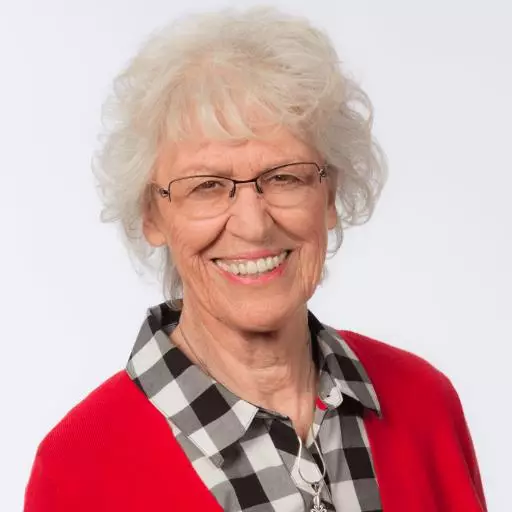
Telling the Truth for Women
Jill Briscoe
He Forgives Me


No sin is bigger than God's forgiveness and mercy. There will be consequences for sin, but the love of God is the kind of unconditional love that shows mercy when the object of its love lies prostrate and repentant. David learned this when he sinned against God with Bathsheba, he learned the weight of guilt. He also learned that God's mercy is an attribute of His unfailing love.
In this message, Jill Briscoe teaches us the importance of letting God love us by letting Him forgive us.
Jill Briscoe: Calvary's love, that's what we've been thinking about and studying about, but taking it from the Old Testament using the word *hesed*: God's unfailing love. A word that's used in many different ways, many different places in the Bible. How do I know that God loves me? Well, God took so much trouble to make me. God knows me. He knows all I'll do before I ever do it, and he loves me still. God chose to choose me. He invested me with his Holy Spirit; he anointed me. How do I know God loves me? For all these reasons and more.
How do I know God loves me? He rescues me from the giants of my life, from the Goliaths that come against me. He comforts me. How do I know he loves me? Because he takes time out to help me when I'm hurting. That's how I know he loves me. And today we look at another facet of this marvelous word *hesed*: mercy, *rachum*. Often when the word *hesed* is used, it is used with another word to give us an angle, a sidelight, another aspect of the love of God. And mercy, forgiveness, is the aspect that we'll be looking at today.
He forgives me. The kind of love that includes mercy when the object is in a pitiful state, that's what the dictionary says. The kind of love, the love of God, is the kind of love that includes mercy when the object of its love is in a pitiful state. We'll be in 2 Samuel chapter 11, but also in the Psalms because we're looking at the life of David and how God's love was reflected in his life, how he really understood it and how it came to him in the things that happened to him. In Psalm 103, a Psalm of David, verse four, it says this: "He redeems my life from the pit, he crowns me with love and compassion. He satisfies my desires with good things so that my youth is renewed like the eagles." I've personalized that.
He redeems your life from the pit, he crowns you with love and compassion, with *hesed*. There is your word. Who satisfies your desires with good things so that the youth is renewed like the eagle? When somebody loves you, it makes you feel younger all the time. There is a renewing, renovating, creative side to love. *Hesed*: love showed by God regardless of our responsiveness or righteousness. Now we're going to look at the probably most well-known incident in the life of David. We're going to look at his affair with Bathsheba and how he needed God to forgive him. And perhaps when we think of David, it's very sad, but this is the incident that springs to mind. We think of him killing Goliath, yes, but we think of David and Bathsheba, names linked together in Christian history in our heritage.
David is roundabout 50. His days of being a fugitive are over. Saul has chased him this way and chased him that way. He has hidden in caves and holes in the ground. All who are in debt, all who are disappointed, all who are discouraged, rascals basically, come to him in his cave. And David takes this band of men and makes them a band who are feared. He makes them an army. They are the sort of people that have made up this ragtag and bobtail group that come to him, but they turn out to be David's mighty men. He is a leader. He is a wonderful leader, and they have fought their battles and they have survived.
And in his economy, Saul is killed, Jonathan is killed in battle, and David is anointed king. And he has a few little skirmishes to finish. In fact, all his life he was always fighting the Philistines. They were always nipping at his heels, and other people as well. But he is established, the king in his castle. God secures his kingdom for him. And it says in the Bible that the lines had fallen unto him in pleasant places. God had given him a godly heritage. Things were very pleasant. He had a big house. He had a lot of wives, not just one, a lot of beautiful women, queens and princesses, the best that he wanted, he had accumulated to himself.
And now he is 50-ish, and he is in mid-life, and he is having a mid-life crisis. Of that we are sure. In the spring, at the time when kings go off to war, David sent Joab out with the king's men and the whole Israelite army. They destroyed the Ammonites and besieged Rabbah. But David remained in Jerusalem. One evening he got up from his bed, he walked around the roof of the palace, and from the roof he saw a woman bathing, and the woman was very beautiful. David sent someone to find out about her, and the man said, "This is Bathsheba, the daughter of Eliam and the wife of Uriah the Hittite," one of David's mightiest of men, a man that had come to him in the cave, that had risked his neck and his life and had become one of the leaders of David's mightiest.
This was his wife. And David sent messengers to get her, and she came to him, and he slept with her. And then she went back home. And the woman conceived and sent word to David saying, "I'm pregnant." So David sends words to Joab because Joab and Uriah and all the leaders are out fighting this battle, and he says, "Send Uriah home." And Uriah comes home. David says, "I wanted you to come and give me greetings and tell me how the war is going." And Uriah must have thought to himself, "Well, why did he send for me? I'm one of the commanders of his army. Why didn't he send for a messenger or someone? And I need to be back out there. All my brothers are getting their heads knocked off."
And so he tells David, and then David says, "Well, go home and greet your wife." For obvious reasons, he wants him to sleep with Bathsheba so that the baby that is to be born will be counted his and not King David's. However, Uriah doesn't. He says to himself, "How can I go home and sleep with my wife when I should be at the battlefront?" He's absolutely urged to get back there. He is frustrated to bits about this thing that he's been asked to do. And so he doesn't go. And so people tell David, and David says, "Well, I'm going to have to make him go." So he persuades him to stay another day. He wants to go back then. No, he said, "I want you to come and eat and drink with me tonight."
And David gets him drunk. He thinks now he's going to go home and sleep with his wife. But Uriah goes among David's servants in the courtyard and sleeps on a mat. Uriah was a better man drunk than David was sober at that point in his life. And so David knows it's not going to work. And he sends a message in Uriah's hand back to Joab: Put him in the front of the battle, withdraw and leave him. And that's what Joab does. At that point, his greatest asset, Joab, the commander of his army, turned against David. Oh, my master can write Psalms, but he asks me to do something like this.
And a slow attrition began in the heart of Joab which resulted in Joab siding eventually with Absalom, David's son, and joining a conspiracy to overthrow King David. And so all sorts of disaster is looming here. Uriah is killed. The messenger comes back. David says, "Say to Joab, don't let this upset you. The sword devours one as much as it devours the other." He knows he's in trouble. Joab is thoroughly upset with David. But the person who is upset the most is the Lord. Look at the last verse: "But the thing David had done displeased the Lord." Now he has not only committed adultery, David has committed murder.
It's interesting to me as we start and look at this whole thing and see what God did about it. It was in the spring, at the time the kings go off to war. It sounds as if there's a season, doesn't it? There was a season when the kings went off to war when it wasn't muddy, when their chariot wheels didn't get stuck in the mud and all of that. There was a season when everybody went out and fought each other apparently. And in the spring, at the time when kings go off to war, David stayed at home. And what's more, David stayed in bed and he sent Joab. This is a little inkling of what was happening to this man at this point in his life. He was tired of fighting the battles of the Lord.
And you know, sometimes we can all get tired of fighting the battles of the Lord. I remember a friend of ours taking his wife to Africa. She didn't want to go, but he dragged her there anyway. He was a speaker. He was a teacher. She was quite content to wait at home till he came back, but he said, "You've got to come. You've got to come. And you've got to see this incredible Victoria Falls. It is just one of the seven wonders of the world and there is Livingstone, his statue, beaming out across Africa, standing there at the top of Victoria Falls. It's a magnificent statue, the falls behind him, looking over Africa in a very stately pose."
And he felt if he could just get his wife around the corner of the forest where you get this shock view of Livingstone against the falls, then she would love Africa too and she would go with him in future. So he drags her all over Africa and she gets sick and she hates bugs and there they all are, waving little flags, "Hello, we're glad to see you" and all of this. And eventually she gets to this corner of the forest and they come around and he looks at her face and she's looking at this incredible picture and he says, "There he is, darling. There he is, darling. What do you think he's thinking?" And she said, "I think he's thinking I've had it up to here with Africa."
And you know, we can have it up to here with Africa. We can have it up to here with the church, with the ministry. We can have it up to there with fighting the battles of the Lord. We can. You can get tired in the work of the Lord, but you can get tired of the work of the Lord and there is a difference. And David was tired of fighting the battles of the Lord, the physical battles and the spiritual battles. The biggest spiritual battle of his life was just about to begin and he was about to be defeated. This was a giant bigger than Goliath. This was a giant bigger than Goliath.
Now David sent somebody else; he should have been out there, commander of his army. But the interesting thing is in verse two, it says, "In the evening David got up from his bed." And so here we get another little clue that his disciplines are slipping, that he's getting middle-aged and tired of the whole thing and now it's time to just enjoy the spoils of victory and the kingly things that have come to him through God's goodness. So it tells us a little bit about what was happening, his physical and spiritual disciplines were slipping. He was letting up, and when you let up, you often let in the suggestions of the devil and then you let down the Lord. You let up, you let in, and you let down. You let down your guard and you let down the Lord.
The Bible gives us no leeway whatever age or season of our life we are. Abraham was very old when he took off into the desert to begin that trek, knowing not where he went. Moses, 80 years of age when he started to lead the children into the desert, began the biggest part of his ministry. Anna in the New Testament, day and night she was in the temple praising the Lord, and she was well up into her 80s. She never departed from the temple. And so whether we retire physically or not isn't the issue. We never retire spiritually. And there are battles we can face and there are battles we can fight at different seasons of our lives and they all have their own temptations. But I think mid-life has a lot of temptations that perhaps we're not up to fighting because we begin to let down and we begin to just rest a little bit and then the devil is onto us in a flash.
Now I wrote a book years ago called *Prime Rib and Apple*. It's out of print now, but it's about all the prime ribs in the Bible starting with Eve. And I wrote a chapter in this book which became the most productive chapter for people reading this book. People wrote to me from all over the world after reading this chapter and it is called "How to Commit Adultery When Your Husband's Out of Town." It's about Bathsheba. And it's just a creative look at what happened. I'm just going to read you a little bit because it tells you a little bit about how the devil works and how he uses temptation.
The snake was busy editing Lust's manuscript. The spelling was dreadful, but the ideas were as bad as they could be, and the snake knew it would be a hot selling item on the market. In fact, he knew exactly who the first purchaser would be: beautiful Bathsheba. She'd buy it. He flicked his tail in evil delight. Putting the finishing touches to the porno cover, he deliberated over the title and with a flash of evil genius, he came up with a best-seller title: *How to Commit Adultery When Your Husband's Out of Town*. "How about that?" he asked Lust, who drooled approvingly and rushed away to present it to Uriah's wife.
She was going to be hard to entice. Her husband, fighting Israel's battles far away, might have been an easier target. But something told him that wasn't the way to go. Sometimes it's easier to fall for temptation in ordinary everyday situations like, well, like the very one he found Bathsheba in as he arrived at her front door. Her husband was out of town, and was all, but that was enough. Omnipotence allowed temptation to knock at the door and Bathsheba opened it and smiled. "Come in," she said.
Now temptation is not sin. If it were, then Jesus was a sinner because Jesus was tempted. In fact, we read in Omnipotence's book that the Holy Spirit actually led Jesus into the wilderness to meet temptation. He knew who stood behind temptation's shadow, that is the snake, and he knew the experience of resisting would result in his returning in the fullness of the power of God. No, temptation is not sin, but to obey his evil suggestions is. Bathsheba wasn't a bit afraid of him. After all, he was very familiar. In fact, he was common to man. Everyone she knew was acquainted with him, so why be suspicious? She'd faced him before and had usually been able to ignore his suggestions, but this time it was different. She was lonely.
Uriah had been away such a long time. She was bored. There was nothing to do. She was also depressed. She wasn't usually so, but then temptation isn't stupid. He isn't stupid enough to approach us when we're at our best. No, it's when we're vulnerable, hurting, lonely in some area of our life that he cunningly appears. And so it was. The beautiful prime rib noticed her visitor was carrying a new book in his hand. She didn't know it had been written especially with her in mind. She was also unaware it was straight from the pit of hell.
There appeared to be an intriguing picture of the king on the front that captured her attention. At least it seemed to be intriguing till she noticed he was naked. She gasped in horror. Her eyes travel to the title, *How to Commit Adultery When Your Husband's Out of Town*, and she looked long and hard into temptation's eyes and they had this hypnotic quality about them. They appeared to be calm and reassuring as if to say, "Now don't run away. Just give me a chance to explain the whole idea. Just take it in your hand and think about it. Plenty of time on your hands. What you need is a good book to go to bed with."
Did he really think he wanted her to go to bed with a book? Having given Bathsheba their ideas, Temptation and Lust walked quickly across the narrow streets of Jerusalem to David's palace. And so the story goes on. And you know the end of it. Now temptation is an opportunity to do the right thing as much as the wrong. God wants to strengthen you, the devil wants to finish you. He wants to finish you off. God wants to deliver you, the devil wants to drown you. God allows us to face temptation.
What were David's options? First of all, be sensible. What are your options? What are my options? When we open the door to temptation, be sensible. Get off the roof. Okay? Get off the roof. This might be very simple, but I am just going to go through these things with you. You know one of the problems we have? We know we're being tempted, but we stay on the roof. I talked to a girl years ago who had just come back to work after raising two or three kids and her boss began to make advances to her and began to bring her flowers and ask if perhaps they could eat supper and she could see the way the wind was blowing.
And she came to me right at the beginning and she said, "I am appalled at myself. There is a response to this. What do I do?" I said, "Get off the roof." She said, "What do you mean?" I said, "Leave the job. Get another job." She said, "I don't think I can." I said, "Okay, get off the roof. Leave your job. Don't get another job, but get off the roof. If you can do it in the firm so that you're not in this situation, move laterally. I don't know, but you have somehow to remove yourself from that if you feel that response." Now if she had been strong or if she was doing very well with it, I might have said something else to her, but she was very conscious she was wanting to be on the roof. And she said to me, "I don't want to get off the roof. I'm really scared now. I do not want to it isn't the job. It isn't the job. I know I could really get another job. I just don't want to get off the roof."
And so you've got to be sensible. You've got to get out of there. The Bible says, "Remove your foot from evil." It says, "Flee youthful lusts." Get out! I remember being in a party years and years ago at Cambridge. I had been aware it was a roof party, if you like. I had received the invitation at the bottom in little letters. It usually said what sort of dress to wear: formal, informal, fancy dress. This time it said dress optional, so I knew it was a roof party. However, I went. I went with my friends. I had probably been converted two months. And as the roof party got going, a verse of Scripture popped into my mind from my beginnings of reading the Bible: "Remove your foot from evil. Flee youthful lusts. Get out! Get off the roof!"
And I tell you, it was a real struggle to leave that party almost as soon as I'd arrived because I wanted to stay. Be sensible, but be honest. Know yourself. You are going to respond. You're going to respond perhaps if your marriage isn't as good as it should be and another man begins to show you a little bit of attention, listen to you like your husband stopped listening to you, flatter you like perhaps your husband's never flattered you, and you want to be there. So be sensible. Be honest. Never say never. Never say this could never happen to me. Let he that thinks or she that thinks she stands take heed lest she fall.
I remember talking to a pastor's wife in Australia who said to me, "I'll never, ever commit adultery. I love my husband, he loves me. Murder yes, adultery no." And I said, "Never say never." She said, "Jill, I can't relate to what you're saying. I just cannot relate." I had been taking this material over there. And I said I just kept saying, "Well, just never say never. Never say never." And I can't remember how long it was after this that I got a letter from her. I had said to her, "Have you ever had the chance?" She was very pretty. And she said, "Yes, I have," which didn't surprise me. And I said, "How did you handle it?" She said, "No problem." I said, "Let me ask you another question. Was it a King David or a King Lear?" She said, "A King Lear." I said, "Well, anyone can say no to a King Lear. Wait till David comes along."
And I think it was two years later she wrote me a letter. She said, "David moved in next door." And she fell. She wasn't honest and she didn't know herself and situation had occurred in her marriage in her family that made her vulnerable and open to that temptation. Laziness plus loneliness spells trouble. We are vulnerably, sexually whatever age we are and we have to get off the roof. We also have to be sensible, we have to be honest, we have to be in the word. Psalm 119, David's words, nine to 11: "How shall a young man cleanse his way? By taking heed thereto according to thy word. Thy word have I hid in my heart that I might not sin against thee." One of my memory verses from when I was 19 years of age. Very good one.
How shall I cleanse my way? How shall I keep clean? How shall I be pure? By taking heed to this. Your word have I hidden in my heart so that your word can leap up like it did for me at that party. "Flee youthful lusts. Get out! Remove your foot from evil. Get off the roof!" Memorize the Scriptures. Get that word in there because then the Holy Spirit can give you the weapons of your warfare to fight your giant. He can hand you those little stones to kill your Goliath when temptation comes.
So be sensible, be honest, be in the word, be accountable. Into this story in chapter 11 comes Nathan, one of David's best friends, his prophet, his personal, personal prophet. How wonderful to have a personal prophet. David had two best friends. He had a Jonathan and he had a Nathan. And I would like to suggest that we need two friends represented in our lives. We need a Jonathan who's going to love us to death, who is going to just kill us with kindness. And we need a Nathan who's going to confront us with the truth and who's not going to let us away with things that we shouldn't be allowed to get away with.
A friend loves at all times. Faithful are the wounds of a friend. If you really love someone and you see them walking towards a cliff, aren't you going to say, "Don't"? You need to be a Nathan. There comes a point where we can be that for each other in the body of Christ and confront each other. Many, many times when I've talked like this, people come up and say, "This is happening right you have just described what's happening in my family. My sister is going through the but I don't know what to do. I don't think it's my place. I daren't pick up the phone and say something. Who am I to? It might spoil our relationship. What am I to do?" They are watching the person walk towards the cliff.
Well, it's better to do something and do it badly and do it wrong than not do it at all. I really believe it. And it could be that you could save somebody from going over the cliff. Nathan came to David. God said, "Nathan, go and talk to that king of mine, that man after my own heart, and tell him this." And Nathan comes and tells him a little story about a man who had one little ewe lamb. And somebody came out of the woodwork and took this little ewe lamb and killed it and the poor little man only had one. And the man that killed it and took it had many, many ewe lambs.
And David was mad. He said, "Who is this man? This man who had all these sheep and took that poor man's one little lamb? He's going to be punished." And Nathan looked at him right in the eye and said, "You are the man. You're the man. You had all these little wives and Uriah had one precious little lamb and you took his little lamb and you've displeased the Lord." And David said, "I have sinned against the Lord." I think that verse is to me one of the most incredible verses in the Bible because it shows me David's heart. It shows me David's heart.
Now this was 10 months, I would guess, after the event. 10 months after the event. The baby is born. And so for 10 whole months, David has lived with what he has done. And Bathsheba has lived with what she has done, for she came willingly. And then Nathan comes and confronts him. And you know, oh that we could be more Nathans for each other and really love enough to prevent disaster happening. But if we do not have a Nathan, we have a Nathan who lives within: the Holy Spirit. The Holy Spirit is our Nathan and he's not going to let you get away with this.
And I cannot believe that David got away with it. I believe for 10 whole months he had been drowning in guilt. I believe it because what he says in Psalm 51, which we'll look at in a moment. I believe that he had drowned in guilt, that he was miserable. And when Nathan came, he was ready. The Holy Spirit had been convicting David. The Holy Spirit had been saying, "You grieved my spirit. You resisted my word. You sinned against the Lord." But it is done. Uriah is buried. The body is there. And so you pick up the bits, I suppose, says David, and do what you can with the mess that you have made.
But when Nathan confronts him, he is ready. And he says, "I've sinned." He says, "I've sinned." He doesn't say, "How did you know?" He says, "I've sinned." God told Nathan exactly what had happened. Now we are free to sin, but we are not free to choose the consequences of our sinful action. And our kids need to know that. Women need to know that that are busy having affairs with other people. You are free to have this affair. God has given you the incredible freedom of free choice, but you are not free to choose the consequences of your action.
And if we choose to violate God's law, there will be consequences that will be hurtful and damaging to someone somewhere. Many people in David's situation. The baby dies. He fasts and prays, but to no avail. Maybe God will be merciful and the child will live. But the baby dies. Nathan has told him this will happen. His prize, precious, favorite son, Absalom, is just about to start his conspiracy against his father and betray him. And that's what Nathan said, verse 11 of 12: "Of one of your own household, I'm going to bring calamity on you. Before your very eyes, I will take your wives and give them to one who is close to you, and he will lie with your wives in broad daylight," which is exactly what happened.
Absalom rises up against his father. Just turn to 14 for a minute, verse 25. "In all Israel, there wasn't a man so highly praised for his handsome appearance as Absalom. From the top of his head to the sole of his foot, there was no blemish in him. Whenever he had his hair cut and he used to get his hair cut from time to time when it became too heavy, he would weigh it and it was pretty heavy. He had three sons and a daughter. His daughter's name was Tamar, she became a beautiful woman," etc. etc. And then in 15 he begins his conspiracy. Look at verse five. "Whenever anyone approached the palace to ask for the king's judgment on a matter, Absalom would reach out his hand and take hold of him and kiss him. And he would say, 'Oh, the king doesn't have anyone to listen to you. I'll listen to you. What's your problem?'"
And look at the end of that verse: "So he stole the hearts of the men of Israel. So he stole away the hearts of the men of Israel." And in the end, he rises up and David in verse 13 flees, and he walks up with his servants and the loyal people of his household and everyone in the countryside sees the king and his entourage fleeing once more like the good old days and everyone weeps. David has to flee for his life from his own son. Absalom says, "What should I do?" 16, 20. And Ahithophel, difficult name, who is one of the priests of the Lord who's a false priest and stayed with Absalom says, "I'll give you some advice. Lie with your father's concubines whom he left to take care of the palace. Then all Israel will hear you've made yourself a stench in your father's nostrils and the hands of everyone with you will be strengthened."
So they pitched a tent for Absalom on the roof and he lay with his father's concubines in the sight of all Israel. You can choose to have a night with Bathsheba, but you cannot choose the consequences of that action. And I don't know where that message has got to. We've lost it in the church, I think. But there are consequences to our action. Our kids need to know it, we need to know it, our world and our Christian world needs to know it. And so Joab's heart is turned against David. Joab sides with Absalom. Needs a bit of persuasion, but Absalom gets Joab in the end to turn against his own father. And he's lost all the people closest to him.
And you know, God loves us so much he will not interfere with our personal choices, but he warns us. He warns us. That's what this is all about. You'll reap what you sow. The soul that sinneth, it must die. And so we turn to Psalm 51. And this is a Psalm I would urge you to, if you can, memorize, but certainly to know it inside out. A Psalm that I use probably more in counseling, not just for cases of sexual misconduct, but more in counseling than any other Psalm in the Bible. And just to be able to take somebody through this Psalm, to sit down with a cup of tea at your table, somebody who is suffering guilt because of something that they've done. Perhaps they've had an abortion and they don't know what to do with the shame and with the guilt of that.
When I was in Hume Lake, there were electives during a women's conference I was having, that was down in California. And one of the other speakers was taking her elective and I said to her, "What is your elective? What's it about?" And she said, "I am just having all the people that have had abortions." And she said, "I'm going to talk about forgiveness and I'm going to talk about renewal and starting again and what do you do with the consequences of the bad choices that you've made," etc. And I said, "Oh, goodness, I wanted to go and hear it, actually, but I couldn't because I was doing something else." And after it was over, I said to her, "How did it go?" She said, "Well, I'm going to have to repeat it two more times. The room wasn't big enough."
I'm going to have to repeat it too many times. The room wasn't big enough. And it was quite a large room. Of course, there were 800 to 1,000 women there. But when you looked at that room and realized it was going to be full three times of Christian women who have come to Christ, who knows, before, during, after who are going to be going through this Psalm. This was her text. It really made me think. And what we have to do is see what David did. Have mercy on me, O God, according to your *hesed*. There it is. It is because of *hesed* we can ask God for mercy. The two things go together. Mercy that does not give us all we deserve. Our own sin brings on us what we deserve. But God's mercy does not give us all we deserve. And his unfailing love.
We've seen it in creating David. Remember in that talk I said to you, God knew what David would do with all those little parts, and he still made them perfectly able to do it. He knows what we will do. He creates us anyway perfectly and he allows us to use our bodies according as we will, but he does not allow us the freedom to choose the consequence of that. And David says, "According to your unfailing love, according to your great compassion, blot out my transgressions, wash away my iniquity, cleanse me from my sin. I know my transgressions and my sin is always before me. Always before me." You think he's got away with it? Well, nobody knows, but it's always before me.
Uriah was always there every time he woke up in the morning. The death of his child in his mind, Absalom, Joab, the whole mess always before me. "But I know my transgressions, and against you, you only have I sinned and done what is evil in your sight. You're proved right when you speak, justified when you judge. Surely I was sinful at birth, sinful from the time my mother conceived me. But you desire truth in the inward parts, you teach me wisdom in the inmost place. Cleanse me with hyssop and I will be clean. Wash me and I will be whiter than snow. Let me hear joy and gladness, let the bones you've crushed rejoice. Hide your face from my sins, blot out my iniquity."
If you don't know what to say, say that. Sometimes people say to me, "I don't know what to say." I said, "Why don't you read this and make it your prayer to God?" Hand them the Bible. Let them read it. Give them David's words. There are none better that I know. I couldn't think of anything better. This is a prayer that is always heard. The kind of love that includes mercy when the object is in a pitiful state, remember? Psalm 103:4, he redeems my life from the pit, he crowns me with love and compassion. "Have mercy. Blot it out. Wash it away."
And you know, when we get to heaven and we say to God, "God, do you remember that?" Because it's always before us, he will say, "No. What?" Because he's blotted it out. He's blotted it out. And there might be something that you have never and will never be able to forget. Never forgive yourself for. But what God has forgiven you for, you have no right to go on remembering. Remember, I think it was Alan Redpath that said God has cast all your sins into the depths of the sea. That's in the Bible. And put up a little sign: "No fishing." No fishing. He has blotted it out. He has washed it away.
Sin against man is a sin against God. Against you, you only have I sinned. No, you said he sinned against Bathsheba? Yes, he did. But a sin against man is a sin against God. Jesus said as much as you've done it unto one of them, you're doing it to me. And he's the one we have to begin with to receive forgiveness from. And you know, sin to do with sexual sin has to be forgiven. We need to say we're sorry. And people don't even know where to start with this. I was watching a program from Minneapolis where kids in schools were being asked about homosexual relationships in high school in Minneapolis, in a very nice suburb, in an area where there's a lot of Christianity going on, a lot of great churches.
And I was appalled. I mean, I know it's out there. I'm a little out of touch with what's happening in the schools. I was absolutely appalled. All these neat high school kids in Minnetonka, out there in that very wealthy suburb, were being asked a question: Do you believe having a homosexual relationship with another girl in this class or another boy in this class is all right? Not one of them said it wasn't. Well, yes, sometimes you just get sick of the guys, one girl said. And the girls really understand you better. And it's nobody's right to say that's wrong. Who's right to say if I mean, if somebody loves you and really can put something into your life, then it doesn't matter whether it's a man or a woman. There is so much confusion.
My daughter's neat baby-sitter, gorgeous girl, high school girl, went to the prom last year. And she went with her best friend who happened to be a guy. She'd just grown up with this guy. He's neat. He's the class president. And now he isn't her friend anymore because she wouldn't go to bed with him. And she said he won't even talk to me. He said, "I spent all this money on you." And that's how it is. And you know what is so marvelous is that the standards that God sets are standards that we need to reiterate to our children, not only to our children, to our adults too. I had a woman say to me, who should know better, "But I love this man." He happens to be married to someone else, but I love this man. And he loves me. And God wouldn't want me to be unhappy. And if it feels so good, it must be right. Who's given me this love? God is love. How could I have love if God hadn't given me this love for this man?
And I said, "I'm sure you do love him. And I believe that he loves you. But what is that to do with what you're doing about that? And you might have to love him for the rest of your life, but he doesn't belong to you. That's trespass. That's stepping over the line. You do nothing about that if you're a believer." And what David was able to say, sin is sin and I repent of it. And he comes to the end of the Psalm: "Create in me a pure heart, O God. Renew a steadfast spirit within me. Don't cast me from your presence. Don't take your Holy Spirit from me. Restore to me the joy." You see, you lose the joy of your salvation when we sin, whether it's a sexual sin or whatever sorts of sin it is. You lose the joy. If you've lost the joy, it could be because there is a sin that needs to be cleansed.
"Then," says David, "I will teach transgressors your ways." I've been out of ministry. He'd lost the desire to minister. You do when there's something wrong between you and God. "And sinners will turn back to you. I'm going to be used in people's lives again. Save me from blood guilt, O Lord." Guilt is holding a grudge against yourself. We're told not to hold grudges against anybody else. Don't hold it against yourself. Quit saying, "Why did I do that? Why did I do that?" God can save you from its guilt and power.
The God who saves me. You are the God who saves me. My tongue will sing of your righteousness. Lord, open my lips and my mouth will declare your praise. You don't delight in sacrifice, ritual, or I'd bring it. You don't take pleasure in burnt offerings. The sacrifices of God are a broken and contrite heart. O God, that you will not despise. And there will be a new sense of his presence. There will be a new sense of his joy. There will be a new sense of ministry and evangelism. You've just got to let God love you. How do you let God love you? Let him forgive you. Know it's there ready for you to come and take. And some of us never enjoy what God intends for us in the Christian life because we have never been able to know we are fully forgiven. We never get that sneaking feeling over that sneaking feeling, "Well, if I don't forgive myself, if I feel so guilty, then how could God have forgiven me?"
What God has forgiven you, you have no right not to forgive yourself for. What God has forgotten, you have no right to remember. Psalm 51. So *hesed*. God *hesed* us. He forgives us. And you know out of that experience, you can go on with your life no matter what. Remember *Amazing Grace*? Who wrote that? A slave trader, a murderer. Amazing grace, doesn't matter what we have done, how sweet the sound that saved a wretch like me. I once was lost and now am found, was blind but now I see. God, somebody said, can go from the guttermost to the uttermost. He can take you from the guttermost to the uttermost. Yes, he can. I've seen it happen. I hear the testimonies. I know it in my own life. And I tell you that God loves you. *Hesed*.
Let's pray. Heavenly Father, thank you for your word. Thank you for this incident in David's life. Not because we're glad it happened, but because we can learn from him, from his quick response, from his quick repentance, from his acknowledgment of sin. He didn't call it something else. He didn't dress it up. He didn't try to make it smell sweet. He said, "I have sinned." God, would you bring the conviction of the Holy Spirit to your church and would you help us walk clean, walk before you in the light of your Holy Spirit's teaching and illumination? Would you forgive us? And Lord, I pray specifically here for someone who has never felt forgiven, never known it, not really experienced it. And I pray that today, perhaps for the first time, they may just let you love them in this sense: forgive them, all part of your love. And use us in the lives of other people to help them find that forgiveness too. For Christ's sake, Amen.
Featured Offer

When life takes an unexpected turn, it’s easy to feel overwhelmed, uncertain, and alone. In her message, “Weathering the Storms of Life,” Jill Briscoe shares biblical truth to help you trust God in the middle of fear, doubt, and difficulty—reminding you that even when circumstances change, He remains steady.
As thanks for your gift today, we’ll send you Jill’s message along with 12 beautifully designed Scripture cards to encourage you on your journey of faith.
Your support helps share life-giving Truth with people searching for hope in the midst of their own storms. Thank you!
Past Episodes
- A Lifetime of Wisdom
- A Little Pot of Oil
- A View from the Porch Swing
- Are You Good Soil?
- Art of Leadership
- He Came to Give Us Life
- Heart Hunger
- Here Am I, Send Aaron
- Hidden Treasures
- Hope for the Disheartened
- How Do I Find Joy?
- How to Be Up When You're Down
- Lessons from the Boy Jesus
- Let's Talk
- Life Lessons
- Life that Works
- Living Above the Circumstances
- Living in the Word
- Living Love
- Lost and Found
- Searching
- Seeing Through Suffering
- Shaking Up Your World
- Shelter from the Wind
- Six Things a Mother Can't Do
- Slaying Giants
- Solid Ground
- Spiritual Arts
- Take 5: A Christian Point of View
- The Balancing Act
- The Cutting Edge
- The Fatherhood of God
- The Heart and Soul of Friendship
- The Heartbeat of the Master
- The Holy Spirit
- The Holy Spirit and You
- The Innkeeper's Daughter
- The Names of God
- The New Normal
- The Power to Change
- Triumph in Trouble

Featured Offer
When life takes an unexpected turn, it’s easy to feel overwhelmed, uncertain, and alone. In her message, “Weathering the Storms of Life,” Jill Briscoe shares biblical truth to help you trust God in the middle of fear, doubt, and difficulty—reminding you that even when circumstances change, He remains steady.
As thanks for your gift today, we’ll send you Jill’s message along with 12 beautifully designed Scripture cards to encourage you on your journey of faith.
Your support helps share life-giving Truth with people searching for hope in the midst of their own storms. Thank you!
About Telling the Truth for Women
Telling the Truth exists to make available sound biblical teaching, practically applied, with a view to producing lives that glorify God and draw people to Christ. The whole of our ministry is to encourage, console, strengthen, teach, and train.
About Jill Briscoe
In addition to sharing with her husband in ministry with the Torchbearers and in pastoring a church in the United Sates for thirty years, Jill has written more than forty books, travelled on every continent teaching and encouraging, served on the boards of "Christianity Today" and "World Relief," and now acts as Executive Editor of a magazine for women called "Just Between Us."
Jill can be heard regularly on the worldwide media ministry called "Telling the Truth" She is proud to be called “Nana” by thirteen grandchildren.
Contact Telling the Truth for Women with Jill Briscoe
info@tellingthetruth.org
Brookfield, WI 53005-4633
Outside North America
Telling the Truth
PO Box 204
Chessington
KT9 9DA
United Kingdom
800.889.5388
Outside North America
0800.652.4120