
Telling the Truth for Women
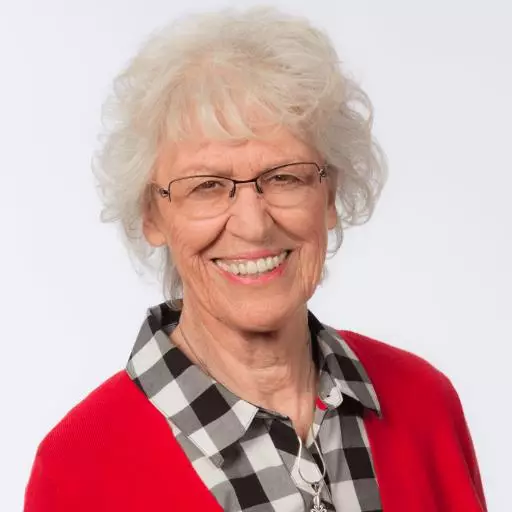
Jill Briscoe
Finishing


If someone were to ask you today what your purpose in life is, would you be able to confidently answer?
Finding your life’s purpose can be challenging. As Christians, we know our primary calling is to follow Jesus, but how are we supposed to be practically spending our days?
In this message, Jill Briscoe reminds you that God has a specific plan for your life—and it’s never too late to figure out what it is. Jesus wants you to join Him on the grand adventure He has in store for your life.
Jill Briscoe: We're going to be talking a little bit about that deep love and how it motivates, mobilizes us, infuses us with life. And we're going to talk about finishing, finishing strong as we finish the series, as we finish looking into John chapter 21, and you can turn there. John chapter 21 together.
We're going to talk about what it means to finish. This is what Jesus talked to Peter about, one of the last times that in his resurrected body he met with his beloved Simon Peter and recommissioned him to finish and to finish strong.
Now, the story is that as Jesus was appearing to his disciples, he had already appeared to Peter. In fact, it tells us in Luke's Gospel that Jesus appeared to Peter. It doesn't tell us anything about it in one of the earliest resurrection appearances. And so we presume that reconciliation, that things that needed to be said, the sorries, the tears, the reconnection with Jesus after Peter's denial had already happened.
Peter was with the 11 in the upper room when Jesus walked through the door without the benefit of opening it and said to Thomas, who was meeting him in his resurrected body for the first time, "Thomas, put your hands into this womb, into the wounds in my hands and don't doubt, but believe." And "Blessed are those who have not seen but believe." Peter was there. And so in his resurrection life, Peter had already met Jesus.
Jesus had told the men, "Now, leave Jerusalem," and that's where most of the first resurrection appearances happened, "and go to Galilee, and I will come to you there." And so the men had left Jerusalem after those hectic, incredible days, after Jesus' resurrection, and gone back to Galilee, waiting for him, looking for him.
I'm sure their eyes were everywhere. I'm sure that they went to bed wondering, "Will he be in my room when I wake up or before I sleep?" And as they would shop and do the normal things, "Would he be there in the marketplace?"
Well, on this occasion, a few of the disciples were together and Peter, being a little impatient, said, "I just can't hang around waiting for Jesus to walk up. Let's go fishing." And so they took the boats out and they went fishing all night and they caught nothing. And in the day, a figure appears on the shore in the mists, the early morning, and says, "Friends, do you have any fish?" "No," they said. "Well, put the net on the other side of the boat," which they did. It says, "And they caught large fish."
As soon as that happened, John looks at Peter and says, "It's the Lord." Now, why would he say that? We know why, don't we? Because in Luke chapter 5 at the beginning of this incredible adventure, this life adventure, Jesus had appeared on the shore after a night when they hadn't caught any fish and said, "Put your net on this side of the boat." And what had happened? The nets had broken.
Well, as soon as Peter heard that, typical, he throws himself overboard and swims. He's not going to wait to drag the fish to the shore. And by the time the others who had brought the fish and organized themselves arrived, Jesus had said to them, "Come on, let's have breakfast." And there was a fire and there were some fish already on it. Do you ever wonder where Jesus got those fish? And he said, "You bring some of the fish that you've brought." And so they did, and they had breakfast together.
Now, after this, Jesus and Peter have a little talk. And Jesus says to Peter, when they'd finished eating in verse 15, "Simon, son of John, do you truly love me more than these?" "Yes, Lord," he said, "you know that I love you." Jesus said, "Feed my lambs." Again, Jesus said, "Simon, son of John, do you truly love me?" He said, "Yes, Lord, you know that I love you." Jesus said, "Take care of my sheep." The third time he said to him, "Simon, son of John, do you love me?" Peter was hurt because Jesus asked him the third time, "Do you love me?" And he said, "Lord, you know all things. You know that I love you." And Jesus said, "Feed my sheep."
"Tell you the truth. When you were younger, you dressed yourself and went where you wanted. But when you're old, you will stretch out your hands and someone else will dress you and lead you where you do not want to go." Jesus said this to indicate the kind of death by which Peter would glorify God. Then he said to him, "Follow me."
Peter turned and saw the disciple whom Jesus loved was following them. This was the one who'd leaned back against Jesus at the supper and had said, "Lord, who is going to betray you?" When Peter saw him, which is John, he asked, "Lord, what about him?" And Jesus said, "If I want him to remain alive until I return, what is that to you? You must follow me." Because of this, the rumor spread among the brothers that this disciple would not die. But Jesus did not say he would not die. He only said, "If I want him to remain alive until I return, what is that to you?"
This is the disciple who testifies to these things and who wrote them down. We know his testimony is true. Jesus did many other things as well. And if every one of them were written down, I suppose that even the whole world would not have room for the books that would be written.
And with that, John closes his Gospel album. Now, that's not the end of John's writings. And it might be a good individual encouragement to you if you just read for yourselves the Epistles of John, to follow up on this talk. It would make so much difference to you to realize that John later, writing to his people, takes so much of what we've talked about and teaches them and goes on from there. He is known as the Apostle of Love, and we've talked about Simon being turned into Peter, the changes that God makes. But remember John, who wrote this album for us, who took the pictures and selected those pictures of Christ he wanted in his Gospel album. Remember this man and the changes in his life.
One day, they were all walking along and this village was really rude and threw Jesus and the disciples out. And it was John who said, and his brother, "Okay, God, shall we call down fire from heaven and burn them up?" And Jesus lovingly gave them a nickname, "Boanerges, Sons of Thunder." Anger, vindictiveness, revenge. And God took John, and he turned him into the Apostle of Love. And when you read the Epistles of John, you'll find love, love, love, love written right across. That's what God does. He takes our Simonness and turns it into Peter. He takes Boanerges, a son of thunder, anger, and he turns him into an Apostle of Love.
Now, he does that by his spirit. But you know, there's little blips along the way. That's not going to happen overnight. And sometimes, maybe we get discouraged in our Christian life, and we take one step forward and feel we're going two steps back. But just let me encourage you, as Jesus met with Peter and set him off on the last lap, 20 more years of the last lap, but the last lap for Peter. As he set him off on that, just know that failure is never final. And Jesus will have breakfast with us, and Jesus will mend those things as we say our sorrys along the way for denying him and for not doing what we know in our hearts we want to do for him, and he'll give us another 20 years. Our 20 years, whatever it is, 5, 10, 15 to serve him again.
Now, I was at I was with the Missionary Alliance ladies, about a thousand of them in their international conference. And one of the ladies gave some statistics. She said that in USA Today there was a poll. "What would you ask a God or Supreme Being if you could get a direct answer?" Interesting question. Of course, you can, but maybe they didn't know that.
6% of the people that answered asked, "How long will I live?" 7% asked, "Is there intelligent life elsewhere?" 16% of the people asked, "Why do bad things happen?" 19% asked, "Will I have life after death?" 34% asked, "What is my purpose in life?" Is that interesting? And what's the theme of John's Gospel? He came that we might have life and might have it to the full. He came that we might have purpose and meaning in life. And of course, we have been answering all those questions. "Can you get a direct answer?" Yes. God is still on the throne. And as my husband used to sing that chorus lustily when he was a little boy, "God is still on the throne." He got it wrong and sang, "God is still on the phone." But that's all right. God's got a throne phone. There is a direct line and he's never engaged and all of that. You can get a direct answer, but not even in prayer, but through the Bible, he has directly answered all these questions.
"How long will I live?" It says he's measured out our years. He's numbered our days. And when our number is up, that's it. You cannot keep yourself alive, as Ecclesiastes tells us. "Is there intelligent life elsewhere?" Yes. Jesus came back from the dead and he seemed pretty intelligent. And he told us there was another place and there was a place called heaven. And there were people, human beings with resurrection eternal bodies that would be living there.
"Why do bad things happen?" Because there was a fall, and we're living in a period of time called "life after the fall" with a sinful nature. And that's why bad things happen. "Will I have life after death?" Jesus said, "I've come to give you life, my life, so that you can." Everybody will have life after death, depends where you live it. "And what's my purpose in life?" Now, that's the big one. That's the 34%. "What's the point?" I hear that a lot. "Life's meaningless. Vanity, vanity, all is vanity. Meaningless, meaningless. This is like chasing the wind," says Solomon, writing his book of Ecclesiastes.
Well, in this postscript, John writes at the end of his Gospel. "All these questions are answered in my Gospel album. And I didn't have space to put all the photographs of Jesus, all he said, all he did in my album. But you have enough in the Gospels, in this book, to get you to heaven. You have enough information to answer all these questions, all these biggies, all these most important, and above all, to answer the question, what is the purpose of life?" God has a purpose. And it's finding and fulfilling the central purpose of your life that makes life work.
God has a plan for your life. God has a purpose for every single person that comes into the world. And many millions never find it. Millions never hear anything to help them find it. Millions have never heard the name of Jesus once, and never will, unless we get our act together. So Jesus re-issues the call to humankind as it were, "Follow me." There is a purpose and it's it's wrapped up with knowing Christ, knowing God through Christ, and following him home to heaven. The long walk home. The long walk home to heaven, hopefully, begins the moment you're born and it ends the moment you die. And you're there. It's a long, long walk. And if we can find our purpose, our life purpose when we're young, we've got the whole of life ahead of us to walk on home with him.
I always think it's sad when people say, "I only found the Lord when I was 40 or 50 or 60 or 70," because they've had a long walk without Jesus. And now they're trying to catch up. "Oh, if only, if only I I really knew the Lord when I was raising my kids. If only I I really knew the Lord when I was choosing a mate. If only I I really knew the Lord when I started off on this path of life, or when tough things happened to me." And so thank God for whenever it was that you came into life. Thank him for that. And realize that you can find your life goal, whatever age you are. And he will maximize the time that you have left if you follow him.
Now, as he reminds us of our calling, let's talk about this. In Luke 5, he'd said, "Peter, follow me." At the end here, "Peter, follow me" twice, "You must follow me. You must follow me." The area of this following, this obedience, it really means, "You must put me first. You must follow me before you follow your husband. You must follow me before you follow your dreams and ambitions. You must follow me before you follow your plans, because the central purpose of your life as you do all these other things is to follow me, to stay close. Don't follow afar off, to stay close." And this will affect all the major decisions that you make. It'll affect how you live in your marriage, whether you have a marriage, whether you train for something at whatever age, your career, all the choices you face daily, food, fitness, money, vacations, days off, days on, spare time, hobbies.
Now, these will all fit under the central purpose of your life. But the central purpose of your life as you follow Christ will affect or should affect all these things. And how it affects them is what comes first. It's this eternal question, "Lord, there are so many priorities in my life. How do I sort out all these good things, these good priorities that seem to be the most important thing?" "Well, seek you first the kingdom and all these things," Jesus has been talking about, "food, fashion, finances" in Matthew 6. "All these things will find their proper priority. You put Jesus first." As a friend of mine has a wonderful way of saying it, "If Jesus is first, you'll know what's next."
And if Jesus is first, if the central purpose, if you've got that, he's got to be first. I've got to put him first. I've got to put him first. Now, working out what that means is is often the problem, what comes first. But if you just ask the king of the kingdom, who has to come first, "What's first today?" If you're walking close enough, you have breakfast with Jesus every day, he'll sort it out for you. And it'll probably be different each day, because all of us are different, all our situations are different, all our lifestyles are different, all our money is different, all our child raising, whether we're empty nest or full nest or whatever, it's different. So one of us cannot say to the other, "This should come first for you." He's the only one that can figure that out and you figure it out with him and your family.
"Jesus, what's first today?" And first today might be, "You look after your kids, you stay home. Maybe it's you teach your kids." And tomorrow it might be, "You let somebody else look after your kids and you go and look after somebody else's kids." Et cetera, et cetera, et cetera. I don't know. But the whole art is, what is the Lord say is first today? And that releases you from a hierarchy of priorities that somebody's trying to put on you.
"What's first today, Lord?" says Peter. First today is you look after your wife and family and you go fishing, Peter. And then a few days later, "What's first today, Lord?" First today is you leave everything and follow me and let somebody else look after your wife and kids and fishing boats. Now the art is being obedient to the priorities he dictates. The art is being obedient to the priorities he dictates, putting him first.
Now, how do we find that out? In and through the word. And it won't always be religious things. Don't think, "Oh, putting him first means I got to live in church." One of our pastor's kids was asked, "Where do you live?" And she said, "In church." That worries me that answer. "Where do you live?" "In church." It doesn't mean that putting God first means that I do nothing else but religious activities. It doesn't mean that at all.
I remember a situation arising where four of our grandchildren under school age needed somebody to go and look after them for two weeks. And so I prayed about it, "Lord, what is first? You know what responsibilities I have here, here, here." And it became very obvious to me through all the usual guidance methods that what was first for me was to cancel out a couple of meetings and look after four little children for a couple of weeks, which I did. And I want to tell you something, there was a point in the middle of that very hectic, very hard, in another way, work that God called me to do, as part of the life purpose of putting him first, of obeying his call, of following him. There was a point where it was pretty hectic and pretty hard work, and yet I had this indescribable sense of, "Yes! This is exactly what I should be doing and this is exactly where I should be for two weeks."
And I felt just as much a sense of his smile at that point as I did three weeks later, standing up in front of a thousand people, because that day, that's what he wanted me to do. And the art is figuring out, "What do you want me to do, Lord?" And it's such a release, because once you have given control of that to God, you don't have to figure it out. He will intentionally tell you. Now, you won't always get it right. I've never always got it right, goodness me. Who's always get it right? But if your heart is right, if your attitude is right, if the Lord knows, and you can say, "Lord, you know my heart. I'm trying my best. I don't think I did it right this time. I shouldn't be here. I should be there." You know, I mean, you're going to have days like that. Realize he'll smile at you and say, "I know your heart. I see your attitude, and it's all right. We'll get it right next time. We'll get it right next time. Let's have breakfast."
So the ordinary calling is the believer's sense of life purpose or response to God's primary call. This is for every child of God. If you count yourself a believer, a Christian, a born-again, come-to-faith person that loves the Lord and wants to serve him, this is for you. This is not for missionaries, pastors, extra special bionic Christian leaders. This is for every child of God, "Follow me." This is the decision you made. This is what you signed up for. Oz Guinness says in his book, "The Call," excellent book, "The call is the idea that God calls us to himself so decisively that everything we are and everything we have and everything we do is invested with a dynamism and devotion because it's done in a response to his summons." In other words, those two words of Jesus that changed the world as millions since have risen up to follow his call, "Follow me," is the primary call for every child of God.
Kierkegaard said, "The goal is to find the idea for which I can live and which I can die." Then you won't be part of the 34% that says, "What am I supposed to be doing? What's the purpose of my life?" "Feels so meaningless. I don't know if I've ever found my destiny." You know, you hear these sort of words. "I don't know if I've ever found that." Well, the secondary calling is the task, day by day by day by day by day, that he will give you to work out that primary call. It's called discipleship. Day by day by day by day. And it'll be different for all of us.
Do you remember Jesus mending the Gadarene madman, the demoniac, who was chained to the tombs in the courtyard, poor man, just absolutely demented, but he was possessed by evil spirits, and Jesus healed him. Do you remember? And when the disciples came along and the other people came along, this incredible man that everyone was so petrified of with this strength of 10 men that they had somehow chained, and they'd bring him food and throw it at him, chained in the graveyard, was sitting clothed and in his right mind. I love that. Clothed and in his right mind, at the feet of Jesus. Well, they couldn't believe this. When it was time to go on with the ministry, and the disciples and Jesus were going on, this man, as you can understand, clung to Jesus and said, "Let me follow you. Let me come with you. Let me serve you. Let me be one of your disciples." And you remember what Jesus said? "No." "I want you to follow me, but I want you to go home and follow me. And tell them what great things God has done for you."
So what was first for the kingdom? What was the task? The primary call was, "Follow me." Yes, "You will always follow me. You will be my disciple, but you're going to do it at home." And you've got this whole area to go out, the area of the Gadarenes. It's a wild, wild area, like you. Now, go get it. That's how I want you to follow me.
Now when God called Jeremiah, he said, "I I called you before you were even in your mother's womb, Jeremiah." Jeremiah's 20, 18 to 20 at this point. "I called you before you were even in your mother's womb, and," first call, primary call, "everything I have, everything I am, everything I'll go anywhere, anytime, anyplace." Secondary call, "And I appointed you as a prophet to the nations." Task. Okay? Task. And then every day of his life from then on, Jeremiah under the umbrella of his primary call of total commitment and surrender to God as his child, worked out what it was that King wanted him to do today. And it was different every day.
Peter, John and the others were asked to leave for three years and to follow Jesus. The Gadarene demoniac was sent home to tell them what great things he had to do. And incidentally, very interesting, when Paul and the people after the resurrection go back to that area, the whole place comes to the Lord. I wonder why? Because this man followed Jesus and did what he was told to do in his secondary calling. So it's him that decides where we are. It's him that decides what we do, secondary calling, discipleship, and we have to work that out.
I remember part of my secondary calling is trying to figure out which invitations to take. It isn't, "Lord, open a door." It's, "Lord, would you shut some of these doors so I can figure out which door to walk through?" And I remember starting the youth ministry here. And that's where my heart, in a sense, still is with the teenagers and with the junior high kids. And for 15 years, I ran that ministry, started it with two of my own children and their friends, just six of them in my living room. That's where my heart was. And then people began to ask me to get involved with women. I didn't like women. I mean, I liked them. They were all right, you know, as women go. But they weren't junior high kids. They weren't gorgeous 12, 13-year-olds I could have eaten with a spoon. I didn't feel like that with women. I just felt like that with kids.
And I began to get this sneaking feeling, "Lord, what wouldst thou have me to do?" "I want you to work with women." Well, I began to shut my ears to that, until I met a wonderful woman who loved women. And she said, "I'm going to pray for you." I said, "Don't." "Oh, yes," she said, "I'm going to pray for you. I'm going to pray, God. It would be part of God's wonderful plan. If it's part of God's wonderful plan that part of your secondary calling would be to work with women, that you would be willing to open your ears and listen to that." "That's all I'm going to pray." Well, she must have done a good job.
And as I went to God on that, how did I go to God? I opened my Bible on my bed and I knelt in front of it and I said, "Okay. I said, 'anywhere, anyplace, anytime.' That's my first calling. Now, this is how I try and figure out my secondary calling, my task. Do you want me to step out of this ministry and do you want me to work with women? I think I'm willing to listen to what you have to say." And there, in his word, and not just this verse but other verses confirming it, came Jeremiah's words. With his prophet's eyes, he looked at the women of the city and knew what was about to happen to them as the sack of Jerusalem was taking place. He knew they would be raped and tortured and killed. And he begins to weep. And he said, "My eye affects my heart for the daughters of my city." And God said to me, directly from that passage, "That's what I want to do with your heart. This is part, only part, and this is the next part. You've done 15 years with kids. This is the next part of my secondary task. I appoint you as, whatever, a teacher to the women, just as I've appointed you as a leader to the kids."
So we do not choose our own ministry. He chooses it. In fact, he's chosen it already. The art of feeling purpose filled is figuring out what that is, finding it, embracing it, doing it. And that was the point I moved out of the teenager work, and I started to get totally over my head with women.
"Peter, will you follow me?" Second question Jesus asked. "Peter, do you love me?" It's in the area of our relationships that we'll be tested the most. "Peter, do you love me more than these?" Now, people have said, "Who's the 'these'?" Was it the boats and was it the fish? "Peter, do you love me more than these?" Did Jesus, you see, the problem is, we only have the words on the paper. We can't look at his body language. We don't know if he and Peter were walking, well, we know they were walking along the Sea of Galilee by now, maybe to draw Peter aside and have this little personal talk with him. Did Jesus sweep over his beloved Galilee and said, "Do you love me more than these?" No, I think most people agree that what he did was look around at the other people eating fish around the fire, the other disciples, and Jesus said, "Do you really love me more than these?" Meaning the other disciples. "Why would Jesus say that?" Because the last time they'd sat around a charcoal fire, Peter had denied him. And just a few days before that event, Peter had stood up and said, looking at these other disciples, "Though all this lot deny you, I'm not going to. Not I. They might deny you. Though all men deny you, I won't."
And most people believe what Jesus was saying, the first thing he said, "Peter, so now, the other side of this incredible event, denying me with oaths and curses three times, do you really love me more than these?" And you know, until we can really find God's secondary calling for us and what we're supposed to be doing, we have to have breakfast with Jesus and let him deal with the heart issues, our loves. Do we really love him? What does it mean to love him? To put him first and to love him first. To submit our human loves to the love of God. Now, Jesus said, "If you love me, keep my commandments." "Follow me." So it's pretty simple, pretty easy. "You follow me."
Now, how does this work with our human relationships? Same way. I remember years and years ago feeling torn in five different directions. Stewart said, "I think that we should accept an invitation to go to South Africa and minister for five weeks." Dave was in college, Judy was 15, Pete was 13. And immediately, I began to get this panic. "Well, I should be here for them and I should be there for that. And my husband feels we should be here for them and I should be with him." I think I've spent my life being torn in five different directions. So here was another test. "Lord, what do you want me to do for these five weeks?" This is part of your secondary task. "Where do you want me?" I I I thought I knew where I wanted to be, and it wasn't in South Africa with my husband, actually.
Then the kids began to get in on the act. Dave said, "Well, Mom, I've got a job. I'll just stay home and look after the house and just, you know, you should go with Dad." Judy said, "Well, my best friend and her friend, who was my best friend, have asked me to go to California for three and a half of those weeks, Mom. And I please let me go. Please, please. I want to be with my best friend, Carrie, and we want to go and have this wonderful holiday." And it was absolutely in the middle of this time. And that left Pete. So because I was struggling with this and wanted to stay home, I never want to travel. I said, "Well, I'll stay home with Pete. Maybe that's where I should be." And Stewart said, "Why don't we just ask the Lord where, you know, why don't you ask the Lord, Jill? Don't ask me. Don't ask yourself. Ask the Lord." And as I began to pray, I began to get this sneaky, horrible feeling, "I've got a hunch he wants my lunch," you know. "Oh, I should go to South Africa. I should really. But but Lord, what about Pete? My responsibility is to a 13-year-old and maybe I could take him with us." Stewart said, "There's no way take Pete with us."
And then my mother, out of the blue, just that week, wrote and said, "Is there any hope of any of you coming over?" And we hadn't been home for a few years. And I thought about Pete. I could take Pete, leave him with my mom, and go on to South Africa. And this would be his first time home since he was seven. My mom, who never came to visit us and I knew never would and never did, was so hungry to see one of the children that it looked a perfect solution. So that's what we did. And so I take Pete home, and there's this huge, wonderful reunion, and my sister's three boys, and they're all so glad to see Pete. And I stayed two days, and then I'm packing up to go the next morning. And this gorgeous, tall, lanky boy in a man's body, six foot six by then, in his pajamas, comes into my room, sits on the bed and says, "I don't want to stay."
I said, "Pete, you have to stay." And I was whispering because it would kill my mother to know that he didn't want to stay. It was strange. He hadn't been home for seven years. He'd grown up. It was it was separation anxiety. He didn't want me to go. "Take me with you, Mother," he said. I said, "I can't, sweetheart. We haven't got a visa. We haven't got it." And it was in those days under apartheid. There was absolutely no way, even if I'd, and I was tempted to see if I could, just make it work and stay two days later and get his papers and take him, but I knew that it was out of the question.
And he said, "Well, you stay." And I said, "Honey, I can't stay. I have to go." Well, he cried. And I cried. Anyway, I had to go. And so I left him in tears. And it was in the days when there was no email and we couldn't phone for different reasons. It was two weeks before I heard from this boy. So you can imagine, I wasn't doing a very good job in South Africa. I get this letter from Pete, absolutely over the moon. "Well, Nana figured it out that I was unhappy when you'd left. And she said, 'Why don't we go around with to the cousins, the three boys, and see if you guys could go up to Capernwray, that's where you were born, and would you like to do that? Would you like to take the boys, your cousins, and go for four days to the youth center where you were raised?'" Peter said, "Oh, Nana, I would love that." And so my three unconverted nephews and Pete went to Capernwray, where the leader, Major Thomas and his wife, greeted them, bedded them down. There was no room anywhere else but in their own flat on the floor, and Major Thomas ended up leading every one of my nephews to the Lord.
And so this letter was ecstatic. And at the bottom, he'd drawn a little hand with a finger pointing up and said, "So thanks to you, Mom, and you know who, thank you for leaving me in England. Thank you for that." I still have that letter. You can imagine what that means to me. As I read that night, as Pete came in to me, I was reading the story of Caleb and how that little boy and his parents had to move. Every time the cloud moved, they had to move. Parents had walked all day through the desert, just got the tent up, got the kids to bed, and the cloud takes off. "Oh, no!" They have to get him up. They get him up. And off they go. And I had just written in my Bible, God preparing me for Pete coming into the room, I had just written in my Bible, "The blessing of the children lies in the obedience of the parents." "The blessing of the children lies in the obedience of the parents."
Now, I want to tell you something. That was a huge exception to everything God asked me to do with my kids in 15 years of Stewart's traveling ministry. I could count on one hand where I have done that. Most of the times, my task was to stay with the children. But if and when he says, "You follow me," then you obey. And that's loving God first. That's loving God first. And he cares for the kids. So always remember Mrs. Hudson Taylor's wonderful lines, in fact, I have them in the front of my Bible at home. When she was in the middle of China, and the Japanese-Chinese war happened, and the school where her children were was run over by the Japanese and all the children and teachers, Eric Liddell with them, were put in internment camps. She didn't know what was happening, whether her kids were dead or alive. Nobody knew. And a messenger came through, who had it in for the missionaries, and he went around the compound saying, "Your kids are all dead. They killed them all," which was not true. She fell to her knees, and something told her that was a lie. And she got up, and she followed this man around and recognized him as someone who had a beef with missionaries. And she tapped him on the shoulder and she said, "That's a lie." And he ran out of the village. So she went back and she got back on her knees. And she said, "We have to try and get there." But they couldn't because of the war and the soldiers. "But we have to maybe what we should do is go and try and see what's happening to our children, try and rescue them or find them or join them in the internment camp or what not."
And God said to her, "You look after the things that are precious to me, and I look after the things that are precious to you." And that's what I've tried to do. And most times, the things that are precious to me is what he's told me to do. But if and when the choice comes, loving God is loving him and loving his commands first. And the blessing of the children lies in the obedience of the parents. I can testify to that. I can testify to that.
"Peter, will you follow me? Peter, will you love me?" Lastly, "Peter, will you die for me? When you were younger, you dressed yourself, you went where you wanted, but when you're old, you'll stretch out your hands, somebody else will dress you and lead you where you do not want to go." I'm sure you know that Peter was crucified upside down. When Jesus had told him, indicating the death he would die to glorify him, he said, "Follow me." And what he meant there was, "Follow me to the death that I died for you, to the cross." It was very specific. "Follow me. Follow me."
Well, will we live for him? Will we love him first? And will we die for him? We know that the whole duty of man is to glorify God by the life that we live and the death that we die. By finishing our course. Paul said, "I've finished my course. I've I've kept the faith. I'm I'm just about ready to be offered." It was his turn to walk right on home. And how do we do that? How do we persevere? Well, we don't look at John and say, "What about him?" That's what we tend to do. We tend to get distracted by what God is doing in someone else's life or, "What about him?" And God says, "Never mind about him. If I want him to live 20 years longer than you," which he did, "none of your business, Peter. You follow me. Don't get distracted. Don't look around and say, 'Lord, what about him? What about her?'" God has a plan for their life. He has tasks for them. And he will care for them. And he will show them what to do. And it's none of our business. And so often, we get distracted by saying, "Well, what about this, and what about that, and what about him, and what about her?" "You must follow me." We must focus on Jesus. We must focus on him.
I remember being very worried about one of my teenagers, whether they would make it and love Jesus. And in the end, I thought, "I am so obsessed with this." And that was the verse that the Lord gave me. I was saying, "What about them?" And God says, "Never mind about them. You follow me." And I remember getting down in my bedroom and saying, "Maybe they never will follow you, but I will. Maybe they never will love you, but I will. And I will not allow my children or anyone in the world to distract me from following you." I had to let it go. And that's what Peter had to do. "What about him?" "None of your business. You look after the things that are precious to me, Peter. I look after the things that are precious to me. You follow me."
Now you know, this can be a really difficult subject. None of us know how we're going to die. Chet Bitterman, 26, didn't know he was going to be a martyr in Colombia. He didn't know that he would stretch out his hands and guerrillas would tie them and take him on a bus and put a bullet through his heart and throw him off the bus. He didn't know. And then those of us at home don't know how we'll die. Maybe for us, it'll be in hospital, and we'll have to stretch out our hands and somebody will put a hospital gown on us and lead us where we do not want to go. How then will we die? Will we finish strong? Will we finish well? Or it might be that we will die to a career or like Robertson McQuilkin, who was Columbia Bible College's president. After 22 years, Columbia Bible College. His wife developed Alzheimer's. And what did he do? He resigned as president, and he committed himself for the rest of his life and hers to care for her.
Perhaps you would help to understand if I shared with you what I shared in Chapel at the time of my announcement of my resignation. "42 years ago, when I promised to care for Muriel in sickness and in health till death us do part." So as I told the students and faculty, as a man of my word, integrity is something to do with this. But so does fairness. She has cared for me fully and sacrificially in all those years. And if I cared for her for the next 40 years, I would not be out of her debt. Duty, however, can be grim and stoic, but there is more. I loved Muriel. She is a delight to me. Her childlike dependence and confidence in me, her warm love, occasional flashes of wit, I used to relish so. Her happy spirit and tough resilience in the face of her continual distressing frustration. I don't have to care for her, I get to. Secondary calling.
For a man who was world renowned as a Bible teacher and world religious leader. "What do you want me to do for the next 30 years of my life?" "Look after your wife." "I've been startled by the response to the announcement." Pastors are telling the story to their people. "It was a mystery to me until a distinguished oncologist who lives constantly with dying people told me, 'Almost all women stand by their men, very few men stand by their women.'" Perhaps people sense this contemporary tragedy and somehow are helped by a simple choice, "I considered God's only option." "It's more than keeping promises and being fair, however, as I watch her brave descent into oblivion, Muriel is the joy of my life." "Daily, I discern new manifestations of the kind of person she is, the wife I have always loved. Muriel loved me too." "Now, she cannot speak in sentences, only words. And often words that don't make sense, 'no' and 'when,' 'she means yes,' for example. But she could still say one sentence, and she said it often. 'I love you.'"
"She not only said it, she acted it. During the latter years of my presidency at Columbia, as I was finishing up, it became increasingly difficult to keep her at home. As soon as I left for the office, she would take out after me. With me, she was content, without me, she was distressed, sometimes terror-stricken. The walk to school is a mile round trip. She would make that trip as many as 10 times a day. 10 miles speed walking. Sometimes at night when I helped her undress, I found bloody feet. When I told our family doctor, he choked up, 'Such love,' he said. Then after a moment, 'I have a theory that the characteristics developed across the years come out at times like this.'"
We don't know what our task will be. Whether it will be like Muriel's task, to descend into grand oblivion, how will we do it? Maybe it will be like Robertson's task, to care for his wife. How will we do it? Or our husband or our child, or an aunt, or a mother, or a father. Or maybe it will be to look after the things that are precious to God and his kingdom and allow someone else to look after the things that are precious to us and the people that are precious to us. I don't know. He does, though. And we have a choice to make. He says to us, "Follow me." Pray with me if you will.
Jill Briscoe: Heavenly Father, the answer to that question, "What am I supposed to be doing?" is very simple. When we look in your word and we hear your words, "Follow me." Lord, when that is settled, then we need to work it out with our secondary callings, each of us individually. And we need to be very close to you. We need to have breakfast with you a lot so that we hear your voice, understand what it is you ask of us, and obey. So, Lord, keep us faithful as we walk right on home. For Christ's sake. Amen.
Featured Offer

When discouragement sets in, where can you turn for lasting hope?
In their encouraging 5-message audio series, Hope for the Disheartened, Stuart and Jill Briscoe share biblical truth to help you anchor your hope in God and rely on His strength and timing, even when life feels overwhelming.
We’ll send you Hope for the Disheartened on USB or as a digital download as our thanks for your gift today. Your support helps us share the timeless truth of God’s Word with more people searching for true comfort, hope, and encouragement. Thank you!
Past Episodes
- A Lifetime of Wisdom
- A Little Pot of Oil
- A View from the Porch Swing
- Are You Good Soil?
- Art of Leadership
- He Came to Give Us Life
- Heart Hunger
- Here Am I, Send Aaron
- Hidden Treasures
- Hope for the Disheartened
- How Do I Find Joy?
- How to Be Up When You're Down
- Lessons from the Boy Jesus
- Let's Talk
- Life Lessons
- Life that Works
- Living Above the Circumstances
- Living in the Word
- Living Love
- Lost and Found
- Searching
- Seeing Through Suffering
- Shaking Up Your World
- Shelter from the Wind
- Six Things a Mother Can't Do
- Slaying Giants
- Solid Ground
- Spiritual Arts
- Take 5: A Christian Point of View
- The Balancing Act
- The Cutting Edge
- The Fatherhood of God
- The Heart and Soul of Friendship
- The Heartbeat of the Master
- The Holy Spirit
- The Holy Spirit and You
- The Innkeeper's Daughter
- The Names of God
- The New Normal
- The Power to Change
- Triumph in Trouble

Featured Offer
When discouragement sets in, where can you turn for lasting hope?
In their encouraging 5-message audio series, Hope for the Disheartened, Stuart and Jill Briscoe share biblical truth to help you anchor your hope in God and rely on His strength and timing, even when life feels overwhelming.
We’ll send you Hope for the Disheartened on USB or as a digital download as our thanks for your gift today. Your support helps us share the timeless truth of God’s Word with more people searching for true comfort, hope, and encouragement. Thank you!
About Telling the Truth for Women
Telling the Truth exists to make available sound biblical teaching, practically applied, with a view to producing lives that glorify God and draw people to Christ. The whole of our ministry is to encourage, console, strengthen, teach, and train.
About Jill Briscoe
Jill Briscoe was born in Liverpool England in 1935. Educated at Cambridge, she taught school for a number of years before marrying Stuart and raising their three children. In addition to sharing with her husband in ministry with Torchbearers and in pastoring a church in the United States for 30 years, Jill has written more than 40 books, traveled on every continent teaching and encouraging, served on the boards of Christianity Today and World Relief, and founded Just Between Us, a Christian magazine for women. Jill can be heard regularly on the worldwide media ministry called Telling the Truth. She is proud to be called “Nana” by 13 grandchildren.
Contact Telling the Truth for Women with Jill Briscoe
info@tellingthetruth.org
Mailing Address:
Telling the Truth
12660 W North Ave
Brookfield, WI 53005-4633
Phone Number: