
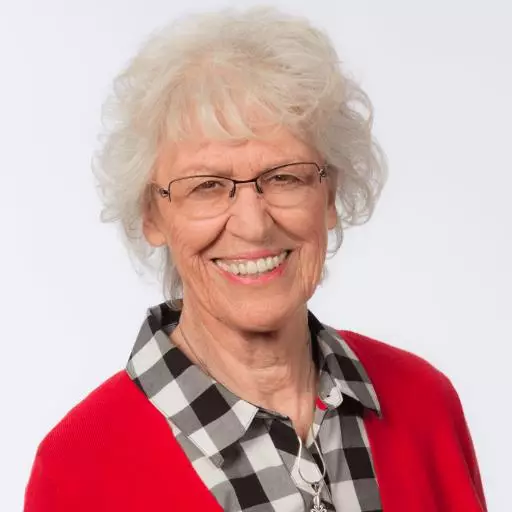
Finding God in the Dark Places


We often ask, “Where is God? I look for Him, but I do not see Him. I listen for Him, but I do not hear Him. It is dark—so very dark. Not pitch black perhaps, but my life is lived in shadows. How can I find God in the shadows?”
In this message, Jill Briscoe looks at the life of Esther to uncover answers to those questions.
Jill Briscoe: I'd like to turn to the book of Esther. I had a wonderful week at Trinity University where I was asked to go and take the Spiritual Emphasis week. I had that great privilege. It's where my heart is. It gets the adrenaline flowing. I love kids. I don't know what I'm doing with all you big people out there.
The main thing I dealt with all week was: "I came from a Christian home, I've been in a Christian church, I'm at a Christian university, and I need to find God in reality." The problem of being on a Christian campus, as I said to them, is it's so much easier to be friends with Jesus' friends rather than friends with Jesus in a Christian community. And that is the problem. If you're in a secular university, there's no problem. You are driven of necessity to develop your relationship with God.
So finding God... they kept saying, "How can I find God in reality? I do everything I'm supposed to do. I'm in the Scriptures. I'm praying. I'm going on missions trips. I'm doing all of this." How is it that we can go through all the motions—real motions—and then suddenly the dark comes, suddenly the problems come? Suddenly, as a kid said to me, "I don't want to go home at break time." "Why don't you want to go home?" "Because as I went out the door, my parents told me they didn't love each other anymore, and they were getting a divorce. They waited until I was at college so it would be all right." Where are the parents' heads?
Dark. Even though I've grown up in Sunday school and even though I've been the head of my youth group, I can't find God. Why can't I find God in this darkness? All over the world I'm asked, "Where is God? I look for Him, but I don't see Him. I listen for Him, but I don't hear Him. It's dark, so very dark. Not pitch black, perhaps, but my life is just lived in shadows. How can I find God?"
My delight was to tell those students: "You know what we're going to do this week? We're going to stop looking. We're going to stop and let Him find us." And that's what happened at Trinity University. They found God finding them. They just stopped trying and put themselves deliberately in the presence of God and stayed there long enough to realize He was there all the time. God was in the shadows. God was in the circumstance. God was in the suffering. And they found each other.
I remember as a student when I was at college, seeking God. I knew I was seeking God in all the wrong places, but I knew that's what I was looking for. I didn't know they were all the wrong places. When eventually in hospital I had that connection, I realized that God had found me and that He'd been there all the time. God is a seeking God. He comes after us.
Now, you will see that whole concept of God being there around the corner of our tomorrow. He's waiting with our future in His hands in the story of Esther. Marvelous story. Finding you, finding me. What a holy mystery. Someone prayed one day. I'll know who it was that loved me so. Lord, You answered. Lord, You came. Lord, You called me by my name. Melted fast my frozen spirit. Showed me Jesus, who by merit died to put my sins away. How could I forget that day? Such a precious memory—finding You, finding me.
That's what happened to Esther in her dilemma. To give you a context, I'm going to give you a brief history of the world. Are you ready? Okay. Creation. Fall. Expulsion from the garden. In Genesis 6, God looked down and saw that everybody's head was full of evil continually, and He was sorry that He made us. His heart was broken. His heart was filled with pain. And it says in Genesis 6 that He decided to begin all over again. Just to crunch up the whole world and the human race and start again in another universe, another place. I don't know.
But Noah. When you get to heaven, find Noah and thank him. Because without Noah, I would not be here, and you would not be here. But Noah found grace in the eyes of the Lord. One man in the darkest of darkest of darkest days, when only one man was left who was righteous. And God said, "All right." And He began all over again.
They came out of the ark and they grew and they grew and they grew, and they had descendants. One man who lived in Ur of the Chaldees, a man named Abraham. God leaned out of heaven and said, "Abraham, you will be My man. I will be your God. And from you will come a people and I will be their God and you will be My people." And Israel was born. Isaac, Jacob, Joseph.
Now, God is in the shadows and God is in the circumstance as you will see through this story. God, looking down history, knew there would be a famine in Egypt. He knew that Israel—Jacob and Israel—would die of starvation. So what He did is He got Joseph from that place in the earth into a position in Egypt. God is in the circumstance. God works in these things.
It wasn't easy to get him there. You know, his brothers tried to kill him and put him in a pit, which is sometimes what brothers like to do to brothers. Joseph was saved, sold into slavery. Think of all of this. Went to prison. God delivered him. Miracles happened, and he became the Prime Minister of Egypt just in time for the famine. Timing. God is a God of timing. His name, God only wise, a God of understanding, means the God of timing. He knows just when to intervene in the darkest of days for His people.
So here we get Joseph in place to save the lives of Israel and get them into Egypt so He could sustain them. And they grew and they grew and they grew, and then a man arose who knew not Joseph, the next Pharaoh. He put the whole lot into slavery. Deliverance. Moses. Joshua. Conquest. Promised Land. And Israel rebels against God. They worshiped the Baals. And God sent them judges. You can read about this. Judges, Kings, Chronicles tells us what happened. But there was a remnant always. There was an Abraham. There was a Joseph. There was an Esther. There was a Mordecai in God's family.
Through some of those prophets and judges and the godly remnant, some still believed. But even then, the remnant began to grow cold in their hearts and they rejected God and worshiped Baal. Judgment. Nebuchadnezzar now ruled the world. Babylon. And they came to Jerusalem and they destroyed the temple and burned the whole city by fire. They gathered up all the captives and they put them in chains and they began to drag them off to Babylon. Among them was a man called Mordecai. Among them was a little girl called Esther. And they went into captivity.
I'm sure her parents started out, but they didn't last long and they were killed. Mordecai, who was a cousin of Esther, took that child as his own. Together they went into exile and together the whole horror began. If you want to read about that, you look at Psalm 137. Some of those exiles—I don't know if Mordecai and Esther ended up there—some of the exiles ended up at the river Chebar, making mud to build the cities for Pharaoh in his realm. And their tormentors, Psalm 137:1-4 says, demanded of them songs. "Go on, sing us one of those happy-clappy little songs that you sang in your temple in Jerusalem. Sing us a song!" And they said, "How can we sing a song in a foreign land?" And they hung up their joy. They hung up their harps on the weeping willow tree.
Somehow at the end of Nebuchadnezzar's reign, as the Medes and the Persians came and took over the world from Nebuchadnezzar and Babylon faded and Persia took over, Mordecai and Esther and a large number of Jews were given permission to scatter. They ended up in the capital city of Persia. Mordecai ended up as a captive serving the king in the palace. So they lived quite close. And that's the background to the first chapter of the book of Esther.
The book opens with a party. Quite a party. 127 provinces this man had charge of. As the despot's way was, he would pick a leader from every one of those provinces—the world—bring them to the capital, and they'd have a party for 180 days. That's a long time. He would show the wealth of his kingdom and he would, like Solomon used to, say, "I'll show you my gold and my silver and my kingdom." And so that's what they did.
The king, whose name was Xerxes or Ahasuerus—same thing, I'll use Xerxes, it's easier to say—the King Xerxes had a wife. She matched him in horror and character. In fact, it was said in the history books he was terrified of her. So you can imagine what she was like. Her name was Vashti. While all these parties were going on and when the dignitaries went home, both Xerxes and Vashti threw a party for their palace people. That went on for days and days and days.
In the middle of this, after months of this revelry, Xerxes sent for Vashti at midnight, I think, when he wasn't thinking straight. He told his servants to go get Vashti so she could come and—the word is display herself in front of the men. Actually, the word is dance like a monkey, probably naked. And Vashti says, "Not on your life." First time ever in biblical history that a queen has ever said that to a king, or a woman has ever said that to a man, to her husband. Can you imagine the humiliation of King Xerxes, having sent for his wife and the people come back and say she won't come? Consternation. Horror.
He was beside himself with rage. In fact, the words and the phrases mean he snorted like a wild boar. Nasty. So what do we do? Counselors gather round. "Your Majesty, you have to deal with this. You divorce her on the spot. Because if you don't, what about our wives? They're going to say no to us. The whole realm will just disintegrate because all the wives will say, 'Look what Vashti did.'" So he divorces her on the spot. A few days later, he's sorry, and he's missing Vashti. Men say, "Don't worry, we'll find you another wife."
So the beauty contest begins. They go out and they gather all the beautiful young virgins from all the different nations, the captives of the nations, and from their own. The Persian women. Right under their nose is one of the most beautiful women in the world: Esther. A teenager. Mordecai comes home from work and finds her gone. Where is she? In the harem. In the what? It says in the story that he walked back and forth every day to see how Esther was doing. Can you imagine this man?
But God is in the circumstances. God is in the shadows. For God is working His purposes out. Esther found herself hung up against a dark and terrible sky, for her name means star, Venus, supernova. A name given to her by her captors. Her name really was Hadassah. Here we find Esther. Here we find Mordecai in the middle of this drama, God's drama, God's story.
Well, what happens? She goes for her night with the king, and he chooses her. What was going on in her heart? Terror. Fear. And submission to the will of God. So here she is, queen. A man appears on the scene of this drama called Haman the Agagite. He is an egomaniac. He doesn't know anything else except himself—a self-monster. He manages to buy and to influence his way to become Prime Minister for Xerxes.
Because he wants through his pride the country to subject themselves to him, he says, "Your Majesty, it would be wonderful if you put me on a white horse and take me through all the streets of my realm and everybody can go flat on their face as I walk over them with my horse. Then they'll know that you have honored me and made me Prime Minister." The king says, "Sure, if that's going to please you, do it."
The edict goes out and the horse is brought and Haman gets on it. As he's going out of the palace and everybody is flattening themselves on the ground, he comes across a man standing straight and tall. Haman looks down. "Who is this man?" He's Mordecai the Jew. "What's he doing on his feet?" Turns his horse around, goes past a second time. Mordecai signs his death warrant: "I will not kneel to anyone but God."
So Haman's ride is spoiled, even though everybody else goes flat on their face, because all he can think about is this man. He comes back and tells the king, "There is a people scattered through your realm. They're called the Jewish people. They're no good for us. I ask an edict that I might destroy them." "Sure," says the king. They drink to it.
The edict goes out and all the Jews go to prayer. Mordecai tells the Jews, "Pray. For on a certain day in a certain month that they have cast lots to make sure it's their lucky day, we will be destroyed." They begin to mourn and to pray and to fast. Mordecai tells Esther. "What can I do?" "Beg for our lives, Esther." "But I can't. Unless the king invites me, that's my death warrant. He has to hold out the scepter. Nobody goes into his presence without being called, and he hasn't called me for so many times. I can't do it."
"Well," says Mordecai, "Look at it all. The plan. God in the circumstances. What did it take, Esther, to bring you to the throne for such a time as this? Just like Joseph, it took the pit and the prison to get him to the palace. Here is Esther having gone into exile so she could come out of exile to Persia. I mean, look at it. God in the details, working His purposes out for such a time as this." And then Mordecai says, "But the choice is yours."
We all have a choice. We all have a choice to be God's man, God's woman, hung up against a dark sky. Mordecai adds, "If you don't, God will bring salvation to the Jews another way, but you're going to miss out. Don't you want to be part of it?" She says, "Yes, I want to be part of it." So she goes to the king to plead for the Jews and her life. Nobody knows she's a Jew. Mordecai has told her not to tell anyone. Everybody's unaware, king included.
How's she going to do it? How is God going to do this? Well, at this point Haman's obsessed now with this problem of the Jews and specifically of Mordecai. Shares it with his wife, who's as bad as him, and all the friends. They said, "Well, if it'd make you feel better, why don't you go into the backyard and we will erect a great cross," the word is. But actually, a stave, pointed at the top, so we can impale him in the backyard. Would that make you happier? "Good idea." So they go out in the backyard and they get these gallows made, this impaling piece. That makes him feel a little bit better.
Meanwhile, Esther has asked for prayer and fasting. She herself prays and fasts and does all the things the Jews are doing so that she will find power and courage to go and beg for the life of the Jews. Now, this is where the plot is absolutely fascinating. Hollywood does not know about this story. Actually, there is a film called A Night with the King, which is wonderful, made by Christians in Hollywood. Fabulous story.
She says, "Come to dinner tomorrow night. Will you come to dinner tomorrow and bring Haman?" "Sure, sure. Will you tell me then?" "Yes, yes." So the first banquet happens and Haman's there and the king's there, and I don't know whether she chickened out. I don't know whether she just couldn't or didn't know what to do, but she didn't ask him. She didn't say, "Save the life of me and my people." She didn't. She didn't say, "This is the man who's trying to kill us." She couldn't or didn't. Instead she said, "Would you come tomorrow night for dinner again and bring Haman?"
God is in the timing and God is in the details. That night, the king couldn't sleep. What do you do when you can't sleep? You read a book. So he reached up to the bookshelf—how many books?—and he picks the right one because God is in the details. He opens it to try and get to sleep, and he reads all these things people have done in his realm. He finds the story of Mordecai who saved his life from two assassins. Just the right book and just the right place. I love it.
You think God isn't at work? Take hope. He's been very much at work before we ever get to the darkest place in our lives. Suddenly, timing, into the garden comes Haman the Agagite. What's he doing at work so early? He's been thinking of how if he asks the king for Mordecai today, he could take Mordecai back and impale him. That would make him feel so much better. He got up earlier to come and ask.
He walks in and the king is reading the book about Mordecai saving his life. He says to Haman, "What would you do to the man who the king delights to honor and thank?" Haman, guess what? He thinks, "Who but me? He wants to honor me." So he said, "Oh, Your Majesty, I would put him on a horse and I would lead him through your main city, the capital, and I would say, 'This is the man the king delights to honor.'" "Good idea," says the king. "Go and do it for Mordecai the Jew."
Can you imagine? Divine justice. And he has to do it. I can see in my mind's eye that ride with Mordecai the Jew, his head held high, looking down at Haman, who is spitting it out: "This is the man the king delights to honor." His humiliation began. Get back to the palace. Haman runs home. His wife and his friends around him, they say, "We have discovered the people that you are trying to kill are the Jewish people. They claim that their God is the God of the earth. This isn't going to work. God is going to judge us, and you too, Haman."
Suddenly a messenger appears. Second banquet. They're waiting, the queen and the king, and he rushes off with this sense of doom and dread. He gets there. In the middle of the banquet of the king and Esther and Haman, the king says, "Come on, Esther. What do you want?" She throws herself at his feet and she says, "Save my life and the life of my people." Well, the king, it says, grunts like a wild boar. It's part of his personality. He rushes out into the garden to get hold of himself. "Who dares to threaten your life and the life of your people?" "Him. Haman."
Haman throws himself, I think intending at the queen's feet. She has wrapped up her feet and gone back on the couch. What happens is, Haman, to plead for his life, gets on the couch. Bad idea. Timing. The king comes back. Haman's all over the queen on the couch. "Does he rape the queen in my presence?" The death mask is brought, put on his head. One of the servants who hated Haman said, "Your Majesty, if I might suggest something? He has built a stake in his backyard for Mordecai." "All right," says the king. "Hang him on it. Kill him on it." And they take Haman and he dies in his own backyard on the stake that he has built.
Mordecai the Jew. Jews are saved. Mordecai takes Haman's place. For a few years, becomes the leading planner of plans for Persia. Isn't God clever? God is so clever. If you think your little darkness is as bad as Esther's... none of us. When you get there, remember God is in the shadows. God is in the circumstance. For He will bring His kingdom in, and no Haman will ever stop Him.
A hymn I grew up with as a child: God is working His purpose out as year succeeds each year. God is working His purpose out and the time is drawing near. Nearer and nearer draws the time, the time that shall surely be, when the earth shall be filled with the glory of God as the waters cover the sea. From utmost East to utmost West, where'er man's foot hath trod, by the mouth of many messengers goes forth the voice of God. Give ear to Me, you continents; you isles, give ear to Me, that the earth may be filled with the glory of God till the waters cover the sea.
What can we do to work God's work, to prosper and increase the brotherhood of all mankind, the reign of the Prince of Peace? What can we do to hasten the time? Hasten His coming, the Bible says. What can we do? The time that shall surely be, when the earth shall be filled with the glory of God as the waters cover the sea. March we forth in the strength of God with the banner of Christ unfurled, that the light of the glorious gospel of truth may shine throughout the world. Fight we the fight with sorrow and sin to set their captives free, that the earth may be filled with the glory of God as the waters cover the sea.
All we can do is nothing worth unless God blesses the deed. Vainly we hope for the harvest till God gives life to the seed. Yet nearer and nearer draws the time, the time that shall surely be, when the world shall be filled with the glory of God as the waters cover the sea. But you've got to want it. I've got to want it. You've got to want it. The church of Jesus Christ has got to want it. How badly do we want to want it? To say, "Use me. Hang me up. Wherever it's darkest, God, let me shine."
This isn't for a missionary. This isn't for a pastor. This is for little you and little me. We're just little dust people, every single one of us, but dust dignified by divinity, for Christ lives in us. Do you want to be part? Esther had a choice. I have a choice. You have a choice. Frightening choice. "I'll shine, scared. I'm frightened out of my mind. I'm even fainting with fear. But hang me up. I'll shine because I love You. I'll do my little bit. Use me. I want to be part."
Do you want to be part of hastening the time? That moved me so much. I want the glory of God to be filling our world like the waters cover the sea. Then every single one of us has a part. It isn't us in the palace or in the king's bed. But our darkness is just as dark. Perhaps it's the darkness of sickness or death or unbelief, or perhaps it's one of our kids that's in prison. I don't know what the darkness is. But that's the little piece of the world where you can shine and where you can hasten the kingdom coming as people watch you and say, "What is that? I want that. I want to be able to do that." And you can tell them it's Jesus. It's Jesus. It's Jesus.
I think of Esther many times. I want to find her in heaven and thank her for her influence in my life, especially when I'm frightened and especially when I'm scared. I realize a huge lesson she's taught me: she did it scared. Actually, she did it petrified, but she did it. I've always thought that courage was not being scared. If God wants me to spend a night with the king, He wants me to end up in the lions' den... how could I do that? Well, God will give you courage, Jill. God will give you—what is it? What's courage? Let me tell you what courage is. Courage is doing it frightened. Courage is doing the right thing scared, but with enough courage, though you faint on the way, to do it anyway. That's the biggest lesson my sister Esther has given me to live this life. Biggest thing.
Can you look back on your life? I think you can only see the will of God in retrospect. The older you get, the more chance you have to see history. You look back and you remember this time when God hung you up in a dark sky. You remember this time, and each time you learn: God was in the shadows, God was in the circumstance, God was there. I wasn't looking for Him; actually, He found me on my knees saying, "I can't do it. I'm scared. I'm frightened. Let somebody else do it. Let salvation arise another way for this person." I have a choice. I look back and I remember how He gave me just enough courage. You don't need all the courage; you just need enough and the will to say, "I will, because I love You, Lord, and I'll shine. Use me. I'm not going to let anybody else have this opportunity, Lord. It's mine. It's mine. It's mine."
If you can, like Esther, be a woman that knows the Scriptures—which she did, knew the story of Daniel and how God had helped other people—as she faced her lions and her fiery furnace, say, "There'll be a fourth man for me." Then you'll shine. You'll take that choice. Because of how God was with you in the dark back here, you'll know He'll be with you here. The dark things that you've suffered in the past and the way that God has helped you will help you here. Then all that accumulation of God's present presence and power and just enough to do it will help you here, because the darkness might increase and it might get worse. But then you look back and you stand on that. You did it there; why would you suddenly stop doing it here?
Let me give you one story and then we'll finish. There's a woman I know whose husband died a martyr. She was only young, twenty-five, two kids. The days went on until they found the bodies of these men that were murdered, and then they knew for certain they were safe in heaven. Those widows picked up their lives and went on for God. About ten years later, God graced them with husbands, each one of them. Life went on and on, and this very special friend of mine wasn't graced with another husband until about fifteen years later. This year Stuart and I got to go to that particular mission and do their meetings, and we stayed with my friend. To our delight she said, "I want to introduce you to my husband." I said, "Oh!" And we had dinner and she's pregnant with a baby. God is good.
Over dinner, she said, "Stuart and Jill, we just have to share something with you so maybe you could pray. My husband's just been diagnosed with cancer." I was speechless. She leaned forward across the table and put her hand on me and said, "Jill, it's all right. I know how to do this." And she does. She's done it before. And so she said, testifying as she has all these years: God was in the dark. God was in the details. God was in the circumstance. And all He asked us to do, us women, was shine. And they did, as best they could.
She said, "So now I'm here and I look back and I remember. Why would He go anywhere? God is here. God is in the darkness, God is in the shadows, God is in the circumstance, God is in the Scriptures. God is in all His Godness for me and for us and for our baby." Her face was radiant. She shone. Oh my word. Oh my word. Oh my word.
Pray with me. Oh Lord, Lord, Lord, Lord, we're such little, tiny, faithless stars. But every one a star, for we have the light of life within us. I pray for my sisters and brothers and the church of Jesus Christ here and around the world. So many of our sisters and brothers have been hung up against a dark sky in this moment as we pray. On every continent, Lord, You're asking Your simple, small, little stars to shine for You. We pray for them today. We pray specifically for the persecuted church. We pray for enough courage, enough strength.
But here we are in our little troubles, our small darknesses compared to others. Lord, I pray in this quiet moment as we stop trying to pray or trying to say anything to You, as we just stop and we shut up and we sit in the silence of God. Find us. You find us. You touch us by Your Spirit. You say what You need individually to every one of us here from Your Word. In this quietness, just sit. Let Him find you. Let Him speak to you. Let Him touch you. Speak, Lord, in the stillness while we wait on Thee. Hush our hearts to listen in expectancy. Thank You, Lord. Amen.
Featured Offer

In her 3-message series, Finding God, Jill Briscoe shares biblical encouragement for seasons when God feels distant and
faith feels tested.
Through powerful teaching and personal insight, Jill reminds you that you don’t have to exhaust yourself searching—God is
already there, even in the shadows.
This special series, available as a digital download or on USB, is our thanks for your gift to help more people around the
world experience God’s presence and true Life in Jesus.
Past Episodes
- A Lifetime of Wisdom
- A Little Pot of Oil
- A View from the Porch Swing
- Are You Good Soil?
- Art of Leadership
- He Came to Give Us Life
- Heart Hunger
- Here Am I, Send Aaron
- Hidden Treasures
- Hope for the Disheartened
- How Do I Find Joy?
- How to Be Up When You're Down
- Lessons from the Boy Jesus
- Let's Talk
- Life Lessons
- Life that Works
- Living Above the Circumstances
- Living in the Word
- Living Love
- Lost and Found
- Searching
- Seeing Through Suffering
- Shaking Up Your World
- Shelter from the Wind
- Six Things a Mother Can't Do
- Slaying Giants
- Solid Ground
- Spiritual Arts
- Take 5: A Christian Point of View
- The Balancing Act
- The Cutting Edge
- The Fatherhood of God
- The Heart and Soul of Friendship
- The Heartbeat of the Master
- The Holy Spirit
- The Holy Spirit and You
- The Innkeeper's Daughter
- The Names of God
- The New Normal
- The Power to Change
- Triumph in Trouble

Featured Offer
In her 3-message series, Finding God, Jill Briscoe shares biblical encouragement for seasons when God feels distant and
faith feels tested.
Through powerful teaching and personal insight, Jill reminds you that you don’t have to exhaust yourself searching—God is
already there, even in the shadows.
This special series, available as a digital download or on USB, is our thanks for your gift to help more people around the
world experience God’s presence and true Life in Jesus.
About Telling the Truth for Women
Telling the Truth exists to make available sound biblical teaching, practically applied, with a view to producing lives that glorify God and draw people to Christ. The whole of our ministry is to encourage, console, strengthen, teach, and train.
About Jill Briscoe
In addition to sharing with her husband in ministry with the Torchbearers and in pastoring a church in the United Sates for thirty years, Jill has written more than forty books, travelled on every continent teaching and encouraging, served on the boards of "Christianity Today" and "World Relief," and now acts as Executive Editor of a magazine for women called "Just Between Us."
Jill can be heard regularly on the worldwide media ministry called "Telling the Truth" She is proud to be called “Nana” by thirteen grandchildren.
Contact Telling the Truth for Women with Jill Briscoe
info@tellingthetruth.org
Brookfield, WI 53005-4633
Outside North America
Telling the Truth
PO Box 204
Chessington
KT9 9DA
United Kingdom
800.889.5388
Outside North America
0800.652.4120