
Telling the Truth for Women
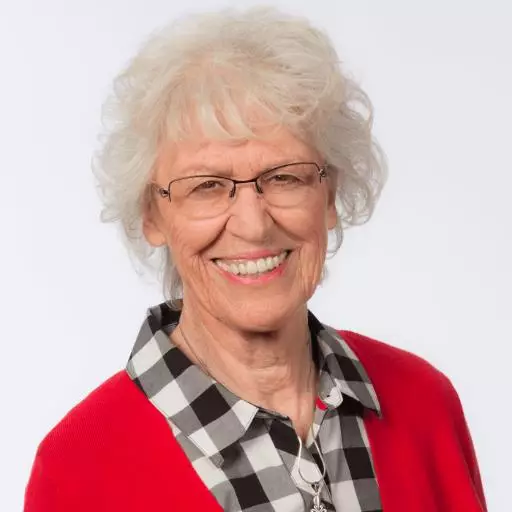
Jill Briscoe
Deborah - How to Fight Your Battles


Every day we fight battles: teaching our kids to clean up their toys, dealing with difficult co-workers or family members, getting society to clean up the environment. But even though these battles are big, there is an even bigger war going on—a spiritual one. While we know that God is the ultimate victor, we live every day surrounded by Satan’s armies.
The judge and prophetess Deborah was surrounded by not only a spiritual war but a physical one! God gave her the gifts and talents she needed to complete the task He gave her. In this message from Judges, Jill shares with us Deborah’s story and shows us how we, too, can respond to God and find our roles in this great battle.
Jill Briscoe: This is the story of Deborah and Barak. Deborah's name means "honeybee" and Barak's means "thunderbolt." I love it. All week I've been thinking about the story I would tell you about Honeybee and Thunderbolt. He'd shot his bolt and she stung him into action, and that's the story we're going to be hearing about today. Names are very interesting; you should always dig around a little bit and find out just what they mean.
Let me give you some background to the book of Judges, which is where we find the story of Deborah. Joshua had died. Now, that was bad news because as soon as he died, things sort of fell apart for the rest of the tribes that were now in the Promised Land. They were, however, loosely organized, and they didn't always occupy the territory that had been given for them. They got a little bit in disarray, and I'll tell you the reason for that in a minute.
But the period of the judges marked the start of a new nation in their own land, the initiation of a new people on the world scene, the inauguration of a national group selected by God Himself as His special people. Israel was to be the model nation to all other nations of what to look for, for inspiration and direction. God wanted there to be one nation in the world that gave due allegiance to Him because no nation was doing that.
Let me take you back a little further to where we began this series, to the book of Genesis, and let me sort of paint in the background to the story. God had worked generally with man from the time of Adam to the flood. He wanted all men to worship Him. But then we know the story; man rejected God. That brought punishment and the flood. Then God started all over again, still wanting to work with all men everywhere. Noah's family began to multiply, and God worked generally with all men.
But then men decided to make a name for himself, rejected God, and built a tower at the town of Babel, which means confusion. So this flood of confusion came in again, and God brought judgment, and He broke up sin's conglomerate at Babel, and yet there was still no change. He scattered people; He confused their languages there. So God decided He would begin to work with one nation and make that nation a model for the whole world. That nation was to bring the Messiah, and Messiah would bring blessing to the whole world, so that the whole world generally again could be worked with by God and show allegiance to Him.
Abraham, of course, was the father of this nation. The land that God would give them to settle them so that He could begin this work again was the land of Canaan. They were to be different from any other country because they would not have a king. Every other nation had a king. But it was to be theocratic rule or God rule, and this would make them distinctive. God would be their supreme ruler; He would make the final decisions. But if this was to work, it had to work on a basis of individual obedience. People had to obey God rule.
No king. They had to learn how to listen to God. There were to be no general civil officials that were employed. There were to be certain local people who held relative authority, elders, but otherwise, God was the ruler. This was very unique when other people compared their form of government. There was to be religious rule for Israel. This would be taken on the priests' shoulders. They would have a teaching ministry; they would instruct God rule for the people. They would take the law given at Sinai and explain it.
They would present sacrifices, not so that they might placate the wrath of an angry god. That's what all the other nations were doing. They were to institute the sacrifices to picture substitution. The fact that the animal slain was seen by God as a substitute for the person who'd sinned so that the sinner didn't have to die. You see, God wanted the picture of those sacrifices to tell Israel, and then for Israel to tell all the other nations, "Listen, God demands the guilt of sin to be paid for by death." That was the reason for those specific religious sacrifices.
The elders in these little civil authority structures that were very minimal were to be older people. They were to judge the murderers, hear family problems, settle matrimonial disputes, and decide cases of controversy. The prophets, as we've talked about already, didn't have a government function in this hierarchy of help for Israel. They acted as recipients and conveyors of God's word, God's message. They waited for the time of revelation. Now, the priests didn't have to wait; they had the law to explain. That was their teaching function.
But the prophets had to wait for the time of revelation, for when God leaned out of heaven and said, "This is my message for you. Take it and tell the people." Proclaim the truth, preach it, and that's what they did. Now there was another group of people in the time of our story today called the judges. Who were they? Well, a new generation arose after Joshua had taken them into the Promised Land and gained great victory. Everything was going great. The people were obediently serving God. But Joshua died, his generation died, and suddenly they had this new generation who had a big problem.
They were second-generation believers, and they decided they didn't believe what Joshua's generation, their parents, had believed. And so now we have all the tribes in Canaan. They had been assigned the territory which they were supposed to take tribe by tribe, trusting God to win their battles for them. But they were backing off the whole plan, and the whole scenario was beginning again. Man was rejecting God all over again.
As soon as that happened, God allowed the Canaanites, He allowed the Philistines, He allowed other people that were heathen people to encroach on the territory that Joshua had won for the people of Israel and punish them in a sense, hoping they would turn back to Him. And in order that God should help them to turn back to Him, when some of the people in some of the tribes tried to, He raised up a judge from that particular tribe who would take that tribe back to victory and perhaps even inspire other tribes to do the same.
There were 14 judges. Deborah was one of them. She was also the only woman and was also the only prophetess. She was a prophetess and a judge and a woman. So in a sense, she has some distinctives that none of the other judges had. God raised these special people up for a special time in the history of Israel, and we have much to learn from them. The first three judges that God raised up did all right. They turned some of the people back to God. But by the time Deborah was judging Israel, the Canaanites had come down into the hill country around Galilee.
The two tribes that were given that region were Zebulun and Naphtali. And so they began to get chipped at by all these guerrilla raids, and terrible things were happening. Now one of the things the judges did was hold court. They would find a place, and people in trouble would come to them. And they would judge the matter, they would give wisdom, they would give advice, they would give comfort. And of course, with Deborah's extra gift of that of prophetess, they would also take God's message for the people, select leaders, and encourage and motivate those leaders into winning the battles of the Lord.
So Deborah set up court under a palm tree. 200 years later after her death, that palm tree, that great big palm tree, still stood in the place that she had judged Israel. She was a very, very revered, honored judge of Israel, and Deborah's palm tree was a place that the people of Israel would travel to see, rather like somewhere that the tourists would travel to see. And so as Deborah sat under her palm tree, all these people came from Zebulun and Naphtali and said, "Listen, the Canaanites are giving us a terrible time. They're stealing our animals. We have to go by the back roads everywhere."
You can read all about this in Deborah's song of victory in Judges chapter 5. But she tells us in that song, which is really a recounting of the whole story of Judges 4 in poetic form, she tells us that they were having to sneak around. They couldn't use the highways. They'd got out of their villages; they were living in the hills and eating berries and trying to keep alive. And so they came to Deborah, who is judging Israel, and they said, "You've got to do something about these Canaanites. It's terrible."
So Deborah, in her song, says, "I arose a mother in Israel, and God told me to call Barak to be the one who would rise up as our commander, our fighter, and win this battle for the Lord." I love this phrase, "she arose a mother in Israel," because what it really means is she had this maternal sense of compassion for the people she was caring for. And that's what the judges should have had. That's what you and I need to have. We need to be Deborahs. We need to arise, especially as women, as a mother in Israel, in the sense that we say, "These people are in trouble. They're having all sorts of trouble in their lives, politically and in problems and in all sorts of ways."
I arose a mother in Israel. I cared enough about it to use the gifts that God had given me to be God's honeybee, to sting people into action, to motivate people to fight the battles of the Lord. So she was certainly a compassionate woman, and she arose to do something about it. She had leadership qualities; that's obvious. She was involved; that's also obvious. She was involved politically, she was involved socially, she was involved relationally, she was involved spiritually. She used her gifts to encourage and call men and women to fight for Him.
She was gifted. She was gifted and talented. Literally, talent was just oozing out of her fingertips. One of the commentators that I was reading about this says that her song in Judges 5 is one of the greatest, finest Hebrew masterpieces of poetry and poem in the Hebrew language. So here we've got one great woman who certainly changed her world. Let me tell you how she changed her world. Barak was called for. He came; he responded. He was a mighty man. He's called in Hebrews one of God's best. He's in the list of heroes in chapter 11.
He was certainly lacking in a little self-confidence. He certainly respected and revered his leader whom God had raised up and put over Israel at that time. And he said, "I'll do it, but I'll only do it if you go with me." He was a man who was not threatened by a woman's gifts, that's for sure. And Deborah said, "Well," showing a little bit of lack of self-confidence, she sort of rebuked him for it and said, "You know something? God's going to give this whole battle into the hands of a woman instead of your hands, which is rather a shame." And she wasn't talking about herself; she was talking about another woman who wasn't even an Israelite.
But she said, "That's all right. If that's what it'll take to get the job done, let's do it together. Let's do it together." And so they went to Zebulun and Naphtali, the two tribes that obviously would give them the men because they were the ones that were having the trouble. But on the way, she called all the other tribes, and in her song, she tells us which princes of the tribes came to her and said, "We'll give so many men, we'll give so many men." There were quite a few; there were also quite a few that didn't, which we'll get to later as well.
But when she got to Zebulun and Naphtali, of course, there was no real problem. What with Barak's reputation as a commander and as a fighter and with Deborah's incredible gift of inspiration and the honeybee that had that little sting about what she said—and you can see it in everything she writes in that song; there's a little sting to what she says that stings people into saying, "Ouch, maybe I better do something about it"—with her giftedness, and I believe that's the gift of exhortation, somebody that can have that power to get under somebody's skin and motivate them to fight the battles of the Lord, together they were formidable foes.
And so Sisera, who was the commander of Jabin the king who was giving them all the trouble, the king of the Canaanites, saw that they were amassing 10,000 troops. So he got his 900 iron chariots ready and he took off to Galilee, which was a very silly thing to do because iron chariots are fine in the plain, in Megiddo, that's all right and on the plain and on the flat places. But when you get to Galilee and you've got hills, try and take an iron chariot with the poor horses trying to get up the hills and down the hills and you're in trouble.
God lent His miraculous intervention in overflowing the banks of the River Kishon as well, which helped because the poor little horses got their feet stuck. And in Deborah's song, you see the horses prancing, pulling their feet out, trying to get their feet out of the mud. And of course, when they couldn't, they eventually did get their feet out of the mud and Deborah sang, "They threw their hooves in the air and of course upset the chariots and the people in it out into the river." And so this was one way that God got rid of the firepower of the Canaanites and put the men on their feet where they were not nearly as effective against the 10,000 certainly outnumbered army of Israel that were rushing down from the mountains like a thunderbolt.
Thunderbolt is the word and I love it. You see, her thunderbolt, we've got Honeybee on one side, we've got Thunderbolt on the other, and the combination is a powerful combination. And he came down, Deborah sings, using his name as a funny little twist in her song, like a thunderbolt. He just came out of that mountain like a thunderbolt with 10,000 men. Deborah did not go with him; this was the thing he needed to do, she had done the thing she needed to do, but they did it together.
Now then, let's draw some lessons. If we are going to be a Deborah and change our world, we must be like her. And I could take any of those things I've just touched on: her leadership ability, her giftedness, her compassion, the sense of maternal care for those that were in need. But I chose an aspect of her that I want to remember for myself, probably selfishly, I went off on this. I chose the aspect of her character that had this fight about it. She was a fighter. She was a fighter. She fought the battles of the Lord.
And I have been hugely challenged as I have looked at this woman's life in my own spiritual experience. And I want to bring that aspect to you now, because we are not going to change our world unless we're fighters, unless we realize there's a battle going on, we understand what it's all about, and we, like Deborah, decide to fight the battles of the Lord. Then we'll change our world. He calls us to do it, He equips us to do it, and we have to remember it's His war; souls are at stake. Christ is our commander and we are His soldiers.
Men and women both are to be involved as He calls us and places us. I was listening to the Commissioner of Washington Police giving a speech that would have put any politician to shame, out of his heart, without any notes, as he stood over the body of the nearly 400th victim of murder in Washington. And he said this: "We've got babies having babies, crack mothers having crack babies. More people locked up in America than in any other free nation in the world. And we're in a war."
He said, "It would be very nice to have more money. It would be very nice to have more jails. It would be very nice to have more help. But you've got to get to the cause. You've got to get to the cause." And of course, the cause is sin. We're talking about the fight between good and evil. We're talking about the principalities and powers of the air that want to destroy the human soul, and of course the body with it and the family with it and the political structure with it. But let's remember we're fighting a spiritual battle.
Yes, we fight it in very obvious ways in all sorts of places, but this is the Lord's battle. And it's a battle, make no bones about it, that is unseen in a sense. We see the terrible result of that battle here in physical terms, but this is an unseen battle. It is God fighting Satan for the souls of men. That's the battle of the Lord. That's the cause of all these murders. That's the cause of abortion. That's the cause of all this stuff that we're fighting on the local level.
So it's God's battle. Christ is the Lord's captain. When Joshua went into the Promised Land, there's a lovely little bit just before he took Jericho in there. I love this bit. He saw this great big man standing in front of him with a shining sword. And he went up to him and he said, "Who are you? Boy, if I could have this man on my side, he'd be a good recruit for my army." And as he went to him, he didn't realize at first that it was the Angel of the Lord, a theophany, a self-revelation of God. Many people think of Christ, the second person of the Trinity in human form, the captain of the Lord's army.
And he said, "Who are you?" and He said, "Well, I'm the captain of the Lord's army." And so Joshua said, "Well, whose side are you on?" He said, "Whose side are you on? Are you on their side or are you on our side? I'd like you to be on my side." And I love Major Thomas's comment on this; I've always remembered it as he was preaching on this passage. Major Ian Thomas, back home in Capernwray, I remember he preached this for teenagers and they were sitting on the edge of their seats.
And he said, "The Angel of the Lord replied to Joshua's question whose side you're on like this: 'I haven't come to take sides; I've come to take over.'" I love it. "I haven't come to take sides; I've come to take over." And we can get bogged down in who's right. We can get arguing in the political arena. We can do all sorts of things. But remember, this is a bigger war that we're talking about. And God hasn't come to take sides; He's come to take over.
He said, "Listen, the battle is mine. I'm calling my people to it. I expect them to be fighting the cause of sin and to be above all winning souls for Christ because when you win souls for Christ, they stop having abortions. When you win souls for Christ, they get into government and make good rules. When you win souls for Christ, they stop killing each other. When you win souls for Christ, they have the power to overcome the drug habit." So let's be careful not at all to put down involvement. Deborah was involved on a social, political level.
But let's remember that she had the bigger picture in mind. She said to Barak, "The captain of the Lord of Hosts goes before you. He's come to take over. We submit to Him and under His authority, let's get the job done." So Christ is our captain. But remember too, it's an unseen battle that we face. We are His soldiers. Let me just say one thing. I heard a talk on Deborah and Barak once that really upset me. Now I think I'm more equipped to deal with why I was upset and the answer to it.
Quite a well-known Bible preacher was talking about Deborah and Barak and he said this, because I wrote it down at the time. I didn't know why it had upset me. He said, "Deborah was an all right lady, she was fine. But Barak was the man that God really wanted to use. But because Barak hadn't got his act together, He had to use a woman. He had to use Deborah." And I thought, that doesn't sound right. He said the reason is that Deborah was a woman and she shouldn't have been the leader of Israel; she shouldn't have been the judge.
That Deborah was a woman and she shouldn't have been the prophetess. But because there was no one around who was a man who was shaping up, God didn't have a prophet and he didn't have a leader. I don't buy it. I want you to know now I do not buy it. I didn't buy it then, but I didn't know why I didn't buy it then. But what that man was really saying was, well, God didn't say my plan is to use Barak but Deborah will have to do. His plan was to use Barak, yes, but to use Deborah too, to sting him into action.
And not even to sting him into action because I don't want to put Barak down and I don't buy that either, and that's what this man was saying. He was a weak-willy man, so God had no alternative but to use a woman who wasn't weak. I don't buy that. God calls women as surely as He calls men. I am hearing now that missionary societies are having terrific trouble with women going into missions because a lot of them are saying, "That's not our job. That's a man's job. Women shouldn't go and have to do the things they're doing, a single woman out running a clinic, helping people to get well."
She shouldn't have to do that; a man should be out there doing what a man should be doing. Well, it would be very nice to have men out there doing what men should be doing. But it doesn't mean that the women shouldn't be out there doing what women should be doing. God as surely calls the Deborahs as He does the Baraks. God doesn't use women because He doesn't have men, in other words. God wants to use, and I'm going right back to my Eve story, God wants to use both of us in harmony, in unity, in submission to each other and to His authority, and to the authority that He has placed over us.
And in this case, sometimes in an extraordinary way, God uses a woman to do what men usually do. And I believe with all my heart that God called Deborah to be judge of Israel. And I believe with all my heart He caused her to be gifted as a prophetess. And I believe that God calls men and women equally to win and to fight the battles of the Lord. You see, nobody else could be His honeybee but Deborah, and nobody else could be His thunderbolt but Barak.
And that's so important to hear and to listen to in this day and age with a lot of women getting into muddled thinking, saying, "That looks like a man's job to me, this looks like a woman's job." Be very, very careful because sometimes God chooses a woman to do what He has been choosing a man to do. There was one woman and 14 men, but she was not there by default. She was not there because there was no one else to use and she was the best that God could find. I believe that God anointed her, raised her up, and chose her as surely as He raised Barak up and chose him.
And I think they give a wonderful example of working together to fight the battle of the Lord. When Stuart and I got married, one of our favorite verses was this: "One of you will chase a thousand, but two of you will put ten thousand to flight." And I believe, either in marriage partnership or in mission partnership, at home or abroad, in the church here or the church outside our shores, that we have got to get that vision again. One of you will chase a thousand, and that's wonderful if God has called you to be a "one of you."
And if God has called you to be a "two of you," then two of you together like Barak and Deborah can put ten thousand to flight, and that can be in a team sense as well. Now the opposition will certainly be fierce. The army was outnumbered for Israel. But above and beyond what they could see, there were fiery chariots, not iron ones, fiery chariots. Do you remember the story of Elisha and Elijah? Do you remember how Elisha was shut up in this little house and he began to be told by God what the enemy was doing?
So he kept sending little messages to his king, the king of Israel: "Don't go here, go there, there's an ambush there, there's a bit of an army here, there's a bit of an army there." So the enemy army, the king of the enemy army said, "Who's the traitor? There's a traitor here! Let's get him, let's torture him, let's catch him, let's put him to death." And one of his commanders said, "There's no traitor, your majesty. But there's an old prophet down there called Elisha who tells his king what you're doing in your bedroom."
Now, how he knows, nobody knows because you're alone in your bedroom, but that's what's happening. So the king sent an army to get Elisha and they surrounded his little house. And Elisha's servant got up one morning and he looked out the window and he opened the casements. Oh, horrors! They were surrounded by chariots and horses. And Elisha said, "Don't worry." He said, "What do you mean don't worry? Oh, my lord, what shall we do?" And Elisha said, "Open his eyes. Lord, open his eyes."
And so God did. And he saw that the air was full of fiery horses and chariots around them. And Elisha said, "You see, you see? They that be with us are more than they that be with them." One of my favorite verses in the Bible. And for some of you missionaries in difficult places and hard places, in dangerous, dangerous places, pray for our women missionaries. Pray for our men missionaries. Pray for our couples, pray for their children because, you know, they are in our day and age in very dangerous places.
There are not as many guns where they are as where you and I live, because there are more guns in America than in any other country in the world. So in a sense, we are in just as dangerous a place where guns are concerned. But the law and order isn't in quite the shape it is for them as it is for us. And so they are in other dangers, in terrible dangers all over the place. Pray for them. And will you remember next time you're in danger, sisters and brothers, they that be with us are more than they that be with them.
And may your spiritual eyes see around you fiery horses and chariots around your heads. I'm talking about the unseen battle, folks. I'm talking about the battle of the Lord. And He is the captain of the Lord of Hosts. He hasn't come to take sides; He's come to take over. He goes before Barak as he thunders down the mountain into the fray to win the battle of the Lord. And unless we have this sense, this incredible agony of soul, of anger, of zeal, of jealousy, of rage, then we will never thunder down our mountain.
We will never stimulate, encourage, send other people. We will never do anything ourselves on our own front step. And so how do we become a fighter? How do we become His honeybee? How do we become His thunderbolt? How do we do it? We do it like Deborah did it. We say, "I'm willing, God, to have You call me to whatever You have created me to be." And I come back to this theme: You designed me, You gifted me to match up to what You've designed me to do. My gifting, my calling matches up to the plan and purpose You have for my life.
That's where you go. That's where you start. And every single one of us can be a Deborah in that sense. And God wants us to be. And when we are, then we'll win the battle of the Lord and He will be glorified. I've just been up to take Green Bay's whole woman day and they were very disappointed in the turnout. Actually, it was pretty good; it was 350 women which I think is very good, very respectable. But it's not as much as they used to have. You know, when we first started whole woman days and nobody else was doing anything, we had a lot more women; we had about 800, 700 women.
Now, 20 years later, churches caught on; they're doing their whole woman days. There's all sorts of different factors for the reason for the drop-off in the numbers. But because we're so number conscious, the committee was very discouraged. And one of the committee members drew me aside and she said, "Jill, I tried to get people to come today and I told them that you were the guest speaker who used to draw all these women. And one of the women looked at me and said, 'I think the women aren't coming because Jill Briscoe is all used up.'"
And I've sort of thought about that, wouldn't you? If somebody said something like that to you. And I said to the Lord, "Am I all used up? That would be terrible, to be all used up." And so I've prayed about it a lot. In fact, I shared it with my husband, who roared with laughter at the thought. But you know, I thought about it and I thought, "God, I never want to be all used up. I want to be a Deborah to the end of my life. I want to be God's honeybee. I want to have a maternal care and a compassionate look into the faces of women and men, boys and girls, wherever God sends me and wherever God calls me."
And I want to come down my mountain like Barak. I want to be a Barak too. I want to be a thunderbolt. I want to get out there and fight, not women's battles, not men's battles, but the battle of the Lord. That's what I want to fight. And I want to see God's name honored, and I hope you do too. Let's pray together.
Heavenly Father, we ask that You would touch our hearts, that You would inspire us today with this marvelous, marvelous story of two people living in second-generation Christianity that had gone stale and dead, people turning away from You, the whole country in disarray. And You raised up a man and a woman, and You used them in their own uniquely gifted ways to bring Israel back to God. Thank You for Deborah. Thank You for Barak.
Thank You for the example they are to us of mission, of caring, of being a mother, a father in Israel, of having compassion for people that are beaten and frightened and in trouble so that they arose to do something about it. Make us Your honeybees, make us Your thunderbolts. Use us to win the battles of the Lord. And thank You, Jesus Christ, for being our captain of this unseen army, and remind us in times of distress when we fight our personal battles that those that be with us are so many more than those that be with them. We ask it for Christ's sake and His kingdom. Amen.
Featured Offer

When discouragement sets in, where can you turn for lasting hope?
In their encouraging 5-message audio series, Hope for the Disheartened, Stuart and Jill Briscoe share biblical truth to help you anchor your hope in God and rely on His strength and timing, even when life feels overwhelming.
We’ll send you Hope for the Disheartened on USB or as a digital download as our thanks for your gift today. Your support helps us share the timeless truth of God’s Word with more people searching for true comfort, hope, and encouragement. Thank you!
Past Episodes
- A Lifetime of Wisdom
- A Little Pot of Oil
- A View from the Porch Swing
- Are You Good Soil?
- Art of Leadership
- He Came to Give Us Life
- Heart Hunger
- Here Am I, Send Aaron
- Hidden Treasures
- Hope for the Disheartened
- How Do I Find Joy?
- How to Be Up When You're Down
- Lessons from the Boy Jesus
- Let's Talk
- Life Lessons
- Life that Works
- Living Above the Circumstances
- Living in the Word
- Living Love
- Lost and Found
- Searching
- Seeing Through Suffering
- Shaking Up Your World
- Shelter from the Wind
- Six Things a Mother Can't Do
- Slaying Giants
- Solid Ground
- Spiritual Arts
- Take 5: A Christian Point of View
- The Balancing Act
- The Cutting Edge
- The Fatherhood of God
- The Heart and Soul of Friendship
- The Heartbeat of the Master
- The Holy Spirit
- The Holy Spirit and You
- The Innkeeper's Daughter
- The Names of God
- The New Normal
- The Power to Change
- Triumph in Trouble

Featured Offer
When discouragement sets in, where can you turn for lasting hope?
In their encouraging 5-message audio series, Hope for the Disheartened, Stuart and Jill Briscoe share biblical truth to help you anchor your hope in God and rely on His strength and timing, even when life feels overwhelming.
We’ll send you Hope for the Disheartened on USB or as a digital download as our thanks for your gift today. Your support helps us share the timeless truth of God’s Word with more people searching for true comfort, hope, and encouragement. Thank you!
About Telling the Truth for Women
Telling the Truth exists to make available sound biblical teaching, practically applied, with a view to producing lives that glorify God and draw people to Christ. The whole of our ministry is to encourage, console, strengthen, teach, and train.
About Jill Briscoe
Jill Briscoe was born in Liverpool England in 1935. Educated at Cambridge, she taught school for a number of years before marrying Stuart and raising their three children. In addition to sharing with her husband in ministry with Torchbearers and in pastoring a church in the United States for 30 years, Jill has written more than 40 books, traveled on every continent teaching and encouraging, served on the boards of Christianity Today and World Relief, and founded Just Between Us, a Christian magazine for women. Jill can be heard regularly on the worldwide media ministry called Telling the Truth. She is proud to be called “Nana” by 13 grandchildren.
Contact Telling the Truth for Women with Jill Briscoe
info@tellingthetruth.org
Mailing Address:
Telling the Truth
12660 W North Ave
Brookfield, WI 53005-4633
Phone Number: