
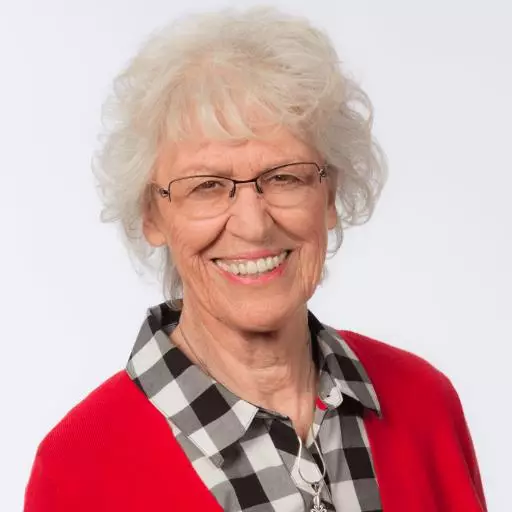
Daring to Dare
Most of us like to put our roots down and feel secure. We don't like change. We don't like being pushed into situations where we'll risk anything. But sometimes God calls us to do this!
God calls us to be believers, like Esther and Mordecai, who care enough about the souls of others that we risk our own comfort, and sometimes our own lives, in order to fight for the lives of those around us.
Jill teaches us how to be believers who care enough to dare—believers with courage to do the right thing even when we're afraid!
Jill Briscoe: Now let's turn in our Bibles to the book of Esther. We're in chapters four and five, the core part of the story. And we're going to talk about what it takes to dare, what it takes to do what Esther did, which is always beyond all of us. When God calls us to do a rather extraordinary thing, it's always beyond us. How can we ever do those things that God asks us to do? If we can do them, then we are not stretching, we're not reaching, we're not risking anything. I'm going to talk a lot about risk because I think all of us, especially those of us that are women, like to put our roots down and feel secure. We don't like change. We don't like being pushed into situations where we'll risk anything. And sometimes God calls us to do this.
He certainly called Esther to do this. We're going to think about that again today. You remember the situation. On a certain day, on a certain month, at a certain time, all the Jewish people were going to be exterminated. Bad old King Ahasuerus had chosen one of his cohorts, Haman, to help him to exterminate the Jews. That's where we are, and it's not a good scene. But we have the right people in the right place at the right time. We've got Mordecai and we've got Esther maneuvered into place in God's economy so that they are in a position to make a difference. Believe it or not, we don't have to be a king or a Mordecai. We don't have to be in high places to be maneuvered by God's Spirit into the right place at the right time to make a difference. That's the exciting part of being a Christian.
The thing is, do we care enough? We are either believers that care enough to dare, or we're believers that don't care enough to dare and we keep all those good things to ourselves. It's like those lepers that were standing outside the walls because they were lepers. And they were watching a confrontation between Israel that was being besieged and the invading army. They were wondering who was going to win. And God sent some miraculous intervention, and the army thought they were being attacked and ran away and left all their tents full of all the spoil. The lepers looked around and said, "We never thought ourselves so lucky. Here are all the empty tents of the enemy. We can take our fill, we can do what we like."
They began to eat and they began to dress themselves in the soldiers' apparel and help themselves to the soldiers' goods. Then suddenly one of them said, "Hey, wait a minute. Today is a day of good tidings and we hold our peace. We do not well." They left the clothes and they left everything else and they turned around and they ran to the gates of the besieged people who were starving, who were at the point of nearly eating each other, they were so hungry. They'd been under siege so long. And they said, "It's all right. Come and see what God has done." They gave away their own opportunity for all that spoil because today was a day of good tidings and they didn't do well when they held their peace and tried to take it all for themselves.
In a sense, that's what the Christian is and that's what the Christian does who holds everything for themselves in a day of good tidings. I quoted a favorite song of mine: "Do you know that souls are dying? Do you care? Children lost and voices crying, do you care? Can you say with God's dear Son, 'Not my will but thine be done.' Does it matter? Does it matter? Do you care?" Now Jesus cared. He didn't need to come. He didn't need to leave heaven. But he cared that souls were dying, children were lost and voices were crying. And so he came. Esther, her choice was coming. Did she care? She was the queen. She might get away with it. Did she need to jeopardize all of that?
Mordecai, oh, he cared. He might have gotten away with it. He was a favorite of the king. Remember, he had an ace up his sleeve. He had saved the king's life. Maybe he would have gotten away with it. Then why wear sackcloth and why put on all this display of trauma because his people were in trouble? He was putting his life at risk as well. But they did care. And that's where it all begins. Exposure to the scriptures, let's talk about that for a minute. "Go ye into all the world and preach the gospel to every creature." That's what the Bible says. That's you and that's me. When we've done it, it's everybody. We are called to go and make disciples, men and women. That is our calling.
Go ye. It doesn't say sit ye in church and let somebody else go ye. It says go ye. It doesn't say come ye into church with me. It says go ye. We are to go where the people are who need help. He says, "Follow me." Where would Jesus go if he were here in bodily form? Where would he go for lunch? Would he go down the road to McDonald's? If he did, what would he do when he was there? Do you think he'd talk to the people around him? Do you think he'd talk to the person who served him? I think he would. I think there'd be something about him that would make the waitress do a very special job for him. Do you think he would leave her a tip? Or do you think he'd leave her more than a tip? Do you think he'd leave her a word from heaven? I think he'd leave her a word from heaven.
He said, "Follow me." If you were with him, if you followed him to lunch today, would you get involved with what he would get involved with? Following him means doing what he would do, going where he would go today. That's what following Jesus means. And as we expose ourselves to the scriptures, all those examples come home to our heart and we follow him. That was the reason I got on a bus one day in England and followed him. I thought, what would Jesus do tonight if he were in Liverpool? Well, I knew what he would do. He wouldn't sit home and watch television. He would get on a bus and he would go downtown to a place called Lime Street where there was a lot of need because he was always among the people who were needy. He didn't come to save those who didn't need saving. He came to seek and to save those who were lost. Who are the lost? Well, there are a lot of lost people.
There are a lot of lost people in my house. So maybe he would have stayed home and watched television with some of them and spoken to them. But he also would have gone on a bus downtown, I knew that. And so I followed him, literally, downtown to Lime Street. That's how the whole of that youth ministry began. I stood there when I got off the bus and thought, where would Jesus go? Well, I knew where he'd go. He'd go where nobody else would go. So I went where nobody else would go. There I found some of my kids from school sitting on a sidewalk in the middle of Lime Street Station. I asked them what they did with their spare time. "Well, there's nothing to do, dunno. Why do you want to know?" They were suspicious; they didn't welcome me.
Night after night, I began to follow Jesus where he would go. And in the end, a great youth work began. And God saved many of those young people because I exposed myself to the scriptures and I asked myself, "Do I care? Do I care that souls are dying? Do I care? Children lost? Yeah, my children that I taught in the day school. They were lost. And voices crying, do you care?" You know, the scripture says, "Nobody cared for my soul." Can't you hear those little voices? If you really get down to prayer, you will hear those little voices saying, "Nobody cared for my soul." Anybody in your family, could they say that to you? Nobody cared for my soul. Oh, you cared for my body. But you didn't care for my soul.
I don't want anybody to say that to me when I meet them on the other side of death. So I expose myself to the scriptures. I hang around the saints, secondly. Hang around the saints who make me care. Find somebody with a heart for evangelism and make them your friend. There are people here who specifically have a heart for evangelism. Expose yourself to what they're doing. It doesn't take much to make me cry for my own self. Self-pity, that's easy. But when was the last time you shed some tears for someone who was lost? I mean it. We get so introspective in our Christianity that all we do is take our spiritual temperature and run around from this nurse or that doctor, this Christian counselor to that Christian whatever, hoping to mend ourselves.
I tell you, we'll mend ourselves in a hurry when we turn our eyes outward and start to mend other people's lives. Do we care? Do you care? Do I care? Let's hang around the people, let's go to them and say, "Teach me how to lead someone to Christ. Have you ever led anyone to Christ?" You say, "That's not my gift." How do you know if you've never led anyone to Christ if it's your gift or not? Why don't you dare to say to God, "Use me this week to actually lead someone to Christ." Have you ever prayed like that? When I first became a Christian, I prayed like that every day. "Lord, today." And guess what? Every day I led someone to Christ.
Somebody came to my husband once and said, "I don't know what's the matter with me, Pastor Briscoe. I'm a preacher. But every time I preach, nobody gets converted." And he said to them, "Goodness me, do you expect anybody to get converted when you preach?" And the young man said, "Oh no, sir. No, sir." Stewart said, "That's why they don't. No expectation. Blessed is he that expecteth nothing for he shall not be disappointed, right? Blessed is she that expecteth nothing; she shall not be disappointed. Do you expect anyone to get converted when you witness to them? Oh no, no, I don't. Then that's why they don't."
But you know, when I came to the Lord, I expected it because the girl who led me to Christ told me to. And I believed her. She had led me to Christ; if she'd told me the moon was cheese, I would have believed her. And so I had this huge, fresh, childlike expectation that Jesus Christ was living in me and it was his job to win souls, therefore he would win them through me. So you hang around the saints. Then you do what Mordecai did in chapter four. You wear sackcloth. You say, "What's the best-dressed woman wearing around Elmbrook's? Sackcloth. Does that mean that's what it means? No, it just means your whole lifestyle should speak of self-denial so that others may come to life and be delivered from death, that's all.
Does it show? Are you never a moment away from realizing people are lost? That's a question I've been asking myself in these busy weeks that I've been involved in lately. Am I never a moment away from realizing that people are lost? Does my soul wear sackcloth today? I mean, quite honestly, up to now today, have you cared about anyone's soul? And why not let the Spirit loose inside our hearts so he might teach us how to pray? The scriptures are going to make me care. The saints will help me to care. Saints being ordinary Christians who know Jesus. My soul must wear sackcloth. Whatever it takes, ask God to do that for you. And let the Spirit loose inside us to teach us how to pray.
Through prayer, a hunger for souls will develop. No question about it. Find a book on prayer. You see, we never get beyond square one, praying for ourselves really. And the battle for other people's souls is something that very few know about, and yet everybody could be part of. Are you in a small group that is literally praying not for people's needs, but for people's souls? Now you probably need to be in both. The needs are so great. There are more and more needs all the time for Christians to be prayed about. But what a discipline to actually join with somebody and say, "We covenant together not to pray for people's needs, not for Christians' needs, that'll be for another time and another place. But let's covenant together to pray for somebody's soul.
Who is there in your family who needs salvation? Why not meet just 10 minutes before the Sunday service, covenant with someone and say, 'I will meet you at 9:00 in the prayer room and we will pray for your husband every Sunday for his soul.' Are we praying for people's souls? Do we know what that is? Have you read 'The Kneeling Christian'? Have you read 10 books on prayer?" I was really excited; I got a phone call from the religious editor of UPI International. They have a religious editor. I didn't know. They had written to Zondervan and said, "We want some books on prayer because it's the National Day of Prayer coming up. Give us some books on prayer." So they'd sent them four or five books and they'd chosen mine, which was a great honor.
They rang me to interview me, 15 minutes all over the place, on why I'd written that book on prayer. And it was a huge challenge to my own heart. I felt like a great hypocrite to tell you the truth. As I lay on my bed and read my own book, it talked to me and said, "Thank you, Jill," at the end. You reminded me of a lot of things I'd forgotten. It is a weird sensation when your own book is a blessing to you. Now that might sound really strange, but you see, you forget. And there was one chapter in particular that I had written with great passion in that book, and it was about praying for people who were lost. You need to remind yourself of what you know already, even if you've written books about it. You get stale.
You need to let the Spirit loosen up your heart and teach you to pray for others. Now then, what happened was Esther, as you know, said to Mordecai, "Gather everybody and fast and pray for me." She didn't say "pray" in the scriptures, but it is implied. Fasting and prayer always went together in the Jewish mind. "But sometimes this kind," Jesus said, "cometh forth by prayer and fasting alone." Prayer isn't enough, sometimes fasting is needed. Is it the fasting that makes God answer our prayers? Not specifically. Nothing we do makes God answer our prayers. It's just that you can concentrate more and you can give God a chance, perhaps.
And I would suggest that no big decisions, no great changes, no ministry begins without fasting and prayer. That you do not choose a husband without fasting and prayer. That you do not see your child walk towards an engagement without fasting and prayer. Esther said, "I and my maidens will fast three days, and we will take no food or water." Interesting. To fast without food is one thing. But to fast without water is almost dangerous for three days. She meant business. Of course, there was a lot at stake. And there's a lot at stake when we fast and pray. Have you ever fasted and prayed for someone's soul? I mean, if we haven't even prayed for somebody's soul, maybe we've never gotten around to fasting and praying.
I would suggest that is a good discipline for all of us, for personal reasons and for corporate reasons. "I will fast and pray," she said, "and my maidens will." So there is a time individually when we are facing a personal crisis when we need to fast and pray. And there is also a time when we corporately need to gather people around us to fast and pray. Where two or three are gathered in my name, there am I in the midst of them. Where two of you shall agree on Earth on anything, I will do it. Jesus has so many promises of prayer. "When you fast," not "if you fast if you'd like or if it doesn't make you have a headache." Somebody said to me once, "I can't fast, I get a headache." I said, "So what?" They said, "Well, so I get a headache."
I said, "So what?" "Well, God wouldn't want me to get a headache, so I don't fast." Well, He didn't say fast if you don't get a headache. Maybe you get a headache. But you know, we are so fond of ourselves. That's why we never risk and that's why we never dare. And I would tell you from personal experience that fasting and prayer together somehow, some way has an effect that praying on its own doesn't always have. It's a wonderful experience. Perhaps it's just that we give ourselves a chance to hear the voice of God in a special way by concentrating in that sense upon him and his word and the subject in hand. I don't know. But Esther certainly asked Mordecai for that help. And the Jews did it. The praying and the fasting began, the caring was already happening. Now the daring. Now the daring.
Let's think about courage for a bit. How courageous are you? How courageous am I? How fearful a person are you? How fearful of people are you? You know, we can be afraid of people's faces. God leaned out of heaven and said to a prophet one day, "Be not afraid of their faces." A prophet. He didn't say, "Be not afraid of being thrown to the lions." He said, "Be not afraid of their faces." It's funny. I used to do all sorts of wild things that I think some of you might be afraid of. But when I came to be a pastor's wife and I had the deacons and their wives for dinner, I nearly died with fear. I was afraid of their faces. I was afraid of their faces when they looked at what I put on the table—my food.
I was afraid it wasn't good enough. I was afraid of their faces when they looked around my house. I was afraid it wasn't clean enough. I was afraid of their faces when I did it all wrong as a pastor's wife in those early days, and I haven't changed much, I don't think. But I was more afraid of a few deacons' wives' faces than I was of mobs of kids on the streets with knives and razor blades. It's funny what you're frightened of. But you can be afraid of faces. Have you ever been a teacher and gone into a new class? I used to hate doing that because every little face would be looking at you. And they're only little faces, but I didn't like being looked at like that. I didn't know what they were thinking.
I used to be afraid of their faces because I'm shy, incidentally. So is Stewart. Nobody believes us, but we are basically. And we're English, which makes us reticent. Remember the first time Stewart asked me, "How did you meet Stewart?" I thought, what's he want to know for? And I couldn't possibly tell that in public. You know, even in our weddings, we don't kiss like you do. I nearly got in the pew when I saw the bride and groom kiss in public. We shake hands like you should do. So here I am, a poor, shy English girl being asked how I met Stewart and how we fell in love and I was absolutely beside myself. I was pink and I was red and I didn't know what to say and we just sort of brush it off with a laugh or a joke.
It's funny what you're frightened of. God said, "Thou shalt go and thou shalt speak and thou shalt not be afraid of their faces." He said to Joshua, "Fear not, don't be afraid. Don't be discouraged. Don't be frightened." Why would he say all that unless he was? And that was Joshua. Abraham, "Fear not, I am thy shield and thy exceeding great reward." What was he frightened of? All sorts of things. Abraham! The Lord said to Moses, "Fear him not." Who was that? Og, King of Bashan. He'd already said to him, "Fear Pharaoh not." Moses stood there and said, "Here am I, send Aaron," remember? Now Esther was standing there before God saying, "Here am I, send Mordecai." We always say that sort of thing: "Here am I, send somebody else." God said, "No, here you, send you. It's you I want to go. I'll look after Aaron, I'll look after everybody else."
So we're not very courageous. And the first thing about courage I want to say is courage is in short supply. Be encouraged. Nobody else is full of courage. Do you envisage everybody else full of the stuff and you're the only one who isn't? Let me tell you a secret: courage is in short supply. I very, very seldom met someone who naturally is full of courage. You need to know you haven't got enough of it, and nor has anyone else. Everyone's frightened of something. Secondly, courage mustn't dictate action. Courage must not dictate action. Now that is very, very important. Very simple message today. There isn't enough courage in my heart to dare today, to dare to do. Courage must not dictate action. And yet I observe that courage does dictate action in most people's lives. If the courage isn't there, I won't do it.
If God expects me to do that, he's got to give me the courage. Doesn't it say ask and you will be given, seek and ye shall find, knock and it will be given you? If God expects me to knock and go through this very frightening door, then he better give me the courage and then I'll do it. Courage must not dictate action because it might never come. Just think, if the courage never comes and you're waiting for it to do God's will, God's will will never get done. It's as simple as that. You say, "Well, that's not very fair of God. If God wants me to do something and I need courage to do it." But you see, you don't need courage to do it.
That's the third thing. You don't need courage to do it, to say it! That is the biggest scriptural truth if you can get hold of it. It's the weak people who do things. The nothing people who bring something down. Read 1 Corinthians and find all that out. Most of us wait and wait. Let me ask you what you're waiting for. Have you been waiting all these years for the courage? You know, Esther's story is incredible because you see she needed courage. Some of you are saying, "Why did she need courage to go and ask the king to save her people?" Because unless you waited for the king to invite you into his presence, you died. If you just appeared in the king's presence, you died. That's why! Unless His Majesty so required that you might live.
And if he decided he wanted you to live, he who was sitting on his throne, dressed in his royal regalia when you appeared in front of him unasked, would hold out his golden scepter. If he held out his golden scepter, you lived. And if he didn't, you died. Now we see why Esther needed courage. Because as she says in chapter four, 30 days have passed since I was called to go into the king. Verse 11, chapter four. 30 days! I'm out of favor. I mean, I'm really out of favor. And you're asking me to go to the king and ask a big favor when I'm out of favor? Look at this. "There is one law, that he be put to death. The only exception to this is for the king to extend the gold scepter to him and spare his life." But 30 days have passed.
So Esther was not expecting it to be good husband and wife time when she appeared unasked for in the king's presence. So on the third day, chapter five, Esther put on her royal robes and stood in the inner court of the palace in front of the king's hall. And the king was sitting on his royal throne in the hall facing the entrance. And when he saw Queen Esther standing in the court, he was pleased with her and held out to her the gold scepter that was in his hand. So Esther approached and touched the tip of the scepter. And the king said, "What is it, Queen Esther? What's your request? Even to the half of my kingdom, it will be given you." "Oh, if it pleases the king," replied Esther, "let the king together with Haman come today to a banquet I have prepared for him."
Now, there are some extra writings in the book of the Apocrypha on the book of Esther, and Josephus talks about them too. Some of these writings give us a little color, a little music, a little light on what was really happening. Let me read you some of the Apocrypha in this regard. She put on her royal apparel and in the Apocrypha, it has a prayer she prayed at the end of her fast as she dressed herself to dare to dare. "Thou knowest, Lord, I abhor the sign of my high estate which is upon my head in the days wherein I show myself. I am not dressing, I'm not putting off the sackcloth and my clothes of my fast for myself, but for him. I abhor the sign of my high estate." It gives you a little clue as to what this girl was thinking about her position as queen.
Now then, she stood in the inner court over against the king. When he saw her, she obtained favor in his sight. The apocryphal author and Josephus say that she took two maids with her, on one of whom she leaned while the other bore up her train. Her countenance was very cheerful and very amiable, but her heart was in anguish. And that the king, lifting up his countenance that shone with majesty, at first looked very fiercely upon her, whereupon she grew pale and fainted. She bowed herself on the head of the maid who went by her. But then God changed the spirit of the king and in fear, he leaped from his throne, took her in his arms till she came to herself and comforted her with loving words. Here in the Bible, we're only told that he protected her from the law and assured her of safety by holding out to her the golden scepter, which she thankfully touched the top of, thereby presenting herself to him as a humble petitioner.
So here we have it. She did it without the courage. I love it! Because why? Because that's me. Anybody can do it without the courage. If we have to wait for the courage, who's going to do it? Not me. I can't think of anything I've ever done with the courage. Doing it without the courage is called obedience. And that involves the will and your body, basically, not your emotions. Anybody can do anything without the courage. Courage must not dictate action. God wants us to do it without the courage. Now how will we then do this? By enlisting the mind to understand certain things. It's the sense of destiny. "For such a time as this," Mordecai said to her. "Esther, you're in the right place at the right time. Will you do it? Will you go into the king?" And she took will by the hand, and she and will went to the king. Where do you think emotions were? Back in their bedroom, probably. They didn't go along, or the ones who went along weren't much help.
Anguish, panic, so much so she fainted! So the emotions weren't going to be much help. So she and will did it, you see. She did it without the courage. For such a time as this. She had enlisted her mind and realized that God had brought her to the throne for such a time as this. Do you know when you enlist your mind and get a sense of destiny, then even when your heart is pounding and you're near fainting with panic, you will open your mouth and say something. And it's exciting! And spiritual excitement isn't specifically an emotion. It's a sense of expectancy that's deep inside your spirit. And you get up in the morning and you say, "God, for such a time as this, I am your Esther today."
I remember going from Stewart's home to Capernwray Hall in a little gray car. Stewart was in the bank; I was staying with his parents at the time. We were engaged, and I wanted to go to Capernwray Hall. As I drove along, I saw two girls, two German girls with a German flag on the back of their backpack, hitchhiking. I had this sense of expectancy in my heart for such a time as this. I'd enlisted my mind, I had been in the scriptures. I had been aware that perhaps today, God was going to use me in someone's life. And that's how we should all wake up to every day. So I didn't go by them; I stopped the car. It was in the days when you picked up hitchhikers safely.
I invited them to come into the car and one of them got in beside me. I began to ask her who she was and she said she was a student. She said she was a theology student from Germany. I said, "Oh, that's interesting. Why are you studying theology?" So she said, "That I might find God." And I said, "Have you found Him?" And she said, "No. But I told God when I came on this holiday that if I had not found Him by the end of this trip, that I would not go back to school and that I would go into a secular environment because I've taken three years to search out God. That's why I went to seminary to find Him, and I haven't found Him." "Oh," I said.
She told me this in very broken English and I knew there was absolutely no way I knew German, obviously. I couldn't know German; I didn't know German that I could help her understand. I said to her, "Do you have a couple of hours to spend?" And she said, "Why?" So I said, "Well, there's a very pretty castle down here. I was just going, and there's somebody there who speaks German really well. I'd like you to meet them." She said, "Who is it?" I said, "Major Ian Thomas." "Who's he?" I said, "Well, wait. He travels the world 11 months of the year, so he's probably not even there."
We drove up to Capernwray Hall with this little girl. I was praying much for in my heart, my soul wearing sackcloth for her. There on the front steps of Capernwray was Major Ian Thomas. I have never before or since seen him on the front steps of Capernwray, and especially not just at the right time at the right place. But there he was, and my heart leaped. I got out of the car and I introduced the young girl to him and I said, "Major Thomas, this young lady is a theology student from Germany and she wants to find God." "How do you do?" he said. "Let me introduce you to Him." He took her inside and an hour later she came out and said, "I found Him. I found Him."
You enlist the mind. For such a time as this, can't you see that excitement? I was a link, that was all. Right place at the right time without the courage saying "get into my car" and without the courage trying to say something that I didn't feel I wanted to say, fearful. I could have given you lots of other illustrations, too. God wants us to do it without the courage. So the sense of destiny is very important. Secondly, the sense of determination. Will I do it? Courage is doing the right thing in fear. What stops us speaking? Fear. The biggest illustration of this was in my own life, standing outside a place called the Floral Hall, a dance hall, unbelievable place, in my days of missionary work among the young people, praying for the courage to go in and the courage never came.
I went back three weeks praying that God would give me the courage to go inside. No courage! In the end, God leaned out of heaven and said, "Will you do it without it?" "Oh! That's called obedience, right." So I said to my feet, "Feet, move." I took will by the hand and will and my feet went in. And then I had to follow because if your feet go, you do. Sense of determination. When I got in there, I found the courage was waiting for me after obedience. But actually, it wouldn't have mattered if it hadn't been, plus the fact I needed more courage then because I found myself asking if I could use the platform in the interval and talk to a thousand kids.
I didn't have the courage to do that, so I did it without. I thought I was going to faint; I was so scared. My heart was pounding, my blood pressure was raising, and I stood there looking at this mob of kids. I mean, who is sufficient for these things? Certainly not me. He is. He is sufficient for these things. Sense of determination. And this brings the sense of dependence. We do not prepare what we say in evangelism; we prepare ourselves. Out of the abundance of our heart, our mouth speaks. Are we taking in the Word of God to such a degree that the Spirit of God can pick out this or pick out that and match the need of the person as we go along?
Training will help, formulas will help—all sorts of helps. But in the end, out of the abundance of your heart, your mouth speaks. It perhaps is what you've learned today that will be the link to somebody finding Jesus Christ. There is no shortcut. We must be in the Bible, we must be in touch with the Lord, and we must encourage ourselves in the Lord. What does that mean? We encourage ourselves in the Lord when we say to our heart, "Heart, depend, rest on him." I remember Stewart saying to our kids, "Jump!" He was standing down on the floor and the kids were standing on a great big wall in Wales. We were off for a day in the hills just enjoying the countryside. The kids had all clambered up on this old English wall.
Daddy stood underneath them with his arms wide open and he said to the kids, "Jump, jump!" And without exception, David jumped right into his arms. Then Judy jumped right into his arms—six-foot wall. Then little Pete jumped right into his arms. No problem. That was daddy. That was daddy. It was the faith in him. He would catch them; they wouldn't fall. He will catch you. You won't fall. We have to jump. Will you jump? Esther jumped and she found God the other side of the courage.
But you see, she did have the sense, "If I perish, I perish." She didn't know he was going to hold out the golden scepter. And you don't know and I don't know what the other side of the story will be. Maybe it will not be success; maybe the person will not find Christ. Maybe they will turn around and say, "How dare you tell me that I am a sinner. I never want to speak to you again." But that will be better than facing them in eternity and having them say to you, "You never told me I was a sinner. Now I can never speak to you again," won't it? Do you care that souls are dying? Do you care? Children lost and voices crying, do you care? Can you say with God's dear Son, "Not my will, but thine be done." Does it matter? Does it matter? Do you care?
Let's pray together. Heavenly Father, we thank you for Esther. We thank you for her great, great courage. And we thank you for the few simple reminders of things that I'm sure we know already. The courage is in short supply. The courage must not dictate our actions. The courage may never come. And while we wait around for it, a world is dying. May our souls wear sackcloth today. We ask it that your kingdom may come upon this earth. And in Jesus' name we pray. Amen.
Featured Offer
In their 5-message series, Powerful and Effective Prayer, Stuart and Jill Briscoe help you discover the power of a life rooted in prayer—and how it can become the place you turn to in every situation.
When life feels overwhelming, it’s easy to react first and pray later. But this encouraging series shows you how prayer can bring clarity, peace, and steady confidence in God, no matter what you’re facing!
This special resource, available as a digital download or on USB, is our thanks for your gift to help more people experience the truth of God’s Word.
Past Episodes
- A Lifetime of Wisdom
- A Little Pot of Oil
- A View from the Porch Swing
- Are You Good Soil?
- Art of Leadership
- He Came to Give Us Life
- Heart Hunger
- Here Am I, Send Aaron
- Hidden Treasures
- Hope for the Disheartened
- How Do I Find Joy?
- How to Be Up When You're Down
- Lessons from the Boy Jesus
- Let's Talk
- Life Lessons
- Life that Works
- Living Above the Circumstances
- Living in the Word
- Living Love
- Lost and Found
- Searching
- Seeing Through Suffering
- Shaking Up Your World
- Shelter from the Wind
- Six Things a Mother Can't Do
- Slaying Giants
- Solid Ground
- Spiritual Arts
- Take 5: A Christian Point of View
- The Balancing Act
- The Cutting Edge
- The Fatherhood of God
- The Heart and Soul of Friendship
- The Heartbeat of the Master
- The Holy Spirit
- The Holy Spirit and You
- The Innkeeper's Daughter
- The Names of God
- The New Normal
- The Power to Change
- Triumph in Trouble

Featured Offer
In their 5-message series, Powerful and Effective Prayer, Stuart and Jill Briscoe help you discover the power of a life rooted in prayer—and how it can become the place you turn to in every situation.
When life feels overwhelming, it’s easy to react first and pray later. But this encouraging series shows you how prayer can bring clarity, peace, and steady confidence in God, no matter what you’re facing!
This special resource, available as a digital download or on USB, is our thanks for your gift to help more people experience the truth of God’s Word.
About Telling the Truth for Women
Telling the Truth exists to make available sound biblical teaching, practically applied, with a view to producing lives that glorify God and draw people to Christ. The whole of our ministry is to encourage, console, strengthen, teach, and train.
About Jill Briscoe
In addition to sharing with her husband in ministry with the Torchbearers and in pastoring a church in the United Sates for thirty years, Jill has written more than forty books, travelled on every continent teaching and encouraging, served on the boards of "Christianity Today" and "World Relief," and now acts as Executive Editor of a magazine for women called "Just Between Us."
Jill can be heard regularly on the worldwide media ministry called "Telling the Truth" She is proud to be called “Nana” by thirteen grandchildren.
Contact Telling the Truth for Women with Jill Briscoe
info@tellingthetruth.org
Brookfield, WI 53005-4633
Outside North America
Telling the Truth
PO Box 204
Chessington
KT9 9DA
United Kingdom
800.889.5388
Outside North America
0800.652.4120