
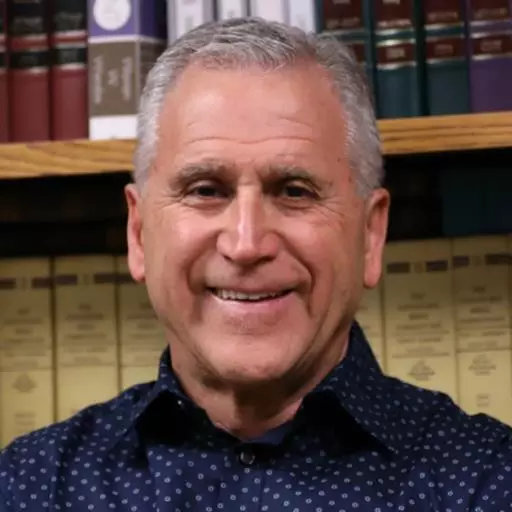
The Right To Forgive


Today, Pastor Raul continues the focus on forgiveness with practical instructions for handling grievances against your fellow believers. Exploring the Lord’s view of lawsuits, you’ll see that rushing to court can run the risk of damaging your spiritual testimony. Instead, you can ask for God’s wisdom and grace to handle a conflict privately, with a heart of forgiveness. Learn more on Somebody Loves You with Pastor Raul Ries.
Raul Ries: If we can’t forgive one another and come to a conclusion or a settlement in the church of Jesus Christ—and one day you and I are going to judge angels—and we can’t take care of our petty judgments here on this earth, then how in the world can you expect God to use you on the last day to judge angels?
Guest (Male): Welcome to Somebody Loves You Radio, the Bible teaching ministry of Raul Ries in Diamond Bar, California. It’s good to have you with us as Raul continues our focus on forgiveness with practical instructions for handling grievances against your fellow believers.
Exploring the Lord’s view of lawsuits, you’ll see that rushing to court can ruin the risk of damaging your spiritual testimony. Instead, you can ask for God’s wisdom and grace to handle a conflict privately with a heart of forgiveness. Let’s join Raul Ries in the book of 1st Corinthians.
Raul Ries: Paul the Apostle, in chapter six, verses one through 11, is going to be speaking to us about lawsuits among believers. This is a very important topic. In the past years and even today, there seems to be a lot of lawsuits in this world. It’s amazing when a lawsuit is brought about against you or you against another person.
Paul the Apostle here is actually giving insight to the believer. These people in the Corinthian church were believers, but there was one small problem: these people were not spiritual people. They were carnal, and that was a major problem.
What Paul will do is break these 11 verses into three parts. First of all, in verse one, we will see the problem. Then, in verse two through verse six, we will see the ignorance of the people in Corinth. Finally, in verses seven through 11, we will see the solution to the problem.
Paul the Apostle is talking to believers in the city of Corinth that literally were bringing shame to the gospel of Jesus Christ. They were taking their brothers and sisters into the court system and bringing them into lawsuits instead of doing what the Bible says biblically.
The Bible teaches that if any brother or sister has anything against another brother and sister in the Lord, it’s not healthy for any one of us to ever take our dealings into the secular world court system because it can bring the gospel into shame. We have to really be careful how we do it.
First of all, he gives us counsel that if we do have a situation or a problem, we should always try to solve it out of court. That is, with a board of believers that have integrity and wisdom and try to come to an agreement between the two parties.
The reason is because if you take a lawsuit to the world system, not only do you have to pay money to the lawyers and to the system, but also in some of the court dealings among lawyers, there’s a lot of lying going on. One thing that God wants us to be is honest in our dealings, especially when it comes to another believer.
Otherwise, what happens is that we become a shame and we hinder the gospel of Jesus Christ to the non-believer that should be coming to Jesus Christ because our testimony is right before God. This was a major, major problem in the city of Corinth.
In the past years, we have seen so many commercials on TV with lawyers enticing people: "If you’ve been hit, if you’ve been in an accident, or if you have mortgage problems, whatever, come to us. We’ll get your money." This is actually a deception of the world. The world says, "Go for the jugular." Paul the Apostle says, "Forgive and forget."
That’s what the scripture teaches. The scripture is teaching here that we’re not to have an unforgiving spirit, but we need to come to the conclusion of love with one another. If we can’t forgive one another and come to a settlement in the church of Jesus Christ—and one day you and I are going to judge angels—and we can’t take care of our petty judgments here on this earth, then how in the world can you expect God to use you on the last day to judge angels?
Think about that. This is what Paul’s teaching. Let’s begin by looking at the problem in verse one. He says, "Dare any of you," and literally in the English, it should say this: "How dare you?" He’s rebuking them. "How dare you, having a problem or a matter against another believer, go to the law courts before the unrighteous and not before the saints?"
You and I have a responsibility that whenever we have a problem, we need to go to believers. There are some good Christian lawyers that can settle out of court. You can come to some conclusions in some way to work it out, whatever the problem may be. There are also times where you must take matters into the court systems because of the person that may be suing you.
But the Bible is very clear that Christians are never to sue another Christian. If you can, the biblical way is to settle out of court and to come to an agreement together by speaking the truth. It seemed to be a problem in the time of Paul. This is why he says, "How dare you having a matter against another brother? Why do you go to the court of the unrighteous, who are not fair? Why? Because they don’t know the word of God."
As a matter of fact, in this chapter, you see that word in verse two where he talks about their ignorance. He says, "Do you not know?" He uses that in verse two and verse three, and then in verse nine, and then again in verse 15. It’s a term constantly being used by Paul here. "Don’t you know that the saints will judge the world?"
Imagine what he says here. Don’t you know that one day you and I are going to stand with God and we are going not only to judge the world, but we are going to judge fallen angels? That’s going to be our job one day. If we’re going to be in such a position of accountability and responsibility, then why can’t we take today those matters and judge them biblically and do it for the gospel’s sake?
Instead of ripping people off and trying to get as much as we can and turning people against us and ending up in bitterness and in hatefulness, Paul says this should never be so among believers. Never should it happen. Then he says this again concerning their ignorance.
"Don’t you know that the saints will judge the world? And if the world will be judged by you, are you unworthy of judging the smallest matters? What’s the matter with you?" God has given you the wisdom and the knowledge to do that. Plus, he’s given you his word, which is the guideline to judgment.
Verse three: "Don’t you know that we shall even judge angels?" This is in reference to Second Peter 2:4 and Jude 6, which speak of fallen angels. They’re in Tartarus right now in a place of judgment. These are some of the angels in Genesis chapter six. Not all the evil angels are in judgment yet; some are already put away because they’re so fierce. One day we will judge those angels.
How much more things that pertain to this life? If we’re going to be in the future judging angels, then why can’t we now in this life judge correctly when God has given us such great responsibility as believers? Well, the problem in the Corinthian church and the problem today is that these people were carnal, not spiritual.
They did not know the word of God. They did not know the Old Testament and the New Testament. They hadn’t studied the word of God to know that there’s a solution to every problem in the scriptures. When you search biblically, God gives you an answer.
Then in verse four, he says: "If then you have judgments concerning things pertaining to this life, do you appoint those who are least esteemed by the church to judge?" He says if you know that the world doesn’t do righteous judgment, then why are you appointing people that don’t know God, especially to judge those in the church that are believers?
"I say this to your shame. You should be ashamed of yourself," Paul says. "Doing this is not right. It’s a shame. Is it so that there is no wise man among you?" He says, "Are you all carnal? Do you have no wisdom? What have you learned in studying God’s word?"
"Is there not even one who will be able to judge between his brother?" And yet he says in verse six: "But brother goes to civil lawsuits against another brother, and that before unbelievers." It should never, ever be so. Never should that happen. And yet it happens in such a way where people end up getting hurt and become bitter toward one another and even bitter toward the church.
Guest (Male): You’re listening to Somebody Loves You Radio with Raul Ries. You can email Raul anytime at PastorRaul@SomebodyLovesYou.com with your Bible questions and prayer requests. For Bible-rich resources to encourage and guide you in your spiritual walk, visit SomebodyLovesYou.com. Let’s continue with the final part of our study, "The Right To Forgive."
Raul Ries: You know what’s amazing? In verses seven through 11, he gave you the problem and then he gave you their ignorance. Now he’s going to speak to you about the solution to the problem. The solution is found here in verses seven through 11, and we find it in the book of Matthew, chapter 18, beginning with verses 21 through 35, as Jesus has been speaking on restoration and reconciliation and as Jesus is speaking to Peter.
This is what Jesus said to Peter. Peter came to Jesus and said, "Lord, how often shall my brother sin against me and how many times do I have to forgive him?" Think about that for a moment. Now, if Jesus was speaking to me, I would say one time. That’s my nature. And you laugh, but that’s your nature too because our heart is evil. Peter was lucky; he said seven times. Jesus was trying to teach that you just keep forgiving and forgiving.
The reason is because look what Jesus Christ has forgiven you and me. Think about that. When I think of my life and I think of my sins, I should have been toasted a long time ago by the Lord. And yet I can turn around and I can look at somebody’s sin and I can immediately say, "Guilty, with his head off," because that’s our ugly nature. But not so with Jesus because Jesus takes it a step further with Peter.
Listen to what he says in a parable. He says, "I do not say to you seven times, but seventy times seven. Therefore, the kingdom of heaven is like a certain king who wanted to settle accounts with his servants." There was a master that had many servants, and one of his servants came to him. The master said, "Servant, I’m getting ready to collect what you owe me, and what you owe me is ten million dollars. Pay up."
This servant came to his master and said, "Master, I really don’t have the money to pay you, but I will pay you." The master of the house said, "No, I want you to take his wife, I want you to take his children, and I want you to sell them. When you sell them, give me the money and put this man in the debtor’s prison." Once you are put into the debtor’s prison, you can’t pay anymore. You’re there stuck for life.
But as the master thought about this and he spoke the parable, he had compassion on his servant. He said, "You know what? Because you’re asking me to be compassionate, I will be compassionate." Instead of making him pay the debt, he told him to forget the whole debt. Ten million dollars? Forget about it. The moment the servant found out and heard the words of his master, he left.
When he left, he remembered that he had someone under him that owed him some money—a hundred dollars. He went and he found him, and when he found him, he took him by the throat. He said, "You pay me now or I’ll kill you." When the master of this servant heard what he did, his master became very angry and called him in because he had put this man in prison.
He stood before the master, and the master said, "Hey, didn’t I forgive you ten million dollars? I told you not to pay me anymore and I forgave you. Why did you go and look for a servant that owed you money, take him by the throat, and tell him you would kill him and then put him in jail?"
He said, "Now what I’m going to do with you is this: not only are you going to pay me the money, but I am going to put you in jail until you can pay the money." It says his master was angry and delivered him to be tortured until he would pay all of his due. "And so my heavenly Father also will do to you and to me and to each one of you from his heart who does not forgive his brother his trespasses."
What was Jesus trying to teach? Jesus was trying to teach that God the Father was compassionate to you and me. He has forgiven us totally for everything that we’ve ever done. Yet, if we become bitter and we become unforgiving as Christians, then how in the world is God going to truly forgive you? He can’t, unless you truly forgive your brothers and your sisters. There has to be forgiveness in our hearts.
In Ephesians chapter four, verses 31 through 32, Paul says this to the Ephesians: "Let all bitterness with wrath and anger and clamor and evil speaking be put away from you Christians with all malice. And be you kind one to another, tenderhearted, forgiving one another just as God in Christ Jesus has forgiven you."
Then in Colossians chapter three, verses 12 and 13, he says: "Therefore, as the elect of God, holy and beloved, put on the tender mercies and kindness in humility and meekness and longsuffering, bearing with one another and forgiving one another. And if anyone has a complaint against another brother or sister, even as Christ forgave you, so you also must do." We have to forgive and forget.
If you go to a person that has not only backbited you and stained your name but defamed your character, and you go to him and say, "You know what, brother? I forgive you," and you really mean it, and they don’t want to forgive you and they continue to do what they’re doing, put it this way: you have made it right. Now God will deal with them.
But you better make sure your heart is right before God in forgiving everything that they have done against you. That’s what he’s teaching here. Verse seven: "Now therefore, it is already an utter failure for you that you go to law against one another." That is, you’re defeated. "Why do you not rather accept the wrong? Why don’t you take the blame?"
"Why do you not rather let yourselves be defrauded?" Why don’t you go ahead and pay the fine and put those brothers and sisters in the hands of the Lord? It’s better to be right with God and to be innocent than to be guilty and unforgiving. We have to be doctrinal and biblical in our beliefs. This is what Paul is trying to teach.
Then he says this in verse eight: "No, you yourselves do wrong and also you’re like them. You defraud and you do these things to your own brothers." Notice that. You’re just like them when there should be repentance. Then Paul says, "I want to give you a warning." The guy that was forgiven was taken and tortured and put in prison because he was unforgiving. "Don’t you know that the unrighteous will not inherit the kingdom..."
Featured Offer

Called, Chosen, and Committed is a powerful call to go deeper in our relationship with Christ and embrace what it truly means to live a life that is fully surrendered to God. God has called us to a higher purpose, chosen us to belong to him, and challenged us to live with unwavering commitment. This series explores what it means to build our lives on the rock, follow the high call of God, establish Godly priorities, surrender completely, and abide in Christ. Through these messages, we are challenged to understand that Christianity is more than belief–it is a life of obedience, sacrifice, consecration, and faithfulness. Following Christ will sometimes cost us, but a life committed to Him means choosing His will, His way, even when it is difficult.
Past Episodes

Featured Offer
Called, Chosen, and Committed is a powerful call to go deeper in our relationship with Christ and embrace what it truly means to live a life that is fully surrendered to God. God has called us to a higher purpose, chosen us to belong to him, and challenged us to live with unwavering commitment. This series explores what it means to build our lives on the rock, follow the high call of God, establish Godly priorities, surrender completely, and abide in Christ. Through these messages, we are challenged to understand that Christianity is more than belief–it is a life of obedience, sacrifice, consecration, and faithfulness. Following Christ will sometimes cost us, but a life committed to Him means choosing His will, His way, even when it is difficult.
About Somebody Loves You
About Raul Ries
Raul Ries is the Senior Pastor of Calvary Chapel Golden Springs and President of Somebody Loves You Ministries. After his miraculous conversion in 1971, Raul began to read and study the Bible extensively even though he had a limited education. In 1974 he began a home Bible study with seven other committed individuals. Soon, he started to preach and counsel youth during the noon hour at his former high school, Baldwin Park High. Calvary Chapel West Covina grew out of Raul's home fellowship, as well as his Kung-Fu studio, and was soon meeting weekly at an old converted Safeway store. In 1993, the congregation moved to Diamond Bar and occupied a 101,000 square-foot corporate building on 28 acres. Calvary Chapel Golden Springs (as it is now called) draws between 10,000 - 12,000 in attendance weekly.
Author of several books, including Fury to Freedom (the story of his early life and dramatic conversion), Raul Ries has also produced three films: Fury to Freedom (feature film dramatization of the book); A Quiet Hope (a riveting and stirring documentary detailing seven soldier's accounts of the Vietnam War and its aftermath); and A Venture in Faith (a documentary of the history of the Calvary Chapel movement).
Contact Somebody Loves You with Raul Ries
Mailing Address
Somebody Loves You Radio
P.O. Box 4440
Diamond Bar, CA 91765
(909) 396-1884