
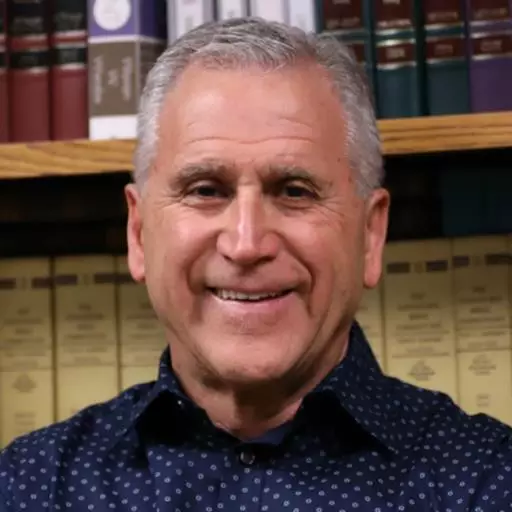
Fully Surrendered Life


Today Pastor Raul will challenge you to go “all in” with God – following Him in trusting obedience no matter what the cost. Considering Abraham’s inspiring example, you’ll find that God sees those whose hearts are fully His, and He will honor your sacrifice with His grace and provision. Learn more on Somebody Loves You with Pastor Raul Ries.
Raul Ries: Will you be that man? Will you be that woman? That will really, totally surrender your life to Jesus Christ, no matter what the cost may be in your own personal life. There should be at the entrance of every church this poster, men and women wanted for Christ. That's what God desires and what God is looking for today.
Guest (Male): Welcome to Somebody Loves You Radio, the Bible teaching ministry of Raul Ries in Diamond Bar, California. We're glad to have you along to examine what the Bible teaches about living under the authority of God. Today, Raul will challenge you to follow him in trusting obedience regardless of what it costs. Pondering Abraham's inspiring example, you'll find that God sees those whose hearts are fully his and will honor them with his grace and provision. Let's join Raul Ries in Romans chapter 12 with the lesson Fully Surrendered Life.
Raul Ries: What I want to do is I want to share with you something that not only has been in my heart, but something that I see that is needed in the body of Jesus Christ. How can God use my life? Or when God is looking for a person, what kind of a person is he looking for to use? And I don't know if you would like to be used by God, but I that's something that you have to come to an understanding in your own personal life that when you ask God to use your life, are you willing to count the cost of serving him?
And so this morning, we want to look at a life that is fully surrendered to God. A life that is fully surrendered to God. How do you do that? Well, Paul the Apostle in writing a letter to the Romans, he had been writing in chapter one about sin two, three, and four. And then he talked about not only sanctification. And then in chapter 12, he tells you now that you know who you are, this is what God expects of your life. And one of the things that God is expecting of our lives is a full surrender of our lives to him, fully, completely in submission to him.
I'm reading out of Romans chapter 12 beginning with verses one and two. I beseech you therefore, brethren, by the mercies of God that you present your bodies a living sacrifice, holy, acceptable to God, which is your reasonable service. And do not be conformed to this world, but be you transformed by the renewing of your mind that you may prove what is that good and acceptable and perfect will of God. Now we understand that when Jesus not only was serving his own disciples all the way through in serving them, he constantly began to share with them that he had come to save that which was lost.
And he gave them the understanding from the beginning of his ministry that he was going to die, he was going to rise, and that he was going to leave, but that he was also going to come again. But it seems somehow that the disciples were not really tuning in to what he was saying. Because every time he would share with them, they were always thinking of themselves. True greatness. When we get to Jerusalem, man, we're going to sit on 12 thrones, we're going to rule, we're going to reign. And it was a wrong thing that they were actually believing until they finally saw the reality of it when Jesus Christ was arrested and betrayed by even one of them, Judas Iscariot.
I think that all of us here, including myself, have to come to a place in our lives where we're fully, totally committed and submitted to the lordship of Jesus Christ. That we will do anything that he asked us to do. Anything that he's asking us to do. Now the reason I say that is because in the Old Testament, then Paul is asking not only for us to present our bodies as a living sacrifice. Remember in the Old Testament, they used to kill the sacrifices. And that is they used to take the lamb and they would actually put their two index fingers on the nose and then the thumb below underneath the jaw, and they would take the knife and they would stick the knife into the throat and cut the jugular, and then the lamb would be bled.
And the blood would be taken for the sacrifice, the sprinkling of the blood. And then the meat would be roasted and given unto the Lord as a sweet smelling aroma, and the other part would be given to the priest. And we know that Jesus Christ was the lamb of God that takes away the sins of the world. He totally submitted his life for us. Christ gave himself for a sacrifice in death. And the blood of Jesus Christ cleanses us and washes us from all of our sins. And yet when you think of the thousands and ten thousands of men and women in Christian work, brilliant men, brilliant women, rarely gifted men and women, men and women who not only are making a great sacrifice in their own personal lives to work for the Lord and to give themselves to the Lord.
Even in those ten thousands of thousands of people, there are so many that are not fully committed and surrender their life to Jesus Christ. Even though God uses them. A person that is fully consecrated and fully surrendered to God is a dangerous tool in the hands of God. The devil will hate you. He will hate you so much. What about you? Will you be that man? Will you be that woman? That will really, totally surrender your life to Jesus Christ, no matter what the cost may be in your own personal life. There should be at the entrance of every church this poster, men and women wanted for Christ.
That should be our model. Wanted for Christ. Not just to become a church member, not just to come to church, but to be committed and to be used of God in my life, not only in the church, but outside of the church. Where my life 24/7, 365 days a year, it is being used and spent for Jesus Christ. That's what God desires and what God is looking for today. Men and women, they will come to him. Men and women that will recognize that it is no longer I who live it, but Christ lives in me.
Men and women who recognize that I am no longer my own, but I am now God's property and I have become his temple where he now lives and dwells. So a matter of fact, Paul the Apostle in writing to the Corinthians in chapter 3 16 and 17 said this to them. Don't you know that you are the temple of God and that the spirit of God dwells in you? If anyone defiles the temple of God, God will destroy him. For the temple of God is holy, which temple you are. If you're a child of God, you have no business over your body any longer.
It doesn't belong to you anymore. It's under new management. It belongs to the Holy Spirit. And what I find interesting in looking at the word temple in this verse in the Greek language, the word temple here, it's in reference to the holiest of holies in the Old Testament where the high priest could only go in once a year on the day of Yom Kippur to offer his sacrifice for himself and for the people of God and for the nation. And now we have become that holiest of holies where God lives, where God dwells. And then Paul the Apostle also in 1 Corinthians 6 18 and 19 said, Flee sexual immorality.
Every sin that a man does is outside of the body, but he who commits sexual immorality sins against his own body. Or don't you know that your body is the temple of the Holy Spirit who is in you, whom you have from God and you are not your own any longer. You don't belong to yourself anymore. It's not your private property. It's God's private property now. If this is so true, then I need to be careful how I live my life for Christ. I need to give myself to God every part of my body, every part of my mind, every part of my soul.
It is like the story of the Indian that went to church. And then they were going to receive the offering and the ushers began to come to the side of the aisles. When the basket was being passed around, it came to this Indian. And he looked at the basket and all the money in the basket, and he stood up. And he looked around and he got into the basket inside and he said, Lord, this is all I got to give to you. God doesn't want your money, he wants you. But I do want to warn you that before you ever surrender your life to Jesus Christ, I want to warn you.
Satan will hate you. He will come after you. But even though Satan will come after me, I have these comforting words in my own heart, in my own life. When I read them, they always bring peace to my heart because not only do I have the power to say in the name of Jesus Christ, I rebuke thee, Satan. But I have the power to say, Greater is he that is in me than he that is of the world. Christ rules. Christ reigns in my life. I'm not afraid of the darkness because the light is greater than the darkness.
You see? We need to be fully surrendered to Jesus Christ.
Guest (Male): You're listening to Somebody Loves You Radio with Raul Ries. For scripture rich resources to guide you as you walk in communion with God, visit somebodylovesyou.com. You can also download our free app to conveniently access live streamed Bible teaching, digital Bible studies, and much more. Let's return to more of our study with Raul Ries.
Raul Ries: God has been so good to us. And we need to continue to know him and to worship him. And when I'm talking about worshiping him, when the Samaritan woman came to Jesus and the Lord asked her, Hey, have you ever been married? She says, Well, I've had five husbands. And Jesus says, Yeah, and the one you're living with today is not your husband. And this woman had been around, she had no peace in her life. But she came pursuing and seeking after God. And once the Lord began to speak to her and began to reveal himself to her, then she was able to surrender and submit her life to Jesus Christ.
Because Jesus said to her, God is a spirit, and those who worship him must worship in spirit and in truth. Now that's kind of neat. The word truth is in the Greek, it's very rich. It says, God is a spirit, and those who worship God in spirit in in reality. God has to be real in your life, in my life. The cross of Jesus Christ has to be real in our lives. We have to know what it stands for. The cross of Jesus Christ has come in between the believer and the world. Not only to save us, not only to cleanse and wash us, but the cross of Jesus Christ has come so we can get the picture that, Hey, it is no longer I who live but it is Christ who lives in me and is working through my life.
That's why Jesus in Matthew 16 24 through 26 said, Then Jesus said unto his disciples, If anyone desires to come after me, let him deny himself, take up his cross, follow me. For whosoever desires to save his life will lose it. And whoever loses his life for my sake will find it. And for what profit is to a man if he gains the whole world and loses his own soul? Or what will a man give in exchange for his soul? How much is your soul valued? What is it worth to you? You see? Eternity. One day we'll all be in eternity.
And then the second picture that really sticks to my mind, it's in the Old Testament. In the book of Genesis chapter 22, if you have for a moment turn there, Genesis chapter 22, one of the greatest pictures of submission, fully surrendering to God. There's a guy by the name of Abraham that not only has been waiting for the promise of God the Father to give him a child. And Abraham actually helped God out, and they had Hagar, his maiden that he actually laid with, and she had a child by him, and they named him Ishmael, a type of the flesh.
And then God came when he was over 100 years old and his wife was 90 years old and said, No, that's not the son of promise. I'm going to give you a child from your own wife. You're going to have a child, Abraham. And of course, Isaac was born. The type of the Holy Spirit, the type of the son, Jesus Christ. You see? And now when Abraham has his son of his, his heir to the throne, now Isaac is 32 33 years old and his life is bearing very good to Abraham, and God is blessing him and he's prospering.
The Lord comes one night to him and says, Abraham, why don't you get up in the morning and go three day journey to Mount Moriah and take Isaac your son, not Ishmael, take Isaac your son, your only son, and I want you to take him and kill him for me. Imagine that. First time in the Bible where God is asking for a human sacrifice. The only place in the Bible. You got to give him up, Abraham, to me. What are you going to do when God comes to you and he's not going to ask for your firstborn?
But what are you going to do when God comes to you and ask you to kill something in your life that he wants you to put on the altar? To sacrifice it, to surrender. Because God wants to deal with you. Because God wants to use you. Read the story. Here it is. Verse one. And now it came after these things that God tested Abraham and said unto him, Abraham, he said, Here am I. And he said, Take now your son, your only son Isaac whom you love and go to the land of Moriah and offer him there as a burnt offering in one in the mountains which I will show you.
This is before the law was given, this before Moses, before Sinai. God is asking for a burnt offering. What is that? It's a sacrifice of what? Again, consecration. Romans 12 1 and 2, our text. Consecration of my life to God, placing myself on the altar, body, soul, and spirit. My ears, my hands, my feet, my mouth, my eyes, my brain. And Abraham verse three got up early in the morning, saddled the donkeys, took two of his young men with him and Isaac his son. And he split the wood and burnt offering and rose and went to the place which God had told him.
Notice his obedience to God. Didn't even tell his wife. Just did it. God's first, you see? Verse four. And on the third day, Abraham lifted up his eyes and saw the place from afar off. How do you think he felt three days later when he saw Mount Moriah knowing that in a few hours his son would be dead? He knew. This is my son, my only son. Verse five. And Abraham said to his young men, Stay here with the donkey. The lad and I will go yonder and worship and we will come back to you.
Notice that Abraham speaks words of faith. He says, me and the lad are going, but we will come back. Why? Because Abraham was in full surrender submission to God, and he knew that even if he killed his son, God would raise him from the dead. That's how much he believed in God. Beautiful picture of God the Father, Abraham, Isaac God the son. His servant that is in chapter 24 Eliezer is a type of the Holy Spirit. And it's interesting here that Abraham is in full submission to his God. And he moves, he takes action. And then check this out.
Verse six. And so Abraham took the wood and the burnt offering and laid it on Isaac his son. A beautiful picture of the cross on top of the son, Jesus Christ. The wood. And he took the fire in his hand, the knife, and the two of them went together. But Isaac spoke to Abraham on his way up there to his father and said, Hey, my father. He said, Yes, my son. What do you want? He says, Look, the fire, the wood, but where is the lamb for the burnt offering? Hey, Isaac is 33 years old.
He's not a baby. He can kill his dad. But what does Isaac do? Isaac submits to the Father. Where's the lamb? There's no sacrifice. Or I get it, Father. I'm going to be the sacrifice. Verse eight, the most beautiful words of all. And Abraham said, my son, God will provide not the word for. They added that the translators in the New King James, you should just put a mark next to that. It should read like this. My son, God will provide himself the lamb for a burnt offering. And the two of them went together. What's that?
1,900 years later in the same place Jesus Christ would be dying on the cross as the lamb of God that takes away the sins of the world. Beautiful picture of submission, surrender, words of faith being spoken. But a man that is in obedience, complete surrender in obedience to his master, Jesus Christ. And then notice the submission of the son in verse nine. He says, Then they came to the place of which God had told him, and Abraham built there an altar and there placed the wood in order and noticed and he bound Isaac his son and laid him on the altar upon the wood.
Can you imagine he's laying down on the wood? Isaac is stronger than his dad. He can overtake him. But what a beautiful picture of the son submitting to the Father and laying himself on top of the altar even as Romans chapter 12 1 and 2 makes a proclamation to you and I. And once God saw that and once God sees your submission to him, listen to what he said to Abraham. And the angel of the Lord called to Abraham from heaven and said, Abraham, Abraham. And he said, Here am I. He said, Do not lay your hand on the lad or do anything to him, for now I know that you fear God since you have not withheld your son, your only son for me.
Notice that. God sees, God hears, God speaks.
Guest (Male): If you're feeling nervous about following Abraham's example of sacrificial obedience, we hope you've embraced the truth that God richly blesses those who walk with him in righteousness. You're listening to Somebody Loves You Radio with Raul Ries. The lesson today was titled Fully Surrendered Life. If you'd like to get an unedited version with much more teaching, we'll be happy to send a copy to you for a donation of $5 or more. To get your copy, just call us at 800 634 9165. And to further bolster your confidence in following the Lord, we'd like to tell you about Raul's 10 part series titled Called, Chosen, and Committed.
It's available on CD or thumb drive. Each lesson illuminates more of what it looks like to completely entrust your future to God. You'll see that when you prioritize the Lord's plans over your own, he'll bring an abundance of grace to your life. To order Raul's 10 lesson series Called, Chosen, and Committed, visit somebodylovesyou.com or call 800 634 9165. We'll send you the CD set for $22, or if you prefer the flash drive for just 13. That's 800 634 9165. Our mailing address if you'd like to order these resources by writing is Somebody Loves You Radio, PO Box 4440 Diamond Bar, California 91765.
We hope you'll utilize our many free resources and tell your friends and loved ones how you can contact us. Visit the Somebody Loves You Worldwide YouTube channel for Straight Talk with Raul every Tuesday at 10:00 a.m. Pacific. It's a channel that also features podcasts of all of our radio programs, or you can look for them on iTunes and Spotify. Somebody Loves You Radio with Raul Ries is completely listener supported. We are so grateful for our partners, and every contribution is tax deductible. Join us next time as we take a few moments to quiet our hearts and minds before the Lord seeking his wisdom and truth in the pages of his word.
Now with the closing comments, here's Raul once again.
Raul Ries: You know what's so beautiful about this is that once God spoke to Abraham not to kill his son, guess what happened? Right next door to him was a ram caught in the thickets where actually God provided the sacrifice for his son, and they killed the ram. God is so good. And I wonder if many of us here today are wanting and willing to submit and to put our children on the altar in our grandchildren and great grandchildren and to put yourself and your whole family on the altar of God and be submissive and be obedient to whatever he may call you to do in this life.
That's what God desires. That's what full surrendering to God is this morning.
Guest (Male): This program is sponsored by Somebody Loves You Radio in Diamond Bar, California.
Featured Offer

Called, Chosen, and Committed is a powerful call to go deeper in our relationship with Christ and embrace what it truly means to live a life that is fully surrendered to God. God has called us to a higher purpose, chosen us to belong to him, and challenged us to live with unwavering commitment. This series explores what it means to build our lives on the rock, follow the high call of God, establish Godly priorities, surrender completely, and abide in Christ. Through these messages, we are challenged to understand that Christianity is more than belief–it is a life of obedience, sacrifice, consecration, and faithfulness. Following Christ will sometimes cost us, but a life committed to Him means choosing His will, His way, even when it is difficult.
Past Episodes

Featured Offer
Called, Chosen, and Committed is a powerful call to go deeper in our relationship with Christ and embrace what it truly means to live a life that is fully surrendered to God. God has called us to a higher purpose, chosen us to belong to him, and challenged us to live with unwavering commitment. This series explores what it means to build our lives on the rock, follow the high call of God, establish Godly priorities, surrender completely, and abide in Christ. Through these messages, we are challenged to understand that Christianity is more than belief–it is a life of obedience, sacrifice, consecration, and faithfulness. Following Christ will sometimes cost us, but a life committed to Him means choosing His will, His way, even when it is difficult.
About Somebody Loves You
About Raul Ries
Raul Ries is the Senior Pastor of Calvary Chapel Golden Springs and President of Somebody Loves You Ministries. After his miraculous conversion in 1971, Raul began to read and study the Bible extensively even though he had a limited education. In 1974 he began a home Bible study with seven other committed individuals. Soon, he started to preach and counsel youth during the noon hour at his former high school, Baldwin Park High. Calvary Chapel West Covina grew out of Raul's home fellowship, as well as his Kung-Fu studio, and was soon meeting weekly at an old converted Safeway store. In 1993, the congregation moved to Diamond Bar and occupied a 101,000 square-foot corporate building on 28 acres. Calvary Chapel Golden Springs (as it is now called) draws between 10,000 - 12,000 in attendance weekly.
Author of several books, including Fury to Freedom (the story of his early life and dramatic conversion), Raul Ries has also produced three films: Fury to Freedom (feature film dramatization of the book); A Quiet Hope (a riveting and stirring documentary detailing seven soldier's accounts of the Vietnam War and its aftermath); and A Venture in Faith (a documentary of the history of the Calvary Chapel movement).
Contact Somebody Loves You with Raul Ries
Mailing Address
Somebody Loves You Radio
P.O. Box 4440
Diamond Bar, CA 91765
(909) 396-1884