
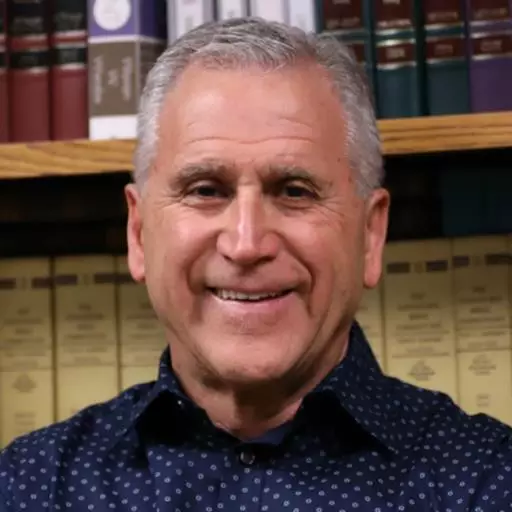
The Call Of The Pastor


On today’s edition of Straight Talk Pastor Raul is joined by ministry partners Dale Goddard and Sean McKeehan to discuss God’s call on the lives of those in pastoral leadership. They’ll also underscore the Lord’s desire for all of us to adopt an attitude of humble selflessness as we prioritize His will over our own. Learn more on this special edition of Straight Talk on Somebody Loves You with Raul Ries.
Raul Ries: We started with nobody, and we saw the people come and change, but change for the best because they were being taught the Word of God. And as you teach them the Word of God, remember, they have the Holy Spirit. The Holy Spirit—there's no excuse—the Holy Spirit tells you what you're doing. And what you're doing, you either continue to do it or you stop doing it.
Radio Announcer: Welcome to Somebody Loves You Radio, the Bible teaching ministry of Raul Ries in Diamond Bar, California. Well, it's great to have you with us today for Straight Talk with Raul Ries, joined today by ministry partners Dale and Sean to discuss God's call on the lives of those in pastoral leadership.
They'll also underscore the Lord's desire for all of us to adopt an attitude of humble selflessness as we prioritize His will over our own. And following the conversation, we'll tell you about a resource that can help you to develop yourself to obedience regardless of whether you're called into full-time ministry. Now here's Raul Ries.
Raul Ries: Hey, we're back here again. I've got Pastor Dale here and Pastor Sean McKinn here too. We want to talk about some things that are important in ministry. And the first thing I want to do is about the pastor's call. How do you know a pastor is called by the Lord or if it's just a job?
When I look at the ministry today, the way I started ministry is that I looked at myself as not only as a pastor but as a servant to the Lord. I was called by the Lord to do this ministry, that it would be anointed by the Holy Spirit. It would not be my ministry; it would be His ministry. I would not be a movie star; I would be a servant to the Lord. I think that's really important.
I wrote a couple of things down here because you have the pastor's call, the pastor's ministry, the pastor's staff, the pastor's assistants, and the congregation. This is important because what happens today is a lot of times pastors want to be called into the ministry and they are called, but what they do is they take care of themselves.
Which means they start a ministry, they have a house, they have a car, they have a salary. And with those things that they have in themselves, all of a sudden the people are kind of left last when they're supposed to be first. The pastor is supposed to keep working until he is afforded in ministry to take care of the people. Because that's very important.
I wrote this down here: his beginning ministry, his growth in ministry, his blessing and simplicity in ministry, and then the pride that comes along. Starting small and ending up big—those are the things that I'm concerned about because of ministry. Dale, you're an assistant pastor. You were called, and maybe you can share a little bit about your call and how you knew that God had placed you in a ministry.
Dale: I think the first thing that we see in especially the way you described it, Raul, is to know your call. To know your call. A lot of people, especially men within the church today, see the pastor as one thing. Unless you know what it really is all about, you can't make that decision.
And it begins with knowing the Lord and having that relationship with Him that is so intimate that you hear His voice. And a lot of people say, "Well, what did you hear? His audible voice?" No. I hear the voice of God through the reading of the Word number one. I read, and then I pray. And I actually pray before I read, but after I've read I have all of this stuff going on in my head and I need to know whether it's emotional or whether this was the voice of God.
So I pray, I read the Bible again, and I look for direction and guidance. And with that direction and guidance comes confirmation. So He confirms it in prayer, He confirms it in the Word of God, and He confirms it in actions and in what other people say and do.
Raul Ries: Now did you have anybody mentoring you that you looked up to?
Dale: I would say two. You were one of them. You made sure I was on the right track. You made sure because certainly, Raul, you remember in the very beginning we had people in the ministry who were kind of doing things for selfish reasons, doing things that would benefit them. And so they approached me to get them to do what they wanted to do rather than what you—and you called me on it.
And you said, "We're following this direction and if you can't follow this..." and you told me this, and we've been friends for 60 years. And you told me, "If you can't follow this, then you can't be here." And I understood. This is my role to hold up your hands, and I need to fall back on what God told me to do.
And with that being said, from that moment on, I only was concerned with what God had moved in your life, your direction, because I do believe in that Exodus 18 model. That God called you, we are a theocracy, and through you we operate within the church under God's umbrella. And God speaks to you, and then you take it to me and I take it to the other leaders within the church and we have ministry heads.
Raul Ries: No respect of persons.
Dale: No respect of persons. And honestly, Oswald Sanders says it best in his Spiritual Leadership book. He said there are two kinds of ambitions. There are those pastors that have a selfless ambition, which I'm here, Sean's here, and I think most of our pastors have resolved themselves to being in submission to God.
And we're not looking at our own visions, our own goals and efforts, although we have them. Our purpose here is to complete the work that God has spoken to you about. Don't come into the pastorate thinking that the church is designed to support you. The church is designed to support the body of Christ and to keep it healthy.
Raul Ries: When Chuck taught us, it was always to be a servant, not to be a movie star. And somehow a lot of these pastors from Calvary Chapel, from other churches, have become movie stars. A lot of them have fallen into sin. They've got from the bottom to the top and you know, as you climb that ladder yourself by promoting yourself, all of a sudden you're at the top of the ladder and then what happens? You slip.
You fall into sexual sin, you start stealing money from the church, and you start buying this and buying that. And all of a sudden you slip and you fall all the way down, you can't climb back up. You can't do that. Because now you demonstrate the reality of your call, your ministry, that you really started with God's call and now you have your own call. And that's not right.
And Chuck never taught us that. You know I remember we went to the Bible school there and we learned classes, but most of what he taught us was by experience and he taught us privately, I mean talking to us, sharing with us. He chose a board of people that would become his board for the future, those that believe in the philosophy and the doctrine of Calvary Chapel. There was probably about five Calvaries at that time, and now we have over 2,000 Calvary Chapels.
And you kind of wonder because we can't oversee all the Calvary Chapels. You know how many are copying sermons from the internet? They're setting up their own salaries, they're going here, they're going there. They come into church whenever they want to, they take as many days off as they want to, they take as many vacations as they want to. These are the things in the church, not just Calvary Chapel, in the church, and people are being fleeced. They're being fleeced. And God never called us to do that. He called us to be not movie stars, He called us to be servants. Don't you think, Sean?
Sean: Talking about all this and hearing both of you speak, our mentality and our philosophy of ministry at Calvary Chapel, one of the bedrock truths is servanthood, servant ministry. You go to the Calvary Chapel distinctives, it's one of the first chapters it speaks about. And it's biblical because one thing that you shared yesterday in our staff meeting and you've kind of brought it up here on this topic, the first thing that came to my mind is Philippians chapter 2 when it speaks about Christ.
And it says of the Lord that He made himself of no reputation. No reputation. Jesus could have come back with this robe and this kingship, but He came as a servant and He came humble. He came from Nazareth is where He was brought up. Does anything good come out of Nazareth? He lived the life of no reputation and He served the people.
Also we also see through the disciples' life as Jesus is raising up these disciples, they were flesh and blood. They weren't on the level of the Lord, but they watched His teachings, they followed Him. But even towards the end, they would question, "Hey man, I kind of want a little bit more authority." And then they even talked to their mom at home or something because one of the gospels says that it comes to a point where James and John, the mom says, "Hey let it be that one of my sons could be on your left and the other one on your right when you enter into the kingdom."
But Jesus' response then is, "Are you really able to partake of the cup that I'm about to partake of?" And that cup was suffering. And going back to the beginning of what you talked about, the call of God, the call of God must be birthed in a brokenness and in a burden upon your heart. That moment in your life where far be it for me that I do anything else but fulfill my call of God.
And it really does start in serving and being available, as the Bible teaches us to be. To not think of yourself more highly than you ought to think. Paul echoes that multiple times. I've always—and you mentioned this a little bit yesterday—the gifts of the Holy Spirit are mentioned in the book of Romans chapter 12, Ephesians 4, and in 1 Corinthians 12 through 14.
And in all three of those, if you read it for yourself, there will be an exhortation to humility in it. Do not think of yourself more highly than you ought to think, even when you're being used by God because there's a danger when God starts using your life that you're like, "Hey you know what? I was pretty right on, I'm pretty good. The people are coming for me, they're coming to hear me, they're coming to watch me," and you start going down a pathway that can be very destructive.
If God opens up a door of opportunity, and He has done that in many people's lives, which is phenomenal, you have to stay humble because these are the areas that if you don't stay in tune here, this is where everything falls off track. And it's something that I have learned through obviously both of you guys, the teaching of Chuck Smith. I've only met Chuck Smith a few times, but I grew up in his teaching here and the simplicity, the humility.
Even a man that was very intelligent coming down to the level of the people to communicate God's word and His truth, and it made you feel, and I've heard a lot of the pastors like the Don McClures and all these guys say, it's like as they listen to him teach he's like, "I feel like I can do that or the Lord's called me to do this." Because Chuck didn't come down on them like lording over like you can't reach this level. No, he encouraged all you guys to be open for what God had for you.
And that's very important because you can get this dangerous, to get this proud mentality. Can I share one more thing? One of the things that we see in the gospels in Luke chapter 10 is when Jesus sent out the 70 to go do ministry. And they went out and they came back and they're like, "Even the demons are subject to us in your name." And Jesus' response was, "I saw Satan fall like lightning from heaven. Do not marvel that the demons are subject to you but marvel that your names are written in the book of life." In that moment where they're being used by God, Jesus uses it as a response for them to stay humble and just walk in the grace of God.
Radio Announcer: This is Somebody Loves You Radio with Raul Ries. Visit SomebodyLovesYou.com for Bible-based resources. You can also access the Somebody Loves You Worldwide YouTube channel for more Straight Talk as well as podcasts of all of our previously aired programs. Now let's get back to more of today's conversation.
Raul Ries: Jesus came to preach, to teach, and to heal. And I was thinking about the Pharisees, the Sadducees, and these guys were religious. But one of the things that I thought about—you talked about and Dale said that—the way Jesus dressed simple. The apostles simple. But the Pharisees and Sadducees and those that were rich, they would buy expensive robes and I mean, they would do this thing to impress people. And the poor people couldn't relate to them because they understood they were lying.
But Jesus, watching Jesus being the Son of God, God himself, the way He addressed people, the way He treated people. It was in simplicity, loving people. Loving them not only as sons and daughters, but at the same time He saw to the people those that would become leaders. Peter, James, John, all these twelve that He chose, and there was one, a traitor, Judas. He was a treasurer and he was taking money from there. And who knows what he was buying, secretively.
But I think today, I see pastors wearing clothes that is just expensive. I mean, shoes that are 500 dollars. I mean, shirts that are 200 dollars. Pants that are 300 or 400, 500 dollars. So what happens to the people that are poor and they come to the church and they see the way you dress, the way you do things? You think they're going to relate with you?
Jesus related to everybody because He came to the level of the rich and the poor, the upper class, middle class, and the lower class. And that's when you go to South America, different places, you got to relate to three groups of people. And if you do that, then you're preaching the gospel and you're doing what God has called us to do and you believe the Word of God. You go and believe the Word of God. This is what God says and you got to do it, if not you're going to be in trouble. Don't you think?
Dale: Oh absolutely. You gave some great illustrations there as to what a pastor should be. I wrote down five things that a pastor shouldn't be, and I think they're simple that we need to look at. When you turn on the TV, when you listen to somebody, be careful that you're not lured by the oratory prowess, or their ability just to speak like a Tony Robbins who gets millions of people because he's very charismatic.
It's not about being charismatic. Let me just say: if they're bringing more attention to themselves than to the cross, number one. Number two, if they're spending more time traveling, and I see a lot of pastors and then putting it on the internet, "follow us as we go through..." and they're usually promoting a book or they're promoting an event or they're promoting themselves. Who's paying for it?
And where is their flock, when we're told to shepherd the flock as Christ shepherd the flock and to feed it? And using Jesus as our standard and not the pastor that is our mentor. And number three, it so often happens, people be careful, listen to what they're saying from the pulpit or from the platform. And I had this come to my mind: every church either has a stage or it has a pulpit, an altar.
And the altar is where God speaks to the congregation and it comes through the pastor. But so many churches don't have a pulpit anymore, they have a stage. And a stage is built for entertainment. You got to be careful. So are they compromising the Word of God in what they do and what they say? Are they compromising God's Word because I know a lot of them started really good in the Word of God, but in order to get more people into their church they became, and number four, trendy.
They became more like the people. Where in the Bible does it say we're to be like the world? We're not to be like the world. But yet more and more pastors are compromising God's Word so they can be like the world. I know Calvary Chapels right now that are forming entire ministries developed to celebrate sin. To celebrate sin, this celibate gay theology thing that so many are going through right now, or changing the doctrine when Israel isn't the Israel of today. Replacement theology. Calvary Chapels doing this kind of stuff.
And then lastly, are they asking for money all the time? Are they asking—this was always something Chuck never, ever agreed with. Where God leads, He provides. There were times when churches were hurting and they wanted to start a funding campaign, a building campaign, a this campaign, a that campaign, and they would bring people in to excite the people to give money. And then they gave the money and they never built, but where the money go? It went into somebody's pocket. And so those five things, I think, are important to examine to anybody that you choose to follow as a pastor.
Raul Ries: And you know what? When you go into a church, I can speak for all kinds of churches, and when you go into a church the congregation looks like the pastor. And they attract those kind of people. Number one is because they don't know God's Word. So they want to be like the pastor. They want to be like the people in that church so they can relate, they can build friendships. And then what happens, the people that don't have the money can't relate. Is that what you see, Sean? I mean, being a pastor now and coming from the world, you're looking at different... you look at TV, you hear the radio, you hear all these things that are there that has to do with money. What do you see?
Sean: One of the things that's dangerous in life, in a ministry, in your Christian life, is when you lack the fear of God in your life. And recognize you're standing on holy ground, whether you are doing a podcast, whether you're teaching a sermon, whether you're giving counsel. You're responsible, you're accountable for all those things and you have to be led by conviction.
I think one of the dangers in the world that we're living in today is the blessings of technology but also the dangers of technology. Technology allows everybody to have a voice and I think that's one of the biggest dangers in our world today. We can't try to be somebody that we're not. We can't try to emulate somebody from a personality perspective.
You really have to be who God's called you to be and have confidence in that. Have confidence by the power of the Holy Spirit working in your life. God's anointed you to teach, teach with all your heart. God's anointed you to preach, preach with all your heart. God has called you in these various gifts of the Holy Spirit, use them for the glory of God. But that's the key.
All that to say, it's always simplicity. Stay biblical. Jesus made himself of no reputation, remember that. The disciples that tried to have these accolades get ahead of themselves, Jesus rebuked. Be a servant. Let God have what He has for you. And the other one with Peter and John at the end when Jesus restores Peter, and Peter still had that like, "Well, you know your life is going to be one of pain and suffering. You went one way, when you're older you're going to go down a pathway you don't want to go, but that's my plan that I have for you." Peter's like, "But what about John?" You do what God's called you to do and not worry about those around you.
Raul Ries: You know what I thought about right now, when they were in the wilderness the Lord gave them one attire, the robes that they would have. Going 40 years, they were not in style. And then in the New Testament when I look at what's happening in the New Testament, especially today, that these Calvary Chapels, I mean Calvary Chapels, that they're following the style instead of following the Lord.
When you follow a style, you will fall by the style because styles change. But the gospel doesn't change. Never changes. And I think that if we stay simple and humble before the Lord, you don't have to tell people. People can recognize it. It's like your children, they know who you are. And when they see you speaking some word, they see you in the church, whatever you're doing, they don't have to ask. They already know. They already know what that church is like.
And I've experienced that for 50 years. We started with nobody, and we saw the people come and change, but change for the best because they were being taught the Word of God. And as you teach them the Word of God, remember, they have the Holy Spirit. The Holy Spirit—there's no excuse—the Holy Spirit tells you what you're doing. And what you're doing, you either continue to do it or you stop doing it.
You like the thing that happened with us, I mean Chuck got up and said, "You guys are buying nice cars," and immediately what I did, I went and sold my car the next day because you know what? It convicted me. I can't do that if I am a pastor. I have to be with the people in that level. So in the future Calvary Chapel is going to have to follow the philosophy, the doctrine, and the way you look at people and the way you look at yourself.
I think that's important. Because if you don't do that, you're not going to be what God wants you to be. You're going to be what everybody else is. And everybody is not Christ-like. They're self-Christ. They believe in themselves and they teach the Word of God but not with conviction. That's why they can do whatever they can do.
But when you have conviction, you read the scriptures and then you think, "I'm going to buy this, I'm going to do this or go here, go there." You have to think about this is God's money, this is people that have given to the Lord. And I tell you guys all the time: we believe where God leads He provides. We don't ask for money. And I think that's been a real lesson to me, Chuck taught me that.
And I've never asked for... we barely make it sometimes but it doesn't really matter. God gave us a facility, God has given us radio, God has given us everything, everything for how many years? 30-some years. And it's been where God leads He provides. And if He's not providing then why get in trouble? Like I shared with you guys when we paid off everything, I'm not going to get in debt ever again. Ever again. It is His church and it's His gospel and we are His servants. Bottom line. We are His servants. And that's why we're here, to be a servant.
Radio Announcer: Today's discussion centered on the servant role of pastors, but we also learned that this call to obedient surrender is directed toward every believer. You're listening to Somebody Loves You Radio with Raul Ries. If you'd like to hear today's interview in its entirety, just call us at 800-634-9165 and we'll send a copy to you for a donation of five dollars or more.
To further inspire you to honor the Lord with your life, we'd like to tell you about a five-message series titled The Call: Will You Go if He Calls? It's available on CD and thumb drive. The study will challenge you to find your purpose and passion in God's will for your life, not your own agenda. His plan may surprise you, but when you commit to following wherever He leads, He will equip you with all that you need to accomplish the work He's laid out for you.
Visit SomebodyLovesYou.com or call 800-634-9165 to order Raul's five-part study, The Call: Will You Go if He Calls? We'll send you the flash drive for seven dollars or the CD set for 20 dollars. That's 800-634-9165. Or write to us at Somebody Loves You Radio, PO Box 4440, Diamond Bar, California 91765.
Download our app for live-streamed Bible teaching and digital Bible studies. And if you've missed a Somebody Loves You Radio program or would like to listen to one again, you'll find it as a podcast on iTunes and Spotify. Somebody Loves You Radio with Raul Ries is entirely listener-supported. Your partnership is a great encouragement and a blessing. Next time we'll begin a new series in the book of James. This brief letter powerfully illuminates more of what it looks like to walk close in step with the Lord through all of life's ups and downs.
Raul Ries: I am falling in love with you. I am falling in love with you. I am falling in love with you. I am falling in love with you.
Radio Announcer: This program is sponsored by Somebody Loves You Radio in Diamond Bar, California.
Featured Offer

Learn about how the Lord desires us to conduct ourselves as fathers with these MP3 audio studies on Fathers by Pastor Raul Ries. Able to be played on a computer and a DVD player.
1. God’s Command to Fathers
2. A Father’s Priority
3. A Father’s Message
4. Godly Fathers Wanted
5. Father’s Integrity
6. A Father’s Counsel to His son
7. Responsibility of a Father
Past Episodes

Featured Offer
Learn about how the Lord desires us to conduct ourselves as fathers with these MP3 audio studies on Fathers by Pastor Raul Ries. Able to be played on a computer and a DVD player.
1. God’s Command to Fathers
2. A Father’s Priority
3. A Father’s Message
4. Godly Fathers Wanted
5. Father’s Integrity
6. A Father’s Counsel to His son
7. Responsibility of a Father
About Somebody Loves You
About Raul Ries
Author of several books, including Fury to Freedom (the story of his early life and dramatic conversion), Raul Ries has also produced three films: Fury to Freedom (feature film dramatization of the book); A Quiet Hope (a riveting and stirring documentary detailing seven soldier's accounts of the Vietnam War and its aftermath); and A Venture in Faith (a documentary of the history of the Calvary Chapel movement).
Contact Somebody Loves You with Raul Ries
Mailing Address
Somebody Loves You Radio
P.O. Box 4440
Diamond Bar, CA 91765
(909) 396-1884