
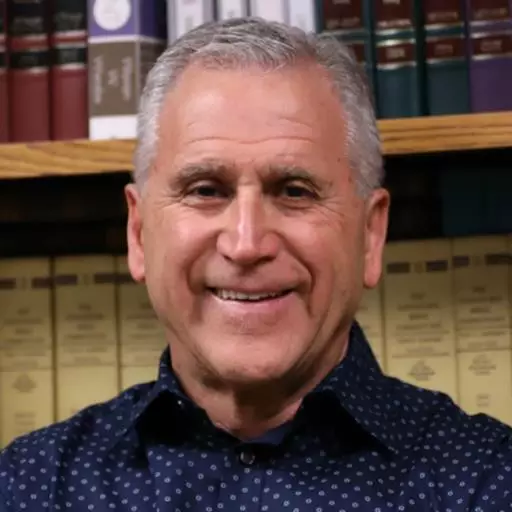
Paul's Greeting To The Church Pt.2


Today Pastor Raul reflects on the merciful, saving love of God and urges you to respond with obedient surrender. You’ll see that genuine repentance for sin will always be accompanied by a change in attitude and action. You can’t keep living for yourself if you claim to be living for God. Learn more on Somebody Loves You with Pastor Raul Ries.
Raul Ries: And if we are defiling our bodies by alcohol, drugs, fornication, adultery, whatever it is that we're doing, then we don't really have respect for Christ. And we don't have the fear of God in our lives. So, it's really important that you get that in your minds, that we are truly the church of our Lord and Savior Jesus Christ.
Guest (Male): Welcome to Somebody Loves You Radio, the Bible teaching ministry of Raul Ries in Diamond Bar, California. We are in the first few lessons in our series in 1 Corinthians and we’re glad to have you along. As Raul explains our passage today, he’ll reflect on the characteristics of God’s mercy and love and will show how that should elicit a response of love and devotion on our part.
We’ll learn how genuine repentance for sin will always be accompanied by a change in attitude and action. Today’s lesson is part two of our study, Paul’s Greeting to the Church. Join us in 1 Corinthians chapter one.
Raul Ries: I think of how many pastors and teachers and people that were really nothing when God calls them and then they become something and they become untouchable to people. It happens with rock stars, it happens with movie stars too. And then I thought, here is Paul the Apostle writing to a church that is really struggling.
And so when he begins his letter, he wants to make sure that the Christians understand that he not only is Paul the Apostle of Jesus Christ, but he wants them to know that the word apostle, that he’s being sent out as a missionary. He has a commission. And when I started reading back again chapter one, verse one, where it says Paul, called to be an apostle, that every single one of us has a calling in our lives. Every one of us. And it all depends what God is calling to you to do.
And the most important thing when God puts a calling in your life, it’s very important that you follow up with one word: obedience. Obedience. Are you willing to obey your call to whatever God is calling you to do? And what’s really cool is that when I ask people, one of the great questions I ask them, do you know God’s will for your life? Because a lot of people don’t know God’s will for their lives.
One of the things about God’s will for our lives, it is defined by submitting to him, not commanding him. Submitting. The word to submit is a very interesting word used in Ephesians chapter five for husbands and wives: submit yourselves one to another. The word is hupotasso in the Greek. It’s a military term and it means to be underneath your chief in commander and you do what they say to you.
We’re under commission. We are committed to Christ. And it’s not my will, but it’s his will as I come to him. I am submitting my life to him, which means I have no say-so. But the way God does it is through his love and through his mercy and through his grace that he allows you to be submitted to him so that he can use your life to bring glory and honor not to yourself, but to him. To him fully and completely.
So as Paul is writing to the Corinthians, he’s talking again and as he does his introduction, Paul, called to be an apostle of Jesus Christ, one to be sent out by the will of God. Now what is the will of God? Number one, the will of God is defined by God not wanting anybody to go to hell. Write that down. Hell was never made for man. You know who it was made for? For the devil and his angels. Matthew 25:41. Write it down when people ask you, because they’ll point their finger at God and say, "Oh, God sends people to hell." No, he does not.
He’s never ever sent anybody to hell. People have sent themselves to hell by rejecting God’s love and God’s grace and God’s mercies, by not aligning themselves with the perfect will of God. Because God’s perfect will is that everyone should be saved. Listen to what 2 Peter 3:9 says: The Lord is not slack concerning his promise, as some count slackness; but is long-suffering toward us, not willing that any should perish, but that all should come to repentance. That’s the key. Repentance.
A change of heart, a change of attitude. To become born again of the Holy Spirit, as 2 Corinthians 5:17 says, "Therefore if any man is in Christ Jesus, all things are passed away, behold, all things have become brand new." Secondly, God’s will is defined by belief in Jesus Christ. Matthew 12:50 says, "For whoever does the will of my Father in heaven is my brother, my sister, and my mother." Notice that.
In order for us to be aligned with God’s perfect will, we have to be obedient to do God’s will. And that is not loving my mother, my brother, my sister, or anybody else more than him. He has to be first in the list. Seeking first the kingdom of God and his righteousness. That’s the key. And then God can really begin to work in you and through your life.
And then as Paul moves in verse one, he mentions a guy by the name of Sosthenes here. And this guy that is called by the name of Sosthenes, he was literally there in Corinth. And number one, he was the ruler of the synagogue in Corinth. There’s not much written about him, but he was beaten because he was friends with Paul the Apostle and he came to know the Lord Jesus Christ.
In Acts 18:17, it says, "And then all the Greeks took Sosthenes, the ruler of the synagogue, and they beat him before the judgment seat; but Gallio took no notice of these things." I mean, this guy got beaten because he was a Christian and he was Paul Apostle’s friend. And they became jealous of that relationship between him and Paul and the way he was bringing people to the Lord. And then in 1 Corinthians 1:1, we see here where Paul says, "Paul, called to be an apostle of Jesus Christ through the will of God, and Sosthenes our brother." So he became a brother in the Lord.
And Paul recognizes him and Paul puts him here in his letter. Now, notice verse two: the recipients now. He says, "to the church of God which is at Corinth." Now the word church here is not speaking of a building, a physical building. The word is ekklesia in the Greek and it means called-out ones. It literally speaking of those that are born again by the power of the Holy Spirit. And then they come with other believers into a building and we become the church of Jesus Christ.
Where two or three are gathered in my name, there I will be in the midst of them, Jesus said. So the church is not this building, the church is you and I. And what’s incredible here is that the church of our Lord and Savior Jesus Christ, it is all those who have been redeemed by the blood of the Lamb, Jesus Christ. We’ve been redeemed, sanctified, called out to be saints, hagios. The word saint means separated to God. You see? Every one of us.
And what’s really cool about that is as I was reading about the church, it’s amazing that the church, not only in the New Testament, as we read the New Testament, that when Paul the Apostle is writing his epistle to the Ephesians, immediately Paul identifies the church with husband and wife relationships. Listen to what he says in verse 25 of chapter five of Ephesians. He says, "Husbands, love your wives, just as Christ loved the church," notice, "and gave himself for her."
He uses the illustration there that a husband is to give himself or his life for his bride, just like Christ did for his church. Why? Because the church is the bride of Christ. And he’s our bridegroom, he’s our husband. Isn’t that cool? He is our husband. And that’s why Paul writes to the Ephesians. He says, "Hey, that he might sanctify, cleanse it," notice, "her by the washing of the water by the word of God, that he might present her to himself a glorious church, not having spot or wrinkle or any such thing, but that she should be holy and without blemish."
"So husbands ought to love their own wives as their own bodies; he who loves his wife loves himself. For no one ever yet hated his own flesh, but nourishes, cherishes it, just as you take care of your body." What does Christ do? He takes care of the body of Christ. You and I. You and I are the body of Christ. That’s why I keep telling people: when you come to the Lord, it is no longer I, but Christ lives in me and through my life. This body that is getting old and is like an old tent.
When I came to Christ, my body was before that, was my own personal body. I did whatever I wanted to with it. I abused it. I did whatever I wanted to. But when I came to Jesus Christ, I gave my body to him because in 1 Corinthians chapter three, verse 16, what does he say? He says again about our body, "Know you not that you are the temple of the living God and if any man defile the temple of God, God himself shall destroy him?" And the word temple there is the Holies of Holies, my body.
That’s become the temple of God. This is not God’s temple. Your body, my body are God’s temple. And if we’re defiling our bodies by alcohol, drugs, fornication, adultery, whatever it is that we’re doing, then we don't really have respect for Christ. We really don’t. And we don’t have the fear of God in our lives. So it’s really important that you get that in your minds, that we are truly the church of our Lord and Savior Jesus Christ.
Guest (Male): You’re listening to Somebody Loves You Radio with Raul Ries. It’s our privilege to support your daily walk with the Lord and we invite you to visit somebodylovesyou.com for Bible-rich resources. Raul’s series titled Unity, Holiness and Love is available on CD and USB. We’ll tell you how you can get your copy of that in just a few moments. But first, let’s get back to more of today’s study.
Raul Ries: And then don’t forget that the body of Christ, the church, has been purchased not with money, not with anything else in this world, it’s been purchased by the blood of Jesus Christ. By the blood of Jesus Christ. That’s why when Paul spoke in the book of Acts chapter 20, 28, he said, "Therefore take heed to yourselves and to all the flock, among which the Holy Spirit has made you overseers," speaking to shepherds. He said, "Shepherd the church of God, which he purchased with his own blood." Wow.
Speaking to pastors, speaking to the people of God. Jesus Christ paid for not this building, he paid for you and me with his own precious blood. He laid down his life for us. Remember in the Garden of Gethsemane, "Father, not my will but thy will be done. If you want me to go to the cross and die, then I submit. I submit my will to you." And he paid with his own life for the church, for you and I. The blood of Jesus Christ. And then thirdly, the church has been sanctified by Christ.
Ephesians 5:26 says, "That he might sanctify and cleanse her by the washing of the water and the word of God, so that he might present her to himself a glorious church, not having any spot or wrinkle or any such thing." We’re going to be perfect when we get to heaven. Right now we’re not perfect, but one day we will be perfect. Holy and without blemish, he says he’s going to present his church. And fourthly, the church has been founded by who? By Jesus Christ.
Ephesians 2:19: "Now therefore, you are no longer strangers or foreigners, but fellow citizens with the saints and members of the household of God, having been built on the foundation of the apostles and the prophets, Jesus Christ himself being the chief cornerstone to the building." He’s the main thing. He’s the main, main thing that we want to keep our eyes on. He’s the chief shepherd. He’s the cornerstone to everything that we have to do with Christianity.
That’s why he said, "I’m the only way, the only truth, and the only life." Nobody else can do that, only Christ. And then the church is subject to Christ. Subject to Christ. Listen: Romans 7:4, "Therefore, my brethren, you also have become dead to the law through the body of Jesus Christ, that you may be married to another, to him who was raised from the dead that he should bear fruit unto God."
So the law was pointing to Jesus Christ. And now that we look at Jesus Christ as our Lord and Savior, the law has no more power over us because the grace of God has taken over our lives. The law was really the one that actually pointed, condemned us, and brought us to Jesus Christ because the law could really not help us. But the law condemned us. The law would kill us. So when we came to Jesus Christ, he came from the Old Testament to fulfill the law.
The law was a schoolmaster that brought you to your knees and that showed you your sin. And the law could not take care of your sin. It was only through Jesus Christ coming from all eternity, becoming human being, going to the cross, dying, shedding his blood so that we can become the church, the ekklesia, and we can become saints, holy ones of God. Otherwise he couldn’t do it.
And then Paul goes on to say in verse two, "sanctified." Did you notice what he says there? Let’s read it again. Verse two. Look what he says. He says, "to the church of God which is in Corinth, to those who are sanctified in Christ Jesus." What does the word sanctify mean? It means to be set apart. To set apart. To be holy. And what’s incredible is that as we’re sanctified, Paul says in 1 Thessalonians 5:23, "Now may the God of peace himself sanctify you completely; and may your whole spirit, soul and body be preserved blameless at the coming of our Lord Jesus Christ."
Did you notice in that verse the way he used that spirit, soul and body? He already has the flip-over because the natural man is body, soul and spirit. But he says spirit, soul and body. He’s talking to Christians. Notice that. He’s talking to believers, that we are to be preserved blameless until the coming of our Lord Jesus Christ. Secondly, we have been sanctified by Christ. Hebrews 2:11: "For both he who sanctifies and those who are being sanctified are all of one, for which reason he is not ashamed to call them brothers and sisters or brethren because of the sanctification."
We have also been sanctified by the Holy Spirit. He’s the one. 1 Peter 1:2: "Elect according to the foreknowledge of God the Father in sanctification of the Holy Spirit, for obedience and the sprinkling of the blood of Jesus Christ; grace to you and peace be multiplied." Notice how beautiful that is in every one of the epistles. And then fourthly, we have been sanctified by Christ’s blood. The blood of Jesus Christ. Check this out: Hebrews 9:14.
"How much more shall the blood of Jesus Christ, who through the eternal Spirit offered himself without spot to God, cleanse your conscience from dead works to serve the living God?" The blood of Jesus Christ. Once you come to Jesus Christ and he wipes out your sins, it’s not for one week or two weeks or one year or five or 20 years, it’s forever. Forever. Never ever again to be brought up ever again. The blood of Jesus Christ is powerful.
And then he uses in verse two also "which is in Christ Jesus." Did you notice the word in Christ? What does that speak of? My position. Not outside of Christ, but in Christ. The book of Ephesians 42 times he uses the word in Christ. 42 times. In Christ speaks of my position spiritually before the Lord. Ephesians 1:3 says, "Blessed be the God and Father of our Lord Jesus Christ, who has blessed us with every spiritual blessing in the heavenly places in Christ."
So the word in speaks of my position in Christ Jesus. And then finally he comes to the greeting. You notice in his greeting, it’s beautiful. Verse three: "Grace to you and peace from God of our God and Father Lord Jesus Christ." Now it’s interesting that he starts with grace and not peace. These are called the Siamese twins of the New Testament. Grace is charis and it means unmerited favor. Something that we can’t buy, something that we don’t deserve, but God gives it to us as the gift of God. The grace of God that every Christian receives.
As a matter of fact, the grace of God, unmerited favor, the Bible tells us in Romans chapter 6:14 that they’re all under grace. "For sin shall not have dominion over you, for you are not under the law but under the grace of God." Secondly, we have received grace. John 1:16: "And of his fullness we have all received and grace for grace." Thirdly, we stand by grace. Romans 5:2: "Through whom also we have the access by faith into this grace in which we shall stand and rejoice in the hope of the glory of God."
And then check this out. Thirdly, we’re supposed to be growing in God’s grace. Growing in God’s grace. 2 Peter 3:18: "But grow in the grace and the knowledge of our Lord and Savior Jesus Christ; to him be the glory both now and forever and ever, so be it." So the unmerited favor of God is the free gift of God to every one of us individually. We’re not saved by works, we’re saved by grace through faith in Jesus Christ.
Because a lot of people have this concept that I’ve got to do good works in order to be good with God. No, it doesn’t work that way. You do something wrong, so then you have to do better deeds. No, it doesn’t work that way. Other religions do that, they’re all by works. Christianity is not by works, it’s by faith in Jesus Christ, period. Then as you have true faith and you become a true Christian, then the works come automatically. You don’t have to work for them. You just automatically do because you want to be in obedience to God because you love him, you do those things.
And one day you’ll stand before God at the Bema Seat of Christ and what’s going to happen? You’re going to be judged for your works. He’s going to set a fire and he’s going to test it by gold, silver, wood, hay or stubble. And whatever the contents or the value, he’s going to throw it in the fire for Christians and whatever remains that comes out of the fire, you’re going to get that reward. But if everything burns in the fire, 1 Corinthians chapter 3:11-16 read it, he says you’re going to suffer the loss, but yet salvation is the free gift of God. You might burn up all your works, but you’ll be saved by the grace of God. The grace of God is so amazing when you receive it and you have it as a Christian.
Guest (Male): We hope today’s lesson has been a challenge and a clarification that while God’s love is unconditional and his salvation is free, he doesn’t turn a blind eye on sin. That’s why repentance and faith are crucial elements of the Christian life. Today’s broadcast was just a part of Raul’s exposition of 1 Corinthians chapter one. If you’d like to get this study in its entirety, just call us at 800-634-9165 and we’ll send you an unedited version for a donation of five dollars or more.
When you contact us, just mention today’s lesson, Paul’s Greeting to the Church. And as you evaluate whether your life shows genuine respect for the Lord, we’d like to offer you Raul’s series Unity, Holiness and Love. It’s available on CD and USB. This 11-part resource underscores God’s call to righteousness while providing biblical direction you can put to use in your daily life. You’ll find instruction for your relationships, your financial stewardship, your spiritual service and much more.
Visit somebodylovesyou.com or call 800-634-9165 to order Raul’s 11-message study, Unity, Holiness and Love. We’ll send you the CD set for twenty-three dollars or the thumb drive for just fourteen. That’s 800-634-9165. You can also write to Somebody Loves You Radio, PO Box 4440, Diamond Bar, California 91765.
On behalf of all of us here at Somebody Loves You Radio, we want to say a hearty thank you for the financial support that enables us to keep sharing the truth of God’s word. Next time as we continue this series, we’d love to have you join us for a challenge to daily commune with the Lord. You’ll see that when you draw near to God in prayer and Bible study, he can work mightily through you to draw others to the Lord Jesus. Now, here’s Raul once again.
Raul Ries: And then when you receive the grace of God, the next thing is what? The peace of God. I love that Shalom, the peace of God. The source of peace that is given to us through God. Philippians 4:7: "And the peace of God, which surpasses all understanding, will guard your hearts and minds through Jesus Christ our Lord." Isn’t that cool? The peace of God in my life, which people don’t have peace today. But we can have peace because we’ve experienced the grace of God.
Secondly, the source of peace through Jesus Christ. John 14:27: Jesus said, "Peace I leave with you, my peace I give to you; not as the world gives do I give to you. Let your heart not be troubled, neither let it be afraid." I love that. Don’t let your heart be troubled and don’t be afraid. If God is for me, who can be against me? Nobody. God is for me all the time. And then the source of peace is through the Holy Spirit. Galatians 5:22: "But the fruit of the Holy Spirit is love, joy," here it comes, "peace, long-suffering, kindness, goodness and faithfulness." That’s what the Holy Spirit of God will do in our lives as we receive the grace and the peace of God, then you know what? We can then be servants of the Lord and we can do his work according to his will so that he gets the glory and the honor and none of us get the glory for anything we do.
Featured Offer

Called, Chosen, and Committed is a powerful call to go deeper in our relationship with Christ and embrace what it truly means to live a life that is fully surrendered to God. God has called us to a higher purpose, chosen us to belong to him, and challenged us to live with unwavering commitment. This series explores what it means to build our lives on the rock, follow the high call of God, establish Godly priorities, surrender completely, and abide in Christ. Through these messages, we are challenged to understand that Christianity is more than belief–it is a life of obedience, sacrifice, consecration, and faithfulness. Following Christ will sometimes cost us, but a life committed to Him means choosing His will, His way, even when it is difficult.
Past Episodes

Featured Offer
Called, Chosen, and Committed is a powerful call to go deeper in our relationship with Christ and embrace what it truly means to live a life that is fully surrendered to God. God has called us to a higher purpose, chosen us to belong to him, and challenged us to live with unwavering commitment. This series explores what it means to build our lives on the rock, follow the high call of God, establish Godly priorities, surrender completely, and abide in Christ. Through these messages, we are challenged to understand that Christianity is more than belief–it is a life of obedience, sacrifice, consecration, and faithfulness. Following Christ will sometimes cost us, but a life committed to Him means choosing His will, His way, even when it is difficult.
About Somebody Loves You
About Raul Ries
Raul Ries is the Senior Pastor of Calvary Chapel Golden Springs and President of Somebody Loves You Ministries. After his miraculous conversion in 1971, Raul began to read and study the Bible extensively even though he had a limited education. In 1974 he began a home Bible study with seven other committed individuals. Soon, he started to preach and counsel youth during the noon hour at his former high school, Baldwin Park High. Calvary Chapel West Covina grew out of Raul's home fellowship, as well as his Kung-Fu studio, and was soon meeting weekly at an old converted Safeway store. In 1993, the congregation moved to Diamond Bar and occupied a 101,000 square-foot corporate building on 28 acres. Calvary Chapel Golden Springs (as it is now called) draws between 10,000 - 12,000 in attendance weekly.
Author of several books, including Fury to Freedom (the story of his early life and dramatic conversion), Raul Ries has also produced three films: Fury to Freedom (feature film dramatization of the book); A Quiet Hope (a riveting and stirring documentary detailing seven soldier's accounts of the Vietnam War and its aftermath); and A Venture in Faith (a documentary of the history of the Calvary Chapel movement).
Contact Somebody Loves You with Raul Ries
Mailing Address
Somebody Loves You Radio
P.O. Box 4440
Diamond Bar, CA 91765
(909) 396-1884