
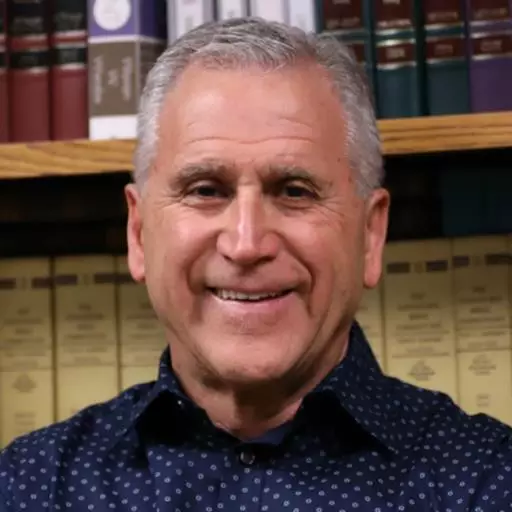
Paul's Greeting To The Church Pt.1


Pointing to the apostle Paul’s dramatic spiritual conversion, Pastor Raul will urge you to consider whether others can see God’s transformative work in your heart and life. You’ll see that Scripture says you’re the temple of the Lord – called to a high standard of holiness. Find out more on Somebody Loves You with Raul Ries.
Raul Ries: Hey, we only have one life to live and it will soon be past and the only thing that will last is what you do for Christ period. That’s why Paul in his letter says Paul called to be what? An apostle of Jesus Christ. You know what an apostle is? It’s one to be sent out. To be sent out with what? With the message of Jesus Christ.
Guest (Male): Welcome to Somebody Loves You Radio, the Bible teaching ministry of Raul Ries in Diamond Bar, California. Today our 1 Corinthians series continues with a role model and a personal challenge. Pointing to the Apostle Paul’s dramatic spiritual conversion, Raul will urge us to consider whether others can see God’s transformative work in our hearts and lives.
As part of Raul’s teaching, we’ll learn that the Bible says we’re temples for the Lord, called to a high standard of holiness. Now, with today’s lesson, here is Raul Ries.
Raul Ries: If you have your Bibles, turn to 1 Corinthians chapter one. This evening the title of my message is "Paul’s Greeting to the Church." You know when you think about the greeting that Paul gives here, what a job Paul had to the church of Corinth. With all of the problems and all the carnality that this church possessed, it was very hard for Paul to come, spend almost a year and a half, 18 months he spends in Corinth.
But before he comes, he begins to hear of the situation and the problems they were having in the city of Corinth. We went over how they had divisions. They had people that were taking other Christians to court, not settling out of court. They were coming to a place where they were abusing the gifts of the Holy Spirit.
Then at the same time, there was this guy living in the church in a sexual relationship with someone’s wife, and the church, the pastor, and the leaders were not doing anything about it. They were letting it go to past; they were actually allowing it in the church to have that. So when Paul hears about it, Paul really becomes upset and he writes a letter to them.
This is 1st, 2nd Corinthians and we have another letter that was lost; we don’t have that letter. But Paul writes and shares with them what they need to do biblically if there is such a person in the body of Christ in the house of God. Especially in these days that we’re living in. Think about the freedoms that people take upon themselves. This is one of the reasons that we have no power in the church is carnal and not spiritual when it comes to looking at a real church.
And yet no wonder the Holy Spirit can’t work effectively in the life of the church. And when I say the life of the church, I’m speaking about not a building, but I’m speaking about the body of Christ, the believer. And at the same time as I become the body or the temple of the living God, in the Greek it says that I become the holiest of holies where God lives.
In the Old Testament, the only one that could go into the holiest of holies once a year was the priest with a rope tied to his right ankle and if he had sin in his life, God would immediately kill him. And nobody could go in there; they had to pull him out with a rope. So it’s really important that we understand the responsibility and accountability that we need to have to the world. Why? Because the world is watching you and watching me.
So when Paul now begins his letter chapter one of 1st Corinthians chapter one verse one to three. The greeting. He starts out by giving us information as he’s writing chapter one verse one. He says Paul and who’s that? The writer. So you want to take notes, that’s the writer. The one that is writing. Now, when we write a letter, we don’t put our first name first in the letter. Dear so and so and at the end of the letter what do we do? We write and sign our name.
Not among the New Testament. They always would insert their first name who was writing the letter. And what’s incredible is that after Paul is saying here is Paul, me, the one that is writing the letter, he says called to be an apostle of Jesus Christ, speaking of his call of God through the will of God and Sosthenes our brother. So he gave us a real good introduction here and I want to spend some time now in giving you some insight and background to Paul the apostle.
Very important person to know why? Because he wrote 14 letters. He gave us half of the New Testament. And when you think of Paul the apostle, the one that was persecuting the church in Acts chapter nine, remember? In chapter six, he stands before as they’re not only demeaning and prosecuting—remember Stephen? And then Stephen in chapter seven gets up and gives this big old speech and he gives the word of God to them and he gives them the greatest sermon ever preached in Acts there in chapter seven.
When Stephen gets through with his sermon, they rush him, they take him because they got grieved, and what do they do? They take him and throw him over the side of the wall and they throw stones at him and they kill him. But before he dies, he stands up and he sees Jesus standing and Jesus says, "Come up Stephen, I’m taking you in." And Paul the apostle was there when Stephen was killed.
And Paul the apostle was, his name was Saul, not Paul yet. Saul was his name given to him. And Saul was constantly persecuting, prosecuting, and he was like a bounty hunter; that’s what he was. He was out going out after Christians and getting them and hurting them and even killing them. And then all of a sudden in chapter nine of Acts on his way to Damascus on the road to Damascus.
If you’ve ever been—I’ve been to Damascus. Now it’s closed, you can't go there, but back in the eighties, I went to Damascus. Amazing place. But on the road to Damascus as he was on his way to persecute the church, he heard a voice saying, "Saul, Saul, why are you persecuting me?" And then he said, "Is that you, Lord?" And then Jesus began to reveal himself to him.
And the men that were with Paul, they never saw Jesus, but they heard a voice like thunder. And there is where Paul the apostle got transformed and converted on his way to Damascus to persecute and prosecute Christians. Incredible. Incredible story. And each one of us individually here tonight have our own story of conversion. And that’s the testimony that God gives to us.
So then when we share with our friends that know us very well, but even our family knows us even better, when there is a transformation and a change divinely by the power of the Holy Spirit, what happens? It blows people away because they say how can that happen so quickly and so soon? It’s only through the power of the Holy Spirit that can happen. It’s when you and I submit our will to the will of the Father like Jesus did.
Father, not my will. You want me to go to the cross? Then I’m submitting to go to the cross. Not my will. I don't want to go, but I'll submit. And I think that that’s something that we need to understand because when you’re young and you’re naive and you really haven’t grown up in life and you really haven’t been hurt enough yet, you begin to learn that a lot of times young kids, they think they know more than their parents.
I thought I knew more than my parents. I used to say, "Oh man, they're stupid, they don't know what they're talking about." And sure enough, as I became older and I went through my life and now in my old life now looking back and looking at my kids and looking at my grandkids, it’s amazing to know that God surely has a lot of grace for each one of us individually. Because you know what we deserve? We deserve hell. Hell.
And yet God has been patient. God’s longsuffering is patience that none of us have perished but that all of us came to repentance and we receive the grace and the love and the mercies of God in our lives and he gave us eternal life. The guarantee that if you and I should die today, we would go to heaven. That’s amazing to me. And Paul the apostle to me, and I’m hoping to meet him when I die and go to be with the Lord, because Paul has been a great influence in my life.
In my conversion, in the things that I’ve learned in his 14 letters that he gives to us. Because Paul the apostle not only was he a theologian, but he was one that worked with his own hands; he was a tentmaker and never asked for money but always, always preached Jesus. Always. So Paul has a very incredible testimony and an incredible life in the Lord. And then when his name from Saul was changed to Paul, the name Paul means little one.
And it’s incredible because when you think of the size of Paul the apostle and his epistles, he’s pretty amazing apostle of Jesus Christ. And what’s incredible about Paul the apostle here is the way his name is given to him and then the way he was called. Saul of Tarsus first before his name Paul was ever given to him. In Acts 9:11, he says, "So the Lord said to him"—this is when his conversion—"Paul, get up and go to the street called Straight and inquire at the house of Judas, one who is called Saul of Tarsus, for behold, he is praying."
And then in chapter 13:9 it says, "Then Saul, who also was called Paul, filled with the Holy Spirit looked intensely at him." So we begin to see the transformation in his life. Not only by his name, but literally spiritually speaking, this transformation that Paul had because he was born in Tarsus of Cilicia. Acts 22:3 says, "Then he said 'I am indeed a Jew, born in Tarsus of Cilicia, but brought up in the city at the feet of Gamaliel, taught according to the strictness of our father's law, and was zealous towards God as you already see today.'"
Who was this man by the name of Gamaliel? He was one of the great Jewish teachers that Paul sat under his feet and learned from him. One of the great teachers. And Paul here gives recognition to Gamaliel and how he taught him the word of God.
Guest (Male): You’re listening to Somebody Loves You Radio with Raul Ries. As you look for ways to glorify God through the witness of your life, visit somebodylovesyou.com for Bible-based resources. You can also email Raul your questions about the Bible. His address is pastorraul@somebodylovesyou.com. Let’s continue with the final part of our study, Paul’s Greeting to the Church.
Raul Ries: And then Paul the apostle was born also a Roman citizen. Roman citizen. Remember when later on he gets himself in big trouble after preaching all those years and they arrest him and he’s trying to appeal to Caesar before that and they take him and they whip him and they said, "Hey, how can you beat a Roman citizen? Romans cannot beat other Roman citizens."
And when they found out he was a Roman citizen, they freaked out; they couldn’t believe it. So then he said, "Well do you want to appeal to Caesar?" Said, "To Caesar I appeal, to Caesar you shall go." And so he went to Caesar. But think of Paul the apostle as a Roman citizen being a Jew but also a Roman citizen as God had given them that right to do that.
In Acts 22:25 it tells us: "And as they bound Paul with thongs, Paul said to the centurion who stood by, 'Is it lawful for you to scourge a man who is a Roman and uncondemned?' And when the centurion, the Roman centurion heard that, he went and told the commander saying, 'Hey, be careful what you do for this man is a Roman.'" And then the commander came and said to Paul, "Tell me, are you a Roman?" He said, "Yes, I am."
Then the commander answered and said, "With a large sum I obtained my citizenship." And Paul said, "Not me, I was born a citizen." Wow. You bought yours; I got mine through birth. By that time, they didn't want to touch him at all. He was a Roman citizen. So Paul could cross the borders. He could go to the Jews, he could go to the Romans. The Jew and the Gentile.
And then he was also by Jewish nature from the tribe of Benjamin. Remember that tribe? Who came from that tribe? Paul the apostle, but also Saul in the Old Testament, the king of Israel. Think about that. And so it’s really important that we understand in Philippians chapter three five he says, Paul says, "circumcised on the eighth day of the stock of Israel, of the tribe of Benjamin, a Hebrew of Hebrews concerning the law"—and check this out—"I was also a Pharisee."
Remember the Pharisees? There’s something interest about the Pharisee. There were 6,000 Pharisees; 70 made the council which was called the Sanhedrin, like the government of Israel. And it’s interesting that among the Pharisees, you had to be married; you had to have a wife. Paul the apostle had no wife. What they tell us is that Paul the apostle either was married before his wife died, or when he came to Jesus Christ his wife left him and Paul never got married again.
He got married to the Lord. Paul the apostle. And that’s why here he says not only a Hebrew of Hebrews concerning the law but a Pharisee. And remember the Pharisees and the Sadducees were the ones that were constantly coming against Jesus and accusing Jesus Christ when he was here on the earth. And then Paul the apostle also a citizen of Tarsus.
Acts 21:39: "But Paul said 'I am a Jew from Tarsus and Cilicia, a citizen of no mean city, and I implore you permit me to speak to the people.'" He’s asking for permission to give them the gospel. And then Paul was a member of the Jewish Council, the Sanhedrin. Acts 26:10: "This I also did in Jerusalem, and many of the saints I shut up in prison, having received authority from the chief priests; and when they were put to death, I, Paul, casted my vote against"—who?—"the Christians."
Notice he gives testimony: "I voted to kill Christians. I, Paul." But now he’s Paul the apostle of Jesus Christ. And then he consented with Stephen’s death in Acts 7:58, chapter eight verse one, chapter 22:20 he gives his testimony. He says, "And they cast him out of the city and stoned him, Stephen. And the witnesses laid down their clothes at the feet of a young man by the name of Saul."
Saul of Tarsus. Who’s that? Paul the apostle. Chapter 8:1: "And now Saul was consenting to his death. At that time a great persecution rose up against the church which was at Jerusalem; and they were all scattered throughout the regions of Judea, Samaria, except the apostles." So the apostles went through a lot of heavy persecution. Heavy persecution. There were 12; one the betrayer, he went out and hung himself, Judas.
The other 10 died horrible, horrible deaths except for John the Beloved. He’s the only one that was shipped over to the island of Patmos; he gave us the Book of Revelation while he was there. He wrote the Gospel of John, 1st, 2nd, and 3rd John and the Book of Revelation. And in the Book of Revelation when he wrote that at the age of 90-some years old, he died of natural causes. He’s the only one.
But the other 10, they were persecuted, they were beaten, and they were killed and massacred. Peter himself was crucified upside down. Paul the apostle was beheaded in Rome. As Peter was crucified upside down also in Rome. So when you read their autobiographies, it’s amazing when you hear of all the things that these men went through.
And then at the same time if they went through some heavy things then why should we not go through heavy things too? If we're the church of our Lord and Savior Jesus Christ. And when I think of Paul the apostle and the beatings—three times I was beaten. He says I was shipwrecked. I died and came back. Remember? On the way, they stoned him and he died and he went to heaven and then came back.
And he said, "I can't tell you what I heard and what I saw because there are no earthly words to tell you exactly what was said; it was so beautiful." And God gave him what? A thorn on the side to keep him simple and humble that he would never brag about that. Amazing. And then in chapter nine of Acts verse one, he was converted on his way to Damascus.
He says, "Then Saul, still breathing threats and murders against the disciples of the Lord, went to the high priest and asked letters from him to the synagogues of Damascus"—that’s in Syria—"so that if he found any who were of the way"—notice the way, it wasn't called Christianity, it was called "the way"—Christianity, whether men or women, that he might bring them bound to Jerusalem.
And as he journeyed, he came near Damascus and suddenly a light shone around him from heaven; and then he fell down to the ground. He heard a voice saying to him, "Saul, Saul, why are you persecuting me?" And he said, "Who are you, Lord?" And the Lord said, "I am Jesus who you are persecuting." And then he said this: "It is hard for you to kick against the goads."
And then Paul the apostle, trembling and astonished, said, "Lord, what do you want me to do?" And then the Lord said to him, "Get up and go into the street and you will be told what to do." Isn't that neat how conversion came? God had a hold of his life, man, and just took him, molded him, shaped him, and then made him one of the greatest apostles of all time, Paul the apostle of Jesus Christ.
Secondly as we notice in the verse, he says the word "called" now. Paul, notice, an apostle called. And what’s really cool in that letter as he’s writing—notice again verse one—Paul called to be an apostle of Jesus Christ. So the next word we want to look at is the word called. That is our call is described by what? Number one, it was a heavenly call to Paul. Not an earthly call, a heavenly call.
In the Book of Hebrews as he writes to the Hebrews, he writes in chapter 3:1: "Therefore, holy brethren, partakers of the heavenly calling, considering the apostle and the high priest of our confession Jesus Christ." So he is saying that the calling of God is a heavenly calling to us. Secondly, it is a holy calling. 2nd Timothy 1:9.
Knowing this that the law is not made for a righteous person, but for the lawless and insubordinate, for the ungodly and for the sinners, for the ungodly and the profane, for the murders for the fathers and murders and mothers and manslayers. So it’s really important that we understand that if God calls us, it’s not for the undefiled. It’s not for those that are in the world and they’re sinning against God; it is for those that are converted and come to Christ and they become holy as he is holy.
The call of God also thirdly, it’s a high calling. A high calling. Whatever God may call you—a pastor, teacher, evangelist, to witness, whatever it is—there's no real order; just to be a Christian is a high calling. To call yourself a Christian is a high calling. Philippians 3:14 says, Paul says, "I press towards the goal for the prize of the upward call of God in Christ Jesus."
Notice that I press for that high call of Jesus Christ to serve him, to love him, to be obedient to him. And then the call of God is irrevocable. Romans 11:29: "For the gifts and calling of God are irrevocable." Irrevocable. You can't do it again. That’s it. It’s irrevocable. And then again, it’s by the grace of God our call. The grace of God.
Galatians 1:15: "But when it pleased God, who separated me from my mother's womb and called me"—notice—"through his grace." Through his grace. Unmerited favor that God’s given to us. It’s incredible when you think of the call of God in our lives. And yet we only have one life to live and it will soon be past and the only thing that will last is what you do for Christ period.
That’s why Paul in his letter says Paul called to be what? An apostle of Jesus Christ. You know what an apostle is? It’s one to be sent out. To be sent out with what? With the message of Jesus Christ. First, you become a convert. You become a servant. And then you become not an apostle—there're no apostles today—but the word sent out. You get equipped and then you get sent out with the message. Every one of us can be used like that.
Guest (Male): We hope you’ve been inspired by the radical change that Paul experienced after his conversion and will look for ways to live faithfully as a follower of Jesus Christ. You’re listening to Somebody Loves You Radio with Raul Ries. If you’d like to review today’s message titled "Paul’s Greeting to the Church," we can send you an unedited version for a donation of five dollars or more. Simply call us at 800-634-9165.
And to support you in devoting your life to God’s glory, we’d like to tell you about Raul’s 11-part series "Unity, Holiness, and Love." It’s available on CD and thumb drive. Featuring Bible-based guidance for all aspects of your life, this resource will show you how to infuse your faith into your relationships, your ministry, and even your finances.
You’ll also learn how to walk in godliness when navigating conflict and holding fellow believers accountable. Visit somebodylovesyou.com or call 800-634-9165 to order this 11-lesson series. We’ll send you the CD set of "Unity, Holiness, and Love" for 23 dollars, or if you prefer the flash drive for just 14. That’s 800-634-9165. You can also write to us at Somebody Loves You Radio, PO Box 4440, Diamond Bar, California 91765.
Join Raul for Straight Talk every Tuesday at 10 AM West Coast time on the Somebody Loves You Worldwide YouTube channel. This channel also features livestreamed Bible teaching and podcasts of all previously aired programs. And you can also browse iTunes and Spotify for these podcasts as well.
This ministry is completely listener-supported and we are so grateful for your tax-deductible gifts. Your partnership enables us to keep sharing the good news of the gospel of Jesus Christ. And thanks again for including us in your day today. We’d love for you to join us again next time as we return to more of our verse-by-verse study of God’s word. This program is sponsored by Somebody Loves You Radio in Diamond Bar, California.
Featured Offer

Liberty can be defined as the quality or state of being free: the power to do as one pleases: or the power of choice. The Bible tells us, “where the Spirit of the Lord is there is liberty.” Put simply, we as believers have been given freedom. Through the atoning death of Jesus on the cross, and the power of the Spirit of God, we have been set free. We have been made free in Christ from the binding power of the world, the flesh, and the Devil. As Christians, we have been given liberty. We have been given the power to choose obedience to God; the power to love and serve others. Join Pastor Raul as he expounds upon our liberty in Christ and how it impacts every facet of our life.
Past Episodes

Featured Offer
Liberty can be defined as the quality or state of being free: the power to do as one pleases: or the power of choice. The Bible tells us, “where the Spirit of the Lord is there is liberty.” Put simply, we as believers have been given freedom. Through the atoning death of Jesus on the cross, and the power of the Spirit of God, we have been set free. We have been made free in Christ from the binding power of the world, the flesh, and the Devil. As Christians, we have been given liberty. We have been given the power to choose obedience to God; the power to love and serve others. Join Pastor Raul as he expounds upon our liberty in Christ and how it impacts every facet of our life.
About Somebody Loves You
About Raul Ries
Raul Ries is the Senior Pastor of Calvary Chapel Golden Springs and President of Somebody Loves You Ministries. After his miraculous conversion in 1971, Raul began to read and study the Bible extensively even though he had a limited education. In 1974 he began a home Bible study with seven other committed individuals. Soon, he started to preach and counsel youth during the noon hour at his former high school, Baldwin Park High. Calvary Chapel West Covina grew out of Raul's home fellowship, as well as his Kung-Fu studio, and was soon meeting weekly at an old converted Safeway store. In 1993, the congregation moved to Diamond Bar and occupied a 101,000 square-foot corporate building on 28 acres. Calvary Chapel Golden Springs (as it is now called) draws between 10,000 - 12,000 in attendance weekly.
Author of several books, including Fury to Freedom (the story of his early life and dramatic conversion), Raul Ries has also produced three films: Fury to Freedom (feature film dramatization of the book); A Quiet Hope (a riveting and stirring documentary detailing seven soldier's accounts of the Vietnam War and its aftermath); and A Venture in Faith (a documentary of the history of the Calvary Chapel movement).
Contact Somebody Loves You with Raul Ries
Mailing Address
Somebody Loves You Radio
P.O. Box 4440
Diamond Bar, CA 91765
(909) 396-1884