
James 2


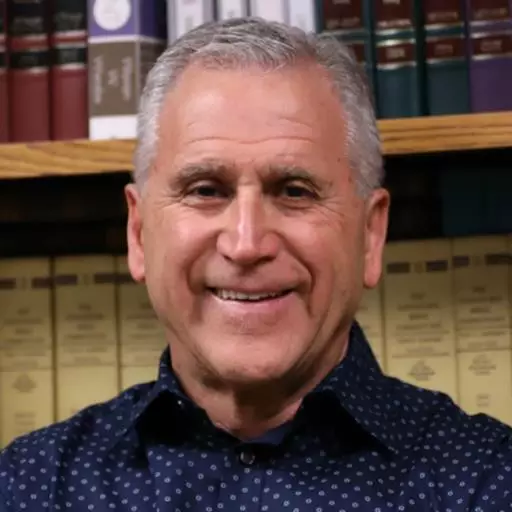
Today on Somebody Loves You Pastor Raul returns to the book of James. You’ll see that while it’s natural to develop biases or prejudices that seep into your interactions with others, the Lord calls you to bless others with His love – regardless of any differences.
Raul Ries: My inheritance in the kingdom of God is amazing. More than any bank could hold for me here on this earth. That's where Jesus said, "Where your heart is, that's where your treasure is." Where's your heart? Where's your treasure? Here or there? We're preparing for the future when we go to be with the Lord.
Guest (Male): Welcome to Somebody Loves You Radio, the Bible teaching ministry of Raul Ries in Diamond Bar, California. We are glad to have you with us today. Considering God's unconditional love for all people, Raul will return to the book of James for inspiration to nurture the same universal kindness and compassion. You'll see that while it's natural to develop biases or prejudices that seep into your interactions with others, the Lord calls you to bless others with His love regardless of any differences. Now, here's Raul Ries.
Raul Ries: And as James begins in chapter 2, if you have your Bible, let us begin and review chapter 2 verse 1 again: "My brethren, do not hold the faith of our Lord Jesus Christ, the Lord of glory, with partiality." For if there should come into your assembly, or the church, or the synagogue, a man with gold rings and really nice pants—they used to use garments in that time, real flashy—and there should also come in a poor man in filthy clothes.
He's putting us in this situation where, as I told you last week, when the rich people would come into the church, the men would have rings on every finger except the middle finger. And they could be real flashy, and their clothes were outstanding. So when they came into the church, James noticed that when the rich people came in, they were all getting good seats in the church. But the poor people would come and they would say, "Now you wait here until we find a seat for you," and most of the time they would sit them in the rear, in the back.
And I shared last week that it's amazing how many times someone that is homeless would come into a church that has a lot of rich people—how would they treat that homeless person coming into the church? Or would they even allow him to come in? Because there have been places that I have been to, churches, where I have been embarrassed for the church the way they treat people like that in the streets.
And yet it's really important that if we all call ourselves believers or Christians, then where is the true love of Christ in our hearts to really care for the poor and the needy? Look what else he says there in verse 2. He says, "For if there should come into your assembly a man with gold rings and really fine dress, and there shall also come in a poor man with filthy clothes, and you pay attention to the one wearing the fine clothes and say to him, 'Hey, you sit here in this good place,' and say to the poor man, 'You go stand over there or sit here at my footstool.'"
He says, "Have you not shown partiality among yourselves and become judges with evil thoughts?" Surely we have. Shame on us for doing that. We should never do that. We should never become respecters of persons with anyone, rich or poor, but we should treat them all the same.
He goes on and he says in verse 4: "He says you have not shown partiality among yourselves and become judges with evil thoughts. Listen, my beloved brethren: Has God not chosen the poor of this world to be rich in faith and heirs of the kingdom which He promised to those who love Him?" Isn't that beautiful?
Imagine how important that is when we came to Jesus Christ and we repented of our sins and we came to a place where we know we needed God in our lives because without Him I would perish. And even though I was in the world and the world was really not good to me, the world became evil to my life and actually the world tried to kill me. But then Jesus Christ opened that door for me to be able to come through that door and be able to give my life to Him, and He took my life and He restored my life.
And then I become now, even though I may not have millions in the bank, I become rich in faith. Why? Because my faith and trust is in Jesus Christ and I am an heir of God. My inheritance in the kingdom of God is amazing. More than any bank could hold for me here on this earth. That's where Jesus said, "Where your heart is, that's where your treasure is." Where's your heart? Where's your treasure? Here or there? We're preparing for the future when we go to be with the Lord.
Again, notice what he says: "Listen, Christians, my beloved brethren. Has God not chosen the poor of this world to be rich in faith and heirs of the kingdom which He promised to those who love Him? But you have dishonored the poor man. Do not the rich oppress you and drag you into courts?" Verse 7: "Do they not blaspheme the noble name which you are called by?" He says when people hear that, what do they do? They blaspheme the name of Jesus Christ. Jesus gets the blame and Jesus gets blasphemed.
Think of all the people that have blasphemed the name of our God by doing what these people were doing: taking advantage of the poor in their court systems and lawsuits. And yet James, the brother of our Lord Jesus Christ, says in verse 8: "If you really fulfill the royal law according to the Scripture, you shall love your neighbor as yourself, you do well." What's the royal law? Love. Loving my brother as myself. Two commandments Jesus gave: to love the Lord your God and to love your neighbor as yourself. That's it. Two commandments.
And if we can't keep the actual covenant or the actual law of love, then how can we say we're Christians? How can we say we believe in God? Who's going to really believe us when the love of God is not extended to any person? No wonder in John 3:16 it says: "For God so loved the world that He gave His only begotten Son Jesus Christ, that whosoever believeth in Him should not perish but come to repentance."
God loves us so much that He should have wiped us out, He should have got rid of us, but look what He did in each one of our lives as we sit here tonight. Every one of us has our own testimony, and yet God was patient with each one of us. And yet somehow, James saw how these poor people were being taken advantage of and how the oppression of the rich against the poor was. And yet he says, "Don't you guys read the Bible? You're supposed to be Christians. And what does the Bible say? To love your neighbor as yourself."
That's one of the commandments. And yet they were hating their neighbors and they were hating the people in the church. That's not true Christianity. That's hypocrisy. That's being a phony. That's not being a real person. Then he goes on to say this, which is just amazing here. He says again in verse 9: "But if you show partiality, you commit sin." He says if you're going to be a partial person, shame on you. It is a sin to show partiality. To be a respecter of persons is a sin against God.
And what else does he say? Notice: "And are convicted by the law as transgressors. For whoever shall keep the whole law and yet stumble in one point, he is guilty of all." Notice what he says here: one miss and you missed it all. One sin. "For He who said, 'Do not commit adultery,' also said, 'Do not murder.' Now if you do not commit adultery but you do murder, you have become a transgressor of the law."
So a transgressor is one that willfully transgresses the law of God. You know what's right, you know what's wrong, but you say, "Forget You, God, I'm going to do it anyways," willfully doing it after the Holy Spirit convicts you. That's transgression. Then he says this: verse 13. "For judgment is without mercy to the one who has shown no mercy. Mercy triumphs over judgment." He is speaking again of the rich that were not merciful but they were condemning people.
"What does it profit, my brethren," speaking to Christians again, "if someone says that he has faith but he has no works? Can faith save him? If a brother or sister is naked and destitute of daily food, and one of you says to them, 'Depart in peace, be warmed and filled,' but you do not give them the things which are needed for the body, what does it profit?"
I mean, he says if you call yourself a Christian and you say you have faith, and you see someone on the street without a blanket, without food, without water—do you do what the Samaritan did? You walk to the other side and you just keep walking along and forget about them? God says you're guilty. You're guilty. Where is the love of Christ to help that person when he or she is in need?
Where is the real faith in your life when you say, "I believe in Jesus Christ and He's my personal Lord and Savior"? Where is your faith if there's no works? Then there's no true faith. And we're not saved by works, but Paul said the same thing James said: True faith brings good works. Why? Because of our conscience. We get convicted when we see people in need or there's a situation or an issue. We take care of it as Christians because of the Holy Spirit that is in us. He speaks to us. We can't excuse it and we can't just put it under the carpet. It's there.
Guest (Male): You're listening to Somebody Loves You Radio with Raul Ries. Visit somebodylovesyou.com for resources to help set your feet on paths of righteousness. Our free app also provides a variety of ways to infuse the Bible into your daily life, including digital studies and live-streamed teaching. Let's rejoin Raul now for the final part of our study.
Raul Ries: Look what else he says: "If a brother or sister is naked and destitute of daily food, and one of you says to them, 'Depart in peace and be warmed and filled,' but you do not give them the things which are needed for the body, what does it profit? Thus also faith by itself, if it does not have works, is dead." Notice that. Your faith is of no value, it's dead. There's nothing in there. You're not really showing the fruits of a Christian, that you really are caring and loving and merciful and gentle and kind, as the Bible says.
And then look what he says. This is so beautiful. In verse 18: "But someone will say, 'You have faith and I have works.' Show me your faith without your works and I will show you my faith by my works. Do you believe that there is one God? You do well. Even the demons believe and tremble. But do you want to know, O foolish man, that faith without works is dead?"
He's trying to make a point that if you really, truly do not have a true faith in Jesus Christ, you will never have good works in your life. There's no possible way. You'll never demonstrate it. You say, well how do you know that? Well, he gives an illustration in a moment about Abraham. And it's really important that when we really think about what God is saying here through James, his stepbrother—that here James is proclaiming and declaring that when you come to Jesus Christ, something really happens in your life.
The Holy Spirit not only gives you what we call regeneration—you become regenerated by the Holy Spirit. The scales fall off, the ears begin to hear what the Spirit is saying to the church. Over a period of time as you're reading and praying and getting hooked up to the Lord, all of a sudden your whole view on the world begins to change. Your friendships begin to change, your desires begin to change.
And then all of a sudden you find yourself looking at the oppression of the poor and the rich like he said here, and other issues that are there in the church. And you begin to say, "You know what? People are not fair and we have to be fair as Christians and as children of the light. Otherwise we're in sin." It's really important that we understand no respecter of persons in the church.
And if we really, truly say that we love the Lord Jesus Christ and He's our Lord and Savior, then we need to be sensitive to one another and to the needs of the poor and those on the streets and the byways and the highways. That we really believe that we are the church of Jesus Christ.
Look what he says: verse 21. He says, "Was not Abraham our father justified by works when he offered Isaac his son on the altar?" Can you imagine what that must have been like? In the 22nd chapter of the book of Genesis, all of a sudden Abraham is at home and Abraham is already over 100 years old. His son is about 33 years old. He wakes him up in the morning. He says to his son, "Son, pack up. Get ready."
Goes over, wakes up his servants, he says, "You guys get the donkeys. Give me some wood, give me a big knife and bring some things for the fire, and we're going to Mount Moriah, a three-day journey. God has told me to go." He doesn't even tell his wife. And they get up in the morning and they are going a three-day journey. And all of a sudden they are coming next to Mount Moriah and you can see it in the distance. And they set camp.
And Abraham says to his servants, "You guys wait here, make camp, but me and the lad, we're going to go up there and we'll be back again." What does Abraham do? He speaks words of faith. Abraham is thinking, "I'm going to take my son up there and my son is going to come back with me." And yet he did not know yet what God was going to ask him. He already knew in his heart because he told him, "Get the wood, get the knife."
And as they're walking up, as Isaac has the wood on the shoulder and Abraham has that big old knife, and they're walking up to Mount Moriah. All of a sudden they come to the top of Mount Moriah and Isaac says, "Father, the wood, the knife, but where is the sacrifice?" And in verse 8 of chapter 22, Abraham says this prophetically, 2000 years later: "God will provide Himself a sacrifice."
Speaking of Jesus, that He would become the Lamb of God that takes away the sins of the world. Can you imagine what it must have been like? For the first time in the Bible, God is asking for a human sacrifice. And God tells Abraham, "I want you to take your son, your only son, the one of promise, and I want you to kill him for Me." And as Abraham is in that three-day journey, imagine what was going through his mind.
I know what it would be like for me to kill one of my sons. I couldn't do it. I love them too much. And as Abraham is riding on that donkey and getting to Mount Moriah as he sees Mount Moriah, he is thinking, "Oh no, we're getting close and I have to sacrifice my son." And when they get up to that top of Mount Moriah, his son could actually beat him up and even kill his own dad. He's 33 years old, he's stronger than Abraham. Abraham is an old man.
And yet what does the son do? He submits to his father. What a beautiful picture we have here: of Abraham becoming the type of God the Father, Isaac becoming the type of God the Son, Jesus Christ. The carrying of the wood is a sign of the cross of Jesus Christ. Think about that. And then Abraham saying, "God will provide Himself a lamb." And all of a sudden they turn around and the angel says—as Abraham ties up his son and lays him on the altar, and we see Isaac submitting himself to the father, even as Jesus submitted himself to the Father.
And he takes up the knife and he raises it up to cut his throat. And the angel says what? "Abraham, Abraham, don't do it!" Jesus spoke out. "I've seen your heart, that you really love Me and you're obedient to what I call you to do." And then they look to the right, and what was there? A ram caught in the thicket to be sacrificed. God provided for the sacrifice. God has provided Himself for you, for me. Behold the Lamb of God that takes away the sins of the world, John the Baptist said when he saw Jesus.
When Jesus Christ came into this world and knowing that people were going to hate Him in the last three and a half years of His life—as He walked around and He preached and He taught and He healed. And then coming to Jerusalem on that last week, when he wrote in the Gospel of John chapter 13, 14, 15, 16, and 17, and begins to tell them that He's going to depart, but He's not going to leave them alone, but He's going to send the Holy Spirit to them.
And then all of a sudden, as Jesus goes into the garden of Gethsemane and the devil comes and begins to torment Him. And as Jesus is praying and the disciples are sleeping, and blood begins to pour out of His body. And Jesus says, "Father, if You can, let this cup pass from Me. If I don't have to go to the cross, I don't want to go, but Your will be done on earth as it is in heaven." And He took the cup for Himself. He submitted Himself unto death.
And when they came to the garden, 600 men with torches and actually swords, and Judas was leading the pack. And then what happened? Peter got up with the sword and he took Malchus's ear right off. And Jesus went over and picked it up and put it back on his head. And then they all fled and left Jesus alone. And Jesus had just told them tonight, "When the actual rooster crows three times, you're going to deny Me three times, Peter."
He said, "I would never do that, Lord." And Peter denied Him three times. They asked him, "Do you know this man?" "I do not know Him." "Do you know Him?" "I do not know Him." And the third time in the court as Jesus was standing there and they had beat Him up—the third time when the actual denial came, Jesus turned around to look at Peter, and Peter looked at Him. And the Bible says Peter ran out and wept bitterly before the Lord. Why? Because we've all—all denied the Lord at one time or another.
We've denied Him with all our hearts, and yet He's forgiven us. He's forgiven us and cleansed us and washed us because He loves us so much. That's why this beautiful book of James is so amazing. That as we begin to see here once again, as he says, "Abraham believed God and it was accounted to him for righteousness. And he was called the friend of God. You can see then that a man is justified by works and not by faith only."
Likewise, was not Rahab the harlot also justified by works? Notice: when she received the messengers and sent them all out another way. Remember what happened to the city of Jericho? The children of Israel came in there and they spied out the land. And when the people in the city of Jericho found out, she took the men up into the attic and hid them there. And they said, "When we come back, we're going to protect you and your family."
"All you have to do is actually hang a little red cord out of your window, and when we come to destroy Jericho and we walk around seven times, the walls are going to come down and the city is going to be totally devastated, except you and your family, because you have believed by faith—by faith." And whenever we believe by faith, we've never seen God, then God honors that. He honors my relationship with Him, as He honored Rahab and He honored Abraham and so many others in the word of God.
He goes on and says, "For as the body without the spirit is dead, so faith without works is dead also." So what does he mean? True faith brings true works. No faith, no works. It's all up to us to give our lives and hearts fully and completely by obedience to Jesus Christ, and then He'll use my life.
Guest (Male): Well, we hope today's teaching has been a motivation for you to take an honest examination at how heavily your interactions with others are biased by your own personal preferences. You're listening to Somebody Loves You Radio with Raul Ries. If you'd like to hear today's lesson in its complete form, we'll be happy to send a copy to you for a donation of $5 or more. Simply call us at 800-634-9165 and mention today's teaching from James chapter 2.
We'd also like to offer you a resource with more insight into what it looks like to walk closely with God as His faithful representative. Raul's eight-message series titled Traits of a Christian is available on both CD and flash drive. As you explore ways to deepen your personal relationship with the Lord, you'll also be motivated to bless others with His gracious love.
Visit somebodylovesyou.com or call 800-634-9165 to purchase Raul's eight-part series titled Traits of a Christian. We'll send you the CD collection for $22 or the USB for $12. The number again is 800-634-9165, or write to Somebody Loves You Radio, P.O. Box 4440, Diamond Bar, California 91765.
Somebody Loves You Radio with Raul Ries is fully listener supported. Your tax-deductible gift supports our mission to share the good news of Jesus Christ with the world. Tune in next time for more instructions from the book of James. Contemplating the power of the tongue to both build others up and tear them down, we'll get a challenge to think before we speak as we carefully monitor the words coming out of our mouths.
I am falling in love. I am falling in love. I am falling in love. I am falling in love with You. This program is sponsored by Somebody Loves You Radio in Diamond Bar, California.
Featured Offer

Pastor Raul explores the teachings of Jesus leading to the cross and what they reveal about salvation, forgiveness, discipleship, and god’s love. Through parables, predictions of his death, and examples of his compassion and servant heart, we see why the cross was central to his mission. The cross not only changed history but continues to transform lives today.
Past Episodes

Featured Offer
Pastor Raul explores the teachings of Jesus leading to the cross and what they reveal about salvation, forgiveness, discipleship, and god’s love. Through parables, predictions of his death, and examples of his compassion and servant heart, we see why the cross was central to his mission. The cross not only changed history but continues to transform lives today.
About Somebody Loves You
About Raul Ries
Author of several books, including Fury to Freedom (the story of his early life and dramatic conversion), Raul Ries has also produced three films: Fury to Freedom (feature film dramatization of the book); A Quiet Hope (a riveting and stirring documentary detailing seven soldier's accounts of the Vietnam War and its aftermath); and A Venture in Faith (a documentary of the history of the Calvary Chapel movement).
Contact Somebody Loves You with Raul Ries
Mailing Address
Somebody Loves You Radio
P.O. Box 4440
Diamond Bar, CA 91765
(909) 396-1884