
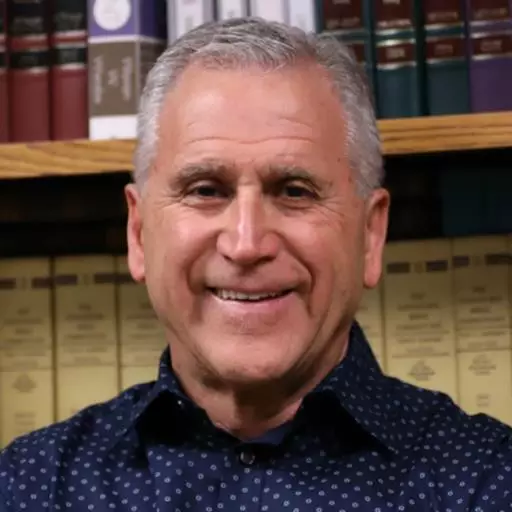
Is Hell A Real Place


Today Pastor Raul launches a new series exploring what Scripture says about life after death. Beginning with a sobering look at what’s ahead for those who willfully reject God’s gift of an eternal home. We’ll see that heaven and hell are not imaginary places but actual destinations – and each person has the freedom to choose which one lies in their future. Learn more on Somebody Loves You with Pastor Raul Ries.
Raul Ries: There are people in hell tonight that wish they could have a second chance, and they wish they could have repented, and they wish they could come back and say to their brothers and sisters, mothers and fathers, "Please wake up. You don't want to come where I am tonight." Once you close your eyes and you take your last breath, it's over. You go to heaven, or you go to hell.
Guest (Male): Welcome to Somebody Loves You Radio, the Bible teaching ministry of Raul Ries in Diamond Bar, California. Thanks for joining us today as we launch a new series exploring what the Bible says about life after death. Raul will begin with a sobering look at what's ahead for those who willfully reject God's gift of an eternal home.
We'll see that heaven and hell are not imaginary places but actual destinations, and each person must choose which lies in their future. Here's Raul Ries in Luke chapter 16, beginning in verse 19, with our study, "Is Hell A Real Place?"
Raul Ries: There seems to be people that don't really believe in life after death. Some people argue the point, is there really a heaven? Is there really a literal hell? One of the things that we must understand is the Bible says there's a point of time for a man to die, and then the judgment comes in Hebrews. Every single one of us and everyone in the world is going to die one day.
At the same time, people say, "Well, what's going to die? What happens when you die?" By the way, this is the only place in the Bible, in the Gospels, Matthew, Mark, Luke, and John—Luke is the only one that gives us this text here. Matthew, Mark, and John don't give us the same text here. This is the only place where you find this story, a real story about two people.
What's interesting is that usually when you talk to people and you read a lot of the commentaries, they'll say chapter 16, verse 19 to verse 31 is a parable. This is not a parable. A parable was used by Christ to illustrate a truth concerning what he was teaching on. This is an actual event that took place. We don't know when, because in parables, Jesus never ever used people's names. Never.
Here we find two names that he uses. One of the names is Lazarus, and the second name is Abraham. What's really amazing about this story here is that Jesus is actually teaching and warning because at that particular time, there were people that didn't really believe in life after death. They believed that when you die, you become non-existent. Some believed that you actually go around in circles, a cycle you go through, and then you become what you're going to be in reincarnation.
But at the same time, when we come to Christ, there's a flip-over that takes place where now we become spirit, soul, and the body or the flesh is dead, speaking spiritually. Even though the natural man is walking around, the Bible says that while he's walking around, he's dead in sin. Yet when a person comes to that personal knowledge of Jesus Christ, all of his philosophy and all of his views begin to change as he begins to read the word of God.
In the Old Testament, before Christ ever died on the cross, every person that ever died in the Old Testament, they all went to hell. You say, "Wait a minute. They all went to hell?" Yes. Hades, Sheol, the place of the dead. In Hades, there were two compartments that the Bible talks about. One compartment was called Abraham's Bosom, and on the other side was the place where the people were being tormented in the fire.
Between Abraham's Bosom and the other side where they were being tormented, there was a great gulf that would separate the righteous from the wicked. People say, "Well, how big is hell?" It's huge. But hell itself, in the Old Testament, the place called Sheol, the place of the dead, or Hades, was a place when a person would die, his spirit or her spirit, if they had faith in God like Abraham, Jacob, Isaac, and all of the forefathers before that had come to know God, they would die and they would go into Hades.
But they would be in that other side, in the compartment which was called Abraham's Bosom. It was a place of comfort, whereas on the other side was a place of torment day and night. Let's look at the story, and then it will speak for itself, beginning with verse 19. He says, "There was a certain rich man who was dressed in purple and fine linen and fared sumptuously every day," which means this guy had the bucks.
He had the money. He had all the fashions of that time. What's amazing, he not only had the money, but he had the home where he lived. It was one of the most beautiful places that he had built. This guy was a partier. He had parties day and night, always inviting someone to come to his house and enjoy the parties. But then it tells you about a second person in verse 20.
"And then there was a certain beggar named Lazarus, full of sores, who was laid at his gate." Now we see the two contrasts: one, the wealthy, the one in comfort, the one that's happy, the one that enjoys life; and then you have the one that has been ostracized by the society because he's poor, he's sick, he has nowhere to lay his head. He's been cast out from society.
He just happens to come to where this mansion is, and he sees people going in and coming out, and he sees that they're always in festivity and having parties, and they're eating pretty good. But he has no food. He has no water. He has nothing. So he decides to stand next to this gate in the mansion. Look at what it says in verse 21: "Desiring to be fed with the crumbs which fell down from the rich man's table. Moreover, the dogs would come and lick his sores."
So you get this picture of this poor beggar lying down and reaching through the gate as they're sitting on these recliner pillows—no chairs—and the crumbs that were falling down, he was reaching for them to pick them up so that he could eat. And then you have these street dogs walking by and licking his sores because he's full of sores, he's sick. Something happened to him; we don't know what. Nobody is paying attention to him. They're all into themselves.
This rich man had the greatest opportunity of helping this poor beggar and giving him something to eat and drink and even take care of him, but he was too busy partying and with his friends. Too busy. Look at what he says: "And so it was that the beggar died and was carried by the angels unto Abraham's Bosom. The rich man also died that night and was buried."
Listen, first of all, notice what it says. When a person dies, who comes to get you? The angels. We saw that when Melinda's grandmother was going to die. She died three days later after we shared the Lord with her. She accepted the Lord, and she was there, but she wasn't really there. She was between here, heaven, and between the earth as she received the Lord. It was a total different thing.
It's amazing because the angels come to take you either to heaven or to take you and to hell and drop you off in hell. That's what the Bible teaches. How sad it is when you know a person that is wicked and they go to hell, and you'll never see them again. You know. Because they never repented, they never accepted Christ. I've seen people slip into eternity, raise up themselves, take their last breath, and then the spirit comes out and it's over. The body just sinks down. Gone. No more.
They don't even know where they're heading. It's sad, but it's true reality. My friends, it happens every day. People that are bitter, people that have been hurt, people that have been neglected, people that have suffered, and they blame God for it, and they blame family for it, and they never get out of their bitterness, but they perish in their bitterness, and they go to hell.
Look at what he says. He goes even further on now. He says in verse 23: "The beggar died, the angels came, took him to Abraham's Bosom. And then that very night, I could just see it all, the rich man having his party as people are getting to go home, saying to his friends, 'Hey, see you guys tomorrow, man, great party.'" What are they doing as the poor man dies?
His spirit is carried to where? To Abraham's Bosom, but his dead body is there. What are they doing? They're just kind of jumping over. Nobody stops to see the dead man. Nobody. Selfishness again. They're stepping over him, they're going their way, they don't even care. They're just celebrating, saying, "Tomorrow we'll see you again." And then that rich man closes his gate, his servants come, and they give him his nightclothes, and he's getting ready to go to bed.
He's thinking, "Tomorrow I'm going to do this, I'm going to do that." He's planning for tomorrow when it says, "Tonight your very soul will be what? Will be taken from you." And that night he lays down and he dies. Check this out. This is incredible. Verse 23: "The rich man also died and was buried, and being in torments in Hades, he lifted up his eyes and saw Abraham afar off and Lazarus in his bosom."
Wait a minute. He never even met Lazarus. He never even met Abraham. How did he know them by name? You see the consciousness in hell. What's interesting here is that probably this rich man, because if he had money in that culture, you could actually hire professional mourners to come and mourn for you, and they would bury you the same day you died.
Imagine what kind of funeral he had because he had all the money. But then all of a sudden, here he is, the rich man waking up in Hades and looking over to the other side, and he sees Abraham and he sees Lazarus. He knows something is wrong. Look what it says: "And the beggar died, carried off, and then Abraham—verse 23—and being in—what? In comfort? No, in torments. In torments in Hades, he lifted up his eyes and saw Abraham afar off and Lazarus in his bosom."
And he cried out and said, "Father Abraham"—notice he's crying out. He's in deep, deep pain, and he's crying out in pain, saying, "Father Abraham." He said, "Have mercy on me." Too late for that. Mercy? No, judgment. You see? "Have mercy on me." Why? Look at what he says: "And send Lazarus that he may dip the tip of his finger in water and cool my tongue, for I am tormented in this flame."
You see what he says? Hell is a hot place. It's not like the Rolling Stones said: "When we die, we're going to rock and roll in hell." There's no such thing in hell. Torments. Torments there. And the worst of men are there, like Hitler and Mussolini and all these people from the past that have been wicked and have killed millions of people. They are there in hell, in torment.
And here look at what he says: "Have mercy on me and send Lazarus," whom he didn't even feed. He didn't even pay attention to Lazarus. And now he wants Lazarus's help. "Just dip your finger in cool water and put it in my tongue, for I am in torment." Watch this: "And Abraham said, 'Son, remember that in your lifetime you received your good things.'"
Now go back and think on your life, how you had money, you had parties, you had everything that money could buy, and yet look where you are today. Money can't buy you out of hell. Nobody can be bought out of hell. I don't care how many millions you have. You leave it behind for others to spend or misspend. You see? He didn't have nothing, just his soul. And then what else? Look what he says.
"You had everything in good things, and likewise Lazarus every evil thing. He was sick, he was in pain, he had no food, he had no water, he had no home, he had no family." Look what it says: "But now he is comforted, and you are tormented." What a difference! Before, you were comforted, and now he was tormented. Now look at the difference. A flip-over when he died. Totally different. No more pain, no more sorrow, no more death.
But him, the rich man that had all the comforts of life, now has no comfort in his life. Not just a little bit, nothing at all. Watch this. He goes on: "And besides all this, between us and you, there is a great gulf that is fixed." You see, he even tells you what's there. There was a great gulf so that the other guys from the other side could not jump over, could not come over. It was a great separation.
Imagine being on the other side of hell and looking over to this side and watching these guys being comforted and you can't be comforted, like looking through a glass. You can't get to the other side. It's over. And they're only there for a little season because Jesus is going to come and he's going to take them out of there, and then this place is going to be emptied, and then hell is going to become one major place.
That's exactly what happened when Christ came. Look what happens. He goes on. He says that, "Between you and us, there is a great gulf fixed so that those who want to pass from that side, you cannot, nor those from this side can go to that side." You see? There's no help available. It's over. You're there and we're here.
And then he said, "I beg you therefore, Father, that you would send him to my father's house." Now he's making a request. He can smell, he can taste, he can hear, he can remember, he can touch, and now he's saying you think it would be possible. He still remembers in hell that he has family. Imagine the torment, to know that you have family. And what does he want them to do?
He wants to rescue them, but it's too late. Watch what he says. He said, "I beg you therefore, Father, that you would send him to my father's house because I have five brothers, that he may testify of them, lest they also come to this place of torment." Underline that. To this place of torment. It's not a place of comfort in hell. What is he doing? He's trying to rescue his brothers.
Look what he says. "I have five brothers, that he may testify of them." Five is the number of what? Of grace. Interesting. "I want you to go and share grace with them, five brothers, that he may testify to them, lest they also come to this place of torment." And Abraham said, "Now look, son, listen to me carefully." Look what he says: "Then he said to him again, Abraham said, 'They have Moses and the prophets. Let them hear them.'"
What do you mean? They have Genesis, Exodus, Leviticus, Numbers, Deuteronomy. They have the 12 historical books, the Psalms, the Proverbs, and then the poetical books, and then they have the major and the minor prophets. He says they have it all, and yet what happened? All they have to do is just read it and believe it. The Old Testament scriptures are there.
That's what he's saying to them. They have the prophets and they have Moses and the law. And then what? "And Abraham said, 'They have Moses and the prophets. Let them hear them.' And then he said, 'No, Father Abraham.'" Notice his persistency. "No, Father Abraham. But if one goes to them from the dead, they will repent." How did he know about repentance in hell when he never repented here on earth?
Full knowledge. Full knowledge in hell. Knowing that I could have repented and I could have been spared from hell. In hell, he realizes that he never repented, but he wants his brothers to repent. That's heavy. To me, this is amazing, that people in hell today, just like this rich man here, are begging, are thinking, are going back in their lives and thinking of their mothers and fathers and brothers and sisters that are still alive here on earth and wanting them to get the message.
"Don't come to hell. It is a place of torment. Repent. Come to Jesus. Receive his love, receive his grace. If not, you're going to end up with me here in hell." And that's just not the ultimate place. The lake of fire will follow. Look what he says. He said, "No, my Father Abraham. But if one goes from the dead, they will repent." But then Abraham said to him, "If they do not hear Moses and the prophets, if they don't listen to the word of God and they don't believe the word of God"—notice what he says—"then how in the world will they ever be persuaded if someone would rise from the dead?"
Is that true? It is true. Why? Because Jesus died and rose again from the dead, and really, how many people in the world today really believe that? They're always just trying to disqualify the resurrection of Christ. How sad. I mean, here it is, the whole Gospel, showing us that there are people in hell tonight that wish they could have a second chance, and they wish they could have repented, and they wish they could come back and say to their brothers and sisters, mothers and fathers, "Please wake up. You don't want to come where I am tonight." Once you close your eyes and you take your last breath, it's over. You go to heaven, or you go to hell.
Guest (Male): If you've never received God's gift of salvation through Jesus, we encourage you to make that crucial decision for your eternal future. You're listening to Somebody Loves You Radio with Raul Ries. Today's lesson was titled, "Is Hell A Real Place?" For a donation of $5 or more, we'll be happy to send an unedited copy to you. Just call us at 800-634-9165.
We'd also like to tell you about Raul's four-part series titled "Heaven or Hell," available on both CD and flash drive. Featuring today's lesson as well as three others, this resource will help you sort through your questions about the afterlife with answers from a biblical point of view. You'll find that the Bible is very clear about the two choices: either life forever separated from God, or life forever in communion with God.
Visit somebodylovesyou.com or call 800-634-9165 to order Raul's clarifying four-message series titled "Heaven or Hell." We'll send you the CD set for $18 or the thumb drive for just $10. The number again is 800-634-9165. Or write to Somebody Loves You Radio, PO Box 4440, Diamond Bar, California 91765.
Thank you for your tax-deductible gifts. Your partnership is truly crucial to this ministry as we share the truth of God's eternal word. And tune in next time for more thought-provoking truths from the word of God. You'll see that Jesus often talked about heaven and hell, clearly laying out the path to eternal communion with the Lord and his desire for each of us to enjoy eternal life with him. Here's Raul with a closing comment.
Raul Ries: And if you go to hell, you will wait until the day of judgment in Revelation chapter 20, 11 through 15, the White Throne Judgment, when Christ is going to open the books. And whoever's name is not found written in the Book of Life will be cast into the lake of fire. This will be their second death. And what did it say?
It says where the devil and Satan and the Antichrist, the false prophet, every demon and every foul person in hell and death will be there forever and ever and ever and ever away from the light of Jesus Christ. But not so for the child of God. Not so for the Christian. We will have the light. Jesus will be the light. We will be comforted. No more sorrow, no more death, no more tears, no more of any pain.
But we shall be like him. Why? Because we have put our faith and trust in Jesus Christ and we have been obedient to his word. We will see God again. But before I die, I surely want to see my parents, my friends, and my loved ones come to know Christ before they die. Why? Because this is the only chance they get in this life. No second chances. It's over once you die.
Guest (Male): This program is sponsored by Somebody Loves You Radio in Diamond Bar, California.
Featured Offer

Called, Chosen, and Committed is a powerful call to go deeper in our relationship with Christ and embrace what it truly means to live a life that is fully surrendered to God. God has called us to a higher purpose, chosen us to belong to him, and challenged us to live with unwavering commitment. This series explores what it means to build our lives on the rock, follow the high call of God, establish Godly priorities, surrender completely, and abide in Christ. Through these messages, we are challenged to understand that Christianity is more than belief–it is a life of obedience, sacrifice, consecration, and faithfulness. Following Christ will sometimes cost us, but a life committed to Him means choosing His will, His way, even when it is difficult.
Past Episodes

Featured Offer
Called, Chosen, and Committed is a powerful call to go deeper in our relationship with Christ and embrace what it truly means to live a life that is fully surrendered to God. God has called us to a higher purpose, chosen us to belong to him, and challenged us to live with unwavering commitment. This series explores what it means to build our lives on the rock, follow the high call of God, establish Godly priorities, surrender completely, and abide in Christ. Through these messages, we are challenged to understand that Christianity is more than belief–it is a life of obedience, sacrifice, consecration, and faithfulness. Following Christ will sometimes cost us, but a life committed to Him means choosing His will, His way, even when it is difficult.
About Somebody Loves You
About Raul Ries
Raul Ries is the Senior Pastor of Calvary Chapel Golden Springs and President of Somebody Loves You Ministries. After his miraculous conversion in 1971, Raul began to read and study the Bible extensively even though he had a limited education. In 1974 he began a home Bible study with seven other committed individuals. Soon, he started to preach and counsel youth during the noon hour at his former high school, Baldwin Park High. Calvary Chapel West Covina grew out of Raul's home fellowship, as well as his Kung-Fu studio, and was soon meeting weekly at an old converted Safeway store. In 1993, the congregation moved to Diamond Bar and occupied a 101,000 square-foot corporate building on 28 acres. Calvary Chapel Golden Springs (as it is now called) draws between 10,000 - 12,000 in attendance weekly.
Author of several books, including Fury to Freedom (the story of his early life and dramatic conversion), Raul Ries has also produced three films: Fury to Freedom (feature film dramatization of the book); A Quiet Hope (a riveting and stirring documentary detailing seven soldier's accounts of the Vietnam War and its aftermath); and A Venture in Faith (a documentary of the history of the Calvary Chapel movement).
Contact Somebody Loves You with Raul Ries
Mailing Address
Somebody Loves You Radio
P.O. Box 4440
Diamond Bar, CA 91765
(909) 396-1884