
Living With Christ


Today’s lesson continues exploring the elements of a life fully devoted to God. As Pastor Raul contemplates Christ’s attitude of total, humble submission. We’ll see that when Jesus prayed in the Garden of Gethsemane, He surrendered His life to His heavenly Father with faith-filled obedience – holding nothing back. Learn more on Somebody Loves You with Pastor Raul Ries.
Guest (Male): For since by men came death, by men also came the resurrection of the dead. So right now in Christ, we're dead in Christ, right? We were baptized, we resurrected spiritually. But one of these days, we're going to take our last breath, we're going to die. And because we are in Christ Jesus, we're going to appear in heaven forever and ever with Christ Jesus our Lord. Welcome to Somebody Loves You Radio, the Bible teaching ministry of Raul Rees in Diamond Bar, California. Well, it is great to have you with us today. Raul is leading us through a series contemplating the joys and responsibilities of walking faithfully before the Lord.
You'll find that fruitfulness and spiritual victory can be yours when you take up your cross, die to yourself, and obey the Lord's leading. Let's join Raul Rees in Romans chapter 6 beginning in verse 8 with our study Living with Christ.
Raul Ries: The book of Romans, if you've been reading it, it's probably one of the best books that Paul ever wrote for the Christian. Let's say that you didn't have the other 13 books that he wrote, you only had Romans, that's all you would need really. Because he compacted everything in the book of Romans that you want to know about theology, salvation, justification, sanctification, glorification, how to live the life in Christ Jesus. Now he's going to talk to us beginning with verse 8. He says, in that if we died with Christ, we believe that we shall also live with Christ.
Knowing that Christ had been been raised from the dead, dies no more. Death no longer has dominion over him. For the death that he died, he died to sin once and for all. But the life that he lives, he lives to God. So if we go back, we start in chapter 1 with the wrath of God revealed from heaven against all ungodliness and righteousness of men. And as we move through chapter 2, 3, 4, and 5, we begin to see that first Adam, second Adam, Christ becoming the true Christ. And Adam was a sinner, Christ was not a sinner.
And now we coming to this chapter that talks about sin, how sin must be dead. And when I read that, I was kind of touched by the Lord because the great triumph that Paul declares here is a resurrection forever and the reign the reign of death over the body of Christ. He came as a man, he died and rose again. We came to him, we got saved, he takes us, we get baptized, a type of resurrection. But on the other hand, he promises that those have been resurrected with him will have not only eternal life, it will be with him in heaven.
At the last resurrection, he's going to come at the rapture of the church. And we're going to be resurrected because we believe in Christ. Because Jesus died once and for all. Once and for all. Where in the Old Testament, lambs and goats were killed every day for sacrifice, for their sins. Let's look at verse 8 dying with Christ, the first point here. Now if we die with Christ, we believe that we shall also be alive with him. So here we take it for granted that we die. That our old man was crucified with Christ Jesus.
Our old man crucified. And we go on expecting a blessed life in Christ Jesus, but it happens if we are obedient to the word of God. Because in verse 8 he says that we shall also live with him. So this word must finally concluding what? It is including our salvation at the coming of Jesus Christ and the fashioning of our new bodies when we are transformed, when we are taken to heaven. What's so cool is when a Christian dies, their body, our bodies go back into the earth. It's earthly. But the inner spiritual body when we die, immediately when we come to that place of taking our last breath, man, we're in the presence of the Lord.
And if you read the book of Revelation chapter 4 verse 1, the first thing you're going to see is the throne of God. Imagine getting there and wow, the throne of God. In Galatians 2:20, Paul says, I have been crucified with Christ. It is no longer I who live, but Christ lives in me. And the life which I now live in the flesh, notice, I live by faith in the son of God who loved me and gave himself for me. So this life that I'm living right now is by faith. Recognizing when I was baptized, a picture of going into the grave and resurrected by the spirit of God.
But literally one day I'm going to die. And here Paul is applying this to ultimate eternal presence in our Savior heaven forever. We're going to be in the presence of Jesus forever and ever and ever one day. Paul the apostle in Colossians 3:1 says, if then you were raised with Christ, seek those things which are above where Christ is sitting at the right hand of God. Set your mind on things above, not on the things of the earth. For you died, notice past tense, for you died and your life is hidden with Christ in God.
When Christ who is our life appears, then you also will appear with him in glory. Wow. And so this is true concerning Christ our Savior, then it's also true concerning those who have what? Died to him. That's us. We have died to him. When we came to Jesus Christ, we gave him our lives. Every Christian dies to him. And then we as we believe that only they were united with the body of Christ. We recognize the baptism of the Holy Spirit in Acts 1:80 he says, but you shall receive power when the Holy Spirit has come upon you and you shall be witnesses to me in Jerusalem, in all of Judea, Samaria, and to the uttermost part of the earth.
I like verse 8, but you shall receive power. The power that can only come through Jesus Christ my Lord. By receiving the Holy Spirit in my life. In John 11:25 Jesus says to Mary, I am the resurrection and the life. He who believes in me, though he may die, yet he shall live. And whoever lives and believes in me shall never die. Do you believe this? Shall never die. Do you believe this, Mary? Do you believe this today? So awesome to know that no more death. No more death forever and ever ever. And this is why we should know not only about our position in Christ Jesus, my position is in Christ Jesus.
No longer outside of Christ, but in Christ Jesus. Hebrews 2:14, in as much then as the children have partaken of flesh and blood, he himself likewise shared in the same. That through death he might destroy him who had the power of death, that is the devil. And release those who through fear of death were all their lives subject to bondage. And then 1 Peter 3:18, for Christ also suffered once for sins, the just for the unjust, that he might bring us to God being put to death in the flesh, but made alive by the spirit of God.
Secondly, Christ now lives forever to the Father because he is God. We need to know that Christ died not only once for sin, but that each one of us individually will follow his footsteps. Right now we're preparing for heaven, and then one day all of a sudden maybe you'll be in the presence of Jesus Christ. Christ lives unto God in unbroken devotion in service to God in my life to him fully and completely. In John 16:28 he says, I came forth from the Father and have come into this world. Again, I leave the world and I go to the Father.
John 17:11, and now I am no longer in the world, but these are in the world speaking of us. And I come to you, holy Father, keep through your name those whom you have given to me. That's us. That they may be one as we are. Ephesians 1:20, which he worked in Christ when he raised him from the dead and seated him at his right hand in the heavenly places. Jesus. Philippians 2:8 and being found in appearance as a man, he humbled himself and became obedient to the point of death, even the death of the cross.
Therefore, God also has highly exalted him and given him the name which is above every every every name, the name of Jesus. Every tongue shall confess and every knee shall bow. And this means that we also are what? We're also willing to live for him. And unbroken devotion and service to God in my life. And then we see secondly in verse 9, knowing that Christ having been raised from the dead dies no more. Death no longer has dominion over him. The word knowing here, it means this we know that both our presence, spiritual participation in Christ risen life will continue and will continue and will continue.
And yet there are so many people that do not really believe. They don't really believe that Christ rose from the dead. That he did rise from the That's what's so cool about going to Israel. You see people that never been there. We go through the whole trip, we come to Jerusalem, 5 days there. And then the last thing we do before we come back, we go to the garden tomb. So awesome. We walk into the garden here and over to the left as you enter, you got to step down. And where at the bottom is where Jesus was buried, the tomb.
But they always take you to the right before you go to the left. And they take you onto the right and you'll go up and you'll come to Mount Golgotha where Jesus was crucified. You're standing on top of the fence and you're looking at Mount Golgotha and you see like a skull. People just standing there, they're just blown away by it. And then we get down and we walk to the other side and this is where people begin to weep when you see the tomb. And you get to go down into the tomb and go inside of the tomb.
And I'm always there watching before they go into the tomb and when they come out of the tomb, what an amazing thing to see. Broken, weeping, crying, joyfully knowing that Jesus is not there. So we can tell if we've been there, we can tell people, hey, I went, he's not there, so you're lying. He's gone and he's coming again.
Guest (Male): You're listening to Somebody Loves You Radio with Raul Rees. Visit somebodylovesyou.com for Bible-based resources to help anchor your mind and heart in God's life-shaping truth. And look for Raul's inspiring 10-part series titled Called, Chosen, and Committed on both CD and thumb drive. We'll tell you how you can get your copy in just a few moments. But first, here's more with Raul Rees.
Raul Ries: And yet we know, notice that the resurrection of Christ proves by the scriptures. Number one, it is foretold in the book of Psalms. Psalm 16:10 David says, for you will not leave my soul in Sheol or hell. Nor will you allow your holy one, Jesus, to see corruption. You will show me the path of life. In your presence is fullness of joy. At your right hand are pleasures forevermore. Secondly, it was presented God's prophecy in Isaiah 53:10 I love it. Yet it pleased the Lord to bruise him Jesus. Jesus has put him to grief. When you make his soul an offering for sin, he shall see his seed.
He shall prolong his days and the pleasure of the Lord shall prosper in his hand. He shall see the labor of his soul and be satisfied. By his knowledge, my righteous servant Jesus shall justify many, for he shall bear their iniquities for their sins. Back in the Old Testament. Scripture verifies it. Jesus answered and said to them, destroy this temple and in 3 days I will raise it up. Then the Jews said, it has taken 46 years to build this temple and you will raise it up in 3 days. Notice how blind they were. He wasn't speaking about the temple, he was speaking about him, his body.
Kill me and I'll rise in 3 days. He was prophesying and they couldn't see it. But he was speaking of the temple of his body. Therefore, when he had risen from the dead, his disciples remembered that he had said this to them. And they believed the scriptures, there it is, and the word which Jesus had said. The scriptures, the scriptures, the scriptures. And then it was proclaimed by the apostles in Acts 2:32 Jesus God had raised up of which we are all witnesses. We are all witnesses. And then it was seen by the empty tomb in John 20:1 I love that.
And now the first day of the week, Mary Magdalene went to the tomb early while it was still dark. And saw that the stone had been removed from the tomb. And then she ran and came to Simon Peter and to the other disciple whom Jesus loved John and said to them, they have taken away the Lord out of the tomb and we don't know where they put him. And Peter therefore went out and the other disciple John and we're going to the tomb. So they both ran together and the other disciple and ran Peter John and came to the tomb first.
And he stooping down looking in so the linen cloth lying there like the body was there, yet he did not go in. Then Simon Peter came following him and went into the tomb and he saw the linen cloth lying there and the handkerchief and notice had been actually folded over and laid down, notice in the cloth, but folded together in a place by itself. And then the other disciple who came to the tomb first when in also and he saw them and believed, for as yet they did not know this scripture. There it is again, they did not know the scripture that he must rise again from the dead.
Now remember, the New Testament wasn't written at this time. The Old Testament, yes. And then how about the purpose of the resurrection? What is the purpose of his resurrection? Well, number one is to fulfill again scriptures. Luke 24:45 And they opened their understanding and they might comprehend the scriptures. Then he said to them, thus it is written. And thus it was necessary for the Christ to suffer and to rise from the dead on the third day. Notice how many times. And then it was for the forgiveness of sins. In 1 Corinthians 15:17 he says, and if Christ is not risen, your faith is empty, futile, and you are still in your sins.
Your sins. And like this when that it was justified what? It was to justify the sinner, you and me. Romans 4:25 he says, who was delivered up because of our offenses and was raised up because of our justification. So we know that he came, he died, and then he justified us. And also it was for the guarantee of coming judgment. Acts 17:31 because he has appointed a day on which he will judge the world in righteousness by the man who he has ordained. He has given assurance of this to all by the rising of him from the dead again.
And then we live for God for sealing us with who? His resurrection. 1 Corinthians 15:20, but now Christ is risen from the dead and has become the first fruits of those who have fallen asleep. That is those that died. For since by men came death, by men also came the resurrection of the dead. So right now in Christ Jesus, we're dead in Christ, right? We the old man is dead. We were baptized, we resurrected spiritually. But one of these days, we're going to take our last breath, we're going to die. And because we are in Christ Jesus, we're going to appear in heaven forever and ever with Christ Jesus our Lord.
I love the way the scripture speaks. How about the third point verse 10, victory over sin. You ever have a problem overcoming sin? We all do. Overcoming sin, he says, for death that he died, he died to sin once for all. But the life that he now lives, he lives to God. So for this great revelation of Romans chapter 6 here in verse 10, it is Christ dying for sin. Christ is made to be what we were. That we were at one time he took all my sins, all your sins upon himself to release us from sin.
To release us from each one of our sins and their releases because he loved us so much. I mean, he released us from Adam, the state of what? Fallen into sin. And we are now resurrected in Christ Jesus. We now possess this new nature in my life. The new nature that God has given to me individually. We call that the new birth. And usually you can tell people, you know, when people are standing there, they talk about Christianity, you could always tell if they really truly are Christians. When someone comes to Christ, there's a change.
The way you think, the way you speak, the things that you listen to, the way you respond, the way you walk by faith. All these things are signs of a born again experience by the Holy Spirit in the child of God's life. Each one of us. We have our names written in heaven. I like that. My name, your name. Luke 10:20 says, nevertheless, do not rejoice in this that the spirits are subject to you, but rather rejoice because your names are written in heaven. And then we have growth in our Christian life. 1 Peter 2:1 therefore laying aside all malice, all deceit, hypocrisy, envy, all evil speaking.
As newborn babies, desire the pure milk of the word that you may grow thereby. So we start with milk and then we end up with steak. You stay with milk all your life, you didn't develop. But if you stick with milk and then you come to steak and all the steak, you're going to grow healthy and you're going to become a mature Christian. And then we have received God's knowledge. 1 Corinthians 2:12, these things we also speak. Not in words which man's wisdom teaches, but which the Holy Spirit teaches. Comparing spiritual things with spiritual. But the natural man does not receive the things of the spirit of God, for they are foolishness to him nor can he know them because they are spiritually discerned.
But he who is spiritual judges all things. Yet he himself is rightly judged by no one. For who has known the mind of the Lord that he may instruct him? But we have the mind of Jesus Christ. Wow. We have the mind of Christ. How do we do that? By getting to the word. And then we are fruitful. John 15:1 I am the true vine and my father is the vine dresser. Every branch in me that does not bear fruit, he takes away. Every branch that bears fruit, he prunes that it may bear more fruit.
You are already clean because of the word which I have spoken to you. Abiding in me and I in you as the branch cannot bear fruit except of itself unless it abides in the vine, neither can you unless you abide in me. So you go out to your fruit tree, let's say apricots. And you see that on one side of the apricot tree is dead. And the other side is green. So you say, well, I'm just going to leave them there, no problem. Next year they'll give fruit. They'll never give fruit. They're dead. So what do you do?
You prune the tree. And you take those dry dry branches and you put them into the trash or you put them into the fire. That's what God's going to do in the last day. Watch what he says. I am the vine, you are the branches. He who abides in me and I in him bears much fruit, for without me you can do nothing. If anyone does not abide in me, being grafted notice, he is cast out as a branch and withered and they gather them and throw them into the fire. And they are burned. If anyone abides in me and my words abide in you, you will ask what you desire and it shall be done for you.
By this my father is glorified that you bear much fruit, so you will be my disciples. Wow.
Guest (Male): It is inspiring to consider that Jesus' resurrection gives us the hope of eternal life. So when we take up our cross and follow our Savior, we can be assured we're walking in the path that leads to everlasting life. You're listening to Somebody Loves You Radio with Raul Rees. Our lesson today was titled Living with Christ. If you'd like to get an unedited version, we'll be happy to send a copy to you for a donation of $5 or more. To get that, just call us at 800 634 9165. And as you think about more of the ways you can be fruitful for God along your journey, we'd like to tell you about Raul's 10-part study Called, Chosen, and Committed.
It's available on CD or USB. Challenging you to prioritize regular time in the word and in prayer, this resource will guide you in truly abiding in the Lord, allowing him to enrich your faith and direct your steps. To order Raul's 10 message study, visit somebodylovesyou.com or call 800 634 9165. We'll send you Called, Chosen, and Committed on CD for $22 or if you prefer on flash drive for just $13. That's 800 634 9165 or write to Somebody Loves You Radio PO Box 4440 Diamond Bar, California 91765. For live streamed teaching and podcast of all of these programs, visit the Somebody Loves You Worldwide YouTube channel.
And for Raul's response to your Bible questions or prayer requests, email him at pastorraul at somebodylovesyou.com. Thank you for partnering with us and sharing the good news of the Lord Jesus. We appreciate everyone of your tax deductible contributions. Tune in with us again next time as we continue this series with insight from Jesus' conversation with a man named Nicodemus. We'll see that life as God's child begins with a spiritual rebirth made possible by the saving power of the Holy Spirit. Here's Raul now with a closing thought from today's study.
Raul Ries: And then we have victory in our lives. 1 John 5:4 for whatever is born of God overcomes the world. Notice what he says, for whatever is born of God overcomes the world. And this is the victory that has overcome the world. Real simple, our faith. So the key, the Lord made us not only simple for eternal life, to have eternal life. And maybe you're here this morning, you're saying, well, I don't think that I'm going to heaven. I think that you know, I've done too many bad things. Well, you can just come to Christ or the devil is saying and telling you lies.
He loves to come when you're down, when you're going through a great trial and say, do you really believe in God? Look where you are today. He hasn't ever helped you. But we live by faith. When I speak, I'm speaking to the air. But see, by faith I'm speaking to God. And if I'm speaking to God, then he's speaking to me. You say, well, how does he speak to you? Through the word.
Guest (Male): This program is sponsored by Somebody Loves You Radio and Diamond Bar, California.
Featured Offer

Called, Chosen, and Committed is a powerful call to go deeper in our relationship with Christ and embrace what it truly means to live a life that is fully surrendered to God. God has called us to a higher purpose, chosen us to belong to him, and challenged us to live with unwavering commitment. This series explores what it means to build our lives on the rock, follow the high call of God, establish Godly priorities, surrender completely, and abide in Christ. Through these messages, we are challenged to understand that Christianity is more than belief–it is a life of obedience, sacrifice, consecration, and faithfulness. Following Christ will sometimes cost us, but a life committed to Him means choosing His will, His way, even when it is difficult.
Past Episodes

Featured Offer
Called, Chosen, and Committed is a powerful call to go deeper in our relationship with Christ and embrace what it truly means to live a life that is fully surrendered to God. God has called us to a higher purpose, chosen us to belong to him, and challenged us to live with unwavering commitment. This series explores what it means to build our lives on the rock, follow the high call of God, establish Godly priorities, surrender completely, and abide in Christ. Through these messages, we are challenged to understand that Christianity is more than belief–it is a life of obedience, sacrifice, consecration, and faithfulness. Following Christ will sometimes cost us, but a life committed to Him means choosing His will, His way, even when it is difficult.
About Somebody Loves You
About Raul Ries
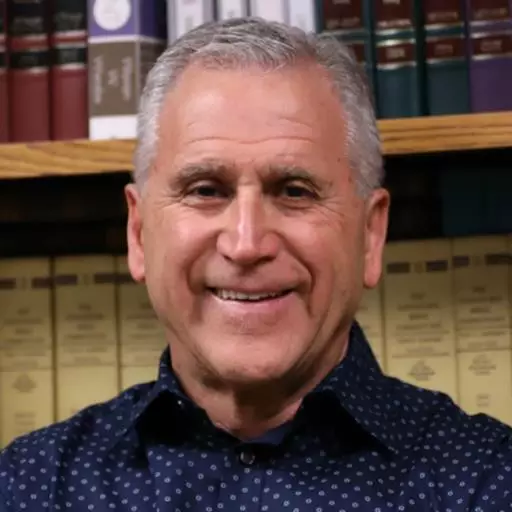
Raul Ries is the Senior Pastor of Calvary Chapel Golden Springs and President of Somebody Loves You Ministries. After his miraculous conversion in 1971, Raul began to read and study the Bible extensively even though he had a limited education. In 1974 he began a home Bible study with seven other committed individuals. Soon, he started to preach and counsel youth during the noon hour at his former high school, Baldwin Park High. Calvary Chapel West Covina grew out of Raul's home fellowship, as well as his Kung-Fu studio, and was soon meeting weekly at an old converted Safeway store. In 1993, the congregation moved to Diamond Bar and occupied a 101,000 square-foot corporate building on 28 acres. Calvary Chapel Golden Springs (as it is now called) draws between 10,000 - 12,000 in attendance weekly.
Author of several books, including Fury to Freedom (the story of his early life and dramatic conversion), Raul Ries has also produced three films: Fury to Freedom (feature film dramatization of the book); A Quiet Hope (a riveting and stirring documentary detailing seven soldier's accounts of the Vietnam War and its aftermath); and A Venture in Faith (a documentary of the history of the Calvary Chapel movement).
Contact Somebody Loves You with Raul Ries
Mailing Address
Somebody Loves You Radio
P.O. Box 4440
Diamond Bar, CA 91765
(909) 396-1884