

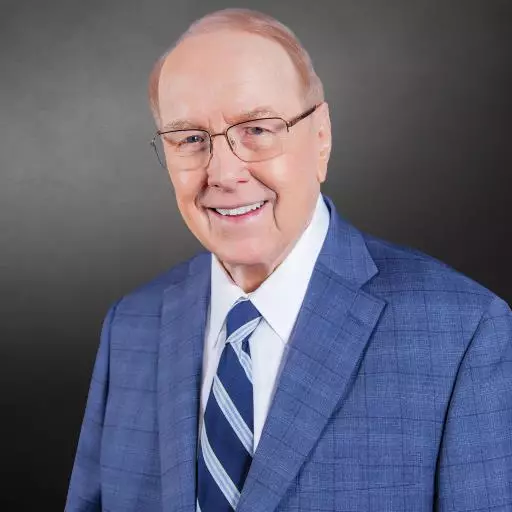
An Immigrant’s Story: From Rebellion to Redemption, Part 2


No one is ever beyond the reach of God’s love and transforming power. On today’s edition of Family Talk, Dr. James Dobson sits down with Emeal “EZ” Zwayne, whose path was headed toward destruction from being part of a notorious street gang, but was interrupted by a single night that changed everything. Zwayne shares how grace turned a rebellious teen into president of a worldwide ministry.
Dr. James Dobson: You're listening to Family Talk, the Radio Broadcasting Division of the James Dobson Family Institute. I am that James Dobson, and I'm so pleased that you've joined us today.
Roger Marsh: Well, welcome once again to Family Talk, the broadcast division of the Dr. James Dobson Family Institute. I'm Roger Marsh. On the last Family Talk broadcast, we heard the remarkable story of Emil Easy Swain, a rebellious teenager whose life was transformed after surrendering to Jesus Christ. On today Family Talk broadcast, Easy returns to share what happened next and to retell how God began using his life to reach others with the gospel. So now let's rejoin this conversation featuring our own Dr. James Dobson, former co-host Meg Meeker, and our guest Easy Swain, as they set up today's edition of Family Talk.
Emil "Easy" Swain: I was a rap artist back in that time, believe it or not. I had my artist producer contract signed, and my producers produced some of the top artists in the industry at the time. And so here I was on my way to the big time. I had kind of this pride and arrogance. And so my first day on that campus, I connected with one of the kids that liked rap music and said he said, Hey, come and hang out with us at lunch. So I did that. And one day turned into two, two into a week, a week into a month.
And one day we walked off campus to go to lunch, and they said, Hey, we want you to become a part of our gang. These kids were a part of a a gang called the Crips. Yeah, the the notorious Crips. And
Dr. James Dobson: Crips. Yeah. That's bad news.
Emil "Easy" Swain: Real bad news. There I was, 15 years old, standing there a mess, finding myself a member of one of the most notorious gangs in the United States. Basically, you know, the Crips is a gang like any other gang where you have people that want to belong and they're driven together in a brotherhood of sorts. And and it revolves around immorality and around crime and a rebellion and violence. Yeah. And so that's kind of what it was all about. And I became a part of that world. And boy, did my life
Dr. James Dobson: Violence.
Emil "Easy" Swain: just spiral out of control at that point. I found myself doing things I never thought I would do, saying things I never thought I would say. So it just all went out of control. And in the midst of all that, I I was so distraught one day as one of my sisters began to sort of tell me as the whole family was gathered together that I was worthless, useless, wasn't going to amount to anything. And something in me just snapped. I remember I jumped up lunch from the kitchen drawer, grabbed a knife, just began to stab violently in my wrist.
I just wanted to die. And here I was, you know, in light of my age and where I was, I had everything a kid my age could want. I had popularity. I had power through the gang. I had pleasure through different things. But I was lost. And I I didn't understand that I was desperate for the God who created me and gave me life.
Dr. James Dobson: How'd you find him?
Emil "Easy" Swain: Well, a good friend of mine who grew up with me in our neighborhood one day came to me and said, Hey, my parents invited me to this event called the Harvest Crusade.
Dr. James Dobson: Mm.
Emil "Easy" Swain: And they wanted me to ask you to come along. This was about a month before we were supposed to go. And so the day came about when we were supposed to go. And actually that morning, about 1:00 or 2:00 in the morning, he and I were parked off a street in our neighborhood, drunk out of our minds. And I remember I looked at him and I said, Man, this is the greatest feeling I've ever had. I want to feel this way for the rest of my life. Having no idea how the rest of my life was going to be transformed only hours later.
So I get home, go to sleep, get up the next morning. This was August 15th, 1991, Thursday. And I went about my same sinful routine. And evening rolled around. I said, Hey mom, I'm going to some Christian thing with my friend Bill tonight. She said, you liar. And I thought here I am for the first time in my life telling her the truth that she's not believing me. So we got in an argument. And I, you know, I I was a real angry young man. In fact, my bedroom wall was full of posters. And it wasn't because I loved the rap groups that were on there only, but it was because there were holes all over my walls.
I'd get so angry I'd often just punch holes in my bedroom wall. And so I started to punch the walls. And at that moment my friend pulls up and we get in this car and we start heading over to the Crusade. And I was angry the whole way there. He said, Man, what's going on? I said, nothing. He goes, what's happening? I said, nothing.
Dr. James Dobson: This is the Greg Laurie Crusade.
Emil "Easy" Swain: Absolutely with Pastor Greg Laurie, right? There were about 20,000 people there come to find that night. This was at the Pacific Amphitheatre in Costa Mesa. And I walk in there and I was just blown away. And I remember sitting there and as the music began to play, my heart started to soften. And I remember looking at these people in the crowd. They were singing to God and raising their hands and their faces were beaming with joy. And I remember looking and thinking, man, these people are acting as if though God is really here. You know?
And little did I know that he was. And and they knew it. And so when Greg Laurie got up and began to preach the gospel, it was as if though there was no one else in that entire amphitheater except the two of us. And everything that I had been thinking about in my own heart and mind he began to touch on. You know, even though I was as bad as I was oftentimes as people I think it's natural we compare ourselves to others. So when I looked at God's standard, I I realized my sinfulness and how much I deserved hell and how much I needed the salvation that Christ provided through his death and resurrection.
And then Greg Laurie said something that I never heard. Or if I heard it, I definitely never understood it. But he said, salvation is a free gift of God's grace. You can know today that you're saved because my whole life growing up, I tried to get my good to outweigh my bad. I tried to earn my own salvation. So when I heard salvation was a free gift, that God was truly willing to wipe away all the wicked sins that I'd ever committed and give me everlasting life. I remember the invitation was given and I just jumped up and ran forward and remember standing there with tears streaming down my face as as I envisioned Christ hanging there on that cross, that crucifix that I saw in church week after week that meant nothing to me suddenly made sense.
And I understood that he bore my sins, that he was my substitute, that he was there to give me his righteousness. And I cried out in repentance and faith. And I tell you Dr. Dobson and Dr. Meeker, I was instantly transformed into a new creation. Yeah.
Dr. James Dobson: Oh my goodness. And and guess what? You know, I mentioned in the last program about Louis Zamperini and how rebellious he was. He walked the same path you did. And and yet he went to a Billy Graham Crusade
Emil "Easy" Swain: Yes.
Dr. James Dobson: Right.
Emil "Easy" Swain: and walked out of it.
Dr. James Dobson: Wow.
Emil "Easy" Swain: And yet came back and gave his heart to the Lord. The parallels between your two lives is really quite remarkable. Yeah. Yeah. And you know, it all traces its root back to that cross. You know, that blood that was shed so long ago, so far away, still trickling through the ages, healing, touching, saving. And so that what God did that night. And I remember I was so transformed. I remember standing there. I felt as light as a feather. It was as if though I was carrying 1,000 lbs of weight on my shoulders all my life.
And God just lifted it up, threw it away. And I was so changed. I mean, we get in my friend's car and he turns on the same wicked radio station we used to listen to. And I turn to him and I said, what are you doing? We're Christians. We don't listen to that anymore. And he's like, whoa, slow down, you know? And so I remember we get home. And remember my mom and I got in a fight before we left. So I am heading in towards the house and come to find later my mom had found out things I'd been involved in.
And she had had it. She told my dad and my brother, I'm done with them. He's out of here. And they convinced her to kind of wait and sort of monitor me before saying anything.
Dr. James Dobson: Were you ever on drugs?
Emil "Easy" Swain: I had tampered with marijuana, but that maybe five, six times if that was the extent of it. But I used to drink a lot. So I got an alcohol and immorality and so I remember I'm walking in through the door and my mom wasn't supposed to say anything. But you know moms, they can't hold anything in. So I I see her through the window there by the front door. And the second she saw me her arms went up like that and the I'm going to get you mom posture, you know? And I walk in through the door and here I was.
And I had this Holy Spirit grin from ear to ear. And I'm like, hi mom, you know? She goes, hi huh, you've been doing this, haven't you? I said, yes mom. And she nearly fell over cuz I never confessed anything to her. So I this was like, what? Did am I hearing right, you know? So I said, you know mom, not just that, but a whole lot more. Let's talk. And we sat down that night and I shared with her everything I had been involved in from A to Z. I said, mom, I want you to mark these words.
I said, from this night forward nothing will ever be the same. And you know, my mom passed away May 22nd of '94. This was August 15th of '91. But until the day that she passed away, she never forgot those words because God allowed her to see the transformation of my life. She told me she used to lock her bedroom door at night because she was afraid I would kill her one day. That's how that that's how intense I was becoming. You know,
Dr. James Dobson: So Easy, what happened to your anger after that? Where did it go?
Emil "Easy" Swain: Honestly, it disappeared.
Dr. James Dobson: Or were you still angry?
Emil "Easy" Swain: No.
Dr. James Dobson: And just dealt with it So it really just went away. It was stripped away.
Emil "Easy" Swain: Well, like like like it says in 2 Corinthians 5, you know, if any man is in Christ, he's a new creation. The old things have passed away. All things have become new. I know some people do continue to struggle with issues even after they're saved, that there are things that that that hang on there. And there were certain things in my life that I continue to struggle with. But as far as the anger went, the bitterness, the resentment, the hostility, it was gone. And And I love what Scripture says too, that that when a man's ways are pleasing to the Lord, he makes even his enemies to be at peace with him.
And even those that hated me, even those that I hated, suddenly I was making peace with. I was apologizing to. I was making amends with. And I I was just a new creation. You know, God God revolutionized me.
Dr. James Dobson: Easy, I have a request for you today. I want you to talk to the kid that's out there, the young person that's out there happened to be listening. And he's where you were.
Emil "Easy" Swain: Right.
Dr. James Dobson: He's as bitter and as angry as you. And you encountered Jesus Christ and he did something remarkable in your life. Talk to that young person and talk to his parents.
Emil "Easy" Swain: Absolutely. Well, I would say first of all to never ever ever give up hope.
Dr. James Dobson: Mm.
Emil "Easy" Swain: I was like that demoniac that it says in the word could not be tamed.
Dr. James Dobson: Wow.
Emil "Easy" Swain: But there was a day that he met Jesus. And there was a day when the son of God stood still to acknowledge this man who was hopeless and who was helpless. And my message to you would be to recognize the futility of life. James tells us that life is as a vapor. It's here one moment, it's gone the next. I said earlier my father's 105 years old. I remember one day walking down the hallway at home and hearing crying coming from his room. And I walked in. I said, Dad, what's the matter? And I saw him standing there staring at pictures of his mom and dad that my sister had just printed up for him.
And he was crying like a baby. And he said, my mom, my dad. Dad passed away maybe 50 years before that. But to him it's as if though it were yesterday. And I know that anyone who gets further along in life always looks back and says, man, life is quick. Life is quick. And my encouragement to you would be to recognize that there is hope at the foot of that blood-stained cross. But you have to recognize that you have a problem. You have a sin problem. And your sin has created a divide between you and God.
Dr. James Dobson: Let let me role play with you. Okay?
Emil "Easy" Swain: Sure.
Dr. James Dobson: Easy, you don't understand me. You don't know where I've been. I've done horrible things. Maybe I've even killed people. I don't even know. I've shot at them.
Emil "Easy" Swain: Right.
Dr. James Dobson: I I am one wicked man and God couldn't do for me what he did for you.
Emil "Easy" Swain: Well, it's great to know that God transformed others who are far worse than both you and me. In fact, in the Bible we see the example of the life of the apostle Paul. He called himself the chief of sinners. That means the worst of the worst. Paul the apostle was one who gave his consent when Christians were being put to death. He would hunt them down like animals. And not only did God take a hold of them and change them and transform him, but he became an apostle. He wrote the majority of the books and the pages of the New Testament.
And so there is hope for you. That's why Christ came. He came to seek and save the lost. He came to give his life for sinners because he was that substitute. To get into heaven we have to have perfect righteousness. And we don't. We're wearing robes that say sin all over them. Christ when he came was wearing a robe that said perfect. He took that robe off, laid it aside, took on himself the robes of sinners like you and me that say sin all over them, went to the cross and bore the just wrath of God that we deserved.
So that if we repent and believe in his death and resurrection on our behalf, he 'll take that robe that Jesus was wearing that said perfect and he 'll put it on us. And we can now go to heaven because of the righteousness of Christ.
Dr. James Dobson: Mm.
Emil "Easy" Swain: But first you have to recognize your sinfulness. You can't pretend you're a good person. You can't pretend that you're okay with God. As I shared earlier, one lie makes you a liar. One thing stolen makes you a thief. You know, if you've used God's name in vain, the name above all names, the Bible calls that blasphemy. And God will not hold you guiltless if you've done that. So you deserve his wrath. You deserve his judgment. That's the truth. But we see his abundant love when we recognize that even though that's what we deserved, he gave us what was undeserved, his son as a sacrifice on our behalf.
Dr. James Dobson: You know, that sounds so good to me, but I feel like I've got to go out there and atone for those things that I did. I have to make restitution. I I have to pay back the people I have stolen from. I have to do all these things. And that 's going to take me a year or two to even deal with them.
Emil "Easy" Swain: Well, imagine if you had committed some serious crimes and then you stood in front of a judge and you said to the judge, judge, I know I committed these heinous crimes, but you know, I'm going to atone for those crimes by beginning to wash your car and mow your lawn and do your house work. That's what I'm going to do to atone for my sins. You can't do that. It's impossible. And you commit a crime, justice has to be served. That judge can't look at you and say, okay, that'll do it. But if someone steps in and pays the fine that you deserved, then you can go free.
And the Bible says by grace you've been saved through faith not of yourselves. It's a gift of God, not of works lest anyone should boast. No amount of good that we could do will ever erase the bad we've done. But God in his grace sent his son to be the propitiation, the sacrifice, the substitute for our sins so that through that and that alone we can have forgiveness.
Dr. James Dobson: So there's no way you can earn it.
Emil "Easy" Swain: No.
Dr. James Dobson: And when you say it's a gift, it's free, you mean that?
Emil "Easy" Swain: Absolutely. Completely, absolutely 100% free.
Dr. James Dobson: So a person could have an encounter with Jesus Christ right now?
Emil "Easy" Swain: Right now. Uh you know, when you cry out to God in repentance and faith, you believe that Jesus Christ is Lord, that God raised him from the dead. You look unto Christ on that cross as the only hope for your salvation.
Roger Marsh: You're listening to Dr. James Dobson's Family Talk. I'm Roger Marsh. And what a story we've been hearing from Easy Swain, a life pulled out of gang violence and rebellion and made completely new in Jesus Christ. Well, that same grace that Easy found is a thread that runs through so many lives including former co-host Dr. Meg Meeker. As we continue now, Dr. Meeker is going to share her own testimony of how she came to know Jesus Christ. So let's rejoin that conversation right now on today's edition of Family Talk.
Dr. James Dobson: Dr. Meeker, tell me your story. I heard it before, but how did you come to know Christ?
Dr. Meg Meeker: Oh, it's really fun. When Walt and I were finishing medical school and we had one child, we decided that we didn't want to both be residents together. So he decided to to stay home and take care of our daughter while I did my training because he said, if you stop now, you won't go back. But if I stop, I know I 'll go back. So we ended up um I filled that we call the match when you want to know what hospital you're going to work in. And I had my first top choices were Boston.
I was from Boston. And then the the other five were from Ohio because I knew Walt wanted to be in Ohio. And this is true. This is true story. I went to the mailbox with the letter in my hand ready to put it in the mailbox. And I opened it up and I scratched out Boston Children's that was ever the top. And I put Children's Hospital of Wisconsin. And I thought this is crazy. Why am I doing it? Well, long story short, we ended up there and shortly after we ended there at in Milwaukee, our realtor who sold us our home invited us to Stewart and Jill Briscoe's church.
And we sat down in that church and I had never heard anybody talk that way. I had never heard Walt
Dr. James Dobson: You'd never heard the gospel.
Dr. Meg Meeker: It like I said, I maybe had heard it, but but it never registered at all. So really that was it. We just both of us fell hook, line, and sinker. And we just started reading Scripture. And Walt started going to Bible studies. And I couldn't cuz I was a resident. But that's really how it happened. And then we just started studying and studying and studying. So we had sort of a long transition. But I'll never forget you know, I I feel like God sort of picked us up by the scruff in the neck and said, I'm kind of done with you too.
You're you're stubborn, you're hard-headed. We fought. I wanted to go to Boston. He wanted Ohio. And God said, you're not going to either of those places. Boom, here you go. And it was one of the biggest, you know, blessings that we ended up there. And we just never looked back. And it just
Dr. James Dobson: Doesn't it amaze you even today that before you were a sinner God wanted you?
Dr. Meg Meeker: Yeah. Oh.
Dr. James Dobson: He cared for you. He knew you.
Dr. Meg Meeker: He knew that.
Dr. James Dobson: Before the foundations of the earth he knew Meg Meeker. Your name wasn't Meeker then, but he knew. He knew your maiden name.
Dr. Meg Meeker: He knew that. I know. He did. And I remember I remember, you know, the Holy Spirit wooing me. I remember as a teenager seeing a Billy Graham on on the television and going, wow, what's going on there? That is so neat. What is that all about? But I I was in New England. New England's a hard place to evangelize. There weren't many evangelists in our neighborhood. You know, it was Boston. And so I think, you know, moving to the Midwest and hearing that, but you're absolutely right. But as I looked back over those years, I can see the Holy Spirit sort of moving in my heart, wooing me and wooing me.
And boy, when I fell in love I just I just fell in love. That was it.
Dr. James Dobson: Well, let me ask you the same question that I asked Easy. Um what would you say to the young person out there who's never heard this message? And there's something about what the two of you said today that is appealing, attractive. And yet they don't know what to do next.
Dr. Meg Meeker: Right. Well, I I would say to that person, you know, you know in the deepest part of who you are that what we're saying is right and it's true. And there's another pull and you're saying, ah, but I don't understand. I don't understand. That's okay. You don't need you need to understand, but respond to what you deeply know is right and true. And that is God calling you to himself. So what I would encourage you to do is find your way to the nearest church that you can or a Bible study or you know, to go talk to a pastor.
And don't be afraid. Go ask somebody who's in a Bible study. Maybe one of your friends goes, ask if you could go with them. But don't be afraid and open your heart and God will lead you where you need to go to come into close relationship with him. And I guarantee your life will never be the same.
Dr. James Dobson: Easy, is that what drives you today? What she just said and spreading that word to others.
Emil "Easy" Swain: Absolutely. And that that's why it's such a delight, you know, to look at what God has done, you know, how he brings things full circle. You know, I was slated for abortion and I'm now the executive producer of probably one of the most successful pro-life films made our 180 film. You've spoken with Ray Comfort about that. I was radically transformed by the gospel. And now the president of Living Waters, a ministry whose whole focus is the gospel. You know, I'm a living miracle. And to me there's no greater joy than to be a part of watching God continue that miracle in the lives of other people.
To watch young people come to Christ especially is a delight beyond description.
Dr. James Dobson: Are you a father?
Emil "Easy" Swain: I am. I'm a father of five.
Dr. James Dobson: Five.
Emil "Easy" Swain: Believe it or not. I have three daughters and two sons, three beautiful delicate rose petals and two prickly thorns. And some
Dr. James Dobson: Is it Is it your great passion to help them come to know Christ? They probably already have, but to grow in that understanding.
Emil "Easy" Swain: Absolutely. You know, as as the apostle John said in 3 John, I have no greater joy than this than to see my children walk in truth. He was speaking of his spiritual children, but but to now have both physical and spiritual children walking with Christ. It's such a delight to see my daughters are now older. They go out evangelizing with us. They share the gospel. My daughter's in college, my oldest Julia, she's sharing Christ with her schoolmates. And in her public speech class she's sharing the gospel in her speeches. And it's such a joy, such a delight.
And oftentimes I look and I say, Lord, I I should be dead or in prison. And look at what you've done. And years ago I summed up my my life in this little verse. I once was but a lump of coal upon a heap of mire. Yet Jesus Christ redeemed my soul and saved me from the fire. And that's my life in a nutshell, doctor.
Dr. James Dobson: So beautiful. Well, it's been a real pleasure for Dr. Meeker and me to have you as our guest. I've been inspired by what you had to say. I thank God for that dinner that we had together a year ago. I had already met you but didn't really know your background until today. And it's just really an honor to be able to share your story with all those people out there that are listening. They're those that aren't so young who still have not ever had an encounter with Christ. And if we can reach one of them,
Emil "Easy" Swain: Right.
Dr. James Dobson: then it's worth the entire history of this broadcast. So thank you. Now before you go, we've got just time for you to talk about Living Waters and what you're doing and why.
Emil "Easy" Swain: Absolutely. Yeah, Living Waters is a ministry that exists to inspire and equip Christians and fulfilling the Great Commission. That's our vision. We want to come alongside the church, come alongside believers and help them in being the ambassadors for Christ that they were called to be. And so we have training courses in evangelism. We have gospel tracts that people are able to give out. We have different movies, our 180 movie on abortion, our Evolution vs. God movie. Uh we have one called Audacity that deals with the sensitive issue of homosexuality. Uh and we're we're working on new things all the time.
So I want to encourage people to go to livingwaters.com and connect with me. I I love to come out and speak at churches and at different events which I get to do all around the world and different parts of the country. And don't forget biblebee.org as well where you can get your young folks involved in the Bible Bee as well.
Dr. James Dobson: Dr. Meeker, being a physician in private practice, you see a lot of lost young people, don't you?
Dr. Meg Meeker: I do. And I get discouraged honestly and truly. I you know, you get sort of downcast because you think well, you know, there's certain things that you can't talk about or very very sensitive. You know, we have a Christian practice too. And I pray with our patients and so does my husband. But you do you sort of feel like the world is gobbling our kids up. Our our whole culture is just so hypersexualized. Everything about our children. But um so this gives me a lot of encouragement.
Dr. James Dobson: Well, you two are my sister and my brother. And it's a pleasure to work with you.
Dr. Meg Meeker: Thank you both for having me. It was truly an honor.
Roger Marsh: Well, what a powerful reminder that God can use one person to change the direction of another person's life. You've been listening to Dr. James Dobson's Family Talk. And we featured Dr. Dobson's conversation with Emil Easy Swain along with former Family Talk co-host Meg Meeker. Now if you'd like to hear today's program again or if you'd like to share it with a friend, you can do so when you visit us online at drjamesdobson.org. If it's easier just type in jdfi.org. They are one and the same. Here at the Dr. James Dobson Family Institute we are committed to preserving and promoting the institution of the family and the biblical principles upon which it is based.
Whether it's strengthening marriages or encouraging parents or pointing the next generation to Jesus Christ, that mission is only possible because of friends like you. So today we invite you to partner with us. Your gift of any amount helps us keep broadcasting biblical truth and reaching families all across America. You can reach us through the U.S. Postal Service. Our ministry mailing address is the Dr. James Dobson Family Institute, P.O. Box 39000, Colorado Springs, Colorado. The zip code 80949. You can also reach us through our secure website at jdfi.org. Or if you prefer, speak with a member of our Constituent Care Team.
That number to call is 877-732-6825. That's 877-732-6825. Well, I'm Roger Marsh. And on behalf of all of us here at Family Talk and the Dr. James Dobson Family Institute, thanks so much for joining us today. Be sure to tune in again next time right here for another edition of Dr. James Dobson's Family Talk, the voice you trust for the family you love. This has been a presentation of the Dr. James Dobson Family Institute.
Featured Offer

A new school year brings fresh opportunities—and new challenges. Between homework, activities, sports, and busy schedules, it's easy to lose sight of what matters most.
Our free 3-day email series, Back-to-School Wisdom for Parents, will equip you to navigate the coming months with greater confidence and intentionality.
Past Episodes
- A Biblical Look at the Family
- A Challenge to Pastors
- A Family in Crisis
- A Father to the Fatherless: The Story of Two Friends
- A Father's Commitment to His Daughter
- A Heart for Romanian Orphans
- A Journey of Widowhood and Grief
- A Marriage Made in Heaven
- A Mom's Heart of Prayer
- A Nation Abandoned by God
- A Picture of Life
- A Sober Update on Military Culture
- A Traditional Family
- A Tragic Account of Mistaken Identity
- A Visit to the Shores of Normandy
- A Visit With the Legendary Pat Boone
- Abraham Lincoln: The Faith of a President
- Adrenaline & Stress
- Adult Children of Alcoholics
- Albert & DeeDee Pujols: Giving Honor to God
- Alone Yet Not Alone
- America: A Call to Humility
- American Heritage Girls
- American Marxism
- An Abusive Childhood: Climbing Out of the Pit
- An Attitude of Gratitude
- Autism
- Avoiding Infidelity
- Back From the Brink of Divorce
- Beauty In Brokenness
- Becoming a Culture Warrior
- Being a Conservative Crusader
- Being a Father at Work and Home
- Being a Smart Stepmom
- Being Jesus to Your Neighbors
- Being There for Your Son
- Between a Rock and a Grace Place
- Bonhoeffer: A Hero Then and Now
- Boys and Puberty
- Breaking the Bonds of Welfare
- BUG-Puberty
- Building a Christian Home
- Building a Safe Haven In Marriage
- Building hedges Around Your Marriage
- Bullying
- Buyer Beware
- Charlie & Lucy Wedemeyer: A Message of Hope
- Children and Stress
- Choosing to See
- Christian Men & Sexuality
- Christianity and Wokeness
- Christ's Influence on History
- Cleaning House: Raising Responsible Kids
- Coach John Wooden
- College
- Confronting Guilt in Motherhood
- Congressman Frank Wolf: A Modern-Day Wilberforce
- Courageous Choices
- Courageous Manhood
- Creative Ideas for Child Discipline
- Crystal Peaks Youth Ranch
- Culture Watch
- Current Economic Tsunami
- Defend Life
- Defending Religious Liberty in the Courts
- Defunding Planned Parenthood
- Delicate Mother-In-Law Relationships
- Depression: Encouragement for the Journey
- Developing a Firsthand Faith
- Digital Invasion
- Divorce
- Dr. Ken Hutcherson: A Defender of Truth
- Dr. Ravi Zacharias: Finding My Destiny in Delhi
- Faith and Family: Raising Kids Right
- Family Finances
- Fierce Beauty
- Fighting to Preserve DOMA
- Finance
- Finding Healing After Sexual Abuse
- Finding Hope for Your Heart
- Finding Joy Amidst Cancer and Loss
- Finding New Intimaacy in Prayer
- Finding Success in a Failing Economy
- Finding True Forgiveness
- Forgiving God
- Forgiving My Father
- Foundation For Successful Families
- Free At Last
- Freeing the Family From Pornography
- From Santa to Sexting: Protecting Your Middle-Schooler
- Fueling the Passion
- Girl's Uncovered
- God Bless America
- God Is At At Work
- God Made Us a Family
- God Makes Lemonade
- God Restored Me
- God Restored Me For a Purpose
- God’s Grace Is Sufficient
- God's Tender Heart for Single Moms
- God's Way or My Way
- God's Wisdom for Raising Children
- Going All Out For Your Wife
- Greg Laurie
- Greg Laurie: A Changed Life
- Guarding Your Grandchild’s Heart
- Healing the Past and Moving On
- Healing the Wounded Spirit
- Healthy Habits
- Help for Angry Moms
- Help for Employed Moms
- Help for Hurting Teens
- Help for Parents of Prodigal Children
- Help, I'm a Spouse AND a Parent Now!
- Helping Teens Find Their Purpose
- Her Role in the Home
- Homeschooling & Beyond
- Homeschooling Today
- Honoring Our Average Joes
- Hooking Up
- Hope for Hurting Hearts
- Hope in the Midst of Unexpected Pregnancies
- Horses and Healing: New Hope for Kids
- Hutch: A Man Filled With Hope
- I Will Never Leave Thee
- I, Isaac, Take You, Rebekah
- In God We Still Trust
- Infertility and Miscarriage
- Insights on Radical Islam
- Integrity in Business
- Is America Imploding?
- James Dobson v Kathleen Sebelius: How will you get involved?
- Jealousy
- Jesus Vs. Muhammad
- Jim & Jill Kelly
- Landscape of America
- Laying Up Treasure in Heaven
- Lean Body, Fat Wallet
- Learning Disorders
- Life & Laughter with Ken Davis
- Life Without Limbs
- Live to Forgive: A Family Story of Pain and Redemption
- Living Through Loss of Spouse
- Living With Less So Your Family Has More
- Living with Less: Heading into the Holidays
- Living With the Strong Willed Child
- Loneliness in Marriage
- Longing for Marriage
- Love For a Lifetime
- Loving Those Left at Home
- Macaroni At Midnight
- Managing Your Home and Time
- Marriage in a Facebook World
- Marriage Survival Skills
- Marriage That Can Go the Distance
- Marriage: The State of Our Union
- Mary Crowley
- Memories of the Holocaust
- Mentoring Boys and Men
- Merging Premarital Expectations
- Ministering to the Elderly
- Ministry of Hymns
- Miscarriage: Grieving the Loss
- Mojave Desert Cross
- My Adoption Story
- My Autistic Son
- My Mission: Capturing a Dictator
- One Woman’s Journey of Grief & Hope
- One-on-One with Bill Gaither
- Online Dangers: Protecting Kids from Pornography
- Online Dangers: Protecting Marriages from Pornography
- Overcoming Childhood Traumas
- Overcoming the Heartaches of Life
- Overcoming the Shame of the Past
- Parenting 101: From Discipline to Sexuality
- Parenting Basics: The First Years
- Parenting Newborns and Those Early Years
- Phill Kline: Challenging an Abortion Giant
- Plugged In: Teaching Your Children to Be Media Savvy
- Politics and the Bible
- Prodigal Child
- Protecting Life and Liberty
- Protecting Your Child in a Dark Culture
- Putting an Arm Around the Post-Abortive Woman
- Raising a Handicapped Child
- Raising Boys: Routine Panic
- Raising Boys: Wounded Spirits
- Raising Kids Who Love the Lord
- Raising Men of Honor
- Raising the Standard of Excellence
- Reaching Out to Youth in Need
- Reaching the Taliban For Christ
- Real Moms, Real Jesus
- Reignite: How to Bring Joy Back into Your Life for Enduring Faith
- Religious Persecution in America
- Republican Majority
- Rescued From a Life of Ruin
- Resolving Money Conflicts in Marriage
- Revival Rising
- Scripture and the Family
- Sexuality & Singles
- She Calls Me Daddy
- Single Adults
- Singleness: Waiting for God's Best
- Singles and Sexuality
- Spiritual Mismatch
- Spiritual Training of Children
- Stand For Life In Your Community
- Staying Christian in a Pagan Culture
- Staying Strong in College
- Stepping Away from the Common Life
- Straight Talk to Young Couples
- Strengthening Military Families
- Strong Fathers, Strong Daughters
- Suicide
- Teaching Your Kids About Sex
- Ten Habits of Happy Mothers
- The Bachmanns: Their Story of Faith and Family
- The Barretts: An Amazing Adoption Story
- The Battle for Civilization
- The Battle for Marriage Continues
- The Cross: The Center of the Family
- The First Year of Marriage
- The Flipside of Feminism
- The Future of the Family: Fact and Fiction
- The God-Wild Marriage
- The Healing Power of Forgiveness
- The Heart of a Cowboy
- The Heart of the Santorum Family
- The High Cost of Low Living
- The Hope of Heaven
- The Hormone Swing
- The Immunization Debate
- The Impact of Truth on My Life
- The Insidious Nature of Infidelity
- The Joy of Good News
- The Joys and Challenges of Adoption
- The Joys and Challenges of Pregnancy
- The Key to Your Child's Heart
- The Kids Are Gone...Now What?
- The Miracle That Saved a Marriage
- The Powerful Influence of a Wife
- The Pro-Life Movement Reaches a New Generation
- The Threat of Islamic Terrorism
- The Unbelieving Spouse
- The Use and Abuse of Power
- The Value of Manhood
- The Value of One Life
- The Vital Role of Fathering
- The Way of the Wise
- To Dads & Daughters … with Love
- Tolerating the Intolerable
- Tony Dungy: A Man of Quiet Strength
- Tough Love For Kids
- Truth: Can We Both Be Right?
- Turning Hearts 180-Degrees Toward Life
- We Help; Jesus Heals
- Welcome To Our Table
- What Does Freedom of Religion Mean?
- What Has Feminism Done for You Lately?
- What Parents Should Know About Teens
- What's It Like Being Married to Me?
- What's Wrong with Being a Nice Guy?
- When Life Brings You Thorns
- When Unemployment Hits Your Home
- When You're in Love
- Why Men Leave the Church and How to Get Them Back
- Why Purity Matters
- Why We Fight For Life
- Women and Emotional Infidelity
- Women and Friendships
- Women and Intimacy
- Women in Combat: Understanding the Consequences
- Wounded Spirit

Video from Dr. James Dobson
Featured Offer
A new school year brings fresh opportunities—and new challenges. Between homework, activities, sports, and busy schedules, it's easy to lose sight of what matters most.
Our free 3-day email series, Back-to-School Wisdom for Parents, will equip you to navigate the coming months with greater confidence and intentionality.
About Family Talk
Family Talk is a Christian non-profit organization located in Colorado Springs, Colorado. Founded in 2010 by Dr. James Dobson, the ministry promotes and teaches biblical principles that support marriage, family, and child-development. Since its inception, Family Talk has served millions of families with broadcasts, monthly newsletters, feature articles, videos, blogs, books and other resources available on demand via its website, mobile apps, and social media platforms.
The Dr. James Dobson Family Institute (JDFI) is a Christian non-profit ministry located in Colorado Springs, Colorado. Founded initially as Family Talk in 2010 by Dr. James Dobson, the organization promotes and teaches biblical principles that support marriage, family, and child development. Since its inception, Family Talk has served families with broadcasts, monthly newsletters, feature articles, videos, blogs, books, and other resources available on demand via their website, mobile apps, and social media platforms. In 2017, the ministry rebranded under JDFI to expand its four core ministry divisions consisting of the Family Talk radio broadcast, the Dobson Policy and Education Centers, and the Dobson Digital Library.
Dr. Dobson's flagship broadcast called, “Dr. James Dobson’s Family Talk," is aired on more than 1,500 terrestrial radio outlets and numerous digital channels that reach millions each month.
About Dr. James Dobson
Dr. James Dobson is the Founder Chairman of the James Dobson Family Institute, a nonprofit organization that produces his radio program, “Dr. James Dobson's Family Talk.” He has an earned Ph.D. from the University of Southern California and holds 18 honorary doctoral degrees. He is the author of more than 70 books dedicated to the preservation of the family including, The New Dare to Discipline, Love for a Lifetime, Life on the Edge, Love Must Be Tough, The New Strong-Willed Child, When God Doesn't Make Sense, Bringing Up Boys, Bringing Up Girls, and, most recently, Your Legacy: The Greatest Gift. Dr. Dobson served as an associate clinical professor of pediatrics at the University of Southern California School of Medicine for 14 years and on the attending staff of Children’s Hospital of Los Angeles for 17 years in the divisions of Child Development and Medical Genetics. He has advised five U.S. presidents and served on eight national commissions. Dr. Dobson has been married to Shirley for 64 years, and they have two grown children, Danae and Ryan, and two grandchildren.
Contact Family Talk with Dr. James Dobson
540 Elkton Drive
Suite 201
Colorado Springs, CO 80907
877.732.6825