

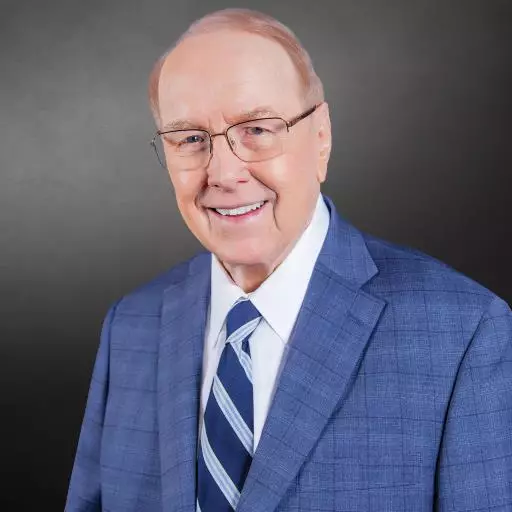
Redeeming Justice, Part 1


One well in Africa can bring clean water to a thirsty village, but Christians are called to offer living water that will last forever. On today’s edition of Family Talk, Roger Marsh welcomes Dr. Christina Crenshaw to discuss her book, Redeeming Justice. She explains the difference between social and biblical justice, and shares why true justice always points people to Jesus Christ.
Roger Marsh: Welcome everyone to Family Talk. It's a ministry of the James Dobson Family Institute, supported by listeners just like you. I'm Dr. James Dobson, and I'm thrilled that you've joined us. When you mention the term social justice, a lot of different issues might come to mind, but what do we as Christians have any kind of responsibility towards social justice, and maybe is it a game that we need to be a little more involved in? Today here on Dr. James Dobson's Family Talk, we're going to get into a great new resource that's going to help believers from all different backgrounds talk about how we as Christians can redeem justice in our culture.
Our guest is Dr. Christina Crenshaw. She's an assistant professor at Arizona Christian University, also serves the university's Cultural Research Center as a fellow. She has over 20 years experience in Christian education, holds a PhD in education with an emphasis on American literature from Baylor University, also has a master's in biblical and theological studies with an emphasis on Christian leadership from Dallas Theological Seminary. Her undergraduate degree is in English from Texas A&M, and we're going to get into how an English teacher with the background that she does and the credentials that she does and the high school teaching experience she does got into something like writing a brand new book that just came out.
It's called Redeeming Justice, Doing Good for God's Glory. In addition to her academic pursuits, Dr. Crenshaw is actively involved in ministry, church conferences, passionate about speaking to millennials and Generation Z, and she loves balancing her professional life with her roles as wife and the mother of a couple of boys, and then they make their home in Waco, Texas. Dr. Christina Crenshaw, welcome to Dr. James Dobson's Family Talk. It's good to have you on the program today. Oh, thank you, Roger. It's good to be here, and thank you for that hardy introduction. I appreciate that. Well, I want to make sure that people know exactly who is behind the what here, and the what we're talking about, of course, is the book Redeeming Justice.
And a lot of people, when you say social justice, you get one of two responses, right, from Christians. It's either, ugh, you know, that that's what all those leftists are doing, and they they're ruining our society, and they're moving away from the Bible, or you hear Christians saying, wait a minute, I mean, don't we have a seat at the table here? Shouldn't we, as believers, be more involved in these issues, even if we don't go at it the same way the left would do? You started out your career as an English teacher, so I'm curious as to how you wound up kind of becoming, is it fair to call you a social justice warrior, or is that maybe a little bit too far in the extreme to say?
Christina Crenshaw: Well, I don't think true social justice warriors would welcome me into that circle or allow me to bear that title.
Roger Marsh: Sure.
Christina Crenshaw: So we could say a biblical justice warrior,
Roger Marsh: There
Christina Crenshaw: certainly.
Roger Marsh: you go. Okay. Well, what's the- what's the difference? How do you delineate between, like you just said, biblical justice and what we would call social justice in the culture?
Christina Crenshaw: Yeah, so to- I guess, in answer to the first question, and I think that would then answer the second question too. I've always been very driven by truth, and I think studying literature, studying philosophy, the humanities lent itself to questions like what has withstood the test of time, or when we start to pull the thread on little t truth, we realize that it's connected to larger t biblical truths, truths that come from God's word. And so when I was an undergrad, I actually was not really raised in a Christian home, sort of culturally raised around Christianity, but came from a pretty dysfunctional, broken, divorced home.
And so I went off to college really hungry for what does God say to be true? I would look around at my friends, and my friends who were raised in a Christian home, just holistically speaking, were much healthier than my friends who were raised in a secular home or a broken home like mine. And I kind of stumbled my way through college. I wasn't discipled real well, but I would go to church, I would seek out discipleship as I could find it. But, you know, I was, as I was an English major, I'm always, you know, searching literature for truth, so not always finding it in the right places, but very hungry for, what is true, what is right, what is good,
what is beautiful, sort of that Roman Greco definition until I really started walking with Jesus and realized, oh, these were his, these were God's good ideas first. And so then as I, grew older and I started teaching and I was a university professor, I went to seminary, I realized you can't disconnect the two, that there really is no such thing as little t truth, that it's derived from God's truth, that where we get our human rights from, where we get the idea of elevating women, where we get the idea, the notion of abolishing slavery, these were all deeply Christian, Judeo-Christian ideas long before they belonged to Western culture and long before they belonged to what we're living in right now, which is a postmodern culture.
So that, that's sort of how I kind of like stumbled into this was really just seeking like, okay, but I have other questions. I've never been the person to just sort of accept face value. I want to know the ontological argument for something, the epistemology, which are kind of fancy words that I don't know that most people need to know, but what it comes down to is I just really want to know that I know, and that led me to Scripture.
Roger Marsh: You know, it's wonderful to hear your confession of faith, Dr. Crenshaw, because of the fact that there are a lot of people who kind of wander in one of two worlds. Number one is either we need to study, study, study, study, study to show ourselves approved, or hey, faith is an experience, and so if you aren't living it out necessarily, why do you spend so much time in Bible study? And the fact that you have purposed to meld the two, to make that a part of your holistic faith, if you will, I think it makes it a lot easier than to read your book, Redeeming Justice, and say, okay, well, I get it, because you're looking at this from a biblical standpoint first and foremost, and we don't realize how social media and other aspects that influence our thought processes really do give Christians the false impression that when it comes to justice, you're either a social justice warrior or you just kind of sit this one out because I'm a Christian and I don't do that type of stuff.
And I think just in the first five minutes of our conversation here on Dr. James Dobson's Family Talk. It's been very encouraging to realize, hey, we all have a seat at the table in this conversation, but we also have a responsibility to follow that biblical framework for justice, because it is, it's God's character, it's not culture's definitions that really are what we're living out.
Christina Crenshaw: Yeah, absolutely. In fact, you know, Roger, the first thing that a publisher will tell you to do, an editor will tell you to do, is to define your audience, and I completely get that. I, I've taught writing for 20 years, taught English for 20 years, and I tell my students the same thing because you cannot speak to everyone at once. And so with this book, my heart was to reach the Big C Church. I recognize that people who are outside an Orthodox Christian perspective may not find solidarity, they may not, they may take issues, but my heart was to remind the body of Christ, you, I know that you have a heart to do good work.
You know, we heard those phrases in 2020, do better, or, you know, we, you know, Amos was quoted a lot, you know, what does God desire of you to do righteous, you know, work? And even, you know, in Malachi, like we are told to like uphold righteousness and to love justice. So I understand why people see an imbalance in the world, and they want to fight against that injustice. My heart in writing this book was to remind the church, the body of Christ, that we don't have to look to culture for a blueprint, that God has already given us a framework. And God's plan is better, and not only is it better, not only does it produce better results, it's also redemptive.
Culture cannot be redemptive. It does not have Jesus. And so the real premise of the book is you cannot do justice without Jesus.
Roger Marsh: I love that thought. Dr. Christina Crenshaw is my guest today here on Dr. James Dobson's Family Talk. Her brand new book is called Redeeming Justice: Doing Good for God's Glory. And I love the way you break this out in your book, Dr. Crenshaw. the cultural moment that we're in right now, we're getting into things like worldview and what matters, because I know there are a lot of Christians who see, the headlines or they watch the videos on TikTok or wherever they're looking at them, wherever they're consuming that, and even just in the past decade, and maybe in the past decade even more so than any other time in our history, there are Christians saying, do I kneel at the national anthem, do I not?
Do I protest for BLM, for George Floyd, or do I not? What am I doing right or wrong? And nobody wants to be on the wrong side of this. You have a chapter in your book called Equipping the Next Generation for Biblical Justice, and I love this, Jesus, Justice, and Why We Should All Care. let's talk about how we can start taking some steps back to starting where we are right now, knowing that there are horrible things that have happened in the past, that wrongs that could have been righted and parts that the church was complicit in. How do we, on this very moment right now, moving forward, embrace this notion of Jesus and justice working together as opposed to trying to compartmentalize them as so many of us do?
Christina Crenshaw: Yeah, so Roger, that's the third part of the book. I broke the book down, because I wanted to end on what I thought was, the, okay guys, how do we move forward in this? academics can be guilty of not doing application, like they're real big on criticism, right, but they don't necessarily give you the application. So I wanted to make sure that I ended my book with some sort of pragmatic application that people could then go and do. So the first part of the book looks at this cultural moment, right? And so I'm kind of gathering the church together. I'm like, how did we get here, church? Like, how did we just sort of wake up one day and the world was crazy and chaotic and just so confused?
So walking through, like how this was thought creep that happened really with Marxist thought, with Frankfurt School of Thought, kind of walk the readers through that. Then the middle part of the book, the second part of the book is on worldview, reminding readers that your worldview and your framework matters. It will inform everything you do in life. A biblical worldview will radically change the way that you approach living your life. It will change the way you parent, it will change the way you work, it will change the way you approach your vocation in general, all of your vocational callings and spheres of influence.
And then the last part of the book is, okay, well, what do we do? What is biblical justice? And I look at the history of what the church has done that has been good for the world, and it's really not conjecture. I even pull in different studies that show when you apply a Judeo-Christian, and I say Judeo because, we've got some evidence of, even before Christ, this worldview led to flourishing more than any other worldview and framework. And then, of course, with the finality of Christ, the fulfillment of the law in Christ's atonement and grace, we see now that this biblical framework for going in and doing good work and doing justice isn't just to alleviate a temporal circumstance.
We are doing this to lead people to eternity. And what's beautiful about doing justice is that it is redemptive, not just for the person who is receiving the help of the body of Christ, but it's redemptive for us. It's a great part of our sanctification process. When we roll up our sleeves, as we're told in Scripture, we don't do good work for our salvation. We are justified and we are saved without ever having to do anything. But there is a sanctifying process that occurs when we roll up our sleeves with the body of Christ and we link arms and we say, okay, human trafficking, hunger, homelessness, this is not okay on our watch.
We're going to do something about this, and we're not doing it just because we want the world to be a better place. We are doing it because it is a command on our life from the Lord, and because we have been set free, and to whom much is given, much is expected.
Roger Marsh: Amen.
Christina Crenshaw: And so it's a beautiful partnership. It's a joy. It's an honor to be able to go out there and eradicate where we see brokenness and fall from the fall, and to be able to say there's a better, more redemptive plan, and his name is Jesus.
Roger Marsh: I love that. You know, when you think about the number of people who get into relief work for whatever reason, whether they're Christians or not, and you see the motivation behind it, and sometimes, let's face it, you and I both know there are a lot of relief organizations that are doing it because it's very financially rewarding for them. I mean, and then maybe they're producing some good fruit out of it, but their motive isn't really right. And then there are other people who are maybe in the body of Christ who have a really strong heart for this, but they're kind of messing things up sometimes because they kind of get in the way of things that are actually working.
You're looking at this whole holistic thing and saying, okay, here's the deal. We're going to go out. We know we can't eliminate human trafficking, but we can eradicate it in certain areas. We can have a positive impact on each individual life that we're helping, and doing so from the standpoint of one who is redeemed, saved by grace, and now is literally called to go into all the world and preach the gospel, and this is the way they're preaching the gospel. How difficult was it for you when you were researching this book, Dr. Christina Crenshaw, was it when you came across people who were professing faith in Christ, thinking they were doing this right, but they, you realized after a couple of moments of the conversation, everything they were doing was secular, everything was from the unbiblical playbook, and if only they could kind of take a step back and see what God's plan A for this was.
Christina Crenshaw: Yeah, you know, so a sort of a litmus I received actually after writing the book, but I do think that in a subconscious way it comes across in the book. My husband and I had the honor of being invited to a Hobby Lobby Green family meeting on generous giving. Wonderful. And I love, I'm probably not going to get the quote exactly right, but David Green, the founder of Hobby Lobby, essentially said, when we decide to give as a corporation, as a family, we ask the question, where are you sharing the gospel? Because
Roger Marsh: Hmm.
Christina Crenshaw: there are a lot of great organizations that you can partner with. You know, I- and- and I want to be really clear, Roger, because I do talk about in the book that there is common ground and that there's common grace
Roger Marsh: Sure.
Christina Crenshaw: and there- there's areas to partner, and I am, I'm more thankful than I am disappointed in people who show up to the table at all. I learned that through my human trafficking work, that it really does take all kinds.
Roger Marsh: Sure.
Christina Crenshaw: But where we have to be very clear as Christians is that we're not doing it just to make the world a better place. We are doing it to share the gospel, to lead other people to salvation, and we're doing this, because we know that we have been set free. So just kind of as we talked about before. So I would say for readers that that is something that I hope comes across in the book, is asking the question, okay, I see that you are providing aid work, in a third world country, which is so good. Thank you for doing that. However, I just need to know, are you also sharing the gospel? Because if you're not sharing the gospel, then that's not really a holistically biblical framework.
You've basically gotten, we can recognize creation, we could recognize fall together, but if you're not bringing redemption and restoration in Jesus' name, then you are just doing this from a humanitarian perspective. And we've got enough humanism in the world that the church doesn't need to partner with that, right? So, if they're a humanist organization, if they're a secular organization and they're digging wells in Africa, then thank you for digging wells in Africa. That is good work. But for Christians, if we're going to go out and partner with something, put, give our time, our treasure, our talents to it, then we want to make sure that we're not just providing water for the here and now, that we are providing living water, eternal water.
You know, as you know too, Roger, and I talk about this in the book, as well, when my husband and I went overseas, we went to Greece to help with the height of the Syrian refugee crisis and human trafficking. And I remember having this epiphany that I could eliminate my entire bank account and probably help one family. But if I haven't actually given them the Lord, what have I done for them beyond helping them live for a year, right?
Roger Marsh: Mm-hmm. Yes.
Christina Crenshaw: So that's where I hope that the book is, highlights for readers the difference between social justice and biblical justice. And social justice would say, we're going to make the world a better place, and their means for doing it can be antagonistic, it can be hostile. We're looking to find the oppressor and topple the oppressor and find an equilibrium with the oppressed. Biblical justice says, hey, good news, bad news, you are all the oppressor without Jesus. You are all sinners. It takes me, it takes salvation through me, it takes grace through me in order to bring redemption and restoration that's not just for the here and now, it is for, it's not just for the temporal, it is for the eternal.
Roger Marsh: I love that. Dr. Christina Crenshaw is our guest today here on Dr. James Dobson's Family Talk, and we're discussing her brand new book. It's called Redeeming Justice: Doing Good for God's Glory. As we talk about this concept that a lot of people are starting to, get a little better arms around, if you will, a little better vision on what's going on. One of the things that we do see is, and it's something that we in the church have to own, is the fact that for many years there have been people who, in Jesus' name, have been engaging in justice, faithfully, but also imperfectly. Some people have gotten it wrong.
You mentioned the Green family, and I couldn't help think about the display at the Museum of the Bible, which they were very, foundational in putting together, of those slave Bibles that were there that had literally parts of the Bible taken out. So if for some reason somebody who was in that situation did come across one, learned how to read and could read it, they would see how we were kind of picking and choosing. Talk about what, how you're talking about this redeeming justice takes that holistic approach that says, okay, this is the whole word of God, like our friends at Through the Bible say, we're taking the whole word to the whole world, and but it also is manifesting itself, that gospel presentation, in the feeding of the hungry, the caring for the poor, the rescuing the trafficked, and so on.
Christina Crenshaw: Yeah, so one of the things that I thought was important to do, Roger, I dedicate several pages to acknowledging that the church has missed it throughout history. I mean, anytime you have a faith that's 2,000 years old, you're going to have some mistakes. Right. But I hope that I underscore even greater the flourishing that has come out of the body of Christ. So, one of the things you brought up, like the slave Bibles, and I'm thankful that the Green family had the discernment to, and the great theologians around them, to really present an honest picture of like, this is where we've missed it.
Or the Jeffersonian Bible is in their museum as well. And as you know, Jefferson famously went out and was like, I don't really like these miracles. This is weird. And just made his own Bible, and it was wrong. and so I highlight those kind of things like, hey guys, this is human error, and sometimes we have missed it. But when you look at the macro picture of what the body of Christ has done well, you know, yes, we were complicit in upholding slavery, but you know what? We were also the leaders of ending slavery. Yes. And so I talk about William Wilberforce, and I talk about the abolitionist movement, and I talk about how that was a deeply Christian movement based on Christian principles, based on a biblical worldview.
And so it took faithful remnant of the body of Christ to say, hey, because of the imago Dei in all of us, we are not going to stand for this. and so that would be one example of just kind of showing readers where there have been times where we have missed it or, we have been too harsh on women or we have subjugated women, and there's a place where Jesus elevates them, right? And so I think, I don't go into the argument about complementarian versus egalitarian, but I do talk about, like, when you look throughout history, how women have been marginalized and children have been marginalized, and then I balance that, but here's what Jesus had to say
on allow, you know, Mary to come and sit at my feet and you know, do not harm these little ones, let them come unto me. And you did not see that within Roman culture. You know, this is the very unique to, again, this Judeo-Christian worldview of no, because of the imago Dei in us, we all have equal value and worth there in Jesus, you have equal worth and value. And so trying to show readers like, hey, that's not a social justice value. That is a Jesus justice. That is a biblical justice.
Roger Marsh: I love that you brought up Mary and Martha just now, Christina, because of the fact that I think that's a story that a part of scripture that we get wrong all the time, right? I mean, we kind of make it a zero sum game. You know, Mary's all right because she wanted to hear the words of Jesus, and Martha's all wrong for spending all that time cleaning up, instead of saying, no, what you're doing is good, but Mary made a better decision, and that better decision was come sit with the guys and let's have this conversation. And I love the fact that he just very matter of factly said, no, what I'm affirming you, I'm condoning what she did.
In other words, I know part of the reason why your heart was saying I better clean up and whatever, because that's my cultural role. And he stepped into that and said, no, you know what, I'm here to kind of undo a lot of that cultural stuff. I'm here to take over the Passover. I'm here to, you know, redeem it and make it the way I want it to be. That's part of the New Covenant. And if we're truly living in the New Covenant, then that's something that we can embrace and we can really wrap our arms around. Redeeming Justice, the brand new book by Dr. Christina Crenshaw, Doing Good for God's Glory.
Christina, we've been flying through this topic of conversation, and unfortunately we've reached the end of today's program. Can you come back again next time so we can continue this conversation on the other side of that?
Christina Crenshaw: Oh, I would love to, Roger. I feel like, yes, we have so much more that we could talk about, so thank you for having me.
Roger Marsh: Well, what a pleasure it was to sit down for this conversation with Dr. Christina Crenshaw on today's edition of Dr. James Dobson's Family Talk, she reminds us that Christians are called not simply to react to culture, but to seek justice, to honor human dignity, and to demonstrate Christ's love in the culture. Now, you can hear today's Family Talk broadcast once again when you go to our website at drjamesdobson.org. Every day here at the Dr. James Dobson Family Institute, we are working to help families stand on biblical truth and walk through hard questions with wisdom and grace. Parents seeking guidance, marriages needing encouragement, families struggling to navigate a changing culture.
These are more than abstract debates. These are real issues that are affecting the people we care about and the next generation that we're raising. And your prayers and financial support help keep these conversations on the air and help make resources available to families all across the country. Through the Dr. James Dobson Family Institute, we are able to bring biblical teaching into their homes when they need it most. And your gift is more than just a donation, it's an investment in families seeking guidance and believers learning to stand for truth with grace. You can give a gift today when you go through our secure website at drjamesdobson.org.
If it's easier, simply go to jdfi.org, they're one and the same. Or you can send a gift through the US Postal Service. Our ministry mailing address is the Dr. James Dobson Family Institute, PO Box 39000, Colorado Springs, Colorado, the zip code 80949. Once again, our ministry mailing address is the Dr. James Dobson Family Institute, or just use those initials JDFI for short, PO Box 39000, Colorado Springs, Colorado, 80949. Now, before we leave for the day, I want to point you to a resource that speaks right to the heart of what Dr. Crenshaw was sharing with us. So many families and churches are wrestling with how to stay faithful to scripture while treating people with real dignity, and few questions make that more difficult than the conversation about transgenderism.
That's why the Dr. James Dobson Family Institute offers a free 5-day email series called Transgenderism, Truth and Grace. Based on the book by Dr. Owen Strand called What Does the Bible Teach About Transgenderism, this free 5-day email series offers biblical insight and practical guidance for approaching sensitive conversations with courage, respect, and love. You can sign up to receive the free 5-day email series called Transgenderism, Truth and Grace when you go to DrJamesDobson.org. Well, I'm Roger Marsh, and on behalf of all of us here at Family Talk and the Dr. James Dobson Family Institute, thanks so much for joining us today.
Be sure to tune in again next time right here for another edition of Dr. James Dobson's Family Talk, the voice you trust for the family you love. This has been a presentation of the Dr. James Dobson Family Institute.
Featured Offer

Raising boys can be wonderfully rewarding—and uniquely challenging. Our free 10-day email series, Bringing Up Boys, will equip you with trusted, biblical guidance drawn from Dr. James Dobson's best-selling book.
Past Episodes
- A Biblical Look at the Family
- A Challenge to Pastors
- A Family in Crisis
- A Father to the Fatherless: The Story of Two Friends
- A Father's Commitment to His Daughter
- A Heart for Romanian Orphans
- A Journey of Widowhood and Grief
- A Marriage Made in Heaven
- A Mom's Heart of Prayer
- A Nation Abandoned by God
- A Picture of Life
- A Sober Update on Military Culture
- A Traditional Family
- A Tragic Account of Mistaken Identity
- A Visit to the Shores of Normandy
- A Visit With the Legendary Pat Boone
- Abraham Lincoln: The Faith of a President
- Adrenaline & Stress
- Adult Children of Alcoholics
- Albert & DeeDee Pujols: Giving Honor to God
- Alone Yet Not Alone
- America: A Call to Humility
- American Heritage Girls
- American Marxism
- An Abusive Childhood: Climbing Out of the Pit
- An Attitude of Gratitude
- Autism
- Avoiding Infidelity
- Back From the Brink of Divorce
- Beauty In Brokenness
- Becoming a Culture Warrior
- Being a Conservative Crusader
- Being a Father at Work and Home
- Being a Smart Stepmom
- Being Jesus to Your Neighbors
- Being There for Your Son
- Between a Rock and a Grace Place
- Bonhoeffer: A Hero Then and Now
- Boys and Puberty
- Breaking the Bonds of Welfare
- BUG-Puberty
- Building a Christian Home
- Building a Safe Haven In Marriage
- Building hedges Around Your Marriage
- Bullying
- Buyer Beware
- Charlie & Lucy Wedemeyer: A Message of Hope
- Children and Stress
- Choosing to See
- Christian Men & Sexuality
- Christianity and Wokeness
- Christ's Influence on History
- Cleaning House: Raising Responsible Kids
- Coach John Wooden
- College
- Confronting Guilt in Motherhood
- Congressman Frank Wolf: A Modern-Day Wilberforce
- Courageous Choices
- Courageous Manhood
- Creative Ideas for Child Discipline
- Crystal Peaks Youth Ranch
- Culture Watch
- Current Economic Tsunami
- Defend Life
- Defending Religious Liberty in the Courts
- Defunding Planned Parenthood
- Delicate Mother-In-Law Relationships
- Depression: Encouragement for the Journey
- Developing a Firsthand Faith
- Digital Invasion
- Divorce
- Dr. Ken Hutcherson: A Defender of Truth
- Dr. Ravi Zacharias: Finding My Destiny in Delhi
- Faith and Family: Raising Kids Right
- Family Finances
- Fierce Beauty
- Fighting to Preserve DOMA
- Finance
- Finding Healing After Sexual Abuse
- Finding Hope for Your Heart
- Finding Joy Amidst Cancer and Loss
- Finding New Intimaacy in Prayer
- Finding Success in a Failing Economy
- Finding True Forgiveness
- Forgiving God
- Forgiving My Father
- Foundation For Successful Families
- Free At Last
- Freeing the Family From Pornography
- From Santa to Sexting: Protecting Your Middle-Schooler
- Fueling the Passion
- Girl's Uncovered
- God Bless America
- God Is At At Work
- God Made Us a Family
- God Makes Lemonade
- God Restored Me
- God Restored Me For a Purpose
- God’s Grace Is Sufficient
- God's Tender Heart for Single Moms
- God's Way or My Way
- God's Wisdom for Raising Children
- Going All Out For Your Wife
- Greg Laurie
- Greg Laurie: A Changed Life
- Guarding Your Grandchild’s Heart
- Healing the Past and Moving On
- Healing the Wounded Spirit
- Healthy Habits
- Help for Angry Moms
- Help for Employed Moms
- Help for Hurting Teens
- Help for Parents of Prodigal Children
- Help, I'm a Spouse AND a Parent Now!
- Helping Teens Find Their Purpose
- Her Role in the Home
- Homeschooling & Beyond
- Homeschooling Today
- Honoring Our Average Joes
- Hooking Up
- Hope for Hurting Hearts
- Hope in the Midst of Unexpected Pregnancies
- Horses and Healing: New Hope for Kids
- Hutch: A Man Filled With Hope
- I Will Never Leave Thee
- I, Isaac, Take You, Rebekah
- In God We Still Trust
- Infertility and Miscarriage
- Insights on Radical Islam
- Integrity in Business
- Is America Imploding?
- James Dobson v Kathleen Sebelius: How will you get involved?
- Jealousy
- Jesus Vs. Muhammad
- Jim & Jill Kelly
- Landscape of America
- Laying Up Treasure in Heaven
- Lean Body, Fat Wallet
- Learning Disorders
- Life & Laughter with Ken Davis
- Life Without Limbs
- Live to Forgive: A Family Story of Pain and Redemption
- Living Through Loss of Spouse
- Living With Less So Your Family Has More
- Living with Less: Heading into the Holidays
- Living With the Strong Willed Child
- Loneliness in Marriage
- Longing for Marriage
- Love For a Lifetime
- Loving Those Left at Home
- Macaroni At Midnight
- Managing Your Home and Time
- Marriage in a Facebook World
- Marriage Survival Skills
- Marriage That Can Go the Distance
- Marriage: The State of Our Union
- Mary Crowley
- Memories of the Holocaust
- Mentoring Boys and Men
- Merging Premarital Expectations
- Ministering to the Elderly
- Ministry of Hymns
- Miscarriage: Grieving the Loss
- Mojave Desert Cross
- My Adoption Story
- My Autistic Son
- My Mission: Capturing a Dictator
- One Woman’s Journey of Grief & Hope
- One-on-One with Bill Gaither
- Online Dangers: Protecting Kids from Pornography
- Online Dangers: Protecting Marriages from Pornography
- Overcoming Childhood Traumas
- Overcoming the Heartaches of Life
- Overcoming the Shame of the Past
- Parenting 101: From Discipline to Sexuality
- Parenting Basics: The First Years
- Parenting Newborns and Those Early Years
- Phill Kline: Challenging an Abortion Giant
- Plugged In: Teaching Your Children to Be Media Savvy
- Politics and the Bible
- Prodigal Child
- Protecting Life and Liberty
- Protecting Your Child in a Dark Culture
- Putting an Arm Around the Post-Abortive Woman
- Raising a Handicapped Child
- Raising Boys: Routine Panic
- Raising Boys: Wounded Spirits
- Raising Kids Who Love the Lord
- Raising Men of Honor
- Raising the Standard of Excellence
- Reaching Out to Youth in Need
- Reaching the Taliban For Christ
- Real Moms, Real Jesus
- Reignite: How to Bring Joy Back into Your Life for Enduring Faith
- Religious Persecution in America
- Republican Majority
- Rescued From a Life of Ruin
- Resolving Money Conflicts in Marriage
- Revival Rising
- Scripture and the Family
- Sexuality & Singles
- She Calls Me Daddy
- Single Adults
- Singleness: Waiting for God's Best
- Singles and Sexuality
- Spiritual Mismatch
- Spiritual Training of Children
- Stand For Life In Your Community
- Staying Christian in a Pagan Culture
- Staying Strong in College
- Stepping Away from the Common Life
- Straight Talk to Young Couples
- Strengthening Military Families
- Strong Fathers, Strong Daughters
- Suicide
- Teaching Your Kids About Sex
- Ten Habits of Happy Mothers
- The Bachmanns: Their Story of Faith and Family
- The Barretts: An Amazing Adoption Story
- The Battle for Civilization
- The Battle for Marriage Continues
- The Cross: The Center of the Family
- The First Year of Marriage
- The Flipside of Feminism
- The Future of the Family: Fact and Fiction
- The God-Wild Marriage
- The Healing Power of Forgiveness
- The Heart of a Cowboy
- The Heart of the Santorum Family
- The High Cost of Low Living
- The Hope of Heaven
- The Hormone Swing
- The Immunization Debate
- The Impact of Truth on My Life
- The Insidious Nature of Infidelity
- The Joy of Good News
- The Joys and Challenges of Adoption
- The Joys and Challenges of Pregnancy
- The Key to Your Child's Heart
- The Kids Are Gone...Now What?
- The Miracle That Saved a Marriage
- The Powerful Influence of a Wife
- The Pro-Life Movement Reaches a New Generation
- The Threat of Islamic Terrorism
- The Unbelieving Spouse
- The Use and Abuse of Power
- The Value of Manhood
- The Value of One Life
- The Vital Role of Fathering
- The Way of the Wise
- To Dads & Daughters … with Love
- Tolerating the Intolerable
- Tony Dungy: A Man of Quiet Strength
- Tough Love For Kids
- Truth: Can We Both Be Right?
- Turning Hearts 180-Degrees Toward Life
- We Help; Jesus Heals
- Welcome To Our Table
- What Does Freedom of Religion Mean?
- What Has Feminism Done for You Lately?
- What Parents Should Know About Teens
- What's It Like Being Married to Me?
- What's Wrong with Being a Nice Guy?
- When Life Brings You Thorns
- When Unemployment Hits Your Home
- When You're in Love
- Why Men Leave the Church and How to Get Them Back
- Why Purity Matters
- Why We Fight For Life
- Women and Emotional Infidelity
- Women and Friendships
- Women and Intimacy
- Women in Combat: Understanding the Consequences
- Wounded Spirit

Video from Dr. James Dobson
Featured Offer
Raising boys can be wonderfully rewarding—and uniquely challenging. Our free 10-day email series, Bringing Up Boys, will equip you with trusted, biblical guidance drawn from Dr. James Dobson's best-selling book.
About Family Talk
Family Talk is a Christian non-profit organization located in Colorado Springs, Colorado. Founded in 2010 by Dr. James Dobson, the ministry promotes and teaches biblical principles that support marriage, family, and child-development. Since its inception, Family Talk has served millions of families with broadcasts, monthly newsletters, feature articles, videos, blogs, books and other resources available on demand via its website, mobile apps, and social media platforms.
The Dr. James Dobson Family Institute (JDFI) is a Christian non-profit ministry located in Colorado Springs, Colorado. Founded initially as Family Talk in 2010 by Dr. James Dobson, the organization promotes and teaches biblical principles that support marriage, family, and child development. Since its inception, Family Talk has served families with broadcasts, monthly newsletters, feature articles, videos, blogs, books, and other resources available on demand via their website, mobile apps, and social media platforms. In 2017, the ministry rebranded under JDFI to expand its four core ministry divisions consisting of the Family Talk radio broadcast, the Dobson Policy and Education Centers, and the Dobson Digital Library.
Dr. Dobson's flagship broadcast called, “Dr. James Dobson’s Family Talk," is aired on more than 1,500 terrestrial radio outlets and numerous digital channels that reach millions each month.
About Dr. James Dobson
Dr. James Dobson is the Founder Chairman of the James Dobson Family Institute, a nonprofit organization that produces his radio program, “Dr. James Dobson's Family Talk.” He has an earned Ph.D. from the University of Southern California and holds 18 honorary doctoral degrees. He is the author of more than 70 books dedicated to the preservation of the family including, The New Dare to Discipline, Love for a Lifetime, Life on the Edge, Love Must Be Tough, The New Strong-Willed Child, When God Doesn't Make Sense, Bringing Up Boys, Bringing Up Girls, and, most recently, Your Legacy: The Greatest Gift. Dr. Dobson served as an associate clinical professor of pediatrics at the University of Southern California School of Medicine for 14 years and on the attending staff of Children’s Hospital of Los Angeles for 17 years in the divisions of Child Development and Medical Genetics. He has advised five U.S. presidents and served on eight national commissions. Dr. Dobson has been married to Shirley for 64 years, and they have two grown children, Danae and Ryan, and two grandchildren.
Contact Family Talk with Dr. James Dobson
540 Elkton Drive
Suite 201
Colorado Springs, CO 80907
877.732.6825