

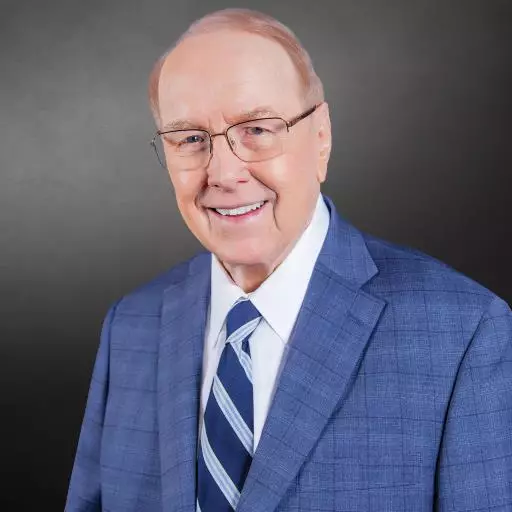
Tuesday, September 29 – Holy Sexuality, Part 1


This story is one of the most powerful testimonies you’ll ever hear. On today’s edition of Family Talk, Roger Marsh welcomes author, ordained minister, and Bible professor Dr. Christopher Yuan, who shares his journey from drug dealing, prison, and an HIV diagnosis to radical transformation in Jesus Christ.
Dr. James Dobson: Welcome everyone to Family Talk. It's a ministry of the James Dobson Family Institute, supported by listeners just like you. I'm Dr. James Dobson and I'm thrilled that you've joined us.
Roger Marsh: Well, welcome to Family Talk, the broadcast division of the Dr. James Dobson Family Institute. I'm Roger Marsh and we have an informative and insightful program for you today, especially for parents and grandparents, especially in light of what's happening in the culture and even in the church with regards to holy sexuality.
Our guest on Family Talk today is Dr. Christopher Yuan. It's wonderful to have Dr. Yuan back with us. He's an author, speaker, ordained minister, and Bible professor who taught at the Moody Bible Institute for over a decade. His speaking ministry is centered on faith and sexuality and he has a fascinating testimony which I know a lot of our listeners are familiar with, but we will get into that in just a moment so you can understand his heart and how God has been using him to reach millions both domestically and internationally with this ministry that's centered on faith and sexuality.
Dr. Christopher Yuan and his mother Angela co-wrote a memoir called *Out of a Far Country*. To date, it's sold over 130,000 copies and has been translated into many languages. Dr. Yuan's second book, *Holy Sexuality and the Gospel*, was named the 2020 Book of the Year for Social Issues by Outreach Magazine.
He has recently produced the Holy Sexuality Project, which is a first-of-its-kind video series designed to help parents and grandparents to empower their teens to understand, embrace, and celebrate biblical sexuality. This curriculum will be the basis of our conversation today. Dr. Christopher Yuan, welcome back to Dr. James Dobson's Family Talk.
Dr. Christopher Yuan: Great to be back on, Roger. Nice to connect with you.
Roger Marsh: For those who may not be aware of this term, I'll jump right in. Sometimes we talk about things that we've been discussing behind the scenes here in terms of what's happening in the culture, but you've got this project and you refer to something that you call holy sexuality. That seems like it should be pretty obvious to Christians, but even in the church, it's a little confusing. Give us a 35,000-foot definition if you will of what holy sexuality means.
Dr. Christopher Yuan: It came out of my misunderstanding of what God was calling to. Number one. And number two, that we have this tendency of pigeonholing ourselves into a secular framework: heterosexuality, homosexuality, bisexuality. I'll be sharing my testimony in just a minute, but obviously, God was so clearly in the Holy Spirit convicting me homosexuality is wrong.
So I thought, well, heterosexuality must be right. But then as I kept reading scripture—really important—I realized, wait, the Bible's also condemning various forms of heterosexual sin. I thought this is too broad of a category. As I kept reading, I was like, there are just two options, which are either chastity in singleness or faithfulness in marriage.
In other words, if you happen to be single, to be sexually abstinent, and if you later get married—and marriage being the only definition in the Bible, one man and one woman—that's faithfulness. So it's chastity in singleness or faithfulness in marriage. That's what that term means.
Roger Marsh: That's a helpful definition because there are a lot of people who have been muddying the water of late, especially in the church, as to what it means in terms of you hear terms like "gay Christian" and things of that nature, and it's very confusing. I want you to speak, if you would, first just give us an overview for those who are not familiar with your story. Because when you write about things like holy sexuality and you give us a definition like that, you are speaking from your experience of having walked down a path that was not holy sexuality.
Dr. Christopher Yuan: That's right. This discussion that I have is not just an intellectual exercise, it's not something I've just written a few books on, but it's something that's very real and personal. I wasn't raised in a Christian home. My parents, we didn't go to church, both of my parents were not Christian at all. My parents were born in China, raised in Taiwan, came to the United States for graduate school. They met in college, they married here, and had my brother and I.
I wrestled with my sexuality from a young age. I was exposed to pornography around nine years old. This is back in the '70s. That began this confusion. With all these situations going on, it was very taboo to discuss this. I didn't have any of that encouragement that we have today, that pushing people to choose one way or the other.
So I began wrestling with my sexuality. I had these desires and temptations that I couldn't explain and no one to talk to. It wasn't until my early 20s. I'm originally from Chicago and I was accepted to dental school pursuing my doctorate in dentistry. My father was a dentist. It was in my early 20s. I was then going to University of Louisville School of Dentistry. There, I came out. I embraced this. This is who I was. I told my parents and this is what's so amazing, Roger. God used that crisis to bring my mother to faith.
Then within a few months, my father did as well. We talk about this in our memoir, my mom and I that I co-authored. She wrote a chapter, I wrote a chapter, we go back and forth, which is very intentional. We wanted to not at all justify this, but to tell my side of the story, which is so twisted to show how prodigals, even though they're the ones just doing everything wrong—which I was—I felt like the victim.
Which ties so much into the worldview today, where everything is seen through the lens of victimhood and the oppressor. So I viewed myself as the victim. My parents are clueless, they don't know, they don't love me, even though nothing in their actions were at all showing that they didn't love me. But my mom came to faith, my father did, and I was like, "Good for you, not for me." I thought they lost their mind. This is just a little trend that they're doing. I went the total opposite direction.
While in dental school, I was doing what all my other classmates were doing, which is surprising. You would think in graduate school you would have people very serious about school, which they were, but just as much as they were serious about school, they were also very serious about partying. You would think in college, that's where I'll party. Well, it was bars and clubs. I'm not even talking about those that identified as gay.
It was very common to go out on the weekends. Well, then I found the gay clubs. At that time before that, I wasn't out and open. Gradually I found the gay clubs, I started going out, and then I became much more open. I spent most of my free time at the gay clubs after I told my parents. I kept doing—unfortunately—I started doing drugs and selling drugs.
I always need to put this caveat: not all gay men or lesbians do drugs. I'm just telling my story. Drugs do cost money. I supported my habit by selling drugs. I sold to friends, classmates, even a professor. Eventually I was expelled from dental school. I moved from Louisville—a small big city we would call it—and I moved to Atlanta, Georgia. There I kept doing what I knew how to do best, which is have fun, live it up. If there's no God, why not live it up? Just do whatever feels good. Love is love, you do you.
I kept selling drugs. I actually began supplying drugs. I was living a very promiscuous life. My parents came to visit me one time and I actually kicked them out. I was believing the lie that all my friends were telling me: your parents don't love you. Kick them out. My dad gave me his Bible before he left. I took my Bible and this is how much I hated God and religion: I threw it in the trash can. It was just obvious to my parents that I was hopeless.
But my parents committed not to focus on hopelessness, but upon the promises of God. Along with over 100 prayer warriors—they had grown so much in their faith, very involved in churches, they were Christian conference junkies, they just couldn't soak up enough—they got literally over 100 prayer warriors and they began to cry out to God for me. My mom began to pray a bold prayer: "God, do whatever it takes to bring this prodigal son to you."
She fasted every Monday for seven years and once fasted 39 days on my behalf. She spent hours every morning in her prayer closet, interceding for me and for many others because she knew it was going to take a miracle. This miracle came with the bang on my door. I opened up my door, on my doorstep were 12 federal drug enforcement agents, Atlanta police, and two big German Shepherd dogs. So I was arrested. I found myself in jail and I tried calling home. I did not want to make that phone call. I was thinking I'm going to get an earful from home.
But Mom's first words were, "Son, are you okay?" No condemnation, no berating words. Just words of unconditional love and grace. I'm reminded now of what Paul says in Romans chapter 2, verse 4, that it's God's kindness that leads us to repentance. It's not God's wrath, Paul doesn't say. Paul doesn't say that it's God's anger, but it's God's kindness that leads us to repentance. On that miserable day, God was pouring out his grace and drawing me to himself through the words of my mom.
A few days after that, I was walking around the cell block, passed by this garbage can, and I'm like, "That is my life." I'm from upper-middle-class suburb of Chicago. My dad had two doctorates. I was three months away from receiving my own doctorate. I was going to be partnering with my dad and his practice was going to be my practice. Everything was set.
I was about to walk by this garbage can, this trash, this mound of rubbish, but something on top of the trash caught my eye. Bent over, picked it up: it was a Gideon's New Testament. Took it back to my cell, opened up that good book for the first time. I read through the entire Gospel of Mark that night.
But I wasn't thinking, "This is God's word, this is the answer." I thought, "I've got tons of time on my hands and I better pass it somehow." But as you know, as many of your listeners know, what we have in our Bibles is not just ink on paper, it's the very word of God. It began to convict me, it began to reveal my sin, and it wasn't a pretty sight.
Well, things got worse. I was called to the nurse's office. The nurse sat me down and I knew something wasn't right. She wrote something on a piece of paper, slowly slid it across the desk to me. I looked down, there were three letters and a symbol. It read HIV positive. The days after were dark, lonely. I was sentenced to six years, better than 10 years to life, but news of my HIV status felt like a death sentence.
This was back in the end of 1998, December of 1998. Things were looking better, the medications were better, but middle of '90s, just people were just dropping like flies. So I was laying in my bed a couple weeks after that, in my prison cell, look up at the cold metal bunk above me. Somebody had scribbled something and it read, "If you're bored, read Jeremiah 29:11." "For I know the plans that I have for you," declares the Lord, "plans to prosper you and not to harm you, plans to give you hope and a future."
At the most hopeless point of my life, God used the words written by a prophet thousands of years ago to a rebellious nation, Judah, to tell me that if God could have a plan for Judah in rebellion in exile, he might even still have a plan for me. I didn't know where that plan was going to take me, but God gave me enough faith and strength to get through that one day and the next and the next.
My transformation was gradual. God was convicting of my idols, obviously drugs. Within a few months, he delivered me from that addiction. God kept bringing to mind other idols and there was just this one thing that I felt like I just couldn't let go of: my sexuality. So I went to a chaplain and I asked him his opinion. To my surprise, this chaplain actually told me the Bible does not condemn homosexuality, and he even gave me a book explaining that view.
Think about it. I, with much curiosity, I took that book. I wanted, as we all do, we want our cake and eat it too, don't we? I had that book in one hand and the Bible in the other. From my human perspective, I had every reason in the world to accept what that book was claiming to justify the way I had been living.
But God's indwelling Holy Spirit convicted me that those assertions were a clear distortion of God and his word. I couldn't finish that book and I gave it back to the chaplain, which meant I turned to the Bible alone. I went through every verse, every chapter, every page of scripture looking for justification. I wanted to find any shred of evidence that might bless a monogamous same-sex relationship.
I went through the whole Bible, went cover to cover several times—I had time. I looked and I looked, and I couldn't find any. So I was at this turning point, I was at this crossroads: either abandon God and his word, live as a gay man, pursuing monogamous same-sex relationship by allowing my attractions to dictate not only who I was but also how I lived, or abandon pursuing a monogamous same-sex relationship by freeing myself from my sexuality and live as a follower of Jesus Christ.
By God's grace, God saved me. As the days and the weeks and the months of abstinence passed, I realized that my sexuality should not be the core of who I am. God loves us unconditionally, but as sinners, we sometimes like to add to God's truth. So I added "so therefore he doesn't want me to change," similar to your friends who might say "God loves me just the way I am so leave me alone."
But I realized that unconditional love is not the same thing as unconditional approval of my behavior. My identity shouldn't be defined by my sexuality, shouldn't be grounded in my desires. My identity is not gay, it's not ex-gay, it's not even heterosexual for that matter, because my identity as a child of the living God must be in Jesus Christ alone.
God says, "Be holy for I am holy." Before I became a Christian, I was under the impression to become a Christian I had to be heterosexual. I need to be sexually attracted to the opposite sex indiscriminately. I was even under the false impression that the more sexual attraction I were to lots and lots of women, the more of a Christian man I would be. But I realized that even if a man had opposite-sex attractions, he would still need to flee temptation and resist sin.
So heterosexuality, it's the right direction, but it's not precise enough. It's too broad. God doesn't say indiscriminately be heterosexual for I am heterosexual, but neither does he say be homosexual for I am homosexual. They're actually both secular Freudian categories. Instead, God says, "Be holy for I am holy."
So the opposite of homosexuality is not heterosexuality—that is not the right goal—but the opposite of homosexuality is holiness. As a matter of fact, the opposite of every sin is holiness. I don't need to focus upon whether I'm struggling, whether I'm tempted, but I need to focus upon living a life of holiness and living a life of purity.
Because change is not the absence of temptations, but change is the spirit-wrought ability to be holy even in the midst of temptations. Because the ultimate issue is not whether I'm struggling or tempted, but the ultimate issue is that I yearn after God in total surrender and complete obedience.
God called me into ministry and I applied to Moody Bible Institute while I was in prison. God accepted. I came out of prison in July of 2001 and started the very next month in August. So imagine the surprise of my classmates when I answered their question, "What did you do this summer?"
I went on to get my master's in exegesis and then got my doctorate of ministry back in 2014. In 2011, I had the really cool privilege of co-authoring a book with my mom. It's called *Out of a Far Country*, which you mentioned. Then my newest book, *Holy Sexuality and the Gospel: Sex, Desire, and Relationships Shaped by God's Grand Story*.
And then that's where I adapted that into our newest projects, which is a video series geared just for the family for parents and their teens to go through this video series at home to really develop some home discipleship patterns to discuss sexuality at home, which is where it should be talked about primarily.
Roger Marsh: Amen to that. Dr. Christopher Yuan is our guest today here on Dr. James Dobson's Family Talk and that remarkable testimony, which you learn more about Chris's path every time you have this conversation. But this new Holy Sexuality Project, I know there are a lot of parents, maybe some grandparents listening to us right now who are saying, "Well, we're going to walk the straight and narrow. We model biblical Christianity at home so this is something that's happening in the world, but it's really not impacting our home."
I know you would push back on that respectfully and kindly. But first of all, help us understand, if you can give us a frame of reference. It seems like in the past three, four, five years, this has really just completely turned on its ear in terms of the LGBTQ being the new standard and the world kind of adopting that, even some people in the church using that as the standard instead of saying, "Well, what's God's standard?" Help us understand what's going on in the culture right now that we may not even be aware of how subtle it's been, but how impactful it's been.
Dr. Christopher Yuan: It's too often we keep wanting to borrow from the world and accommodate. It's not just ways to be relevant to be able to share the gospel better, but it's taking on these secular humanist distorted concepts wrought in things like these philosophies and worldviews like critical theory that then distort God's truth. What I see right now that pastors, youth pastors, church leaders, and Christian authors are getting wrong on sexuality, it's this.
It's that they're conflating sexuality to be who we are. So they might even say, "I have an orthodox view of sexuality," or they might even say, "I believe that gay marriage is wrong," which I'm happy they do that. But once you concede that sexuality is—to get philosophical or theological—an ontological category or, to put it in layman's terms, that it is a category of personhood, then we're not going to get anything right after that. Why? Because the Bible teaches against that.
Never do we make our sin struggle who we are. Never do we make a feeling or a desire who we are. We need to be really clear who we are: that we are created in the image of God. That is something that's essential to who we are.
But the world says something different, don't they, Roger? They say, "No, your sexuality or your gender confusion is essential to who you are." Wrongly ordered desire is lust. So if a man looks lustfully at, desiring a woman, he's already committed adultery, Jesus said. He doesn't say he's good, just don't act on it, which is kind of what this movement, this gay Christian movement is promoting: just don't act but the desires are okay.
People are even promoting and saying, "No, gay can be sanctified," which is nowhere in scripture. Does it say we sanctify sin? We put it to death. Paul says in Romans that we mortify it, the good old King James word. We put it to death, we don't toy with it, we don't play with it.
So it's really key and I think that's very important that we talk about this, address this with our kids because our kids are swimming in this, and address this with the teenagers and helping them go through this. I think it needs to be best done at home because I think a lot of youth groups are in their attempt to be winsome, they're accommodating to the world and they're causing more confusion.
Roger Marsh: Amen. Today on a special edition of Dr. James Dobson's Family Talk, you heard part one of my conversation with Dr. Christopher Yuan. We've been discussing holy sexuality, identity in Christ, and his new video curriculum for families and teens called the Holy Sexuality Project.
Now, if you missed any portion of today's broadcast or if there's a parent or grandparent that you would like to share it with because they would benefit from this kind of biblical grounding, go to drjamesdobson.org. You'll find a link for the audio, you'll also find information about Dr. Christopher Yuan's book called *Holy Sexuality and the Gospel*. And be sure to look for the links for the Holy Sexuality Project video series. There are two different tracks you can explore when you go to drjamesdobson.org.
The topics that Dr. Yuan raised today, like biblical sexuality, gender confusion, and how to talk with your kids and teens about all of it, these issues sadly are not going away. And if you're looking for a solid, grace-filled starting point to discuss this issue, I want to tell you about a free resource from the Dr. James Dobson Family Institute. It's called Transgenderism: Truth and Grace.
It's a five-day email series developed in collaboration with Dr. Owen Strachan, author of the book called *What Does the Bible Teach about Transgenderism?* For more information on how you can sign up for this free five-day email series, go to drjamesdobson.org and search for that title, Transgenderism: Truth and Grace. Again, you'll find all that information at drjamesdobson.org. If it's easier, just type in jdfi.org, one in the same URL.
Conversations like the one you heard today here on Family Talk and the resources that go along with them exist because people like you have chosen to stand with the Dr. James Dobson Family Institute. Every day, we work to strengthen marriages, equip parents, and defend biblical truth, as well as introducing people who may not know him yet to the gospel of Jesus Christ.
We invite you to partner with us in this mission. Your gift of any amount helps keep these broadcasts on the air and these resources in the hands of families who need them. To give securely online, go to jdfi.org. Or to speak with a member of our constituent care team, call 877-732-6825. That's 877-732-6825.
I'm Roger Marsh and on behalf of all of us here at Family Talk and the Dr. James Dobson Family Institute, thanks so much for joining us today. Be sure to join us again next time right here when you'll hear part two of my conversation with Dr. Christopher Yuan discussing the Holy Sexuality Project. That's coming up right here on the next edition of Dr. James Dobson's Family Talk, the voice you trust for the family you love.
Featured Offer

A new school year brings fresh opportunities—and new challenges. Between homework, activities, sports, and busy schedules, it's easy to lose sight of what matters most.
Our free 3-day email series, Back-to-School Wisdom for Parents, will equip you to navigate the coming months with greater confidence and intentionality.
Past Episodes
- A Biblical Look at the Family
- A Challenge to Pastors
- A Family in Crisis
- A Father to the Fatherless: The Story of Two Friends
- A Father's Commitment to His Daughter
- A Heart for Romanian Orphans
- A Journey of Widowhood and Grief
- A Marriage Made in Heaven
- A Mom's Heart of Prayer
- A Nation Abandoned by God
- A Picture of Life
- A Sober Update on Military Culture
- A Traditional Family
- A Tragic Account of Mistaken Identity
- A Visit to the Shores of Normandy
- A Visit With the Legendary Pat Boone
- Abraham Lincoln: The Faith of a President
- Adrenaline & Stress
- Adult Children of Alcoholics
- Albert & DeeDee Pujols: Giving Honor to God
- Alone Yet Not Alone
- America: A Call to Humility
- American Heritage Girls
- American Marxism
- An Abusive Childhood: Climbing Out of the Pit
- An Attitude of Gratitude
- Autism
- Avoiding Infidelity
- Back From the Brink of Divorce
- Beauty In Brokenness
- Becoming a Culture Warrior
- Being a Conservative Crusader
- Being a Father at Work and Home
- Being a Smart Stepmom
- Being Jesus to Your Neighbors
- Being There for Your Son
- Between a Rock and a Grace Place
- Bonhoeffer: A Hero Then and Now
- Boys and Puberty
- Breaking the Bonds of Welfare
- BUG-Puberty
- Building a Christian Home
- Building a Safe Haven In Marriage
- Building hedges Around Your Marriage
- Bullying
- Buyer Beware
- Charlie & Lucy Wedemeyer: A Message of Hope
- Children and Stress
- Choosing to See
- Christian Men & Sexuality
- Christianity and Wokeness
- Christ's Influence on History
- Cleaning House: Raising Responsible Kids
- Coach John Wooden
- College
- Confronting Guilt in Motherhood
- Congressman Frank Wolf: A Modern-Day Wilberforce
- Courageous Choices
- Courageous Manhood
- Creative Ideas for Child Discipline
- Crystal Peaks Youth Ranch
- Culture Watch
- Current Economic Tsunami
- Defend Life
- Defending Religious Liberty in the Courts
- Defunding Planned Parenthood
- Delicate Mother-In-Law Relationships
- Depression: Encouragement for the Journey
- Developing a Firsthand Faith
- Digital Invasion
- Divorce
- Dr. Ken Hutcherson: A Defender of Truth
- Dr. Ravi Zacharias: Finding My Destiny in Delhi
- Faith and Family: Raising Kids Right
- Family Finances
- Fierce Beauty
- Fighting to Preserve DOMA
- Finance
- Finding Healing After Sexual Abuse
- Finding Hope for Your Heart
- Finding Joy Amidst Cancer and Loss
- Finding New Intimaacy in Prayer
- Finding Success in a Failing Economy
- Finding True Forgiveness
- Forgiving God
- Forgiving My Father
- Foundation For Successful Families
- Free At Last
- Freeing the Family From Pornography
- From Santa to Sexting: Protecting Your Middle-Schooler
- Fueling the Passion
- Girl's Uncovered
- God Bless America
- God Is At At Work
- God Made Us a Family
- God Makes Lemonade
- God Restored Me
- God Restored Me For a Purpose
- God’s Grace Is Sufficient
- God's Tender Heart for Single Moms
- God's Way or My Way
- God's Wisdom for Raising Children
- Going All Out For Your Wife
- Greg Laurie
- Greg Laurie: A Changed Life
- Guarding Your Grandchild’s Heart
- Healing the Past and Moving On
- Healing the Wounded Spirit
- Healthy Habits
- Help for Angry Moms
- Help for Employed Moms
- Help for Hurting Teens
- Help for Parents of Prodigal Children
- Help, I'm a Spouse AND a Parent Now!
- Helping Teens Find Their Purpose
- Her Role in the Home
- Homeschooling & Beyond
- Homeschooling Today
- Honoring Our Average Joes
- Hooking Up
- Hope for Hurting Hearts
- Hope in the Midst of Unexpected Pregnancies
- Horses and Healing: New Hope for Kids
- Hutch: A Man Filled With Hope
- I Will Never Leave Thee
- I, Isaac, Take You, Rebekah
- In God We Still Trust
- Infertility and Miscarriage
- Insights on Radical Islam
- Integrity in Business
- Is America Imploding?
- James Dobson v Kathleen Sebelius: How will you get involved?
- Jealousy
- Jesus Vs. Muhammad
- Jim & Jill Kelly
- Landscape of America
- Laying Up Treasure in Heaven
- Lean Body, Fat Wallet
- Learning Disorders
- Life & Laughter with Ken Davis
- Life Without Limbs
- Live to Forgive: A Family Story of Pain and Redemption
- Living Through Loss of Spouse
- Living With Less So Your Family Has More
- Living with Less: Heading into the Holidays
- Living With the Strong Willed Child
- Loneliness in Marriage
- Longing for Marriage
- Love For a Lifetime
- Loving Those Left at Home
- Macaroni At Midnight
- Managing Your Home and Time
- Marriage in a Facebook World
- Marriage Survival Skills
- Marriage That Can Go the Distance
- Marriage: The State of Our Union
- Mary Crowley
- Memories of the Holocaust
- Mentoring Boys and Men
- Merging Premarital Expectations
- Ministering to the Elderly
- Ministry of Hymns
- Miscarriage: Grieving the Loss
- Mojave Desert Cross
- My Adoption Story
- My Autistic Son
- My Mission: Capturing a Dictator
- One Woman’s Journey of Grief & Hope
- One-on-One with Bill Gaither
- Online Dangers: Protecting Kids from Pornography
- Online Dangers: Protecting Marriages from Pornography
- Overcoming Childhood Traumas
- Overcoming the Heartaches of Life
- Overcoming the Shame of the Past
- Parenting 101: From Discipline to Sexuality
- Parenting Basics: The First Years
- Parenting Newborns and Those Early Years
- Phill Kline: Challenging an Abortion Giant
- Plugged In: Teaching Your Children to Be Media Savvy
- Politics and the Bible
- Prodigal Child
- Protecting Life and Liberty
- Protecting Your Child in a Dark Culture
- Putting an Arm Around the Post-Abortive Woman
- Raising a Handicapped Child
- Raising Boys: Routine Panic
- Raising Boys: Wounded Spirits
- Raising Kids Who Love the Lord
- Raising Men of Honor
- Raising the Standard of Excellence
- Reaching Out to Youth in Need
- Reaching the Taliban For Christ
- Real Moms, Real Jesus
- Reignite: How to Bring Joy Back into Your Life for Enduring Faith
- Religious Persecution in America
- Republican Majority
- Rescued From a Life of Ruin
- Resolving Money Conflicts in Marriage
- Revival Rising
- Scripture and the Family
- Sexuality & Singles
- She Calls Me Daddy
- Single Adults
- Singleness: Waiting for God's Best
- Singles and Sexuality
- Spiritual Mismatch
- Spiritual Training of Children
- Stand For Life In Your Community
- Staying Christian in a Pagan Culture
- Staying Strong in College
- Stepping Away from the Common Life
- Straight Talk to Young Couples
- Strengthening Military Families
- Strong Fathers, Strong Daughters
- Suicide
- Teaching Your Kids About Sex
- Ten Habits of Happy Mothers
- The Bachmanns: Their Story of Faith and Family
- The Barretts: An Amazing Adoption Story
- The Battle for Civilization
- The Battle for Marriage Continues
- The Cross: The Center of the Family
- The First Year of Marriage
- The Flipside of Feminism
- The Future of the Family: Fact and Fiction
- The God-Wild Marriage
- The Healing Power of Forgiveness
- The Heart of a Cowboy
- The Heart of the Santorum Family
- The High Cost of Low Living
- The Hope of Heaven
- The Hormone Swing
- The Immunization Debate
- The Impact of Truth on My Life
- The Insidious Nature of Infidelity
- The Joy of Good News
- The Joys and Challenges of Adoption
- The Joys and Challenges of Pregnancy
- The Key to Your Child's Heart
- The Kids Are Gone...Now What?
- The Miracle That Saved a Marriage
- The Powerful Influence of a Wife
- The Pro-Life Movement Reaches a New Generation
- The Threat of Islamic Terrorism
- The Unbelieving Spouse
- The Use and Abuse of Power
- The Value of Manhood
- The Value of One Life
- The Vital Role of Fathering
- The Way of the Wise
- To Dads & Daughters … with Love
- Tolerating the Intolerable
- Tony Dungy: A Man of Quiet Strength
- Tough Love For Kids
- Truth: Can We Both Be Right?
- Turning Hearts 180-Degrees Toward Life
- We Help; Jesus Heals
- Welcome To Our Table
- What Does Freedom of Religion Mean?
- What Has Feminism Done for You Lately?
- What Parents Should Know About Teens
- What's It Like Being Married to Me?
- What's Wrong with Being a Nice Guy?
- When Life Brings You Thorns
- When Unemployment Hits Your Home
- When You're in Love
- Why Men Leave the Church and How to Get Them Back
- Why Purity Matters
- Why We Fight For Life
- Women and Emotional Infidelity
- Women and Friendships
- Women and Intimacy
- Women in Combat: Understanding the Consequences
- Wounded Spirit

Video from Dr. James Dobson
Featured Offer
A new school year brings fresh opportunities—and new challenges. Between homework, activities, sports, and busy schedules, it's easy to lose sight of what matters most.
Our free 3-day email series, Back-to-School Wisdom for Parents, will equip you to navigate the coming months with greater confidence and intentionality.
About Family Talk
Family Talk is a Christian non-profit organization located in Colorado Springs, Colorado. Founded in 2010 by Dr. James Dobson, the ministry promotes and teaches biblical principles that support marriage, family, and child-development. Since its inception, Family Talk has served millions of families with broadcasts, monthly newsletters, feature articles, videos, blogs, books and other resources available on demand via its website, mobile apps, and social media platforms.
The Dr. James Dobson Family Institute (JDFI) is a Christian non-profit ministry located in Colorado Springs, Colorado. Founded initially as Family Talk in 2010 by Dr. James Dobson, the organization promotes and teaches biblical principles that support marriage, family, and child development. Since its inception, Family Talk has served families with broadcasts, monthly newsletters, feature articles, videos, blogs, books, and other resources available on demand via their website, mobile apps, and social media platforms. In 2017, the ministry rebranded under JDFI to expand its four core ministry divisions consisting of the Family Talk radio broadcast, the Dobson Policy and Education Centers, and the Dobson Digital Library.
Dr. Dobson's flagship broadcast called, “Dr. James Dobson’s Family Talk," is aired on more than 1,500 terrestrial radio outlets and numerous digital channels that reach millions each month.
About Dr. James Dobson
Dr. James Dobson is the Founder Chairman of the James Dobson Family Institute, a nonprofit organization that produces his radio program, “Dr. James Dobson's Family Talk.” He has an earned Ph.D. from the University of Southern California and holds 18 honorary doctoral degrees. He is the author of more than 70 books dedicated to the preservation of the family including, The New Dare to Discipline, Love for a Lifetime, Life on the Edge, Love Must Be Tough, The New Strong-Willed Child, When God Doesn't Make Sense, Bringing Up Boys, Bringing Up Girls, and, most recently, Your Legacy: The Greatest Gift. Dr. Dobson served as an associate clinical professor of pediatrics at the University of Southern California School of Medicine for 14 years and on the attending staff of Children’s Hospital of Los Angeles for 17 years in the divisions of Child Development and Medical Genetics. He has advised five U.S. presidents and served on eight national commissions. Dr. Dobson has been married to Shirley for 64 years, and they have two grown children, Danae and Ryan, and two grandchildren.
Contact Family Talk with Dr. James Dobson
540 Elkton Drive
Suite 201
Colorado Springs, CO 80907
877.732.6825