

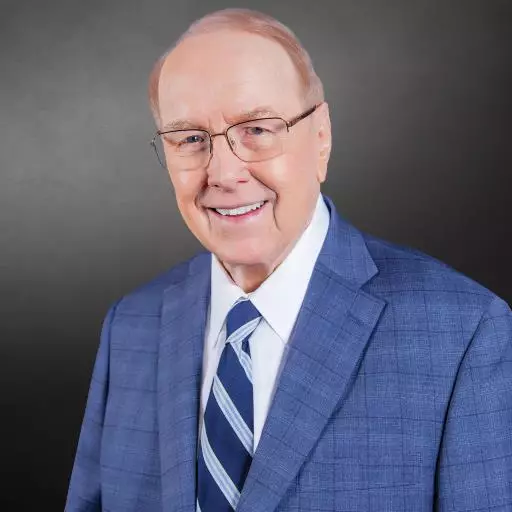
Remaining Faithful Against the Odds, Part 1


On today’s edition of Family Talk, Dr. James Dobson welcomes Vietnam veteran Clebe McClary and his wife, Deanna. When Clebe was working as a football coach and saw protesters burn the American flag, he walked off the field and joined the United States Marines. He recounts the night enemy soldiers overran his recon team, and the young Marine who smothered a grenade to save his life.
Roger Marsh: With today's Dr. Dobson minute, here's Dr. James Dobson.
Dr. James Dobson: Veterans Day is the anniversary of the signing of the armistice that ended World War I in 1918. President Woodrow Wilson designated this day to honor those who fought for our country, and this is what he said. The reflections of Armistice Day will be filled with solemn pride in the heroism of those who died in the country's service. And with gratitude for the victory, both because of the thing from which it has freed us and because of the opportunity it has given America to show her sympathy with peace and justice in the councils of the nations.
I am also grateful for the men and women who gave their lives for our freedom and for all those who have served our country in the defense of liberty.
Roger Marsh: For more information, visit dr dobson minute dot org.
Dr. James Dobson: Welcome everyone to Family Talk. It's a ministry of the James Dobson Family Institute supported by listeners just like you. I'm Dr. James Dobson, and I'm thrilled that you've joined us.
Roger Marsh: Well, welcome to Family Talk, the broadcast ministry of the Dr. James Dobson Family Institute. I'm Roger Marsh. A young Marine leaves his bride behind to serve in Vietnam, never imagining that one night in combat will change their lives forever. On today's Family Talk broadcast, you'll hear Dr. James Dobson welcome Clebe and Deanna McClary, whose story is one of courage, sacrifice, and a marriage tested literally from day one. Just 6 months after their wedding, Clebe volunteered for the United States Marine Corps. During a reconnaissance mission, an enemy attack left him wounded. A fellow Marine made the ultimate sacrifice to save his life.
But surviving the battlefield was only the beginning. Ahead lay years of recovery and a test of commitment for a couple who had barely begun their life together. Here now is Dr. James Dobson with Clebe and Deanna McClary on today's edition of Family Talk.
Dr. James Dobson: I want our listeners to meet a couple of new friends. They're both already very well known internationally, Clebe and Deanna McClary. I know people are going to be very interested in meeting them and hearing their story. Clebe is a motivational speaker, a Vietnam vet, a former Marine, Silver Star, Bronze Star, three Purple Hearts. Clebe, I said you were a former Marine. There is no such thing, is there?
Clebe McClary: No, sir, Dr. Dobson. Once a Marine, always a Marine.
Dr. James Dobson: Always a Marine. You guys take that job rather seriously, don't you?
Clebe McClary: Yes, sir, we sure do. USMC, US Marine for Christ. That's what counts.
Dr. James Dobson: Clebe and I are acquainted. We went hunting together. We went pheasant hunting in South Dakota this last year. That was a lot of fun, wasn't it?
Clebe McClary: That was as much fun as I've ever had. I really enjoyed that, yes, sir.
Dr. James Dobson: You only have one arm, and yet you shoot very well, my friend. Explain how you do that.
Clebe McClary: I put my hook on and use that, and um it it's When they operated, they took the tendons on my right foot, put my right finger, and that's one thing um I said just get that trigger finger working. That's the main one I need. And I really enjoy it.
Deanna McClary: And that really is true. When the doctor operated, the middle finger died, that that graft died, and the doctor literally cried. I I saw Dr. Santin cry over that hand because he's only got two fingers that work on his only hand. And he sat there with Clebe's hand and Dr. Santin said, Clebe, I wish that had worked. And Clebe said, Doc, just get my trigger finger working so I can shoot a dove and I'll be happy. And that's what he's got working.
Dr. James Dobson: Well, he does it very very well. I tell you, better than I do with two hands and all my fingers working.
Deanna McClary: With one eye. That's what's amazing, depth perception, too. He's amazing.
Dr. James Dobson: Somebody told me that your life verse is in Habakkuk, which talks about restoring the years the locust ate.
Deanna McClary: It is. That's right. Well, verse 17 to me is I basically paraphrase it because it talks about a time of barrenness and famine and desolation and discouragement. And in a way, that was a part of my life as I look back over some of the adverse times in my life. You know, my father owned a medical center and a pharmacy, and we had everything tried to keep up with the Joneses, so to speak. And materially, we were blessed in many ways, but those were some barren years in my life as well because my daddy was an alcoholic growing up.
And it was kind of like a weekend alcoholic, a social drunk, you could say.
Dr. James Dobson: But enough to make you hate him or have very strong feelings about him.
Deanna McClary: It was very It was very difficult. I really did because daddy was um he'd come home at night and he would be not only was he taking um was he an alcoholic, but he had also amphetamine addiction.
Dr. James Dobson: Mm.
Deanna McClary: And that would one alone will kill you, but the two mixed many times he'd come home and he would be an almost inhuman person. And I did. I I had great fear of my father when he's like that, but more than the fear, I literally hated the sight of him in this condition. And I'd run to my room, and there were four of us in the family, and I would just say, God, just please get rid of this man. Take him away because he's destroying our happiness.
Dr. James Dobson: Now, Clebe, you grew up on a 10,000 acre ranch, as I understand it.
Clebe McClary: We call it a plantation in South Carolina, yes, sir.
Dr. James Dobson: Were your parents wealthy?
Clebe McClary: No, sir. My grandparents had owned this place and lost it during the Depression. Folks in Philadelphia bought it, and my daddy uh was playing college ball and working in the summers. And they were losing the place, and the man that bought it walked in and said, I'm looking for somebody to run my plantation, daddy, so I've been there all my life. And Mr. Cheston said, Well, you may not suit me, daddy. So that goes both ways, but somebody suited somebody because daddy stayed there 52 years running that plantation. If you'd come out there, you thought he owned it.
I guarantee you he ran it like he owned it.
Dr. James Dobson: You were not raised in a Christian home either though, were you?
Clebe McClary: Um yes, sir. My folks were were church background and knew the Lord, but uh we didn't have Bible study, and I didn't know the Lord. So many people told me I was a Christian and I thought I was. Headed in my head, but it was empty vacuum in my heart that only the Lord Jesus can fill.
Dr. James Dobson: Okay, now how did the two of you meet?
Clebe McClary: I was football coach in Florence, South Carolina. And Deanna was majorette. And so that's how we met.
Deanna McClary: And basically, my sister Annette introduced us. And Clebe was driving a little 64 Mustang and and everybody been talking about this handsome football coach in Florence, but I thought to be a football coach you had to be pretty old guy, but when I saw him that night, I thought he was pretty well preserved old guy. He looked mighty fine. And it didn't take me long to realize that he was so uniquely different from any guy I'd ever dated. I mean, he was truly a different person. And I'll I'll never forget meeting him that night when my sister introduced us.
She said, this is Clebe. And he said, yeah, I'm Clebe McClary.
Dr. James Dobson: Mm.
Deanna McClary: And I couldn't understand that accent. And then I thought was surely
Dr. James Dobson: Well, you got one of your own, I might say.
Deanna McClary: Well, his his is the low country plantation plantation. That's what he said accent. But uh we met that night, and the next weekend he called and asked me for a date, and I was just absolutely overwhelmed. And I said, Mother, that's that coach calling. And she said, well, I hear he's a wonderful young man. She had no idea there was 7 years age difference. And I was in high school. And that was kind of a sticky situation, but we didn't realize it until later when my principal called us in and said that we cannot go to school functions or anything like that.
So it was quite a unique romance.
Dr. James Dobson: Now, you had kind of a rocky relationship. You married how many years later?
Clebe McClary: About a year and a half.
Dr. James Dobson: Year and a half later. Uh uh you had your first fight about 2 minutes after you were married, which
Deanna McClary: We sure did.
Dr. James Dobson: So you you the the minister says uh and I now pronounce you man and wife. First of all, he invited you to kiss her.
Deanna McClary: That's the first shock when they said kiss the bride, and he wouldn't kiss me in front of all those people.
Dr. James Dobson: Well, at least Clebe
Clebe McClary: Sunday, the lights phone, we got 6 or 700 people there, and I was going to kiss her in front of all those folks. I didn't do that. And and so I didn't. And we just walked on out.
Dr. James Dobson: And you got out to the car, and you had your first argument.
Deanna McClary: Well, the Clebe
Clebe McClary: Well, I had a Mustang convertible, and I had the lid down. And you know, she had a veil and her fix and everything. She says, I'm not riding in a convertible in that. And I said, I'm going with daddy. I said, well, if you go with daddy, keep going. I'm not going to be there. I won that argument though. She she rode with me. We had two arguments about the first 5 minutes of marriage.
Deanna McClary: Yeah, the veil
Clebe McClary: I that was unbelievable.
Dr. James Dobson: Now, was this a collision between two strong-willed people?
Deanna McClary: Very strong-willed people.
Dr. James Dobson: Yeah.
Deanna McClary: That was very interesting, but he won. He says the only one he's won since, but that's not true.
Dr. James Dobson: Was that characteristic of a rocky road um in the first few years of marriage?
Deanna McClary: No, because we really didn't have any first few years of marriage. We were married 6 months when Clebe volunteered to go to Vietnam. And people think the rocky road, maybe that's why he volunteered to go to Vietnam, but he'll tell you why he went to Vietnam.
Dr. James Dobson: Uh in fact, uh being a football coach, you went down and joined up for the Marine Corps. You didn't have to do it. You were almost past the eligibility.
Clebe McClary: Age-wise, I was right at the the peak of eligibility. And um I was deferred as long as I was teaching and coaching, and that's what I wanted to do. But after a ball game, I I saw you somebody do something I hope I never see in person. Like Dobson, they they burned the American flag. And you heard about a walk-on on the college campus. I was a walk-off. I went into coach's office Sunday afternoon and said, I'm going to Parris Island to join the Marines. And so I walked off from coaching and walked on the Marine Corps.
Dr. James Dobson: That really was the motivation. That really was.
Deanna McClary: Yeah, it really was.
Clebe McClary: I think deep down I always wanted to be a Marine. I had a You know, I'd I'd like to have been and I got into coaching, teaching, working with young people. And that's what I was really interested in. It just sort of took my mind away from it. But when I saw them burn the flag, it really turned it around. I said, man, I've got to serve.
Deanna McClary: And in high school, you wanted to join the Marines, but but your dad wouldn't let you.
Clebe McClary: Well, I had a couple scholarships, and all daddy wanted me to get a college education. So when I got into teaching and coaching and working and all, I just sort of put the Marines on the back burner. But when I saw him burn the flag, it turned that turned it around.
Deanna McClary: I didn't want him to be a Marine, and I I didn't want him to go anywhere but to stay with me because I really was basically a very insecure person. I wanted my husband. I wanted my happiness. I wanted my security. Everything kind of revolved around me. And I cried and pleaded and begged, but Clebe said, Honey, this is something important. I want to serve my country. And he's taught me a lot about our country. As a result of that, I look back as a 19 year old and and I realized Dr. Dobson, even today, this is so much a passion in my life.
When I see the flag and I watch young people, observe young people, my heart goes out to young people. I see the dads and moms cover their heart, and the young people look around and they'll think, oh, I'm supposed to cover my heart. They have no reason. They don't understand why.
Dr. James Dobson: They have no reason. Yeah.
Deanna McClary: And I didn't. I was just as naive. I took the freedom for granted. I took everything in my life that had been given to me by God and our great veterans so for granted. And now every time I see the flag, I remind young people, every time I cover my heart, I feel it beat. I I feel it beat. And I'm reminded of that young Marine that jumped on the grenade and blew himself in half to save Clebe's life. And the young man next to him that died that night, and their hearts are no longer beating so that Clebe can be on this program and travel around the country.
And that's what you know, America means to me now. And that's what our flag and our country means because he had to teach me that.
Clebe McClary: When I went in, I I knew I was going to Vietnam when he goes as a Marine. And I didn't want to put a young bride through that. I didn't want to join up and then go over sea get married and leave her. But um got out a purpose and a plan and um you know, if I hadn't have got married and I know God had a purpose and a plan for my life, but Deanna gave me a reason I want to to live. And when I got wounded in 37 operations and 2 and 1/2 years in the hospital, but that first night when I got hit, if I hadn't had Deanna, I wouldn't have lived.
Dr. James Dobson: Well, let's let's talk about the Vietnam experience. You were shipped over there almost as soon as you got through with your training. Uh you were a second lieutenant, and they were going. They were the first ones to go and the first to die frequently, weren't they? So and then when you get over there, Clebe, you're not only in harm's way, you're not only in the midst of a very bloody, dangerous war, but you you volunteered for recon, which is like a suicide mission. Explain what recon is.
Clebe McClary: Recon goes in behind the enemy lines, and the planes come over and pick up body odors and campfires and sort of computes what's down there. And then we we supposed to jump in to see if they're there. And they usually are. It's an exciting group. It's a well-trained group though. It really is. It's usually five, six, seven men, and we go out there and get information or whatever we've got to do and come back. So like the SEALs, the Navy type thing, we jump, we we um dive. And uh it's a great group, but it's well-trained.
And um till you get caught, it's good.
Deanna McClary: And I was told before he went over there because I we went through all of the Marine Corps together, and I'd memorized the components on the M16 and teach him all of this stuff, you know, so he'd be prepared. But all the guys said as a recon Marine, they either all come back or they don't. And so I begged Clebe not to do it. I said, please don't do that. He said, Honey, I grew up on a plantation all my life. And he said, I've been close encounters, close in the woods. And I want to be with a close outfit like that, but I wasn't too excited about that.
I wanted him to be with the biggest group over there, but
Clebe McClary: I never thought I was going to get wounded or hit though. I always thought I was going to be the other guy. And I blew that theory, but uh I never really thought it was going to be me. The ones that thought that they was going to be their last patrol, it usually was. That it was amazing. When they started thinking that, boy, that I'm not going to make it back. This is going to be my last one. That those thoughts came true so many times.
Dr. James Dobson: Well, in football, if you think you're going to lose, you lose. That's right. Or any other athletic endeavor, confidence has a whole lot to do with uh with succeeding.
Clebe McClary: It sure does.
Dr. James Dobson: All right. So let's talk about the fateful night. I guess it happened in the March of
Deanna McClary: My birthday.
Clebe McClary: Deede's birthday.
Dr. James Dobson: Your birthday.
Deanna McClary: On my birthday.
Dr. James Dobson: March of '68.
Clebe McClary: Clebe March of '68.
Dr. James Dobson: That while the summer of love was about to occur in the United States with all that uh street uh activity and rebellion and all the rest of it, you were on a mission. Explain what you did.
Clebe McClary: Had a recon team, and um we landed on a small tea plantation and set in with a group of men. And I cleared a punji pit got in the bottom of bottom of that. Had my radio man McCormick to my left and tree men in a foxhole to my right and back behind me in a punji pit I I mean, a bomb crate I put the rest of my men in a suicide squad. NVAs hit us. They had grenades
Dr. James Dobson: Now, wait a minute. You going fast. NVAs north Vietnamese army.
Clebe McClary: Vietnamese army, regular.
Dr. James Dobson: Okay, that's the enemy.
Clebe McClary: Right. And uh they came up as a suicide group with grenades tied around their waist, pins pulled, grenades in each hand, satchel charges just running up, exploding, killing themselves trying to kill us. And as you can imagine, we shooting them as fast as we could. One got right in front of me. I shot him. His momentum brought him in a hole with me. As he fell in, this exploded blew the Clebe on the side of the punji pit. I reached back for my shotgun. I realized the left arm had been taken off. And looked to my left.
My radio man McCormick was dead, unconscious at the time. They wasn't sure which. A man on the right had cried out and when it happened, a grenade came in their foxhole. A young Marine PFC Ralph Johnson from Burke High School in Charleston. Ralph jumped on the grenade, smothered it with his stomach blew himself in half to save my life.
Dr. James Dobson: Mm. If that had not occurred, you would have been blown to pieces.
Clebe McClary: I wouldn't be here. And that's why I go to high schools all over the country, and that 's why I feel like I owe my life to young people. And if I can reach one and say thank you for what you've done and uh they've named the VA hospital in Charleston after Ralph and God used him to give me a chance. And he knew the Lord, so we'll see him again. I knew he had something I didn't have.
Dr. James Dobson: You knew him very well. He was your buddy. Your life depended on each other. Did it surprise you that he would give his life for you like that?
Clebe McClary: I saw him. We were the only person I had from South Carolina. We were real close. I saw him sometimes. He was scared of an I were. But um I don't know. You never know. If I throw a grenade down in the middle of Deede's hand, you know, you don't know if you're going to jump up and run or you going to grab it and try to throw it or you going to jump on it. It's just at the time what you do. And the next time you may not do the same thing. All I know he ended up on it in my life.
And uh I wouldn't have expected him to do it. I've had grenades that we were taking our packs off and knocking them down. My radio man Oscar Munos from California, Mexican American. And one fell between us. And he went over the hill one way, and I went over the hill the other way, and we crawled back up and greeted each other. So you know, he rose in this crowd is it. And so at that time I know what we did, but I know what Ralph did. And I'm alive because of it.
Deanna McClary: And the amazing thing about that patrol that night is Clebe also volunteered for that last patrol. And I met the the man that he took that patrol. He was Lieutenant Barter then. And I'll never forget Barter the first time he saw Clebe after he when he we came back to the States, he literally broke down crying.
Dr. James Dobson: Mm.
Deanna McClary: Because he said I would have never made it that night on that hilltop. Clebe was in great athletic condition. His heart rate was like 34 beats a minute. He said, I know I would have never made it. And God had a plan for Clebe.
Dr. James Dobson: As I understand it, if you had survived that mission, you had some R&R coming. You were meeting with Deanna.
Deanna McClary: He already had the R&R coming.
Dr. James Dobson: Yeah.
Deanna McClary: The R&R I was ready to Yeah, I was getting ready to meet him in Hawaii. And he wrote and said, Honey, I've had a pretty easy patrol. I' been out 26 days on a French something that the French had owned it. It was a Benah. And he'd had a very easy patrol. And he said, now Barter's just come in and he's had a tough patrol, and I want to stay alert. I want to I'm going to volunteer for this last patrol. We shouldn't be out there too long. Just supposed to be out three or four days.
Dr. James Dobson: And that's where it happened.
Deanna McClary: They got socked in. They couldn't get out.
Clebe McClary: Barter came back and finished up in recon and then went in air wing and just retired as a fixed wing aircraft a pilot. And that's unusual to come out of recon Marine. So got out a plan for his life, too.
Dr. James Dobson: Now, you were terribly badly wounded and uh near death from all these wounds. It's my understanding that a north Vietnamese uh soldier came up to execute you or to finish you off.
Clebe McClary: They came up. We all run. We had two dead and eight wounded out of 13. And he came up and stuck a NVA flag up next to me and took an AK-47 and I guess tried to shoot me through the head, shot me through the neck. It was a long night. I guarantee you.
Deanna McClary: They sent Clebe that flag, and it's just all I mean, just it's battered with blood and holes. It's unbelievable. And that one guy Clebe they couldn't even get Clebe. They finally found him. I met his doc, Sean Green, that was his first patrol that night. And he said he temporarily had stress grow stress. He was deaf and blind. He literally blocked his mind out that this was happening. He said the only thing that saved his life was hearing Clebe shout out commands to keep your head up, keep fighting, you know, don't retreat. We're going And he said those commands kept him going.
Dr. James Dobson: That's
Deanna McClary: And he got over to Clebe, and he said when he got to Clebe, he said got to the lieutenant. He said he felt his leg, and he was getting ready to tie it off because he knew that Clebe was going to bleed to death. His leg was shredded like hamburger meat. How he lived with that leg, but he said um the lieutenant said, Sean, leave my leg on long, Doc. If I'm going to die, I want both legs. And boy, God spared that leg as you would not believe that leg, Dr. Dobson.
Dr. James Dobson: Clebe, they came in with a helicopter for you?
Clebe McClary: They said they couldn't get in till daylight, and they got in right before daylight. And um put two dead and two
Dr. James Dobson: So you lay there all night essentially?
Clebe McClary: And well, we we got hit started getting hit right after right after midnight. So it was about
Dr. James Dobson: Did you know you were made out of that kind of stuff before you went over there?
Clebe McClary: Um I don't think so. I think um courage comes when you need it, you know. I had the discipline. I had a good dad. I had great training in the Marines. And um discipline we need it. And I think that's the biggest need in America today.
Dr. James Dobson: So they got you to a Marine hospital, then
Clebe McClary: Mash unit like in Marble Mountain for Marble Marble Mountain there.
Dr. James Dobson: Yeah. Yeah. And it was still nip and tuck that you were going to make it.
Clebe McClary: Oh, I was there for a long time. And then went to the Air Force hospital in Japan or me hospital in Japan.
Deanna McClary: I want to tell him one thing about that that hospital experience, that mash unit. They took me through one a few years ago, and the his radio man he was going to be the best man in Munos's wedding when we went to Hawaii. And so he left Munos back in Base Area. In fact, the only two men that were his two regular men were the two men that were killed. The rest were just kind of a pickup group that he'd gone out with that he didn't even know them. So he didn't know that night if they would fight.
And and Munos and all the men at Base Area heard the entire firefight on the radio and heard Clebe calling for help and calling for choppers. And and we met the chopper pilots. They were going on another mission, which was a a serious mission, but when they heard this recon outfit, they just knew that they were flying over. They had to get them out. Everything was so timely.
Dr. James Dobson: Yet the weather was bad and they had trouble getting in there.
Deanna McClary: Unbelievable. They And when they picked them up, they were overrun by over 200 uh of NVA regulars just overran the entire hill. They wouldn't have lasted 5 more minutes. And when um Munos and several Clebe's other men heard that they were flying Clebe back to the mash unit, they all got in their Jeeps and ran to the mash unit. This story means so much to me because Munos comes every year. He loves Clebe. I just get choked up thinking about the love that his men had for Clebe. They respected him. He was such a moral, you know, seemingly godly man even over there that they all respected him.
They couldn't believe he was hit. So that night when they got to the mash unit, Munos said he just told us this last year, Dr. Dobson, it's just been able to finally say this. He said, I walked into the mash unit and I saw Ralph there, and he was blown into on a body bag. And then he they were fighting to save Tom Jennings from Pennsylvania. He was bleeding to death. And they they were taking care of him first because they knew that he was going fast. And then Munos said he looked at this other man on the table, and then he said, I didn't even recognize the lieutenant.
And he said, suddenly I I realized that was my lieutenant. And he ran over That's Clebe. He said I ran behind Clebe. And he said, I'll never forget this. He said he he was totally demolished, unrecognizable. And he said, I didn't think he was going to make it. And I thought he was dying. I thought he was dead in fact. And he said when I got there, I went lieutenant. Lieutenant, this is Munos. He said the first words out of his mouth, he said, Munos, I'm sorry I messed up your wedding. I hope I can make it up to you one day because Dr.
Dobson messed the first tape he sent me from the hospital in Japan. He said, Honey, I'm sorry I messed up our um wedding plans. What do you call it?
Dr. James Dobson: Reunion. Anniversary.
Deanna McClary: Anniversary. Honey moon, that's the word I'm looking for. Sorry. That's right. He said, Honey, I' am sorry I messed up our honeymoon in Hawaii, but one day I hope we can go back to Hawaii and I can make it up to you. He was feeling sorry for what he thought he had done to us. Now, that is the kind of man he is. I was overwhelmed, and Munos was overwhelmed. He said he didn't know it, but he did mess up my honeymoon in Hawaii. And his wife Barbara, they're still together.
Dr. James Dobson: Mm.
Deanna McClary: They've never had children, but that's the kind of love she had for him because she said Munos sat on the balcony in Hawaii and looked out at the ocean thinking he would never see Clebe again because he didn't think he was going to live.
Dr. James Dobson: What do you feel when you go to Washington DC and you stand in front of the Vietnam Memorial that's stretched out there with all the names of the people who died there?
Clebe McClary: 58,202 names, and boy, just you break down every time. It's just it's a closeness there. It really is. And um yeah, I just pick out the names of the men I know. And a lot of my men's names on there.
Dr. James Dobson: Deanna tomorrow I want to hear your reaction when you first saw Clebe and and why you chose to stay with this man who was so badly wounded. Good to have you here, and we'll pick up the conversation next time.
Roger Marsh: Oh, yeah. Clebe and Deanna's story reminds us that commitment can be tested under extraordinary circumstances. And here on today's edition of Dr. James Dobson's Family Talk, Dr. Dobson has been talking with his guests Clebe and Deanna McClary. And if you missed any part of today's conversation or if you'd like to share it with a friend, we encourage you to go to drjamesdobson.org or jdfi.org. Those sites are one in the same. Every day, families all across America are searching for truth that they can stand on. And your partnership with the Dr. James Dobson Family Institute puts biblical hope within their reach, strengthening marriages, equipping parents to raise godly children, and defending the sanctity of human life and religious freedom.
When you give a gift of any amount, you help keep this trusted voice on the air for the next weary listener who turns on the radio or clicks online and needs to hear it. You can make your tax-deductible donation today through our secure website at drjamesdobson.org. You can also speak with a member of our constituent care team. That number is 877-732-6825. That's 877-732-6825. Or write to us. Our ministry mailing address is the Dr. James Dobson Family Institute, PO Box 39000, Colorado Springs, Colorado, the zip code 80949. Well, I'm Roger Marsh, and on behalf of all of us here at Family Talk and the Dr.
James Dobson Family Institute, thanks so much for listening today. Be sure to tune in again next time right here for part two of Dr. Dobson's continuing conversation with Clebe and Deanna McClary right here on the next edition of Dr. James Dobson's Family Talk, the voice you trust for the family you love. This has been a presentation of the Dr. James Dobson Family Institute.
Featured Offer

Raising boys can be wonderfully rewarding—and uniquely challenging. Our free 10-day email series, Bringing Up Boys, will equip you with trusted, biblical guidance drawn from Dr. James Dobson's best-selling book.
Past Episodes
- A Biblical Look at the Family
- A Challenge to Pastors
- A Family in Crisis
- A Father to the Fatherless: The Story of Two Friends
- A Father's Commitment to His Daughter
- A Heart for Romanian Orphans
- A Journey of Widowhood and Grief
- A Marriage Made in Heaven
- A Mom's Heart of Prayer
- A Nation Abandoned by God
- A Picture of Life
- A Sober Update on Military Culture
- A Traditional Family
- A Tragic Account of Mistaken Identity
- A Visit to the Shores of Normandy
- A Visit With the Legendary Pat Boone
- Abraham Lincoln: The Faith of a President
- Adrenaline & Stress
- Adult Children of Alcoholics
- Albert & DeeDee Pujols: Giving Honor to God
- Alone Yet Not Alone
- America: A Call to Humility
- American Heritage Girls
- American Marxism
- An Abusive Childhood: Climbing Out of the Pit
- An Attitude of Gratitude
- Autism
- Avoiding Infidelity
- Back From the Brink of Divorce
- Beauty In Brokenness
- Becoming a Culture Warrior
- Being a Conservative Crusader
- Being a Father at Work and Home
- Being a Smart Stepmom
- Being Jesus to Your Neighbors
- Being There for Your Son
- Between a Rock and a Grace Place
- Bonhoeffer: A Hero Then and Now
- Boys and Puberty
- Breaking the Bonds of Welfare
- BUG-Puberty
- Building a Christian Home
- Building a Safe Haven In Marriage
- Building hedges Around Your Marriage
- Bullying
- Buyer Beware
- Charlie & Lucy Wedemeyer: A Message of Hope
- Children and Stress
- Choosing to See
- Christian Men & Sexuality
- Christianity and Wokeness
- Christ's Influence on History
- Cleaning House: Raising Responsible Kids
- Coach John Wooden
- College
- Confronting Guilt in Motherhood
- Congressman Frank Wolf: A Modern-Day Wilberforce
- Courageous Choices
- Courageous Manhood
- Creative Ideas for Child Discipline
- Crystal Peaks Youth Ranch
- Culture Watch
- Current Economic Tsunami
- Defend Life
- Defending Religious Liberty in the Courts
- Defunding Planned Parenthood
- Delicate Mother-In-Law Relationships
- Depression: Encouragement for the Journey
- Developing a Firsthand Faith
- Digital Invasion
- Divorce
- Dr. Ken Hutcherson: A Defender of Truth
- Dr. Ravi Zacharias: Finding My Destiny in Delhi
- Faith and Family: Raising Kids Right
- Family Finances
- Fierce Beauty
- Fighting to Preserve DOMA
- Finance
- Finding Healing After Sexual Abuse
- Finding Hope for Your Heart
- Finding Joy Amidst Cancer and Loss
- Finding New Intimaacy in Prayer
- Finding Success in a Failing Economy
- Finding True Forgiveness
- Forgiving God
- Forgiving My Father
- Foundation For Successful Families
- Free At Last
- Freeing the Family From Pornography
- From Santa to Sexting: Protecting Your Middle-Schooler
- Fueling the Passion
- Girl's Uncovered
- God Bless America
- God Is At At Work
- God Made Us a Family
- God Makes Lemonade
- God Restored Me
- God Restored Me For a Purpose
- God’s Grace Is Sufficient
- God's Tender Heart for Single Moms
- God's Way or My Way
- God's Wisdom for Raising Children
- Going All Out For Your Wife
- Greg Laurie
- Greg Laurie: A Changed Life
- Guarding Your Grandchild’s Heart
- Healing the Past and Moving On
- Healing the Wounded Spirit
- Healthy Habits
- Help for Angry Moms
- Help for Employed Moms
- Help for Hurting Teens
- Help for Parents of Prodigal Children
- Help, I'm a Spouse AND a Parent Now!
- Helping Teens Find Their Purpose
- Her Role in the Home
- Homeschooling & Beyond
- Homeschooling Today
- Honoring Our Average Joes
- Hooking Up
- Hope for Hurting Hearts
- Hope in the Midst of Unexpected Pregnancies
- Horses and Healing: New Hope for Kids
- Hutch: A Man Filled With Hope
- I Will Never Leave Thee
- I, Isaac, Take You, Rebekah
- In God We Still Trust
- Infertility and Miscarriage
- Insights on Radical Islam
- Integrity in Business
- Is America Imploding?
- James Dobson v Kathleen Sebelius: How will you get involved?
- Jealousy
- Jesus Vs. Muhammad
- Jim & Jill Kelly
- Landscape of America
- Laying Up Treasure in Heaven
- Lean Body, Fat Wallet
- Learning Disorders
- Life & Laughter with Ken Davis
- Life Without Limbs
- Live to Forgive: A Family Story of Pain and Redemption
- Living Through Loss of Spouse
- Living With Less So Your Family Has More
- Living with Less: Heading into the Holidays
- Living With the Strong Willed Child
- Loneliness in Marriage
- Longing for Marriage
- Love For a Lifetime
- Loving Those Left at Home
- Macaroni At Midnight
- Managing Your Home and Time
- Marriage in a Facebook World
- Marriage Survival Skills
- Marriage That Can Go the Distance
- Marriage: The State of Our Union
- Mary Crowley
- Memories of the Holocaust
- Mentoring Boys and Men
- Merging Premarital Expectations
- Ministering to the Elderly
- Ministry of Hymns
- Miscarriage: Grieving the Loss
- Mojave Desert Cross
- My Adoption Story
- My Autistic Son
- My Mission: Capturing a Dictator
- One Woman’s Journey of Grief & Hope
- One-on-One with Bill Gaither
- Online Dangers: Protecting Kids from Pornography
- Online Dangers: Protecting Marriages from Pornography
- Overcoming Childhood Traumas
- Overcoming the Heartaches of Life
- Overcoming the Shame of the Past
- Parenting 101: From Discipline to Sexuality
- Parenting Basics: The First Years
- Parenting Newborns and Those Early Years
- Phill Kline: Challenging an Abortion Giant
- Plugged In: Teaching Your Children to Be Media Savvy
- Politics and the Bible
- Prodigal Child
- Protecting Life and Liberty
- Protecting Your Child in a Dark Culture
- Putting an Arm Around the Post-Abortive Woman
- Raising a Handicapped Child
- Raising Boys: Routine Panic
- Raising Boys: Wounded Spirits
- Raising Kids Who Love the Lord
- Raising Men of Honor
- Raising the Standard of Excellence
- Reaching Out to Youth in Need
- Reaching the Taliban For Christ
- Real Moms, Real Jesus
- Reignite: How to Bring Joy Back into Your Life for Enduring Faith
- Religious Persecution in America
- Republican Majority
- Rescued From a Life of Ruin
- Resolving Money Conflicts in Marriage
- Revival Rising
- Scripture and the Family
- Sexuality & Singles
- She Calls Me Daddy
- Single Adults
- Singleness: Waiting for God's Best
- Singles and Sexuality
- Spiritual Mismatch
- Spiritual Training of Children
- Stand For Life In Your Community
- Staying Christian in a Pagan Culture
- Staying Strong in College
- Stepping Away from the Common Life
- Straight Talk to Young Couples
- Strengthening Military Families
- Strong Fathers, Strong Daughters
- Suicide
- Teaching Your Kids About Sex
- Ten Habits of Happy Mothers
- The Bachmanns: Their Story of Faith and Family
- The Barretts: An Amazing Adoption Story
- The Battle for Civilization
- The Battle for Marriage Continues
- The Cross: The Center of the Family
- The First Year of Marriage
- The Flipside of Feminism
- The Future of the Family: Fact and Fiction
- The God-Wild Marriage
- The Healing Power of Forgiveness
- The Heart of a Cowboy
- The Heart of the Santorum Family
- The High Cost of Low Living
- The Hope of Heaven
- The Hormone Swing
- The Immunization Debate
- The Impact of Truth on My Life
- The Insidious Nature of Infidelity
- The Joy of Good News
- The Joys and Challenges of Adoption
- The Joys and Challenges of Pregnancy
- The Key to Your Child's Heart
- The Kids Are Gone...Now What?
- The Miracle That Saved a Marriage
- The Powerful Influence of a Wife
- The Pro-Life Movement Reaches a New Generation
- The Threat of Islamic Terrorism
- The Unbelieving Spouse
- The Use and Abuse of Power
- The Value of Manhood
- The Value of One Life
- The Vital Role of Fathering
- The Way of the Wise
- To Dads & Daughters … with Love
- Tolerating the Intolerable
- Tony Dungy: A Man of Quiet Strength
- Tough Love For Kids
- Truth: Can We Both Be Right?
- Turning Hearts 180-Degrees Toward Life
- We Help; Jesus Heals
- Welcome To Our Table
- What Does Freedom of Religion Mean?
- What Has Feminism Done for You Lately?
- What Parents Should Know About Teens
- What's It Like Being Married to Me?
- What's Wrong with Being a Nice Guy?
- When Life Brings You Thorns
- When Unemployment Hits Your Home
- When You're in Love
- Why Men Leave the Church and How to Get Them Back
- Why Purity Matters
- Why We Fight For Life
- Women and Emotional Infidelity
- Women and Friendships
- Women and Intimacy
- Women in Combat: Understanding the Consequences
- Wounded Spirit

Video from Dr. James Dobson
Featured Offer
Raising boys can be wonderfully rewarding—and uniquely challenging. Our free 10-day email series, Bringing Up Boys, will equip you with trusted, biblical guidance drawn from Dr. James Dobson's best-selling book.
About Family Talk
Family Talk is a Christian non-profit organization located in Colorado Springs, Colorado. Founded in 2010 by Dr. James Dobson, the ministry promotes and teaches biblical principles that support marriage, family, and child-development. Since its inception, Family Talk has served millions of families with broadcasts, monthly newsletters, feature articles, videos, blogs, books and other resources available on demand via its website, mobile apps, and social media platforms.
The Dr. James Dobson Family Institute (JDFI) is a Christian non-profit ministry located in Colorado Springs, Colorado. Founded initially as Family Talk in 2010 by Dr. James Dobson, the organization promotes and teaches biblical principles that support marriage, family, and child development. Since its inception, Family Talk has served families with broadcasts, monthly newsletters, feature articles, videos, blogs, books, and other resources available on demand via their website, mobile apps, and social media platforms. In 2017, the ministry rebranded under JDFI to expand its four core ministry divisions consisting of the Family Talk radio broadcast, the Dobson Policy and Education Centers, and the Dobson Digital Library.
Dr. Dobson's flagship broadcast called, “Dr. James Dobson’s Family Talk," is aired on more than 1,500 terrestrial radio outlets and numerous digital channels that reach millions each month.
About Dr. James Dobson
Dr. James Dobson is the Founder Chairman of the James Dobson Family Institute, a nonprofit organization that produces his radio program, “Dr. James Dobson's Family Talk.” He has an earned Ph.D. from the University of Southern California and holds 18 honorary doctoral degrees. He is the author of more than 70 books dedicated to the preservation of the family including, The New Dare to Discipline, Love for a Lifetime, Life on the Edge, Love Must Be Tough, The New Strong-Willed Child, When God Doesn't Make Sense, Bringing Up Boys, Bringing Up Girls, and, most recently, Your Legacy: The Greatest Gift. Dr. Dobson served as an associate clinical professor of pediatrics at the University of Southern California School of Medicine for 14 years and on the attending staff of Children’s Hospital of Los Angeles for 17 years in the divisions of Child Development and Medical Genetics. He has advised five U.S. presidents and served on eight national commissions. Dr. Dobson has been married to Shirley for 64 years, and they have two grown children, Danae and Ryan, and two grandchildren.
Contact Family Talk with Dr. James Dobson
540 Elkton Drive
Suite 201
Colorado Springs, CO 80907
877.732.6825