

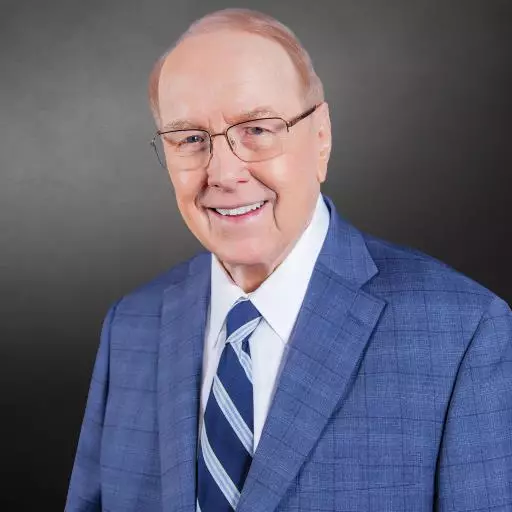
Rebellious Teenagers, Part 1


Childhood wounds can leave lasting scars, but God’s healing power transforms even the most
broken lives. On today’s classic edition of Family Talk, Dr. James Dobson has a conversation with Rev. Franklin Graham, Pastor Raul Ries, and Pastor Mike MacIntosh. These three influential men share powerful testimonies of defiance and redemption, revealing how Christ rescued them from darkness and called them into ministry.
Dr. James Dobson: Welcome everyone to Family Talk. It's a ministry of the James Dobson Family Institute, supported by listeners just like you. I'm Dr. James Dobson and I'm thrilled that you've joined us.
Roger Marsh: Well, welcome to Family Talk, the broadcast division of the Dr. James Dobson Family Institute. I'm Roger Marsh. If you're a parent who's been lying awake at night, wondering if your rebellious child will ever come back to the Lord, I've good news. Today's program is for you.
We are reaching back into our archives to bring you a powerful conversation from four decades ago, when Dr. James Dobson sat down with three men who were once angry, defiant, and lost, but who each encountered Jesus Christ and went on to become pastors and ministry leaders.
One grew up with an abusive, alcoholic father and was literally holding a loaded gun, waiting to kill his wife and children, when he heard the Gospel on television and surrendered his life to Jesus Christ. Another came from a broken home and endured the trauma of abuse, lost his brother in a car accident at the age of 15, and then spiraled into heavy drug use. That was before God pulled him back from the brink.
The third—well, he is the son of Billy Graham himself, who rebelled not out of trauma, but simply because he wanted to live life on his own terms. The men in question are Franklin Graham, Raul Ries, and Mike McIntosh. Each took a different path into rebellion, but they all found the same way out. Here now is Dr. James Dobson to introduce our three guests on this classic edition of Family Talk.
Dr. James Dobson: This program has a very interesting twist to it, I think. It started with an idea. Most of our programs begin with an idea that we think might be helpful to someone or useful in their family life or useful to the Lord. I had an idea that I thought would make a good broadcast.
It occurred to me that there are now religious leaders, Christian leaders, who are very effective for the Lord, who have large ministries and a great following, and yet they came the path of rebellion. When they were teenagers, they were very difficult to get along with and their parents had all kinds of problems with them.
I thought it would be interesting to bring these three men into the studio and ask them, "What were they thinking back there? What was the source of all that anger and all that rebellion and all that resistance against their parents?" Help us understand.
What I was really trying to do is to get a fix on what goes on in the mind of a teenager and to give some encouragement to the parents who have one who's going through that—that maybe your son or daughter could go on to become a great Christian minister. Don't despair too quickly on what's going on during those years of hormonal upheaval. That was the idea behind the program, and we brought these three men into the studio.
The first voice that I want to identify is that of Franklin Graham, who now serves as the President and CEO of the international relief agency, Samaritan's Purse, but he remains equally committed to evangelism as his father was and is, Dr. Billy Graham. This year he's going to be speaking at several high-energy revival festivals around the world, including one in Angola and the Ukraine and even in my old neighborhood of Shreveport, Louisiana, where I was born. Many people have seen the Time magazine earlier this year which listed Franklin as one of the 25 most influential evangelicals in America.
The second voice was that of Mike McIntosh, who's been a pastor of a thriving congregation at Horizon Christian Fellowship in the San Diego area for the past 30 years. He's the founder and president of Horizon International, an evangelistic arm of his church which ministers throughout the world in areas such as Poland, Romania, and China. Mike also serves as president of Youth Development International, an organization which provides assistance and counsel to thousands of young people across North America.
Finally, another friend of mine, Pastor Raul Ries, who has since 1979 led two different Calvary Chapel congregations in Southern California and is currently based in the city of Diamond Bar. He was born in Mexico City. Raul endured a very rough childhood and is now passionate to reach the lost for Christ. He has two Purple Hearts for his service in Vietnam and he has earned an eighth-degree black belt in martial arts.
So those are the three individuals, the three voices, and we brought them in the studio for over an hour. What we're going to hear now is that blast from the past from 1986. It has been said, Raul, that you were perhaps the world's most unlikely individual to have become a minister. Explain what that means.
Raul Ries: Well, I was one of those rebellious teenagers—not only my teens, but also my adulthood—where I didn't really like anybody. My problem was never drugs. I just had a real hatefulness in my heart for people because of the things that I had seen when I was a kid. I grew up with that real deep in my heart.
Dr. James Dobson: What was your early childhood like?
Raul Ries: My early childhood was I was born in Mexico City, where my dad was an alcoholic. He was a businessman, but he had problems drinking real bad, abusing of my mom and in the children, coming home and beating up on my mom and not being able to really speak to us, but by pushing and shoving and breaking things, and coming home with his hands bloody from fighting in the streets and doing people in.
Dr. James Dobson: Did he ever abuse you?
Raul Ries: He abused me a couple of times, but I was so uptight and so mad that I would—I always think in my mind of going into the kitchen and grabbing a knife and cutting his throat. That was my picture in my mind.
Dr. James Dobson: You really wanted to kill him?
Raul Ries: Yes. As a matter of fact, when I came back from Vietnam one time, I was just back, and he shoved me, he pushed me. I went into the kitchen, I grabbed one of those big butcher knives. I said, "The next time you touch me, I'm going to cut your throat." He knew then that he had to put a stop to it because I would do it.
Dr. James Dobson: Would you have done it?
Raul Ries: I would have done it in my heart.
Dr. James Dobson: Were you also rebellious against the school and against all forms of authority?
Raul Ries: Yes. I was mad at everyone. The police right here in Baldwin Park, they knew how I used to be because I would rebel against everything and anything. The reason for that, I believe in my heart, is because I was angry at my mother and my father and I wasn't getting love.
I felt I was always going to be the rejected one. I was never going to amount to anything. They would always praise my brother and my sisters, but they would never praise me.
Dr. James Dobson: How in the world did you come to know the Lord out of that atmosphere?
Raul Ries: Well, about 1972 I had gotten married to a Christian woman that was backslidden and had given her life back to the Lord. The Lord Jesus Christ had been really dealing with my life, but I was unaware of it. My wife was praying for me. I had come home to kill my wife that night and my kids because she was getting ready to leave me after five and a half years of abuse.
Dr. James Dobson: You were sitting there in the living room with a gun waiting for them to come home?
Raul Ries: Right. I did the same thing my dad did. I started abusing my wife and my children. I was tired. I was making all kinds of money in the martial arts and I was doing good secular-wise, but not in the Lord. That night I loaded my gun and waited for her to come home, and she never did come home.
Pastor Chuck Smith was on the TV during the hippie movement. I turned the television on and they were giving testimony. That night the Lord spoke to my heart and I accepted Jesus into my life.
Dr. James Dobson: That's incredible. Was there a total change? Were you really a new creature?
Raul Ries: Oh yes. It was like a weight of blackness in my heart that was lifted up in my soul and I felt the Holy Spirit come into my life.
Dr. James Dobson: How old were you at that time?
Raul Ries: 24 years old.
Dr. James Dobson: Did your relationship with your wife then begin to—tell me what happened.
Raul Ries: My wife didn't believe it. When she came home—she was in church—so I ran to this church to go to the altar call. When I came back home, I knocked on the door and I said, "Honey, guess what? I am born again." She closed the door right in my face. She didn't want to believe it.
She opened the door, and it took about a year to really see the change in my life as she began to see me get into the Word and drive out to Chuck's church and begin to get rooted and grounded in God's Word.
Dr. James Dobson: And then you started your own ministry with seven or eight people.
Raul Ries: Right. The Lord gave me a calling to start to have a Bible study in my home, to go back to my old high school and start ministering to the young kids. We started with seven kids and for about four years we had about 25 people and then it just blew up afterwards. The Lord just really blessed that.
Dr. James Dobson: 5,000 people on Sunday now. That must be staggering to you given where you came from.
Raul Ries: I can't even believe I'm a minister of the Gospel, but it's really exciting.
Dr. James Dobson: Well, our second guest is Franklin Graham, who's President of Samaritan's Purse, which is an international ministry that provides assistance to missionaries and national pastors, among other things. He's also President of World Medical Missions, which is a sister organization to Samaritan's Purse. Franklin, you also came through a time of rebellion, did you not?
Franklin Graham: Yes sir, that's correct.
Dr. James Dobson: And it started very early or during the teen years?
Franklin Graham: I would have to say it probably starts early and develops more as you get into your teenage years. Really I never rebelled against anything that my parents taught or what they stood for. I just decided I was going to live my own life and I was going to do those things that made me happy, those things that pleased me. I was going to taste and sample and take a bite of everything, whether my parents liked it or not.
Dr. James Dobson: There will be those who are listening to us who connect your last name, Graham, with your accent and will recognize who your father is—of course, Dr. Billy Graham. Did you rebel against being his son and being in the limelight? What did that influence have on the rebellion that you later experienced?
Franklin Graham: Not as much as people would think. My father was very wise and, of course, my mother. They raised us children not in a country-club type setting. We lived in a very rural area of Western North Carolina in the mountains. So we were not under the glass, so to speak.
We were just accepted for who we were. If I had lived in a city where we would have had a lot of contact, it would have been very difficult for me. I did rebel in some cases because people expected me to be something that I wasn't.
Dr. James Dobson: Did you resent the notoriety that your father had?
Franklin Graham: Sometimes I did. I can't explain it. Yes, you do resent it. You resent all of his attention going to other people. You resent the fact that he comes home and he's tired and you want to go play ball and he doesn't. You resent the fact that he gets on an airplane and then he's gone for six weeks or two months.
Dr. James Dobson: He traveled nine months out of the year when you were little, didn't he? I think I read that somewhere.
Franklin Graham: That's correct. I remember there was one time he was gone for one period six months straight when he had Crusades in Australia. But God made up for it. God always sent another man to be in my life, a man that was a father-type image, who at that particular period of my life met a particular need. God used men at the right time.
My father never deserted us. He loved us. When he came home, he tried his best to make his time with us quality time. He would try his best to go camping and do the things that he didn't care for very much, but he would do them anyway with us children.
Dr. James Dobson: In an article I read, you said you always had access to him, even when he was out of town.
Franklin Graham: Always had access. I can never remember a time where my father has ever locked the door and said that we couldn't see him. If I wanted to see him—I remember I was little, he sent me to boarding school in New York. He was afraid that I was going to turn out to be a real hick, I guess, there in the mountains of North Carolina. I went to a boarding school in New York, which I really hated and really dreaded.
I was leaving for school and I needed some money, and he was having his board meetings there in Montreat. I wanted to go in and see him. I'd already said goodbye to him, but I was really wanting to get some more money from him. I remember I went to the board meeting and T.W. Wilson, his assistant, was there and I said, "Uncle T," which is what we call him, "Would you mind going in and asking Daddy if he could just come here for a moment?"
He said, "No, Franklin, you come on in the room." I walked into the room and my father stopped the whole board meeting, introduced me to all of his board members, and then he took about 30 or 40 minutes with me. Most of the time we were just general conversation, but yet he took that time. All of his life, he's always done that. He's taken time with us children. I don't care if the President of the United States—and he took me to the White House when I was young, where just he and I would go spend the night with President Johnson and then later when President Nixon was in the White House. He would do things with me.
Dr. James Dobson: Now, comparing your background with Raul's—he had something to rebel against. He was unloved, he was abused, he saw an awful lot that made him angry. You're saying your rebellion did not grow out of legitimate reasons. It was just there for some reason.
Franklin Graham: Well, I think it's legitimate reasons. I think it's just the evil nature of man's heart. I was wanting all of those things in life that I thought would please me, that Christian parents are telling you not to have—the girlfriends, the drinking, or tobacco or marijuana. These are things that I was going to find out for myself, and I wasn't going to take advice from my parents. So it was just the evil nature of the heart of Franklin Graham.
Dr. James Dobson: Not all rebellion grows out of parental mistakes. Boy, I wish every Christian knew that. Some rebellion is just in the heart of man, Franklin, as you say. Some of it is just an independent desire for power and for selfishness, and "I'll have my own way." While your parents made a lot of mistakes, Raul, and I'm sure yours did too, Franklin, nobody's perfect.
But yours represented a free choice, and kids do have a free choice, and we have to recognize that. It isn't appropriate in every context to say, "Where did I go wrong?" when you've given the best you've got and it wasn't good enough. You found the Lord about 20, 22 years of age, I guess.
Franklin Graham: I was 22 years old when I really gave my heart to the Lord and made him the Lord of my life. At the age of eight, I invited Christ into my heart, but to be honest, I don't think I really made him the Lord of my life. I don't think I knew what lordship meant at eight years of age.
Dr. James Dobson: If you learned it at 22, you did better than a lot of people do. Well, our third guest is Mike McIntosh, who is the senior pastor of the Horizon Christian Fellowship in San Diego. Mike, I know that you experimented with drugs. Franklin, you mentioned marijuana. Is that as far into the drug lifestyle as you went?
Franklin Graham: Yes sir, it is.
Dr. James Dobson: You got into heavier stuff, didn't you Mike?
Mike McIntosh: Right. Franklin, I'd like to touch on a couple of things he brought up. One is that he said that it wasn't when he was a teenager that the rebellion started; it started earlier than that. That's how it was with me too. It just really came to fruition my teenage years. Secondly, though his father traveled, he recognized the strong need for a father figure in his life, and I didn't have the father figure. That always made me a little uptight.
Dr. James Dobson: You were from a broken home?
Mike McIntosh: From a broken home, right. My father, who's still alive, is an alcoholic and a gambler at 78 years old. I never knew my father. In fact, in the last four years is the most I've ever seen him in my life. That was through him seeing me on television and preaching in the Portland Coliseum one night.
But I had a stepfather. I thought my stepfather would be the answer and took me off the farm from a foster home. Then when he divorced my mother, my life began to fall apart at 10, 11, 12 years old. By the time I got to high school, that's when all the hostility that was in me from the time I remember back to four or five years old just really came unglued.
Dr. James Dobson: You were abused when you were in that foster home, weren't you?
Mike McIntosh: Well, later when I had my experience with LSD, through psychotherapy it came out that that was a big part of my problem that I had repressed over the years—that the man of that house had molested me a couple of times. I would never confront that issue in my life and I always wondered why I partied so much and chased so many girls.
I realized I was trying to identify my masculinity and to repress that. I had so much bitterness and hatred and anger as a little guy from that having happened to me and I was always a fight away from anybody that would light my fuse.
Dr. James Dobson: You know, Mike, we played a trick on you and Raul. I don't know if you all know it yet. This may come as a surprise to you, but we called your mothers. We talked to them. I called your mom, or at least a member of our staff did, and asked what she remembers about your rebellious adolescent years and so on, and she wasn't aware of a lot of it. You got away with it. But she said the worst rebellion occurred when your brother was killed in a car accident.
Mike McIntosh: That devastated me. When I was about 12, I made a commitment to Jesus. I said I wanted to accept him as my savior in a Baptist church and never followed that up. Though I was the president of our youth group in high school—at that time it was the largest high school west of the Mississippi—and I was trying to find Jesus, but I had nobody guiding me to the Scriptures or discipling me.
That afternoon when a friend of my brother's pulled up beside me on the street and said, "Get in the car," and I said, "What's the matter?" and they said, "We want to tell you that your brother was killed today in an auto accident." I was 15 and my life was never the same from that time until about 30 years old.
Even after having been a Christian, the bitterness I had against life coming from the broken family, the alcoholism in the family, living in a foster home, having nobody to help me—though I was always trying, I was given real sharp mind by the Lord. That made me so angry at life that I just predetermined my heart that I was going to push and push and push and push until I met somebody big enough to set me down. Of course that ended up being Jesus Christ.
Dr. James Dobson: Now, if we had to characterize what you were feeling at that time by one particular emotion, would anger be the emotion? Raul, is that what you were feeling?
Raul Ries: That's what I was feeling, yes.
Dr. James Dobson: You were mad.
Raul Ries: Real mad.
Dr. James Dobson: Who were you mad at?
Raul Ries: I was mad at everybody—my mom, my dad, my brothers, my sisters, the police, everybody. School teachers—everybody. I mean they kicked me out of school so many times that I didn't even care.
Dr. James Dobson: Why were you so angry? I mean you've told us about this stormy, troubled childhood, but is there anything else we can get a handle on?
Raul Ries: You know, Dr. Dobson, I think deep down in my life, looking at everything in my life, going to nightclubs with my dad and seeing my father getting drunk and—
Dr. James Dobson: That's still tender down there. Isn't that interesting, all those years later you can still feel what you felt at that moment.
Raul Ries: It was a real hard part of my life.
Dr. James Dobson: Did you stand and watch him?
Raul Ries: Oh yeah. He would leave me outside while he got drunk.
Dr. James Dobson: Did it embarrass you?
Raul Ries: Yes, it did.
Dr. James Dobson: Franklin, how about you? Is there that kind of anger? Were you feeling the same things, or were you just looking for life?
Franklin Graham: I was just looking for life and was on kind of a roll. I wanted to get all that I could get. There were things that I was forced to do that I didn't want to do. I had to go to school to New York, and that's the last place I ever wanted to go was up north. I was a southern boy.
To put me into that type of setting, and then I got into high school in the South, we were taught respect for our parents, for our teachers. I went into a private school in New York where the children showed absolutely no respect for anybody or anything. Total disrespect for authority. I just have to say that that rubbed off on me. As a result of that, going back South to finish my education, I had no respect. I just was going to get all I could.
Dr. James Dobson: Boy, that confirms a view of mine. I've watched that happen where you have a class that starts in kindergarten and the first grade and the second grade, and a large number of those kids stay together throughout the elementary school years.
If they get four or five bad teachers—teachers who allow them to get away with the kind of thing you're talking about—or if the principal does not represent somebody that they respect, you can establish disrespect in their minds. You can give them a disdain for authority that follows them into adolescence and even into adult life. You can destroy kids that way. That's why I feel so strongly about discipline in the classroom, and I know you guys feel the same way about that.
Raul, we passed over your emotion there pretty fast. But isn't it interesting that at your age and with the success God has given you in the ministry that he's placed you in, that there's still that tender spot there from childhood? Those years stay with us forever, don't they? They just never get away.
Raul Ries: Right. It's like I remember the story where you can get a board and you can nail the nails. You take the nails out, but the scars remain. It's always there in my heart. But it's neat to see the Lord Jesus Christ work in my life and work in all these guys' lives. I love these guys.
Dr. James Dobson: Have those experiences now made it possible for you to understand other people in your ministry who are going through those kind of hard times?
Raul Ries: Yes. It's really neat because he's given me a real compassion for those—I like working with these tough guys because I can really relate to them. Deep inside we really want to be humbled by the Lord.
Dr. James Dobson: Gentlemen, we're just getting started. We've just met you and there's a whole lot more that you can say to us. So let's just continue the conversation next time and, Raul, appreciate your opening yourself in that way.
Roger Marsh: What a gift it is to hear from men who have literally walked through the fire and come out on the other side with a testimony that can strengthen someone else's faith. You're listening to a special edition of Dr. James Dobson's Family Talk, featuring a classic conversation Dr. Dobson had with Franklin Graham, Raul Ries, and Mike McIntosh.
As we think about the vitality of these testimonies, it's just so amazing to see how God used all three of these men during their earthly existence to have an impact on the Kingdom in such a powerful way. And now here once again is Dr. James Dobson with some closing thoughts.
Dr. James Dobson: We're talking to some parents today who I think needed to hear this, and frankly to hear the rest of the interview next time. I know we all make mistakes and the Lord is wonderfully able to restore the years the locusts have eaten, as evidenced by the testimonies that we heard today.
Perhaps there's a mom or a dad listening out there who needs to be reminded of just how far-reaching their impact is when they pursue a divorce or when they don't deal with a child's addictive behaviors or when the parent themselves is alcoholic or has other problems that aren't handled.
Two of the men we heard from today still have the scars from what happened back there. Yes, the Lord can heal those wounds, but wouldn't it be better if they were prevented in the first place? Maybe that's one of the messages from this interview.
Roger Marsh: Well, I'm Roger Marsh. Thanks so much for listening today. Be sure to join us again next time for Part 2 of this classic interview featuring Franklin Graham, Raul Ries, and Mike McIntosh. That's coming up right here on the next edition of Dr. James Dobson's Family Talk, the voice you can still trust for the family you love. This has been a presentation of the Dr. James Dobson Family Institute.
Featured Offer

Every marriage faces pressure. Busy schedules, financial stress, unmet expectations, poor communication, and unresolved conflicts can slowly create distance in a relationship. Many couples love each other deeply, yet feel stuck and are unsure how to reconnect and move forward in a healthy way.
Dr. James Dobson’s newly revised digital download, 10 Tips for a Long-Lasting Marriage, offers:
- Clear, trusted guidance for navigating common marital challenges
- Encouragement for couples who feel stuck or disconnected
- A practical strategy for building a marriage that doesn’t just survive—but truly thrives
This free resource is designed to help you strengthen your relationship with clarity, hope, and confidence.
Past Episodes
- A Biblical Look at the Family
- A Challenge to Pastors
- A Family in Crisis
- A Father to the Fatherless: The Story of Two Friends
- A Father's Commitment to His Daughter
- A Heart for Romanian Orphans
- A Journey of Widowhood and Grief
- A Marriage Made in Heaven
- A Mom's Heart of Prayer
- A Nation Abandoned by God
- A Picture of Life
- A Sober Update on Military Culture
- A Traditional Family
- A Tragic Account of Mistaken Identity
- A Visit to the Shores of Normandy
- A Visit With the Legendary Pat Boone
- Abraham Lincoln: The Faith of a President
- Adrenaline & Stress
- Adult Children of Alcoholics
- Albert & DeeDee Pujols: Giving Honor to God
- Alone Yet Not Alone
- America: A Call to Humility
- American Heritage Girls
- American Marxism
- An Abusive Childhood: Climbing Out of the Pit
- An Attitude of Gratitude
- Autism
- Avoiding Infidelity
- Back From the Brink of Divorce
- Beauty In Brokenness
- Becoming a Culture Warrior
- Being a Conservative Crusader
- Being a Father at Work and Home
- Being a Smart Stepmom
- Being Jesus to Your Neighbors
- Being There for Your Son
- Between a Rock and a Grace Place
- Bonhoeffer: A Hero Then and Now
- Boys and Puberty
- Breaking the Bonds of Welfare
- BUG-Puberty
- Building a Christian Home
- Building a Safe Haven In Marriage
- Building hedges Around Your Marriage
- Bullying
- Buyer Beware
- Charlie & Lucy Wedemeyer: A Message of Hope
- Children and Stress
- Choosing to See
- Christian Men & Sexuality
- Christianity and Wokeness
- Christ's Influence on History
- Cleaning House: Raising Responsible Kids
- Coach John Wooden
- College
- Confronting Guilt in Motherhood
- Congressman Frank Wolf: A Modern-Day Wilberforce
- Courageous Choices
- Courageous Manhood
- Creative Ideas for Child Discipline
- Crystal Peaks Youth Ranch
- Culture Watch
- Current Economic Tsunami
- Defend Life
- Defending Religious Liberty in the Courts
- Defunding Planned Parenthood
- Delicate Mother-In-Law Relationships
- Depression: Encouragement for the Journey
- Developing a Firsthand Faith
- Digital Invasion
- Divorce
- Dr. Ken Hutcherson: A Defender of Truth
- Dr. Ravi Zacharias: Finding My Destiny in Delhi
- Faith and Family: Raising Kids Right
- Family Finances
- Fierce Beauty
- Fighting to Preserve DOMA
- Finance
- Finding Healing After Sexual Abuse
- Finding Hope for Your Heart
- Finding Joy Amidst Cancer and Loss
- Finding New Intimaacy in Prayer
- Finding Success in a Failing Economy
- Finding True Forgiveness
- Forgiving God
- Forgiving My Father
- Foundation For Successful Families
- Free At Last
- Freeing the Family From Pornography
- From Santa to Sexting: Protecting Your Middle-Schooler
- Fueling the Passion
- Girl's Uncovered
- God Bless America
- God Is At At Work
- God Made Us a Family
- God Makes Lemonade
- God Restored Me
- God Restored Me For a Purpose
- God’s Grace Is Sufficient
- God's Tender Heart for Single Moms
- God's Way or My Way
- God's Wisdom for Raising Children
- Going All Out For Your Wife
- Greg Laurie
- Greg Laurie: A Changed Life
- Guarding Your Grandchild’s Heart
- Healing the Past and Moving On
- Healing the Wounded Spirit
- Healthy Habits
- Help for Angry Moms
- Help for Employed Moms
- Help for Hurting Teens
- Help for Parents of Prodigal Children
- Help, I'm a Spouse AND a Parent Now!
- Helping Teens Find Their Purpose
- Her Role in the Home
- Homeschooling & Beyond
- Homeschooling Today
- Honoring Our Average Joes
- Hooking Up
- Hope for Hurting Hearts
- Hope in the Midst of Unexpected Pregnancies
- Horses and Healing: New Hope for Kids
- Hutch: A Man Filled With Hope
- I Will Never Leave Thee
- I, Isaac, Take You, Rebekah
- In God We Still Trust
- Infertility and Miscarriage
- Insights on Radical Islam
- Integrity in Business
- Is America Imploding?
- James Dobson v Kathleen Sebelius: How will you get involved?
- Jealousy
- Jesus Vs. Muhammad
- Jim & Jill Kelly
- Landscape of America
- Laying Up Treasure in Heaven
- Lean Body, Fat Wallet
- Learning Disorders
- Life & Laughter with Ken Davis
- Life Without Limbs
- Live to Forgive: A Family Story of Pain and Redemption
- Living Through Loss of Spouse
- Living With Less So Your Family Has More
- Living with Less: Heading into the Holidays
- Living With the Strong Willed Child
- Loneliness in Marriage
- Longing for Marriage
- Love For a Lifetime
- Loving Those Left at Home
- Macaroni At Midnight
- Managing Your Home and Time
- Marriage in a Facebook World
- Marriage Survival Skills
- Marriage That Can Go the Distance
- Marriage: The State of Our Union
- Mary Crowley
- Memories of the Holocaust
- Mentoring Boys and Men
- Merging Premarital Expectations
- Ministering to the Elderly
- Ministry of Hymns
- Miscarriage: Grieving the Loss
- Mojave Desert Cross
- My Adoption Story
- My Autistic Son
- My Mission: Capturing a Dictator
- One Woman’s Journey of Grief & Hope
- One-on-One with Bill Gaither
- Online Dangers: Protecting Kids from Pornography
- Online Dangers: Protecting Marriages from Pornography
- Overcoming Childhood Traumas
- Overcoming the Heartaches of Life
- Overcoming the Shame of the Past
- Parenting 101: From Discipline to Sexuality
- Parenting Basics: The First Years
- Parenting Newborns and Those Early Years
- Phill Kline: Challenging an Abortion Giant
- Plugged In: Teaching Your Children to Be Media Savvy
- Politics and the Bible
- Prodigal Child
- Protecting Life and Liberty
- Protecting Your Child in a Dark Culture
- Putting an Arm Around the Post-Abortive Woman
- Raising a Handicapped Child
- Raising Boys: Routine Panic
- Raising Boys: Wounded Spirits
- Raising Kids Who Love the Lord
- Raising Men of Honor
- Raising the Standard of Excellence
- Reaching Out to Youth in Need
- Reaching the Taliban For Christ
- Real Moms, Real Jesus
- Reignite: How to Bring Joy Back into Your Life for Enduring Faith
- Religious Persecution in America
- Republican Majority
- Rescued From a Life of Ruin
- Resolving Money Conflicts in Marriage
- Revival Rising
- Scripture and the Family
- Sexuality & Singles
- She Calls Me Daddy
- Single Adults
- Singleness: Waiting for God's Best
- Singles and Sexuality
- Spiritual Mismatch
- Spiritual Training of Children
- Stand For Life In Your Community
- Staying Christian in a Pagan Culture
- Staying Strong in College
- Stepping Away from the Common Life
- Straight Talk to Young Couples
- Strengthening Military Families
- Strong Fathers, Strong Daughters
- Suicide
- Teaching Your Kids About Sex
- Ten Habits of Happy Mothers
- The Bachmanns: Their Story of Faith and Family
- The Barretts: An Amazing Adoption Story
- The Battle for Civilization
- The Battle for Marriage Continues
- The Cross: The Center of the Family
- The First Year of Marriage
- The Flipside of Feminism
- The Future of the Family: Fact and Fiction
- The God-Wild Marriage
- The Healing Power of Forgiveness
- The Heart of a Cowboy
- The Heart of the Santorum Family
- The High Cost of Low Living
- The Hope of Heaven
- The Hormone Swing
- The Immunization Debate
- The Impact of Truth on My Life
- The Insidious Nature of Infidelity
- The Joy of Good News
- The Joys and Challenges of Adoption
- The Joys and Challenges of Pregnancy
- The Key to Your Child's Heart
- The Kids Are Gone...Now What?
- The Miracle That Saved a Marriage
- The Powerful Influence of a Wife
- The Pro-Life Movement Reaches a New Generation
- The Threat of Islamic Terrorism
- The Unbelieving Spouse
- The Use and Abuse of Power
- The Value of Manhood
- The Value of One Life
- The Vital Role of Fathering
- The Way of the Wise
- To Dads & Daughters … with Love
- Tolerating the Intolerable
- Tony Dungy: A Man of Quiet Strength
- Tough Love For Kids
- Truth: Can We Both Be Right?
- Turning Hearts 180-Degrees Toward Life
- We Help; Jesus Heals
- Welcome To Our Table
- What Does Freedom of Religion Mean?
- What Has Feminism Done for You Lately?
- What Parents Should Know About Teens
- What's It Like Being Married to Me?
- What's Wrong with Being a Nice Guy?
- When Life Brings You Thorns
- When Unemployment Hits Your Home
- When You're in Love
- Why Men Leave the Church and How to Get Them Back
- Why Purity Matters
- Why We Fight For Life
- Women and Emotional Infidelity
- Women and Friendships
- Women and Intimacy
- Women in Combat: Understanding the Consequences
- Wounded Spirit

Video from Dr. James Dobson
Featured Offer
Every marriage faces pressure. Busy schedules, financial stress, unmet expectations, poor communication, and unresolved conflicts can slowly create distance in a relationship. Many couples love each other deeply, yet feel stuck and are unsure how to reconnect and move forward in a healthy way.
Dr. James Dobson’s newly revised digital download, 10 Tips for a Long-Lasting Marriage, offers:
- Clear, trusted guidance for navigating common marital challenges
- Encouragement for couples who feel stuck or disconnected
- A practical strategy for building a marriage that doesn’t just survive—but truly thrives
This free resource is designed to help you strengthen your relationship with clarity, hope, and confidence.
About Family Talk
Family Talk is a Christian non-profit organization located in Colorado Springs, Colorado. Founded in 2010 by Dr. James Dobson, the ministry promotes and teaches biblical principles that support marriage, family, and child-development. Since its inception, Family Talk has served millions of families with broadcasts, monthly newsletters, feature articles, videos, blogs, books and other resources available on demand via its website, mobile apps, and social media platforms.
The Dr. James Dobson Family Institute (JDFI) is a Christian non-profit ministry located in Colorado Springs, Colorado. Founded initially as Family Talk in 2010 by Dr. James Dobson, the organization promotes and teaches biblical principles that support marriage, family, and child development. Since its inception, Family Talk has served families with broadcasts, monthly newsletters, feature articles, videos, blogs, books, and other resources available on demand via their website, mobile apps, and social media platforms. In 2017, the ministry rebranded under JDFI to expand its four core ministry divisions consisting of the Family Talk radio broadcast, the Dobson Policy and Education Centers, and the Dobson Digital Library.
Dr. Dobson's flagship broadcast called, “Dr. James Dobson’s Family Talk," is aired on more than 1,500 terrestrial radio outlets and numerous digital channels that reach millions each month.
About Dr. James Dobson
Dr. James Dobson is the Founder Chairman of the James Dobson Family Institute, a nonprofit organization that produces his radio program, “Dr. James Dobson's Family Talk.” He has an earned Ph.D. from the University of Southern California and holds 18 honorary doctoral degrees. He is the author of more than 70 books dedicated to the preservation of the family including, The New Dare to Discipline, Love for a Lifetime, Life on the Edge, Love Must Be Tough, The New Strong-Willed Child, When God Doesn't Make Sense, Bringing Up Boys, Bringing Up Girls, and, most recently, Your Legacy: The Greatest Gift. Dr. Dobson served as an associate clinical professor of pediatrics at the University of Southern California School of Medicine for 14 years and on the attending staff of Children’s Hospital of Los Angeles for 17 years in the divisions of Child Development and Medical Genetics. He has advised five U.S. presidents and served on eight national commissions. Dr. Dobson has been married to Shirley for 64 years, and they have two grown children, Danae and Ryan, and two grandchildren.
Contact Family Talk with Dr. James Dobson
540 Elkton Drive
Suite 201
Colorado Springs, CO 80907
877.732.6825